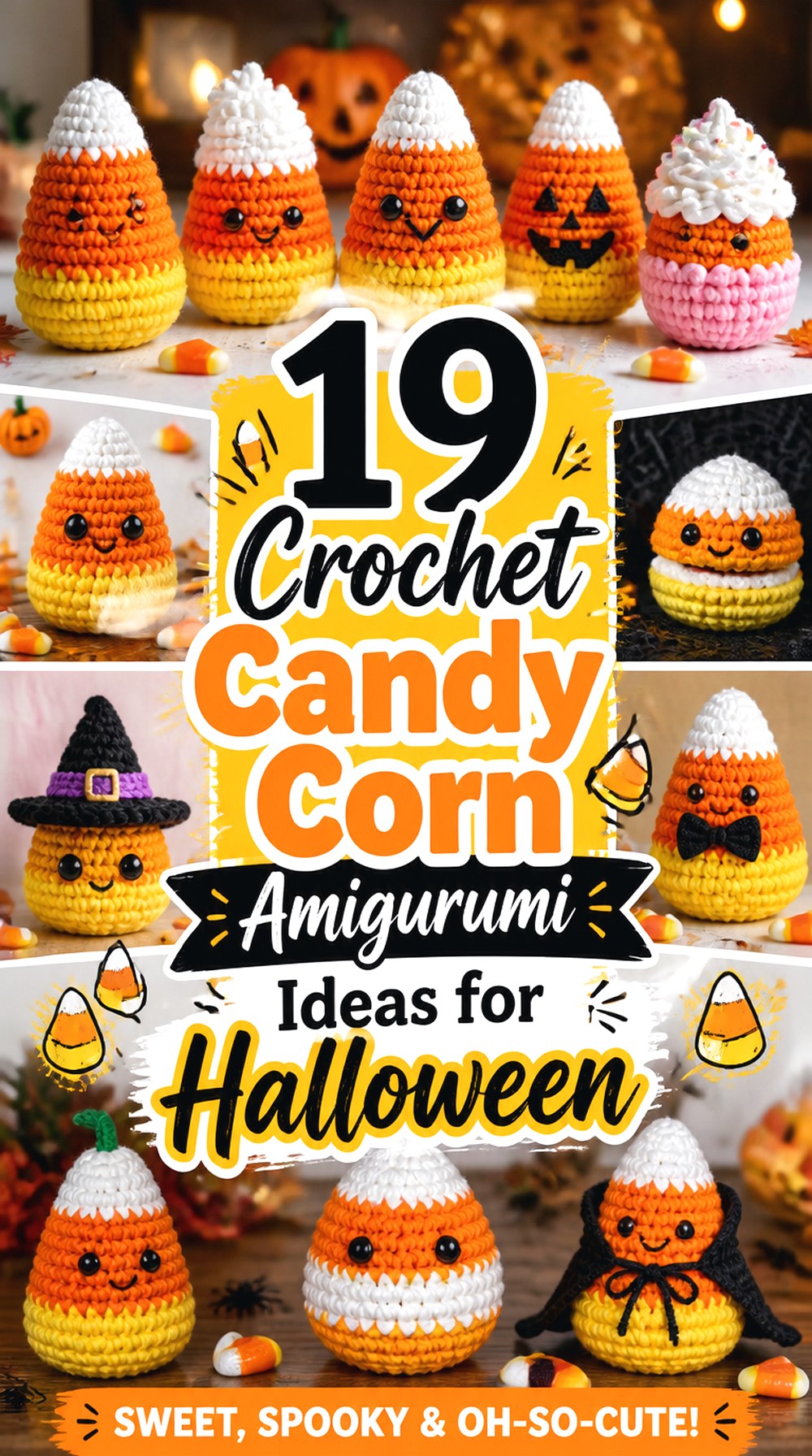

Candy corn amigurumi can be much more varied than the familiar three-color triangle suggests. Some tutorials produce small, smooth pieces suited to bowls and shelves, while others use plush or chenille yarn for a softer stuffed look. There are also keychains, pillow-like versions, character faces, and Halloween mashups that turn the basic candy into cats, bees, and mummies.
The useful difference is not simply which finished candy corn looks cutest. Yarn texture affects stitch visibility and shape, hardware changes how a miniature can be used, and extra character details increase the finishing decisions. The 19 ideas below use separate original YouTube tutorials from different creators so you can compare construction styles and finished purposes while returning to each creator for exact instructions.
Quick List
- Crochet Structured Candy Corn Friend
- Crochet Fuzzy Pocket Candy Corn Plush
- Crochet Squishy Chenille Candy Corn
- Crochet Mini Soft-Yarn Candy Corn
- Crochet Candy Corn Keychain Clip
- Crochet Tiny Candy Corn Shelf Mini
- Crochet Candy Corn Pillow Plush
- Crochet Classic Candy Corn Face Plush
- Crochet Primitive Candy Corn Bowl Filler
- Crochet Face-Free No-Sew Candy Corn
- Crochet Embroidered Candy Corn Cutie
- Crochet Kawaii Candy Corn Character
- Crochet Mummy Candy Corn Amigurumi
- Crochet Candy Corn Cat Keychain
- Crochet Candy Corn Bee Plush
- Crochet Minimal Candy Corn Amigurumi
- Crochet Chunky Candy Corn Plush
- Crochet Clean-Stripe Candy Corn Character
- Crochet Rounded Candy Corn Stuffed Toy
Choose Candy Corn Amigurumi by Finished Use
Start with where the finished piece will go. A tiny candy corn intended for a keychain or small Halloween display needs a different scale and finishing approach from a chunky plush that will sit by itself on a chair or shelf. Hardware-based projects also deserve extra attention because the hanging point becomes part of the finished object rather than an afterthought.
For grouped decor, several compact candy corns can create more impact than one large plush, especially in bowls, tiered trays, or shelf arrangements. Character projects such as the mummy, cat, and bee work differently: their extra features make them stronger focal pieces. Before choosing a tutorial, look at the finished result and decide whether you need something portable, display-oriented, soft and squeezable, or visually detailed.
Yarn Texture Can Change the Candy Corn Shape
Smooth yarn generally keeps individual stitches and color boundaries easier to see, which can be useful when the clean triangular silhouette is the main attraction. Plush and chenille yarn create a softer surface and more volume, but their fibers can obscure stitch openings and make subtle tension differences less obvious while you work.
Neither approach is automatically better. A smooth worsted-style candy corn may suit a crisp collection of small decorations, while a chenille version can provide a fuller stuffed-toy look. If you substitute yarn, do not assume the tutorial’s finished scale will remain the same. Compare your own fabric as you work, make sure stuffing is not showing through, and use the creator’s recommended materials when matching the demonstrated proportions matters.
Plan Faces and Small Details for the Recipient
Candy corn already reads clearly from its three color sections, so a face is optional rather than necessary. That gives you useful choices: a face-free version can blend into general fall decor, while eyes, smiles, cat ears, bee features, or mummy details move the project toward character amigurumi.
Small components also affect suitability. For example, Rose and Lily Crochet specifically notes that the safety eyes used for its mini candy corn are not recommended for children under three. If you are making amigurumi for a young child or another situation where detachable hard pieces are inappropriate, choose a tutorial or adaptation that allows embroidered features instead. Keychain findings and other attached embellishments should likewise match the intended use rather than being treated as purely decorative.
1. Crochet Structured Candy Corn Friend
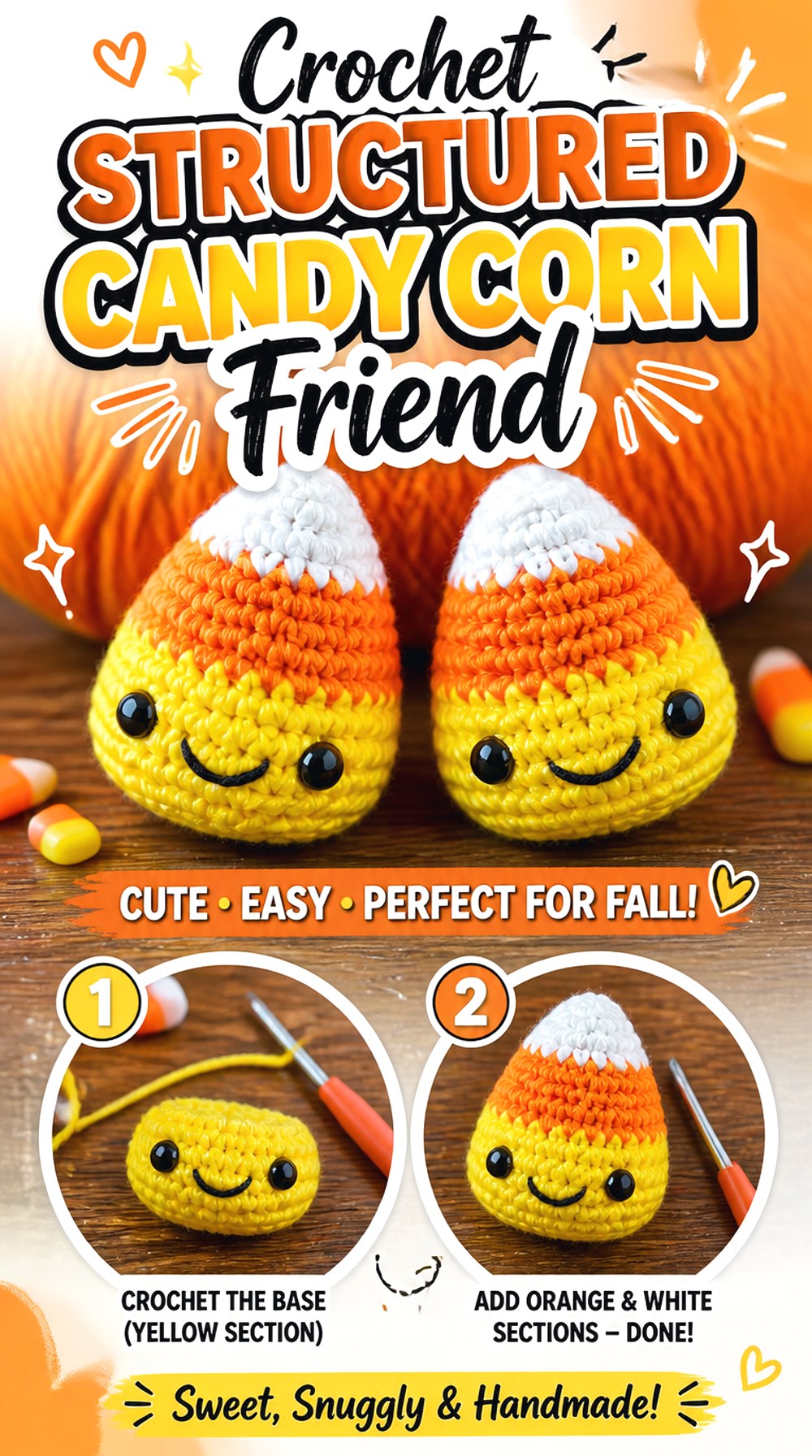
This version from Hooked Yarns Plus is a useful starting point for anyone who prefers a clearly defined candy corn silhouette rather than a heavily fuzzy plush. The tutorial uses worsted-weight yarn, giving the finished piece visible stitch texture and strong separation between its three familiar color zones. The face turns the simple food shape into a small amigurumi character without changing the basic outline.
Compared with chenille versions later in the list, this approach puts more visual emphasis on the crochet fabric itself. That makes it especially helpful when neat shaping, color transitions, and the overall outline are what you want people to notice.
Smooth Yarn Keeps the Silhouette Easy to Read
A smoother yarn surface lets the triangular shape and color bands carry most of the design. That can work particularly well if several candy corns will share a shelf or bowl, because their outlines remain clear even when grouped closely. When changing yarn, compare the firmness of your fabric with the demonstrated piece rather than choosing solely by color.
Facial Placement Has More Visual Impact on a Simple Body
Because this candy corn has few extra embellishments, the face becomes an important focal point. Before permanently positioning facial features, look at the stuffed form from the front rather than judging placement while the fabric is still flat or only partly filled. A small change in eye height can noticeably alter the expression on such a compact design.
2. Crochet Fuzzy Pocket Candy Corn Plush

InnoScent teddies takes the same recognizable candy shape in a softer direction. The tutorial uses a fuzzy plush-style yarn, so the finished surface looks less sharply stitched and more like a small tactile stuffed toy. That textural difference is meaningful if you are choosing between a decorative amigurumi and something with a softer plush appearance.
The compact form still depends on white, orange, and yellow for instant recognition, but the fuzzy yarn softens the edges between sections. Readers who enjoy plush fibers may prefer this treatment, while anyone who depends heavily on seeing every stitch clearly should consider how comfortable they are working through a textured surface.
Fuzzy Fibers Can Hide the Working Loops
Plush fibers make a finished amigurumi look soft, but they can also reduce stitch visibility while crocheting. Instead of relying only on what the next stitch looks like, keep track of your position using the methods demonstrated by the creator and whatever stitch-marking system works reliably for you. This matters most near shaping areas and color changes.
Keep the Point From Disappearing Into the Stuffing
Candy corn needs a recognizable tapered top even when the yarn itself is fluffy. As you fill the piece, judge the silhouette from several angles and distribute the stuffing rather than concentrating it in one area. The goal is not maximum firmness; it is enough support for the illustrated shape without forcing the stitches apart.
Original Tutorial and Creator Credit
Creator: InnoScent teddies
3. Crochet Squishy Chenille Candy Corn

Okey Dokeys presents a candy corn specifically as a chenille-yarn fall and Halloween decor project. The thicker, velvety-looking surface gives the finished piece more visual volume than a small smooth-yarn amigurumi and makes it read as a squishy plush rather than a tiny ornament.
Choose this approach when texture is part of the appeal. The white, orange, and yellow bands remain recognizable, but their boundaries look softer because of the yarn pile. That distinction can be useful in a mixed Halloween display: one chenille candy corn can provide a plush focal point beside smaller pumpkins, ghosts, or smooth-yarn amigurumi.
Chenille Makes Color Changes Look Softer
On a smooth yarn, even a slight jog or tension change can be visually obvious. Chenille fibers tend to soften those boundaries, producing a more blended plush appearance. That does not eliminate the need for careful color changes, but it changes what the eye notices first. Prioritize an even overall outline and consistent fabric density.
Give a Plushier Body Enough Display Space
A chenille candy corn has more visual presence than a very small thread- or worsted-style piece, even when exact dimensions vary. Before making several, decide where they will sit and how much room the pointed top and broader base need. For a narrow tray or crowded shelf, a smaller tutorial elsewhere in this collection may fit more naturally.
Original Tutorial and Creator Credit
Creator: Okey Dokeys
4. Crochet Mini Soft Yarn Candy Corn
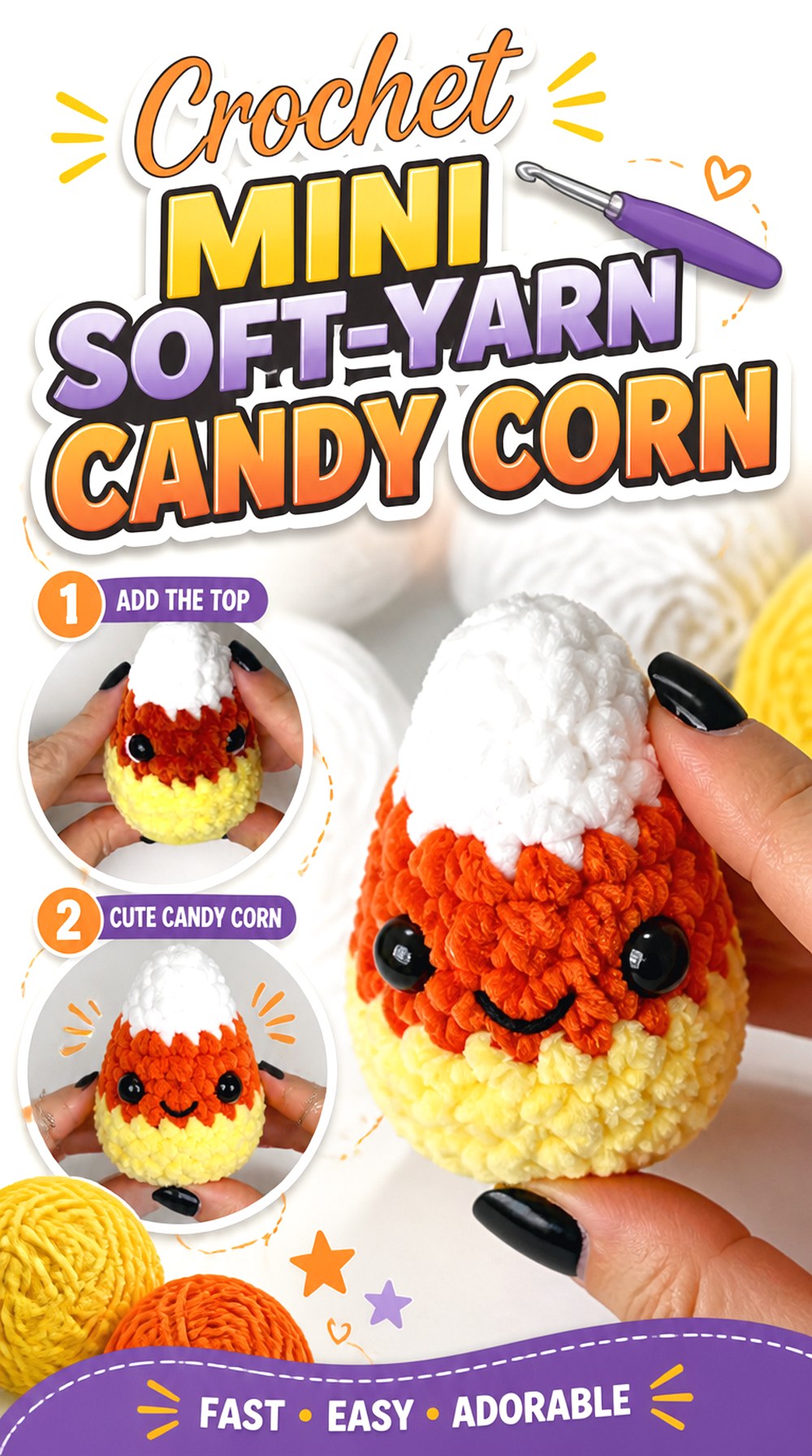
Rose and Lily Crochet’s version is specifically presented as a mini candy corn and uses a soft plush yarn. That combination makes it a practical choice for a small Halloween accent rather than a statement-size cushion. The friendly face provides enough character for the piece to stand on its own, while the compact form can also work among several miniature decorations.
This idea sits between the tiny smooth amigurumi and the larger chenille plush styles: the yarn adds softness, but the scale remains deliberately small. It is a good comparison point if you want plush texture without committing to a larger stuffed project.
A Mini Plush Works Better as an Accent
Small candy corn amigurumi can fill spaces where a large stuffed piece would overwhelm the arrangement. Think desk corners, small baskets, narrow shelves, or seasonal trays. If you want to make multiples, first confirm that the finished scale shown in the tutorial works for your intended grouping rather than assuming every “mini” tutorial produces comparable dimensions.
Treat Safety Eyes as a Use Decision
The creator’s written companion material specifically cautions that the safety eyes used for this project are not recommended for children under three. For a decorative adult display, the demonstrated face may be suitable. For a recipient where hard detachable features are undesirable, consider whether an embroidered face would better match the intended use.
Original Tutorial and Creator Credit
Creator: Rose and Lily Crochet
5. Crochet Candy Corn Keychain Clip
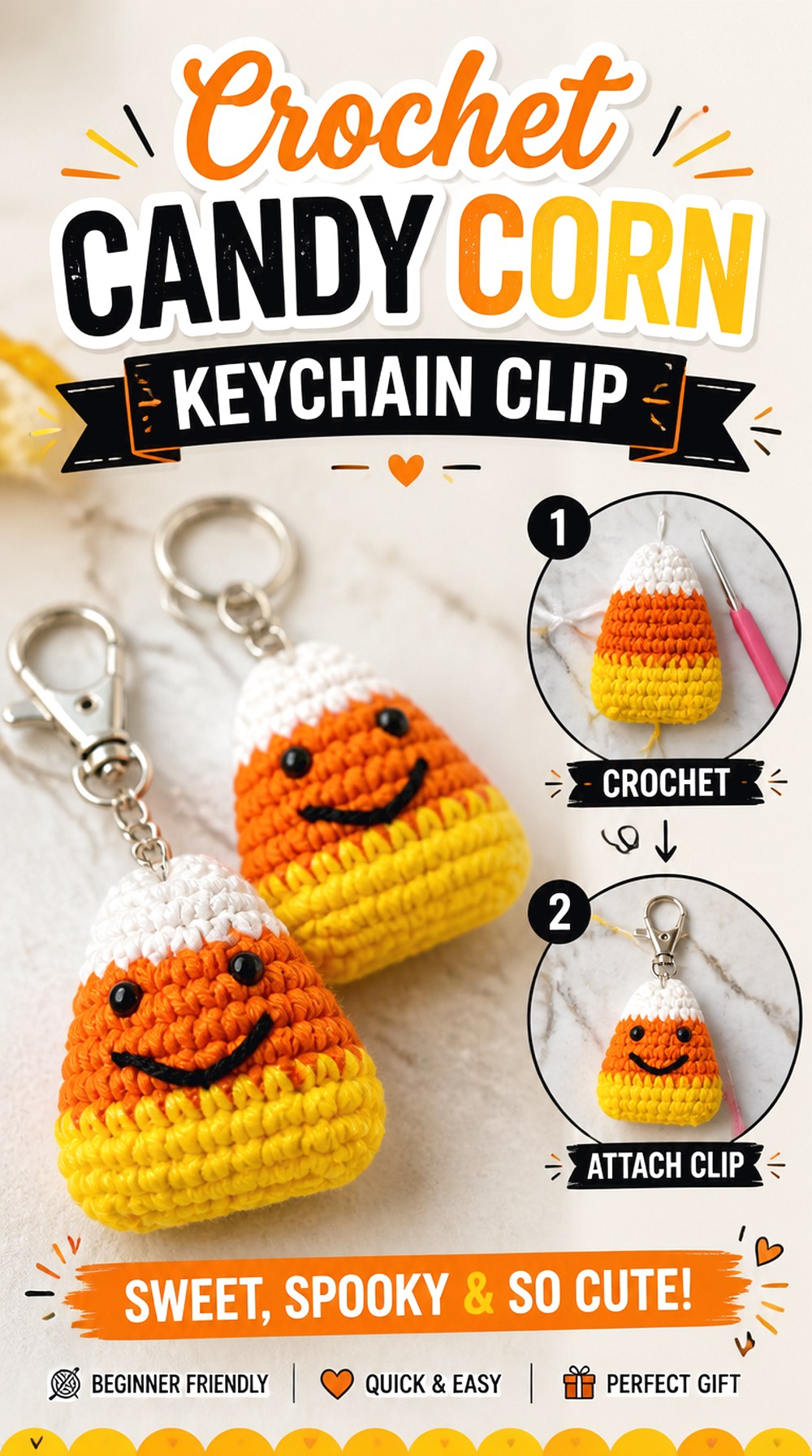
Treasured Hometown shifts the candy corn from shelf decor to a portable accessory. This tutorial is specifically for a candy corn keychain or lanyard clip, so the attachment hardware is part of the finished project rather than an improvised addition afterward.
That changes several practical decisions. A hanging amigurumi experiences movement and rubbing that a shelf plush does not, and its orientation matters because the candy corn should hang attractively from the attachment point. Choose this idea for bags, lanyards, seasonal key rings, or small gift add-ons when a functional attachment is more useful than another free-standing decoration.
The Hanging Point Becomes Part of the Design
Before attaching the clip, check how the finished candy corn naturally hangs. A connector placed too far to one side can make the piece twist instead of presenting its face or color bands forward. Follow the creator’s demonstrated attachment and inspect the surrounding crochet fabric so the hardware does not depend on a visibly stretched area.
Portable Amigurumi Gets More Surface Wear
A keychain may rub against keys, bag fabric, or other belongings far more often than shelf decor. Keep that in mind when considering yarn substitutions and decorative details. Very fuzzy fibers or loosely attached embellishments may behave differently under repeated handling, so choose materials based on the intended use rather than appearance alone.
Hardware Needs to Match the Intended Recipient
A metal clip makes sense for a keychain or lanyard, but it also means the project contains a hard component. If the candy corn is actually intended as a soft toy rather than an accessory, the hardware changes that use. Decide which role matters before finishing instead of automatically adding a clip to every miniature you make.
Original Tutorial and Creator Credit
Creator: Treasured Hometown
6. Crochet Tiny Candy Corn Shelf Mini
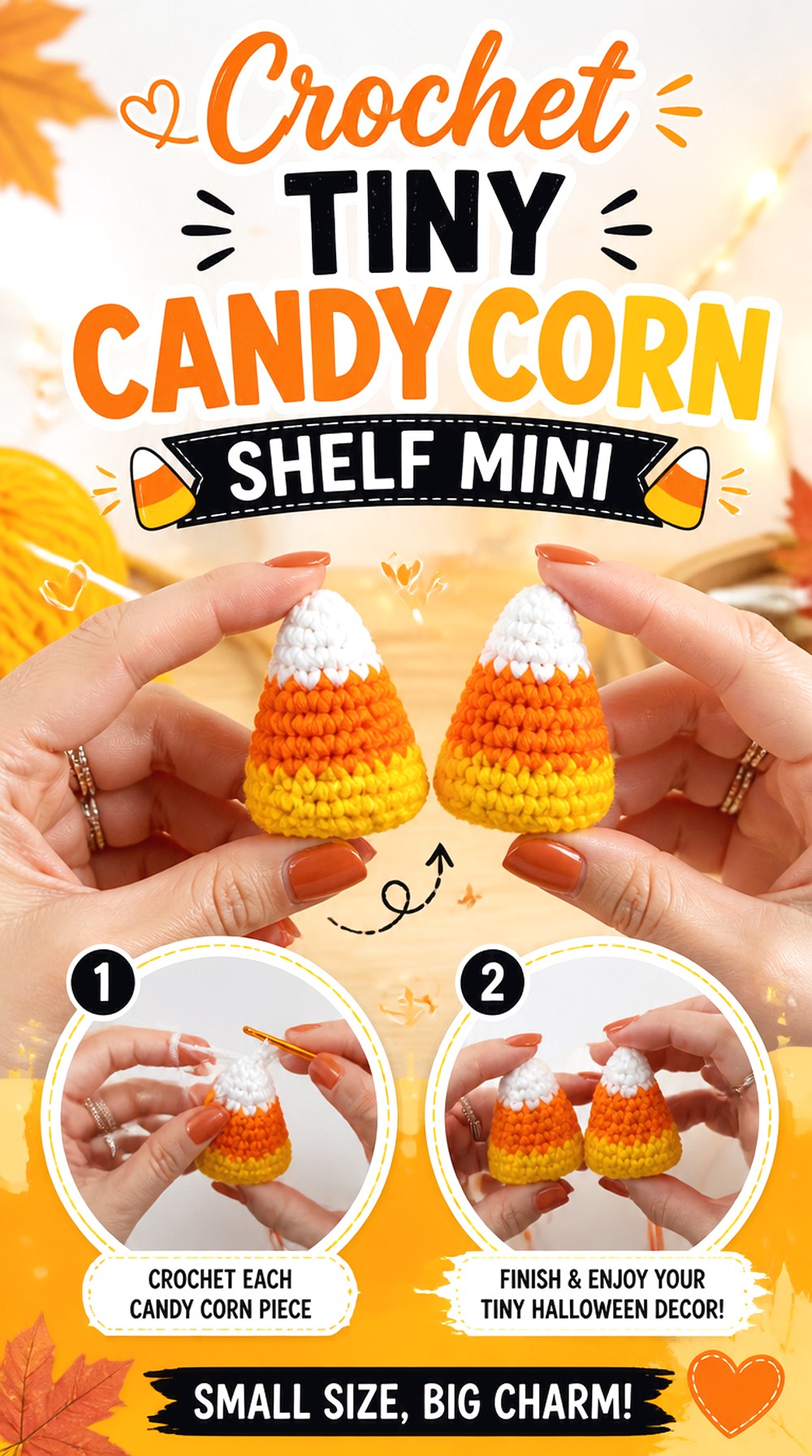
Cloud 9 Knots Crochet includes candy corn in its monthly-mini format, making this one of the more deliberately compact approaches in the collection. The small scale suits readers looking for a tiny seasonal accent rather than a plush that dominates a display.
A mini like this can work individually on a desk or as part of a repeated arrangement with other Halloween pieces. Its practical advantage is visual flexibility: you can use one where space is limited or coordinate several small objects without the group becoming bulky. The main consideration is that smaller crochet gives you less room to disguise uneven shaping or misplaced details.
Small Scale Makes Proportion More Noticeable
When the whole object is tiny, a slight difference in taper, stuffing distribution, or facial placement can noticeably change the silhouette. Check the candy corn from the front and side as you work. If you substitute yarn or hook size, judge the resulting proportions on their own rather than expecting an exact miniature copy of the tutorial result.
Minis Are Useful for Building a Coordinated Display
A small candy corn can sit beside miniature ghosts, pumpkins, or other Halloween amigurumi without taking over the composition. If you plan a group, think about relative scale before making every piece. A candy corn that looks tiny in isolation may look perfectly balanced next to other small seasonal figures.
Original Tutorial and Creator Credit
Creator: Cloud 9 Knots Crochet
7. Crochet Candy Corn Pillow Plush

CreationsMisfit moves the idea toward a pillow/plush format and uses a much bulkier yarn setup than the smallest amigurumi in this list. The result has a broader visual presence and works more naturally as a standalone seasonal accent than a tiny bowl filler.
This is a useful choice when you want the candy corn itself to become a noticeable part of the Halloween decor. Because larger stuffed shapes expose more surface area, even stuffing and clean color sections matter. It is also worth watching the tutorial’s on-screen information carefully, since the creator provides corrections within the video where needed.
Larger Surfaces Show Uneven Stuffing More Clearly
With a pillow-like plush, small lumps are easier to notice than on a tiny amigurumi. Add and distribute filling with the finished silhouette in mind, checking the broad base, sides, and point rather than focusing only on softness. Overfilling can stretch the crochet fabric, while uneven filling can make one color section look wider than the others.
Decide Whether You Need a Pillow or a Shelf Plush
“Pillow” can describe anything from a compact stuffed accent to a piece large enough to dominate a chair. Do not rely on the label alone. Review the creator’s materials and finished view before buying yarn, especially if the intended display space has a fixed depth or width.
Watch for Creator Corrections During the Tutorial
If a tutorial includes an on-screen correction, follow the corrected information rather than trying to infer the intended sequence from an earlier spoken instruction. This is one reason the original video remains important even when you understand the general shape: small project-specific corrections belong with the creator’s instructions, not a secondary roundup.
Original Tutorial and Creator Credit
Creator: CreationsMisfit
8. Crochet Classic Candy Corn Face Plush
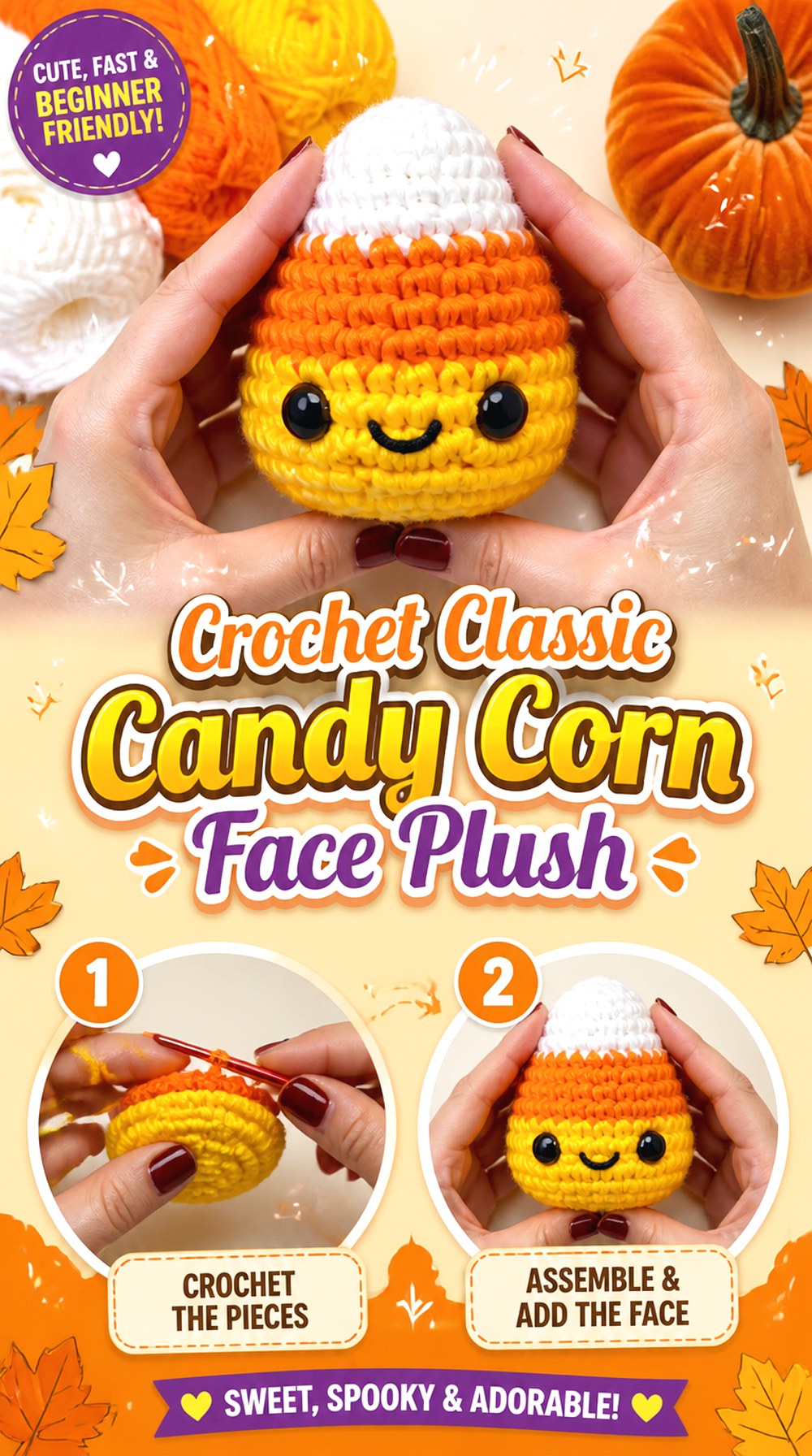
Storybook Crochet keeps the project close to the classic amigurumi interpretation: a stuffed candy corn shape with a simple face and recognizable three-color body. Its straightforward silhouette makes it a useful option when you want the Halloween candy itself to remain the main idea rather than adding costumes, animal features, or hardware.
Compared with the fuzzy and chunky versions, this approach gives the color bands and facial expression more visual responsibility. It can stand alone as a small character or join a larger Halloween amigurumi collection without competing with more detailed figures.
A Simple Outline Benefits From Balanced Color Sections
The white tip, orange center, and yellow base immediately communicate candy corn, so their relationship matters more than extra embellishment. When substituting colors, preserve enough contrast that the three areas remain visibly separate. A tonal palette can still work, but if the colors become too similar, the shape may read simply as a striped triangle.
Check the Face After the Body Has Dimension
Facial features can appear differently once stuffing rounds out the front. Before finalizing their position, consider how the face reads on the three-dimensional form and where the candy corn naturally faces when sitting. Centering by stitch count alone is not always the same as looking visually centered on a stuffed object.
Original Tutorial and Creator Credit
Creator: Storybook Crochet
9. Crochet Primitive Candy Corn Bowl Filler
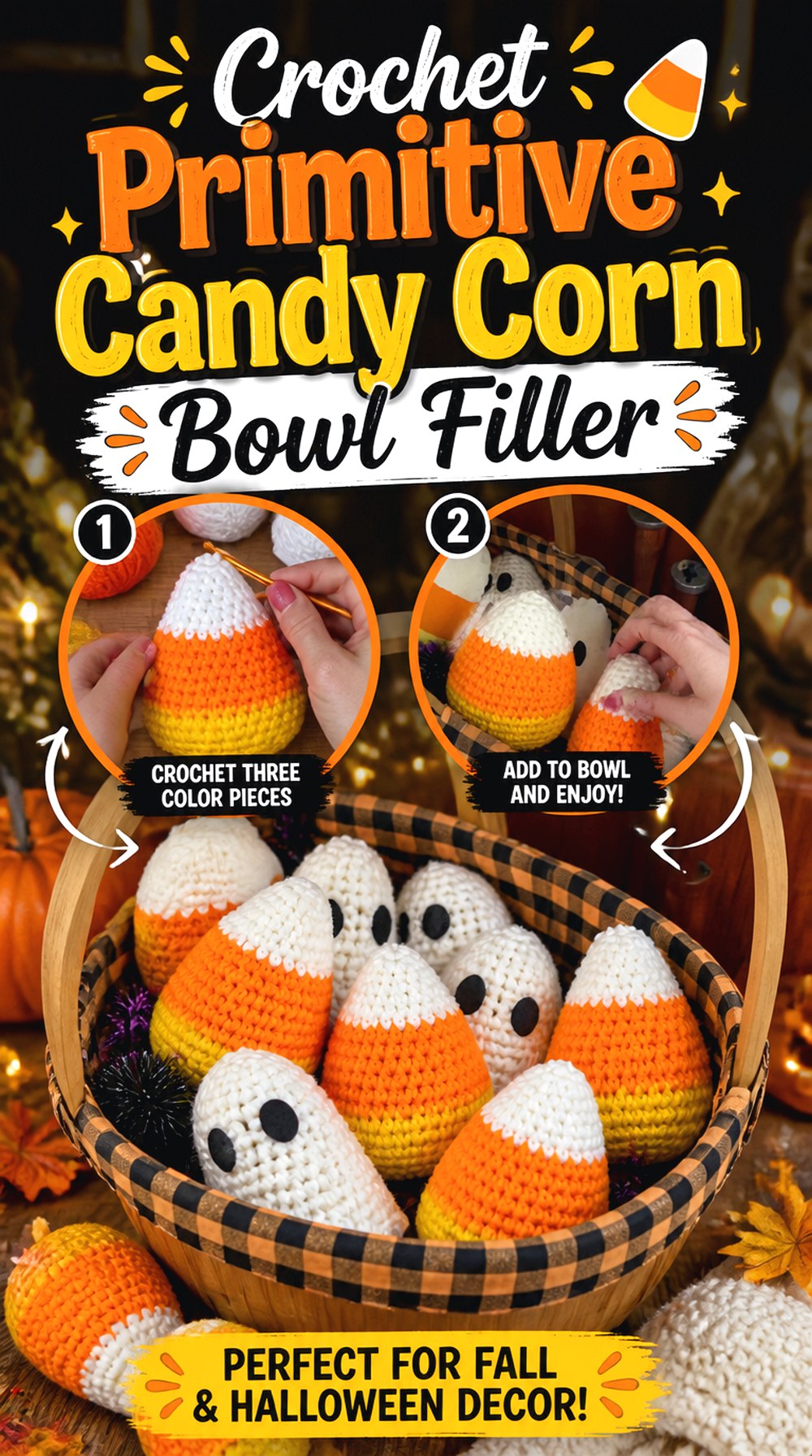
Brianna Lentz explicitly presents this candy corn as a primitive bowl filler, giving it a different decorative purpose from the polished kawaii characters elsewhere in the roundup. The finished piece is meant to read comfortably among rustic or handmade seasonal decor rather than as a keychain or oversized plush.
That makes it a good choice for baskets, wooden bowls, trays, or displays where slightly homespun texture is part of the appeal. The tutorial also uses a construction route that starts differently from many magic-ring-based amigurumi, providing an alternate learning format without needing to turn the article into pattern instructions.
Rustic Displays Do Not Need Every Piece to Match
A primitive-style bowl often looks better when the objects feel coordinated rather than identical. If you make several candy corns, slight differences in yarn tone or scale can add variety as long as the overall white-orange-yellow theme remains clear. Decide first whether you want a tidy matching set or a more collected, handcrafted arrangement.
Consider the Container Before Making Multiples
A bowl filler only works as intended if the finished objects actually fit the chosen bowl, tray, or basket. Make one piece and place it in the display area before committing to a large group. That gives you a real scale reference and helps determine whether the remaining pieces should match or vary.
Original Tutorial and Creator Credit
Creator: Brianna Lentz
10. Crochet Face Free No Sew Candy Corn

The Pudgy Rabbit’s candy corn keeps the finished object notably simple: a stuffed striped candy shape without the facial supplies used in many character versions. The accompanying project information also describes a compact construction without separate pieces that need to be sewn onto the body.
This combination makes the project a strong candidate for repeated decor. Without eyes, mouths, ears, wings, or costume pieces, the white-orange-yellow silhouette does all the work. It can fit a broader fall display more quietly than a cartoon-faced amigurumi and is easier to mix with pumpkins, leaves, or neutral seasonal textiles.
Face-Free Candy Corn Has a Wider Decor Range
Removing a character face changes the mood significantly. Instead of reading primarily as a toy, the piece can function as a graphic autumn object. That can be useful if you want handmade Halloween decor that does not look overly child-oriented. You can also combine face-free and character versions in the same arrangement for contrast.
Low Assembly Helps When Making a Group
A design without separate character pieces reduces the number of finishing decisions repeated across multiple candy corns. That does not mean the project is automatic; color transitions, stuffing, and the final silhouette still deserve attention. Make the first piece your reference so the rest of the group stays visually consistent where consistency matters.
Original Tutorial and Creator Credit
Creator: The Pudgy Rabbit
11. Crochet Embroidered Candy Corn Cutie
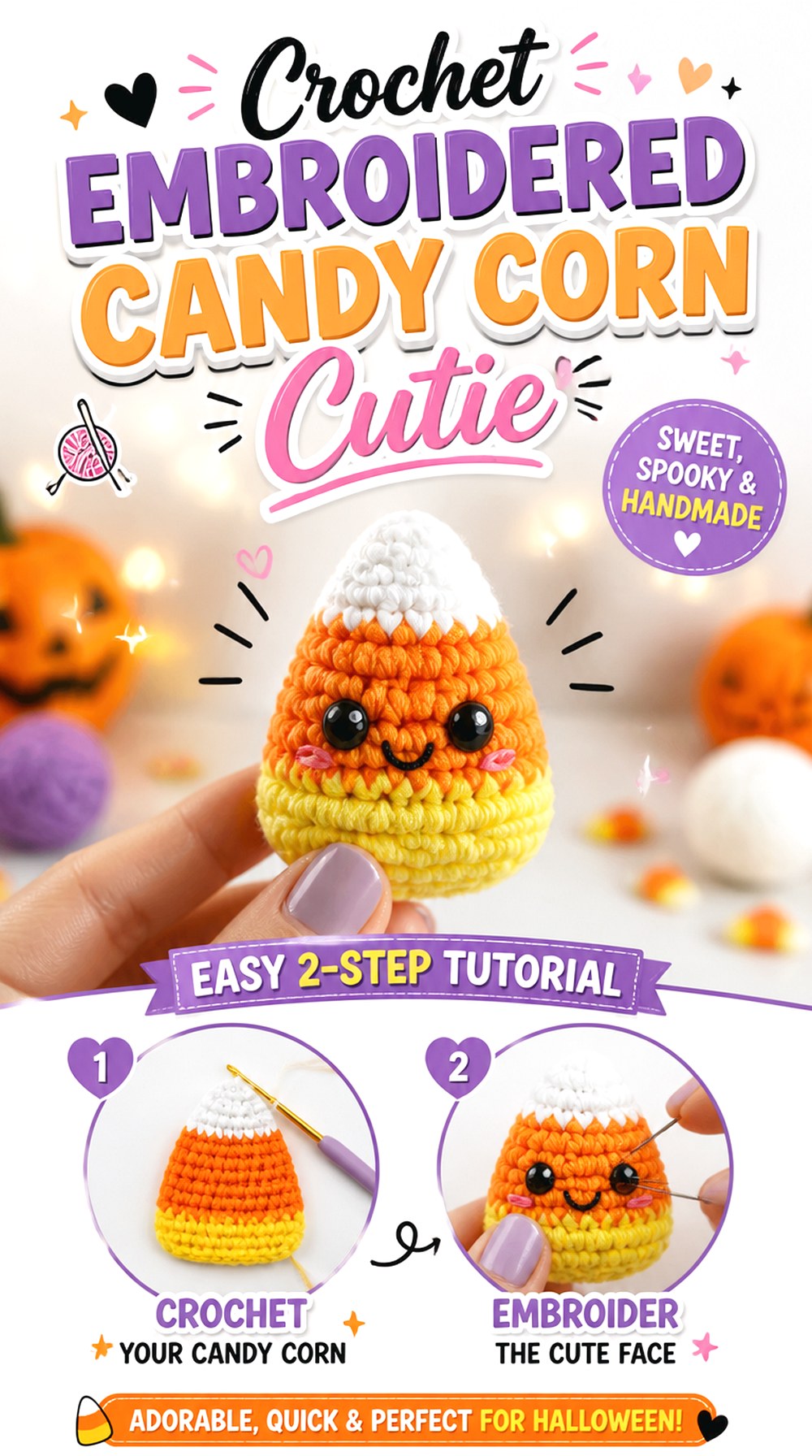
The Loopy Lamb’s mini candy corn belongs to the creator’s Candy Corn Cutie concept, combining a compact stuffed shape with facial detailing. The tutorial focuses on the mini version, which makes it practical for readers who like small character amigurumi rather than larger plush decor.
Its appeal is in the balance between recognizable food shape and expression. The candy corn remains simple enough to repeat, but the face gives each piece personality. This also creates room for subtle customization—especially through embroidered details—without changing the underlying project into a completely different character.
Embroidery Lets You Adjust Expression Without Hardware
A small embroidered detail can change the expression while keeping the front relatively flat. If you customize the mouth or other stitched features, place them only after checking the eye position and overall front view. On miniature amigurumi, even a small shift can make the face look noticeably tilted or crowded.
Repetition Makes Color Consistency More Important
If several mini candy corns will sit together, differences in white, orange, and yellow shades become more apparent than they are on a single piece. Decide whether you want a uniform set or intentional variation before buying additional yarn. Either can work; accidental near-matches often look less deliberate than clearly coordinated or clearly varied colors.
Let the Mini Scale Guide the Amount of Detail
It is easy to overload a tiny amigurumi with cheeks, eyebrows, bows, or extra embroidery. Before adding more, view the piece from the distance at which it will normally be displayed. If the candy corn shape and face already read clearly, extra embellishment may reduce rather than improve the visual clarity.
Original Tutorial and Creator Credit
Creator: The Loopy Lamb
12. Crochet Kawaii Candy Corn Character
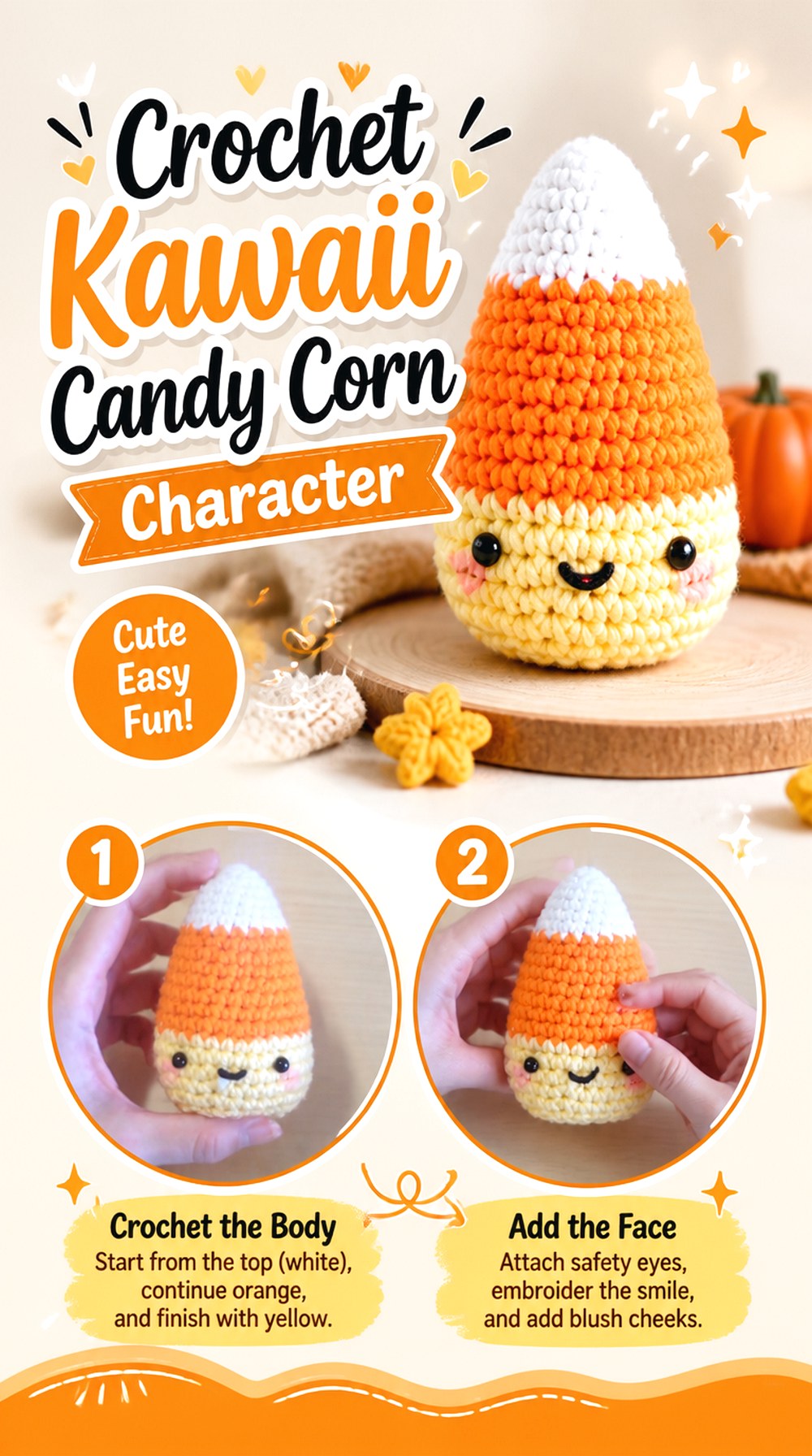
Flying Mio’s tutorial leans into a cute character interpretation rather than treating candy corn only as seasonal decor. The finished form remains unmistakably candy-inspired, but the face becomes central to its personality.
This version suits readers building a collection of expressive Halloween amigurumi—ghosts, pumpkins, bats, and similar figures—because it reads more like a character than a neutral stuffed object. If you prefer fall decor that can remain on display beyond Halloween, a face-free option may be easier to integrate. If personality is the goal, this is the more playful route.
Expression Can Change the Entire Finished Mood
Two candy corns with the same basic silhouette can feel completely different once the eyes and mouth change. Before attaching or embroidering facial details, decide whether you want a cheerful, sleepy, spooky, or neutral expression. Keeping that decision intentional is more effective than simply adding more embellishments.
Keep Custom Details Proportional to the Body
A small character needs facial elements that leave enough open space for the candy-corn color bands to remain visible. Oversized additions can turn the face into the only thing the viewer notices. If adapting the design, test temporary placement first and look at the whole object rather than judging each detail separately.
Original Tutorial and Creator Credit
Creator: Flying Mio
13. Crochet Mummy Candy Corn Amigurumi

Danielle L Designs combines candy corn with a mummy theme, creating one of the clearest departures from the classic striped plush. The tutorial adds mummy styling and facial details to the candy shape, so the finished piece works as a dedicated Halloween character rather than general fall decor.
This is a good choice when you want a small project with more visual storytelling. The extra surface detail also means there are more placement decisions than on a plain candy corn. The wrap effect, face, and underlying stripes all need enough room to remain recognizable instead of competing with one another.
The Mummy Layer Should Not Hide the Candy Identity
The most effective hybrid still lets viewers recognize the white-orange-yellow candy underneath its costume details. When judging the finished look, make sure the wrap treatment adds the mummy theme without covering so much surface that the three-color structure disappears. That visual balance is what separates a candy-corn mummy from a generic mummy plush.
Extra Surface Details Need a Snag Check
Raised or wrapped embellishment can catch more easily than a smooth amigurumi surface, especially in a crowded storage bin or when repeatedly handled. Before considering the project finished, inspect any projecting or layered details and think about how the object will actually be stored and displayed.
Match Small Components to the Final Use
The source uses specific facial and finishing materials, including small eye components. If you are making the mummy for a recipient where small or firm embellishments are not appropriate, do not assume the demonstrated finish fits that use unchanged. Choose safer facial treatment based on the recipient and intended handling.
Original Tutorial and Creator Credit
Creator: Danielle L Designs 🌻
14. Crochet Candy Corn Cat Keychain
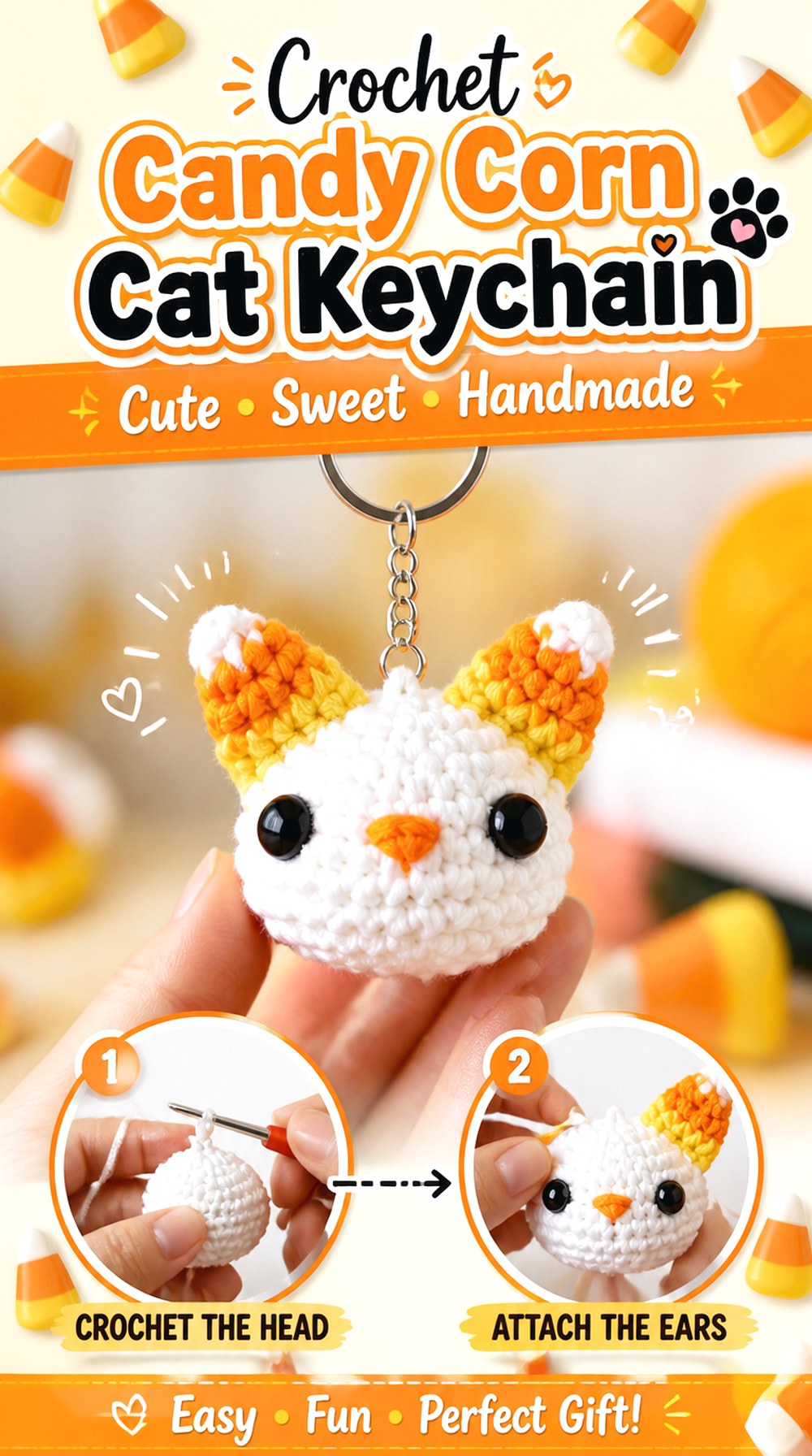
CrochetByEmpanada turns candy corn into a cat-head keychain, changing both the silhouette and the purpose. Instead of a plain tapered candy, the finished project uses feline details while retaining the candy-corn color theme and adds keychain hardware for carrying.
This idea works well if you want a Halloween accessory rather than tabletop decor. The ears give the top edge a very different outline from ordinary candy corn amigurumi, while the clip attachment introduces another practical consideration: the project must look balanced when hanging, not just when lying on a table.
Cat Ears Compete With the Traditional Point
Standard candy corn is defined by one tapered white tip, while a cat silhouette introduces separate ear shapes. That means the color blocking has to do more work to maintain the candy-corn reference. When customizing, preserve enough of the familiar palette and triangular impression that the hybrid idea remains readable.
Check the Face While the Keychain Is Hanging
A small charm may look perfectly centered while resting flat but slightly rotated once the hardware takes its weight. Before completing every finishing detail, hold the piece by the actual attachment point. That gives you a more realistic view of how the cat face and ears will appear when worn on a bag or lanyard.
Hardware Turns a Plush Into an Accessory
Keychain findings add function, but they also change storage and handling. Inspect the joining point periodically if the charm is used daily, and avoid treating a hardware-equipped piece as though it were the same as a soft toy. If you prefer display-only amigurumi, the standard plush options are a better match.
Original Tutorial and Creator Credit
Creator: CrochetByEmpanada
15. Crochet Candy Corn Bee Plush

DBHandmades creates a candy corn bee, using the Halloween palette on a recognizable bee-like amigurumi rather than simply decorating a triangular candy. The tutorial also demonstrates more than one textural treatment and emphasizes seamless-looking color changes, giving this project a particularly useful construction focus.
Choose this idea when you want the theme to feel inventive rather than literal. Wings and bee proportions distinguish the finished piece immediately from the other candy corns, yet the orange, yellow, and white treatment keeps the seasonal reference. It can work as a standalone character beside pumpkins or other Halloween creatures.
Wings Make the Silhouette Wider
A bee needs horizontal space that a narrow candy corn does not. That matters when planning shelf displays, baskets, or grouped amigurumi arrangements. Leave room around the wings rather than pressing the figure between taller objects, where the feature that makes the project distinctive may become hidden.
Color Transitions Are a Major Feature Here
The creator specifically highlights seamless color changes in this tutorial. That makes the video especially relevant if stripe transitions are one of your main concerns. Rather than borrowing a generic color-changing method from somewhere else, follow the project-specific demonstration so the technique stays consistent with the designer’s construction.
Pick the Texture Before Planning a Matching Set
The tutorial shows candy-corn bee ideas with different yarn presentations, including a fluffier treatment. If this bee will sit beside other Halloween amigurumi, decide whether you want consistent yarn texture across the collection or intentional contrast. A fuzzy bee beside smooth candy corn can become a focal point instead of appearing mismatched when the contrast is deliberate.
Original Tutorial and Creator Credit
Creator: DBHandmades
16. Crochet Minimal Candy Corn Amigurumi
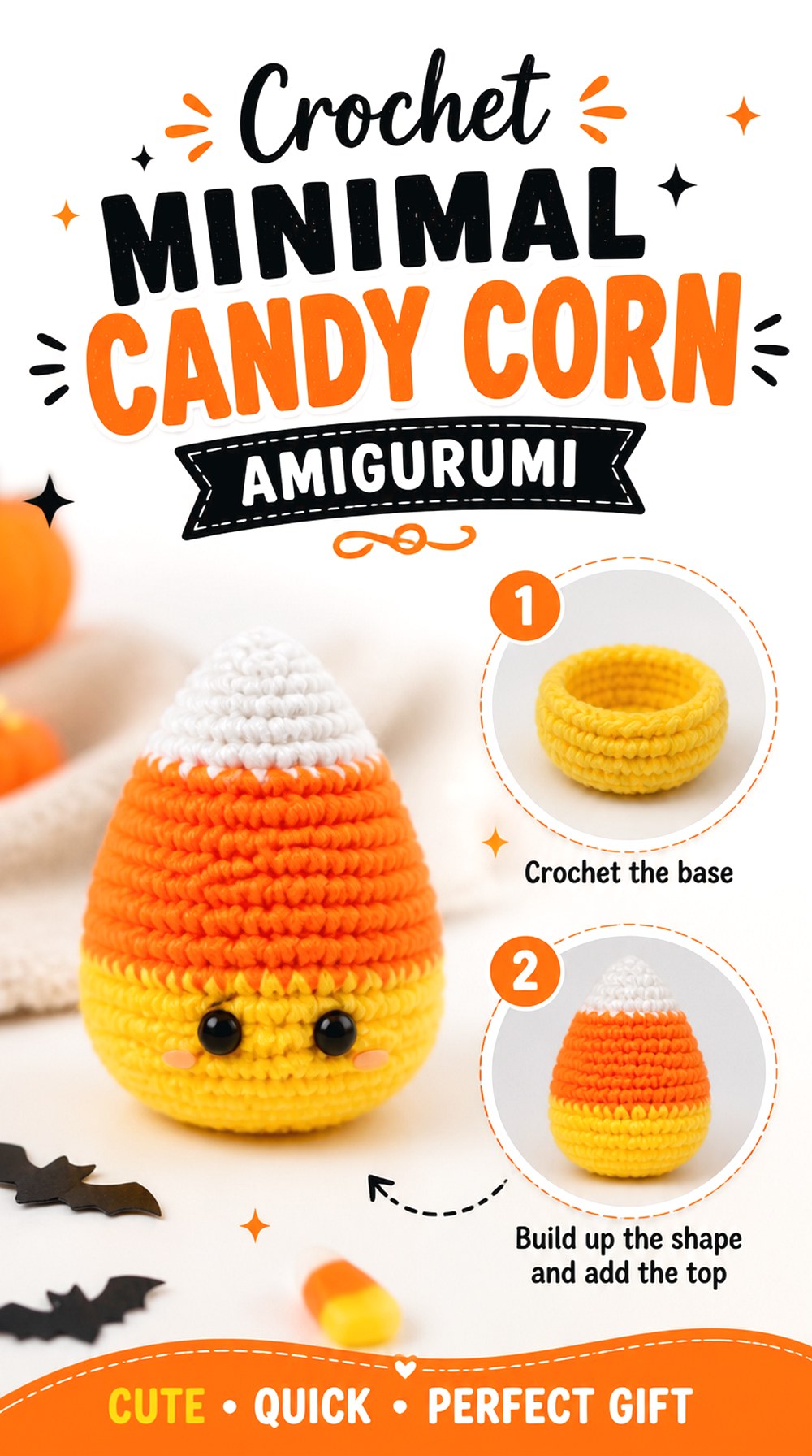
Amigu World’s tutorial keeps the idea uncomplicated: a small stuffed candy corn worked in the classic white, orange, and yellow palette. The source lists lightweight yarn, stuffing, and basic amigurumi tools without making a character face the defining feature.
This is one of the cleaner choices for readers who want the candy shape itself rather than a secondary animal or costume theme. It can serve as a simple seasonal accent, a component in a larger display, or a useful reference point before experimenting with more elaborate variations.
Lightweight Yarn Gives the Shape Finer Visual Detail
A lighter yarn produces a different surface impression from thick chenille or chunky plush fibers. Individual stitches remain more apparent, and the transition between color sections can look crisp. If you substitute a dramatically thicker yarn, expect the scale and proportions to change rather than assuming the same finished object will simply become softer.
A Minimal Design Makes Finishing More Visible
When there are no wings, ears, mummy wraps, or oversized embellishments to distract the eye, the outline becomes the main quality cue. Check the point, base, and color boundaries before finishing. Small irregularities are not necessarily a problem in handmade work, but deciding what you want to correct is easier before the opening is fully closed.
Original Tutorial and Creator Credit
Creator: Amigu World
17. Crochet Chunky Candy Corn Plush
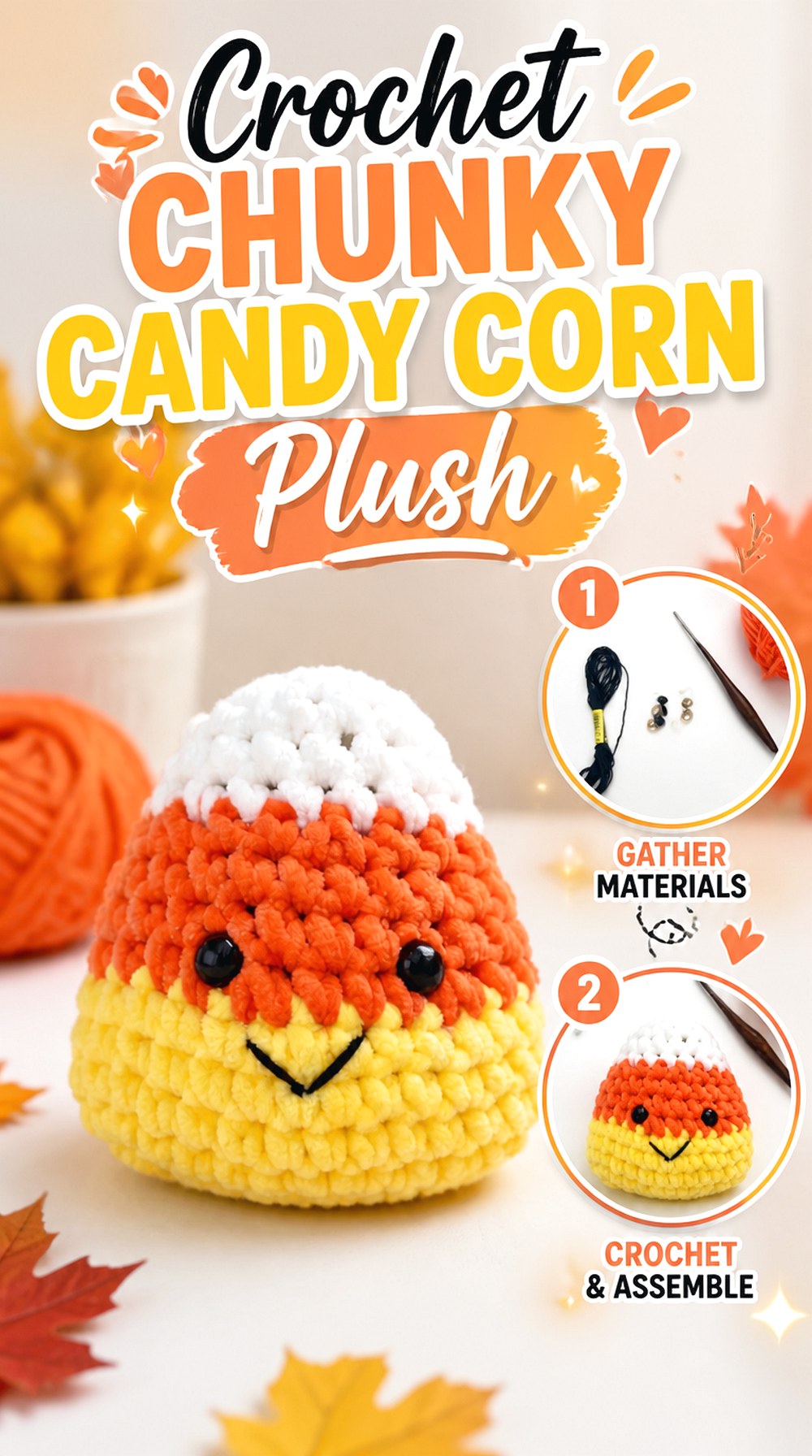
OkieGirlBling’n’Things uses Premier Parfait Chunky yarn for a plush candy corn with a much fuller visual presence than fine-yarn miniatures. The creator’s companion project information also identifies the chunky yarn, stuffing, safety eyes, and embroidery materials used for the demonstrated version.
This approach is well suited to readers who want a soft Halloween figure that does not disappear among larger home-decor pieces. The chunky fabric makes the color blocks bold, while the face keeps the project firmly in cute amigurumi territory rather than neutral fall decor.
Chunky Yarn Magnifies Shape Decisions
A small change in shaping becomes physically larger when the yarn is thick, so look at the silhouette periodically instead of waiting until the end. The point should still feel intentional, and the base should support the stuffed body rather than becoming distorted by uneven filling.
Leave Enough Visual Space Around the Face
Large yarn creates large stitches, which means the same number of stitches can occupy more physical area than on a lightweight project. If you alter facial features, judge their spacing on the actual stuffed piece. Do not transfer measurements or eye spacing from a finer-yarn candy corn and expect the proportions to remain equivalent.
Original Tutorial and Creator Credit
Creator: OkieGirlBling’n’Things
18. Crochet Clean Stripe Candy Corn Character

Club Crochet’s candy corn is particularly useful for readers interested in the transition between the three color bands. The creator’s supporting pattern material describes the project as no-sew and specifically includes guidance around stripes and color changes, while the face keeps the finished object firmly in amigurumi territory.
That gives this idea a different emphasis from a plain no-sew candy corn. Instead of choosing it only to reduce assembly, choose it when the appearance of the stripe transitions matters to you. The live crochet-along format also offers a more conversational learning route than tightly edited short tutorials.
Clean Stripes Matter on Such a Graphic Shape
Candy corn has almost no visual camouflage: three strong bands form the entire identity of the object. If a color transition bothers you, it will probably remain noticeable after stuffing. The creator specifically provides color-change guidance, so use that project-specific explanation instead of mixing several unrelated techniques during the same piece.
No-Sew Does Not Mean No Finishing Decisions
A body made without separate sewn-on components can simplify assembly, but you still need to evaluate stuffing, closure, facial placement, and yarn tails. Use the reduced assembly as an opportunity to spend more attention on those visible details rather than treating “no-sew” as equivalent to “no finishing.”
Original Tutorial and Creator Credit
Creator: Club Crochet
19. Crochet Rounded Candy Corn Stuffed Toy
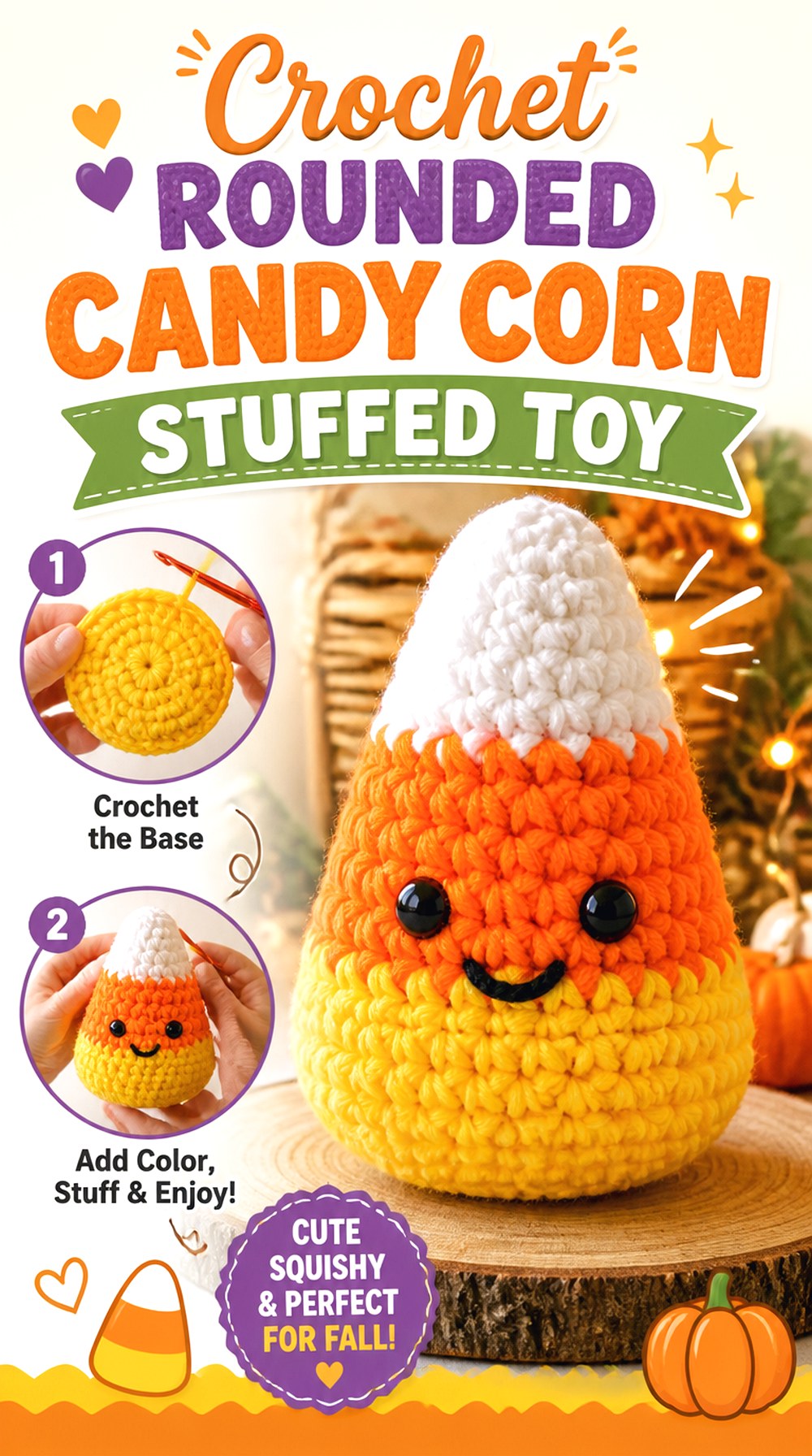
Jayda InStitches offers an older stuffed-candy-corn tutorial with a noticeably different crochet texture from the small single-crochet-style amigurumi that dominate this theme. The creator’s written companion pattern uses worsted-weight yarn and includes options for beads or scrap yarn as facial features.
The finished piece works well as a classic handmade Halloween toy or ornament-style plush. Its value in this collection is the alternate fabric and shaping approach: if you have already made several tightly stitched amigurumi candy corns, this tutorial provides a visibly different route while preserving the familiar tapered three-color result.
A Different Stitch Texture Changes the Surface
The fabric in this project has a different visual rhythm from the compact single-crochet texture commonly associated with amigurumi. That can make it particularly useful when you want the crochet itself to look prominent. If you are building a matching set, compare surface texture as well as color before mixing this piece with tighter, smoother amigurumi.
Choose the Facial Finish Before Final Display
The companion material allows for facial details using beads or scrap yarn. Those options create different finished moods and different practical considerations. Yarn embroidery keeps the surface soft, while beads add a more dimensional feature. Select the treatment according to how and by whom the finished object will be handled.
Which Crochet Candy Corn Style Should You Choose?
For very small spaces or portable projects, start with the Candy Corn Keychain Clip, Tiny Candy Corn Shelf Mini, or Candy Corn Cat Keychain. If tactile plush texture matters more, the Squishy Chenille Candy Corn, Candy Corn Pillow Plush, and Chunky Candy Corn Plush provide noticeably more visual softness.
Choose the Face-Free No-Sew Candy Corn or Minimal Candy Corn Amigurumi when the classic striped shape is enough on its own. For a more obvious Halloween character collection, the Mummy Candy Corn, Candy Corn Cat, and Candy Corn Bee create the strongest departures from the basic triangle. If improving stripe presentation is your main interest, the Club Crochet tutorial is particularly relevant because its supporting material specifically addresses color changes.
Conclusion
The most useful way to choose among these 19 crochet candy corn amigurumi ideas is to decide what the finished piece needs to do. Smooth-yarn minis suit compact displays, chenille and chunky versions provide a softer plush presence, and keychains need hardware-aware finishing. The mummy, cat, and bee are stronger choices when you want the candy-corn theme to become a full Halloween character rather than a simple striped decoration.
For a coordinated collection, settle on scale, yarn texture, and facial style before making several pieces. Once you choose a design, use its original YouTube tutorial for the creator’s exact construction, shaping, color changes, and finishing details.
Frequently Asked Questions
Do all crochet candy corn amigurumi tutorials make the same size?
No. Finished scale can change with the pattern’s construction, yarn thickness, hook choice, tension, and stuffing. A tutorial using fine or worsted yarn should not be assumed to produce the same dimensions as one using chenille or chunky plush yarn. If size matters for a shelf, bowl, or gift, check the creator’s stated measurements when available or make one piece before planning a full set.
Is smooth yarn or plush yarn better for candy corn amigurumi?
It depends on the result you want. Smooth yarn usually makes stitch definition and color boundaries easier to see, which suits crisp, graphic candy-corn shapes. Plush or chenille yarn gives a softer, fuller surface but can make stitch openings harder to distinguish while crocheting. Choose based on both the finished texture and how comfortable you are tracking stitches in that yarn.
Can I turn any small candy corn amigurumi into a keychain?
A small size alone does not make a project a well-planned keychain. You also need an appropriate attachment point, compatible hardware, and a finished piece that hangs in the intended direction. If portability is the goal, using a tutorial specifically designed as a keychain—such as the Treasured Hometown or CrochetByEmpanada options—removes much of that guesswork.
How can I keep the three candy corn color bands looking clean?
Consistent tension and careful color transitions help the white, orange, and yellow sections remain visually distinct. Because the bands are such a large part of the design, check the transition as soon as it is made rather than waiting until the amigurumi is finished. If a creator demonstrates a particular color-change technique, use that tutorial’s method instead of combining instructions from unrelated patterns.
What should I consider before giving candy corn amigurumi to a young child?
Look closely at every small or hard component, including safety eyes, beads, keychain hardware, and added embellishments. One tutorial in this collection specifically warns that its safety eyes are not recommended for children under three. For recipients where detachable parts are a concern, an embroidered or face-free design may be a more appropriate direction. Always assess the complete finished object, not just the yarn body.
Can I combine candy corn amigurumi from several tutorials in one display?
Yes, but compare scale and texture first. A tiny smooth-yarn piece may look dramatically smaller beside a chunky chenille plush, while two projects described as “mini” can still differ. You can either standardize yarn style for a more coordinated collection or deliberately mix smooth, fuzzy, character, and face-free pieces. Intentional contrast usually looks more cohesive than accidentally mismatched proportions.


