A cool blue and silver crochet icicle window garland works differently from a garland designed mainly for a mantel or Christmas tree. Against a window, each hanging icicle needs a recognizable silhouette, and the horizontal strand has to connect the individual drops without becoming the most visually dominant part of the display.
Cool blue can establish the main icy color, while silver can highlight twists, tips, joining points, or the upper window line. Adding ice blue, white, navy, charcoal, or pale gray creates more options for separating individual icicles when cool blue and silver are too similar in value.
The tutorials used below support relevant icicle, hanging ornament, snowflake, or garland construction concepts. The cool blue and silver palettes are independent color adaptations rather than claims about colors used by the tutorial creators.
Quick List
- Cool Blue And Silver Spiral Icicle Crochet Window Garland
- Cool Blue Silver And Ice Blue Crochet Icicle Window Garland
- Cool Blue And Pale Silver Graduated Crochet Icicle Window Garland
- Cool Blue Silver And Snow White Crochet Icicle Window Garland
- Cool Blue And Sparkling Silver Crochet Icicle Window Garland
- Cool Blue Silver And Navy Crochet Icicle Window Garland
- Cool Blue Silver And Frost Gray Crochet Icicle Window Garland
- Cool Blue And Silver Snowflake Accent Crochet Icicle Window Garland
- Cool Blue Silver And Midnight Blue Crochet Icicle Window Garland
- Cool Blue Silver And Winter White Crochet Icicle Window Garland
Give Cool Blue and Silver Separate Jobs Across the Window
Instead of alternating blue and silver randomly, decide which color owns the main icicles and which handles the supporting structure. One useful direction is a cool blue majority with silver appearing on selected drops, connecting loops, and the upper garland line.
Another option is to make the icicles predominantly cool blue while using silver only at their tips. That produces repeated pale endpoints across the window and keeps silver from competing with the larger blue forms.
Check Cool Blue and Silver Against Daylight
Window decorations can be strongly backlit during the day. A subtle difference between medium cool blue and medium silver-gray may become less obvious when bright outdoor light sits behind the crochet.
Temporarily hang a blue and silver sample in the intended window before making the entire set. Check it during daylight as well as after dark. If the two colors merge, increase their light/dark separation rather than simply adding more motifs.
Plan Cool Blue and Silver Icicle Spacing Before Joining
Icicles need open space around them. If several crocheted spirals overlap, their silhouettes can turn into one visually dense section, especially when all the drops use similar cool colors.
Arrange the finished motifs along a temporary cord before making the final garland connection. Look at the whole window rather than one icicle at a time. The aim is to create a repeated downward rhythm while preserving enough space for individual blue and silver shapes to remain visible.
1. Cool Blue And Silver Spiral Icicle Crochet Window Garland

This version keeps the palette deliberately simple. Cool blue forms most of the hanging spirals, while silver marks selected icicles and connection points. The repeated narrow drops create the main visual rhythm, so there is no need to divide blue and silver equally.
Let Cool Blue Dominate the Spiral Icicles
Use cool blue on most of the hanging forms so the window reads as a blue winter display rather than an evenly striped two-color garland. Silver becomes more noticeable when it interrupts that repeated blue rhythm occasionally.
Place Silver Between Groups of Cool Blue Icicles
Instead of alternating every drop, try separating several cool blue icicles with a silver one. Grouping creates clearer color repetition and prevents the window line from becoming visually busy.
Keep the Cool Blue and Silver Top Line Quiet
The connecting strand should support the hanging icicles rather than compete with them. A single cool blue or subdued silver-gray line lets the vertical drops remain the main feature.
Creator Credit: Hectanooga1
2. Cool Blue Silver And Ice Blue Crochet Icicle Window Garland

Ice blue adds a lighter transition between cool blue and silver. Use cool blue for the strongest drops, ice blue for secondary icicles, and silver for limited highlights or joins. This creates a tonal progression without abandoning the icy color family.
Keep Cool Blue Darker Than the Ice Blue Icicles
The two blues need enough value separation to remain recognizable against the window. If they are almost identical, the extra shade adds complexity without adding useful visual layering.
Use Silver to Separate Cool Blue and Ice Blue Groups
A silver icicle or connecting detail can interrupt longer runs of blue. This works particularly well when the two blues are deliberately close in tone.
Repeat Cool Blue More Often Than Silver
Let the main blue appear regularly from one end of the window to the other. Consistent repetition makes the garland feel connected even when individual drops vary in shade.
Creator Credit: Pookie Doodle Crafts
3. Cool Blue And Pale Silver Graduated Crochet Icicle Window Garland

A graduated palette moves between stronger cool blue and much lighter silver rather than relying on several unrelated colors. The visual interest comes from how the shades are distributed across the window and how the icicles hang at different positions.
Keep Pale Silver Noticeably Lighter Than Cool Blue
A clear value difference is important here because the palette contains only two main colors. Pale silver should remain distinguishable when both yarns are viewed against daylight.
Cluster Cool Blue Icicles Around Pale Silver Drops
A pale silver icicle becomes easier to notice when surrounded by several blue ones. This gives the lighter drop a deliberate accent role rather than scattering both colors evenly.
Use Cool Blue at Both Ends of the Silver Garland
Repeating the dominant blue toward both ends can visually frame the paler central area. Check the arrangement across the actual window before joining so the color progression suits the display width.
Creator Credit: Crafty Crochet Castle
4. Cool Blue Silver And Snow White Crochet Icicle Window Garland

Snow white introduces the brightest value in the collection. Let cool blue remain dominant, silver supply the secondary icy color, and white appear in smaller drops or snow accents. White is particularly useful when silver alone does not stand apart clearly from blue.
Use Snow White Between Cool Blue and Silver Icicles
A white drop can create a clean visual break between medium-value blue and silver. This is more useful than adding white randomly wherever there is an empty space.
Keep Cool Blue as the Largest Color Share
Too many white icicles can shift the display from cool blue and silver to a mostly white winter garland. Keep blue repeating prominently across the full window.
Reserve Silver for Details Around Cool Blue and Snow White
Silver can move into the connecting line, occasional drops, or selected tips. Giving it a narrower role keeps all three colors from competing equally.
Creator Credit: Over Crochet
5. Cool Blue And Sparkling Silver Crochet Icicle Window Garland

This idea makes silver a stronger accent but limits where it appears. Cool blue supplies most of the crochet surface while sparkling silver is concentrated on selected icicles or lower details. The narrow hanging format means a small amount of reflective contrast can already be visually noticeable.
Let Cool Blue Provide the Calm Background for Sparkling Silver
Repeat plain cool blue icicles between stronger silver accents. Giving the reflective-looking shade breathing room prevents every hanging element from competing for attention.
Concentrate Sparkling Silver at Cool Blue Icicle Tips
If you want a more integrated two-color motif, keep most of each drop blue and move silver toward the lower end. Repeated silver tips can create a recognizable line of pale accents without turning every icicle into an equal two-color split.
Avoid Overloading Cool Blue Icicles With Silver Details
An icicle already has a narrow silhouette and visible downward movement. Too many contrasting additions can interrupt that shape. Choose one consistent silver placement strategy and repeat it.
Creator Credit: Posh Pooch Designs
6. Cool Blue Silver And Navy Crochet Icicle Window Garland

Navy gives the pale winter palette a dark anchor. It works particularly well along the upper garland line or in occasional icicles, where it can provide contrast without taking over the entire window.
Keep Navy Secondary to Cool Blue Icicles
Use navy less frequently than cool blue. A dark drop placed between lighter icicles creates definition, but too many navy elements can make the garland read as dark blue rather than icy blue and silver.
Put Silver Beside Navy to Protect Cool Blue Contrast
Silver can create a light break between navy and cool blue. This makes the tonal hierarchy easier to see when the garland is backlit.
Repeat Cool Blue Across the Navy Garland Line
If navy forms the top connecting strand, repeat cool blue consistently in the hanging elements below. That keeps the dark horizontal line from becoming visually disconnected from the icicles.
Creator Credit: Anita Louise Crochet
7. Cool Blue Silver And Frost Gray Crochet Icicle Window Garland

Frost gray creates a quieter alternative to white. It can act as the transition between cool blue and silver, especially when you want the window garland to remain muted rather than strongly contrasted.
Keep Frost Gray Lighter Than the Cool Blue Icicles
Gray needs a clear role in the tonal hierarchy. A lighter frost gray can sit between medium blue and pale silver without looking like an accidental second version of either color.
Use Silver at the Ends of Cool Blue and Frost Gray Drops
Repeating silver at lower endpoints can visually connect icicles made in two different base colors. The eye still sees variation above, but the silver repetition gives the row a shared finish.
Give Cool Blue the Strongest Repetition Across Frost Gray
Place cool blue at regular intervals from one side of the window to the other. Frost gray can fill secondary positions without weakening the article’s main color direction.
Creator Credit: Moara Crochet
8. Cool Blue And Silver Snowflake Accent Crochet Icicle Window Garland

This version interrupts the vertical icicles with a few flatter snowflake motifs. Cool blue remains the dominant icicle color, silver can appear on secondary drops or the joining line, and the snowflakes provide wider shapes among the narrow hanging elements.
Keep Cool Blue Icicles More Numerous Than Silver Snowflakes
Snowflakes occupy more visual width than slender drops, so they do not need to appear as frequently. Leaving several cool blue icicles between them preserves the characteristic icicle rhythm.
Place Silver Snowflakes Between Cool Blue Icicle Groups
Use the snowflakes as separators rather than attaching them randomly. A silver snowflake between clusters of blue drops creates an obvious repeat that can be followed across the window.
Leave Space Around Cool Blue Icicles and Silver Snowflakes
Avoid overlapping the two motif types. Window backlighting can make overlapping crochet appear denser, which weakens both the snowflake outline and the icicle silhouette.
Creator Credit: Kristines Crochets
9. Cool Blue Silver And Midnight Blue Crochet Icicle Window Garland
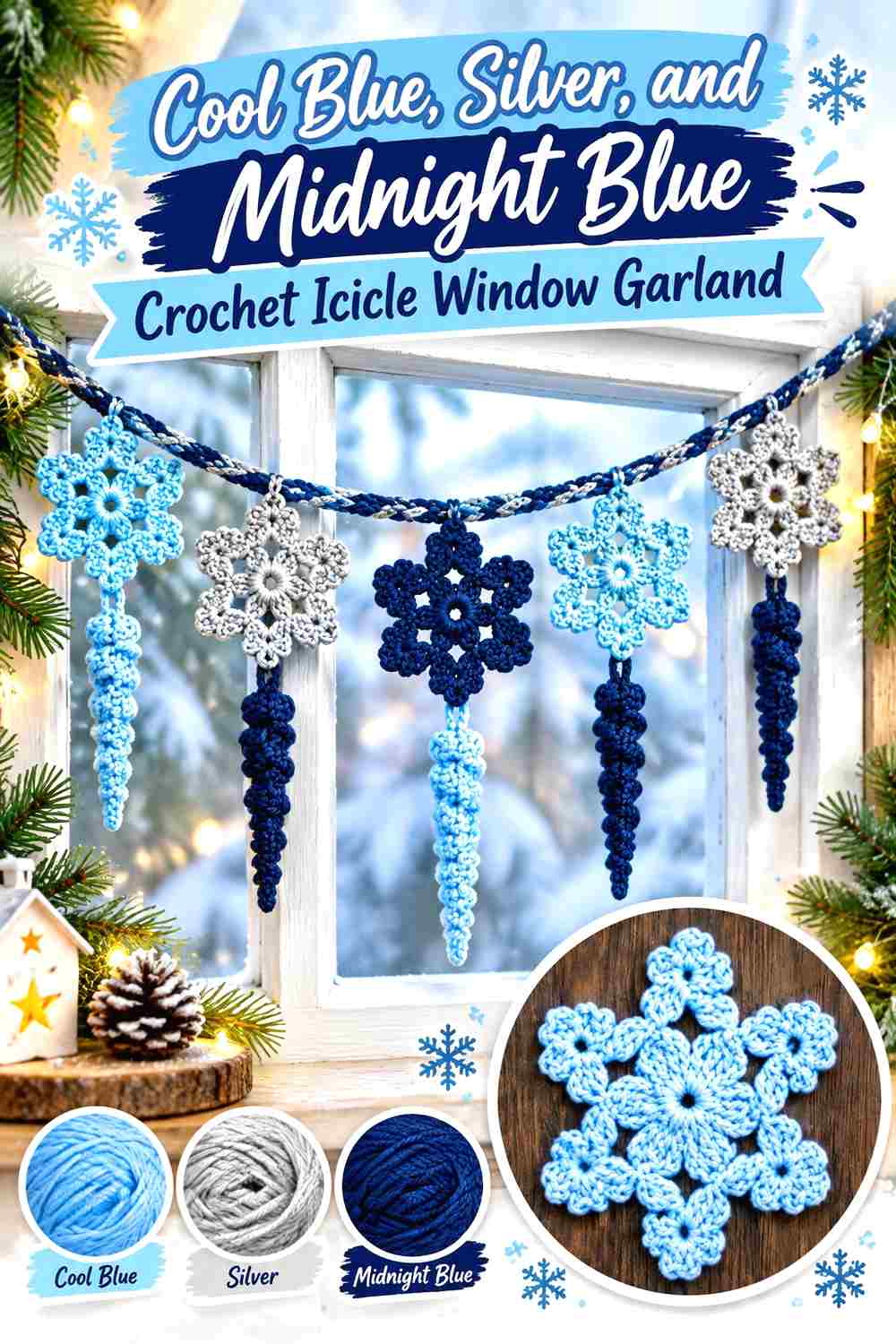
Midnight blue gives the window display its darkest value. Instead of distributing it evenly, use it to frame or punctuate the lighter cool blue and silver drops. This produces stronger contrast without losing the icy palette.
Place Midnight Blue Beside Silver for Strong Icicle Contrast
Silver becomes especially noticeable next to midnight blue. Use that contrast at selected points rather than alternating the two colors continuously, which could overpower the main cool blue.
Keep Cool Blue Between Midnight Blue Accent Groups
Cool blue can act as the bridge between the darkest and lightest colors. Several blue icicles between midnight and silver accents create a smoother visual transition across the window.
Use Cool Blue to Keep the Midnight Garland From Feeling Heavy
If midnight blue appears on the top strand, repeat enough cool blue below it to lighten the overall composition. The dark shade should frame the icy colors rather than dominate them.
Creator Credit: Naztazia
10. Cool Blue Silver And Winter White Crochet Icicle Window Garland

The final idea uses winter white more substantially than the earlier white-accent version. White can form part of the upper snowy line and selected hanging motifs, cool blue provides the main icicles, and silver connects the two.
Let Winter White Open Space Around Cool Blue Icicles
Use white where you want the garland to feel visually lighter. It can separate clusters of blue drops or form wider snow motifs without forcing silver to carry every pale element.
Use Silver to Connect Winter White and Cool Blue
Repeat silver at joining points, selected icicle tips, or between motif groups. This gives the third color a clear connecting function instead of simply creating another alternating stripe.
Keep Cool Blue Visible Across the Entire Winter White Garland
Do not concentrate all the blue at one end. Repeating it from side to side gives the complete window display a consistent color identity even when white occupies a larger share of the design.
Creator Credit: Crochet Craftsman
Comparing the Cool Blue and Silver Icicle Window Garland Palettes
For the cleanest two-color result, the cool blue and silver spiral or pale-silver graduated versions keep attention on the icicle silhouettes. These palettes depend on sufficient light/dark separation because there is no third color to rescue details that merge.
Ice blue and frost gray create softer tonal variation. They work when you want several related cool shades but still need cool blue to remain identifiable as the dominant color.
Snow white and winter white provide stronger light areas. They are useful when the window is dark behind the garland at night or when medium silver does not provide enough separation from the chosen blue.
Navy and midnight blue create the strongest dark anchors. Use them selectively along the top line or between lighter drops so they define the composition without changing it into a predominantly dark-blue garland.
The snowflake-accent version changes the silhouette as well as the palette. It is useful when an uninterrupted row of narrow icicles feels too repetitive and you want occasional wider winter motifs.
Conclusion
Cool blue and silver give an icicle window garland a focused winter palette, but placement matters more than simply alternating the two colors. For a subtle result, keep most drops cool blue and use pale silver as a repeated accent. For more tonal variation, introduce ice blue or frost gray. White creates clearer light areas, while navy or midnight blue adds darker definition.
Before making the final joining strand, arrange the individual motifs across the actual window. Check whether the icicles remain distinct in daylight, whether neighboring colors have enough value contrast, and whether wider motifs have sufficient space around them.
The original tutorials provide the exact construction guidance for their respective icicle, snowflake, ornament, or garland concepts. Use those construction sources separately from the editorial cool blue and silver placement ideas above.
Frequently Asked Questions
Should cool blue or silver dominate a crochet icicle window garland?
Cool blue is a useful dominant choice when you want the garland to read clearly as a blue winter decoration. Silver can then handle selected icicles, tips, joins, or the upper strand. Reversing the balance can also work, but decide on the hierarchy before arranging the motifs.
How can I keep cool blue and silver icicles visible against a bright window?
Check their light/dark values rather than relying only on hue. If blue and silver become difficult to distinguish when backlit, deepen the blue, lighten the silver, or introduce a clearly lighter or darker supporting color at important transitions.
Should cool blue and silver icicles alternate across the entire window?
They can, but strict one-for-one alternation is not necessary. Groups of cool blue separated by occasional silver drops can create a calmer rhythm and give silver more impact.
What color works with cool blue and silver if I need more contrast?
White creates a lighter point, while navy or midnight blue creates a darker one. Ice blue and frost gray produce gentler tonal variation. Choose the additional color according to whether the existing palette needs stronger contrast or simply another cool transition.
Can I mix cool blue icicles and silver snowflakes in one window garland?
Yes. Keep enough open space around the wider snowflakes so they do not overlap the narrow icicles. Repeating a snowflake at planned intervals can also help divide longer groups of hanging drops.
How should I arrange different cool blue icicle lengths across a window?
Judge the overall silhouette before joining the motifs permanently. Alternating or gradually changing drop positions can create movement, but avoid clustering all visually prominent elements in one area. The exact finished dimensions should come from your chosen tutorial and materials rather than an assumed universal measurement.
What should I use for the connecting strand on a cool blue and silver garland?
Either main color can work. Cool blue keeps the top line connected to the dominant icicles, while silver creates a lighter horizontal edge. If you add navy or another dark shade, a darker top line can frame the display, but check that it does not visually overpower the hanging motifs.