Skinny scarves can look deceptively similar in photos, but their construction changes how they sit, tie, layer, and feel around the neck. A long straight strip behaves differently from a tapered mini scarf, while mesh, lace, Tunisian crochet, keyholes, and textured stitches all change the finished fabric in practical ways.
These 20 crochet skinny scarf ideas cover long fashion ties, compact neckerchiefs, striped pieces, openwork scarves, tapered shapes, and pull-through designs. Instead of choosing only by color, compare how much fabric gathers at the neck, whether the ends need to knot securely, how much structure the stitch pattern creates, and whether you want the scarf to function mainly as a decorative accent or a closer-fitting layer.
Quick List
- Crochet Folded Long-Line Skinny Scarf
- Crochet Scarf-and-Belt Skinny Tie
- Crochet Filet Mesh Skinny Scarf
- Crochet Pointed Ribbed Neck Scarf
- Crochet Tunisian Tapered Skinny Scarf
- Crochet Bordered Mini Tie Scarf
- Crochet Soft Layering Skinny Scarf
- Crochet Lace-Panel Skinny Scarf
- Crochet Striped Tapered Mini Scarf
- Crochet Moss-Stitch Skinny Scarf
- Crochet Shallow Triangle Skinny Scarf
- Crochet Silver-Shimmer Accent Scarf
- Crochet Textured Mini Neckerchief
- Crochet Pull-Through Keyhole Scarf
- Crochet Tunisian Rib Keyhole Scarf
- Crochet Y2K Color-Stripe Skinny Scarf
- Crochet Open-Grid Long Skinny Scarf
- Crochet Measurement-Planned Long Skinny Scarf
- Crochet Compact Tapered Neck Scarf
- Crochet Color-Tail Long Narrow Scarf
Choose the Skinny Scarf Shape Before the Stitch Pattern
“Skinny scarf” can describe several quite different accessories. A long rectangular scarf gives you more wrapping and knotting options, while a tapered mini scarf concentrates its width around the center of the neck and reduces bulk at the ends. A shallow triangle reads more like a small neckerchief, and a keyhole design relies on its opening rather than a conventional knot.
Before committing to a tutorial, think about how you expect to wear the finished piece. If you want a loose fashion tie, length and drape may matter more than warmth. If you want something under a coat collar, a short tapered shape may be easier to manage. For decorative lace and mesh versions, also consider whether jewelry, buttons, bag straps, or rough outerwear could catch on larger openings.
Yarn Bulk Has an Outsized Effect on a Narrow Scarf
A small change in yarn thickness can make a bigger visual difference on a narrow accessory than on a wide wrap. A bulky or highly textured yarn may turn a slim scarf into a noticeably substantial neck layer, while a finer, smoother yarn can keep the same general shape visually light.
Drape matters too. If the scarf needs to make a small knot, compare the fabric at its narrowest end rather than judging only a swatch laid flat. Dense crochet can become bulky when two ends overlap. Openwork reduces visual weight but may stretch differently. When substituting yarn, check the developing scarf against its intended styling rather than assuming the tutorial’s finished proportions will remain unchanged.
1. Crochet Folded Long Line Skinny Scarf

This long-line scarf is a useful choice when you want the unmistakable look of a very narrow fashion scarf rather than a shortened neckerchief. Krampolinka’s tutorial produces a long, slim piece and includes a final joining or folding treatment that changes its finished width. That construction detail gives the scarf a cleaner, more substantial-looking strip without requiring it to become broadly rectangular.
The elongated proportions suit loose knots, simple draping, and repeated wrapping. It also makes this design noticeably different from the compact tapered scarves later in the list.
The Final Fold Changes More Than the Width
A folded or joined construction puts two fabric layers into the finished strip, so judge the scarf after that finishing stage rather than from the initial flat crochet alone. The result can feel more substantial and may hold a long vertical line more clearly. If you substitute a thicker yarn, check whether the doubled fabric still bends comfortably where you expect to knot it.
Long Edges Make Tension Differences Easier to See
On a narrow scarf, the outside edges remain highly visible because there is little width to distract from them. If your row beginnings gradually tighten or loosen, the finished piece can curve. Periodically lay a long scarf flat without stretching it. That simple checkpoint can reveal edge drift early enough to correct your tension before finishing.
Original Tutorial and Creator Credit
2. Crochet Scarf and Belt Skinny Tie

A scarf that can also be worn around the waist pushes the skinny-scarf idea toward true accessory styling. Crochet with Linni presents the project specifically as both a skinny scarf and a belt, making it a good option when you want a narrow strip with more than one wardrobe role.
Because the piece may be tied at either the neck or waist, its proportions need to work differently from a short mini scarf. The ends should remain visually tidy when hanging free, and the overall fabric needs enough flexibility to curve around clothing without turning into a stiff band.
Dual-Purpose Styling Makes Drape More Important
A scarf can tolerate slightly more body because it hangs from the neck, but a belt needs to conform to the waist. When changing yarn, bend a sample around your hand and see how readily it curves. If the fabric wants to remain flat and rigid, it may still make a good scarf but feel less natural when tied over a dress or cardigan.
Keep the Ends Presentable on Both Outfits
The ends become a focal point when the same accessory is worn as a belt. Uneven edges or bulky finishing that disappears inside a scarf knot can become much more visible at the waist. Give extra attention to weaving in tails cleanly and compare both ends before finishing so they look intentionally paired.
Original Tutorial and Creator Credit
Creator: Crochet with Linni
3. Crochet Filet Mesh Skinny Scarf

This version replaces a solid strip of crochet with an airy mesh surface. Ravella Design’s tutorial presents the narrow mesh piece as a scarf with additional styling possibilities such as a belt or head accessory, giving it a lighter visual character than dense single-color scarves.
Open cells allow clothing underneath to become part of the finished look, so contrast can matter as much as the scarf color itself. The mesh also makes this a useful warm-weather or decorative direction when you want an accessory to frame an outfit without creating the same solid band around the neck.
Mesh Scale Controls the Visual Transparency
Larger open spaces make the background garment more noticeable, while a tighter mesh reads more like textured fabric from a distance. Before changing hook or yarn size, consider the look you want when the scarf is actually worn. A substitution that enlarges every opening can shift the design from subtle openwork to a much more graphic net-like effect.
Openwork Needs a Snag Check
Mesh has less continuous fabric protecting each loop from surrounding objects. If you expect to wear the scarf with textured coats, prominent jewelry, zippers, or shoulder bags, gently test the fabric against those surfaces first. An especially open version may work better over smooth tops than as an everyday scarf buried beneath hardware-heavy outerwear.
Original Tutorial and Creator Credit
Creator: Ravella Design
4. Crochet Pointed Ribbed Neck Scarf
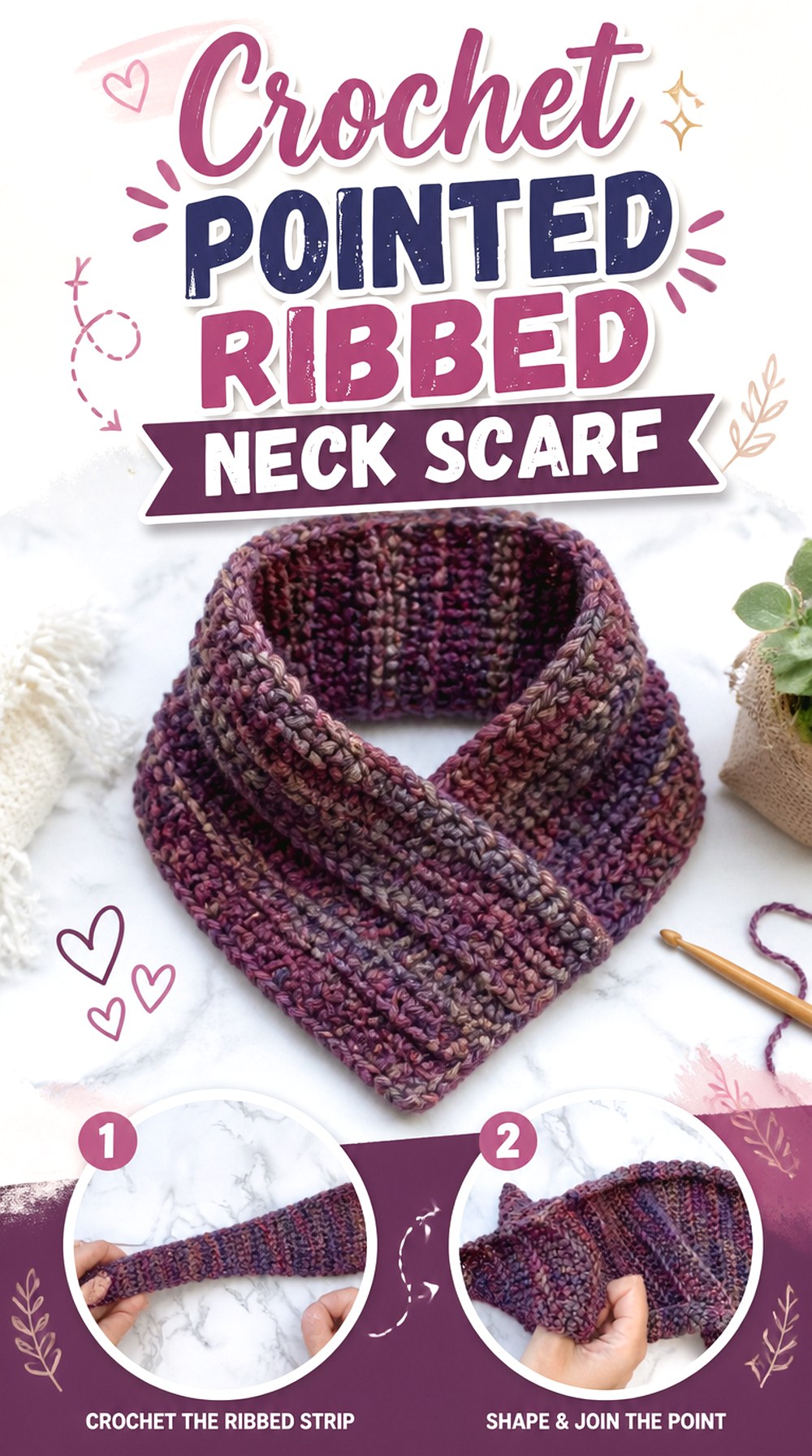
Instead of maintaining one width from end to end, this scarf expands and contracts to create a tapered silhouette. Handy Little Me’s skinny-scarf tutorial uses increases and decreases and incorporates back-loop texture, producing a shape with slimmer ends and a broader central section.
That makes it particularly suitable for readers who like the look of a mini scarf but do not want a wide rectangular end sitting inside the knot. The linear ribbed texture also emphasizes the scarf’s length and gives the solid fabric more surface detail without adding open lace.
Narrow Points Reduce Knot Bulk
Tapering is useful because the part you actually tie can contain less fabric than the section covering the neck. When adapting the concept, do not judge only the widest midpoint. Test how the thinner ends overlap and knot. If they become too thick after a yarn substitution, the scarf can lose the neat pointed appearance that makes this silhouette distinctive.
Rib Texture Looks Best With Consistent Direction
Back-loop texture creates strong visual lines, so irregular tension or an accidental change in stitch placement can be more obvious than it would be in a visually busy fabric. Check the developing ribs in good light every few sections. Correcting a directional mistake early is easier than trying to disguise an interrupted line during finishing.
Original Tutorial and Creator Credit
Creator: Handy Little Me
5. Crochet Tunisian Tapered Skinny Scarf

Tunisian crochet gives this skinny scarf a noticeably different fabric language. Blue Star Crochet’s tutorial presents a tapered design using Tunisian techniques, including a textured Tunisian stitch surface and shaping rather than a simple straight strip.
The combination suits readers who want a mini scarf with a more structured, knit-like visual rhythm while still working with a crochet-based technique. Because Tunisian fabric can behave differently from conventional crochet, this idea earns its place for construction as well as appearance.
Watch the Fabric Before It Becomes a Long Strip
Some Tunisian fabrics naturally want to curl, especially before finishing. On a skinny scarf, even moderate curling can affect the entire visible width. Pay attention to the tutorial’s finishing approach and evaluate the fabric before assuming its off-the-hook appearance is final. If substituting yarn, make a small sample and see how it relaxes after appropriate finishing.
Tapering Has to Stay Balanced With Structure
A structured fabric can make shaping lines more obvious. Compare the two sides as the scarf widens and narrows so one edge does not appear steeper than the other. If your personal tension changes during shaping, pausing to lay the piece flat can help you catch asymmetry before it becomes a defining feature.
Original Tutorial and Creator Credit
Creator: Blue Star Crochet | Veronika Cromwell
6. Crochet Bordered Mini Tie Scarf

This compact mini scarf focuses on a tapered center-and-ends silhouette but finishes the shape with a defined border. The eliznuts tutorial visibly moves through increasing, a central section, decreasing, border work, and blocking, making finishing part of the scarf’s overall appearance rather than an afterthought.
A bordered mini scarf works well when you want the accessory to look complete even when worn with a simple T-shirt, cardigan, or open neckline. Compared with a long skinny scarf, the visual interest stays closer to the neck and the tails remain comparatively controlled.
Border Tension Can Reshape the Whole Scarf
On a small tapered accessory, the border runs around a large percentage of the visible outline. If it is significantly tighter than the main fabric, the edges can pull inward; if much looser, they may ripple. Lay the scarf flat as the border develops and look at the outline rather than focusing only on individual stitches.
Blocking Is Part of the Silhouette
Tapered edges and a border often look different immediately after crocheting than they do after the fabric is arranged and finished. Follow care instructions appropriate to your chosen fiber rather than assuming every yarn should be treated identically. The goal is to settle the shape and edges without stretching the mini scarf beyond the proportions you intended.
Original Tutorial and Creator Credit
Creator: eliznuts
7. Crochet Soft Layering Skinny Scarf

Zoë-Rose’s skinny scarf is a straightforward fashion-layering option for readers who want a narrow accessory without the stronger structure of a keyhole or triangular scarf. The creator specifically discusses wearing the piece in different weather and notes cotton as an option for warmer-season styling.
That makes the idea useful when fiber choice is part of the look you are planning. A narrow scarf can sit over a lightweight top as an accent or become one small layer within a colder-weather outfit, but those two uses call for noticeably different fabric feel.
Match the Fiber to the Outfit, Not Just the Season
A warm-looking yarn is not automatically ideal for every winter outfit, just as cotton is not automatically right for every summer scarf. Consider the garments that will touch the scarf. A smooth, light top may suit a softer drape, while a heavier jacket can visually support a more substantial texture. Check fiber-care information before making substitutions.
Decide How Much Neckline You Want to Leave Visible
A skinny scarf can frame a neckline rather than cover it. Before making yours longer or wider, test a strip of fabric or even a folded measuring tape against the tops you wear often. That gives you a practical sense of whether you want the scarf to sit close to the throat, hang vertically, or form a loose small knot.
Original Tutorial and Creator Credit
Creator: Zoë-Rose
8. Crochet Lace Panel Skinny Scarf

A lace skinny scarf gives you detail without the physical volume of a wide lace shawl. Valeria Chérie’s tutorial is specifically for a crochet lace skinny scarf, so the openwork remains contained within a narrow accessory shape.
This is a strong option for readers who want the scarf itself to provide visual pattern rather than relying on stripes or dramatic yarn. Because the scarf is narrow, the lace repeat becomes prominent from edge to edge, and careful finishing has a larger effect on whether the pattern reads as crisp and intentional.
Lace Needs Room to Show Its Pattern
If openwork is compressed into a tight knot, much of its detail disappears. Consider how you intend to wear the scarf before choosing your final length and fiber. A loose drape or small relaxed knot can leave more of the lace visible than several close wraps around the neck.
Choose Stitch Definition Over Fuzz When Detail Matters
Highly fuzzy yarn can soften the edges of lace openings and make the pattern less distinct. That may be appealing if you want a hazy texture, but it changes the visual result. If the lace structure is your priority, compare yarns by how clearly you can see individual loops and open spaces in a sample.
Original Tutorial and Creator Credit
Creator: Valeria Chérie
9. Crochet Striped Tapered Mini Scarf

Stripes add another design variable to the familiar tapered mini-scarf shape. The ars textura tutorial combines a narrow scarf silhouette with color changes, increases, a straight middle section, and decreases, creating a visibly balanced piece with color running through the shaped construction.
This idea works especially well if you want to use several coordinated colors without turning the scarf into a large multicolor project. Because the accessory is small, stripe placement is easy to notice, and the transition from one color to the next becomes part of the finished composition.
Plan Stripe Rhythm Around the Center
A tapered scarf has a visual midpoint, so random color placement can feel different from a deliberately centered sequence. Before crocheting, decide whether you want the strongest color at the middle, repeated evenly, or reserved for the ends. You do not need a complicated chart; even a simple color-order note can prevent an accidental imbalance.
Color Changes Should Not Distort One Edge
Frequent changes can create extra bulk or inconsistent tension where yarns are joined or carried. Periodically compare both edges rather than waiting until the scarf is finished. If one side starts feeling firmer, the color-management method may be affecting tension even though the stitch count and overall shaping remain correct.
Original Tutorial and Creator Credit
Creator: ars textura – Häkeln & DIY
10. Crochet Moss Stitch Skinny Scarf

Carroway Crochet’s skinny scarf uses a moss-stitch construction, giving the narrow strip a fine alternating texture instead of pronounced ribs or large open spaces.
Moss stitch can be particularly attractive in a skinny scarf because its small-scale texture does not need a wide field to become visible. It also makes this a useful direction for yarns with subtle color variation, where the stitch pattern and changing shades can share attention rather than compete with an elaborate lace motif.
Small Texture Keeps the Width Visually Calm
When a scarf is only a narrow band, oversized texture can dominate its proportions. A small repeating surface creates interest while keeping the silhouette relatively restrained. If you want the scarf to work with patterned clothes, this quieter texture may be easier to coordinate than large lace openings or strong three-dimensional stitches.
Check Every Edge Before the Scarf Gets Long
Alternating stitch-and-space fabrics can make an accidentally missed edge position less obvious for a few rows. Because a skinny scarf quickly becomes much longer than it is wide, periodic stitch-position checks can save considerable unraveling. Look at the edge profile as well as the top row; a gradual narrowing often reveals an error faster than the texture itself.
Original Tutorial and Creator Credit
Creator: Carroway Crochet
11. Crochet Shallow Triangle Skinny Scarf

This design changes the geometry completely. Slow Crochet’s tutorial creates a skinny triangle scarf rather than a rectangle or symmetrical pointed strip, using a shallow triangular profile that can sit more like a small neck wrap.
The extra depth at the center gives the scarf more presence on the chest while the ends remain narrow enough for tying. Choose this direction if you like the idea of a scarf that partly fills an open neckline but still feels lighter and more compact than a conventional triangular shawl.
Center Depth Determines the Overall Character
A shallow triangle reads as a neck accessory; a much deeper triangle begins moving toward shawlette territory. If you adapt the scale, keep checking the center drop against your torso instead of looking only at the length of the ties. That preserves the skinny-scarf character while giving you enough central fabric to make the triangle visible.
The Point Becomes a Natural Focal Area
The center point attracts attention, especially over a plain top. If you use a multicolor yarn or introduce contrasting sections, consider where the strongest visual change will land. A dramatic color shift directly at the point creates a different effect from a more evenly distributed sequence across the whole triangle.
Original Tutorial and Creator Credit
Creator: Slow Crochet
12. Crochet Silver Shimmer Accent Scarf
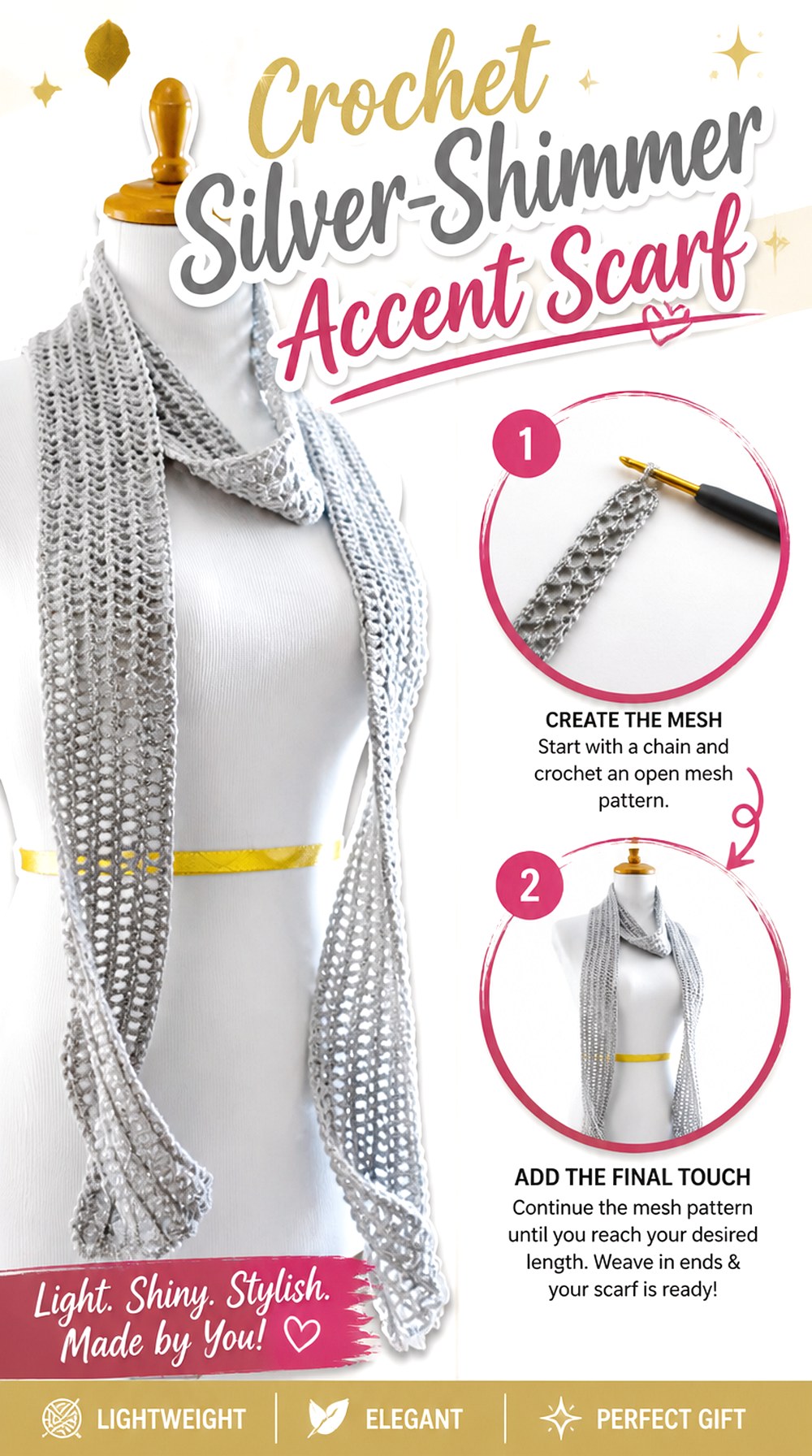
Fiber Flux’s Silver Dollar Skinny Scarf takes the idea in a decorative direction, using a sparkly yarn to make the narrow scarf function as a noticeable accent rather than a large insulating layer. The accompanying project information describes it as a soft, sparkly accessory scarf.
A shimmer-focused scarf can be useful for evening outfits, holiday dressing, or simple tops that benefit from one concentrated detail. Since the yarn itself carries much of the visual interest, the slim shape prevents the effect from covering a large area.
Let Specialty Yarn Carry the Design
Metallic, glittered, or highly reflective yarn can obscure complicated stitch details. If you choose a specialty yarn, first decide whether texture or shine should be the main feature. A simpler fabric often gives reflective fibers room to show without making the finished surface visually crowded.
Test Neck Comfort Before Committing
Decorative fibers can feel very different in the hand than they do against the neck. If a yarn contains metallic or textured components, make a small sample and wear it briefly against the skin or over the type of garment you plan to pair with the scarf. The prettiest yarn is not useful if you avoid wearing the finished accessory.
Original Tutorial and Creator Credit
Creator: Fiber Flux
13. Crochet Textured Mini Neckerchief
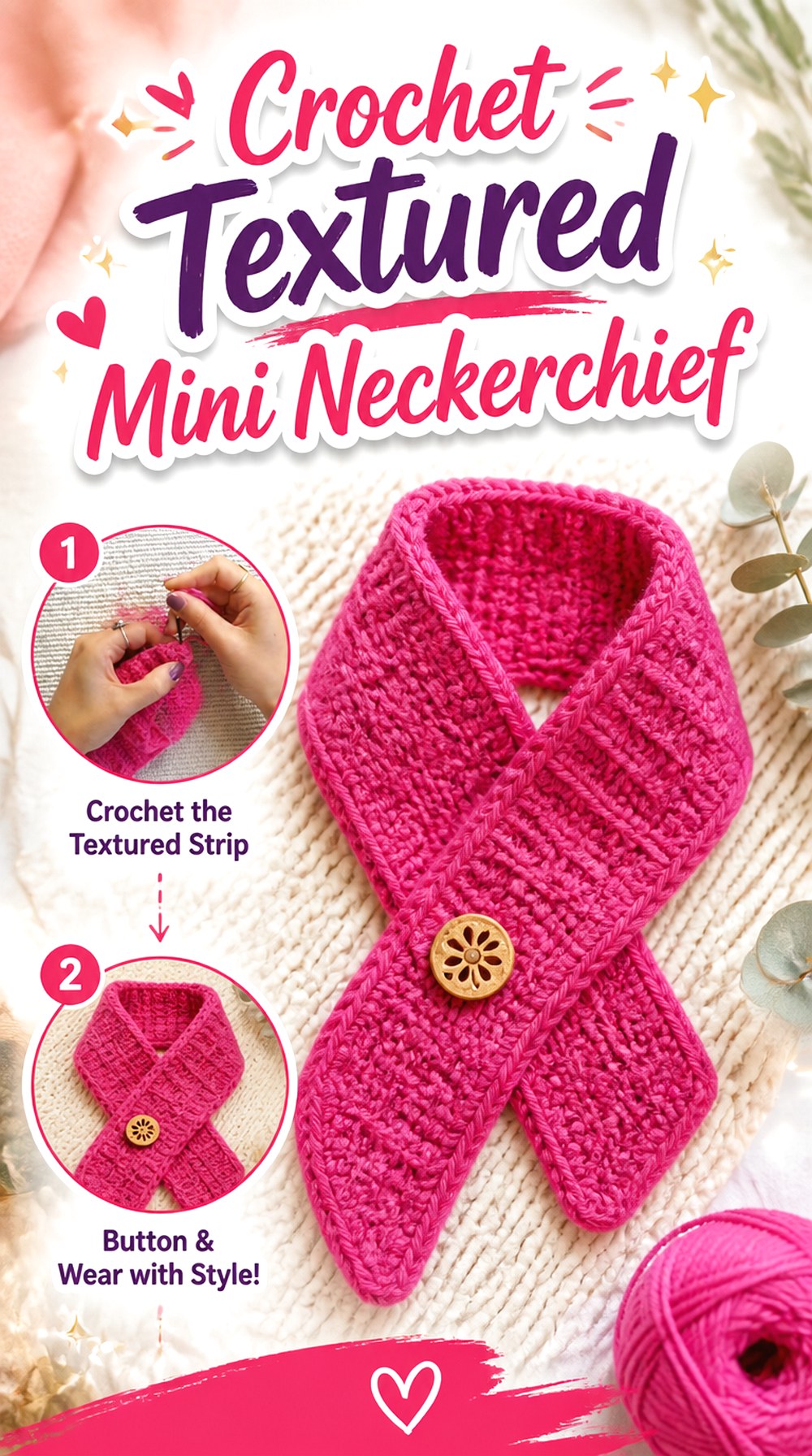
Bloodimaryart Crochet’s mini scarf sits close to the neckerchief end of the skinny-scarf spectrum. The tutorial combines tapering with textured stitch work, creating slim ends and a more noticeable central body rather than one continuous rectangular band.
This shape is useful when you want a scarf that can be tied neatly without long tails hanging down the torso. The creator also demonstrates the concept as a compact neck accessory, making it distinct from the extra-long options in this list.
Texture Can Make a Small Center Look Fuller
A mini scarf has less surface area for visual interest, so textured stitches can give the central section more presence without requiring extra width. When substituting yarn, check whether the texture still reads clearly. Very fuzzy yarn may soften it, while an extremely stiff yarn can exaggerate the raised areas and reduce drape.
Tie Comfort Matters More Than Maximum Length
With a neckerchief-style scarf, the ends need only enough length for the intended wrap and knot rather than dramatic hanging tails. Try the developing scarf around the neck before assuming that more length is always better. Extra fabric can turn a compact accessory into a bulkier scarf and change where the textured center sits.
Original Tutorial and Creator Credit
Creator: Bloodimaryart Crochet
14. Crochet Pull Through Keyhole Scarf
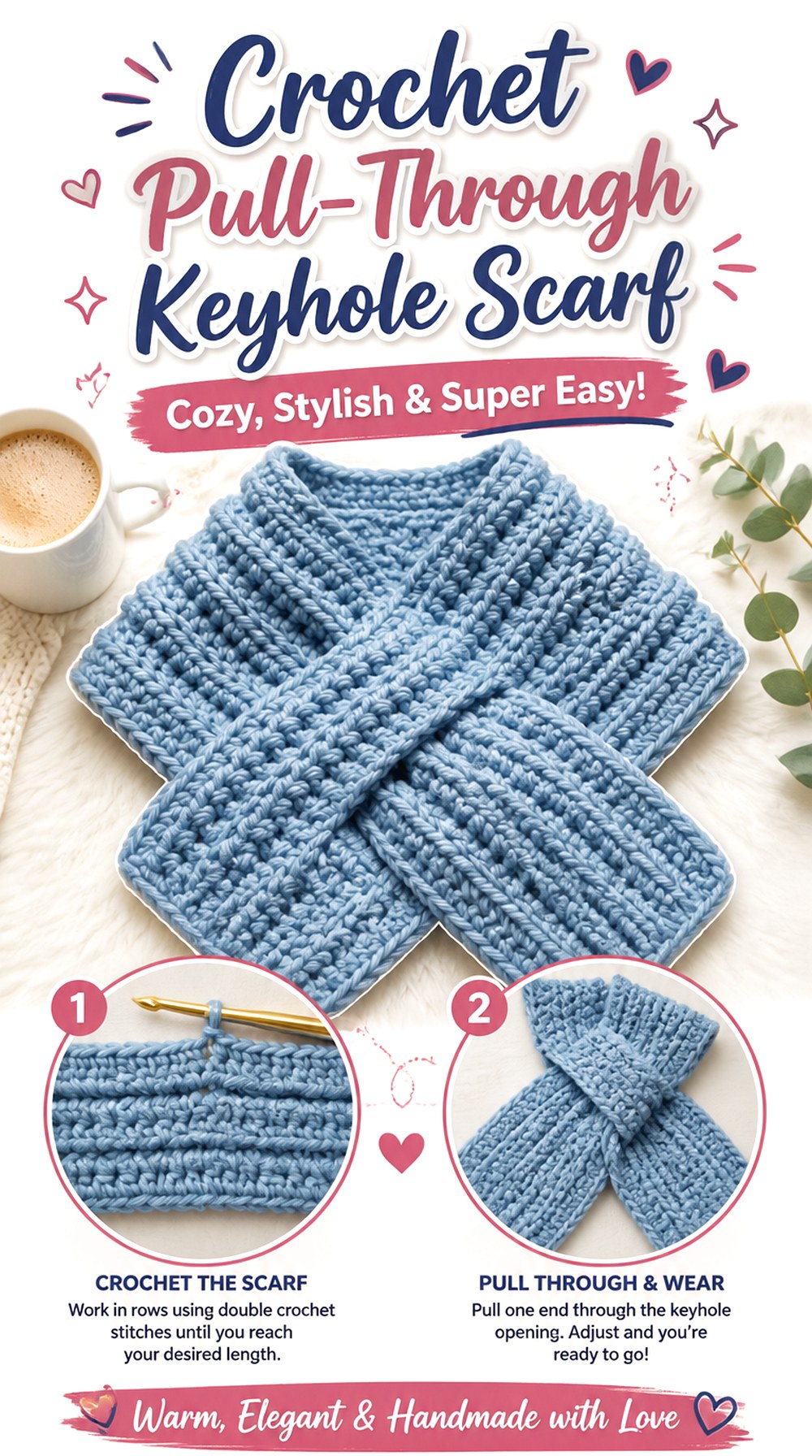
A keyhole scarf solves the fastening problem differently from every tie scarf in the list. Crochet Jewel’s tutorial uses a pull-through opening, allowing one end to pass through the scarf instead of relying on a conventional knot.
This construction is worth considering if you dislike loose scarf tails or want an accessory that stays arranged with less fabric overlapping at the neck. It can also work neatly with coats because the scarf has a defined closure point rather than needing a bulky bow or repeated wrap.
The Opening Has to Work With the Finished End
The keyhole and the section that passes through it need to function as a pair. If you alter yarn thickness or edging substantially, check the opening before finishing the entire scarf. An end that becomes too thick can be awkward to pull through, while an oversized opening may not hold the scarf as securely as intended.
Test It With Your Usual Collar Height
A pull-through scarf has a more fixed resting position than a long free-form scarf. Try it with the coat, cardigan, or jacket you expect to wear most often. A high collar may compete with the keyhole placement, while an open neckline may leave the closure clearly visible as part of the design.
Original Tutorial and Creator Credit
Creator: Crochet Jewel
15. Crochet Tunisian Rib Keyhole Scarf

This option combines two structural ideas: Tunisian crochet fabric and a keyhole closure. justtheworsted’s tutorial uses a Tunisian rib-style texture in a compact pull-through scarf, giving it more visual and physical substance than an airy skinny fashion tie.
It suits readers who prefer the narrow scarf concept but want a more defined cold-weather accessory. The closure controls the scarf at the neck, while the ribbed surface makes the fabric itself a noticeable part of the design.
Ribbed Tunisian Fabric Can Feel More Substantial
When a narrow scarf uses dense textured fabric, it may provide more body than its width suggests. Consider this when choosing yarn. Increasing thickness can make the pull-through area bulky quickly, so compare flexibility and folded thickness rather than relying only on the yarn label.
Keyhole Placement Controls How the Ends Sit
The opening determines where one side crosses the other. Before finalizing any size adaptation, check that this crossing point lands comfortably on the wearer rather than directly under an awkward collar edge. A keyhole scarf offers less freedom to slide the knot up and down than a conventional long skinny scarf.
Original Tutorial and Creator Credit
Creator: justtheworsted
16. Crochet Y2K Color Stripe Skinny Scarf

Pittsburgh Crochet Co.’s Y2K skinny scarf leans deliberately into the long, narrow striped-accessory look associated with early-2000s styling. The tutorial uses half double crochet, color changes, and a method for managing yarn as the stripes progress.
This makes it a strong choice when the scarf is intended to be a visible outfit element rather than simply a practical neck warmer. Bold color contrast and a narrow silhouette work together particularly well here because the scarf creates long vertical lines without covering much of the garment underneath.
Stripe Width Changes the Retro Effect
Many narrow stripes can create a busier, more playful surface, while larger blocks of color make the scarf read more graphically. Before starting, place your yarn colors side by side and decide which one should dominate. The same construction can look dramatically different depending on how often the colors alternate.
Yarn Management Affects the Edge Finish
With repeated color changes, the technical question is not only how the colors look across the rows but also how tidy the transition area remains. Follow the creator’s demonstrated color-management method closely before improvising your own. If you change the stripe sequence, periodically inspect both edges so carried or joined yarn does not create unwanted bulk.
Original Tutorial and Creator Credit
Creator: Pittsburgh Crochet Co.
17. Crochet Open Grid Long Skinny Scarf
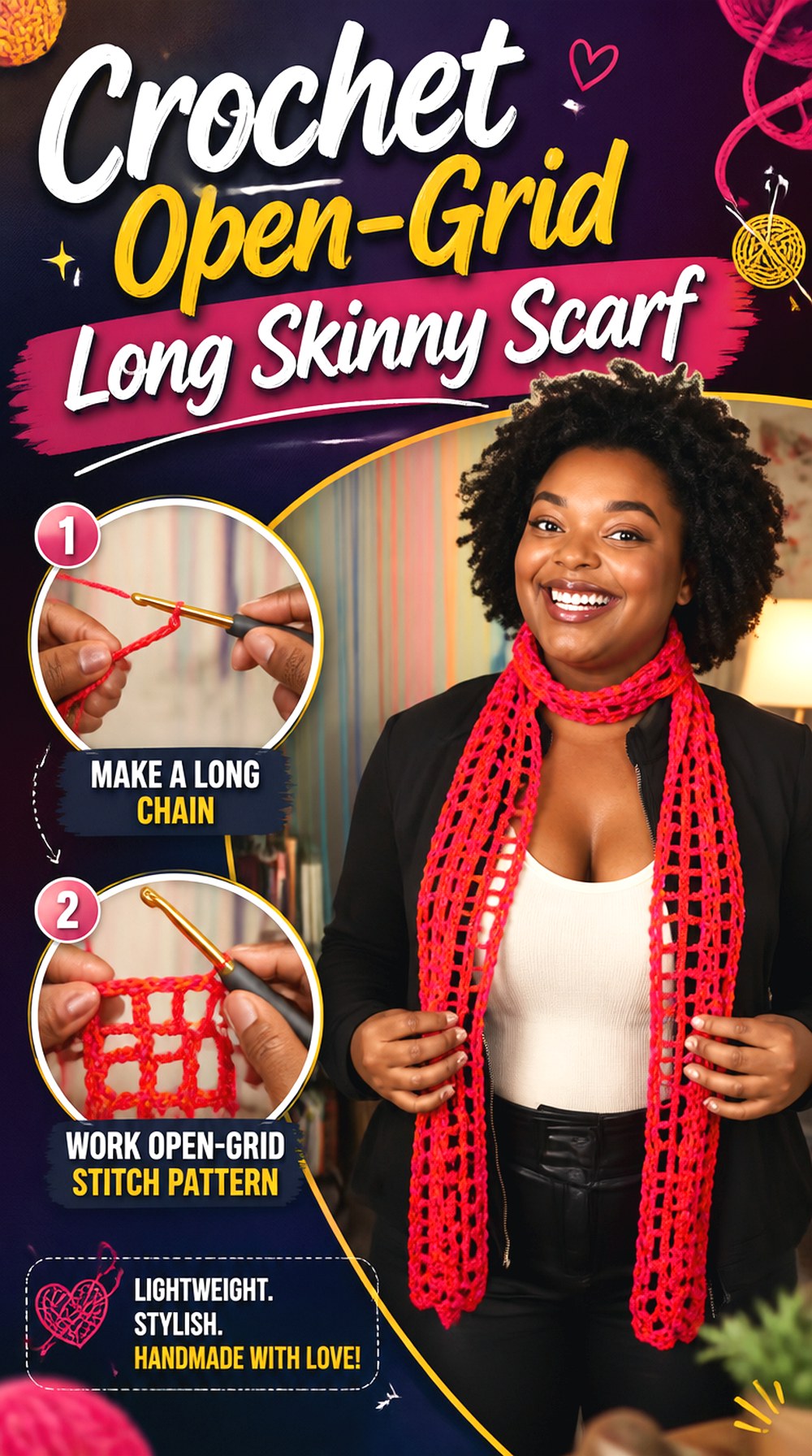
Dezzyloops offers another approach to openwork: a long skinny scarf that alternates more open sections with solid crochet rows. The tutorial description indicates a combination of double crochet, chain spaces, and solid rows, with the starting length adjustable to the maker’s preference.
This creates more visual rhythm than an evenly spaced mesh scarf. The contrast between open and closed sections is especially noticeable on a narrow strip because each change can span much of the scarf’s width.
Alternating Density Creates Its Own Stripe Effect
You do not need multiple colors to create horizontal rhythm. Open and solid rows can produce bands simply through changes in fabric density. If you use a highly variegated yarn, decide whether those color changes will complement that rhythm or compete with it. A solid or gently shifting color can keep the open-grid structure more obvious.
A Long Foundation Needs an Early Straightness Check
When the scarf’s length is established early, tension at the starting edge can influence the entire silhouette. Before progressing far, lay the foundation and first completed section flat without pulling. If the starting edge is significantly tighter than the developing fabric, it is better to address that difference early than after a long scarf is complete.
Original Tutorial and Creator Credit
Creator: Dezzyloops
18. Crochet Measurement Planned Long Skinny Scarf

Alexandria Masse’s scarf is a useful choice for makers who prefer thinking in finished measurements rather than treating one yarn-and-hook combination as the only possible route. The associated pattern information specifically describes the project as measurement based and notes flexibility in yarn and hook selection.
That makes the tutorial particularly relevant when you already have yarn in mind and want to understand the scarf concept without assuming your finished piece will match another maker’s gauge automatically. It remains a straightforward long skinny scarf rather than a shaped neckerchief or closure-based design.
Start With the Look You Want to Wear
A measurement-led approach works best when you first decide how the scarf should behave on your body. Consider whether you want one loose tie, a longer vertical drape, or enough length for additional wrapping. Those styling goals are more useful than copying an arbitrary length that may not suit your height, clothing, or yarn.
Yarn Substitution Still Changes the Fabric
Being able to plan from measurements does not mean every yarn produces the same scarf. A thicker fiber may make the same width feel much heavier, while a fine yarn can create a more delicate strip. Swatch enough fabric to judge drape and knot thickness before relying on dimensions alone.
Original Tutorial and Creator Credit
Creator: Alexandria Masse
19. Crochet Compact Tapered Neck Scarf

Crochet con Sole’s Sophie-style scarf is another compact tapered option, but it is most useful here as a reference for the classic widen-flat-narrow silhouette that keeps the ends small and the main coverage centered around the neck. The creator presents it as a short, lightweight scarf and discusses adapting the size and materials.
This shape works when you want something less dramatic than a long fashion scarf and more streamlined than a full bandana. It can add color or texture close to the face without leaving long tails down the front of an outfit.
Keep the Widest Section Where You Need Coverage
If you lengthen a tapered scarf, consider whether you are adding to the tie ends or enlarging the central section. Those changes produce different results. A broader or longer center increases neck coverage, while longer narrow ends mainly affect tying options. Decide which function you actually need before altering the proportions.
Lightweight Does Not Have to Mean Loose
A small scarf can remain visually light because of its scale even when the fabric is not openwork. If you want a cleaner tapered outline, a relatively defined fabric may support the shape better than an extremely loose one. The right balance depends on whether you prioritize crisp edges or softer drape.
Original Tutorial and Creator Credit
Creator: Crochet con Sole
20. Crochet Color Tail Long Narrow Scarf

For the final idea, GYSEVAKAT’s tutorial shows a distinctly long, narrow scarf and includes color changes within the construction, giving it a different appearance from both the tiny neckerchiefs and the evenly striped Y2K version. The published tutorial identifies a narrow finished scarf and demonstrates the color-change portion during the process.
This direction is useful if you want the dramatic vertical line of a longer accessory while still introducing color rather than making one uninterrupted solid strip. The narrow proportions keep the color detail concentrated and make the ends an important part of the outfit.
Long Tails Become Part of the Silhouette
With an elongated skinny scarf, the sections hanging below the neck can be more visible than the wrapped portion itself. Think about where you want contrasting colors to appear when the scarf is worn, not just when it is laid flat. A color change near the ends can emphasize movement and length.
Check Length While Wearing the Intended Outer Layer
Long scarves can land very differently over a fitted top, cardigan, or bulky coat. Before committing to additional length, drape the developing piece over the clothing you expect to pair with it. The goal is to keep the deliberate skinny silhouette without creating tails that interfere with pockets, closures, or daily movement.
Original Tutorial and Creator Credit
Which Crochet Skinny Scarf Style Should You Choose?
For the smallest amount of fabric around the neck, start with one of the tapered mini scarves or the textured neckerchief. They concentrate width at the center while leaving slimmer ends for tying.
Choose the mesh, lace-panel, or open-grid versions when visual lightness matters more than solid coverage. The moss-stitch, ribbed, and Tunisian options create a more substantial surface without requiring a conventional wide scarf.
If staying securely arranged is the priority, compare the two keyhole scarves before choosing a long tie. For outfit-focused styling, the scarf-and-belt design, Y2K stripes, shimmer scarf, and extra-long narrow options make the accessory itself more noticeable. The shallow triangle is the clearest choice when you want more central neckline coverage without moving to a full shawl.
Conclusion
The most useful way to choose among these crochet skinny scarf ideas is to start with silhouette rather than color. Pick a long straight scarf for flexible wrapping, a tapered mini scarf for less knot bulk, a triangle for central coverage, openwork for a lighter visual effect, or a keyhole when you want the scarf to stay arranged without a conventional tie.
After that, compare texture and yarn behavior. Moss stitch, ribbing, Tunisian fabric, lace, mesh, and stripes can make scarves with similar dimensions feel completely different. Once you find the construction that fits your styling goal, use the original tutorial for the creator’s exact crochet sequence, materials, shaping, and finishing details.
Frequently Asked Questions
How narrow should a crochet skinny scarf be?
There is no universal width that defines a skinny scarf. The useful question is how the width behaves when worn. A scarf can look narrow laid flat but feel bulky once folded or knotted. Compare the developing fabric at the neck and inside the intended knot. If you are following a tutorial, use the creator’s measurements where supplied rather than assuming another scarf’s proportions transfer directly.
Is a tapered mini scarf better than a straight skinny scarf?
Neither shape is automatically better. Tapered scarves reduce fabric at the ends, which can make a compact knot look cleaner. Straight skinny scarves usually offer more consistent width along their length and may suit long vertical styling or repeated wrapping. Choose according to how you intend to wear the scarf, not simply which silhouette looks narrower in a flat photo.
What yarn works well when I want a skinny scarf to drape?
Look at the finished fabric rather than relying on fiber name alone. Yarn thickness, twist, hook choice, and stitch density all affect drape. Make a small sample and bend or loosely knot it. If it feels stiff before the scarf is even full size, the finished accessory may not form the soft tie you expect. Always check the yarn’s care instructions separately.
How can I stop a long crochet skinny scarf from curving?
Uneven edge tension is one common reason a narrow strip begins to curve. Lay the scarf flat periodically and compare both long edges. Also check that you are consistently working the intended first and last stitch or space. If the starting edge is much tighter than the fabric above it, that difference can also distort a lengthwise construction.
Should I block a crochet skinny scarf?
Blocking can help settle lace, openwork, tapered edges, and some textured fabrics, but the appropriate method depends on the yarn. Follow the fiber’s care information and the tutorial’s finishing guidance when available. Blocking should refine the shape rather than be used to force a badly distorted scarf into dimensions the fabric naturally resists.
Can I make a skinny scarf longer than the tutorial version?
Often the concept can be adapted, but the correct method depends on its construction. A straight scarf may be simpler to lengthen than a shaped piece with carefully positioned increases, decreases, or a keyhole. For tapered and closure-based designs, check how extra length affects the center placement, tie ends, and opening before changing the creator’s proportions.
How do I keep a skinny scarf from feeling bulky at the knot?
Focus on the fabric that actually overlaps. Narrower tapered ends, a thinner yarn, more flexible fabric, or a keyhole closure can all reduce concentrated bulk. Do not assume making the whole scarf narrower is the only solution. A design with a wider central section and slim tie ends can provide comfortable neck coverage while still forming a small, tidy knot.