

A detachable collar can change the neckline of a plain sweater, dress, blouse, or T-shirt without committing to a whole crocheted garment. The interesting part is how many different forms this small accessory can take. Some collars lie close to the neckline like traditional Peter Pan designs, while others spread across the shoulders, use joined motifs, rise around the neck, or function almost like crocheted jewelry.
These 16 crochet detachable collar ideas focus on those practical differences. You will find rounded, floral, leaf-shaped, bib-style, capelet, gothic lace, Victorian, and buttoned options, each supported by a separate original YouTube tutorial. Along the way, the comparisons below will help you think about neckline compatibility, closure placement, yarn behavior, shoulder spread, and the amount of visual weight you actually want the collar to add.
Quick List
- Crochet Rounded Peter Pan Detachable Collar
- Crochet Flower Square Tie Collar
- Crochet Soft Rouge Neck-Warmer Collar
- Crochet Vintage Leaf Statement Collar
- Crochet Heritage Everyday Collar
- Crochet Threadwork Detachable Collar
- Crochet Narrow Neck-Lace Collar
- Crochet Bib-Style Detachable Collar
- Crochet Child-Size Rounded Collar
- Crochet Wide Capelet Collar
- Crochet Gothic Wednesday Lace Collar
- Crochet Scalloped Multi-Size Peter Pan Collar
- Crochet Openwork Button Collar
- Crochet Victorian Necklace Collar
- Crochet Structured Button Collar
- Crochet Classic Curved Collar
Match the Collar to the Neckline Underneath
Plan the outfit before deciding which collar shape to crochet. A compact Peter Pan collar usually needs a fairly clear neckline underneath so its curved edge remains visible. Wider bib and capelet styles occupy more of the upper chest and shoulders, making them better suited to simple garments that will not compete with the crochet.
High crew necks can also push a flat collar outward, while an open cardigan or button-front blouse may create a visible gap through the center. Place a measuring tape, fabric strip, or even a paper outline around the garment neckline before beginning. The goal is not to duplicate a tutorial’s exact measurements but to understand where you want the inner edge, front opening, and outer points to sit on the clothes you actually wear.
Closure and Shoulder Spread Change the Fit
Detachable collars can fasten with buttons, ties, loops, or other closures, and that small construction choice affects more than appearance. A tie creates visible movement and gives you some flexibility in how the front is styled. A button creates a defined meeting point, while a collar without a prominent front fastening depends more heavily on its neckline shaping.
Also compare the inside neckline with the outside edge. If a collar expands quickly toward the shoulders, it needs enough shaping to lie flat rather than ripple or fold upward. Motif collars add another variable because the width of each square, triangle, flower, or leaf influences the total spread. When changing yarn, evaluate the collar’s overall footprint again rather than assuming the original layout will behave identically.
Yarn Choice Controls Drape, Definition, and Visual Weight
A detachable collar is small, but yarn substitutions can noticeably change its character. Smooth, relatively fine yarn can make lace holes, scallops, leaves, and other decorative edges easier to see. A thicker or loftier yarn gives the collar more visual weight and may turn a delicate neckline accent into something closer to a neck warmer.
Structure matters too. A soft fabric can suit gathered or ruffled collars, while designs intended to show crisp points or defined motifs benefit from fabric that keeps those details recognizable. Before committing to an entire collar, crochet enough of the chosen stitch or motif to see how it behaves after normal finishing. If the fabric spreads much more than expected, revisit the collar width and neckline fit before adding closures or joining multiple motifs.
1. Crochet Rounded Peter Pan Detachable Collar

A rounded Peter Pan collar is one of the cleanest ways to introduce detachable crochet into an everyday wardrobe. The curved front creates a recognizable blouse-like neckline without covering a large part of the shoulders, so the collar can remain visible without becoming the entire outfit. Ahuyama Crochet’s tutorial specifically presents a Peter Pan collar that can be adapted across sizes, making it useful when fit is a bigger concern than decorative complexity.
This option makes sense over uncomplicated sweaters, tees, or blouses where the two rounded front sections can remain clearly defined.
The Inner Curve Decides How Neatly It Sits
The outer rounded edge gets most of the attention, but the inner neckline determines whether the collar frames the garment cleanly. Compare that inner curve with the neckline you plan to wear underneath. A collar intended for a relatively close neckline may spread awkwardly over a much wider one.
Try the developing piece against the intended garment rather than relying only on neck circumference. That simple comparison can reveal whether the front edges will meet where you expect and whether the shoulder portion is lying flat.
Keep Both Front Sides Visually Balanced
Peter Pan collars make asymmetry easy to notice because the two curved sections sit next to each other. Before finishing, place the collar flat and compare the front edges, widest points, and way each side curves toward the shoulder.
If one side looks more stretched, examine tension and finishing before adding decorative details. Blocking can improve presentation when appropriate for the fiber, but it should refine a balanced shape rather than compensate for substantially different sides.
2. Crochet Flower Square Tie Collar

This flower-square collar turns the neckline into a much more visible crochet feature. Brunaticality combines floral square and triangular elements into a collar and finishes the design with ties, giving the piece a modular construction instead of the continuous rows used by many traditional collars. The tutorial also separates the motif, layout, joining, string, and lower-edge portions, which is helpful when you want to understand how the individual pieces become a wearable shape.
Choose this direction when you want color placement and motif arrangement to be part of the finished design rather than merely decoration added afterward.
Motif Width Sets the Overall Collar Scale
With joined motifs, changing yarn or hook size affects more than stitch appearance. Every square or triangle becomes part of the collar’s total span. A small difference in one blocked motif can multiply across the complete arrangement.
Lay completed motifs around the neckline before permanently joining everything. Look at shoulder coverage as well as neck opening. This planning stage is particularly valuable if you want to substitute a different floral square, because two motifs with a similar appearance may not finish at compatible dimensions.
The Ties Become Part of the Front Styling
The front strings are not simply a hidden fastening. They remain visible and therefore influence how casual, romantic, or decorative the collar appears.
Before finishing them, consider where you want the bow or loose ends to fall. Long dramatic ties create a different proportion from shorter understated ones. The best choice also depends on the garment underneath: visible ties have more room against a plain sweater or blouse than against another top with bows, buttons, ruffles, or a detailed neckline.
Joining Deserves as Much Attention as the Flowers
A floral motif can look excellent by itself but still produce an uneven collar if neighboring pieces are joined under different tension. Arrange the complete set in its intended orientation first.
Compare the spaces between motifs and the transition between squares and triangles. If one connection pulls noticeably harder than another, correcting it before the final edging is usually easier than trying to reshape the whole collar later.
Original Tutorial and Creator Credit
Creator: Brunaticality
3. Crochet Soft Rouge Neck Warmer Collar

Francesca Uncinettando Crochet&Love takes the detachable-collar idea in a softer direction with a vintage-inspired rouge collar that also functions as a small neck warmer. The creator specifically discusses keeping the gathered effect soft rather than stiff and adjusting the piece to the wearer’s neck. That makes this a useful contrast to flat Peter Pan and lace collars, because the fabric is intended to create texture around the neck instead of spreading neatly across the shoulders.
Consider it when you want removable neckline volume and light coverage rather than crisp shirt-collar geometry.
Drape Is the Design Feature Here
This collar depends on soft gathering, so substituting a yarn that produces very rigid fabric can change the character of the finished piece. Before making a major material change, examine how readily your crocheted fabric bends and gathers.
If you want the rouge effect to remain relaxed, prioritize the fabric behavior you can actually observe rather than choosing yarn solely by color. A softer collar can settle naturally around the neckline, whereas an overly firm version may project outward instead of forming gentle folds.
Fit Needs Enough Room for the Gathered Texture
A collar that rises or gathers around the neck needs a different fit check from a flat decorative collar. Do not evaluate only how it looks on a table.
Place the developing piece around the intended neckline and notice how much room remains once the texture compresses. The tutorial discusses adjusting the size to the neck, so use that guidance rather than assuming the same finished length will suit every wearer or every yarn substitution.
Original Tutorial and Creator Credit
Creator: Francesca Uncinettando Crochet&Love
4. Crochet Vintage Leaf Statement Collar

Instead of relying on a plain scalloped border, this collar uses a leaf-inspired appearance to make the edge itself the focal point. Mariie Crochet presents the project specifically as a vintage leaf collar that can be paired with blouses and sweaters. The organic edge gives it a more ornamental identity than a simple rounded collar, making this a strong option when you want the crochet to resemble decorative lace or botanical trim.
Because the leaves create obvious repeated shapes, stitch definition and an even final spread become especially important to the finished look.
Leaf Shapes Need Enough Definition to Stay Recognizable
Decorative motifs can disappear visually when the yarn is too fuzzy or the stitches merge into one another. If the leaf edge is the reason you chose this collar, work a small sample in your intended yarn and evaluate it from normal viewing distance.
A yarn that produces crisp outlines will emphasize the botanical repetition. A softer, hairier fiber may create a gentler surface but can reduce the sharpness of individual leaves, changing the effect substantially.
Let the Leaf Edge Be the Main Outfit Detail
This collar already creates a patterned border around the neckline, so it does not need a highly detailed garment underneath to feel finished. A simple sweater, dress, or blouse provides visual space for the leaves.
Also consider where the widest part of the motifs lands. If the edge overlaps another strong design feature such as a ruffled yoke or embroidered neckline, both details may become harder to read. Styling the collar over a calmer background usually shows its shape more clearly.
Original Tutorial and Creator Credit
Creator: Mariie Crochet
5. Crochet Heritage Everyday Collar

The Heritage Collar from Fios Cruzados por Joana Gouveia offers a compact standalone accessory for readers who prefer a collar that can move between outfits without the broader coverage of a capelet or bib. The tutorial walks through the piece row by row and includes a separate finishing portion, so it is a useful source when you want to see how a relatively small collar develops into its final wearable form.
Its quieter scale also makes it a practical counterpoint to the flower-square, Victorian, and wide capelet options in this collection.
Small Collars Still Need a Clear Outer Line
A narrow collar has less surface area to disguise uneven edges. After finishing, place it flat and look at the entire silhouette rather than inspecting individual stitches.
The outer edge should appear intentional from one side to the other. If the collar begins to flare noticeably in one area or pull inward in another, examine tension before deciding that more edging will solve the problem. Extra decoration can emphasize irregular shaping rather than hide it.
Test It With More Than One Top
If the goal is an everyday detachable accessory, versatility matters. Try the finished or nearly finished collar over several neckline types in your wardrobe.
A collar that sits perfectly over a close crew neck may interact differently with an open blouse or cardigan. This test can also help you decide whether the front needs a more noticeable closure or whether the existing shape provides enough definition on its own.
Original Tutorial and Creator Credit
Creator: Fios Cruzados por Joana Gouveia
6. Crochet Threadwork Detachable Collar
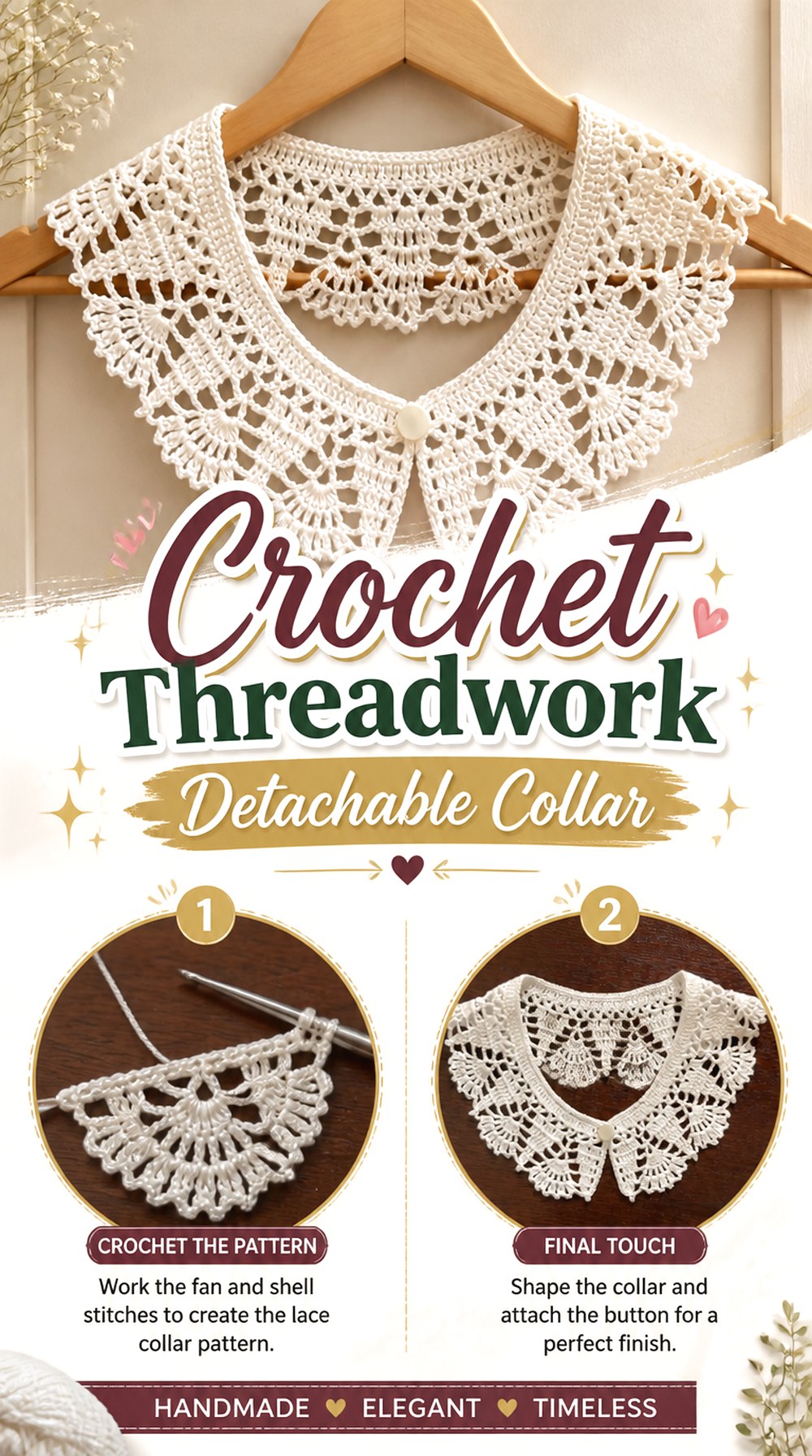
Crochet Around the Globe in English presents this project specifically as a detachable collar, making it a straightforward choice for readers interested in traditional ornamental crochet worn as a removable accessory. The channel also discusses crochet thread and finishing products alongside its tutorial resources, which makes this direction worth considering when you want a finer, more decorative appearance rather than the bulk of a neck warmer.
This style works best when you treat the collar as its own finished object and pay attention to how the complete shape sits before deciding whether any additional embellishment is necessary.
Fine Crochet Makes Finishing More Visible
With smaller-scale threadwork, loose ends, uneven edge tension, and inconsistent shaping can attract more attention because there is less bulky texture to disguise them.
Give the final edge the same attention as the central fabric. Before securing everything permanently, spread the collar into the shape in which it will be worn. That makes it easier to spot sections that are pulling inward or opening too widely around the outside edge.
Decide How Much Structure You Actually Want
Some decorative collars benefit from a crisp presentation, while others look better with natural softness. The appropriate finish depends on the actual fiber and the appearance you want.
Do not assume every thread collar needs aggressive stiffening. First evaluate the washed or normally finished fabric and how it behaves on the garment. If additional shaping is considered, follow product and fiber-care guidance rather than applying a treatment solely because another crochet thread project used it.
Original Tutorial and Creator Credit
Creator: Crochet Around the Globe in English
7. Crochet Narrow Neck Lace Collar

Maariyah Creative Arts approaches the collar as neck lace, creating a narrower decorative band rather than a broad shoulder-covering piece. That makes it useful for readers who like the idea of a detachable collar but do not want the accessory to resemble a miniature cape or large bib. The tutorial is explicitly presented as a crochet collar neck-lace project with an English pattern demonstrated in the video.
This proportion can work particularly well when the goal is to introduce a fine handmade edge around a neckline while leaving most of the garment visible.
Narrower Coverage Can Be Easier to Style
A slim collar competes with fewer garment details because it occupies less space. That can make it useful over printed dresses or layered outfits where a large floral or cape collar would feel too busy.
Still, look carefully at the neckline relationship. A very narrow collar placed over a dramatically wider neckline may appear disconnected from the garment. Compare both shapes together before deciding whether this is the right scale.
Lace Definition Matters More Than Added Embellishment
Because the collar already depends on decorative crochet, extra trims are not automatically necessary. First judge whether the repeating lace creates enough visual interest by itself.
If you change yarn, consider how the new fiber affects the openings and outer edge. Clear stitch definition can make a compact lace collar look deliberate, while an overly fuzzy yarn may blur the pattern and make such a small accessory feel heavier than intended.
Original Tutorial and Creator Credit
Creator: Maariyah Creative Arts
8. Crochet Bib Style Detachable Collar

A bib collar extends farther down the upper chest than a narrow Peter Pan or neck-lace design, so it changes the visual balance of an outfit more dramatically. TEJIENDO CON MERRY CARDIEL demonstrates a complete crochet bib collar intended as a standalone fashion accessory. The source describes it as suitable for adding detail to both casual and more formal outfits, which highlights the main appeal of the shape: the collar itself becomes a visible front panel.
This is a useful direction when you want more crochet surface area without moving all the way to a full capelet.
Chest Coverage Should Suit the Garment
The lower edge of a bib collar may overlap buttons, gathers, embroidery, or printed fabric on the garment beneath it. Before beginning, decide where you want the collar to finish visually.
A plain upper chest gives the crochet more room to read as a single design. If you plan to wear it over button-front clothing, also look at whether the center lines align or compete. Those styling checks are easier to solve before you choose the final color and scale.
Keep the Left and Right Spread Consistent
A bib shape draws the eye toward the center front. If one side extends farther or hangs differently, the imbalance may be more visible than it would be on a narrow collar.
Lay the piece symmetrically during finishing and compare corresponding edge points. If the fabric is suitable for blocking, use that stage to refine the intended outline rather than stretching one side simply to match the other.
Original Tutorial and Creator Credit
Creator: TEJIENDO CON MERRY CARDIEL
9. Crochet Child Size Rounded Collar

Dearly Monica’s tutorial focuses specifically on a crochet collar for little girls and shows the piece in the context of children’s sizing. The creator references a collar made for her three-year-old while noting that the concept can accommodate a smaller or larger child, so this option is better treated as a child-focused project rather than automatically scaled up for adults.
The smaller proportion makes it useful for dresses, cardigans, or simple tops where a full-size adult collar would overwhelm the garment.
Child Fit Should Be Confirmed on the Actual Wearer
Age labels alone are not enough for wearable sizing because children’s measurements vary. Use the tutorial’s construction guidance, but compare the developing neckline with the intended garment and wearer rather than relying only on an age category.
The collar should sit as intended without needing to be pulled tightly into position. If you alter yarn thickness or edging, reassess the finished opening because those changes can alter both scale and weight.
Keep Closures and Added Details Appropriate
Any detachable accessory made for a child deserves extra attention at the fastening and finishing stages. Secure buttons or other components carefully, and consider whether decorative additions are suitable for the child’s age and how the garment will be worn.
Do not assume a particular embellishment is appropriate simply because it looks attractive on an adult version. A simpler finish may be the better choice when loose or detachable small parts would be undesirable.
Original Tutorial and Creator Credit
Creator: Dearly Monica
10. Crochet Wide Capelet Collar

This collar moves beyond a narrow neckline trim and into capelet territory, spreading more noticeably across the shoulders. KnittingwiththeHearth’s Crochet: Cape – Collar tutorial demonstrates a vertically worked approach and describes length adjustment as a way to change sizing.
The broader silhouette makes this option particularly distinct from the tiny lace and Peter Pan collars in the list. Choose it when you want the detachable piece to create its own upper-body layer rather than simply outline the neckline of the garment beneath it.
Shoulder Spread Becomes the Main Fit Question
For a broad collar, neck circumference is only one part of the fit. The fabric also needs to settle across the shoulders without bunching behind the neck or projecting outward along the front.
Try the developing piece over the type of top you intend to wear underneath. A thick sweater changes the effective shoulder surface compared with a lightweight blouse, so the same collar can appear narrower or more elevated depending on the layer beneath it.
More Fabric Means More Yarn Behavior
The wider the collar becomes, the more its weight and drape influence the final silhouette. A yarn that seems firm in a small swatch may relax once a larger amount of fabric is hanging from the neckline.
Before making substitutions, think about whether you want a defined cape-like edge or a softer drape. If the finished fabric begins pulling downward more than expected, review the yarn choice and overall scale rather than adding further decorative weight automatically.
Original Tutorial and Creator Credit
Creator: KnittingwiththeHearth
11. Crochet Gothic Wednesday Lace Collar

Littlejohn’s Yarn created this white lace collar in response to the distinctive collar styling associated with Wednesday Addams. The tutorial uses fine crochet materials and develops a noticeably decorative lace edge, making it one of the strongest choices in the collection for readers who want a gothic, costume-influenced, or high-contrast collar rather than a casual everyday trim.
The contrast between a light collar and dark garment is an important part of the visual effect, but the underlying lace structure can also be adapted to other color schemes for a less character-specific look.
Contrast Makes Every Edge More Noticeable
A light lace collar over a black or very dark top creates strong visual separation. That also means uneven edges, loose ends, or distorted points will be easy to see.
Finish the collar carefully before judging the final effect. Spread the lace into its intended shape and make sure the outer motifs read consistently across the neckline. High contrast can be dramatic, but it is least forgiving when the finishing is rushed.
Fine Materials Change the Pace of the Project
This tutorial uses crochet thread and a small hook, so readers accustomed to thicker yarn should expect the fabric to feel different in hand. Fine materials can create detailed lace without excessive bulk, but they also make each small section more visually significant.
If you substitute a heavier yarn, do not assume the resulting collar will retain the same proportions. A thicker version may expand farther across the shoulders and produce a much bolder accessory.
Original Tutorial and Creator Credit
Creator: Littlejohn’s Yarn
12. Crochet Scalloped Multi Size Peter Pan Collar

HanJan Crochet’s Poppy Lace collar combines the familiar Peter Pan concept with a more visibly scalloped lace edge and documented sizing from baby through adult. The tutorial demonstrates an adult version and uses a button closure, making this a good choice when you want the traditional rounded-collar idea but need more sizing guidance than a one-size fashion accessory provides.
It also differs from the smoother first Peter Pan option because the lace and scalloped outer border play a stronger role in the finished appearance.
Use the Sizing System Rather Than Simply Scaling Yarn
HanJan Crochet provides separate sizing information, so begin with the size guidance appropriate to the intended wearer before experimenting with heavier or finer yarn.
Changing yarn thickness to make a collar larger or smaller is less predictable because it changes both neckline length and the depth of the lace. If you substitute materials, compare your developing collar with the intended neckline rather than assuming the size label still guarantees the same finished proportions.
The Button Position Defines the Meeting Point
A single button creates a clear front closure, which means the placement of the two ends matters visually. Before attaching the button permanently, position the collar around the intended neckline and see where the ends naturally want to meet.
Moving the closure can alter the way the scallops sit across the front. A neat fastening should support the collar’s natural shape rather than pull two edges together under unnecessary tension.
Original Tutorial and Creator Credit
Creator: HanJan Crochet
13. Crochet Openwork Button Collar
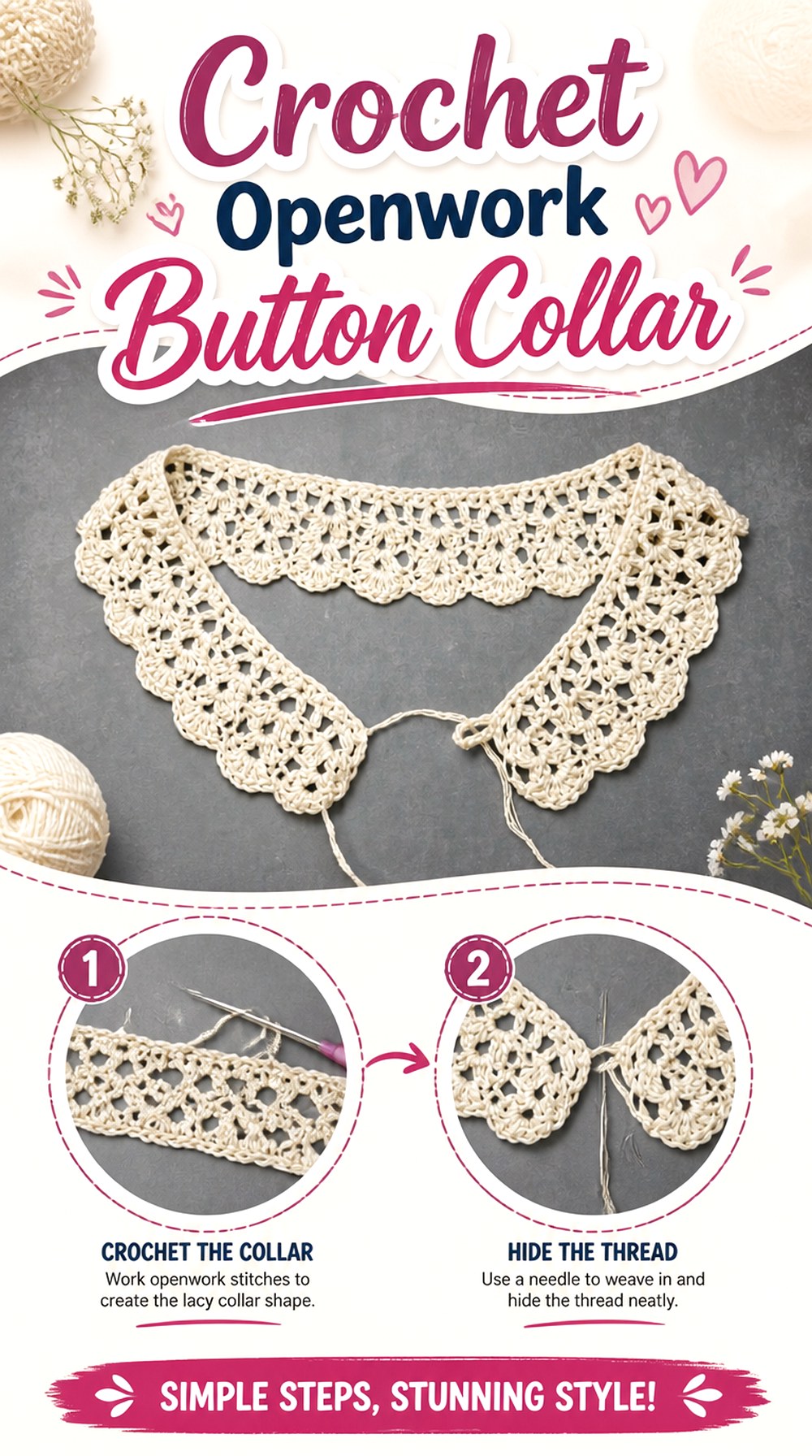
MoMo Snail Knitting’s collar is presented as a vintage openwork accessory and includes a button and buttonhole as part of the finished piece. The creator uses linen in the demonstrated version while allowing for leftover yarn, so the tutorial provides a useful starting point for readers attracted to a light, patterned collar with a compact fastening rather than ties.
Compared with a large bib or floral motif collar, the openwork texture keeps the visual effect lighter and places more emphasis on the repeating negative space.
Openwork Needs Consistent Tension to Look Even
When much of a design is created by spaces between stitches, irregular tension can alter the apparent size and shape of the repeats. Examine the fabric periodically rather than waiting until the collar is complete.
If one section is noticeably tighter, determine whether the working tension changed before adding the next rows. A consistent openwork field will usually look more intentional than trying to correct a distorted section with an oversized final border.
Plan the Button Before Final Finishing
The button is small compared with the collar, but it determines how the neckline closes and therefore how the whole piece hangs. Check the size of the actual button against the demonstrated buttonhole concept before permanently finishing the opening.
If you substitute a very different button, confirm that it passes through securely without stretching the surrounding crochet excessively. A decorative button that does not work comfortably as a closure is not a useful trade.
Original Tutorial and Creator Credit
Creator: MoMo Snail Knitting
14. Crochet Victorian Necklace Collar

Bag-O-Day Crochet describes this project as both a necklace and a Victorian-style crochet collar, which places it at the jewelry end of the detachable-collar spectrum. Rather than trying to cover a large part of the shoulders, this approach creates ornamental detail concentrated around the neck.
It is a strong alternative for readers who like vintage collars but find full bibs or capelets too substantial. The smaller scale can also make the accessory easier to pair with clothing that already has some neckline shaping of its own.
Treat the Finished Piece Like Textile Jewelry
Because the collar occupies a relatively narrow area, details need to be intentional. Think about how the crochet will interact with earrings, necklaces, buttons, and other accessories.
If the collar already supplies intricate texture around the neck, additional jewelry may compete with it. Try the completed piece on with the outfit before deciding that more embellishment is needed. A narrow collar often looks strongest when it is allowed to function as the main necklace-like detail.
Vintage Styling Does Not Require Vintage Colors
The construction can provide the Victorian influence even if you do not use cream, white, or other traditionally associated shades. A darker or brighter yarn can move the same collar toward contemporary styling.
What matters more is whether the chosen yarn preserves the ornamental shape. Test stitch clarity first, then choose a color that works with the clothes you expect to wear. That produces a more useful accessory than selecting a historically suggestive shade that matches nothing in your wardrobe.
Original Tutorial and Creator Credit
Creator: Bag-O-Day Crochet
15. Crochet Structured Button Collar

Yarnissonline’s detachable button collar focuses on a soft structured form, clean edges, and a visible button fastening. That combination makes it different from the highly open lace and floral motif options: the finished look depends more on silhouette and tidy edge definition than on elaborate decoration.
This is worth considering if you want the collar to resemble a deliberate clothing component that can be moved between garments. Neutral colors can emphasize that tailored effect, while brighter yarn can turn the same clean shape into a stronger contrast accessory.
Structure Should Not Become Uncomfortable Stiffness
A collar needs enough body to keep its intended outline, but a piece sitting directly around the neck still has to bend naturally with the wearer.
When substituting yarn, compare the fabric’s firmness and flexibility before completing the full collar. If the sample feels rigid against the skin or refuses to curve smoothly, a softer combination may be more appropriate. Structure is useful only when it supports the shape without making the accessory awkward to wear.
Let the Button Support the Clean Design
On a minimal collar, the button is more visually prominent because there are fewer motifs or lace details competing for attention. Choose its scale after seeing the completed collar rather than before.
A very large decorative button can shift the design toward a statement accessory, while a quieter button keeps the focus on the crochet shape. Either approach can work, but the fastening should remain functional and sit comfortably at the intended front position.
Original Tutorial and Creator Credit
Creator: Yarnissonline
16. Crochet Classic Curved Collar

Jewelry & Crochet Items demonstrates a classic crochet collar with a simple, elegant finished form. The tutorial lists basic materials and focuses on creating the collar as a complete accessory rather than attaching a decorative edging directly to an existing garment.
This makes the project a useful final option for readers who want a traditional detachable shape without committing to flowers, leaf motifs, gothic lace, or the broader coverage of a capelet. Its strength is versatility: the finished collar can provide handmade texture while allowing the clothes underneath to remain the dominant part of the outfit.
A Simple Shape Makes Proportion More Important
When a collar does not depend on elaborate motifs, its width and curve become the main design decisions. Compare how far the outer edge extends from the neckline and whether that proportion suits the garment underneath.
A collar that is too broad can visually shorten the upper chest, while a very narrow version may disappear against a thick sweater. There is no universal ideal width; the useful measurement is the one that creates the appearance you want on the intended outfit.
Clean Finishing Keeps the Look Versatile
A classic collar can work with many different garments, but that versatility depends on a tidy finish. Weave ends carefully and inspect the front meeting points and outer edge before considering the accessory complete.
If you intend to move the collar frequently between outfits, also look at the back and underside. A detachable item gets handled more than a permanently sewn-on collar, so neat finishing on every visible surface matters.
Choosing Between Decorative, Structured, and High-Coverage Collars
Start with coverage if you are unsure which project to choose. The neck-lace and Victorian options stay closest to jewelry-scale accessories, while the classic curved, openwork, heritage, and Peter Pan designs frame the neckline without covering much of the upper body. The flower-square, leaf, and bib collars create a stronger focal point, and the capelet extends the farthest across the shoulders.
Closure offers another useful filter. Tie collars make the fastening visible and decorative. Single-button versions create a neat fixed meeting point, while gathered neck-warmers depend more on the shape and fit around the neck.
Finally, consider how much attention you want the crochet itself to receive. If the garment underneath is patterned or detailed, a restrained collar may integrate more easily. Plain sweaters and dresses give larger floral, gothic, leaf, and capelet designs enough visual room to stand out.
Conclusion
These 16 crochet detachable collar ideas range from subtle neckline trims to accessories that behave almost like small garments. For classic styling, start with one of the rounded, scalloped, or clean curved collars. The flower-square, leaf, bib, and gothic lace versions make a stronger statement, while the rouge neck warmer and capelet add more fabric and coverage. The Victorian and neck-lace choices are useful when you want something closer to textile jewelry.
Whichever direction you choose, compare the collar with the actual neckline you plan to wear underneath before making major yarn or sizing changes. Pay particular attention to closure position, shoulder spread, and fabric behavior. Use the original tutorials linked with each idea for the creators’ exact construction details.
Frequently Asked Questions
How do I know whether a detachable crochet collar will lie flat?
Look at both the inner neckline and how quickly the outer edge expands. A collar needs enough shaping to travel from the smaller neck opening to the larger shoulder area without excessive rippling or pulling. Yarn substitution can change that balance, so try the developing collar against the intended garment. Motif-based collars should also be laid out before final joining so you can evaluate the overall curve.
Should a detachable collar match my exact neck measurement?
Not necessarily. The collar’s inner opening, closure style, garment underneath, and intended position all affect fit. A flat collar worn over a crew-neck sweater does not behave exactly like a gathered collar sitting close to the neck. Use measurements provided by the original tutorial where available, but compare them with the actual garment and wearer instead of treating bare neck circumference as the only measurement that matters.
Which yarn is most useful for a lace crochet collar?
Choose according to the fabric you want rather than relying on one universal fiber. Smooth yarns and crochet threads can make openwork and decorative edges easier to see, while thicker yarn makes the same amount of crochet visually heavier. Make a small sample if you are changing the tutorial’s yarn significantly. You want enough stitch definition to show the lace without creating a collar that feels too rigid or bulky for its intended shape.
Can I replace a button closure with crochet ties?
Sometimes, but it is not merely a decorative substitution. A button fixes two specific parts of the collar together, while ties can allow the front opening to shift and may add visible length below the neckline. Before changing the closure, place the unfinished collar around the intended garment and see whether the edges still sit correctly when held together at your proposed tie points.
How can I keep a motif collar from becoming too wide?
Measure the blocked motif rather than relying on its dimensions immediately after crocheting. Then arrange the required squares, triangles, flowers, leaves, or other units around the intended neckline before completing permanent joins. If you substitute a motif, compare both width and shape. Even a small difference repeated several times can noticeably increase the shoulder spread of a detachable collar.
Should I block a crochet detachable collar?
Blocking can help many collars settle into a cleaner shape, particularly lace, scalloped edges, and joined motifs, but the appropriate method depends on the fiber and care instructions. Use blocking to refine the intended outline rather than forcing badly mismatched sections into place. Before applying heat, steam, starch, or another treatment, confirm that the yarn and any buttons or added components can tolerate the method you plan to use.


