A crochet cowl can be a compact neck warmer, a loose infinity loop, a tall fold-down collar, or even a snood that pulls up around the head. That range makes construction more important than color alone. A dense ribbed tube behaves very differently from an open V-stitch cowl, while buttons, extra circumference, bulky yarn, or a hood-like shape can completely change how the finished piece is worn.
These 18 crochet cowl ideas cover distinctly different approaches, including seamless rounds, flat-and-seamed rectangles, button closures, granny stitches, raised texture, shell stitches, lightweight fabrics, oversized snoods, and knit-look crochet. Each idea also points to an original creator tutorial for the exact construction details, while the planning notes below help you compare fit, yarn behavior, layering, texture, and practical adjustments before choosing a project.
Quick List
- Crochet Infinity Loop Cowl
- Crochet Lightweight Five-Way Cowl
- Crochet Seamless Double-Crochet Cowl
- Crochet Shell-Stitch Halo Cowl
- Crochet Raised-Herringbone Texture Cowl
- Crochet Fold-Down Tri-Color Cowl
- Crochet Granny-Stitch Neck Cowl
- Crochet Super-Bulky Two-Size Cowl
- Crochet Chunky Vertical-Rib Cowl
- Crochet Three-Button Ribbed Wrap Cowl
- Crochet Super-Chunky Horizontal-Rib Snood
- Crochet Bean-Stitch Buttoned Cowl
- Crochet Hooded Snood Cowl
- Crochet Double-Strand Self-Striping Cowl
- Crochet Airy V-Stitch Autumn Cowl
- Crochet Knit-Look Ribbed Cowl
- Crochet Color-Block Oversized Snood
- Crochet One-Row-Repeat Textured Cowl
Choose the Cowl Opening Before You Choose the Stitch
For a closed pull-on cowl, the opening has to pass comfortably over the wearer’s head before stitch texture or decorative details matter. A dense foundation can feel much tighter than the finished body, so test the actual starting edge rather than assuming the fabric will stretch enough later. If the cowl is meant to sit closely around the neck, also think about whether that same circumference still works for putting it on and taking it off.
Buttoned cowls solve the entry problem differently because they can open completely. Infinity cowls need substantially more length because their appeal comes from draping or wrapping. Hooded snoods need enough room for both neck coverage and head movement. Instead of relying on a universal measurement, compare the intended wearing style with the creator’s finished construction and your own blocked fabric.
How Yarn Changes Warmth, Bulk, and Drape
Cowl yarn sits directly against the neck and sometimes the face, so feel and fabric behavior deserve more attention here than they might in a decorative project. Super-bulky yarn builds height quickly and can create a substantial collar, but a very firm stitch can also become stiff. Lighter yarn creates less bulk and often gives infinity loops or open stitches more fluid movement.
Texture changes the equation too. Raised post stitches, bean stitches, ribs, and dense single-crochet fabrics use their surface structure to create dimension. Shells, V-stitches, and granny-style spaces allow more air through the fabric. Fuzzy fibers can soften the appearance of individual stitches, while smoother yarn tends to make ribs and relief texture more visible. When substituting yarn, compare weight, fiber feel, stretch, and blocked drape rather than matching color alone.
Plan Cowl Height Around Coats, Folding, and Face Coverage
A short cowl can tuck neatly inside a coat without creating a bulky ridge at the neckline. A taller one can become a statement collar or fold over for extra insulation, but that extra fabric has to go somewhere when worn under outerwear. Oversized snoods go further by giving the wearer enough material to arrange around the shoulders or pull upward.
Before adding extra height, try the work with the type of jacket or sweater you expect to wear beneath it. Also notice where heavily textured sections land. A firm raised stitch may be comfortable at the lower neck but less pleasant when pressed against the jaw. For buttoned cowls, changing the overlap can alter both height and neck circumference, so button position is part of fit rather than a purely decorative choice.
1. Crochet Infinity Loop Cowl
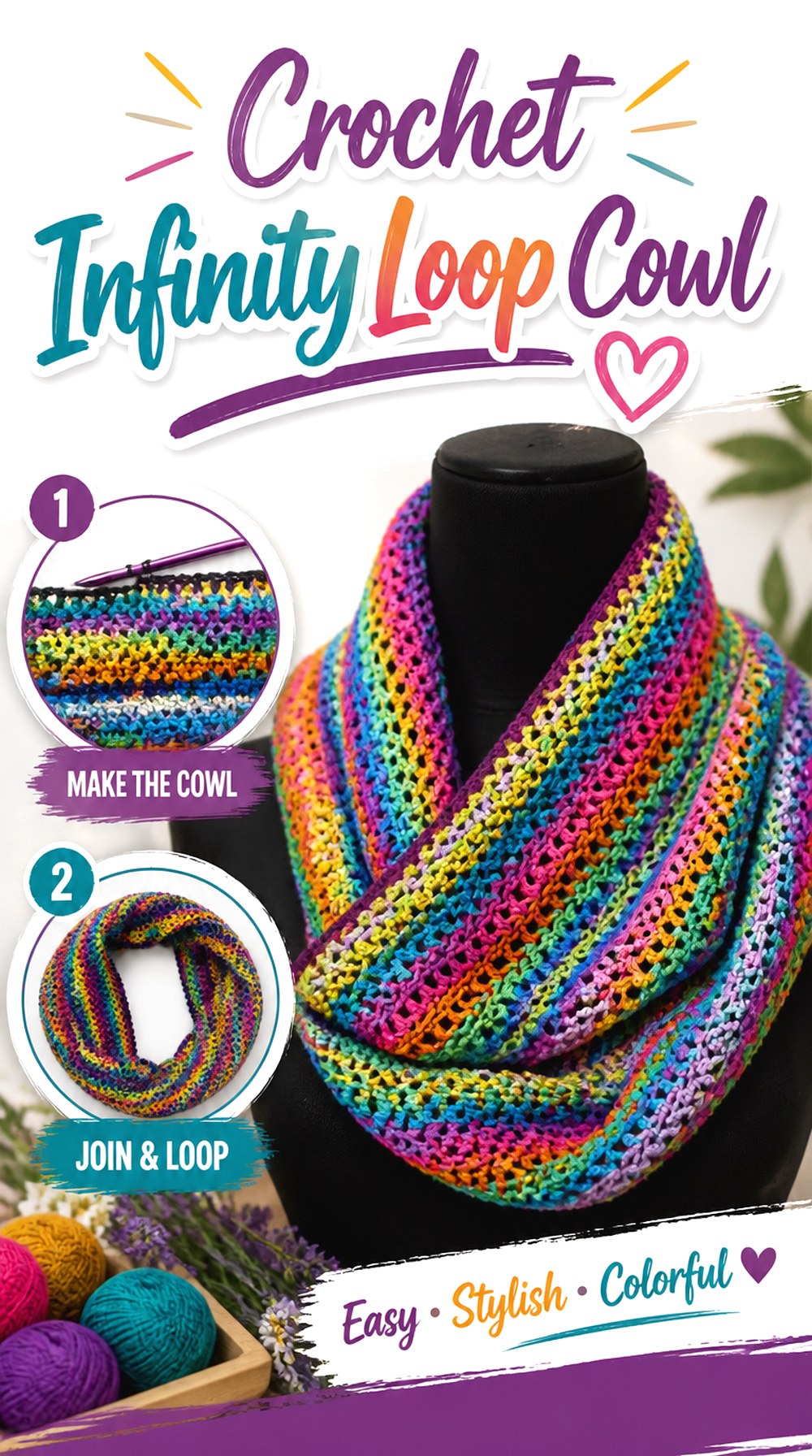
An infinity cowl gives you substantially more styling room than a short neck tube because the extended loop can hang with scarf-like drape or wrap closer to the neck. The Crochet Crowd’s tutorial focuses on an infinity-style accessory and describes the form in the cowl/Mobius family, making it a useful starting point for readers who want a continuous loop rather than a compact collar.
This approach works especially well when you want the finished piece to be visibly part of an outfit instead of disappearing beneath a coat. Before choosing yarn, decide whether your priority is soft looping movement or a fuller, more structured wrap.
Length Determines the Styling Range
An infinity loop needs enough circumference to create its characteristic drape. If you shorten the concept substantially, it begins behaving more like a standard pull-on cowl. Extra length creates additional wrapping possibilities, but it also increases yarn use and finished weight.
Before adapting the tutorial, arrange a similarly sized scarf around your neck to estimate the amount of hanging fabric you actually enjoy wearing. That gives you a more useful target than choosing length from appearance alone.
Check Orientation Before the Loop Is Final
Long circular accessories make twists more noticeable than small cowls. If the chosen construction requires joining or closing a long section, lay the fabric out first and confirm its orientation before completing the finish.
A deliberate twist can be part of some Mobius-inspired designs, but an accidental one behaves differently. Follow the creator’s construction rather than adding or removing a twist simply because another infinity scarf uses one.
Softer Drape Keeps the Loop From Feeling Rigid
Because this style relies on folds, yarn that forms a very stiff fabric can make the loop stand away from the body instead of falling naturally. Make a small fabric sample if you are changing the suggested yarn.
A softer fabric is usually preferable when loose drape matters most. If you want a thick sculptural winter loop instead, additional body may be desirable; just remember that the same material will feel bulkier once the cowl is doubled around the neck.
2. Crochet Lightweight Five Way Cowl

This option moves away from heavy winter neckwear. Bag-O-Day Crochet presents the tutorial as a “5 in 1” cowl and describes lightweight cowls suitable for milder weather, giving readers a useful alternative to the dense, super-bulky projects elsewhere in this list.
A flexible multi-wear cowl makes sense when you want an accessory that can be rearranged rather than locked into one close-fitting shape. That versatility depends heavily on fabric movement. A rigid substitute can technically produce the same basic dimensions while losing much of the wearing flexibility that makes this concept different.
Airflow Can Be an Advantage
Not every crochet cowl needs to block winter wind. A lighter fabric can provide color and texture around the neckline without the heat of a dense cold-weather collar.
If you are choosing this concept for transitional seasons, consider the openness of the stitch fabric as well as yarn weight. Two light yarns can still behave differently when one creates a compact fabric and another allows noticeably more airflow.
Multi-Way Styling Needs Flexible Fabric
A piece designed to be rearranged benefits from bending and folding without forming hard creases or bulky ridges. That makes drape a functional consideration rather than simply an aesthetic one.
When substituting yarn, work enough of a sample to fold it over itself. If the doubled fabric feels awkwardly thick, the finished cowl may have fewer practical styling options even when the circumference is technically correct.
Keep Decorative Texture From Taking Over
A lightweight cowl can handle texture, but raised stitches and dense embellishment may change both weight and flexibility. If adapting the idea, use accent texture selectively when movement is the main goal.
This is also a good place for color changes or subtle surface interest because those details can remain visible without adding significant physical bulk. Let the multi-wear shape stay the primary feature.
Original Tutorial and Creator Credit
Creator: Bag-O-Day Crochet
3. Crochet Seamless Double Crochet Cowl
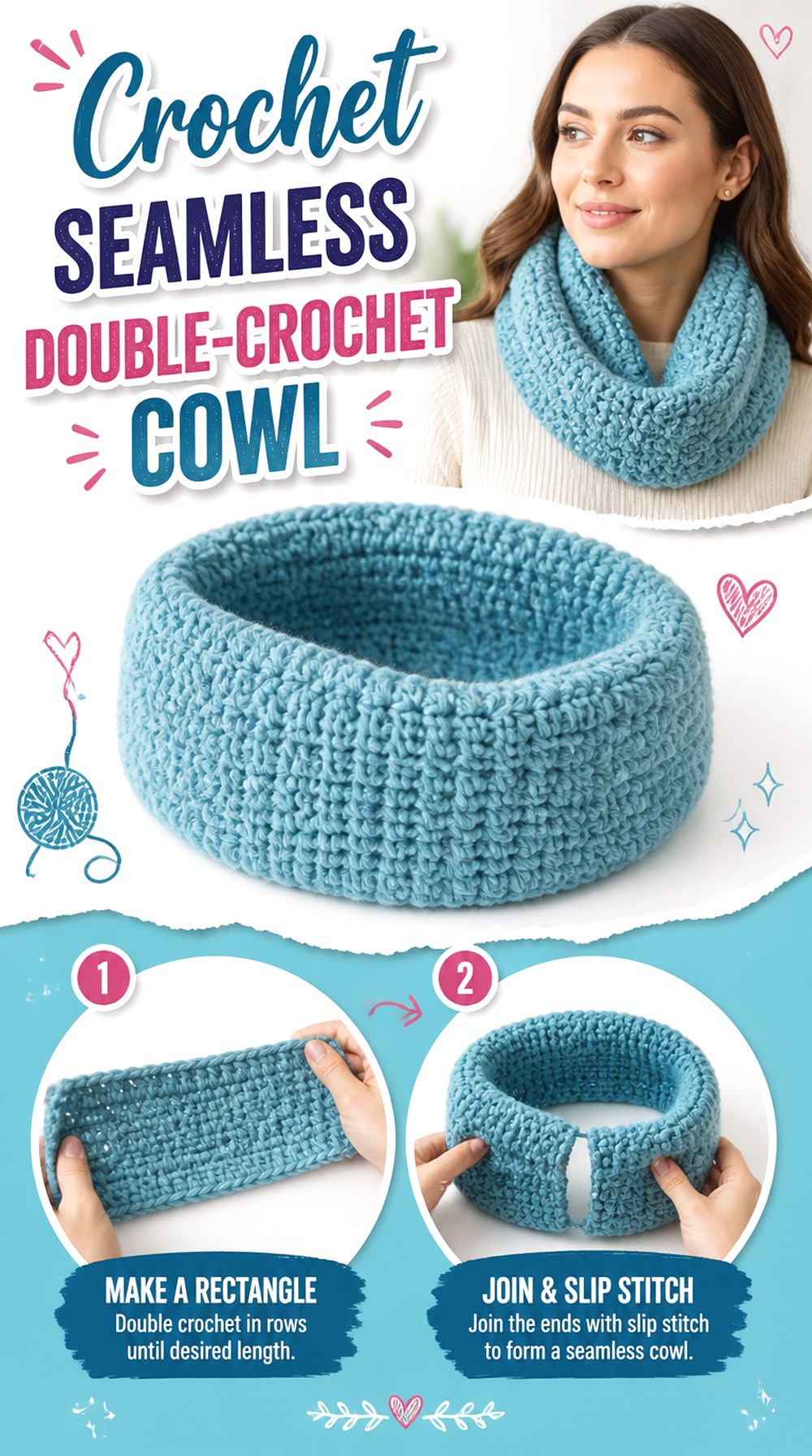
Fiber Flux’s tutorial demonstrates a straightforward cowl worked in the round, making the circular construction itself the main reason to consider this version. The project uses basic double crochet and avoids turning a separate rectangle into a neck loop later.
This construction is a useful choice when you prefer a clean continuous shape and want to focus on maintaining consistent rounds. Its uncluttered surface also gives the yarn more visual influence than a highly decorative stitch pattern would. Solid shades make the stitch rhythm obvious, while variegated or gradient yarn can provide most of the visual movement without requiring additional motifs or embellishments.
Test the Starting Ring Over the Head
With a closed cowl, the earliest circumference decision can determine whether the finished piece is wearable. A starting edge that looks generous on the hook may still have less stretch than the body fabric.
Before investing in many rounds, carefully test whether the opening passes comfortably over the intended wearer’s head. If you are following the tutorial exactly, use the creator’s sizing guidance; if adapting it, base changes on your own fabric rather than an assumed universal cowl size.
Seamless Construction Makes Round Transitions Visible
Removing a side seam does not automatically make every transition invisible. Joined rounds, turning points, or stitch-marker positions can still create a visual line depending on the method.
Decide whether that line matters to you before adding stripes or directional texture. A consistent transition can simply be worn toward the back, while irregular tension in the same area becomes more noticeable on a plain fabric.
Simple Stitches Put the Yarn in Charge
A basic double-crochet surface does not compete with dramatic yarn. That makes this cowl a practical candidate for gradients, speckles, or other color effects you want to see clearly.
The trade-off is that very open double-crochet fabric may not block wind like denser stitches. If maximum warmth is the priority, judge the actual fabric density rather than assuming every cowl provides the same protection.
Original Tutorial and Creator Credit
Creator: Fiber Flux
4. Crochet Shell Stitch Halo Cowl

This shell-stitch cowl from Bella Coco takes a softer, more decorative direction. The source project combines a shell-based fabric with fine yarns held together, including a fuzzy strand that gives the sample a gentle halo, and the tutorial shows the piece being joined after the main fabric is completed.
The result suits readers who want a cowl with more visual delicacy than chunky ribbing. Shell stitches create obvious pattern rhythm, so yarn selection affects both texture visibility and the overall softness of the surface. This style can work as dressier neckwear, but a heavily fuzzy substitution may obscure the shell definition that gives the design much of its character.
Balance Halo Against Shell Definition
A fuzzy companion strand can soften the edges of each shell and produce an appealing blended surface. Too much halo, however, can make individual stitch groups harder to distinguish.
If you are changing fibers, compare a clean, smooth swatch with the fuzzier option before committing. Choose based on whether you want the stitch architecture or the cloud-like yarn surface to dominate the finished cowl.
The Join Deserves a Clean Finish
When a cowl begins as a flat piece and is later joined, that connection becomes part of the finished object even if it is usually positioned at the back.
Before finishing, check that the two edges meet without one side being stretched to match the other. If the fabric dimensions differ, address the tension issue first rather than forcing the seam and creating a puckered section.
Light Blocking Can Refine the Pattern
Shell-based fabric can change after blocking because the stitch groups have room to settle and open. That matters if you are judging circumference or height from an unfinished piece.
Use the care method appropriate for the actual fiber you choose, and avoid assuming all yarn should be treated identically. A small swatch can show whether blocking substantially changes both drape and visible shell spacing.
Original Tutorial and Creator Credit
Creator: Bella Coco
5. Crochet Raised Herringbone Texture Cowl

For a cowl where stitch relief is the main visual feature, the Into the Bush design from Rich Textures Crochet is a much stronger contrast to plain tubes or openwork styles. The project is worked in the round and uses pronounced texture associated with raised herringbone-style crossed post work, along with additional surface detail.
This type of cowl is worth choosing when you enjoy a fabric that looks substantial even in a single color. Because the surface already contains strong lines and relief, color can remain understated without making the finished accessory look plain. The trade-off is a denser, more involved fabric that deserves careful attention to tension.
Raised Stitches Need Enough Definition
Relief texture is easiest to appreciate when the yarn allows shadows and stitch direction to remain visible. Highly fuzzy fibers can blur the crossings, while a dramatically variegated yarn can compete with the repeating surface pattern.
If the raised texture is your main reason for selecting this cowl, make a sample first and view it from a normal wearing distance. The most interesting yarn in the skein is not always the clearest yarn for architectural stitches.
Extra Surface Texture Can Add Weight
Post stitches and other dimensional techniques put more yarn into the same visible area than very open stitch patterns. On a small cowl that may be desirable because it creates substance and warmth.
If you enlarge the height substantially, however, remember that the additional textured fabric can become heavier around the neck. Add height based on how the actual fabric feels, not simply because a taller collar looks appealing when laid flat.
Track the Texture Before Errors Multiply
Repeating relief patterns can make an error difficult to notice until the diagonal or raised line visibly shifts. Pause periodically and check the direction of the texture rather than relying only on stitch totals.
That visual checkpoint is particularly useful with dark yarn, where individual post placements may be harder to read. Catching a misplaced texture section early avoids having to decide whether a large visible interruption is acceptable later.
Original Tutorial and Creator Credit
Creator: Rich Textures Crochet
6. Crochet Fold Down Tri Color Cowl
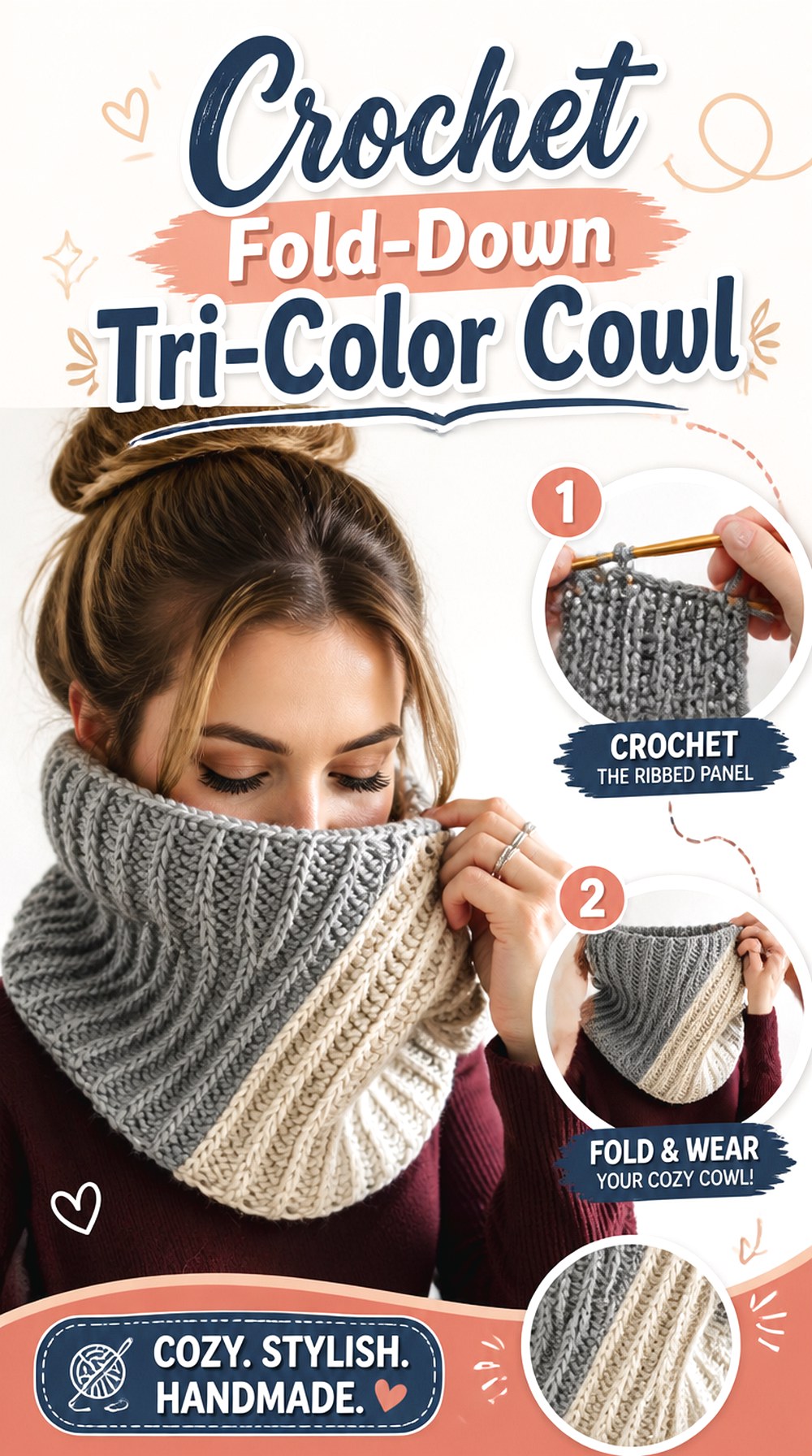
B.Hooked Crochet’s cowl is intentionally a little oversized and designed so the upper section can fold down, with three colors adding clear horizontal visual breaks. The creator describes the fold as a way to build extra warmth into the finished accessory.
This makes the design notably different from short neck warmers that sit at one fixed height. A taller cowl gives you more control over how much fabric reaches the upper neck, but it also makes yarn softness and thickness more important because doubled fabric will rest closer to the face. Color placement can reinforce that folded shape rather than functioning as an unrelated decorative stripe sequence.
Height Has a Functional Purpose Here
Extra rows are not simply making the cowl larger. They provide enough fabric for a visible fold, so shortening the project can change the basic way it is intended to sit.
If you want less bulk, decide whether you still want a fold-down collar before reducing height. A shorter version may work well, but it becomes a different type of cowl rather than a scaled-down version of the same silhouette.
Place Color Changes With the Fold in Mind
A color section that looks prominent on a flat cowl can become partly hidden once the upper edge is turned down. Before choosing stripe proportions, imagine the piece in its actual wearing position.
For an adaptation, you might make the fold contrast deliberately with the body or keep the transitions subtle. Either way, plan from the folded view rather than only from the crocheted tube.
Neck-Sensitive Fibers Need Extra Scrutiny
Folded fabric puts two layers of yarn against the upper neck, and some wearers may also position it close to the jaw. That makes texture against the skin especially important.
A fiber that feels acceptable in a hand swatch may feel different after prolonged contact with the neck. If you are substituting yarn, test the fabric against the intended wearing area before committing to a tall doubled collar.
Original Tutorial and Creator Credit
Creator: B.Hooked Crochet
7. Crochet Granny Stitch Neck Cowl

The familiar granny-stitch structure moves especially well into a cowl when you want visible clusters and small areas of open space rather than a solid wall of fabric. Diving Ducks Crochet’s tutorial is specifically devoted to a granny-stitch cowl, giving this idea a different visual rhythm from the ribs, shells, and raised post textures elsewhere in the collection.
This is a useful choice for color lovers because the repeating horizontal structure can support stripes without requiring complex motif assembly. It can also be kept in one shade when you want the cluster pattern itself to do the work. Remember that the openings affect warmth as well as appearance.
Granny Spacing Changes Wind Protection
The spaces that make granny stitch recognizable also allow more air through than many dense crochet fabrics. That is not necessarily a drawback; it can make the cowl more comfortable in mild weather or when worn indoors.
If you want it primarily for cold windy conditions, compare the openness of the finished fabric with a more compact cowl before choosing. A thick yarn does not automatically make an open stitch structure wind resistant.
Stripes Should Support the Cluster Rhythm
Granny-style rounds naturally create horizontal bands, which makes deliberate color changes easy to read visually. Too many unrelated shades can make the surface busier than you expect once the cowl is gathered around the neck.
A limited palette emphasizes the stitch pattern, while frequent changes produce a more playful result. Arrange the yarn together first and decide which effect is the actual goal.
Keep the Upper Edge Comfortable
A decorative border or tighter finishing round can stabilize the opening, but it can also remove stretch. That matters more at the top of a pull-on cowl than on the edge of a blanket.
If you add your own edging, test the opening again before fastening off. A beautifully finished edge is not useful if it turns an otherwise comfortable cowl into something difficult to pull over the head.
Original Tutorial and Creator Credit
Creator: Diving Ducks Crochet
8. Crochet Super Bulky Two Size Cowl

The Turtle Trunk’s Cloud Nine Cowl gives readers a compact super-bulky option with both child and adult sizing included in the source pattern. The designer describes it as a thick, warm cowl made with super-bulky yarn, so its appeal is substantially different from the lightweight or drapey options in this roundup.
This style is useful when you want a simple cold-weather accessory where loft is part of the finished look. Because the fabric is physically substantial, changes in circumference or height are immediately noticeable. It is also a good reminder that child and adult cowls should not be treated as identical tubes made from different colors.
Choose the Intended Size Before Starting
When a tutorial supplies separate child and adult guidance, use the size that corresponds to the intended wearer instead of improvising from appearance alone. A cowl needs to balance head clearance with neck coverage.
If you are making it as a gift and cannot test the fit, check the creator’s stated sizing information carefully. Avoid assuming that adding or removing a few stitches will produce a predictable new size without considering the repeat and fabric stretch.
Super-Bulky Fabric Builds Volume Quickly
Thick yarn can make even a relatively uncomplicated cowl look substantial. It can also reduce the amount of room available inside the opening because the fabric itself takes up space.
When assessing fit, consider the inside circumference rather than only the outer measurement. This matters particularly if the cowl will be worn over a high sweater collar or beneath a coat with a narrow neckline.
Keep the Collar From Becoming Too Tall
With lofty yarn, every additional section adds noticeable vertical bulk. A height that looks moderate when lying flat may push upward once the cowl is compressed between shoulders and jaw.
Try on the project at intervals if possible. Stop when the cowl gives the coverage you want rather than automatically adding height simply because more yarn remains.
Original Tutorial and Creator Credit
Creator: The Turtle Trunk
9. Crochet Chunky Vertical Rib Cowl
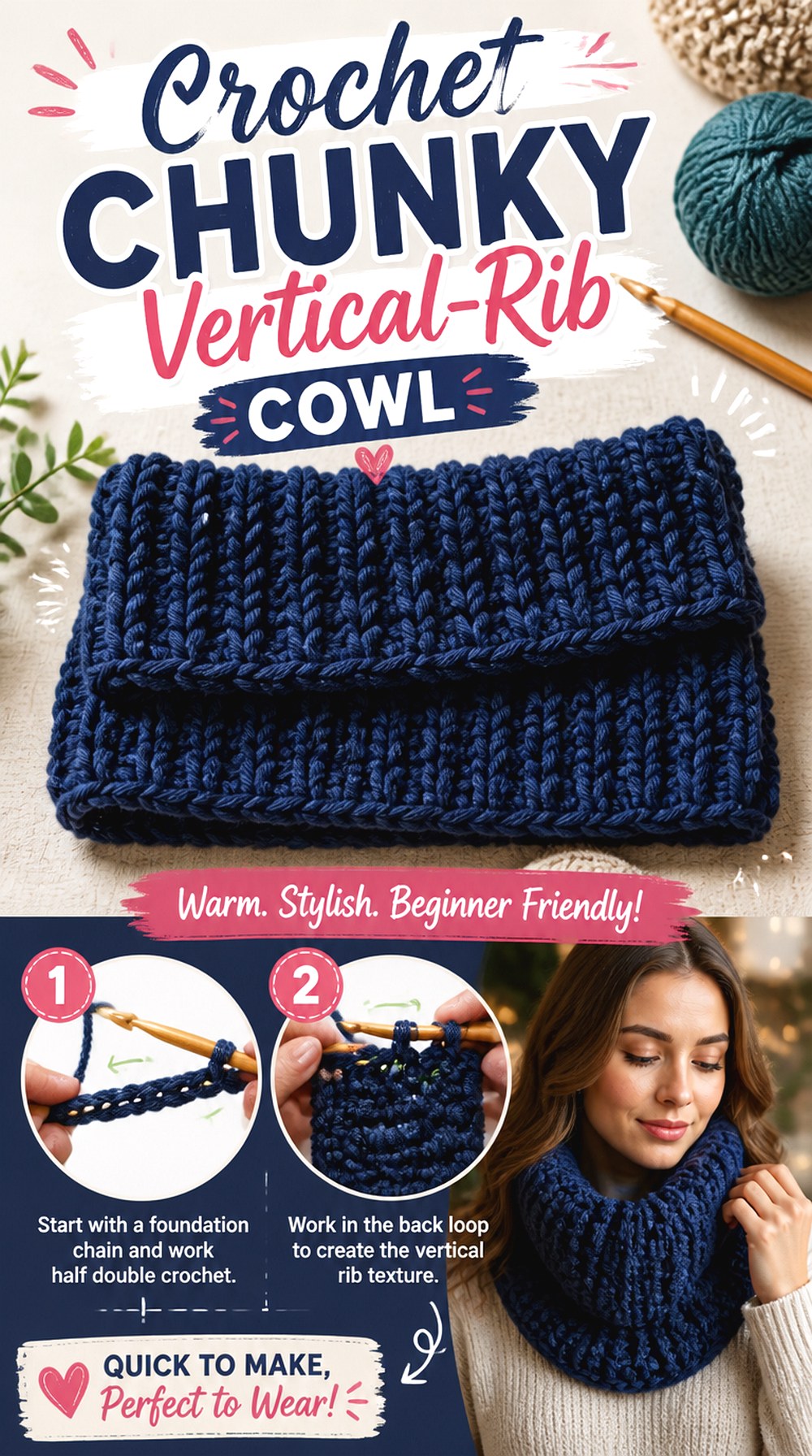
Whistle and Ivy Modern Crochet’s cowl uses chunky ribbing and a construction that creates strong vertical lines when the finished piece is worn. That orientation is important because vertical ribs give the neck warmer a different visual effect from horizontally worked ridges.
The design is a good choice when you want the simplicity of a rectangular fabric with the polished look of strong rib texture. Because the ribs run upward after finishing, the seam becomes an important finishing detail. This is also a style where a solid or lightly heathered yarn can be enough; complicated color changes may distract from the shadows formed by the ribbed surface.
Rib Direction Changes the Silhouette
Vertical ribbing visually pulls the eye upward and can make a chunky cowl look less like a series of horizontal bands. It may also allow the fabric to compress differently from a horizontally ridged snood.
When comparing ribbed cowl ideas, do not treat all ribs as interchangeable. Look at the direction they run after assembly, because orientation affects both appearance and how the fabric settles.
Align the Seam Without Flattening the Ribs
When a ribbed rectangle is closed into a loop, the first and last edges should meet without twisting the fabric or creating a visibly compressed section.
Before fastening the seam permanently, pin or hold the edges together and inspect the rib alignment from the right side. If one edge is longer, forcing them together can make the finished cowl pull noticeably toward the join.
Chunky Yarn Can Turn Firm Quickly
A rib stitch may look stretchy, but thick yarn combined with a tight hand can create a surprisingly dense neck warmer. If your fabric stands almost upright when you expect softer folds, tension may be contributing.
Rather than relying only on the hook size printed on a label, compare the feel and flexibility of your fabric with the look demonstrated in the tutorial.
Original Tutorial and Creator Credit
Creator: Whistle and Ivy Modern Crochet
10. Crochet Three Button Ribbed Wrap Cowl
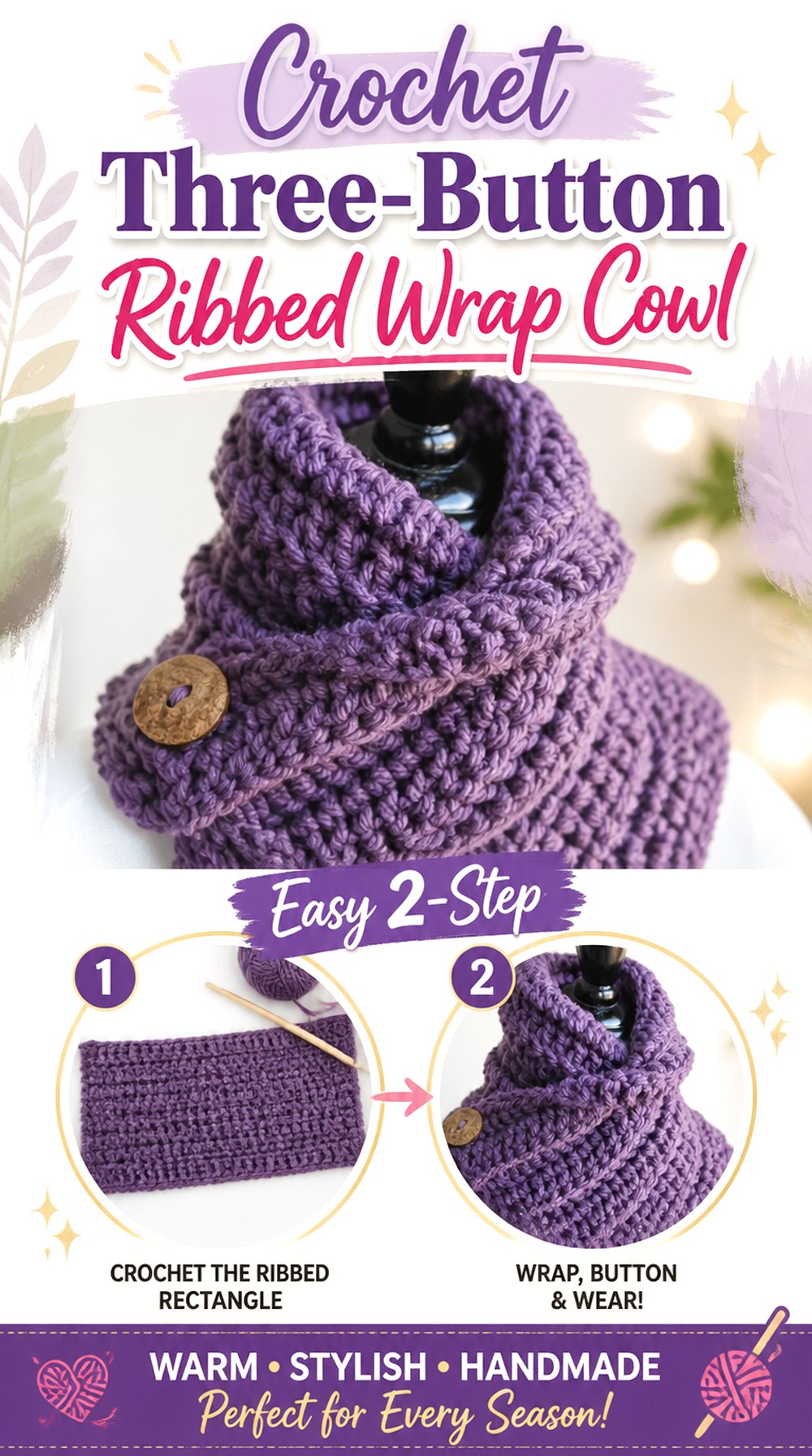
Amanda Crochets’ design changes the basic cowl shape by using a long ribbed piece secured with three buttons instead of a permanently closed tube. The source pattern uses back-loop work to create ribbing and shows several ways the finished buttoned piece can be arranged.
This construction is particularly useful for anyone who dislikes pulling a fitted cowl over the head. It also lets overlap become part of the styling. The buttons are functional, not merely decorative, because their placement determines how tightly and at what angle the fabric wraps. That makes finishing decisions more important than they are on a simple continuous tube.
Button Position Controls the Overlap
Moving a button changes more than its visual position. It changes how much fabric overlaps and therefore how closely the cowl sits around the neck.
Before sewing buttons permanently, temporarily secure them and test the arrangement in the intended wearing position. This is especially useful if your yarn or gauge produced a slightly different length from the source project.
Ribbing Makes the Wrap Look Substantial
The back-loop texture gives the piece strong linear definition and creates a thick-looking surface. Because the wrap overlaps when buttoned, part of the cowl may contain more than one fabric layer.
Take that into account when choosing yarn. A very heavy substitute can make the overlapping area noticeably bulkier than the single-layer section at the back of the neck.
Choose Buttons for Function as Well as Scale
Large buttons can become a visible design feature, but they still need to work with the crochet fabric and closure method demonstrated by the creator.
Check that the selected buttons sit securely and that the surrounding fabric does not distort badly when fastened. If changing button size, review how the tutorial handles closure rather than assuming any decorative button can be substituted without adjustment.
Original Tutorial and Creator Credit
Creator: Amanda Crochets
11. Crochet Super Chunky Horizontal Rib Snood
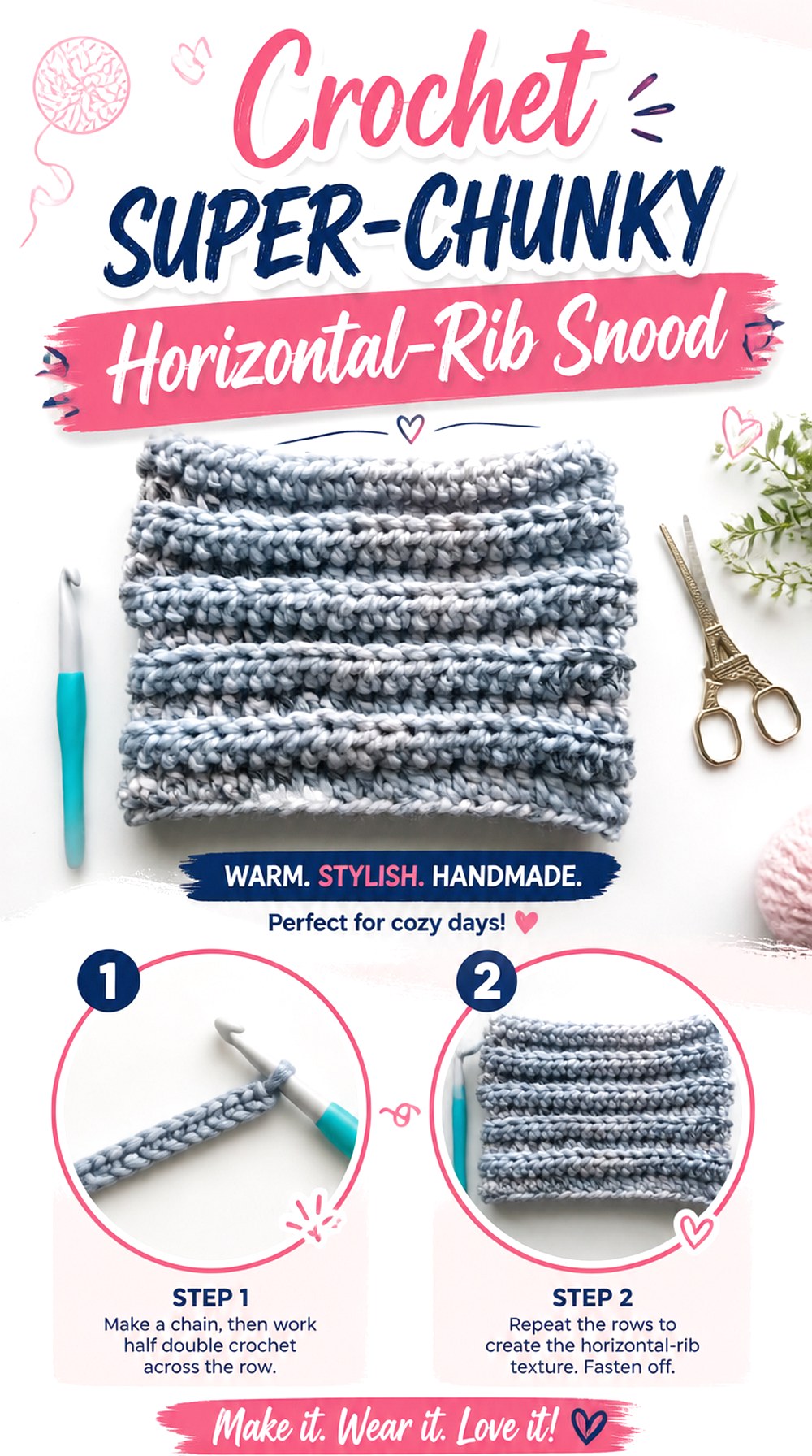
The Arctic Ice Snood from forthefrills uses super-chunky yarn and works its rib effect horizontally around the finished neck warmer. The designer specifically notes choosing this orientation after considering how vertical ribbing behaved, and the project is worked in the round rather than relying on a final side seam.
This makes it an interesting comparison with the vertical-rib cowl above. Both emphasize ribbing, but their construction and finished direction are different. The horizontal bands help the snood visually wrap around the neck, while the thick yarn creates a plush, compact shape rather than a long infinity-style drape.
Horizontal Ridges Encourage a Softer Collapse
Ribs running around the circumference create stacked horizontal lines, which can help a tall snood settle downward rather than visually extending the neck.
If you increase height, watch how the fabric starts to fold on itself. More height can create extra softness and volume, but after a point the collar may feel crowded beneath a coat or around the chin.
Check the Initial Circle Before Building Upward
The designer’s own guidance emphasizes confirming that the starting ring can fit over the head. That is a valuable checkpoint for any in-the-round snood.
Super-chunky yarn can make circumference difficult to judge by sight because the strand itself is so thick. Test the opening while changes are still simple rather than discovering the problem after the full height is complete.
Give Thick Yarn Room to Bend
A very tight fabric can make super-chunky yarn feel more rigid than cozy. The desired result here depends on a plush ribbed texture that can curve around the wearer.
If your substitution produces a board-like swatch, consider whether your hook-and-yarn combination is creating the same type of fabric shown by the source. Match behavior, not merely the printed yarn-weight category.
Original Tutorial and Creator Credit
Creator: forthefrills
12. Crochet Bean Stitch Buttoned Cowl

Yarn and Chai’s Malia buttoned design combines a flat wrap construction, pronounced bean-stitch texture, and button fastening. The source describes the cowl as a textured piece that can be worn over lighter clothing or tucked beneath a winter coat, giving it more styling flexibility than a fixed closed tube.
This is the buttoned option to consider when surface texture matters as much as the closure. Unlike a plain ribbed button wrap, the raised stitch pattern creates a busier, more dimensional fabric. That makes color choice, yarn definition, and button scale interact with one another rather than operating as separate design decisions.
Bean Texture Already Provides Strong Detail
A raised bean-style stitch can carry plenty of visual interest without elaborate striping. If you want the texture to remain readable, a solid or gently shifting color can be easier to interpret than a high-contrast variegated yarn.
That does not mean multicolor yarn is wrong. It means you should decide whether the viewer should notice the stitch texture first or the color changes first.
Closure Placement Changes the Neck Shape
A flat buttoned piece can sit differently depending on how much of the fabric overlaps. A close overlap forms a warmer collar, while a looser arrangement can create more drape around the neckline.
Use the creator’s button placement as the construction reference. If you alter the finished length, test the new overlap before committing, because the original button positions may no longer produce the intended shape.
Think About Texture Under a Coat
Raised stitches create additional surface depth. That is attractive when the cowl is exposed, but the same texture can feel bulkier when compressed beneath a narrow coat collar.
If you intend to wear the cowl mostly under outerwear, try a fabric sample between your neck and jacket collar. A beautiful dimensional stitch may still need a thinner yarn choice for that particular use.
Original Tutorial and Creator Credit
Creator: Yarn and Chai
13. Crochet Hooded Snood Cowl
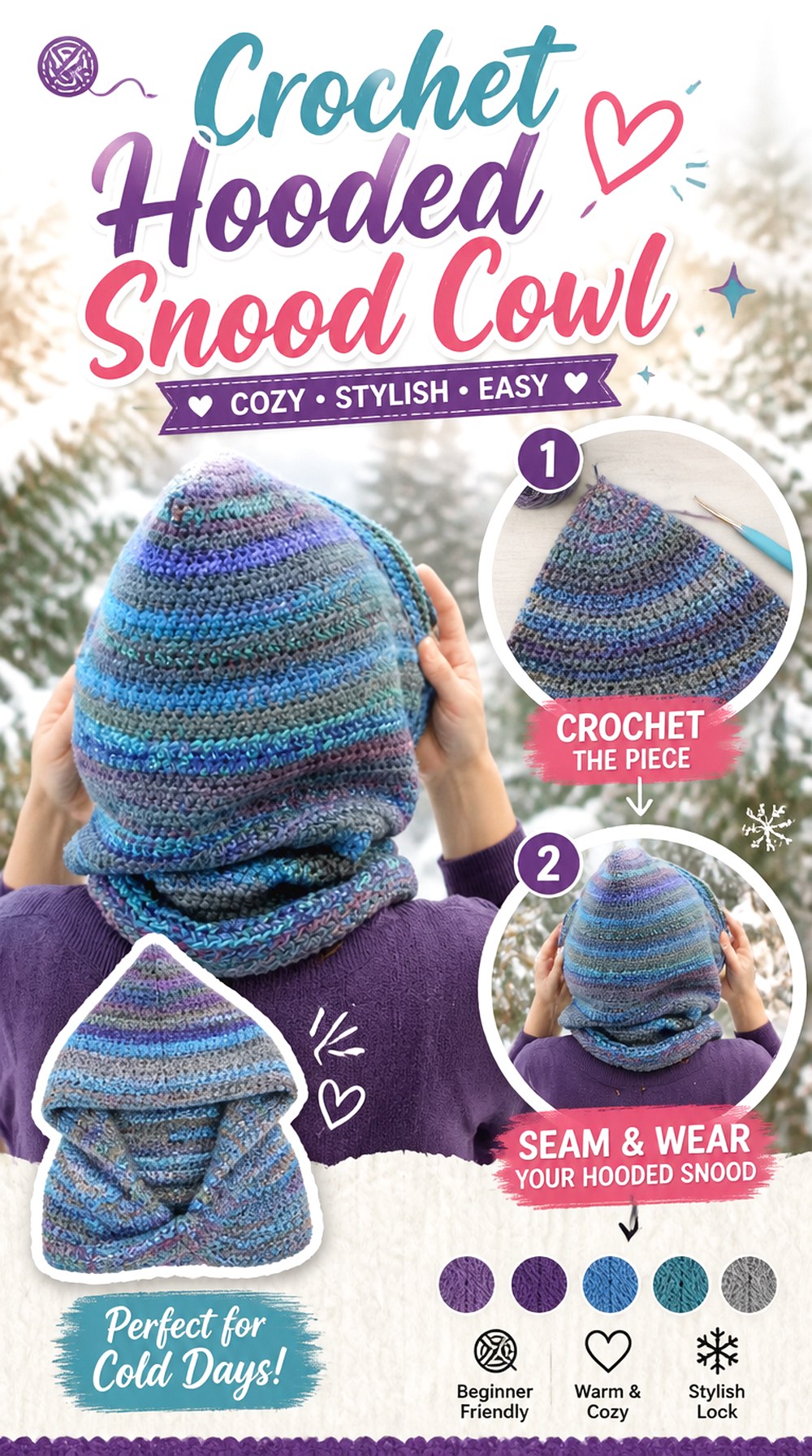
Crochet with illJay’s tutorial specifically covers a snood that can function as a balaclava or hooded cowl, moving this project beyond neck-only coverage.
That dual use changes the most important sizing question. A standard cowl only needs a comfortable neck and head opening; a hooded snood also needs enough depth and circumference to rise around the head without pulling tightly at the throat. This makes it a practical choice for readers who want one accessory to cover more than the neck. It also places the chosen yarn closer to the cheeks and hair, so softness, static, drape, and bulk can become more noticeable.
Head Coverage Needs More Freedom
A snood that lifts over the head should not be sized as if it were only a narrow neck warmer. It needs enough fabric to move from the shoulders upward while still leaving comfortable space around the face.
When adapting, test both wearing positions. A circumference that looks generous while resting around the neck may feel much more restrictive once the same fabric is pulled over the head.
Drape Affects the Hood Shape
Very stiff crochet can produce a hood that stands away from the head instead of settling naturally. Extremely loose fabric can behave in the opposite way and collapse more than you want.
Look at the source tutorial’s fabric rather than focusing only on yarn thickness. When substituting, aim for similar flexibility if you want the snood to transition between neck and hood positions in a comparable way.
Face Contact Makes Fiber Choice Personal
A hooded cowl can touch areas that a standard scarf does not, including the cheeks, temples, and hairline. That makes personal sensitivity important.
If the item is a gift, choose conservatively unless you know the recipient’s fiber preferences. Also check the yarn manufacturer’s care instructions, since a frequently worn face-adjacent accessory may need different practical care than decorative crochet.
Original Tutorial and Creator Credit
Creator: Crochet with illJay
14. Crochet Double Strand Self Striping Cowl

TheCraftyGemini’s tutorial demonstrates a cowl made by working with two strands drawn from one skein of a color-changing yarn, allowing the yarn’s shifting shades to create much of the visual interest.
This approach is different from intentionally planned stripes because the color interaction develops through the yarn itself. Holding strands together also changes the fabric: it becomes fuller and can show color combinations that would not appear in the same way with a single strand. This is a useful idea when you want a visually active cowl without managing a long sequence of separate yarn colors, but even strand feeding becomes an important practical consideration.
Two Strands Change More Than Thickness
Holding yarn double changes the effective fabric weight, hand feel, and color blending. Two strands from the same color-changing skein may not show identical colors at the same moment, which can create an interesting marled or blended effect.
If you substitute a solid yarn, the construction can still work, but you will lose much of the spontaneous color variation that distinguishes the source project.
Keep Both Strands Feeding Consistently
When two strands are treated as one, uneven tension can cause one to form loose loops while the other carries more of the stitch load. This becomes especially visible in a simple cowl surface.
Pause occasionally to check that both strands are being caught together and are moving freely. Tangled yarn management is easier to correct before it begins affecting several inches of fabric.
Let the Yarn Handle the Color Planning
Self-striping yarn already creates frequent visual changes, so extra texture may not be necessary. A relatively straightforward stitch surface lets the evolving color combinations stay readable.
Before buying additional skeins solely to create manual stripes, look at how the chosen yarn changes across a larger swatch. The yarn may already provide enough movement for the finished cowl.
Original Tutorial and Creator Credit
Creator: TheCraftyGemini
15. Crochet Airy V- Stitch Autumn Cowl

Jayda InStitches’ autumn cowl uses V-stitch construction, creating a noticeably more open fabric than compact ribs or dense single crochet. The creator’s tutorial notes that the foundation should fit loosely over the head and discusses both adult and child versions.
This cowl fits readers who want seasonal neckwear without the weight of a heavy winter collar. The repeating V shapes introduce small spaces that keep the fabric visually light and make color changes easy to see. Because the project is a closed pull-on style, however, the starting circumference still matters even though the body looks airy and flexible.
Open V-Stitches Trade Density for Movement
V-stitch fabric generally contains visible space between stitch groups. That gives the cowl drape and a lighter appearance, but it also means the fabric does not behave like a densely crocheted wind barrier.
Choose this style because you like that balance rather than trying to make it perform exactly like a solid super-bulky neck warmer. Different cowl structures are useful for different weather and layering needs.
Fit the Foundation Before Adding Height
The creator explicitly emphasizes a foundation that fits loosely over the head. That is especially important when the body stitch later feels more flexible than the starting edge.
Check the opening early. If you are resizing, follow the tutorial’s repeat requirements and sizing guidance rather than making an arbitrary adjustment that could disrupt the V-stitch pattern.
Use Color Changes to Emphasize the V Pattern
The repeated stitch groups make horizontal color bands easy to read, but the design can also work in a single shifting yarn. If using several shades, consider whether each band is wide enough to show the V shape clearly.
Very rapid color changes can visually fragment the stitch pattern. Longer changes keep the surface calmer and make the repeating V structure more obvious.
Original Tutorial and Creator Credit
Creator: Jayda InStitches
16. Crochet Knit Look Ribbed Cowl

Spotted Horse Design Co. takes a different approach to surface texture by using crochet techniques that create a knit-like appearance. The designer’s accompanying pattern describes alternating single-crochet-based techniques and working the cowl in continuous rounds, producing a seamless-looking, ribbed surface.
This is a strong choice for crocheters who like the compact vertical texture often associated with knitted accessories but want to stay with a crochet construction. Because the visual effect depends on stitch placement rather than large decorative clusters, tension consistency is especially important. Uneven loops can interrupt the clean lines more noticeably than they would in a highly textured or variegated design.
The Knit Effect Depends on Placement
A knit-like crochet surface usually comes from where the hook enters the previous stitches, not from simply changing to thicker yarn. That means consistent placement matters throughout the project.
If you are new to the technique, stop occasionally and compare the recent section with the established fabric. A misplaced stitch may appear as a visible break in what should otherwise be a regular vertical pattern.
Continuous Rounds Need a Clear Marker
The source construction uses continuous rounds, which avoids a traditional joined-round seam but can make the beginning of each round less obvious.
Use a removable marker if it helps you track position. Losing the beginning may not matter visually on every stitch pattern, but it can make counting height or identifying the final stopping point less predictable.
Solid Yarn Highlights the Illusion
A solid or gently tonal yarn lets the eye follow the vertical knit-like columns. Strong variegation may still be attractive, but it can disguise some of the surface effect you chose this design to create.
Compare both goals before selecting yarn. If color is the priority, embrace the variegation; if the knit-look texture is the priority, give the stitches more visual room.
Original Tutorial and Creator Credit
Creator: Spotted Horse Design Co.
17. Crochet Color Block Oversized Snood
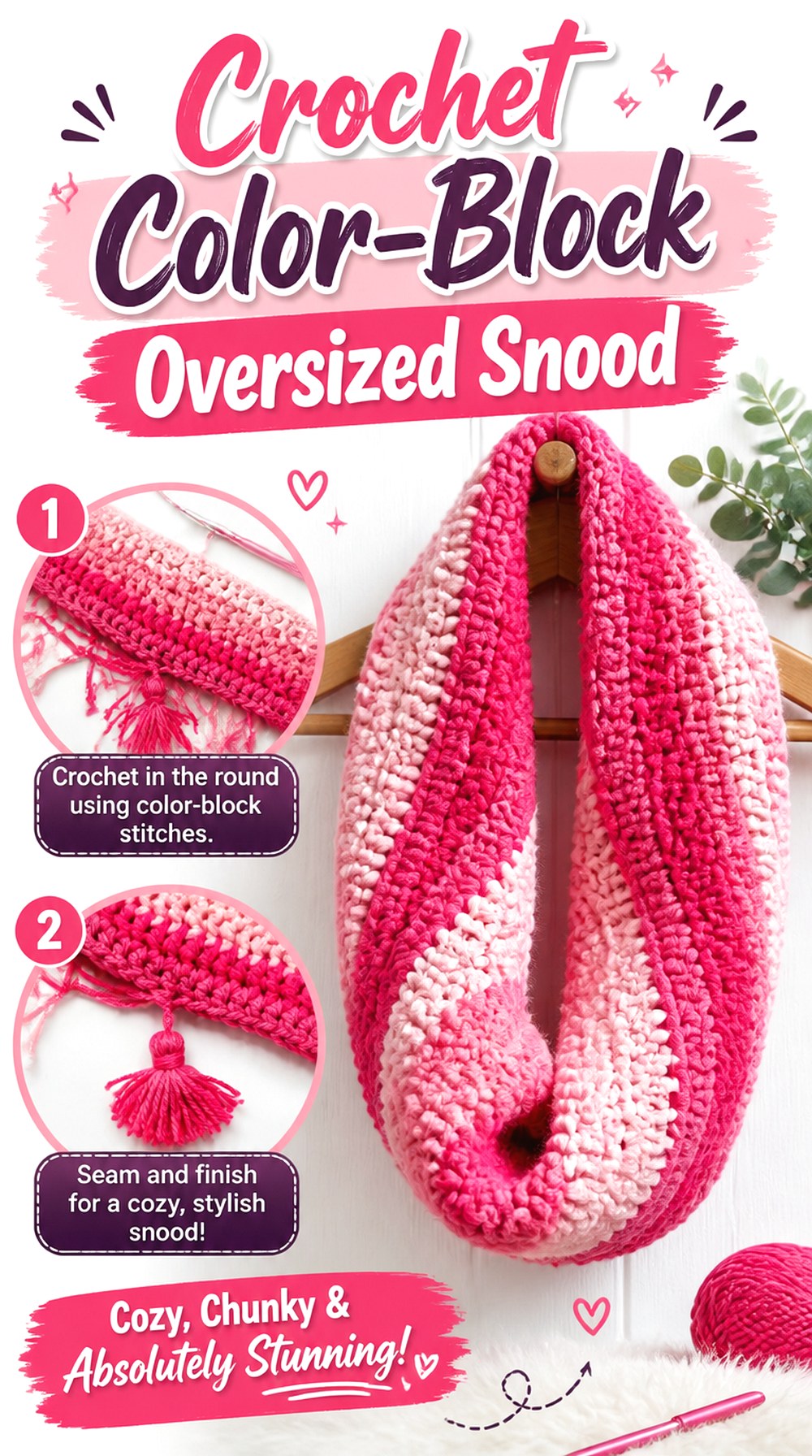
The Loopy Lamb’s Enid-inspired snood is intentionally much longer around than a compact neck warmer and uses multiple pink shades in the source version, with guidance for changing the length and adapting the color concept. The tutorial accompanies a design inspired by the snoods seen in Wednesday.
Its oversized loop makes this project more scarf-like than many of the close-fitting cowls in the list. That additional circumference creates room for dramatic draping and styling, while the broad color sections make the accessory visually prominent. Choose this type when the cowl itself is meant to be a major part of the outfit rather than a discreet layer under a coat.
Large Circumference Changes How It Is Worn
An oversized snood needs enough length to create loose folds rather than simply encircle the neck. Reducing that length can turn the concept into an ordinary cowl, even if the stitch pattern stays unchanged.
The source includes resizing guidance, so use that information if you want a different scale. Think first about the number of wraps and amount of drape you want from the finished accessory.
Broad Color Sections Suit the Statement Scale
The source design uses several related shades, allowing color to become part of the recognizable oversized look. You can adapt the palette without copying the original combination.
For a calmer result, use closely related tones. For stronger graphic contrast, separate light and dark sections. Whichever route you take, evaluate the colors in the order they will appear around the whole loop rather than as isolated skeins.
Matching Yarn Behavior Matters When Mixing Shades
Combining several colors works most predictably when the yarns produce similar fabric thickness and stretch. Two skeins labeled with the same broad weight category can still behave differently.
If mixing brands or fibers, swatch them together before starting. A noticeably thicker color section may widen or stiffen part of the snood and interrupt the consistent drape that an oversized loop needs.
Original Tutorial and Creator Credit
Creator: The Loopy Lamb
18. Crochet One Row Repeat Textured Cowl
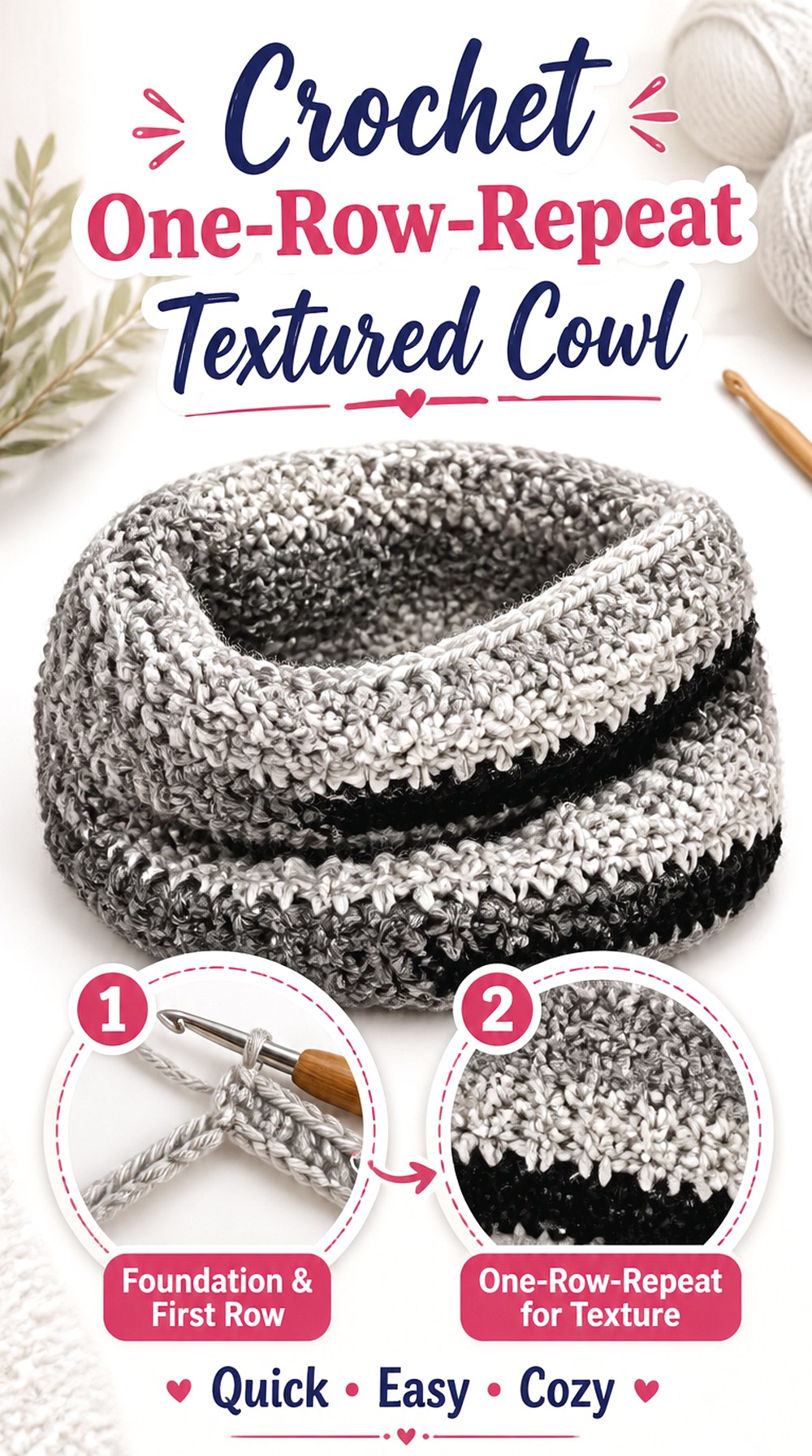
Claudetta Crochet’s tutorial centers on a cowl built around a one-row repeating design, making repetition and fabric consistency the main attraction rather than closures, multiple motifs, or complex shaping.
A repeating texture like this can be a practical choice when you want the finished cowl to look detailed without constantly switching between unrelated stitch sections. It also leaves plenty of room for adapting the visual mood through yarn. A solid color emphasizes stitch shadows, while a tonal yarn adds movement without requiring planned stripes. The key is maintaining the same tension across the repeated fabric so the cowl does not gradually change circumference or shape.
Simple Repetition Still Needs Tension Checks
A memorable repeat can encourage long stretches of uninterrupted crocheting, which is convenient but also makes gradual tension changes easy to overlook.
Lay the cowl flat or compare its width periodically. If the fabric begins narrowing or expanding, correct the cause before continuing. A repetitive stitch sequence cannot compensate for a steadily changing working tension.
Texture Can Carry a Single Color
When the surface already has visible dimension, using one shade does not mean the cowl will look plain. Light and shadow can define the repeating stitch pattern without additional color changes.
This is useful if you have a yarn whose color you want to feature cleanly. Conversely, a highly variegated yarn may reduce the visibility of the repeat, so decide which feature should take priority.
Adjust Height for the Actual Neckline
A repeating pattern makes it tempting to continue until the yarn is nearly gone, but additional height changes how the cowl sits.
Try it against the intended coat or sweater before deciding to keep adding repeats. A little extra fabric may create a comfortable fold; too much can bunch beneath the chin or compete with an outerwear collar.
Original Tutorial and Creator Credit
Which Crochet Cowl Style Fits Your Use?
For a compact cowl that can disappear neatly beneath a coat, start with the seamless double-crochet, Cloud Nine, V-stitch, or knit-look options. If visible texture is the priority, the raised-herringbone, bean-stitch, granny-stitch, and one-row-repeat projects give the surface a stronger role.
Choose one of the buttoned cowls when you want to avoid pulling the accessory over your head or want adjustable overlap. The infinity and oversized snood ideas suit readers who prefer long, visible drape. For maximum upper-neck or head coverage, compare the fold-down cowl with the hooded snood. And if bulky winter fabric is uncomfortable, the lightweight five-way or airy V-stitch designs offer less visually dense alternatives.
Conclusion
The most useful way to choose among these 18 crochet cowl ideas is to start with how you want the finished piece to behave. Pick a close pull-on tube for compact layering, a buttoned wrap when an openable neckline matters, an infinity loop for drape, or a hooded snood when you want more coverage. Then compare yarn weight and stitch density: ribs and raised textures create a more substantial surface, while shells, granny stitches, and V-stitches bring more openness.
Color can come last. A well-chosen construction will still suit its purpose when the palette changes. Once you have selected the shape and fabric behavior you want, use the original creator tutorial for the exact stitch sequence, sizing information, joining method, and finishing details.
Frequently Asked Questions
How do I know whether a crochet cowl will fit over my head?
For a closed pull-on cowl, test the actual opening before completing the full height. The foundation edge can stretch differently from the body, so a circumference that looks large enough may still feel tight when worn. Follow the tutorial’s sizing instructions and stitch-repeat requirements when resizing. Buttoned cowls are different because they open instead of needing to pass over the head.
What yarn weight is best for a crochet cowl?
There is no single best weight because the intended fabric matters more. Super-bulky yarn creates quick visual volume and a substantial collar, while lighter yarn usually produces less bulk and more drape. Also consider stitch density and fiber feel. A heavy open stitch can still allow airflow, while a lighter yarn worked densely can feel surprisingly warm. Match the yarn behavior to the cowl style.
Should a crochet cowl be tight or loose around the neck?
That depends on its job. A compact winter neck warmer may sit relatively close to reduce open space around the neckline, while an infinity cowl or oversized snood needs significantly more room for draping and wrapping. Comfort is essential in either case. A pull-on cowl also needs enough usable stretch to clear the head, so neck fit cannot be considered separately from the opening.
How tall should a crochet cowl be if I want to fold it down?
Rather than relying on one universal height, build enough depth for the fabric to turn over comfortably without pushing against the jaw. Yarn thickness makes a major difference: a small amount of super-bulky fabric can create much more volume than the same height in a lighter yarn. Try the unfinished cowl with your usual coat or sweater before deciding whether additional height will actually improve it.
Can I turn a flat crochet scarf into a cowl?
Sometimes, but the scarf’s width, length, edge structure, and stitch direction all matter. A short rectangle can often be joined into a simple loop, while a longer piece may behave more like an infinity cowl. Before seaming anything, wrap the fabric into the proposed shape and confirm that the opening, height, and drape work. Also check whether the two joining edges align cleanly without distorting the stitch pattern.
Are buttoned crochet cowls easier to adjust than closed cowls?
They can offer more flexibility because they open completely and the amount of overlap affects how closely they sit. However, the button positions and available fabric length still determine the practical adjustment range. Moving a button without checking the full wrap can create an awkward fold or overly tight neckline. Temporarily position the closures first and test the cowl in the way you plan to wear it.
Should I block a crochet cowl before joining or finishing it?
Blocking can be useful when the stitch pattern changes noticeably after the fabric relaxes, particularly with shells, openwork, or textured rectangles that must be joined neatly. The correct method depends on the yarn fiber and the creator’s instructions. If you are substituting yarn, test a swatch first. That shows whether blocking changes width, drape, or stitch definition enough to affect your final fit or seam placement.