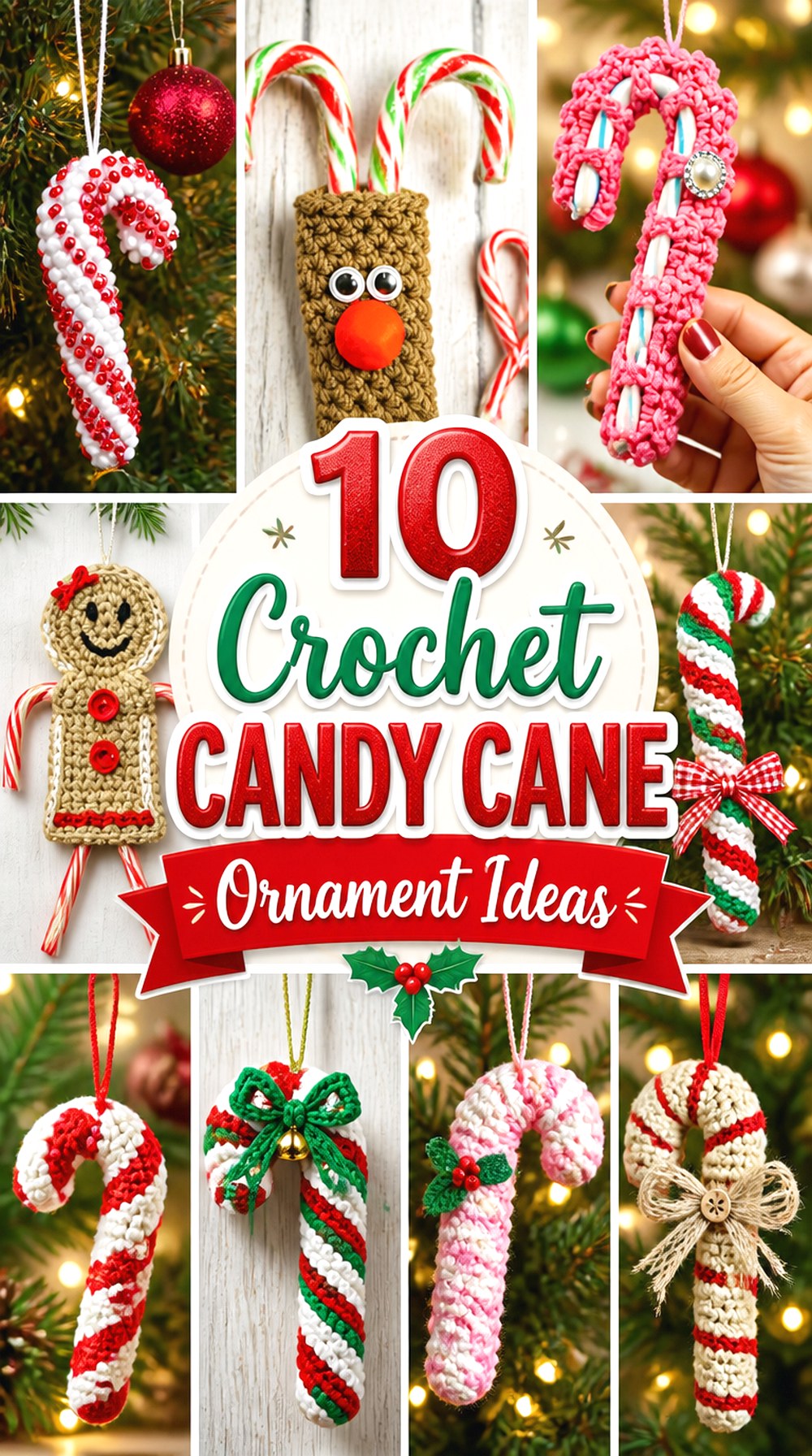

Candy cane ornaments can look surprisingly different once you move beyond the familiar red-and-white color scheme. Some are flat enough to double as gift tags, some use a flexible core to keep a crisp hook shape, and others turn the candy cane into a plush amigurumi, bead-covered ornament, or character-style holder for a real sweet.
This collection focuses on those practical differences so you can choose a project by construction, weight, texture, display method, and finishing rather than color alone. The ideas below compare structure, display, and adaptation instead of treating every candy cane as the same project. Each idea also points to an original video tutorial for the exact construction details.
Quick List
- Two-Coil Twist Crochet Candy Cane Ornament
- Flat Appliqué Crochet Candy Cane Ornament
- Curly-Cue Crochet Candy Cane Ornament
- Wire-Core Slim Crochet Candy Cane Ornament
- Velvet Amigurumi Crochet Candy Cane Ornament
- Stuffed Cotton Crochet Candy Cane Ornament
- Bead-Crochet Candy Cane Ornament
- Crochet Candy Cane Cozy Ornament
- Reindeer Crochet Candy Cane Holder Ornament
- Gingerbread Crochet Candy Cane Holder Ornament
Choose the Structure Before the Stripe Style
Candy cane ornaments can be divided into several useful construction types. Flat pieces are light and easy to layer onto gifts, wreaths, or garlands. Twisted crochet coils create the striped effect after the pieces are made, while dimensional amigurumi versions build a fuller tube that may use stuffing or an internal support. Other tutorials add wire or pipe cleaners specifically so the finished cane can be bent into its recognizable hook.
That distinction matters more than whether you choose red, green, cream, or metallic yarn. Decide first whether you want a soft ornament, a rigid silhouette, a completely flat piece, or something substantial enough to become a small feature ornament. Then choose colors and embellishments that suit that construction.
Match Ornament Weight to the Display Spot
A flat yarn ornament puts little visual bulk around a branch, while stuffed, velvet, and especially bead-crochet versions have more presence. CauliCrochet’s bead-crochet tutorial, for example, combines beads, stuffing, and an internal wire, so that style deserves a sturdier display point than a light appliqué.
Think about the whole tree rather than evaluating each ornament by itself. A group of slim candy canes can fill narrow gaps between larger baubles. Plush versions look more intentional when they have a little space around them. Character holders are wider again because the reindeer or gingerbread figure becomes part of the silhouette. If you’re making several designs for one tree, varying weight and width usually creates a more balanced collection than simply changing stripe colors.
Finish for Reuse, Storage, and Safe Display
Internal support makes a candy cane easy to shape, but the support should remain fully enclosed with no sharp end working its way through the crochet fabric. Beaded designs also benefit from protected storage so they are not crushed under heavier holiday decorations. Soft amigurumi can usually tolerate more relaxed storage, although heavy compression may change the curve.
Character holders introduce loose-looking decorative elements such as eyes, noses, or other embellishments. The reindeer tutorial, for example, uses decorative face details. If ornaments will be within reach of small children or pets, consider securely embroidered details instead of detachable pieces and keep wire- or bead-based ornaments out of reach. For candy holders, leave edible candy in its original wrapper rather than placing unwrapped food directly against yarn.
1. Two Coil Twist Crochet Candy Cane Ornament
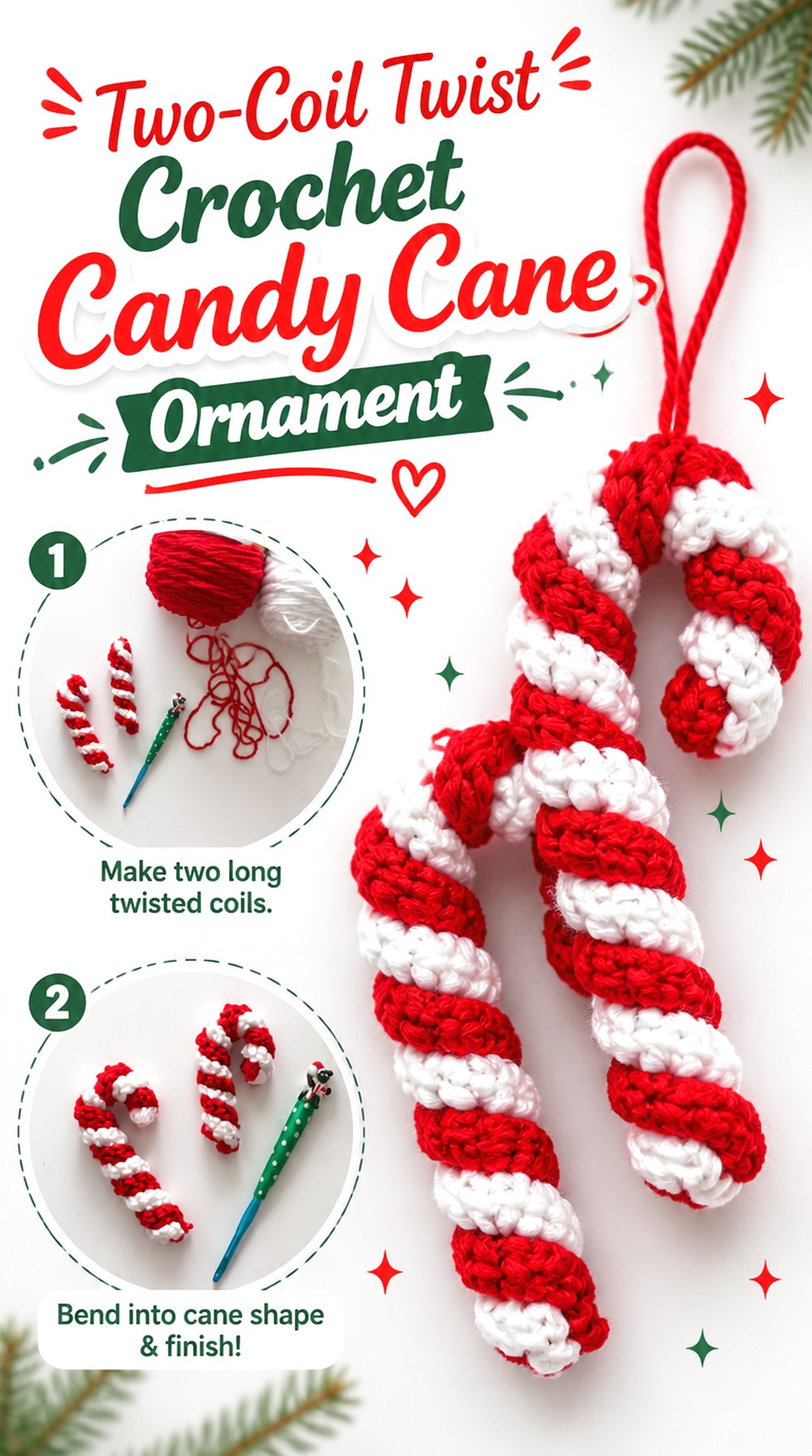
This version creates the familiar peppermint look without building alternating stripes into one crocheted tube. Instead, separate crocheted coils are combined so the two colors spiral around each other, then a bendable center helps establish the hook shape. RepeatCrafterMe presents the project as useful for ornaments, bunting, gift toppers, wreaths, and other holiday decor.
It is a particularly good choice when the spiral itself is the feature you want to emphasize. Compared with a flat appliqué, the finished cane has more rounded visual texture, yet it does not depend on bulky stuffing.
The Twist Controls the Stripe Rhythm
Because the colors are separate before assembly, the finished stripe spacing depends on how evenly those pieces are wrapped together. A very tight twist produces a busier surface, while a more relaxed wrap opens the stripe visually.
Before securing the final form, look at the entire length from a short distance. If one section looks compressed while another opens up, redistribute the twist first. That checkpoint is easier than trying to disguise an uneven spiral after the cane has already been shaped.
A Bendable Center Makes Reshaping Practical
A flexible core is useful when you want a recognizable hook rather than a loose spiral hanging straight down. It also means the ornament can be adjusted after seasonal storage if the curve has flattened slightly.
The main finishing concern is containment. Make sure whatever flexible support you use remains completely covered by the crocheted coils, particularly around the two ends where an exposed tip would be most noticeable.
Repetition Works Well for a Coordinated Set
This construction lends itself to sets because the same overall form can be repeated while changing the palette. Traditional red and white is only one option; green and cream, burgundy and ivory, or colors matched to an existing tree can preserve the striped identity without looking identical.
For a mixed ornament collection, keep the overall silhouette consistent and vary only one or two design elements. That gives the set cohesion without making every cane look interchangeable.
2. Flat Appliqué Crochet Candy Cane Ornament
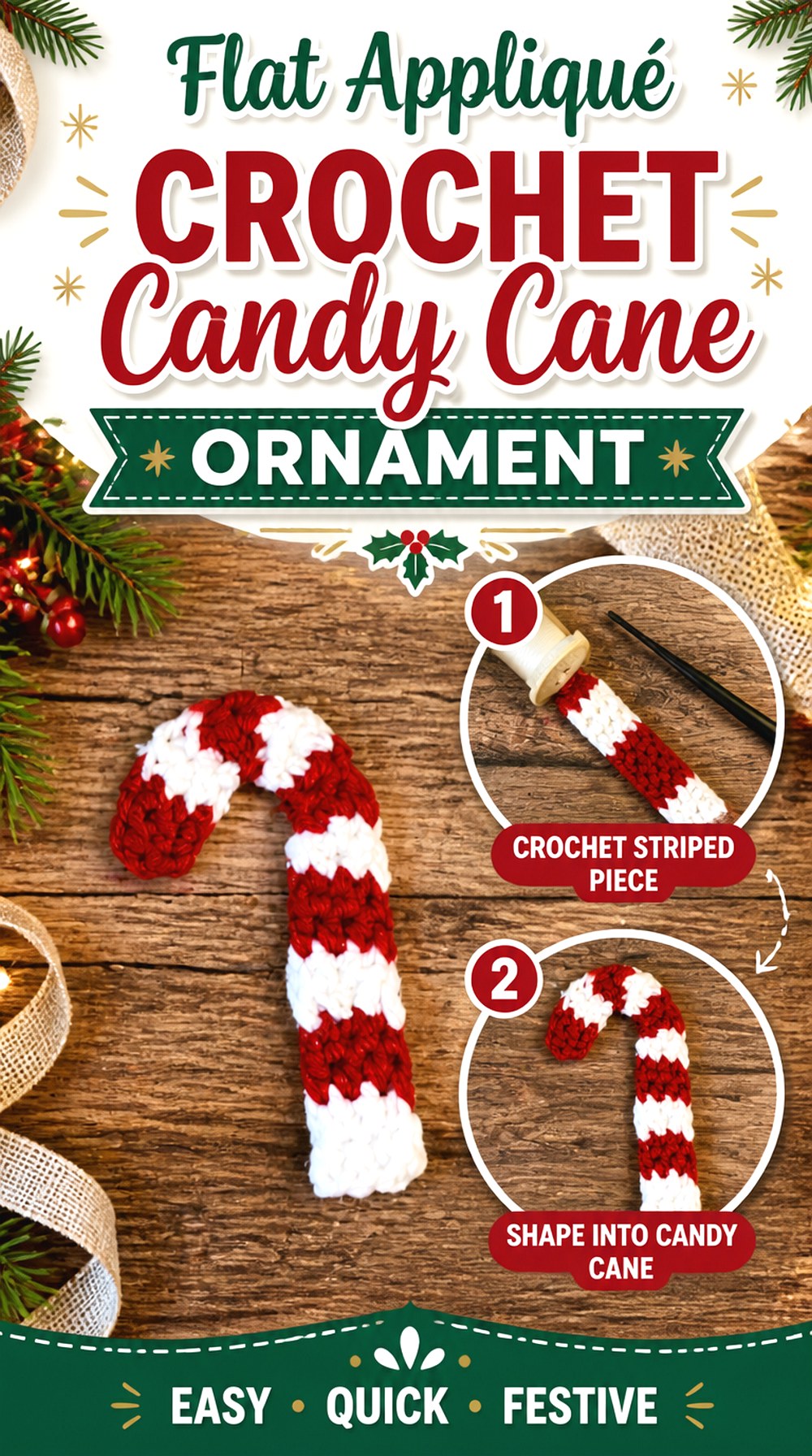
A flat candy cane takes a completely different approach to holiday decorating. ChristaCoDesign’s version is a shaped striped piece rather than a stuffed or wire-filled tube, and the designer shows it as suitable for gifts, holiday decor, and garland use as well as the tree. The associated pattern page lists the finished piece at about 4 inches tall.
Because it lies relatively flat, this style is useful where a chunky ornament would be inconvenient. It can sit against a gift package, attach to a wreath, or hang from a branch without projecting far into the surrounding decorations.
Flat Construction Changes the Hanging Profile
A flat ornament generally looks best when its front surface faces the viewer. That makes hanger placement more important than it is on a round amigurumi cane, which can be seen from several angles.
Before fastening the hanging loop permanently, temporarily suspend the finished piece and see whether the hook rotates sideways. Moving the attachment point slightly can improve how naturally the candy cane presents itself on the tree.
The Curve Should Read Without Extra Bulk
The recognizable hook has to come from the crocheted shaping rather than stuffing or a hidden framework. That makes the outer silhouette one of the most important visual checkpoints.
If the piece looks too straight after finishing, follow the creator’s blocking guidance rather than forcing it around a rigid insert. Flat construction is most useful when you preserve its low-bulk character.
Original Tutorial and Creator Credit
Creator: ChristaCoDesign
3. Curly Cue Crochet Candy Cane Ornament
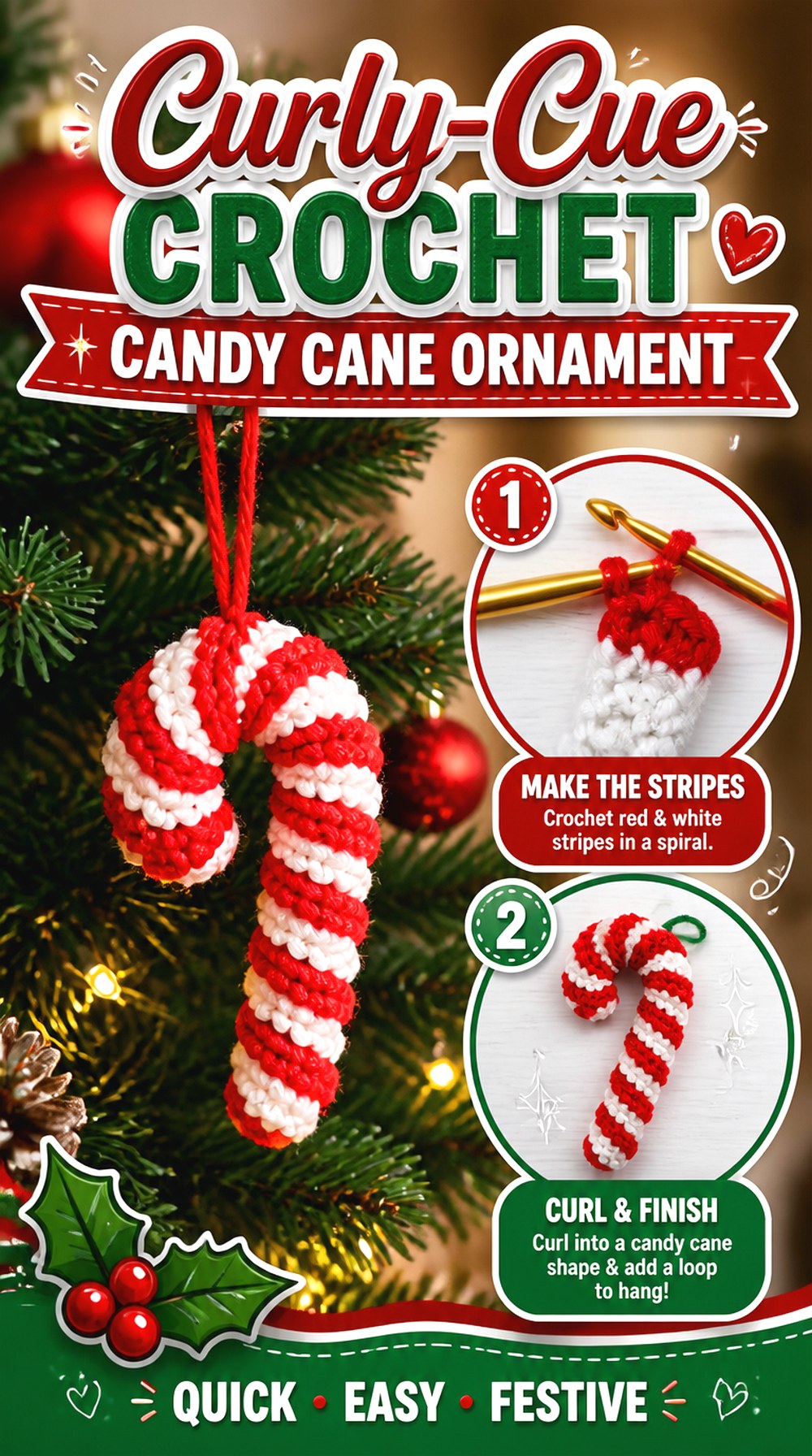
Brunaticality builds this ornament around curly crochet strands, making the spiral texture part of the finished design rather than hiding it inside a smooth tube. The same tutorial also demonstrates a wreath, showing how the curly-cue concept can be redirected into more than one Christmas silhouette.
For a candy cane collection, this option adds useful textural variety. The open, coiled surface looks livelier than a flat appliqué and less plush than amigurumi. It works especially well when you want the red-and-white twist to remain highly visible instead of blending into broad blocks of color.
The Curled Surface Is the Main Design Feature
With this style, neatness does not mean making the crochet look perfectly smooth. The curls create the ornament’s character, so the better checkpoint is whether the two colors interlock in a balanced way.
Hold the cane at the distance from which it will usually be viewed. If one color dominates the outside edge or the hook loses definition inside the curls, reposition the strands before final finishing.
Yarn Sheen Can Emphasize the Spiral
The tutorial uses yarns that include festive-looking options, and a little sheen can make the raised spiral more noticeable under tree lights. A matte yarn will give the same construction a softer, more homespun appearance.
The trade-off is visual clarity. Very fuzzy yarn can soften the edges of individual curls, so choose texture intentionally if the pronounced coil is the reason you’re selecting this design.
Original Tutorial and Creator Credit
Creator: Brunaticality
4. Wire Core Slim Crochet Candy Cane Ornament
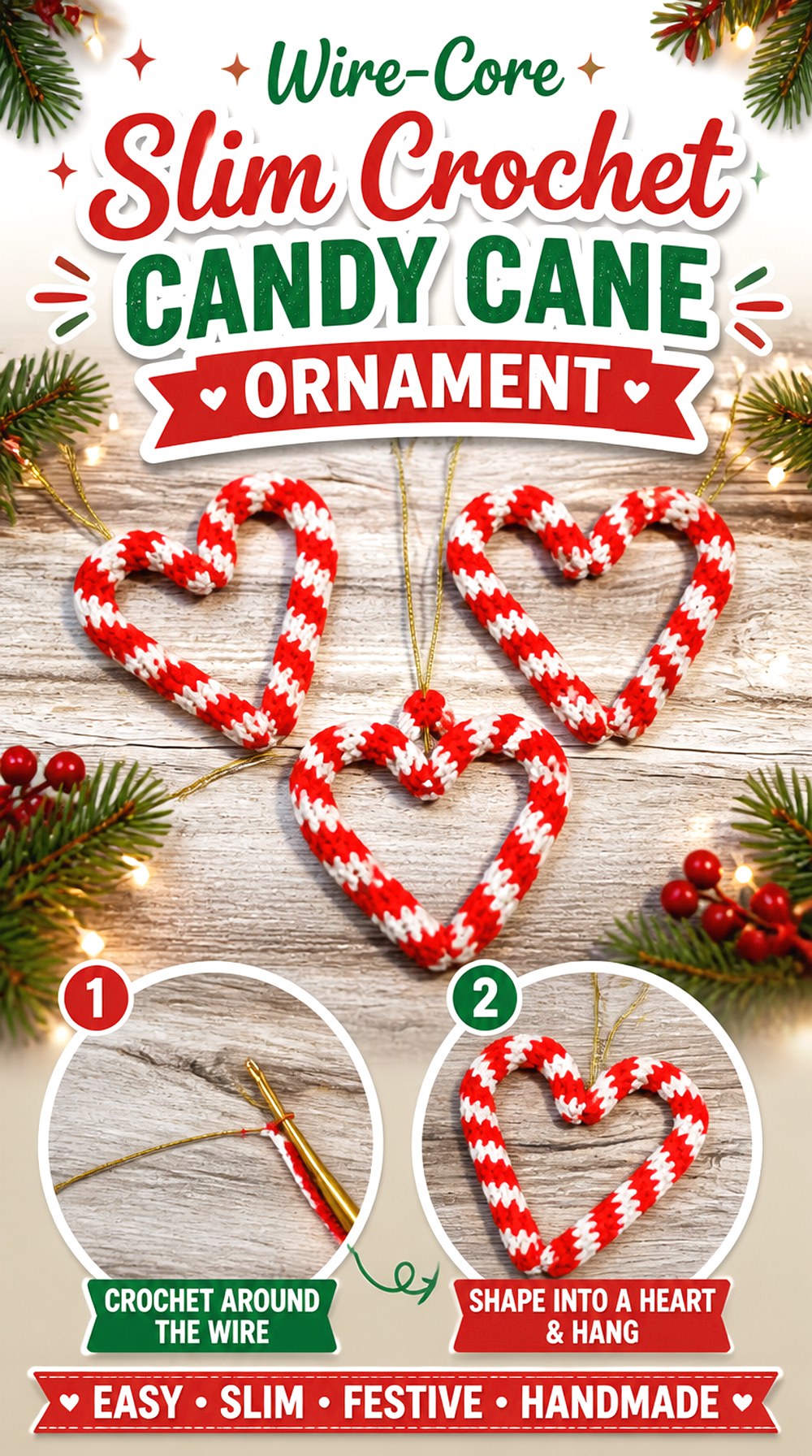
Made With Love By Daisy’s Christmas-tree ornament uses a slender crocheted body with a craft pipe cleaner or wire providing internal support. The tutorial specifically includes preparing that support before the final shaping and finishing.
The result is useful when you want a narrow candy cane that keeps a deliberate hook instead of relying on stuffing to create volume. Compared with plush versions, it takes up less visual space and can sit neatly between larger baubles. It also gives you control over the final curve, making it easier to coordinate several ornaments so their proportions look intentionally related.
Internal Support Defines the Silhouette
The most important advantage of this construction is adjustability. Instead of asking the crochet fabric alone to maintain the curved top, the hidden support carries that job.
Shape the cane gradually and compare both sides of the bend. A very tight turn can bunch the fabric around the inside of the hook, while an overly broad curve may stop reading as a classic candy cane.
Slim Proportions Suit Smaller Display Gaps
A narrow ornament can fill spaces where a stuffed figure or large bauble would crowd nearby branches. It also keeps the traditional candy-cane silhouette visually clean.
When making a whole set, compare the length and hook depth before adding hangers. Small variations are natural in handmade work, but deliberately similar proportions make repeated slim canes look more cohesive across a tree or garland.
Keep the Core Completely Enclosed
Wire and pipe-cleaner-style supports are useful only when they remain safely inside the crochet. Pay particular attention to both ends and anywhere the support is sharply bent.
If the ornament is intended for a household with young children or pets, hang it where it will not be handled casually. A soft, wire-free design is the better choice when frequent handling is expected.
Original Tutorial and Creator Credit
Creator: Made With Love By Daisy
5. Velvet Amigurumi Crochet Candy Cane Ornament
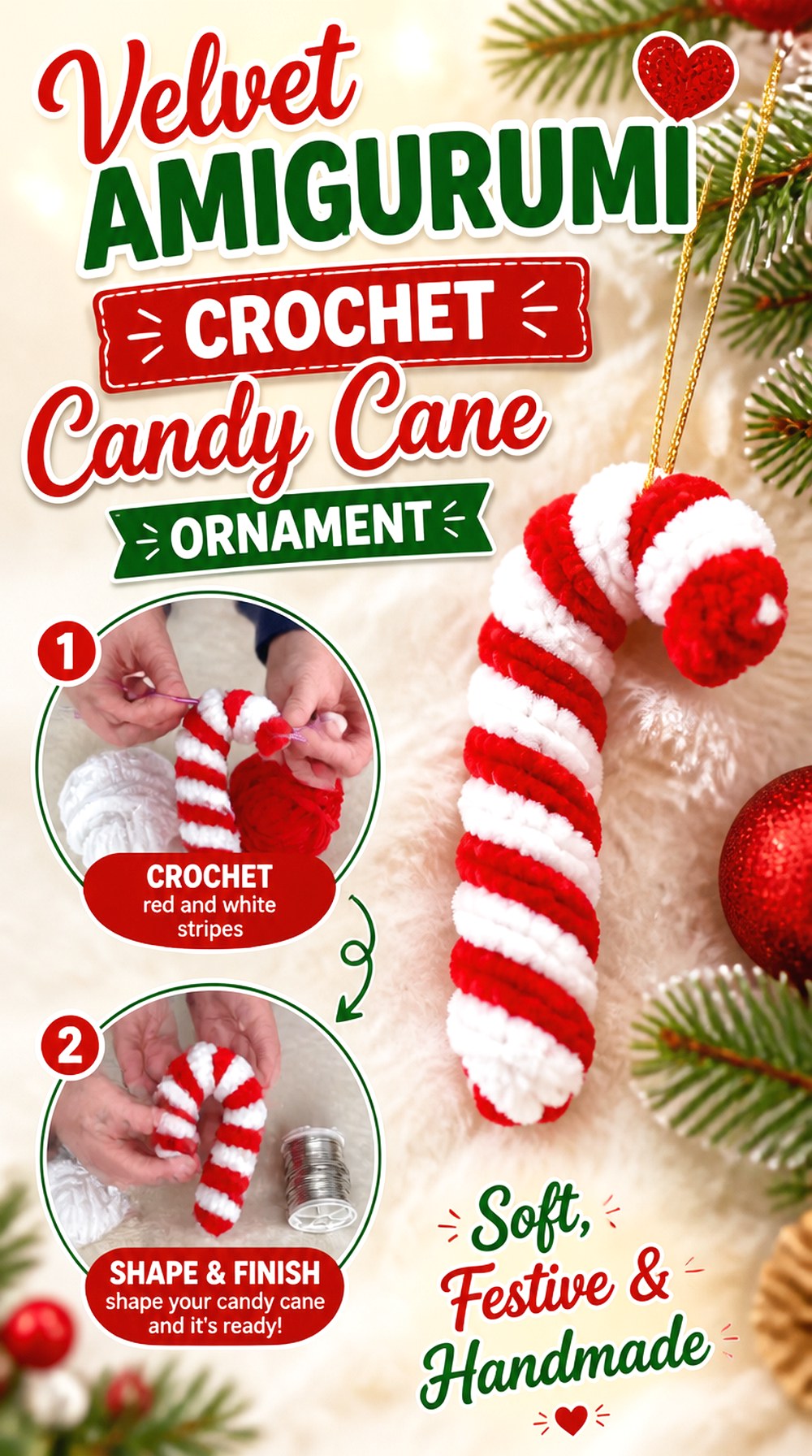
Craftastic Duo’s candy cane brings plush texture into the collection. The tutorial demonstrates an amigurumi version made with velvet yarn and notes that cotton can also be used; a ribbon can be added so the finished cane hangs as a Christmas-tree ornament.
Velvet changes the visual character substantially. The surface is soft and rounded, making the candy cane feel closer to a miniature plush decoration than a crisp appliqué. This option therefore works well among other stuffed ornaments, gingerbread figures, or soft Christmas characters, where a very flat candy cane might disappear visually.
Velvet Softens the Stripe Boundaries
Plush yarn naturally creates a softer edge between neighboring stitches. That can make broad red-and-white sections look cozy, but it may reduce the sharp graphic effect of a fine cotton candy cane.
Before committing to velvet, decide which quality matters more: tactile softness or precise stitch visibility. If you want clearly defined small stitches, the cotton alternative mentioned by the creator may better suit that goal.
A Plush Cane Needs a Clear Hook Shape
Once the surface becomes thick and soft, the silhouette has to do more work. A weak curve can make the object read as a striped tube rather than a candy cane.
Check the profile before attaching the hanging ribbon. The upper bend should remain recognizable even when viewed against a busy Christmas tree, where branches and neighboring decorations can visually interrupt the outline.
Keep the Hanger in Scale With the Plush Body
A tiny thread loop can look visually lost on a thick velvet ornament, while an oversized bow may compete with the candy-cane shape.
The creator suggests ribbon for hanging, which fits the soft decorative style well. Choose a hanger that supports the ornament without becoming the dominant feature, particularly if you plan to display several plush canes together.
Original Tutorial and Creator Credit
Creator: Craftastic Duo
6. Stuffed Cotton Crochet Candy Cane Ornament
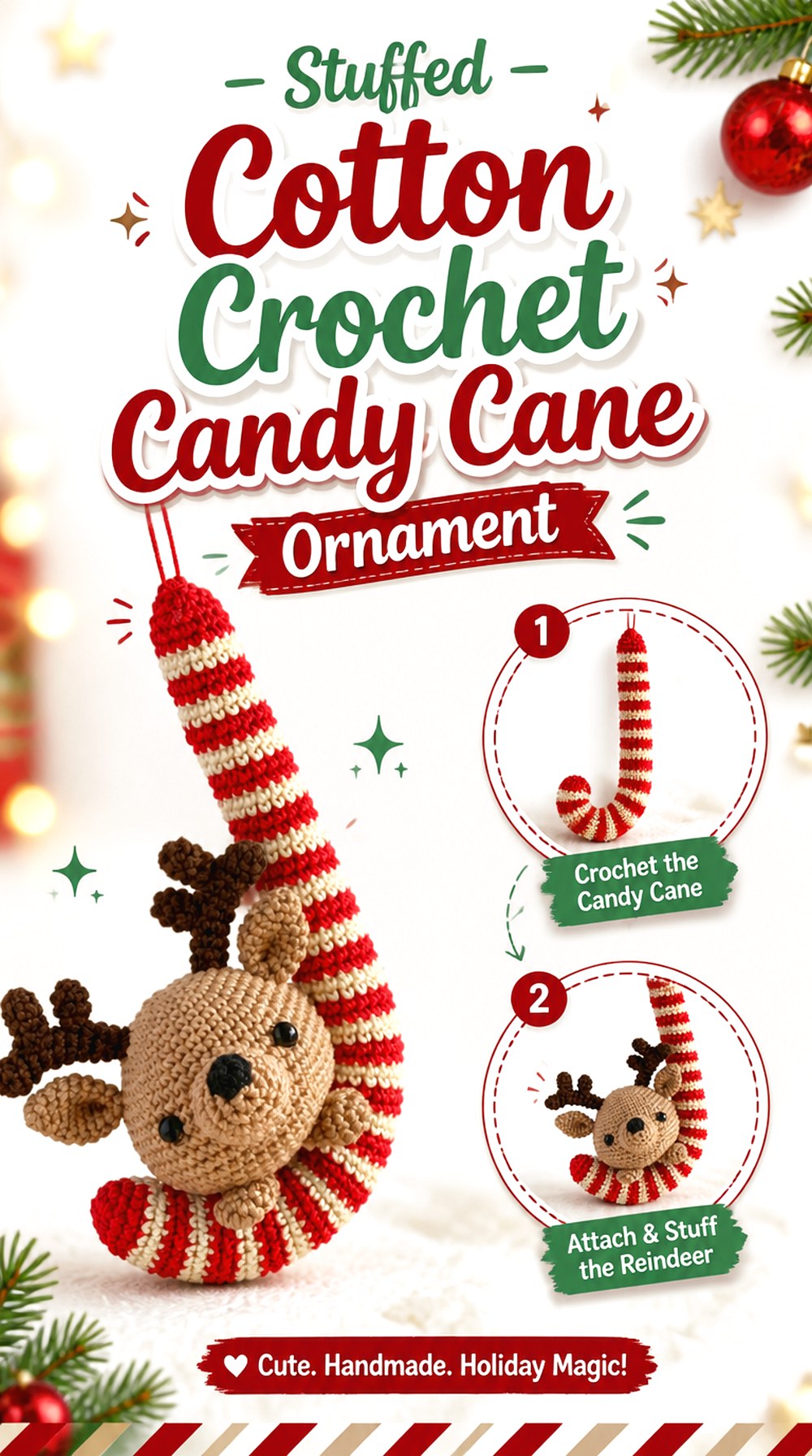
DIY Fluffies offers another dimensional candy cane, but its material direction gives it a noticeably different character from the velvet version. The tutorial uses sport-weight cotton yarn and stuffing to make a Christmas decoration.
A smoother cotton surface lets the stitch structure and color changes remain more visible, so this design suits readers who like the rounded form of amigurumi without the fuzzy appearance of plush yarn. It also bridges the gap between highly structured wire-core designs and soft velvet pieces: the ornament has dimensional volume, yet the yarn surface stays comparatively crisp and graphic.
Dense Fabric Keeps the Filling Visually Contained
Stuffed crochet ornaments look cleaner when the fabric is dense enough that the filling does not peek through between stitches. This becomes especially noticeable with high-contrast red and white because gaps attract the eye.
Rather than choosing a hook only by its label recommendation, evaluate the actual fabric you are producing. If openings remain obvious before stuffing, the finished ornament will usually exaggerate them once the fabric is under tension.
Cotton Gives Small Stitches a Cleaner Surface
Sport-weight cotton can produce a more defined finish than velvet, making this design useful when you want the rounded amigurumi shape and still want individual stitches to remain visible.
The trade-off is that a crisp yarn will also show inconsistent tension more clearly. Keep an eye on the transition between the straight section and the hook, where uneven fabric can affect both the stripe appearance and overall curve.
Judge the Curve From the Finished Profile
Stuffing creates volume, so the hook can look different once the piece is fully filled than it did while flat or partially worked. Use the final silhouette—not just the stitch placement—as the visual checkpoint.
If you’re making several, place finished canes side by side before adding their hangers. Similar hook depth and overall direction will make a group look coordinated even when each handmade piece varies slightly.
Original Tutorial and Creator Credit
Creator: DIY Fluffies
7. Bead Crochet Candy Cane Ornament
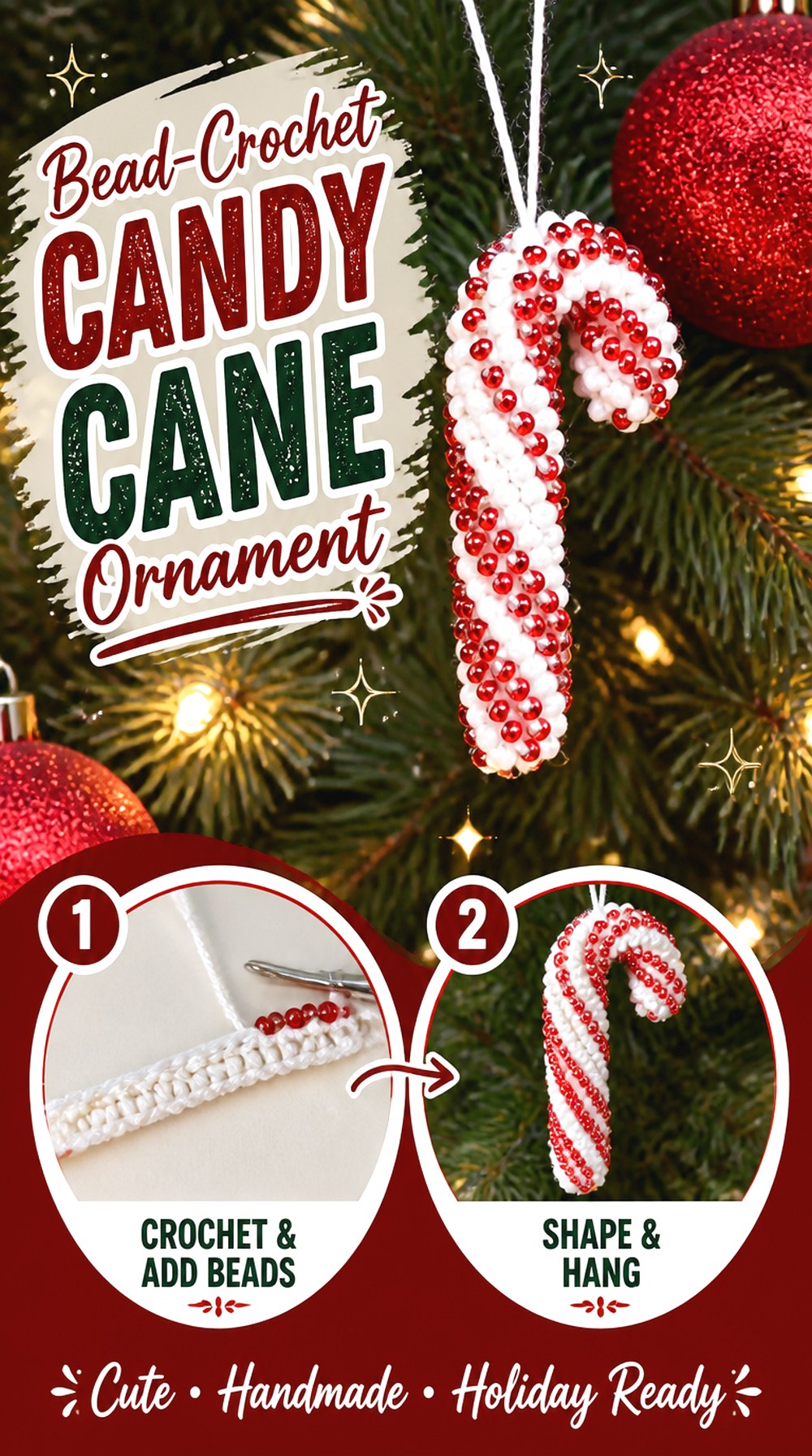
CauliCrochet’s project turns a familiar candy cane into a more decorative bead-crochet ornament. The tutorial combines crochet with pre-threaded beads, stuffing, and a wire core, and it includes a dedicated section for turning the finished cane into an ornament.
This is the strongest statement piece in the collection. Rather than relying only on yarn color for the peppermint effect, the beads add surface detail and reflected light. That extra visual interest also brings extra planning: bead order matters, the finished ornament is heavier than a plain flat cane, and careful storage becomes more important.
Bead Order Becomes Part of the Stripe Design
In ordinary striped crochet, an incorrect color change may affect only a small patch of yarn. With bead crochet, the beads are prepared in sequence, so planning the visual order before crocheting matters much more.
The creator even includes guidance for addressing a bead-order mistake. That makes this project a good choice when you enjoy deliberate preparation rather than improvising the stripe pattern as you go.
Extra Weight Changes the Best Branch Position
Beads, stuffing, and wire collectively create more weight than a simple yarn appliqué. Even without relying on an exact finished weight, that difference should influence where the ornament goes.
Choose a branch that does not droop noticeably when the ornament is attached. On a garland, secure the hanger to the supporting cord rather than expecting a light decorative sprig to carry the load.
Wire and Beads Need Careful Finishing
The tutorial includes wire cutters and an internal wire as part of the materials. Make sure the wire stays completely enclosed and that no bead or decorative component feels loose before hanging the piece.
For homes with small children or pets, display this ornament out of reach. A plain flat or fully soft crochet cane is a more practical choice if the decoration will be regularly handled.
Storage Matters More for a Beaded Ornament
Do not place a bead-covered candy cane at the bottom of a box beneath heavy wreaths or dense holiday decor. Pressure can distort the hook, strain the crochet around individual beads, or bend the internal support.
A small compartment, padded container, or top layer of the ornament box keeps it separated. This extra storage care is a reasonable trade-off when the goal is a more decorative, light-catching candy cane.
Original Tutorial and Creator Credit
Creator: CauliCrochet
8. Crochet Candy Cane Cozy Ornament
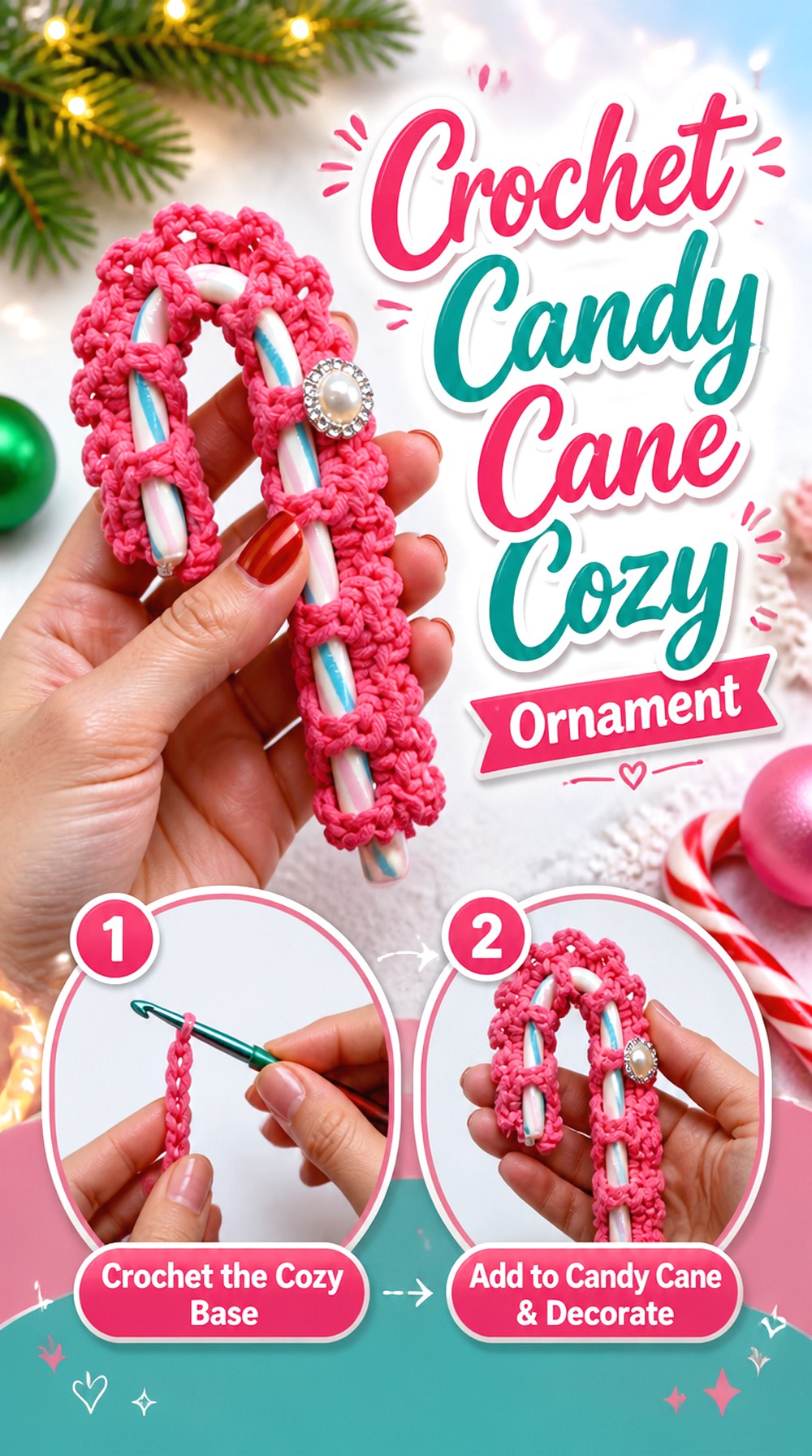
This idea changes the relationship between crochet and the candy cane completely. Naztazia’s design is a crocheted cozy that surrounds an actual candy cane rather than imitating one entirely in yarn. The creator describes it as both a Christmas decoration and a way to cover or protect the candy.
That makes it a useful hybrid for party favors, place settings, stocking additions, or tree decorations that can later be separated from the treat. It is also visually different from every stuffed project because the rigid hook and proportions come from the real candy cane inside.
The Finished Fit Depends on the Candy Inside
Unlike an amigurumi cane, this project has to cooperate with an existing object. Candy canes vary by brand and size, so don’t assume every wrapped sweet will fit identically.
If you’re making several for gifts, buy the candy first and compare the wrappers before producing a whole batch of cozies. A small fit check early prevents ending up with covers that slide off or cannot comfortably accommodate the intended treat.
Keep the Candy in Its Wrapper
Treat this as a decorative cover, not as yarn packaging for exposed food. Keeping the commercial wrapper intact separates the edible candy from fibers, handling, and any finishing products used on the crochet.
It also makes the concept more practical as a reusable ornament. The candy can be removed while the crocheted portion is kept for another season, depending on how you choose to finish and store it.
Decide Whether the Treat Should Be Removable
If this is going on a Christmas tree, a removable candy turns the project into both decoration and small gift. If it will be part of a permanent garland, you may prefer to treat the candy as a temporary insert and replace it before each holiday season.
That decision affects finishing. Avoid permanently attaching anything to the candy wrapper if easy removal is part of the project’s purpose.
Original Tutorial and Creator Credit
Creator: naztazia
9. Reindeer Crochet Candy Cane Holder Ornament
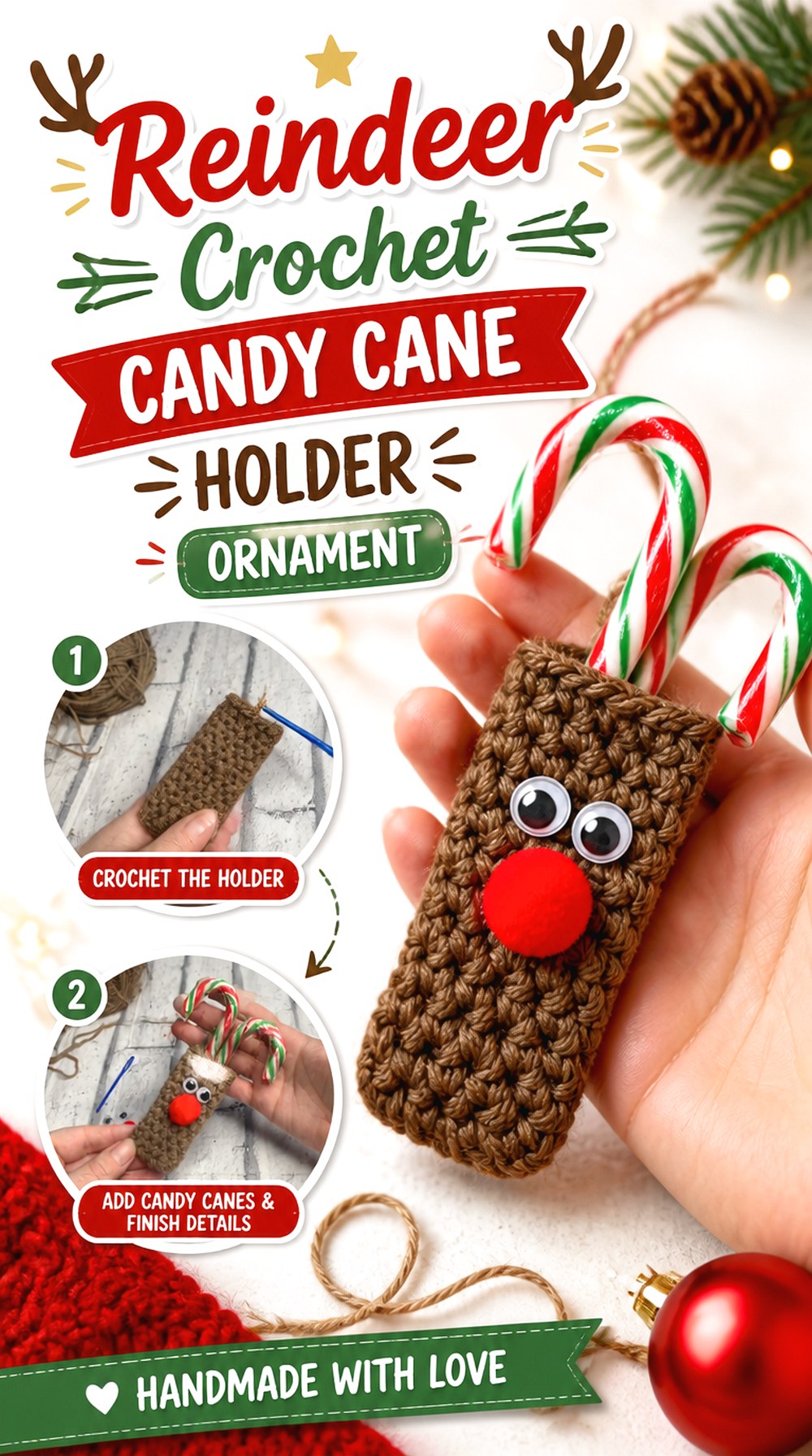
Cosy Rosie Crochet turns the candy cane into part of a Christmas character. The crocheted reindeer holder is designed as a quick Christmas ornament, and the tutorial shows a thicker fabric created by holding yarn strands together, along with decorative features such as googly eyes and a red pom-pom nose.
This works especially well when a tree already contains character ornaments rather than purely geometric decorations. The candy cane provides the recognizable holiday stripe, while the reindeer introduces a wider silhouette and a playful face, making the project visually distinct from every standalone cane.
The Candy Cane Becomes Part of the Character
Because the real candy is integrated into the design, its placement affects the overall balance of the reindeer rather than acting as an afterthought.
Insert the intended candy before judging whether the ornament looks centered. The character may look balanced when empty but lean once the treat is added, especially if the hanger is positioned before the final loaded shape is checked.
Thicker Fabric Helps the Reindeer Read Clearly
The creator works with yarn held together to create a thicker equivalent fabric. That extra body gives the character enough visual weight to stand beside the candy cane instead of looking like a tiny scrap attached to it.
If substituting yarn, focus on the resulting fabric rather than copying color alone. A very thin, floppy material can change the shape and presentation of the whole holder.
Decorative Face Parts Need Secure Finishing
Googly eyes and pom-poms create an expressive face, but detachable decorations deserve extra attention. Tug gently on each piece after assembly and consider embroidered alternatives when the ornament may be handled by children.
This is primarily seasonal decor, not a toy. Keep any version with small detachable parts out of reach of babies, pets, or young children who may pull pieces free.
Original Tutorial and Creator Credit
Creator: Cosy Rosie Crochet
10. Gingerbread Crochet Candy Cane Holder Ornament
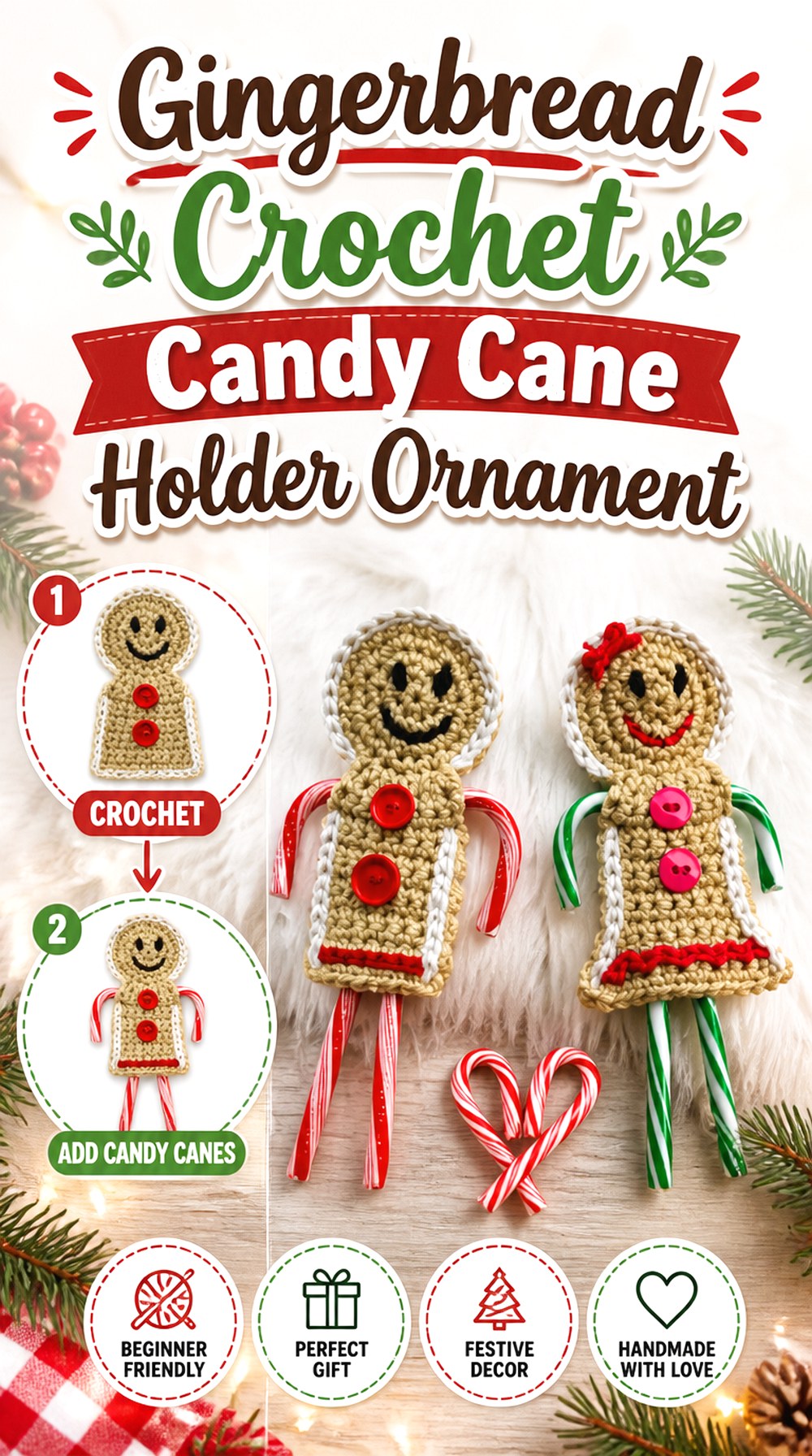
Sweet Potato 3 offers a gingerbread boy-or-girl candy cane holder, giving the final idea a character shape that can be customized more extensively than a plain striped cane. The creator presents the holders as holiday accessories suitable for gifting, classroom use, and festive displays.
This option is worth choosing when you want the ornament to carry a personality rather than simply repeat the candy shape. The gingerbread form supplies the warm neutral base, while the real candy cane adds the red-and-white holiday contrast. It can work on a tree, at a place setting, or as part of small gift packaging.
Plan the Holder Around the Actual Treat
As with the cozy and reindeer versions, the candy cane is a functional component of the finished design. Make a sample with the exact candy you intend to use before producing a large gift set.
The key checkpoint is easy insertion without an excessively loose fit. If the holder distorts noticeably around the candy, review the creator’s sizing guidance instead of forcing a different-sized treat into the finished piece.
Boy-or-Girl Styling Changes the Final Detail Work
The tutorial specifically covers both gingerbread boy and girl options. That lets you create a mixed set without changing the basic candy-holder concept.
Keep embellishment in proportion to the small ornament. One or two clear character details often read better than covering the gingerbread body with so many additions that the candy cane stops being a visible part of the design.
Use the Display Method to Guide the Hanger
For tree use, the ornament needs to hang level with the candy inserted. At a table setting, a hanger may be unnecessary or can be kept visually discreet. As a gift topper, the holder can instead be attached to ribbon around the package.
Choosing the intended use before finishing prevents an oversized hanging loop from interfering with a flat presentation or, conversely, a tiny loop from being difficult to place on a tree branch.
Original Tutorial and Creator Credit
Creator: Sweet Potato 3
Which Crochet Candy Cane Ornament Style Should You Choose?
| Ornament idea | Main construction difference | Works especially well for | Check before finishing |
|---|---|---|---|
| Two-Coil Twist | Separate colored coils twisted together | Coordinated striped sets | Even spiral spacing |
| Flat Appliqué | Flat shaped fabric | Gift tags, wreaths, slim tree decor | Hanger orientation |
| Curly-Cue | Exposed spiral texture | Textural ornament collections | Clear hook silhouette |
| Wire-Core Slim | Crochet around flexible support | Narrow gaps and defined curves | Fully enclosed support |
| Velvet Amigurumi | Plush dimensional fabric | Soft character-style trees | Hook definition |
| Stuffed Cotton | Smooth stuffed amigurumi | Crisp dimensional stitches | Dense fabric and even stuffing |
| Bead-Crochet | Beads, stuffing, and wire | Statement ornaments | Branch strength and secure parts |
| Candy Cane Cozy | Crochet surrounding real candy | Treat ornaments and favors | Candy fit |
| Reindeer Holder | Character plus real candy cane | Playful trees and gifts | Balance with candy inserted |
| Gingerbread Holder | Customizable character holder | Place settings and gift toppers | Intended hanger or display method |
Conclusion
For the lightest, most versatile ornament, start with the flat appliqué. Choose the two-coil or curly-cue versions when the spiral stripe itself is the attraction, and use a wire-core design when maintaining a precise hook matters. Plush velvet and stuffed cotton versions add more dimension, while bead crochet creates a stronger statement piece. The cozy, reindeer, and gingerbread holders are better choices when you want a real candy cane to become part of the finished decoration.
Whichever form fits your tree or gifting plan, check the original tutorials near the end of each idea for the creator’s exact construction details before substituting materials or changing the scale.
Frequently Asked Questions
Do crochet candy cane ornaments need wire inside?
No. The projects in this collection use several different approaches. Some deliberately include wire or pipe-cleaner-style support, while flat appliqués and certain curly constructions create their shape through crochet itself. Choose support when you want a firm, adjustable hook; choose a wire-free construction when softness or uncomplicated storage matters more.
What is the best style for a lightweight Christmas tree branch?
A flat appliqué or relatively slim crochet cane is usually the more practical direction because it avoids the additional weight of stuffing, beads, or character pieces. A bead-crochet version deserves a sturdier branch because the design incorporates beads, stuffing, and wire. Test the actual finished ornament on the branch rather than assuming every artificial or natural tree will support the same weight.
Can I make crochet candy canes in colors other than red and white?
Yes. The candy-cane silhouette and spiral or striped construction are recognizable independently of the traditional palette. Green and cream can create a softer Christmas look, while burgundy, blush, gold, or colors already used on your tree can make the ornament collection more cohesive. When changing colors, keep enough contrast between neighboring stripes or coils for the candy-cane effect to remain visible from a distance.
Which design is easiest to adapt as a gift topper?
Flat appliqués are especially convenient because they add little bulk to a wrapped package, and ChristaCoDesign specifically presents the flat candy cane for gift use. Candy cane cozies and gingerbread holders are another option when the gift includes an actual candy cane. For packaging, avoid fragile beadwork or exposed rigid elements if the present will be transported or stacked.
How should I store wire-core crochet candy cane ornaments?
Avoid crushing them beneath heavier holiday decor. Place wire-core canes in a shallow ornament box or upper layer where the curved top is not forced flat for months. If the support bends slightly, reshape it gently rather than sharply folding the crochet. Beaded versions deserve additional separation so neighboring decorations do not snag the beads or distort the internal support.
Are candy cane holder ornaments suitable for children?
They can be used as decorations or gifts, but the finishing details matter. Some character tutorials use small decorative components such as googly eyes or pom-poms, and bead-crochet designs contain beads and wire. For young children, favor embroidered facial details and soft, wire-free constructions, and treat the finished piece as decor rather than an unsupervised toy.