Interlocking crochet patterns are a strong choice when the surface design matters as much as the finished item. This technique can create two-layer, graphic fabric with bold contrast, reversible effects, and clean geometric shapes, so it works well for blankets, accessories, bags, home pieces, and practice panels.
This list brings together different ways to use interlocking crochet instead of repeating the same square in nine colors. You will find larger projects, wearable accessories, storage pieces, smaller samples, and detail-focused ideas that help readers choose by size, use, shape, and learning format. Each idea links back to the original YouTube tutorial so readers can follow the creator for the exact construction details.
Quick List
- Crochet Reversible Geometric Blanket
- Crochet Two-Sided Interlocking Scarf
- Crochet Structured Interlocking Shoulder Bag
- Crochet Round Interlocking Storage Basket
- Crochet Snowflake Cowl in Interlocking Rounds
- Crochet Interlocking Blanket Square
- Crochet Celtic Knot Wacky Weave Coaster
- Crochet Honeycomb and Railroad Tracks Panel
- Crochet Interlocking Bag Strap Band
What to Compare Before Choosing an Interlocking Crochet Pattern
The biggest difference between these ideas is not only the design on the surface. It is how the fabric will be used once it is finished. A blanket gives the technique room to show a larger repeat, while a scarf or cowl needs a pleasant reverse side because both sides may show during wear. A basket or bag has practical shaping needs, so openings, edges, handles, and structure matter more than they would on a flat practice panel.
Before choosing, look at whether the project is worked flat or in the round, whether a chart or written guide is linked, and how clearly the finished item is shown. Interlocking crochet can look very different depending on contrast, so it is also worth checking how strongly the two colors need to separate for the pattern to read clearly.
1. Crochet Reversible Geometric Blanket

A full blanket gives interlocking crochet enough space to show a repeating geometric design without feeling cramped. This project stands out because it is a finished home item rather than only a technique sample, and the reversible surface makes it useful from either side when folded, draped, or placed across a sofa.
The graphic layout is the main attraction here. Readers who want a larger project with a clear finished purpose may prefer this over a small square, especially if they want to see how interlocking crochet behaves across a wider fabric.
The Reversible Surface Is the Main Feature
A blanket is one of the clearest ways to appreciate a reversible interlocking design because both sides may be visible during everyday use. When comparing this idea with the smaller projects below, think about whether you want the pattern to be seen from across the room. Strong contrast will usually make the geometry easier to notice.
Finished Size Matters More Than With a Sample
The creator’s information includes a finished blanket size, which helps readers decide whether the project suits a lap blanket, display throw, or gift plan. Before choosing yarn, check the original pattern information rather than guessing from the video screen. A small change in yarn weight can affect the final footprint.
Border and Edge Finish Deserve Attention
For a large rectangular project, the edge finish can change how polished the blanket looks. This tutorial includes a border section, so readers should watch how the outer edge is handled before deciding whether this project matches their preferred finish. The border is especially important if the blanket will be displayed folded.
Creator: The Crochet Crowd
2. Crochet Two Sided Interlocking Scarf
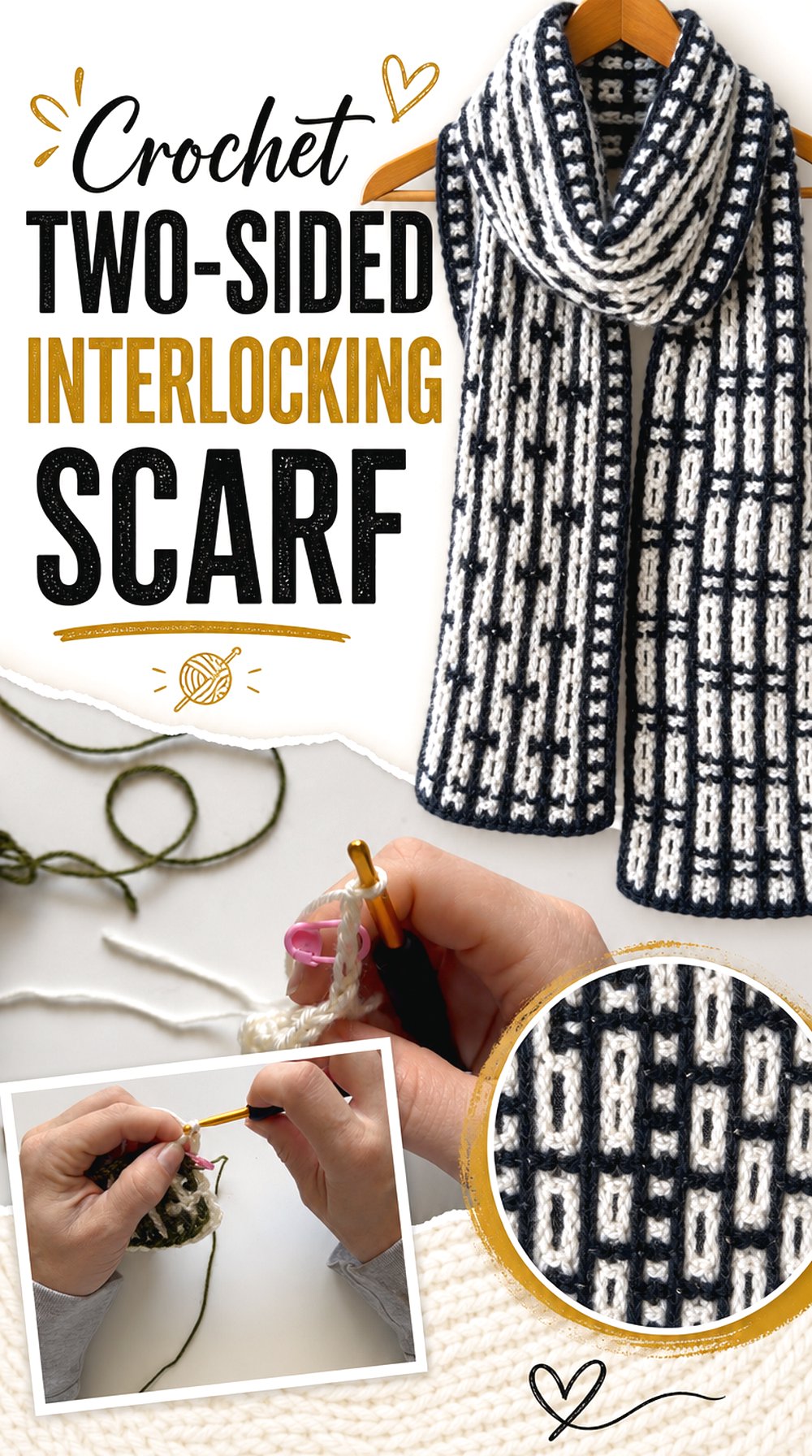
This scarf uses interlocking crochet in a wearable format where the reverse side matters. Unlike a blanket that may stay mostly flat, a scarf twists, folds, and shifts during wear, so a two-sided look is especially useful. The source describes the scarf as having no wrong side, with a different pattern on each side.
The long, narrow shape also makes this a practical way to focus on pattern rhythm. Readers who want a project that shows the technique clearly without committing to a large blanket may find a scarf easier to plan and store.
A Long Shape Highlights the Repeat
A scarf gives the design room to continue in a visible line. That makes it a useful choice for readers who enjoy watching a motif build gradually. Before starting, look at the finished scarf view and decide whether you like the scale of the pattern across a narrow width.
Two Sides Need Thoughtful Color Contrast
Because both sides are part of the finished look, color choice matters more here than it might on a one-sided decorative piece. The contrast should allow the two patterns to remain readable when the scarf is folded. Readers may want to compare light-dark pairings before buying yarn.
Written Support May Be Useful
The source points readers toward a full written pattern on the creator’s blog. That is helpful for a project with repeated rows and a long finish. Viewers who prefer to mark progress should check the written guide and video together rather than relying only on memory while working.
Creator: Life and Yarn
3. Crochet Structured Interlocking Shoulder Bag

A bag changes the purpose of interlocking crochet from surface design to usable structure. This shoulder bag has a more defined shape than a flat panel, with a visible body, base, and carrying format. The interlocking texture gives the bag a bold two-color look while still keeping the finished item practical.
This idea is clearly different from the scarf and blanket because readers need to think about shape, opening, and carrying use. It may suit someone who wants the technique to become an accessory rather than a home project.
The Bag Shape Gives the Pattern a Job
On a shoulder bag, the interlocking pattern is not just decorative; it covers a shaped item that needs to hold its form. Readers should look closely at the front, sides, and base view to decide whether the finished structure matches how they would use the bag.
Opening and Access Are Important
A bag needs a practical top opening. Before choosing this project, check how the top edge is presented and whether the tutorial’s information gives enough detail for your preferred use. An open or lightly closed bag will feel different from one with a more secure closure.
Finished Measurements Are Worth Reviewing
The video description includes bag dimensions, which makes this easier to compare with other crochet bag ideas. Rather than estimating from the thumbnail, use the creator’s listed information to decide whether the size fits light daily carry, small errands, or decorative outfit use.
Subtitles May Help With Following Along
The source notes that subtitles are available in different languages. That can be useful for viewers who want visual guidance but also need extra text support. Before beginning, adjust YouTube subtitle settings and preview a short section to make sure the teaching format suits you.
Creator: Bj Design
4. Crochet Round Interlocking Storage Basket
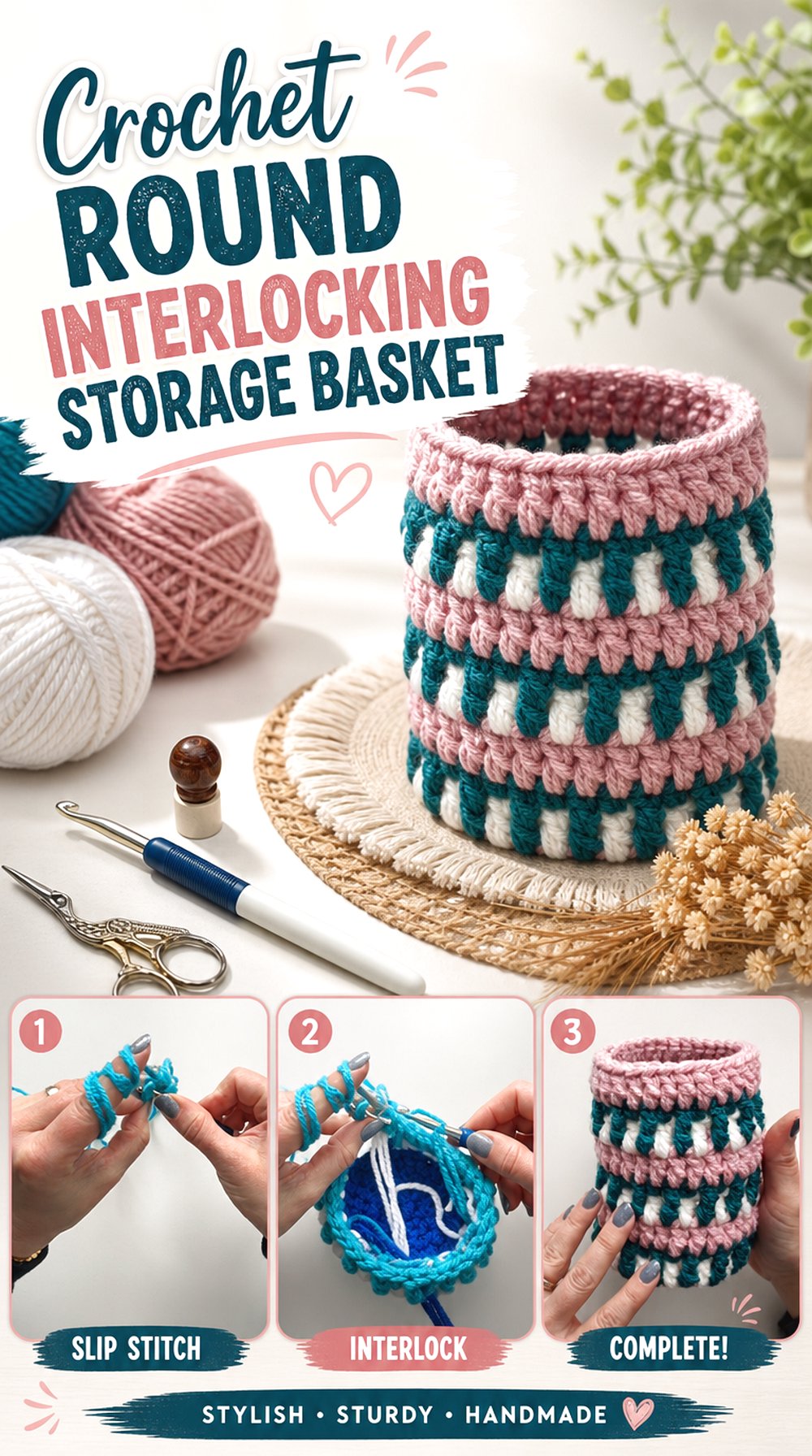
A round basket brings interlocking crochet into home storage. The finished shape is different from flat rectangles because the pattern wraps around the sides, giving the basket a textured, continuous look. The source describes it as a round basket using interlocking crochet with three coordinating colors.
This option may appeal to readers who want a useful object for shelves, craft tables, or small household items. It also gives the technique a more sculptural result, since the base and side height affect the final look.
Round Construction Changes the Visual Flow
A circular basket does not display the pattern in straight rows across a flat surface. Instead, the texture wraps around the body. That makes color placement and side height more noticeable. Readers should look at the finished basket from more than one angle before choosing their colors.
Adjustable Size Adds Planning Choices
The source explains that the basket size can be adjusted through the base size and height. That flexibility is useful, but it also means readers should decide the intended use before starting. A small decorative bowl and a roomier storage basket will need different planning.
Structure Depends on the Material Approach
The creator discusses making a sturdier basket by using thicker yarn or holding yarn together. Before buying supplies, readers should check the material notes carefully. A storage basket needs more shape support than a scarf, so the yarn choice affects how the finished piece sits.
Creator: Blue Star Crochet
5. Crochet Snowflake Cowl in Interlocking Rounds
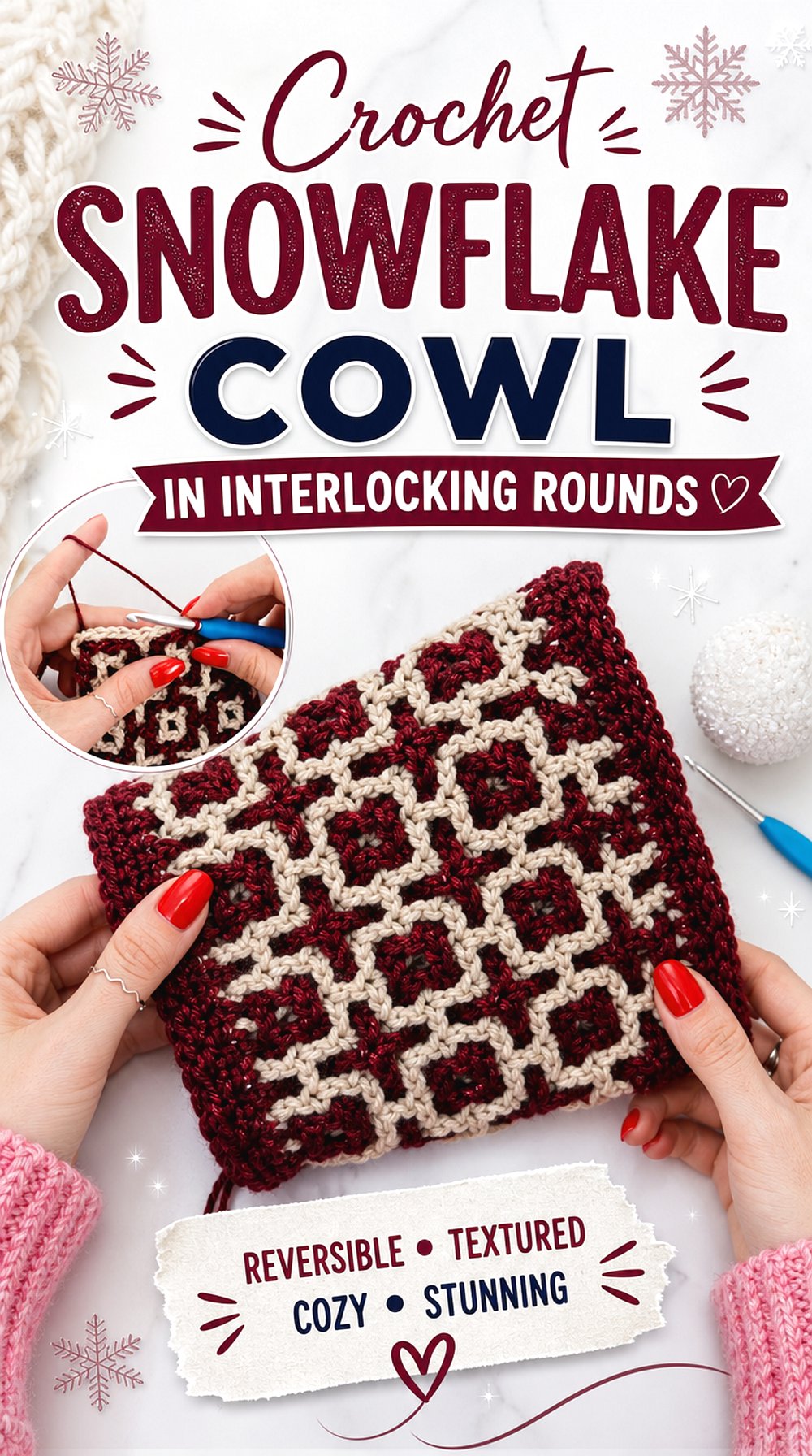
This cowl uses interlocking crochet in the round, which makes it a useful contrast to the flat scarf and blanket ideas. The finished project is wearable, compact, and designed as a tube-like accessory, so the inside and outside relationship matters.
The snow-inspired design gives the piece a seasonal feel without turning it into a large winter blanket. Readers who want a smaller wearable project may like this format because it keeps the focus on reversible patterning, edging, and round shaping.
In-the-Round Work Changes the Setup
Working in the round can feel different from making a flat scarf or blanket. The tutorial is organized with setup, pattern repeat, final interlocking rounds, and edging sections. That structure helps readers preview the learning path before committing to the cowl.
The Edge Finish Frames the Wearable Shape
For a cowl, the upper and lower edges are visible when worn. The tutorial includes edging sections, so readers should pay attention to how the edges finish the tube. A neat edge can make the finished accessory look more intentional around the neckline.
Reversibility Matters Near the Face
A cowl may fold, roll, or shift while being worn, so the reverse side should be part of the design decision. Before choosing colors, think about which side is likely to show most often and whether both sides look good with the clothing you plan to pair it with.
Creator: CrochetHighway
6. Crochet Interlocking Blanket Square
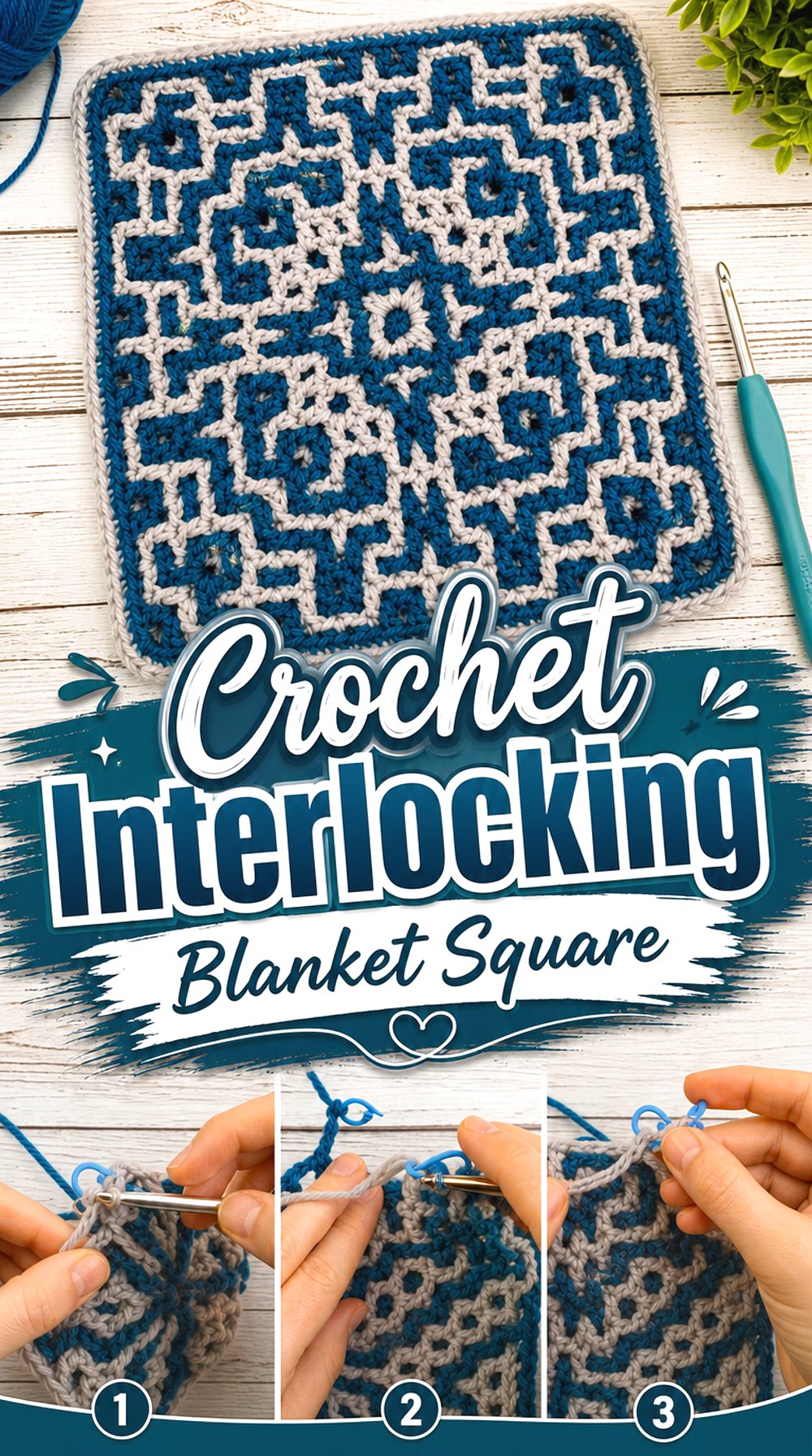
A blanket square is a focused way to try interlocking crochet without choosing a full-size blanket immediately. This square is worked in the round and has chart and written directions linked by the creator, making it a useful bridge between a small practice piece and a larger joined project.
The shape also gives readers a clear finished unit. One square can stand alone as a sample, while multiple squares may be planned for a larger blanket-style project if the reader wants to continue.
A Square Makes Progress Easy to Judge
The defined edges of a square help readers compare the shape as they work. Unlike a long scarf, this project has a compact boundary, so changes in tension or alignment may be easier to notice early. That makes it a useful choice for learning the rhythm of the technique.
Chart Support Helps With Motif Placement
The creator links chart and written directions, which can help readers who want both visual and text-based guidance. Interlocking crochet often depends on where the design sits in the fabric, so a chart can be useful for checking placement without guessing from the finished photo.
Creator: Kickin Crochet
7. Crochet Celtic Knot Wacky Weave Coaster

This coaster-sized project gives interlocking crochet a compact decorative purpose. The source describes the demonstrated pattern as a coaster with a Celtic knot and notes that the tutorial is complete with a border. That makes it a smaller option for readers who want a finished item rather than a loose swatch.
The knot-style design sets this project apart from the geometric blanket and square. It is more motif-focused, so the main decision is whether the reader wants a small surface piece with a strong central design.
A Coaster Keeps the Commitment Small
A coaster is easier to place, store, and compare than a full blanket or wearable. It may suit readers who want to understand how the technique behaves on a finished item before moving to something larger. The small format also puts pressure on the central motif to stay clear.
The Border Completes the Piece
The source notes that the tutorial includes a border, which matters for a coaster because the edge is part of the visible finish. Readers should watch how the border frames the Celtic knot before deciding whether this style fits their table setting or gift plan.
Right- and Left-Handed Options Are Available
The source page lists separate right-handed and left-handed tutorial options. That can be helpful for viewers who follow hand placement closely. Choose the version that matches your working style so the direction of the demonstration feels natural from the start.
Creator: Hilda Steyn
8. Crochet Honeycomb and Railroad Tracks Panel

This interlocking crochet idea is more about exploring graphic surface design than making a finished accessory. The Honeycomb and Railroad Tracks design gives readers a way to study how lines, openings, and contrast can create different visual effects within the same technique.
A panel like this can be useful before choosing a larger project. It lets readers focus on the pattern language first, then decide later whether the design belongs on a blanket, scarf, coaster, placemat, or another flat item.
A Design Sample Supports Bigger Plans
A panel can help readers test whether they like the look of a motif before committing to a large piece. With interlocking crochet, the pattern may read differently depending on color contrast and viewing distance. A sample gives useful information before turning the design into a bigger project.
Keep Notes on the Side You Prefer
The title names two design effects, so readers should pay attention to which side or layout they prefer visually. Interlocking crochet can create different impressions from each side. Marking the preferred face, color order, and final use can make later project planning easier.
Creator: Tanis Galik
9. Crochet Interlocking Bag Strap Band
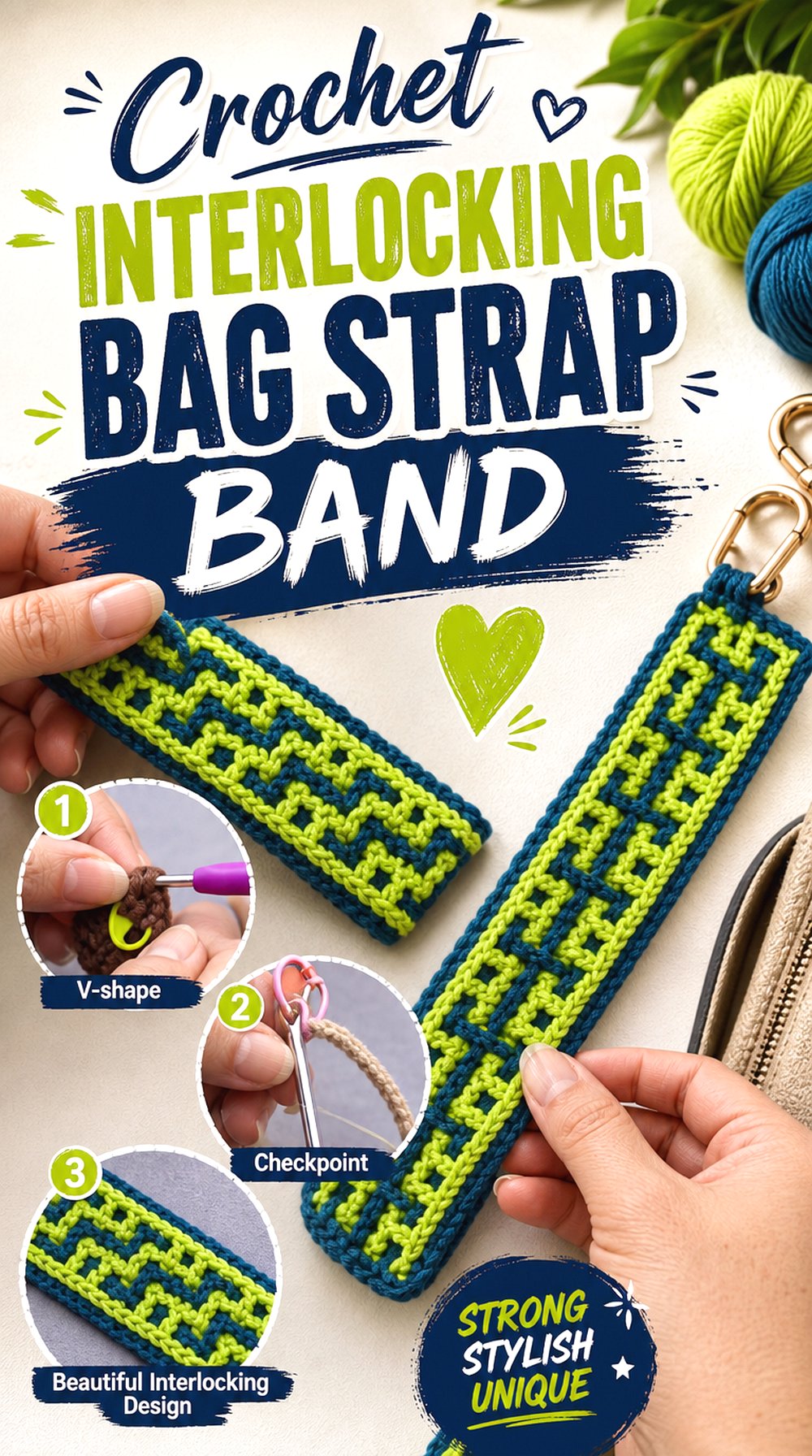
A strap or band is a narrow project, but it has a clear practical role. This tutorial focuses on an interlocking crochet band that the creator used for a bag, with attention to the sides and the straightness of the finished stitches. That makes it a useful finishing idea rather than a full bag tutorial.
This project is different from the larger items because it concentrates on a detail that can affect how a bag looks and functions. Readers who already enjoy crochet bags may find this especially useful.
A Narrow Project With a Clear Job
A strap needs to look neat from the front, back, and sides. Unlike a decorative panel, it may be handled often and seen along its full length. Readers should decide whether they want the band as a handle, trim, or decorative strip before choosing colors.
Side Edges Matter More Here
The creator’s description specifically notes the appearance of the sides. That is important because a strap exposes its edges more than a blanket square does. Watch the edge treatment carefully and decide whether the finished side profile matches the bag or accessory you have in mind.
Match the Strap to the Main Bag
A strap can look disconnected if its scale or contrast is very different from the main bag body. Before starting, compare the band width, color direction, and overall texture with the bag it will join. The original tutorial should be used for the exact working details.
Creator: The Craftsteacher
How to Pick the Right Interlocking Crochet Idea First
Start with the project shape, not only the surface design. For a full home piece, the reversible geometric blanket gives the most finished impact. For wearable use, the scarf and cowl make the reverse side more important because both sides can show. The shoulder bag, basket, and strap band are better for readers who want interlocking crochet to serve a practical purpose.
For learning and testing, the blanket square, coaster, and Honeycomb and Railroad Tracks panel are smaller ways to study the technique before planning something large. The best first choice is the one where the final use is clear before you choose colors.
Conclusion
These interlocking crochet pattern ideas show how one technique can move from flat panels into useful finished projects. The blanket offers the broadest display area, while the scarf and cowl focus on wearable reversibility. The bag, basket, and strap band bring the texture into practical shapes, and the square, coaster, and design panel help readers study motifs on a smaller scale.
Choose the project that matches the way you want to use the finished piece, then follow the original YouTube tutorial for exact construction details, counts, shaping, and finishing.
FAQs
What makes interlocking crochet different from regular crochet colorwork?
Interlocking crochet usually creates a layered, reversible-looking fabric where two mesh-like sections work together to form a design. The effect can look more dimensional than simple stripes or flat color changes. Because the structure can vary by designer, readers should follow the original tutorial closely instead of assuming every interlocking crochet method works the same way.
Should I start with a flat or round interlocking crochet project?
A flat project, such as a scarf, panel, or blanket square, may be easier to compare row by row because the edges are visible. A round project, such as a cowl or basket, is useful when you want to learn how the pattern wraps around a shape. Choose based on the finished item you actually want to use.
Are all interlocking crochet projects reversible?
Many interlocking crochet projects are designed to be reversible or attractive on both sides, but the exact result depends on the pattern and technique used. A scarf, cowl, or blanket especially benefits from a good reverse side. Check the creator’s finished views before starting so you know what both sides are meant to look like.
What should I verify before buying yarn?
Check the creator’s material list, finished size information, color guidance, and whether the project needs structure, drape, or strong contrast. A basket may need more body than a scarf, while a graphic panel may need colors that separate clearly. Do not rely only on the thumbnail when planning yarn.
Can I sell finished items made from YouTube interlocking crochet tutorials?
Do not assume selling is allowed just because a tutorial is public. Check the creator’s pattern terms, video description, linked blog post, shop listing, or licensing notes. Some creators allow sales of finished items with conditions, while others may limit use. Follow the original designer’s terms and any local business rules.