Filet crochet can create very different finished pieces, even though the technique is often built around open mesh and filled spaces. In this collection, the ideas range from larger blankets and window panels to smaller motifs, table pieces, a wearable top, and a bookmark.
The main difference between these projects is not just size. Some are meant to show a clear picture or symbol, while others use repeated lace blocks, floral shapes, or long decorative borders. This list helps readers compare the finished use, display style, and details to check before choosing a tutorial.
Quick List
- Crochet Lily Filet Baby Blanket
- Crochet Woven Filet Throw Blanket
- Crochet Floral Filet Table Runner
- Crochet Filet Lace Doily for Table Displays
- Crochet Filet Curtain Panel or Bedspread
- Crochet Rose Filet Panel for Garments or Decor
- Crochet Filet Granny Square for Modular Blankets
- Crochet Flower Filet Square Motif
- Crochet Heart Filet Blanket
- Crochet Soft Lace Filet Baby Blanket
- Crochet Filet Top or Vest from a Pixel Grid
- Crochet Filet Bookmark with Tassel Finish
- Crochet Heart Filet Border for Fabric Edging
What to Compare Before Choosing a Filet Crochet Project
The best filet crochet project depends on how clearly the open spaces need to read. A blanket or curtain has room for a larger image, while a bookmark or border needs a design that stays visible on a narrow strip. Table runners and doilies depend more on neat edges and flat display, so finished shape matters as much as the motif.
Readers should also check whether the source uses a chart, written notes, a multi-part tutorial, or a full project walk-through. Filet crochet can look simple from far away, but small alignment changes affect the final image. Before starting, it is worth confirming the finished size, material list, joining method, and whether the tutorial shows the full piece clearly.
1. Crochet Lily Filet Baby Blanket

The lily-style filet baby blanket offers a soft floral look without turning into a busy picture blanket. Its appeal comes from the open mesh design and the way the flower-inspired pattern sits inside a neat rectangular blanket shape. This option suits readers who want a larger filet project with a calm, decorative finish rather than a bold graphic motif.
Because the source includes measurement and materials sections, it gives readers useful information to review before choosing yarn or planning the finished size. The border also matters here, since it frames the open filet center and helps the blanket look complete.
Floral Motif Visibility Matters
A lily-style design depends on the contrast between open spaces and filled sections. If the mesh is too loose or the yarn is too visually busy, the floral shape may be harder to see. Readers who want the motif to stand out should pay attention to the creator’s finished sample and think about whether a solid or gently shaded yarn would keep the pattern clearer.
Measurement Notes Help With Planning
This project is useful for readers who want size guidance before beginning. The source includes a measurement section, which is especially helpful for a blanket because the finished dimensions affect use, gifting, and yarn planning. Anyone changing yarn weight or hook size should treat the original measurements as a reference point rather than assuming the same result.
The Border Frames the Filet Design
The border is not just decoration on this type of blanket. It gives the open center a cleaner edge and can make the finished piece look more settled. Readers should watch how the outside edge is finished and decide whether the final border style matches the intended use, especially if the blanket will be displayed folded or laid flat.
Creator: Ophelia Talks Crochet
2. Crochet Woven Filet Throw Blanket
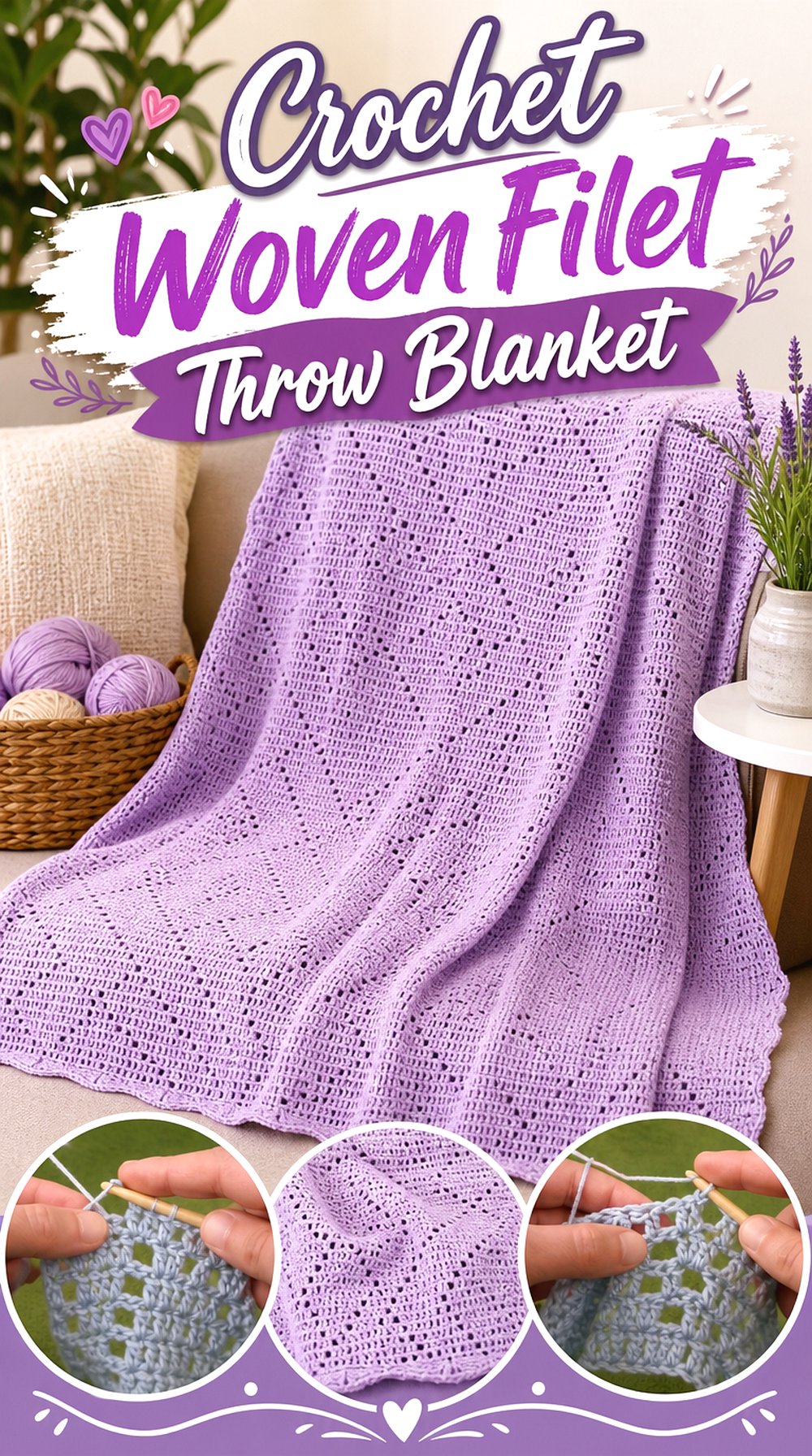
A woven-look filet throw is a good choice for readers who prefer texture and movement over a picture-based design. Instead of focusing on one central image, this blanket uses a directional layout that gives the finished piece a more rhythmic surface. It stands apart from the floral and heart blankets because the interest comes from repeated structure.
The source is presented as part of a larger tutorial sequence, so it suits readers who do not mind following a project in sections. That format can be helpful, but it also makes organization important before starting.
Directional Texture Sets This Blanket Apart
The woven effect gives this blanket a stronger all-over pattern than a single motif design. That can make it easier to use in a living room or bedroom where a picture blanket may feel too theme-specific. Readers should look at the finished sample and decide whether they want a subtle repeated texture or a motif that is immediately recognizable.
Project Order Needs Attention
Because the tutorial begins as Part 1 and points viewers toward the broader project sequence, readers should make sure they have access to the remaining sections before beginning. This is especially important for a larger throw, where stopping mid-project because a later step is missing would be frustrating. Saving the full sequence in order can make the process easier to follow.
Progress Tracking Is Useful Here
A repeating filet blanket can look similar from row to row while it is in progress. A simple progress note, row marker, or printed chart reference can help readers avoid losing their place. This does not replace the creator’s instructions, but it does make the original tutorial easier to use across several crochet sessions.
Creator: Fiber Spider
3. Crochet Floral Filet Table Runner

A long filet table runner gives the technique a practical home-decor purpose. The narrow shape makes it different from blankets and square motifs because the design has to stretch across a surface without becoming too wide. This version uses floral detail, so it works especially well as a centerpiece layer on a dining table, sideboard, or console.
The source provides finished measurements and material information, which is helpful for readers trying to decide whether the runner will fit their table. The color placement also deserves attention because it affects how clearly the floral sections show.
Long Shape Should Fit the Surface
A table runner needs to work with the furniture first. Readers should compare the stated finished length and width with the table or sideboard they have in mind. A runner that is too short may look disconnected, while one that is too long may hang more than expected. Filet crochet also has open spaces, so the surface underneath will remain visible.
Listed Measurements Reduce Guesswork
This tutorial includes finished measurements, which makes it easier to plan before buying supplies. That information is especially useful for a runner because size affects display more directly than it does for a scarf or small motif. Readers who want a different length should review the source carefully instead of assuming the pattern can be changed without affecting the floral layout.
Color Placement Shapes the Floral Effect
The table runner uses color as part of the finished look, so readers should think about contrast before beginning. Floral filet details can become softer or stronger depending on the yarn colors chosen. A high-contrast combination may make the design more noticeable, while a closer color pairing may create a quieter table piece.
Creator: Carmem Crochê
4. Crochet Filet Lace Doily for Table Displays
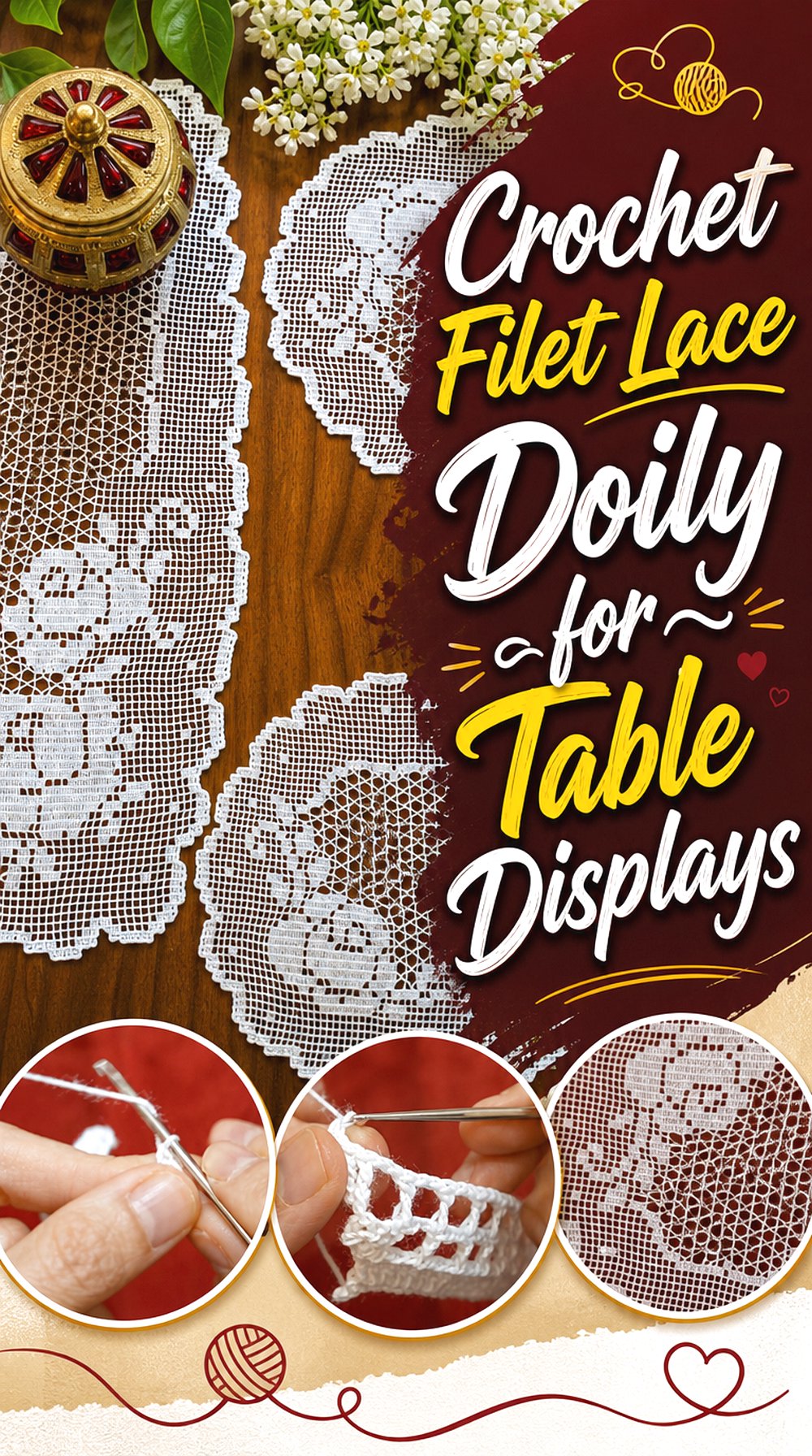
A filet lace doily brings the technique into a smaller table display. Compared with a runner, this type of piece is more compact and works better where readers want one decorative area rather than a long strip of lace. It may suit a coffee table, bedside table, shelf, or layered centerpiece.
The source describes a doily or tablecloth runner style and includes chart-reading guidance. That makes this option useful for readers who want to build confidence with filet crochet charts while still making a finished decorative item.
Decide the Display Purpose First
Before choosing this project, readers should decide whether they want a small doily, a larger table accent, or a repeated section for a longer piece. The same lace style can feel very different depending on scale. A small version may frame a vase or candle, while a longer layout becomes more of a furniture accent.
Chart Reading Is Part of the Value
This source includes guidance on working with a chart, which is useful for filet crochet because many designs depend on reading open and filled spaces correctly. Readers who usually rely only on written instructions may want to watch that section closely. Learning the chart logic can also make future filet projects easier to compare.
Flat Edges Matter for Table Use
A doily or table topper needs to sit neatly on a flat surface. Readers should pay attention to the finished shape, edge treatment, and blocking needs shown or discussed by the creator. If the final piece is meant to hold another object, it is worth checking whether the surface looks even enough for that purpose.
Creator: Crochet Samia
5. Crochet Filet Curtain Panel or Bedspread
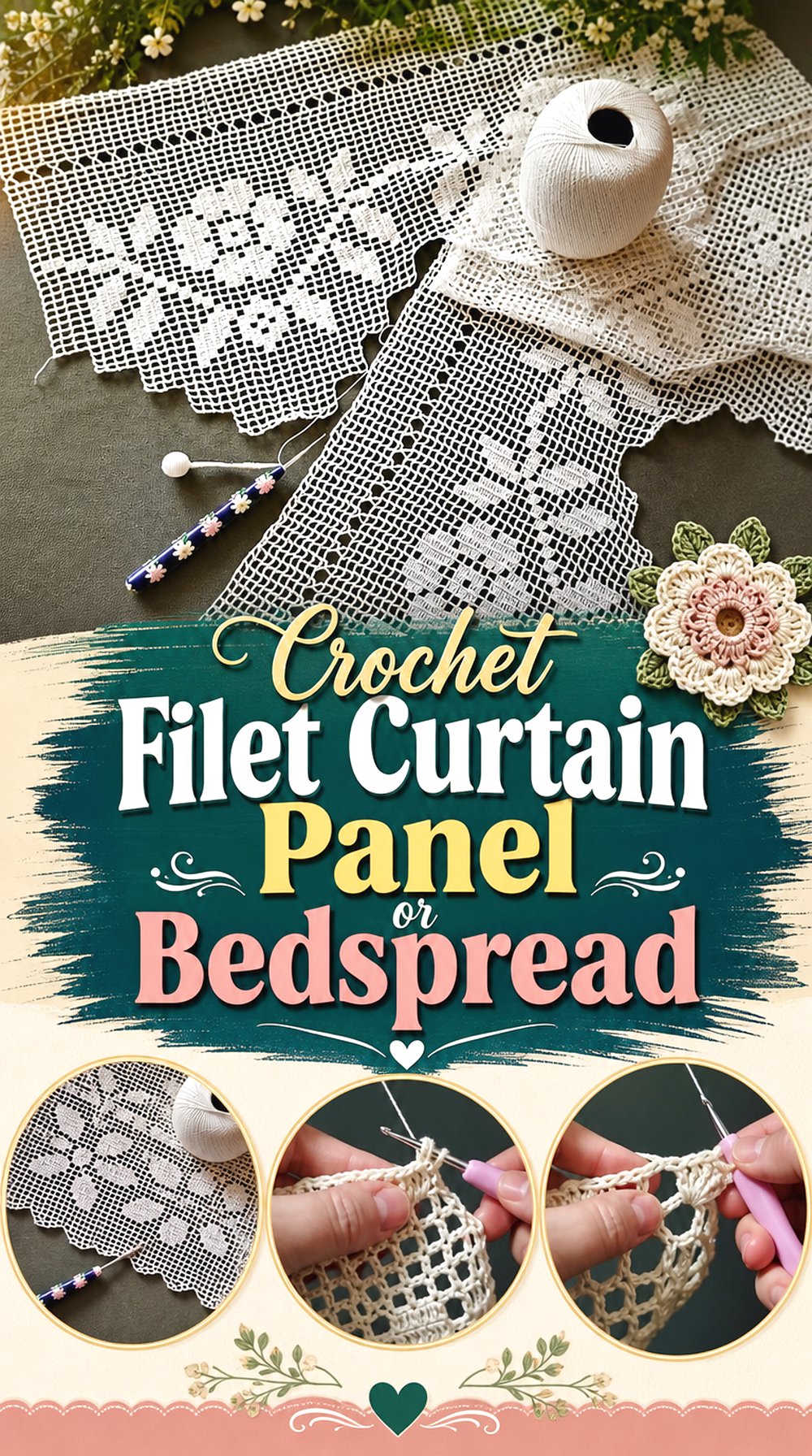
This filet curtain panel idea is one of the most dramatic projects in the list because light can pass through the open mesh. The same tutorial also connects the design to bedspread use, so readers can think of it as either a hanging lace panel or a larger home textile direction.
This project differs from a table runner because it is meant to be seen vertically or spread across a larger surface. The open areas are part of the effect, so placement matters before starting.
Light Changes the Finished Look
A curtain panel will look different depending on the window, wall color, and daylight behind it. The filet openings become more visible when light passes through them, which can make the design stand out more than it would on a table. Readers should choose this type of project when they want the mesh itself to be part of the display.
Curtain or Bedspread Use Needs Planning
The title presents the design as a curtain panel or bedspread, but those uses have very different size and placement needs. A window project may need a specific width and hanging method, while a bedspread needs broader coverage. Readers should decide the final use before following the project too far.
Multi-Part Viewing Should Stay Organized
The source begins with Part 1 and links to the next section, so readers should keep the related parts together. For larger filet pieces, missing a later section can make the project harder to finish neatly. It is worth reviewing the full available tutorial path before choosing materials or committing to a large version.
Creator: Crochet and Knit with Feride Erbaşar
6. Crochet Rose Filet Panel for Garments or Decor
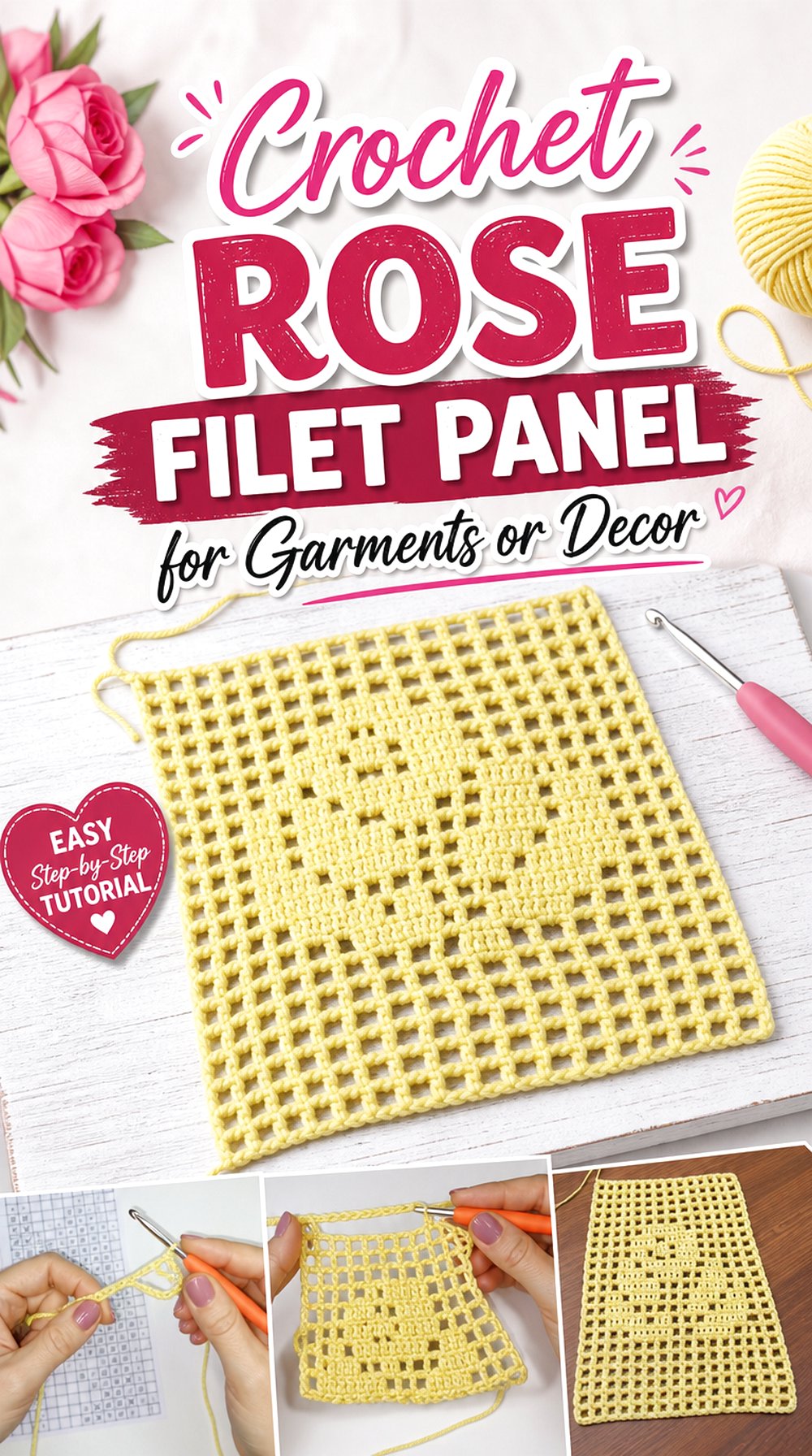
A rose filet panel is a flexible idea because it can be used as a design insert rather than a single finished household item. The source connects the rose pattern with a summer cardigan or jacket direction, but the motif itself can also inspire panels for decor pieces where a floral image is the main feature.
This project stands out because the rose is the focus. Readers who enjoy picture-based filet crochet may prefer it over repeating mesh designs, especially when they want a recognizable floral shape.
The Rose Motif Is the Main Feature
The success of this project depends on the rose reading clearly. A floral image can lose definition if the yarn texture is too fuzzy or the color shifts too much. Readers should study the finished sample and decide whether they want a crisp rose panel or a softer lace impression.
Panel Placement Changes the Use
A rose panel can feel very different depending on where it appears. On a wearable, placement affects the overall look and symmetry. In a decor item, it may become a centerpiece panel. Readers should decide whether the rose will stand alone, repeat, or sit inside a larger project before starting.
Garment Mentions Need Extra Checking
The source mentions using the rose filet pattern for a summer cardigan or jacket, but readers planning a wearable should confirm all garment information separately. Fit, size, joining, and body measurements matter more in clothing than in flat decor panels. The rose motif is only one part of that decision.
Creator: MamochkinKanal
7. Crochet Filet Granny Square for Modular Blankets

A filet granny square is a smaller way to explore the technique without committing to a large one-piece blanket right away. This project works as a modular block, so readers can make one square for practice or repeat the square as part of a larger blanket layout.
It differs from the flower square motif because it sits inside a granny-square structure and connects to a blanket CAL format. That makes it useful for readers who like building projects one block at a time.
A Single Square Makes Testing Easier
One square gives readers a chance to test yarn, hook size, and filet visibility before planning a full blanket. This is helpful because a small sample can reveal whether the open spaces look neat and whether the block lies evenly. It is a lower-commitment way to understand the technique.
Joining Choices Affect the Final Blanket
A modular blanket depends on how the squares are arranged and joined. The filet section may look delicate on its own, but the overall blanket can become busier once many blocks sit together. Readers should think about spacing, color consistency, and how visible each square will be in the final layout.
Written Support Adds Convenience
The source includes a written pattern link along with the video tutorial, which can help readers who like checking visual instructions against text. For filet crochet, that combination can be especially useful because the chart or written notes help keep the open and filled spaces in the right order.
Creator: Cosy Rosie Crochet
8. Crochet Flower Filet Square Motif
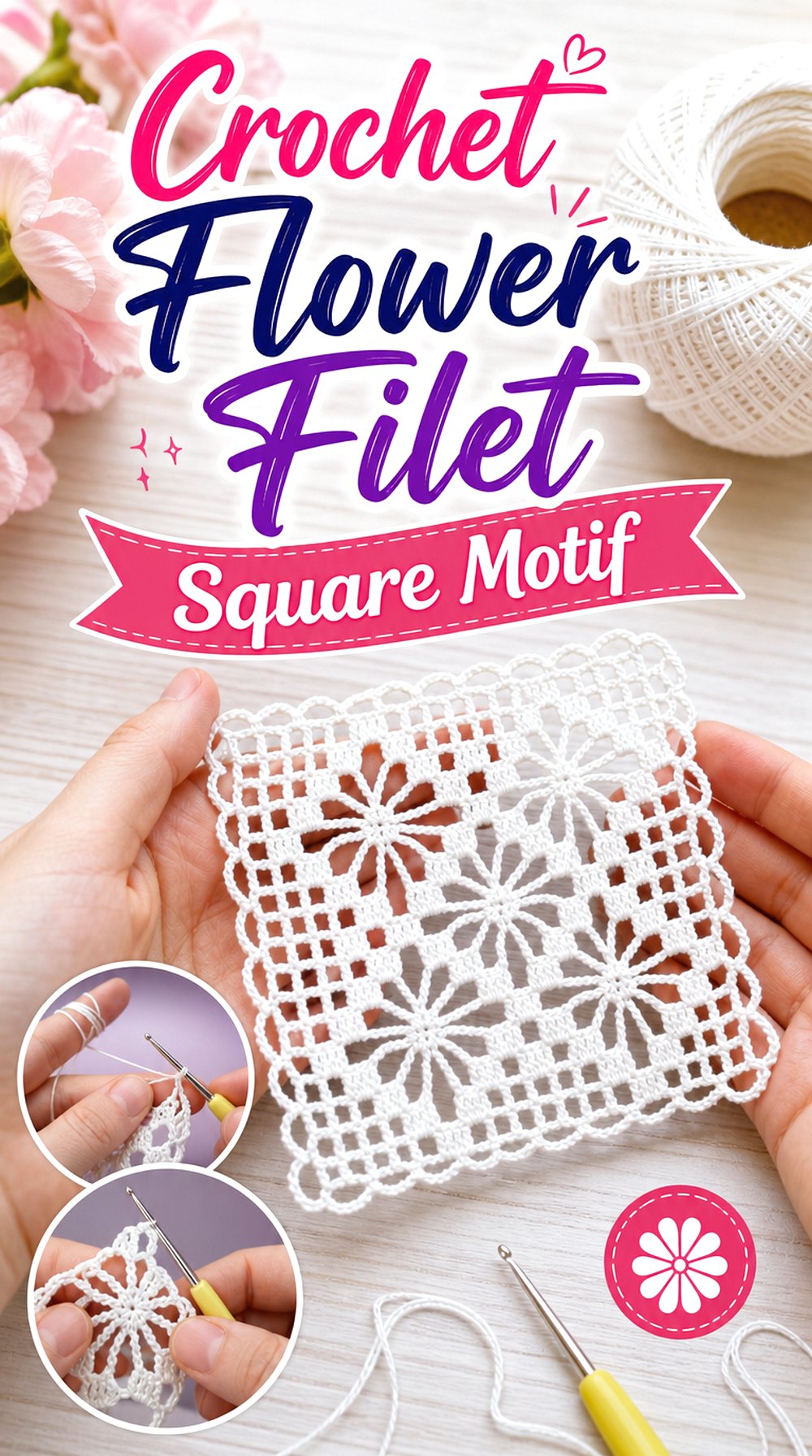
This flower filet square motif is another modular idea, but it has a more decorative lace-block feeling. The source describes the square as useful for projects such as tablecloths, bedspreads, blankets, pillow covers, curtains, and other decor pieces, so it gives readers several possible directions from one finished motif.
Unlike the rose panel, this design reads as a square block rather than a single picture insert. It may suit readers who want repeated floral lace across a larger surface.
Open Floral Blocks Work Across Decor
A square motif can be repeated in many home pieces because it has clean boundaries. That makes it easier to imagine as part of a tablecloth, curtain, blanket, or pillow front. Readers should choose this idea when they want a repeatable floral lace unit instead of one large central image.
Consistent Edges Matter Most
When a motif is repeated, the edges need to stay consistent so the blocks line up neatly. Readers should watch the corner and edge portions closely and compare each finished square before making many more. Small differences in size may become more noticeable once several motifs are joined.
Project Scale Should Be Chosen Early
This motif can lead to very different projects, so the final purpose should come first. A pillow cover needs fewer blocks than a curtain or bedspread, and a tablecloth needs a layout that fits the table. Choosing the use early helps readers avoid making squares without a clear plan.
Creator: Knitting Love 💗
9. Crochet Heart Filet Blanket
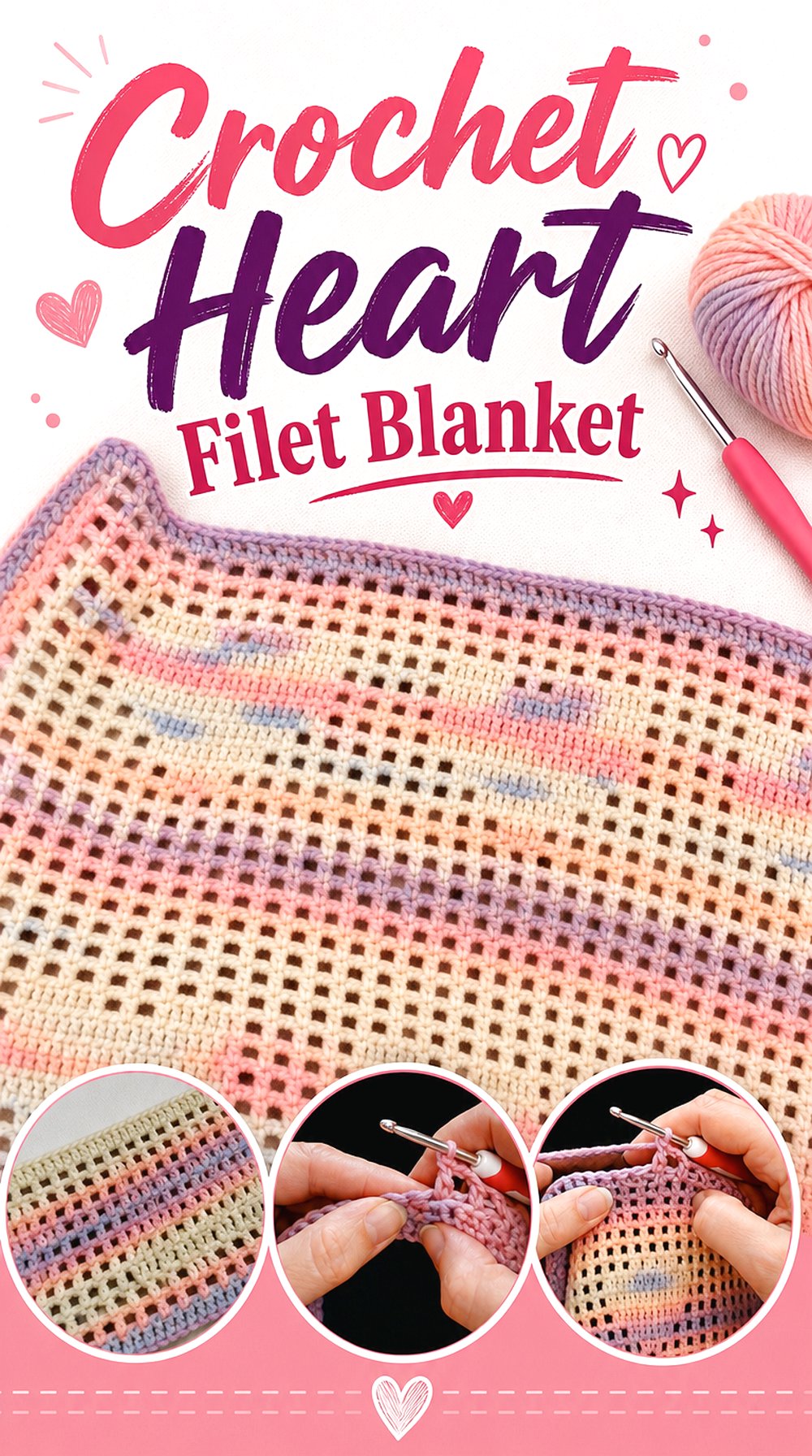
A heart filet blanket is a good option when the design needs to feel personal without adding appliqués or extra surface pieces. The heart shape is formed through the filet layout, so the finished blanket keeps a flat, integrated look. This makes it different from the lily blanket, where the effect is more floral and subtle.
The source describes a full step-by-step tutorial and notes both USA and UK crochet terms. That detail is useful because terminology can affect how readers follow any crochet source.
Heart Placement Gives the Blanket Its Message
The heart motif is the reason to choose this blanket. It may suit a baby gift, Valentine-themed project, or sentimental home piece, depending on color and size. Readers should think about whether they want one main heart, repeated hearts, or a panel-style layout before deciding how to use the source.
Crochet Terms Are Worth Noting
The source mentions USA and UK crochet terms, which is important because the same stitch names can mean different things depending on the system. Readers should confirm which terms they are following before beginning. This simple check can prevent confusion later in a filet design where spacing and alignment matter.
Separate Squares Change the Final Look
The description discusses a single heart square option, which means the heart idea can become more than one finished format. A joined-square blanket will look different from a continuous panel blanket. Readers should decide whether they prefer a grid of separate hearts or a smoother one-piece layout.
Creator: Alison Russell Crochet and Craft Channel
10. Crochet Soft Lace Filet Baby Blanket

This soft lace filet baby blanket gives readers another baby-blanket direction, but it is more focused on an airy lace texture than a specific picture motif. The finished piece is described with an approximate square measurement in the source, which helps readers understand the scale before starting.
Compared with the heart and lily options, this blanket feels more like an all-over lace fabric. It may suit readers who want a gentle filet look without a large image or strong symbol.
A Square Size Is Easy to Place
The source gives an approximate finished square size, which helps readers imagine how the blanket may be used or gifted. A square blanket can fold and display differently from a long rectangular throw. Anyone adjusting yarn or hook size should remember that those changes can affect the final dimensions.
Softness Comes From the Source Materials
The creator names the yarn used and describes the feel of the finished blanket. Readers can use that information as a starting point, but they should still check yarn labels and care details before choosing supplies. Filet crochet creates openings, so drape and fiber choice can change the finished behavior.
Care Details Should Be Verified
Baby blankets often need practical care, but washing and durability depend on the yarn used. Readers should keep the yarn label and confirm fiber-specific care rather than assuming one method fits every version. This is especially important if the blanket will be gifted and handled often.
Creator: Laura Brian
11. Crochet Filet Top or Vest from a Pixel Grid
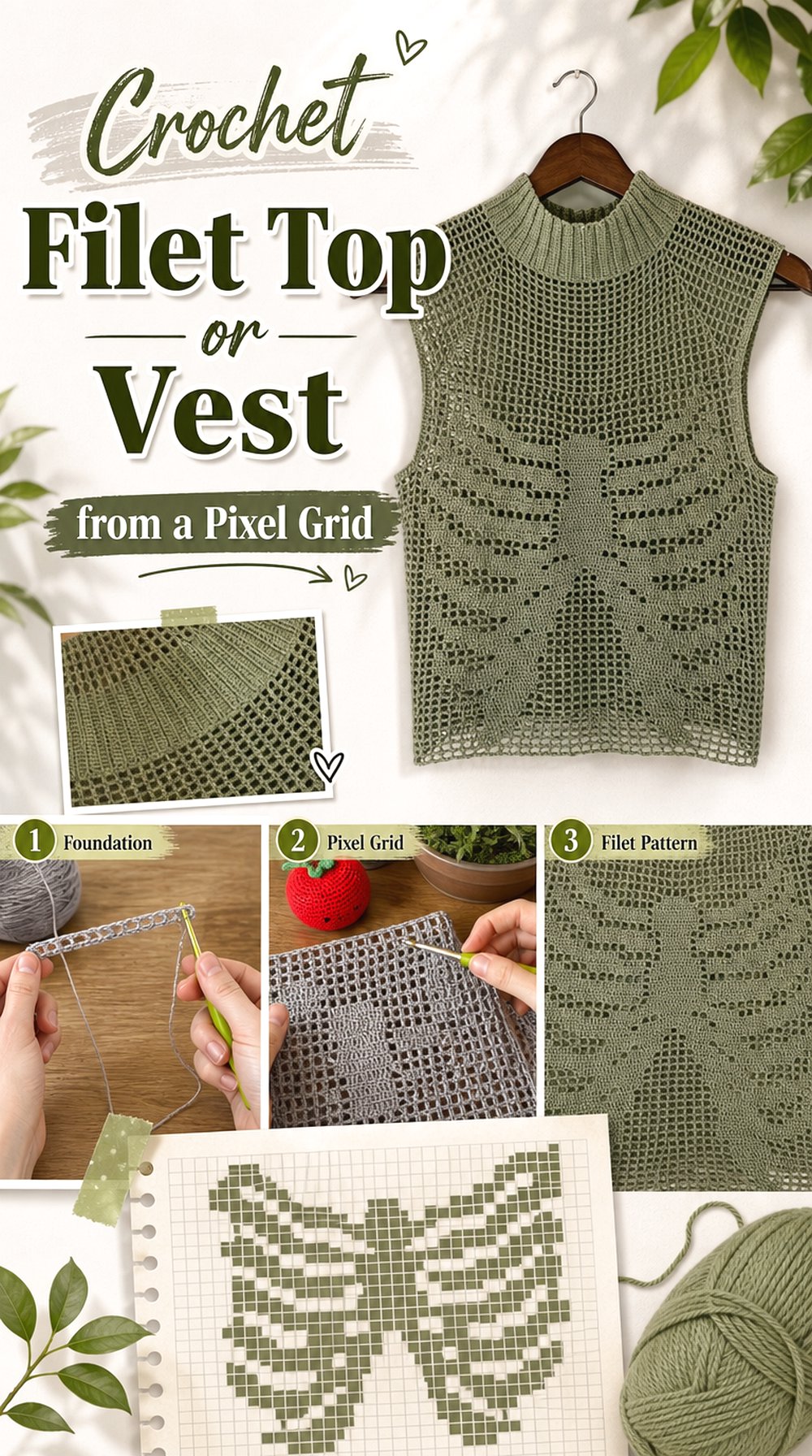
A filet crochet top or vest turns the technique into a wearable project. This idea is very different from the blankets and decor pieces because fit, symmetry, and body placement matter. The source discusses using a pixel grid and includes sizing and construction guidance, which are key points for clothing.
This project may suit readers who already like graphic crochet and want a garment with open filet areas. Since wearables need more planning than flat pieces, the preparation stage is especially important.
Fit and Symmetry Come First
A filet garment has to line up on the body, not just look good flat. Readers should pay attention to the creator’s sizing and construction notes before choosing a grid. If the design is off-center or the proportions are not planned, the finished top may not sit the way the maker expects.
Pixel Grid Choice Changes the Whole Top
The grid is the visual center of this project. A simple grid may create a cleaner wearable, while a more detailed one may require more careful placement. Readers should choose a design that fits the garment shape instead of picking a graphic only because it looks good on a screen.
Linked Skills May Be Needed
The source points to related techniques and preparation, including garment construction support. That means readers should review the full learning path before starting. A filet top or vest may involve more than the filet panel itself, so it is worth checking whether the linked help matches the reader’s current skill level.
Creator: divyne crochet
12. Crochet Filet Bookmark with Tassel Finish
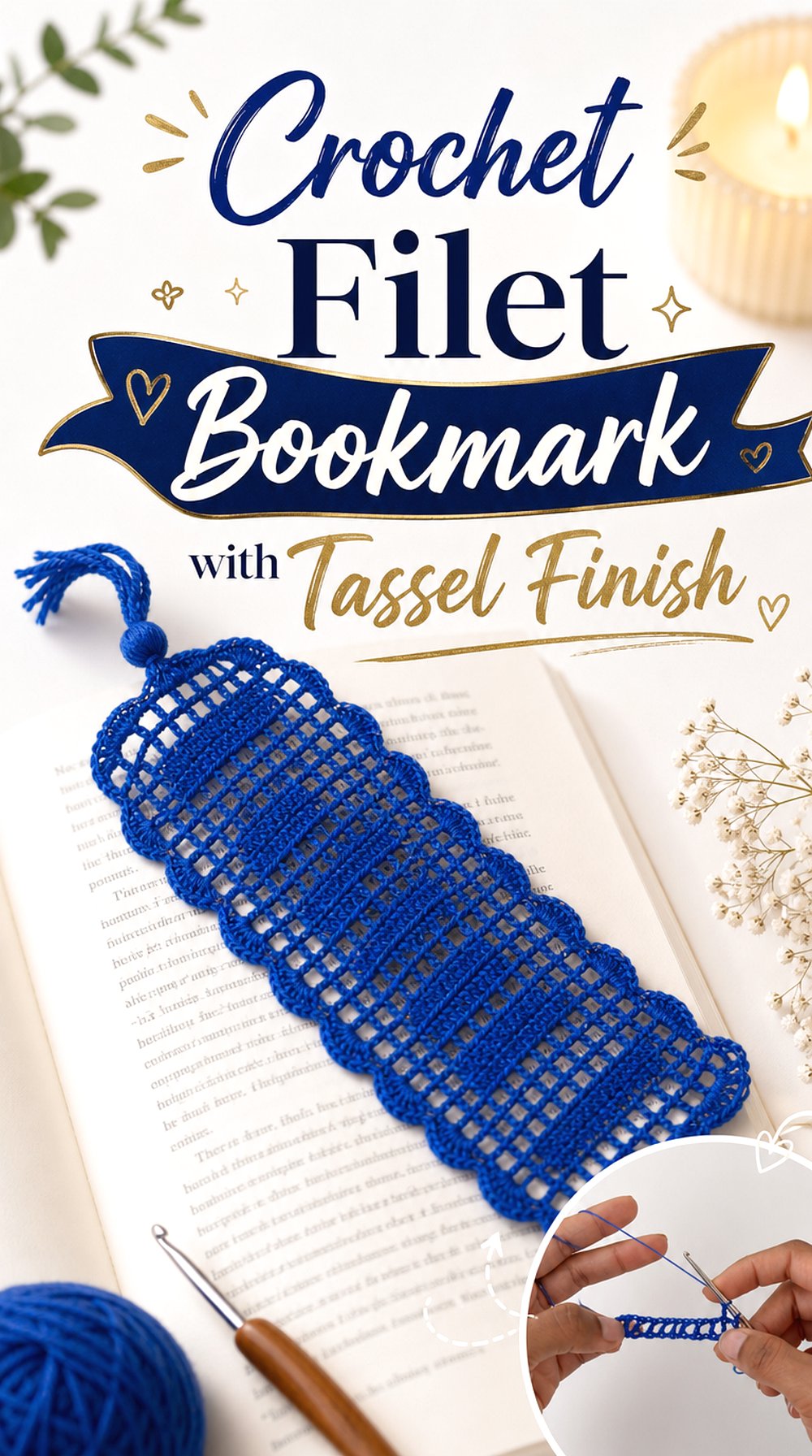
A filet crochet bookmark is a small project with a clear use. Its narrow shape makes it very different from blankets, curtains, and table pieces because the design has to stay readable in a slim strip. The tassel gives the finished item a defined end and makes it easier to spot inside a book.
This idea works well for readers who want a filet project that feels giftable without taking over a large surface. It also shows how filet crochet can be used in practical accessories.
Narrow Scale Needs a Clear Grid
A bookmark does not have much room for complicated imagery. Readers should choose colors and yarn thickness with the narrow scale in mind so the filet openings do not disappear. A clean, simple grid often reads better on a small item than a very detailed picture.
The Tassel Changes Daily Use
The tassel is more than decoration. It can help the bookmark hang outside the book, making it easier to find the page. Readers should decide whether they want that extra movement or a flatter finish, especially if the bookmark will be used in smaller books or carried in a bag.
Creator: jorithedio
13. Crochet Heart Filet Border for Fabric Edging

A heart filet border is a useful choice for readers who want to add crochet to fabric rather than make a whole blanket or panel. The source teaches a heart-shaped edging and also discusses applying or sewing the border onto fabric, which gives this idea a different purpose from the heart blanket.
This project may work for towels, cloth edges, linens, or decorative fabric pieces when the material and attachment method are suitable. The key decision is where the edging will be placed.
Fabric Attachment Is the Main Detail
Unlike a standalone filet project, this border depends on another material. Readers should check how the crochet edging is applied and whether their chosen fabric can support it. A light fabric, thick towel, or loose weave may behave differently, so the attachment method deserves attention before starting.
Heart Edging Works Best With Repetition
A border usually repeats along an edge, so the heart shapes need to stay evenly spaced. Readers should think about the length of the fabric edge and how the pattern will end at the corners or final repeat. A neat ending can make the difference between a polished border and an awkward stop.
Material List Should Be Reviewed First
The source notes that the materials are listed in the video, so readers should review that portion before buying supplies. Edgings can be sensitive to thread size, fabric type, and hook choice. Confirming the list first helps the finished border sit better on the intended fabric.
Creator: Gisele Barrados e Bordados
How to Choose Among These Filet Crochet Ideas
For a large statement piece, choose one of the blankets, the curtain panel, or the bedspread direction. These give the mesh enough room to show a larger motif or repeated texture. For table styling, the runner, doily, and flower square motif make more sense because they are designed around flat display.
The wearable top or vest needs the most fit planning, especially if a pixel grid is involved. The bookmark and heart edging are better for smaller projects where the finished use is clear from the start. If the goal is to learn how filet images are built, a square, border, or small panel may be easier to manage before committing to a full blanket.
Conclusion
These 13 filet crochet pattern ideas show how flexible the technique can be. The blankets offer larger surfaces for hearts, flowers, lace, and woven effects, while the curtain panel and table runner turn filet crochet into visible home decor. The rose panel, granny square, and flower motif are useful for readers who like modular planning, and the top, bookmark, and fabric border show how the same mesh idea can move into wearables and small gifts.
The original tutorials should be used for exact construction details, sizing, materials, and any chart or joining information before starting.
FAQs
What makes filet crochet different from regular crochet patterns?
Filet crochet usually depends on open mesh spaces and filled sections that form a pattern, image, or lace effect. Instead of focusing only on texture, the design often depends on how the open and solid areas line up. That is why charts, counting, and clear visual contrast are especially important.
Which filet crochet project is easiest to choose first?
A smaller project such as a square motif, bookmark, or border may be easier to choose first because it limits the project size. A blanket, curtain, or wearable can be more demanding because the design has to stay aligned over a larger area. Readers should review the full tutorial style before deciding.
How can I make the filet design easier to see?
The design usually reads best when the yarn does not hide the open spaces. A solid or lightly shaded yarn may keep the pattern clearer than a very busy color-changing yarn. The finished sample in the tutorial is the best guide, especially for picture motifs such as hearts, roses, or flowers.
Can I use any filet crochet chart for a top or vest?
Not every chart will automatically fit a garment. A wearable needs planning for body size, symmetry, placement, and construction. A chart that looks good as a flat panel may need adjustment before it works on a top or vest, so readers should follow the creator’s sizing and garment guidance closely.
What should I check before starting a large filet crochet blanket?
Check the finished size, material list, chart format, border information, and whether the tutorial is complete or split into parts. Large filet blankets can take more organization because the design depends on alignment. It is also helpful to keep a progress note so the pattern stays consistent across multiple crochet sessions.
Can I sell finished items made from YouTube filet crochet tutorials?
Do not assume selling is allowed just because the tutorial is public. Creator terms vary, and some designs may have separate pattern rules. Readers who plan to sell finished items should check the creator’s wording, linked pattern license, and any local business requirements before making items for sale.