Mosaic crochet can create bold colorwork without making every project feel the same. Some patterns use large graphic repeats for blankets and shawls, while others keep the technique compact in coasters, mug rugs, bags, baskets, and wearables.
This list brings together mosaic crochet pattern ideas with different shapes, uses, and finishing needs. You will find flat home pieces, soft accessories, structured bags, and larger projects that need more planning. The goal is to help readers choose by finished item, not just by color or motif.
Each project links to an original YouTube tutorial from a different creator, so readers can go directly to the source for the exact pattern details.
Quick List
- Crochet Winter Forest Mosaic Blanket
- Crochet Wave Mosaic Blanket
- Crochet Infinity Mosaic Pillow
- Crochet Diamond Mosaic Pillow Cover
- Crochet Summer Mosaic Tote
- Crochet Large Mosaic Tote Bag
- Crochet Gothic Skull Mosaic Bag
- Crochet Square Mosaic Granny Bag
- Crochet Mosaic Basket
- Crochet Basketweave Mosaic Placemat
- Crochet Rectangular Mosaic Table Runner
- Crochet Center-Out Mosaic Starburst Square
- Crochet Overlay Mosaic Mug Rug
- Crochet Small Mosaic Coaster
- Crochet Havana Mosaic Shawl
- Crochet Farahan Mosaic Triangle Shawl
- Crochet Bismuth Mosaic Cowl
- Crochet Mosaic Peaks Hat
- Crochet Geometric Yoke Mosaic Sweater
What to Compare Before Choosing a Mosaic Crochet Project
Mosaic crochet projects vary most in scale, finishing, and how the colorwork is handled. A blanket or shawl gives the pattern room to spread out, while a coaster, mug rug, or placemat keeps the design smaller and easier to place around the home. Bags and baskets add practical questions about structure, openings, handles, and how the inside is finished.
Wearable mosaic crochet patterns need a little more checking because fit, drape, and body measurements matter. For any project, readers should review the creator’s material list, finishing details, and whether a chart, written guide, or multi-part tutorial is included before choosing supplies.
1. Crochet Winter Forest Mosaic Blanket
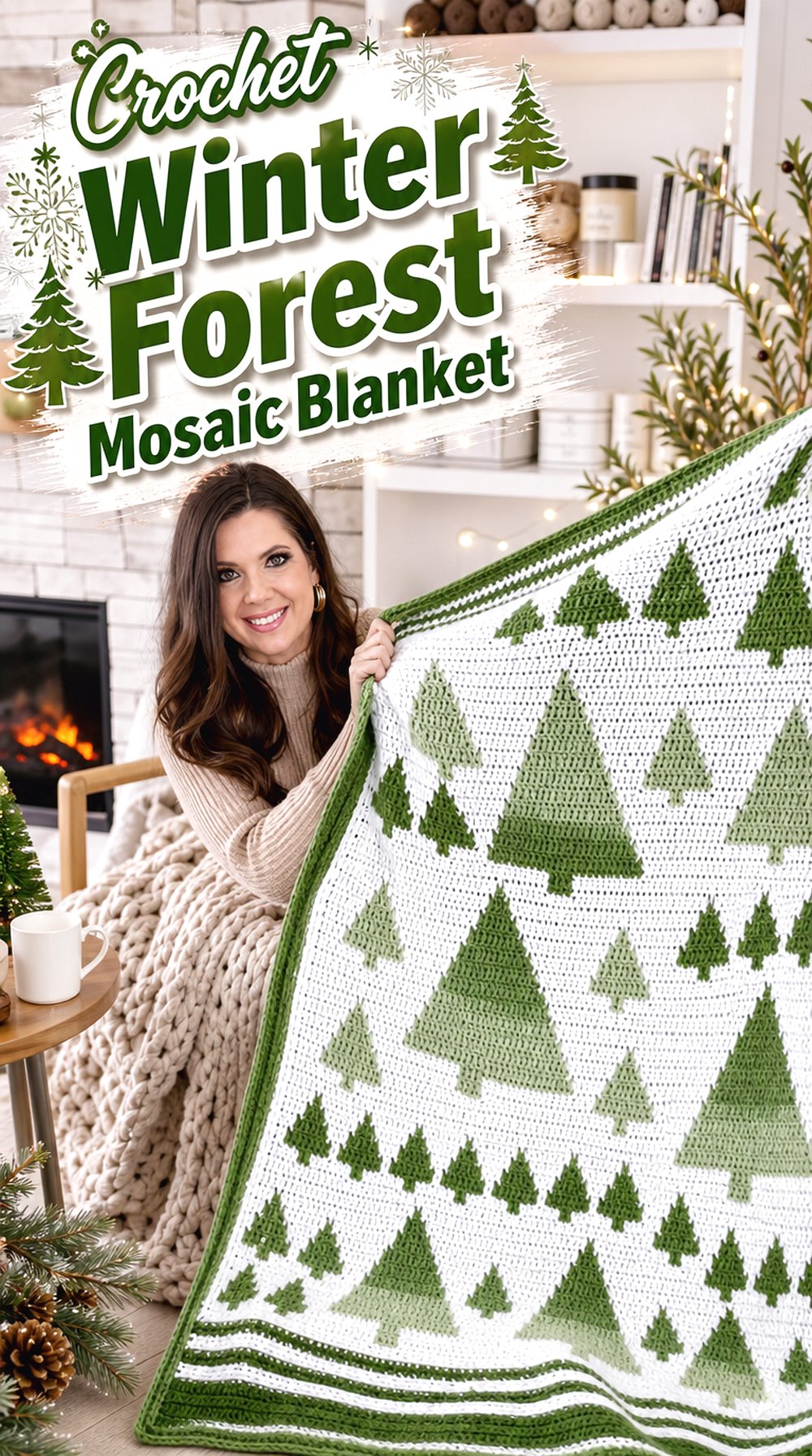
A forest-themed mosaic blanket gives the technique a wide surface where the repeated shapes can stand out clearly. The finished look is especially suited to seasonal home decor, but it is still a full blanket project rather than a small accent piece. The tall tree-style patterning makes it different from the smaller home accessories later in this list.
This option is best for readers who want one large statement project and are comfortable following a longer design through repeated sections.
The Motif Needs Room to Show
A blanket gives mosaic colorwork enough space for the forest design to read as a complete scene instead of a small sample. Readers should think about where the finished blanket will be used before choosing colors, because high contrast helps the trees remain clear from a distance. The original source should be used for the exact layout and any border details.
Finishing Details Matter on a Large Piece
Larger mosaic blankets often involve edge treatment, tails, or border decisions that affect the final appearance. Before starting, readers should review the full tutorial information and any linked pattern notes so the finishing plan is clear. This is especially useful for anyone who wants the blanket to look polished on a sofa, bed, or seasonal display ladder.
Creator: MJ’s Off The Hook Designs
2. Crochet Wave Mosaic Blanket
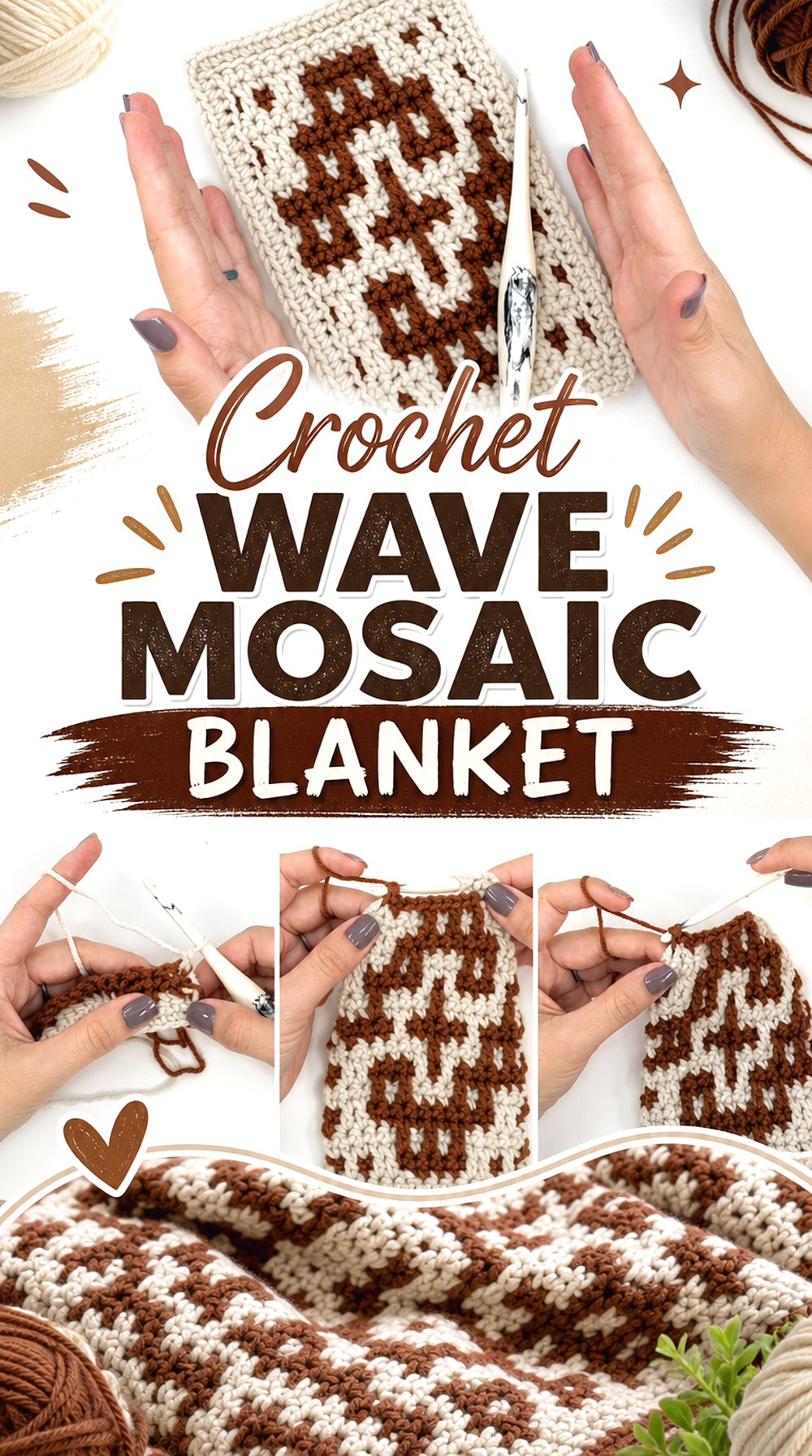
A wave mosaic blanket brings a softer movement to the category compared with the sharper tree or geometric projects. The design direction suits readers who want a blanket with flowing lines rather than a blocky motif. It can work as a decorative throw when the color contrast is chosen carefully.
This project still needs the planning of a full-size crochet item, especially if the finished blanket must match a specific room, bed, chair, or gift purpose.
Choose Colors for Clear Movement
The wave effect depends on the contrast between the two color areas. Subtle shades may create a softer result, while stronger contrast can make the movement easier to see. Readers should check the creator’s sample and source notes before buying yarn, especially if they want the wave lines to remain visible across the full blanket.
A Repeated Design Needs Consistent Tracking
Mosaic blankets with a repeating visual rhythm are easier to follow when progress is checked often. Keeping track of where the pattern repeat begins and ends can help prevent the design from drifting visually. Readers should rely on the original tutorial and any linked written support for the exact counts, repeat information, and finishing choices.
Creator: Briana K Designs
3. Crochet Infinity Mosaic Pillow
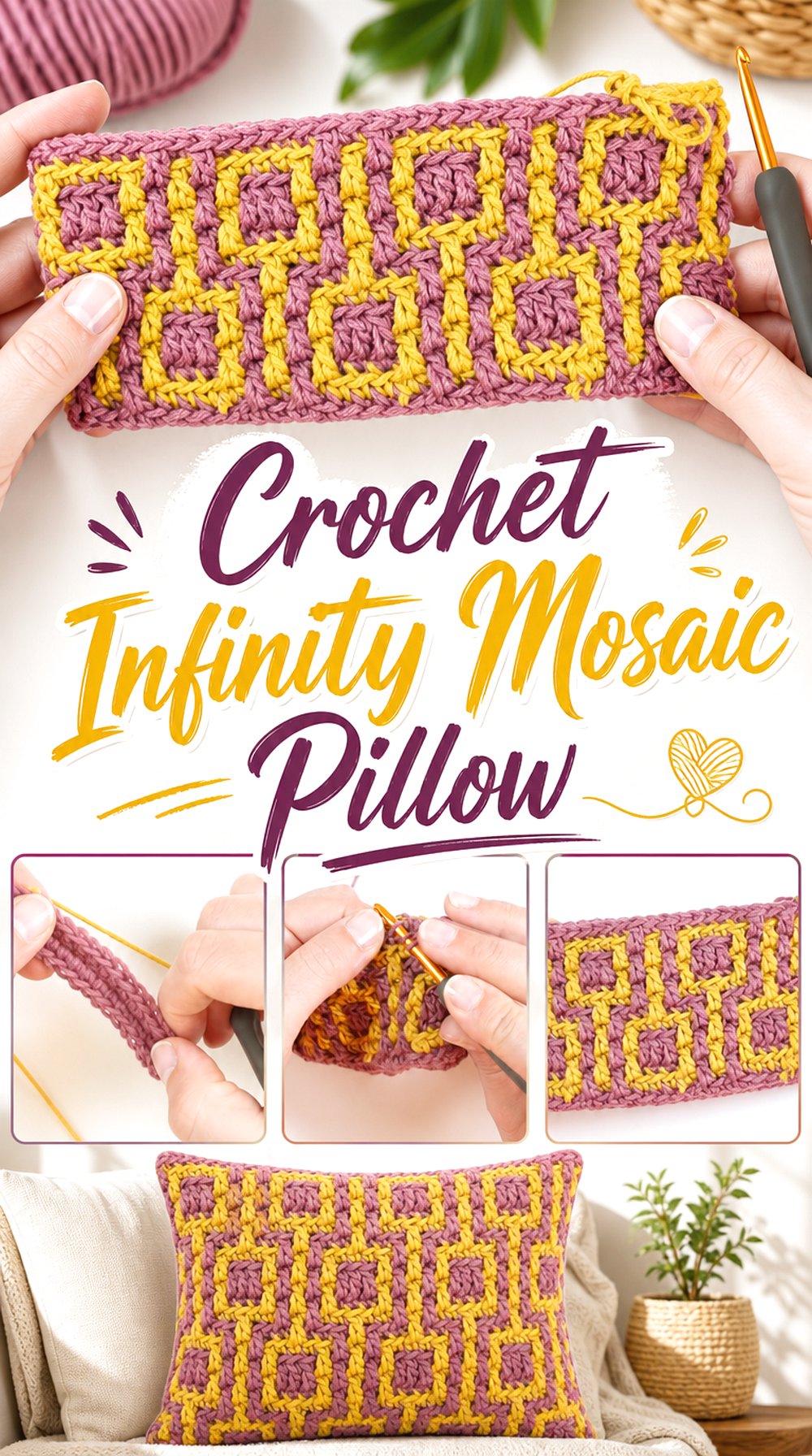
The infinity pillow is a smaller home decor project with a bold circular or looped visual effect. It has more shape focus than a flat placemat or coaster, but it does not require the same surface area as a blanket. The finished pillow can work as a sofa accent, chair accent, or decorative piece on a bed.
Because it is a pillow project, the insert, back finish, and closure details are worth checking before starting.
Pillow Shape Changes the Planning
Unlike a flat mosaic panel, a pillow needs to become a usable cover around a filled form. Readers should confirm how the creator handles the back, opening, and final shape before choosing it for a specific pillow insert. This prevents the finished crochet piece from being treated like a simple square when it actually needs a functional cover finish.
The Central Design Should Stay Balanced
The infinity-style motif works best when the design stays centered and evenly framed. Before committing to colors, readers may want to notice how the sample uses contrast around the main shape. A strong contrast can make the looped design clearer, while softer colors may create a quieter home decor piece.
Creator: Lanas y Ovillos in English
4. Crochet Diamond Mosaic Pillow Cover

A diamond mosaic pillow cover has a more angular look than the infinity pillow. The repeated diamond layout creates a neat, graphic surface that can fit modern, rustic, or simple room styling depending on the yarn colors used. It is a good idea for readers who want a useful home item with a clear front-facing design.
The main point to review is how the cover is finished, because pillow projects can vary in back style, opening, and insert fit.
The Front Panel Is the Main Feature
The diamond design gives this pillow its strongest visual value, so color placement matters. Readers should choose contrast that keeps the diamond shapes readable after the pillow is filled. If the colors are too close, the mosaic work may look textured but less defined from across the room.
Back and Closure Information Are Important
A pillow cover is not complete until the back and opening are handled in a way that suits the intended use. Readers should check whether the source clearly shows the back view, insert placement, and closure style. These details matter more for a pillow than for a simple practice swatch.
Creator: JST Crochet
5. Crochet Summer Mosaic Tote
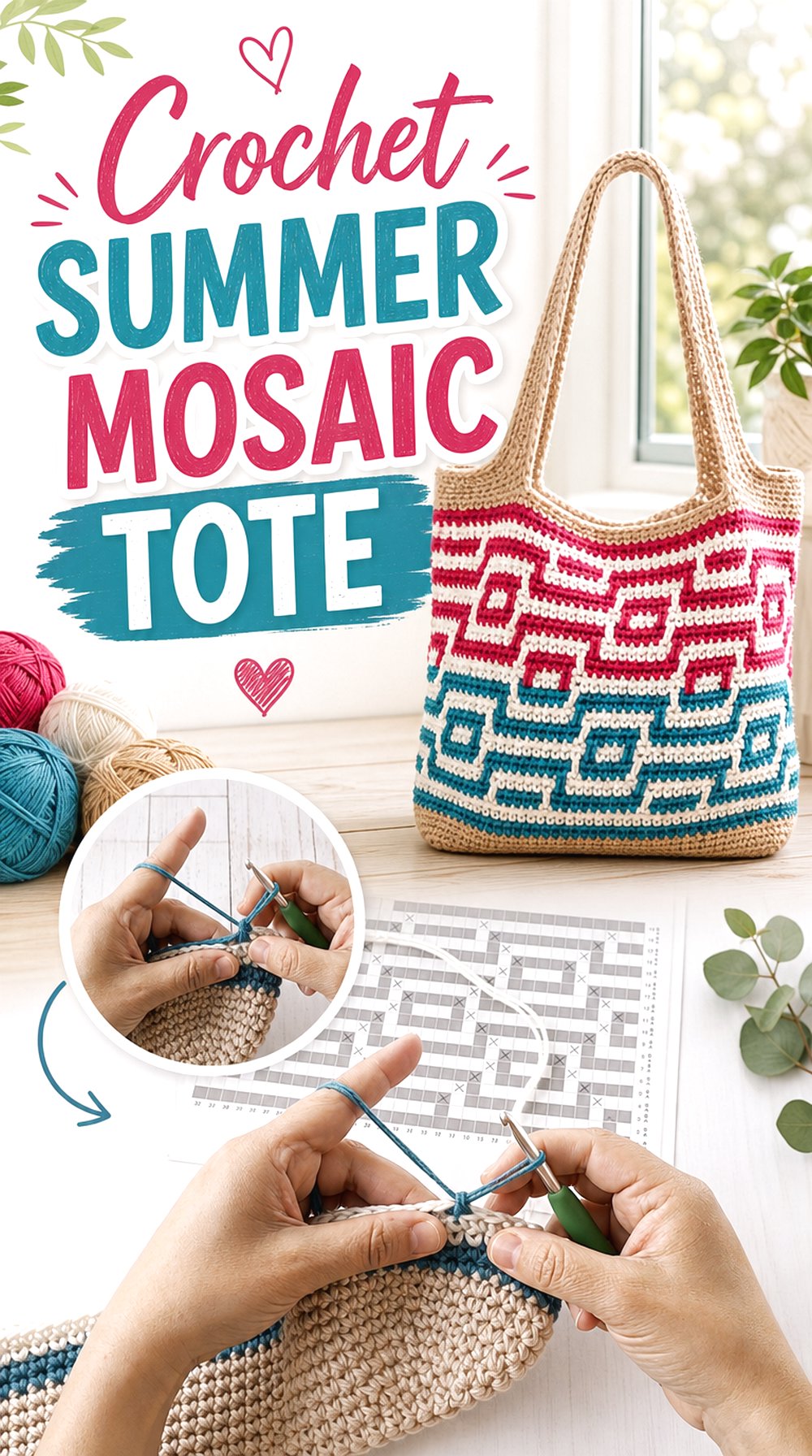
A mosaic tote brings colorwork into a practical bag shape. This version has a lighter everyday feel than the darker skull bag and a more open casual purpose than a structured basket. The finished tote style may suit light carrying, project storage, or seasonal use when the size and handle placement match the reader’s needs.
Because bags take more handling than flat decor, the opening, strap area, and inside finish should be reviewed carefully.
Handle Placement Affects Daily Use
The handles are one of the most important parts of a tote because they decide how the bag sits when carried. Readers should look closely at where the handles attach and whether the source gives enough guidance for finishing that area neatly. A pretty mosaic panel still needs a practical carrying shape to work as a bag.
The Interior Finish Is Worth Reviewing
Mosaic crochet can leave a textured or layered fabric depending on the method used. For a tote, readers may want to know whether the inside is shown and whether a lining is included or suggested. That choice can matter if the bag will hold small items, yarn tools, or anything that might catch on the inside surface.
Creator: Loops and Love Crochet
6. Crochet Large Mosaic Tote Bag
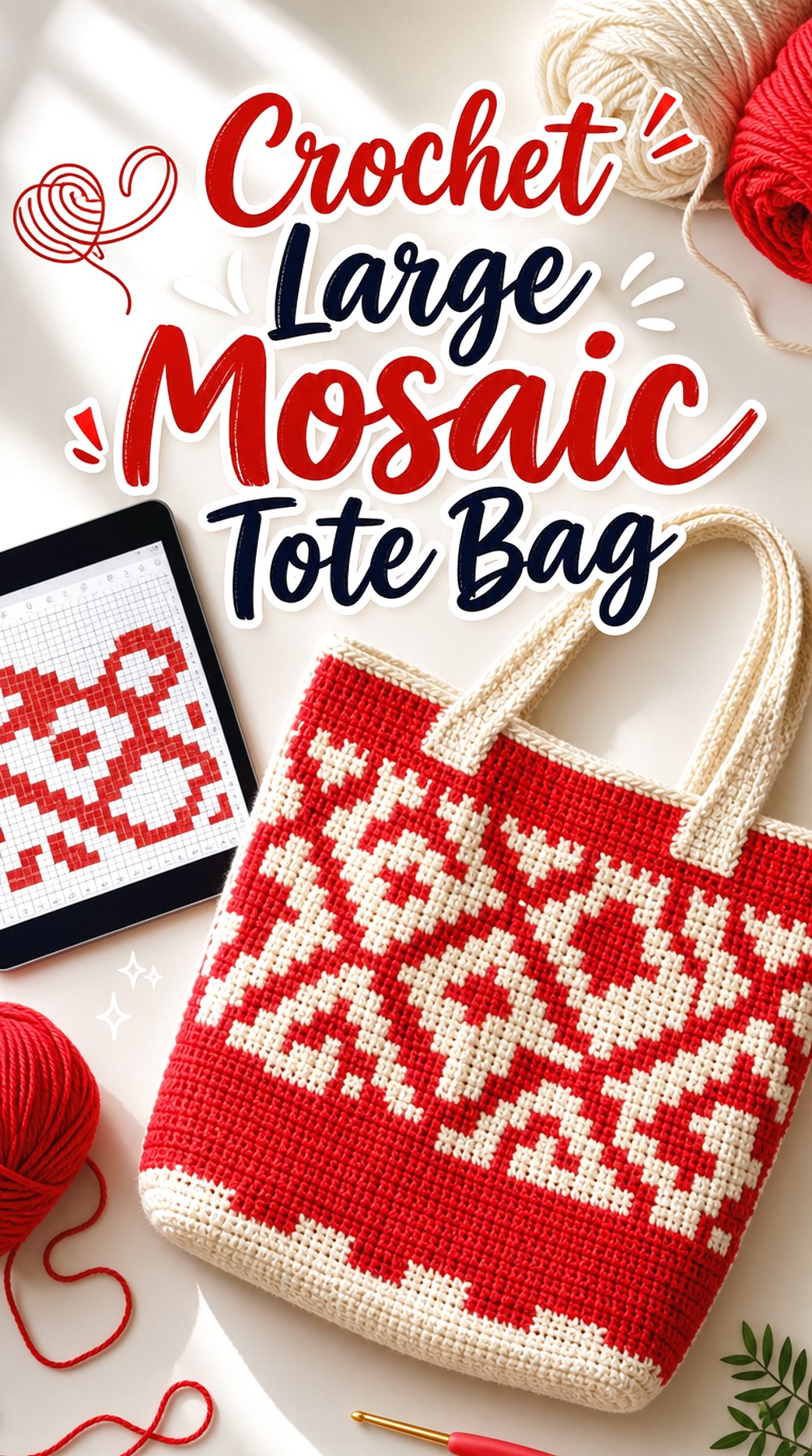
This large mosaic tote idea offers a roomier bag shape than the smaller or more decorative bag projects in this list. The main appeal is the combination of a broad crochet surface and a usable carrying format. The colorwork has more space to show across the body of the bag, making it feel closer to a statement accessory.
Readers should treat this as a planning project, especially if they want a tote for specific contents.
Size Should Match the Intended Use
A large tote can be useful only when the finished dimensions suit what the reader wants to carry. Before starting, it is worth checking whether the creator gives size details or shows the bag with items for scale. Without that information, readers should avoid assuming it will fit books, groceries, or larger yarn projects.
Structure May Need Extra Attention
A bigger crochet bag can look different when empty, filled, or hanging from the handles. Readers should review how the base and sides appear in the finished sample and whether any lining or shaping details are included. This helps them decide whether they want a soft tote or a more defined bag shape.
Colorwork Covers a Wider Surface
The large body gives the mosaic pattern more visual weight than a small pouch or coaster. Readers may want to choose colors that they would actually wear or carry often, not just colors that look strong in a close-up. A high-contrast design can be bold, while a quieter palette may feel easier for daily use.
Creator: KnittyLife
7. Crochet Gothic Skull Mosaic Bag
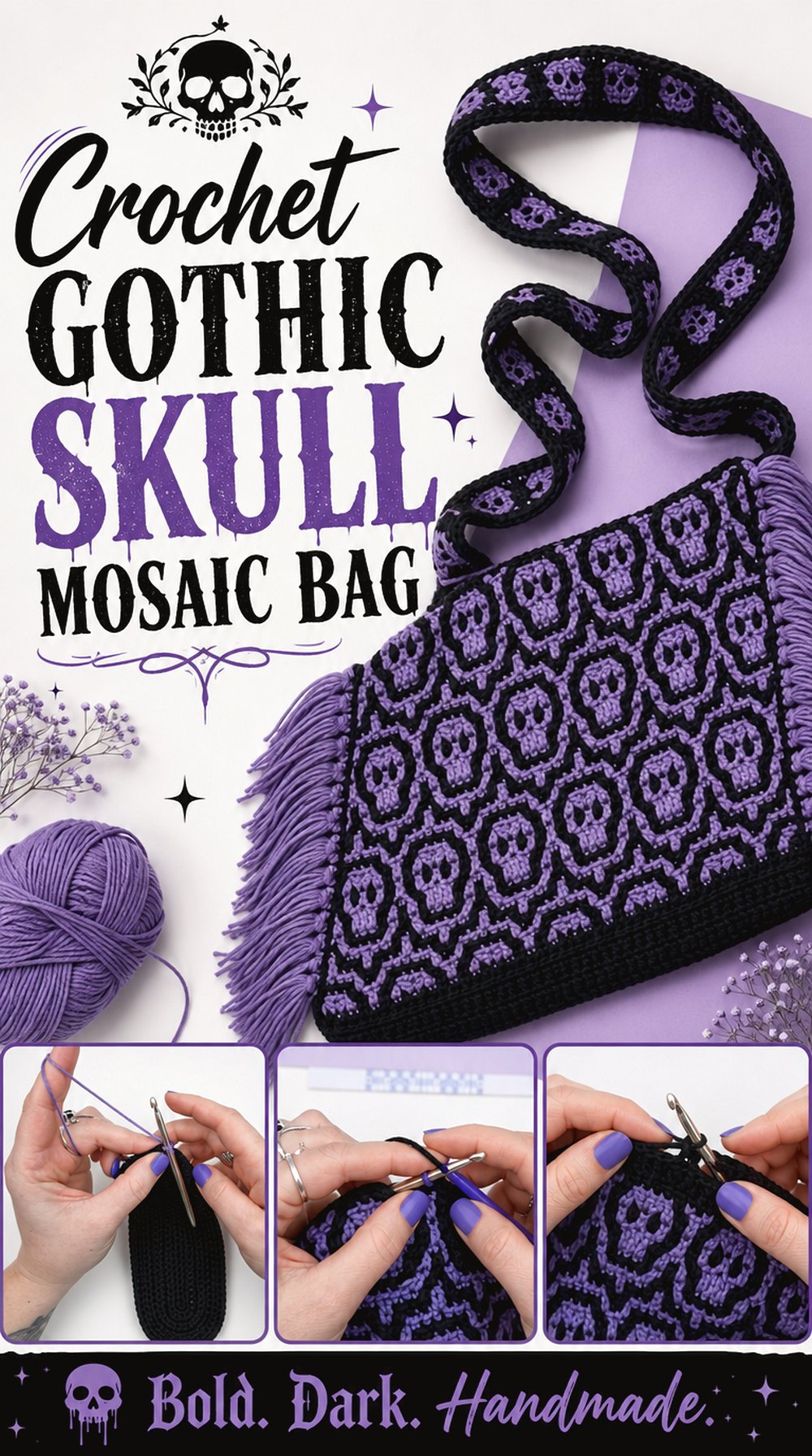
The gothic skull mosaic bag is the most character-driven bag idea in this collection. Instead of using only geometric repeats, it turns the mosaic surface into a themed design. This makes it a strong option for readers who want a bag with a bold graphic front rather than a subtle everyday texture.
Because the source is presented in parts, readers should review the full tutorial series before choosing it as a main project.
The Graphic Motif Sets the Style
The skull design gives the finished bag a very specific mood, so it will not blend into every wardrobe the way a simple diamond or wave pattern might. Readers should think about color contrast carefully because the motif needs to stay recognizable. Dark and light contrast can make the design clearer, but the final palette should still match how the bag will be used.
Follow the Series Format Carefully
A multi-part bag project requires more organization than a single short home accessory tutorial. Readers should check the available follow-up parts, material notes, and final assembly information before starting. This prevents the project from being chosen based only on the first visible section when the complete bag may need several stages.
Creator: Sixel Design
8. Crochet Square Mosaic Granny Bag
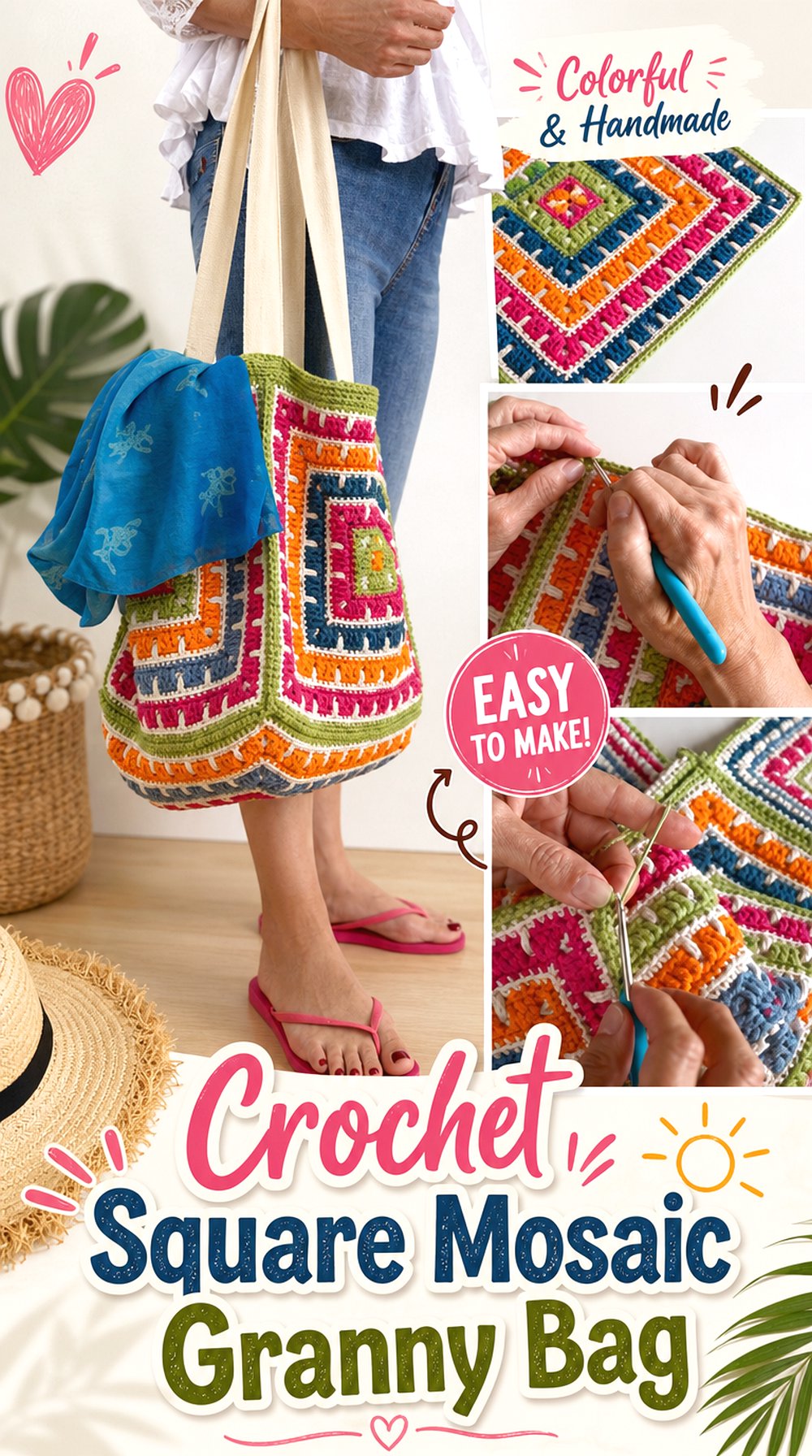
This mosaic granny bag uses joined square-style construction rather than one continuous tote body. That gives it a different look from the larger mosaic totes and makes the layout part of the design. The finished bag can show separate blocks of pattern, which may appeal to readers who like modular crochet projects.
The most important details to review are square placement, joining, and how the handles are added without distorting the bag shape.
Modular Layout Changes the Look
A square-based bag has a patchwork feeling that is different from a single-panel tote. Readers should notice how the motifs line up once they are joined, because the final effect depends on placement as much as color. This style may suit someone who enjoys building a project in visible sections.
Joining Is a Key Decision Point
The joining stage affects the bag’s shape, seams, and overall neatness. Readers should follow the original guide for exact construction details rather than guessing how the squares connect. It is also useful to check whether the source shows the front, back, and sides clearly before starting
Creator: daisyknots mosaic crochet.
9. Crochet Mosaic Basket
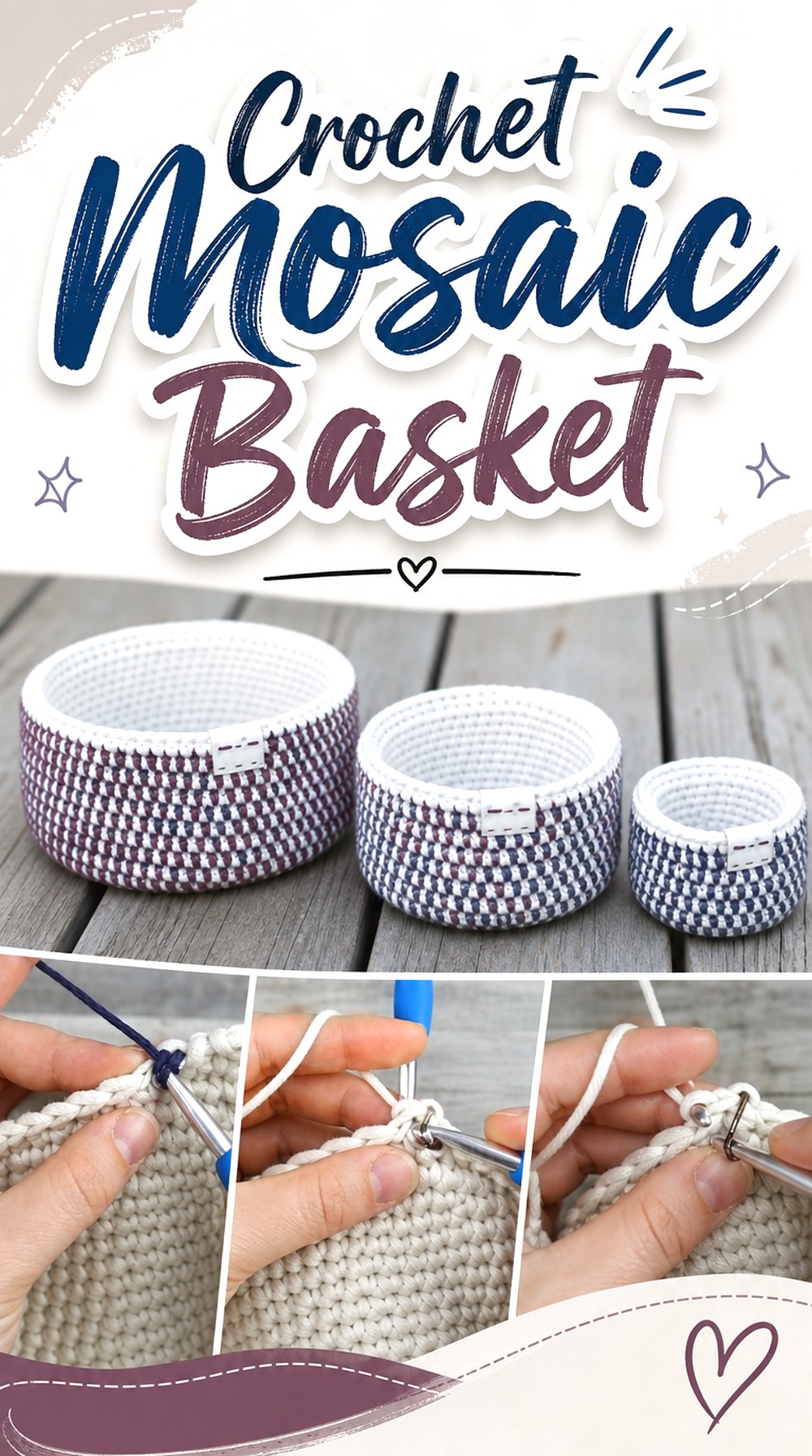
A mosaic basket moves the technique into storage and display. Unlike a tote, it does not need to hang from handles or carry weight in the same way, but it does need a stable shape and a useful footprint. The finished basket can work for small household items, yarn storage, or decorative organization when the size fits the space.
Readers should check the finished dimensions and shaping information before assuming where it will fit.
Shape Stability Is the Main Question
A basket needs enough structure to stand in the way the reader expects. The finished sample should be reviewed for side height, base shape, and how firmly it appears to hold its form. If the basket will sit on a shelf or table, readers should also think about whether a softer shape is acceptable.
Storage Use Depends on Size
The basket’s usefulness depends on what it is meant to hold. A small basket may suit notions or light accessories, while a larger one may need more structure and space. Readers should confirm any size notes in the original source instead of assuming it will work for a specific storage purpose.
Creator: Yarn and Chai
10. Crochet Basketweave Mosaic Placemat
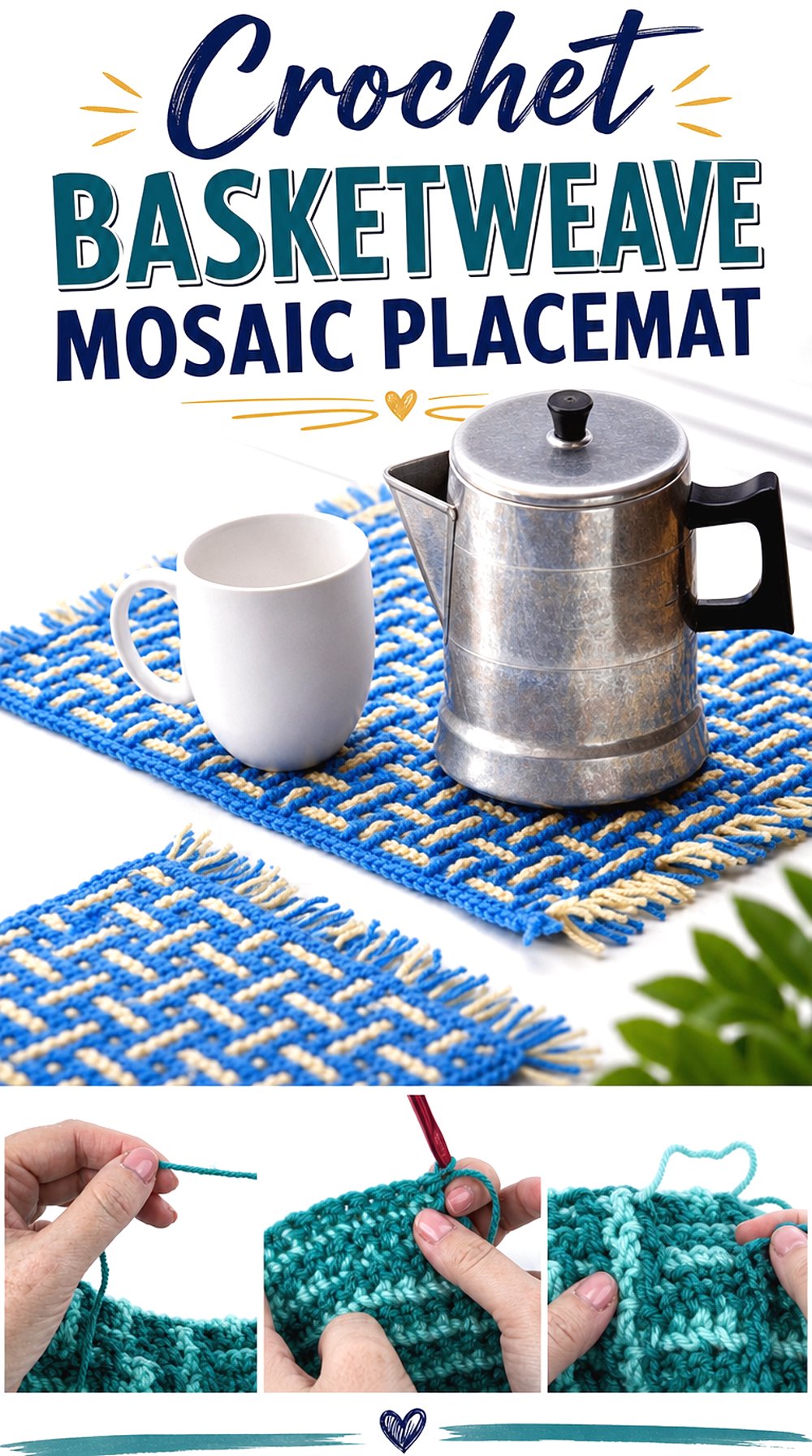
A basketweave mosaic placemat is a flat home project with a practical table setting purpose. The woven-look surface makes it different from the runner and coaster ideas because it is sized for an individual place setting rather than the center of a table or a small cup area.
This project may suit readers who want a home item that shows texture and pattern without becoming a blanket-scale commitment.
Table Fit Comes First
A placemat needs to fit the table space, dish size, and setting style. Readers should check any finished measurement information from the creator before making a full set. This is especially important if the placemats need to match existing dishes, chargers, or a narrow dining table.
Edges and Fringe Affect Everyday Use
The edge treatment changes how the placemat looks and how practical it may feel on the table. If fringe or a decorative edge is included, readers should decide whether that finish suits their table habits and storage space. A cleaner edge may feel simpler, while a more decorative finish can make the placemat stand out.
Creator: Yarnspirations
11. Crochet Rectangular Mosaic Table Runner
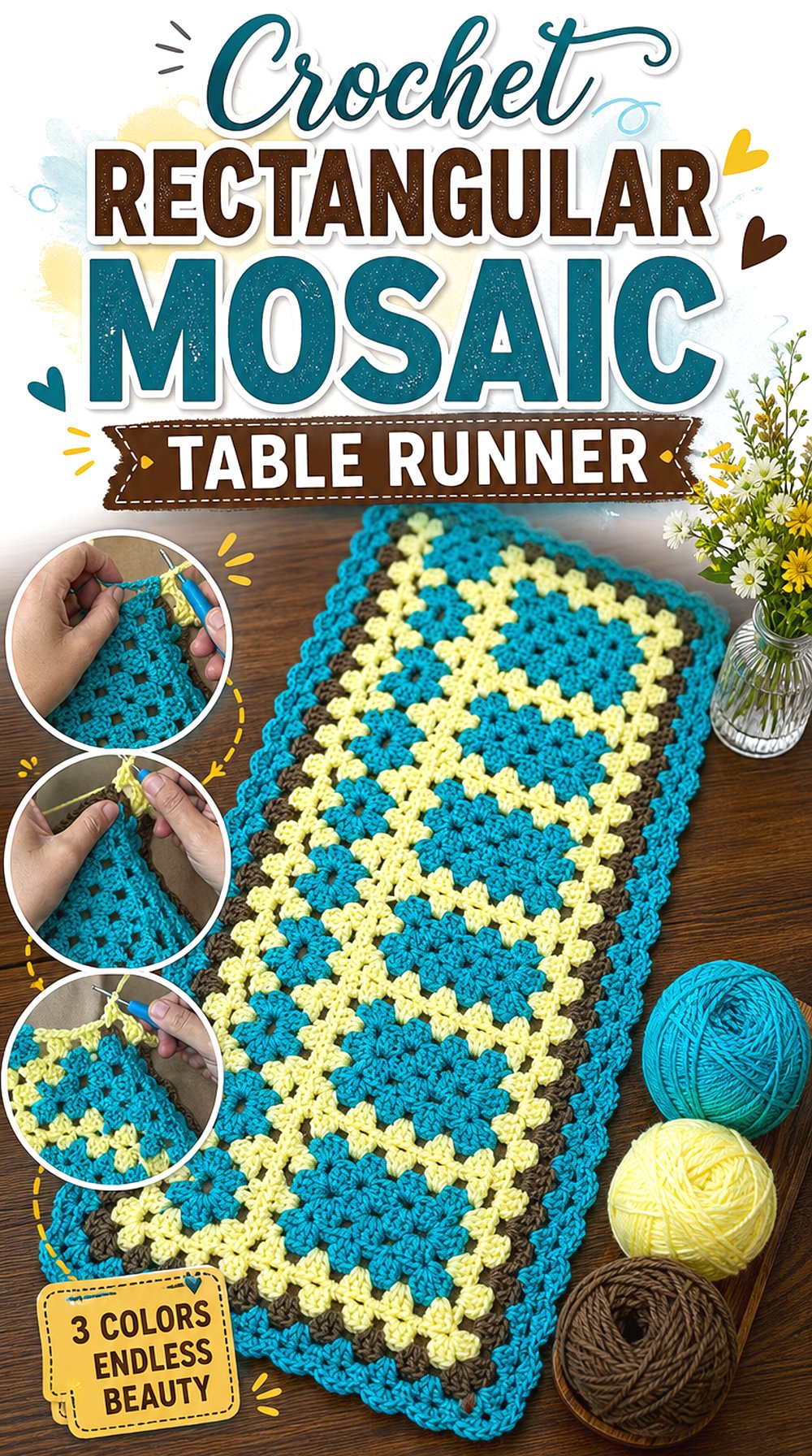
A rectangular mosaic table runner gives the technique a long, narrow format. It is different from a placemat because it works along the center of the table instead of under one place setting. The finished piece can also be used on a console table, dresser, or sideboard if the length suits the surface.
The long shape makes planning important, especially when the runner needs to stay balanced on a specific piece of furniture.
Length Should Match the Surface
A table runner can look too short, too long, or just right depending on the table it is meant for. Readers should review the source information and compare it with their own surface before choosing colors and supplies. This is especially useful when the runner is being made for a dining table, entry table, or seasonal display.
Repeats Need a Balanced Ending
Long mosaic projects look cleaner when the pattern repeat ends in a visually balanced way. Readers should use the original tutorial for exact repeat and finishing details rather than trying to adjust the length without guidance. The final edge and border can make a big difference on a narrow home decor piece.
Creator: The Art Zone
12. Crochet Center Out Mosaic Starburst Square
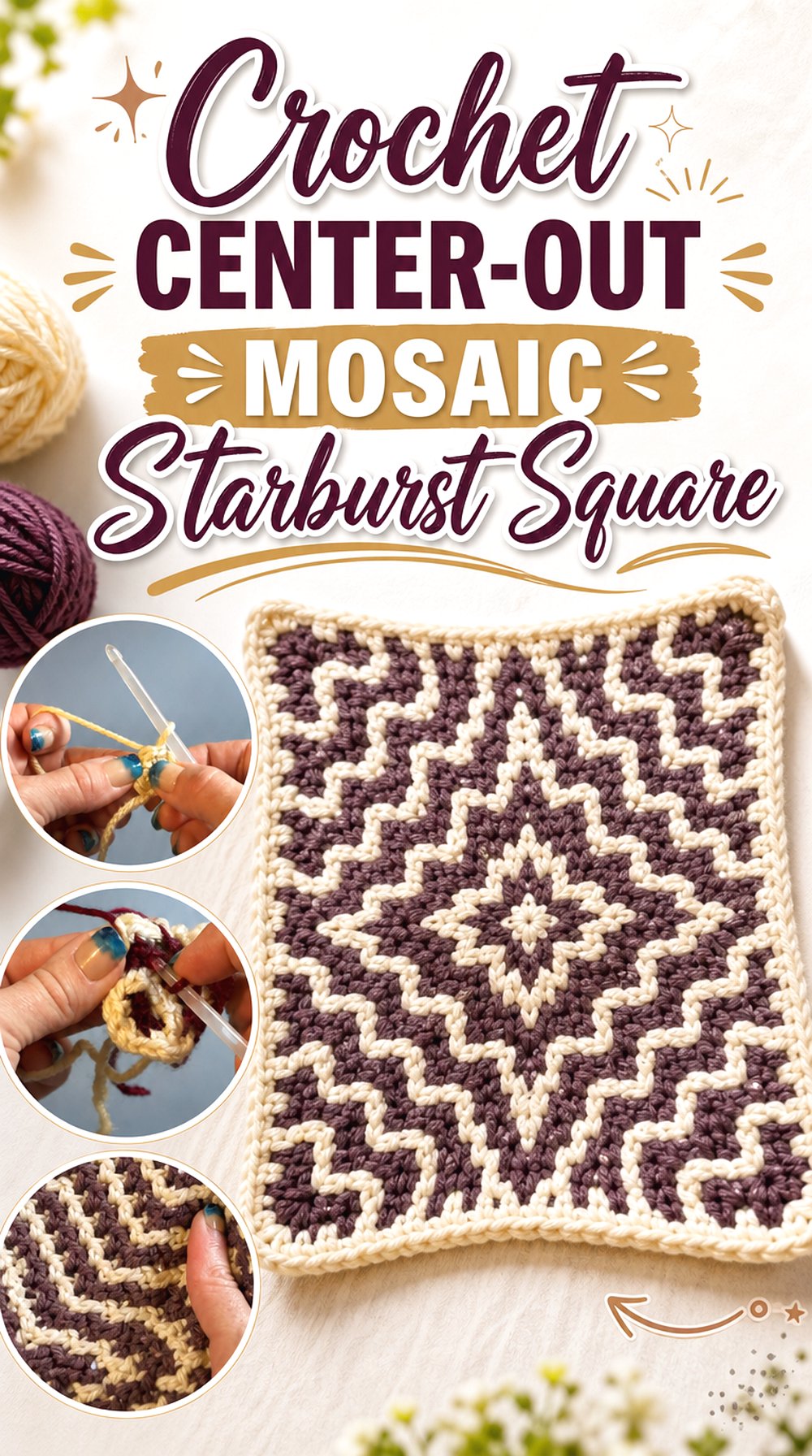
A center-out mosaic square offers a different construction direction from the row-based blankets, runners, and bags. The design grows outward from the middle, which gives the finished square a more medallion-like look. It can be useful as a small decor piece, a building block, or a practice project for readers who want to understand centered mosaic placement.
Because possible uses can vary, readers should confirm the creator’s intended project notes before deciding how to use the square.
The Center Needs to Stay Visually Even
A center-out design draws attention to the middle first. That means uneven tension or unclear color contrast can be more noticeable than it would be on a long row-based repeat. Readers should compare the shape as it grows and rely on the source for exact placement details.
Decide How the Square Will Be Used
A mosaic square can become a standalone piece, part of a larger project, or a sample for learning the technique. The best use depends on size, edge finish, and whether the reader wants to make one square or repeat it. The original source should be checked for any project suggestions or finishing guidance.
Creator: Juniper & Oakes
13. Crochet Overlay Mosaic Mug Rug

A mug rug is a compact way to try mosaic crochet while still making a usable item. It is larger than a coaster but much smaller than a placemat, so it can hold a cup and possibly a small snack depending on the final size. This makes it a practical bridge between learning swatches and full home decor pieces.
The flat shape also makes it easier to focus on the colorwork and edge finish.
A Small Format Makes Details Visible
Because a mug rug is viewed up close, the edges, color changes, and surface texture are easy to notice. Readers should choose colors that make the mosaic pattern readable at a small scale. A very busy color pairing may distract from the design, while clean contrast can make the project look more finished.
Finished Size Affects Use
A mug rug needs enough space for its intended purpose. Readers should check the creator’s size notes or finished sample before assuming it will hold more than a cup. This matters if the piece is being made for a desk, bedside table, coffee station, or gift set.
Creator: House Of Leo Crochet
14. Crochet Small Mosaic Coaster
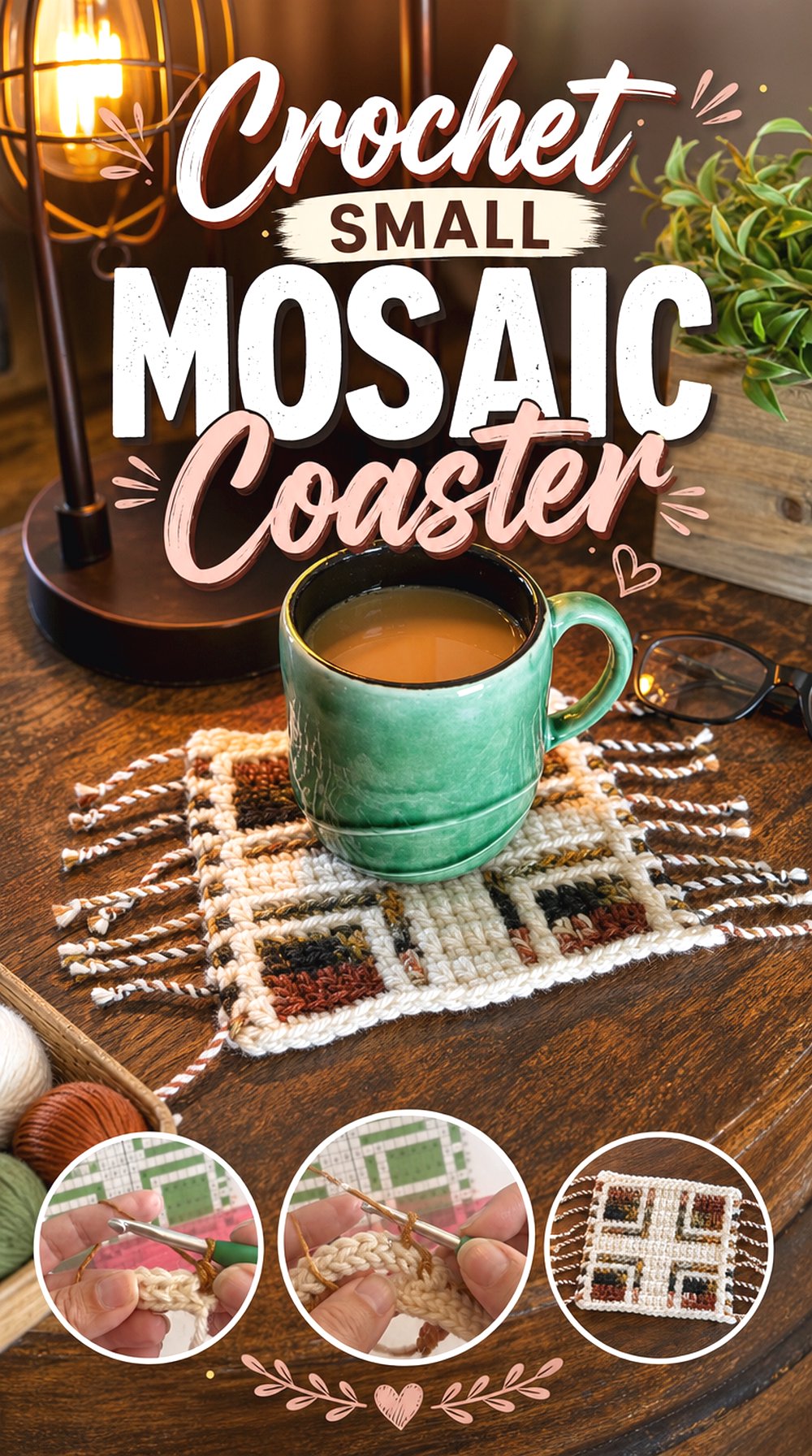
A small mosaic coaster is one of the most compact ideas in this list. It keeps the focus on a flat finished surface, neat edges, and a readable mini motif. Compared with a mug rug, it takes up less table space and works better for readers who want a smaller accent piece.
This type of project is also useful for testing color contrast before moving into a larger mosaic pattern.
Scale Changes the Color Choice
On a coaster, the mosaic design has less room to develop than it would on a blanket or runner. Readers should use colors that separate clearly so the small motif does not disappear. The finished sample can help show whether the contrast is strong enough for the design to read at coaster size.
Surface Use Needs a Practical Finish
A coaster sits under a cup, so the final surface and edge should feel stable enough for that purpose. Readers should review the source for finishing guidance and keep yarn-label care information in mind. Unless the creator provides care instructions, washing and heat handling should not be assumed.
Creator: SweetPotato3
15. Crochet Havana Mosaic Shawl
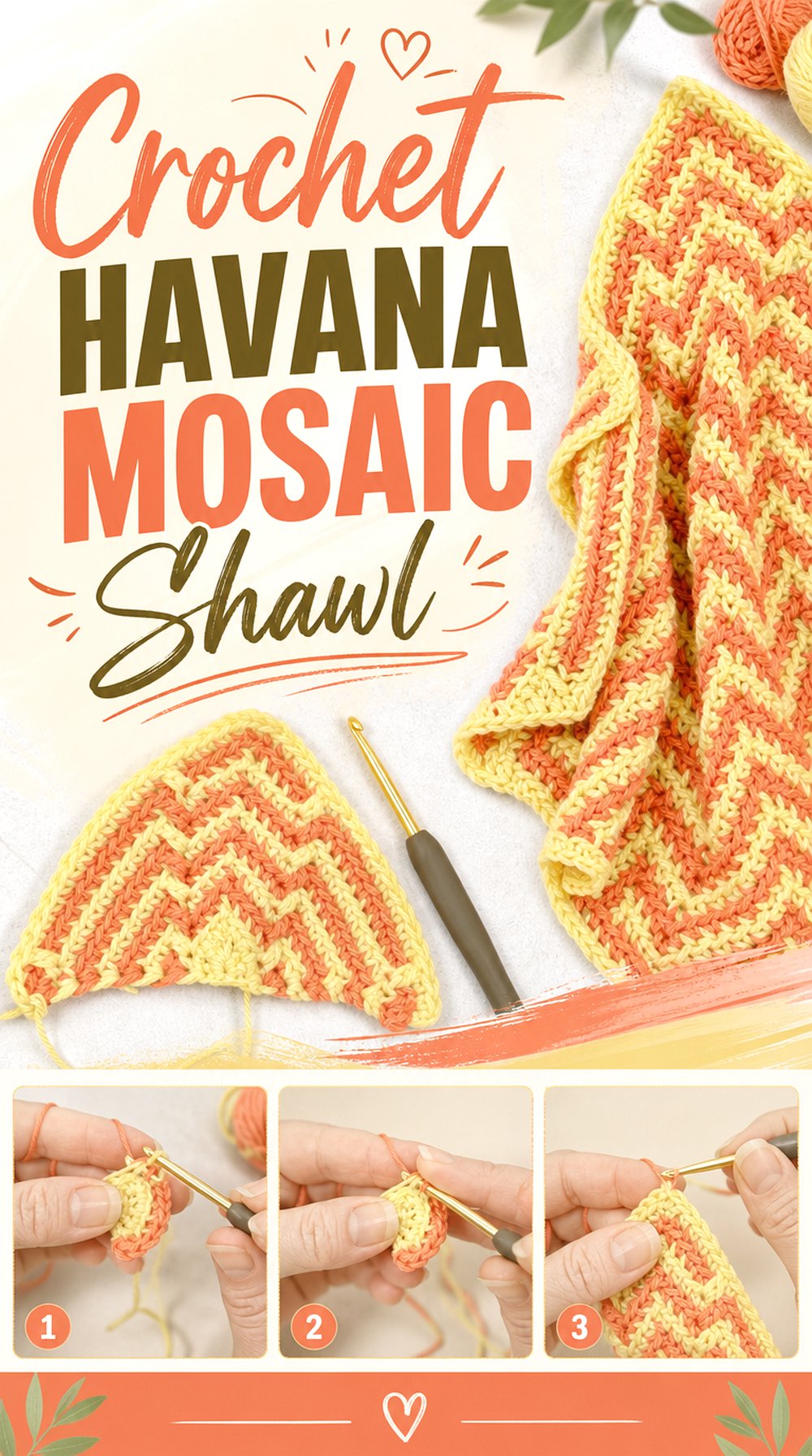
The Havana mosaic shawl turns colorwork into a wearable wrap rather than a home decor piece. It has more drape and styling movement than a blanket, but still gives the mosaic design enough room to spread across a broad surface. This makes it a strong idea for readers who want a statement accessory.
A shawl also needs attention to finished shape, edge behavior, and how the colors look when the piece is worn rather than laid flat.
Drape Matters More Than Structure
Unlike a basket or bag, a shawl should move comfortably around the shoulders. Readers should review the creator’s yarn and material notes before choosing substitutes, because the finished feel may change with fiber and weight. The colorwork may look clear when flat, but the shawl also needs to suit wrapping and wearing.
Shape Affects Styling Options
A shawl’s finished shape decides whether it is worn over the shoulders, wrapped around the neck, or displayed as a larger accessory. Readers should check the source for the shape and final layout before starting. This helps avoid choosing a shawl based only on the motif when the wearing style may matter more.
Creator: Tinna Thorudottir Thorvaldar
16. Crochet Farahan Mosaic Triangle Shawl
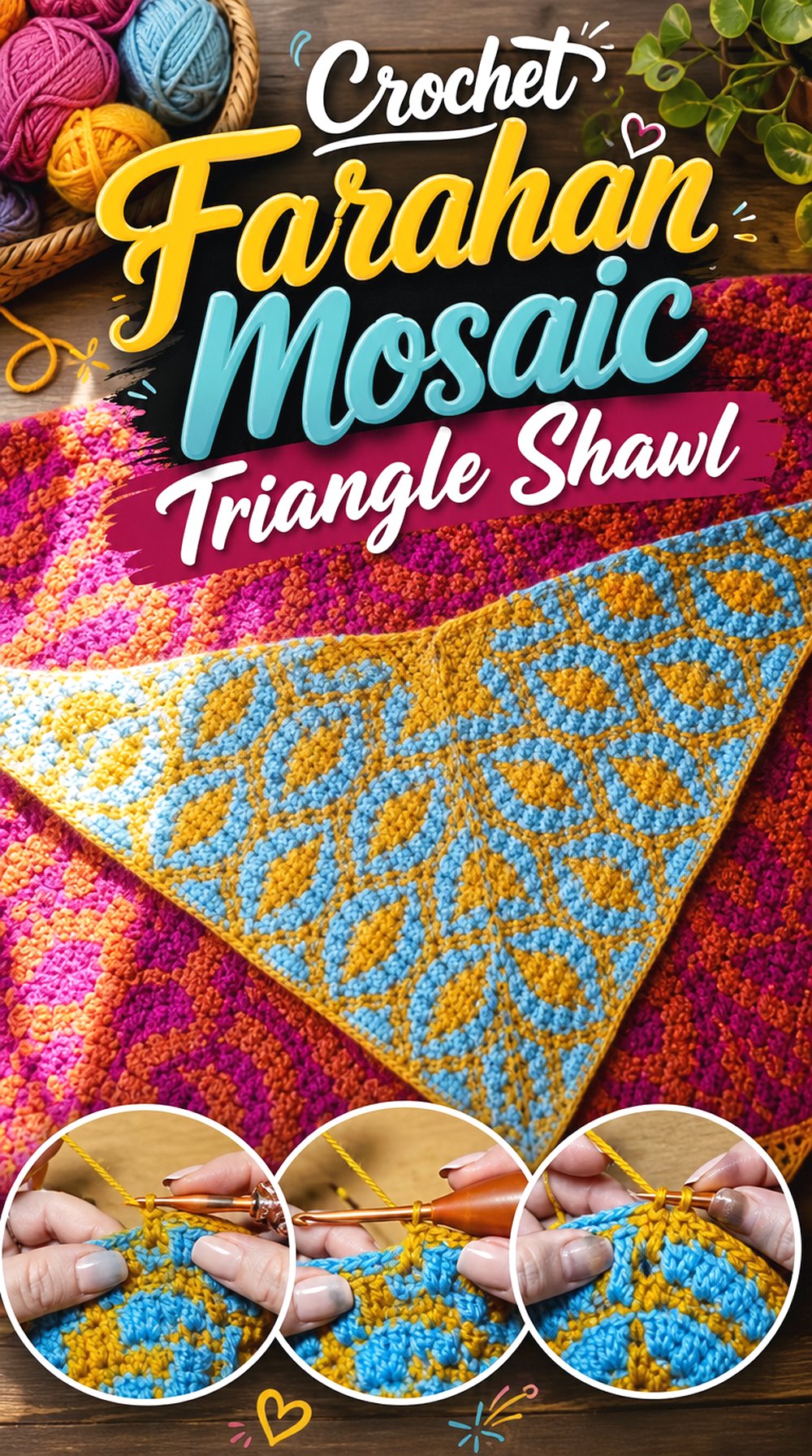
The Farahan mosaic triangle shawl has a different shape from the Havana shawl and works from a triangle format. The angled shape can make the mosaic pattern feel more directional, especially as the fabric widens. This project suits readers who want wearable colorwork with a clear shawl silhouette.
Because the source is part of a series, readers should review the available sections before deciding whether this is the right tutorial format for them.
Triangle Growth Changes the Pattern View
A triangle shawl expands in a way that can make the mosaic design look different near the point than it does along the wider edge. Readers should watch how the sample develops and use the source for exact shaping details. This is not the same planning process as a rectangular runner or square panel.
Multi-Part Guidance Requires Organization
A longer shawl series can be very useful, but it also requires readers to keep track of where they are. Before beginning, they should review the introduction, follow-up parts, and any written or chart support mentioned by the creator. This helps the project stay manageable from the first section through the final edge.
Creator: Fiber Fox Studios
17. Crochet Bismuth Mosaic Cowl
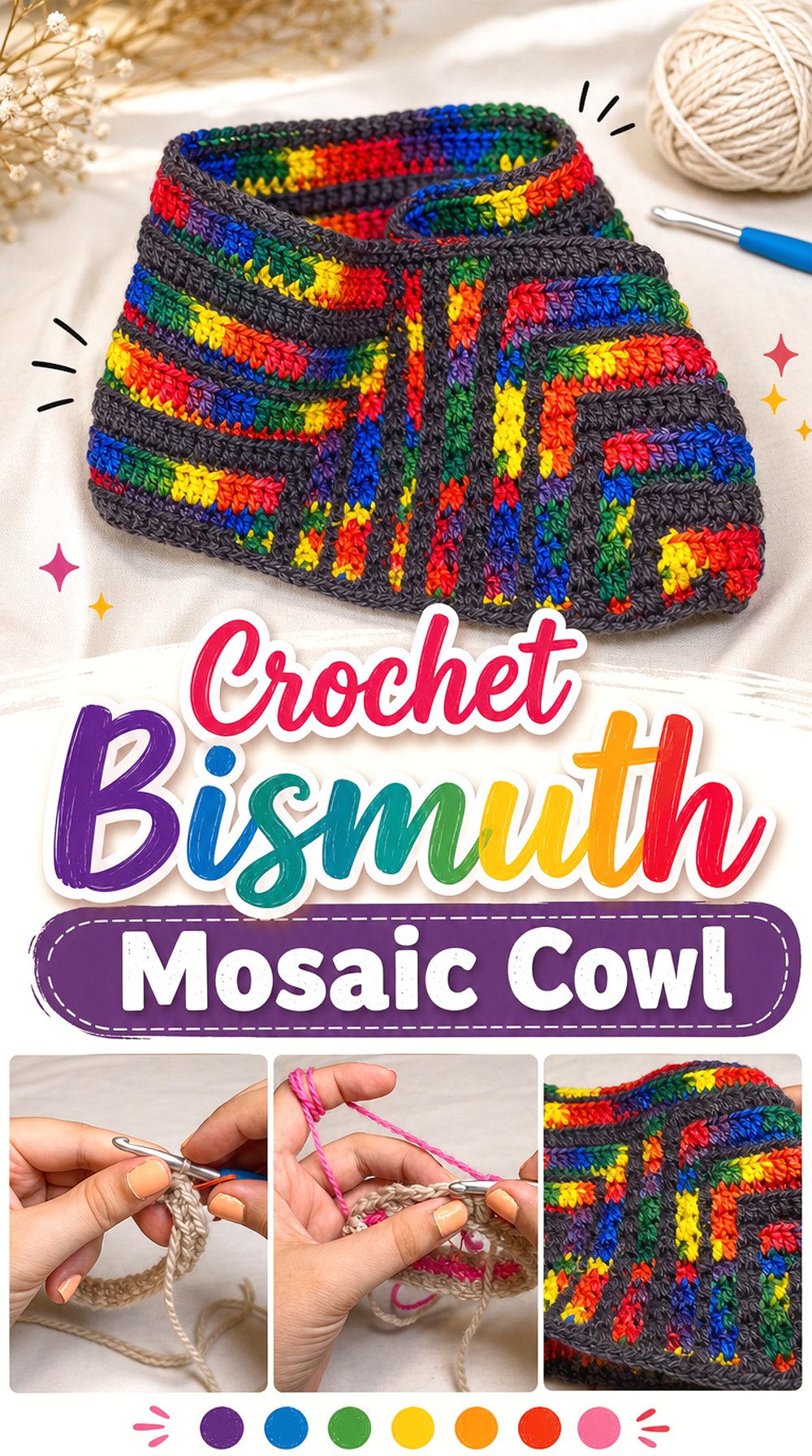
A mosaic cowl keeps the colorwork wearable but more compact than a shawl or sweater. The circular format gives it a different rhythm from flat row-based projects and makes the finished piece useful as a neck accessory. It may suit readers who want mosaic crochet in a smaller wearable item without committing to garment shaping.
Fit still matters because a cowl needs to sit comfortably over the head and around the neck.
In-the-Round Format Feels Different
A cowl made in the round has different planning needs than a flat blanket, runner, or placemat. Readers should pay attention to how the round is joined and how the design continues around the piece. The original tutorial should be followed for the exact method so the pattern lines stay consistent.
Neck Fit Should Be Verified
A cowl can be too loose, too snug, too tall, or too short depending on the finished dimensions. Readers should check any size information from the creator and compare it with how they like to wear cowls. This is especially important if the project is intended as a gift and the recipient’s preferences are unknown.
Creator: Northwest Yarns
18. Crochet Mosaic Peaks Hat
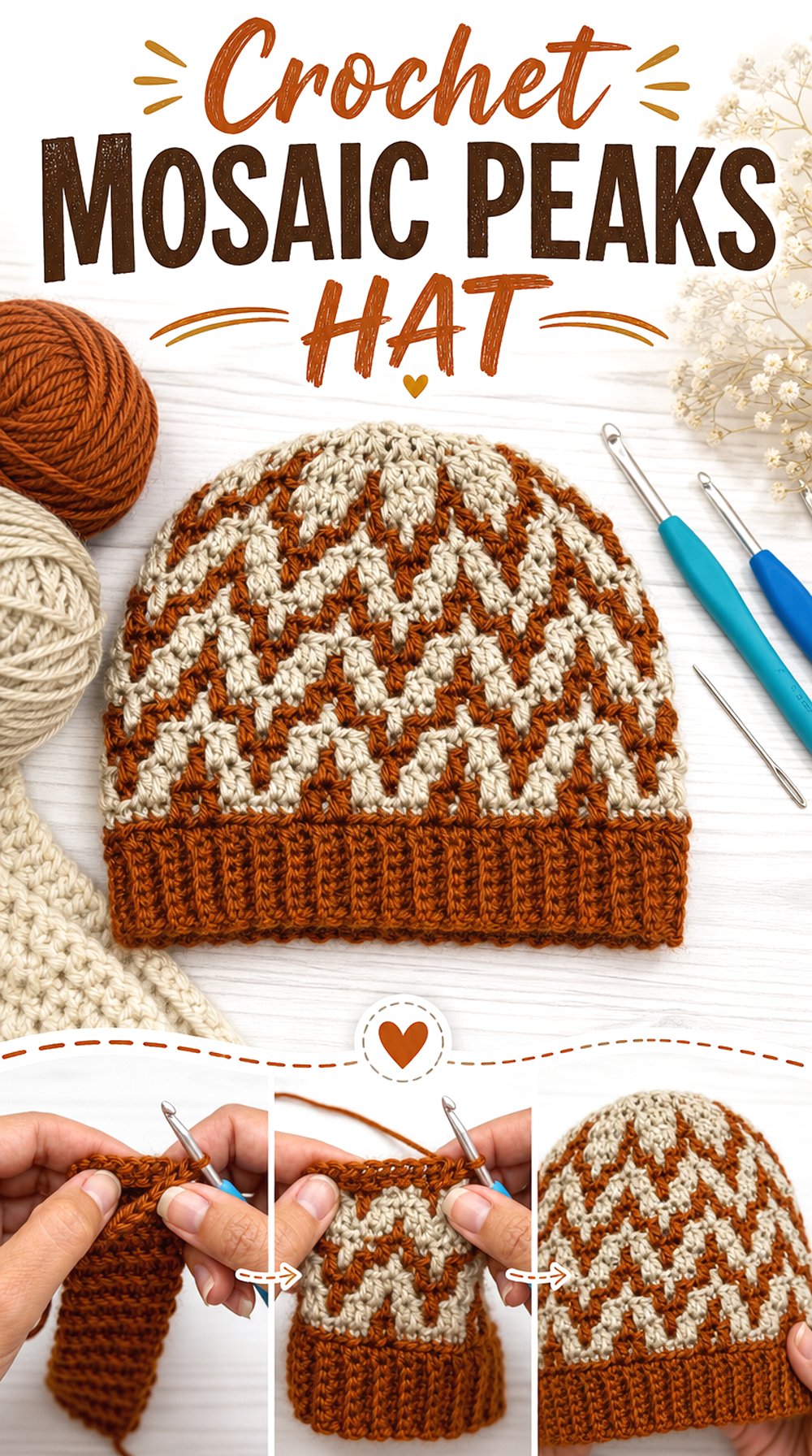
The mosaic peaks hat brings the technique into a fitted accessory. Unlike the cowl or shawls, this project needs to sit on the head, so sizing and stretch matter more than display shape. The peaked colorwork can create a strong band or allover effect depending on how the design is placed.
Readers should check the creator’s sizing notes and finishing details before choosing it for themselves or someone else.
Hat Sizing Is the Main Check
A hat pattern depends on fit more than most flat mosaic projects. Readers should compare the creator’s size information with the intended wearer before starting. If gauge or measurements are provided, those details should be reviewed carefully because a finished hat has less room for guesswork than a blanket or table runner.
The Crown Finish Changes the Look
The top of a hat affects the final shape as much as the mosaic band or body. Readers should look for a clear view of the crown, edge, and any finishing option before choosing colors. This helps them decide whether they prefer a closer beanie shape, a taller shape, or a finish with an added topper if one is included.
Creator: Be Ewenique Boutique
19. Crochet Geometric Yoke Mosaic Sweater
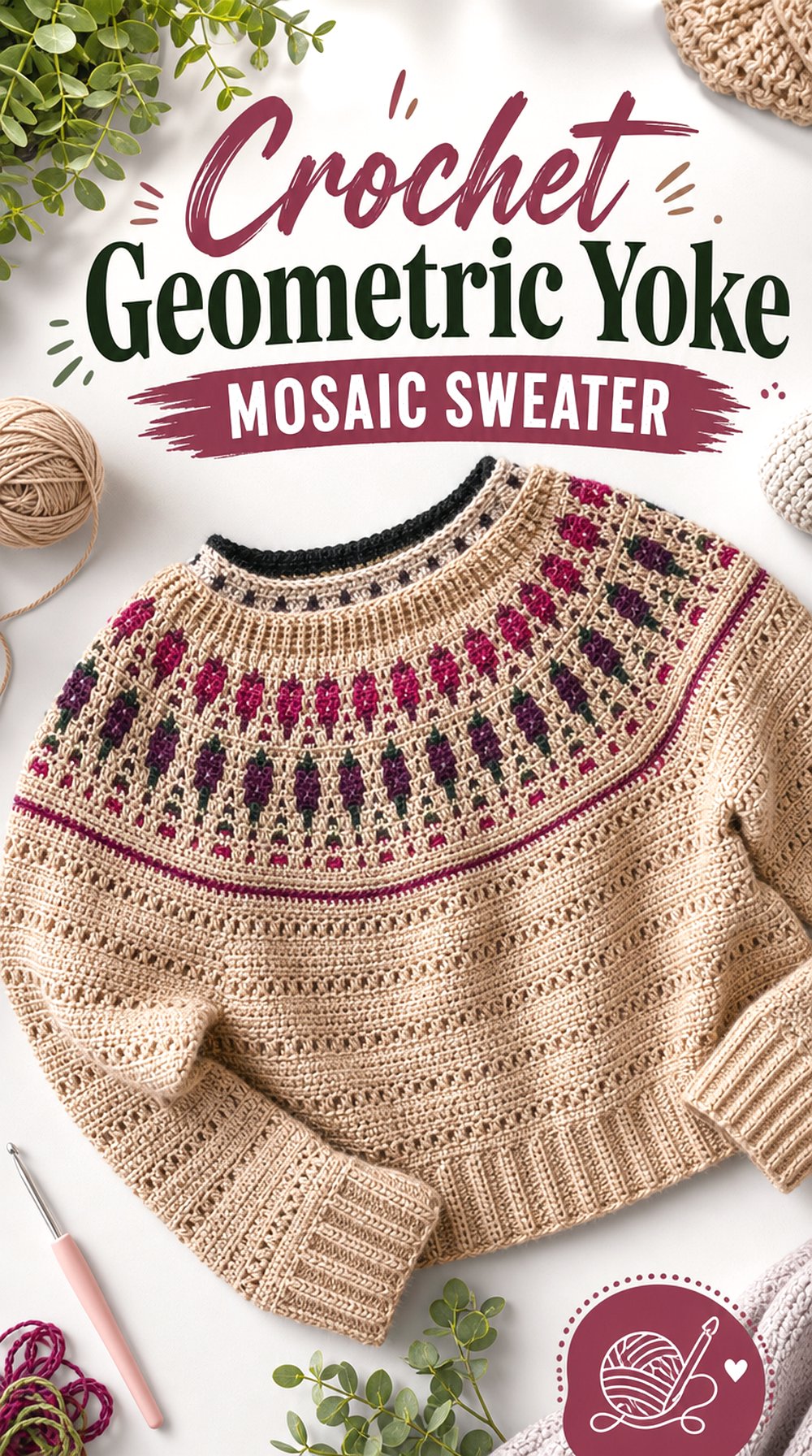
A mosaic sweater is the largest wearable idea in this collection and needs the most fit planning. The colorwork is placed around the garment rather than only on a flat surface, so the design has to work with the neckline, yoke, body, and sleeves. This makes it very different from the shawls, hat, and cowl.
Readers who choose this project should review the full size information, gauge notes, and garment views before starting.
Fit Information Comes Before Color
For a sweater, the first decision should be size and fit rather than color palette. Mosaic work may be the visual feature, but the garment still needs to match the wearer’s measurements and preferred ease. Readers should use the creator’s sizing details and compare them carefully before buying yarn or beginning the project.
The Yoke Is the Focal Point
A geometric mosaic yoke draws attention to the neckline and upper body. Readers should look at how the colorwork sits around the shoulders and whether the back view is shown clearly. This helps them decide if the design gives the coverage, shape, and visual placement they want in a wearable garment.
Garment Projects Need Full Tutorial Review
A sweater has more decisions than a coaster, basket, or pillow. Neckline, sleeve length, body length, gauge, and finishing can all affect whether the result is wearable. Readers should review the full original tutorial and any linked written support before starting, especially if they plan to adjust the fit.
Creator: HanJan Crochet
How to Choose the Right Mosaic Crochet Pattern From This List
For a first small home item, the coaster, mug rug, placemat, or table runner keeps the project flat and practical. For a larger display piece, the winter forest blanket, wave blanket, or mosaic pillows give the colorwork more room. Bags and baskets are better when readers want a useful item but are willing to check structure, handles, openings, and finishing.
Wearables need the most personal decision-making. The cowl and hat are smaller accessories, while the shawls focus on drape and shape. The sweater is the most fit-dependent option and should be chosen only after reviewing the size and gauge information from the original source.
Conclusion
These mosaic crochet pattern ideas show how flexible the technique can be. Blankets and pillows create strong home decor pieces, while placemats, runners, coasters, and mug rugs keep the work smaller and easier to place. Bags and baskets add practical structure, and the shawls, cowl, hat, and sweater bring mosaic colorwork into wearable form.
The best choice depends on whether the reader wants a flat project, a shaped accessory, a useful bag, or a garment that needs careful fit planning. Use the original tutorials for exact construction details, counts, charts, finishing, and material information.
FAQs
What is a good mosaic crochet project to start with from this list?
A small flat item is usually the simplest place to begin comparing mosaic crochet options. The coaster, mug rug, placemat, or center-out square keeps the project easier to view and manage than a large blanket or garment. Readers should still follow the original tutorial for the exact method, because mosaic crochet relies on careful placement.
How do I choose colors for a mosaic crochet pattern?
Mosaic crochet usually reads best when the two main colors have clear contrast. Light and dark pairings make motifs easier to see, while close shades create a softer effect that may hide the design. Before buying supplies, readers should look at the creator’s finished sample and decide whether they want bold definition or a quieter surface.
Are mosaic crochet bags practical for everyday use?
A mosaic crochet bag can be practical, but it depends on the finished size, handle placement, structure, lining, and opening. Readers should check whether the inside is shown and whether the creator includes finishing guidance. It is better not to assume strength, capacity, or durability unless the source clearly provides that information.
What should I check before making a mosaic crochet wearable?
Wearables need more review than flat home pieces. Readers should check size range, gauge notes, finished measurements, neckline, sleeve or strap placement, back view, and intended fit. A cowl or hat may need less shaping than a sweater, but all wearable projects should be compared with the wearer’s measurements before starting.
Can I use a mosaic crochet blanket pattern for a smaller item?
Some mosaic designs can inspire smaller projects, but readers should not assume a blanket pattern can be resized without changing the layout. Motif repeats, borders, and finishing may depend on the original dimensions. If a creator includes adjustment notes, follow those. Otherwise, choose a smaller mosaic project such as a coaster, square, mug rug, or placemat.
Do YouTube mosaic crochet tutorials replace a written pattern?
A YouTube tutorial can be very helpful, especially for seeing color changes and placement, but it may not include every detail in printable form. Readers who prefer written instructions should check whether the creator links a chart, written pattern, or extra notes. For larger projects, written support can make it easier to track progress.