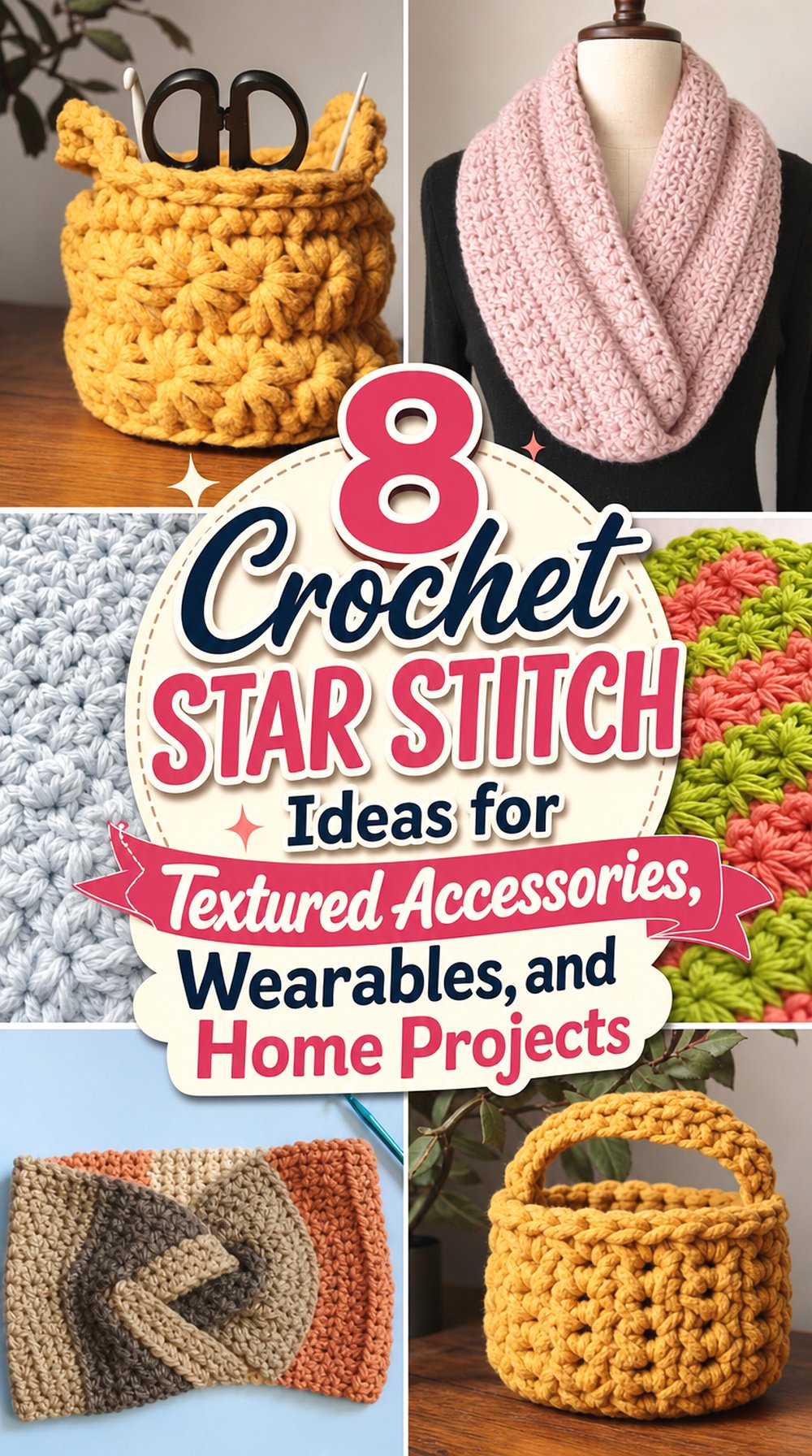

Star stitch has a raised, clustered look that can make simple crochet shapes feel more detailed. In this collection, the stitch appears across several project types, from soft wearables to practical home pieces, so readers can compare more than color or yarn choice.
Some ideas are flat and useful, like a dishcloth or blanket. Others turn the texture into a shaped accessory, such as a beanie, headband, wrist warmers, or pouch. The basket adds a storage angle, while the cowl gives the stitch a warmer layered look.
Use this list to choose the kind of finished item you want first, then open the original tutorial for the exact stitch counts, shaping, and finishing details.
Quick List
- Crochet Star Stitch Baby Blanket
- Crochet Chunky Star Stitch Cowl
- Crochet Star Stitch Beanie Hat
- Crochet Twisted Star Stitch Headband
- Crochet Star Stitch Wrist Warmers
- Crochet Star Stitch Kitchen Dishcloth
- Crochet Star Stitch Fanny Pouch
- Crochet Star Stitch Basket with Handles
How to Choose a Star Stitch Project by Shape and Use
Star stitch creates a noticeable surface, so the best project depends on how much texture you want in the finished item. A blanket or dishcloth lets the stitch sit flat and repeat across a broad surface. Wearables such as a cowl, beanie, headband, and wrist warmers put that texture closer to the body, so fit and flexibility matter more.
For storage pieces, look closely at structure. A pouch needs a usable opening and secure carrying format, while a basket needs enough shape to stand as intended. Since tutorials vary in how much sizing, material, and written support they provide, readers should confirm those details from the original source before choosing supplies.
1. Crochet Star Stitch Baby Blanket

A baby blanket gives star stitch enough space to become the main surface detail. The repeated texture can make a simple rectangular blanket look more finished without relying on heavy color changes or added decorations. This option is the broadest project in the list, so it suits readers who want the stitch to cover a larger flat area.
Compared with the smaller accessories below, this blanket is more about steady texture and finished dimensions. It may also be useful for readers who want a project where size planning matters from the start.
Blanket Size Matters Most
The original source refers readers to written support and a blanket size chart, which is useful because blanket planning depends heavily on finished dimensions. Before choosing yarn or committing to a gift size, readers should compare the intended blanket use with the creator’s sizing information. A lap-style blanket, crib-sized blanket, and decorative throw can require very different planning.
Color Choices Can Change the Texture
Star stitch already has a strong surface pattern, so color changes should support the texture instead of hiding it. A solid or gently changing yarn can keep the star shapes easy to see, while sharper striping may make the surface look busier. Readers should preview the creator’s finished sample and decide whether they want the stitch or the color layout to stand out more.
Use the Source for Exact Repeats
A blanket made with a textured stitch can become hard to track if the repeat is guessed from appearance alone. This is a project where the original tutorial should be used for the exact counts and turning points rather than trying to copy from a finished photo. Keeping a simple progress note may also help readers stay consistent across a wider piece.
Creator: DIY FROM HOME CROCHET
2. Crochet Chunky Star Stitch Cowl

A chunky cowl turns star stitch into a soft neck accessory with a looped shape. Unlike a long scarf that hangs down, this style sits closer around the neck and keeps the texture gathered in one visible area. The finished look is more compact than a blanket but still gives the stitch room to show.
This is a good comparison piece for readers who want a wearable project without dealing with sleeves, shaping around fingers, or a fitted hat crown. The main decision is how much bulk and loop size the wearer wants.
The Loop Shape Changes How It Wears
A cowl or infinity-style scarf works differently from a straight scarf because the opening and depth affect how it sits. Readers should look at the finished loop before starting and decide whether they prefer a snug neck warmer or a looser drape. The tutorial notes that the cowl can be made in different sizes, so size planning is part of the choice.
Bulk Should Be Judged From the Finished Sample
Star stitch can look thicker when worked with heavier yarn, and this project is presented as a chunky cowl. That can make the texture more visible, but it also affects how the piece layers with coats or sweaters. Readers should compare the finished sample to the kind of outerwear they plan to use with it.
Material Notes Help With Preparation
The source includes material information for the creator’s sample, which is useful before buying supplies. Rather than swapping yarn by guesswork, readers should check the listed hook and yarn details, then decide whether they want a similar chunky result or a different weight after understanding how that could change the finished size.
Creator: WoolyWondersCrochet
3. Crochet Star Stitch Beanie Hat

A beanie uses star stitch in a more shaped way than the blanket or cowl. The finished item needs to sit around the head, so the texture is not the only detail to notice. The lower edge, crown shape, and overall height all affect how useful the hat will be.
This idea stands apart from the headband because it gives fuller coverage. It also differs from the wrist warmers because fit needs to work around a rounded shape rather than a straight cuff or tube.
Fit Information Comes First
For a hat, finished fit matters more than surface texture alone. Readers should check what size information the creator gives and compare it with the intended wearer before starting. A beanie that looks neat in the sample may still need careful size confirmation, especially if yarn or hook choice changes the stretch and finished circumference.
Crown Shape Needs a Full View
The crown is one of the most important parts of a beanie because it affects how the hat sits from the top and sides. A useful step before choosing this project is to look for a clear finished view of the top shaping. The raised star stitch texture may draw attention, but the overall hat shape still needs to look balanced.
Texture Placement Around the Hat
Star stitch creates a strong horizontal surface, so placement around the beanie affects the finished style. Readers may want to notice whether the texture covers most of the hat or appears as a main body detail with a different edge finish. That choice changes whether the hat feels mostly textured or more balanced with simpler sections.
Creator: Sirin’s Crochet
4. Crochet Twisted Star Stitch Headband

A twisted headband is a smaller wearable that keeps the focus on the front detail. The star stitch texture gives the band more surface interest, while the twist changes the shape from a plain strip into something with a clear front point. It is less covering than the beanie but more shaped than a simple flat practice panel.
This project may suit readers who want a compact accessory where the finished width, stretch, and front twist matter more than length alone.
The Twist Sets the Front
The twist is the feature that separates this headband from a basic band. Readers should watch how the finished front sits and decide whether they like a centered knot-like look or prefer a flatter accessory. Since the twist draws attention, yarn color and stitch definition should help that front detail stay clear.
Width and Snugness Need Measuring
A headband has to sit securely without covering as much as a hat. That makes width and circumference important reader decisions. The source gives a star stitch headband tutorial in US crochet terms, but readers should still compare the project’s sizing approach with their own head measurement or the intended recipient’s fit preference.
US Crochet Terms Are Useful Here
The tutorial states that it uses US crochet terms, which helps readers avoid confusion if they normally follow a different terminology system. Before starting, it is worth checking that all abbreviations and stitch names match the terms the reader expects. That small check can prevent mistakes in a compact project where every section is visible.
Creator: Luna Crochet Designs (a.k.a. Luna the Ladybird)
5. Crochet Star Stitch Wrist Warmers

Wrist warmers use star stitch on a narrow wearable shape. They are smaller than a scarf or blanket but require more attention to how the finished piece sits on the hands. The texture becomes part of the cuff style rather than a large repeating surface.
This idea is different from the beanie and headband because it needs to work in pairs. Readers should pay attention to matching length, coverage, and the way the warmers sit around the wrist and hand.
Open Fingers Keep Them Practical
Wrist warmers leave the fingers more available than full mittens, which changes how the finished item may be used. Readers should look at the sample shape and decide whether the coverage matches their intended use. The project should be judged by hand placement and wrist coverage, not just by the star stitch texture.
Pair Matching Deserves Attention
Because wrist warmers are made as a set, consistency matters. The star stitch texture should line up in a way that looks intentional on both pieces. Readers may want to mark progress clearly and compare the first warmer with the second as they work, using the original source for the exact structure rather than relying on memory.
Cuff Length Affects Coverage
A longer cuff can cover more wrist area, while a shorter one may feel less bulky. The finished sample should be checked for how far it appears to extend past the wrist. This matters especially if the warmers will be worn under sleeves, where too much bulk or too little coverage can change the practical use.
Written Support May Be Separate
6. Crochet Star Stitch Kitchen Dishcloth
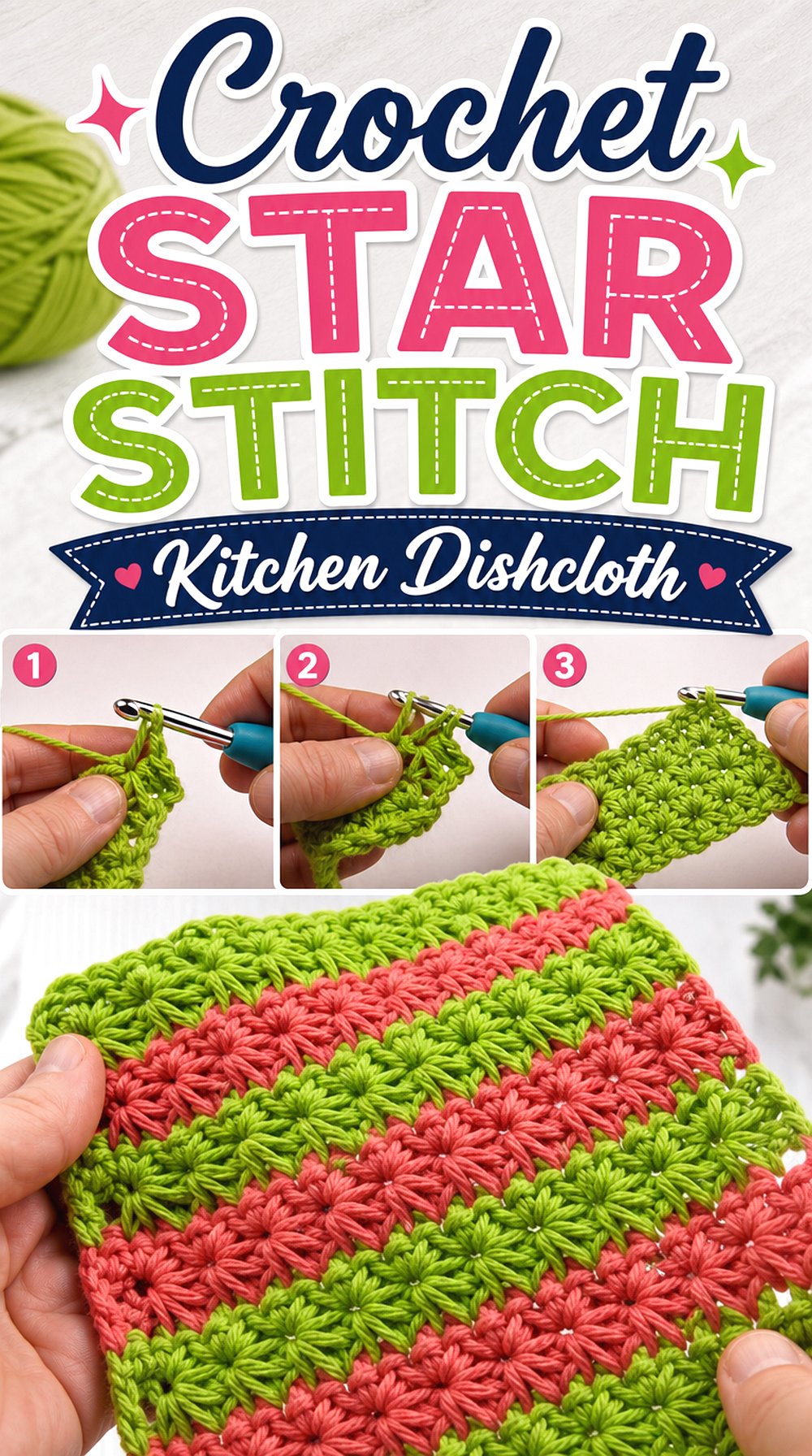
A dishcloth is one of the most practical ways to use star stitch on a smaller flat project. The finished piece keeps the texture visible while staying simple in shape. Compared with the blanket, it gives the same kind of surface practice on a much smaller scale.
This project is also different from the wearables because fit is not the main issue. Instead, readers should focus on a flat finish, usable size, and the kind of material information supplied by the original source.
A Flat Finish Matters in the Kitchen
For a dishcloth, the finished shape should sit flat enough for everyday handling. Raised texture can be useful for appearance and grip, but readers should check the final edges and overall shape before choosing this as a practical kitchen item. A cloth that curls or feels too thick may not suit every use.
Pattern Support Is Available
The source presents the project as a cotton dishcloth tutorial and includes a pattern link, which may help readers who prefer to follow both video and written instructions. Before starting, readers should open the original material list and pattern support so they know what information is provided beyond the visual demonstration.
Keep Care Notes Fiber-Specific
Kitchen items are handled often, so care matters. The source identifies the project as a cotton dishcloth, but washing and drying choices should still follow the yarn label or any care notes from the creator. Readers should avoid assuming that every yarn used for a star stitch cloth will behave the same way.
Creator: Yarnspirations
7. Crochet Star Stitch Fanny Pouch

A fanny pouch gives star stitch a storage purpose instead of using it only as surface decoration. The compact bag shape makes the texture visible on a practical accessory, while the carrying format separates it from flat pieces like blankets and dishcloths.
This project needs more decision-making than a simple rectangle because the opening, attachment, and finished size all affect use. Readers interested in small-item carry should look closely at how the pouch is presented from the front and side before choosing it.
Hands-Free Shape Separates It
The fanny pouch format is meant to be carried differently from a hand pouch or tote. Readers should consider whether they want a small accessory that sits close to the body rather than something held in the hand. The star stitch texture gives the surface detail, but the carrying style is the main reason to choose this project.
Closure and Attachment Need Attention
A pouch needs a clear opening and a secure way to sit where it is worn. Before starting, readers should review how the top closes and how the pouch attaches or sits on a belt-style area. The original source should be used for those exact details, since a finished photo alone does not explain how the carrying structure works.
Choose the Right-Handed Source
This selected source is the right-handed tutorial, and the creator also references a left-handed version. Readers should choose the version that matches how they prefer to follow crochet demonstrations. That is a practical detail for a shaped project, because pouch structure can be harder to interpret if the hand direction feels confusing.
Creator: JolieKnots Handmade
8. Crochet Star Stitch Basket with Handles

A handled basket moves star stitch into home storage. The raised texture can make the outside look more detailed, while the handles give the piece a clear practical feature. This is the most storage-focused idea in the list, so it should be judged by shape, depth, and handle placement.
Unlike the pouch, the basket is not mainly about wearing or carrying on the body. It is better compared with other home pieces, where the finished footprint and structure matter more than drape.
Handles Change the Storage Use
Handles can make a basket easier to move, but they also need to look balanced with the side walls. Readers should inspect how the handles sit on the finished sample and whether they appear proportionate to the basket size. The handles are part of the design, not just decoration, so their placement deserves attention.
Structure Matters More Than Stretch
A basket needs enough body to hold its shape as a container. Star stitch adds texture, but the finished basket should still be reviewed for side stability and base shape. Readers should check whether the source discusses the material and hook choice used to create the sample before substituting supplies.
Match the Basket to Its Spot
The best use for a crochet basket depends on where it will sit. A tabletop basket, shelf basket, and entryway catchall may need different footprints. Since the source presents a basket with handles, readers should compare the visible proportions with the space they want to use, rather than choosing only by stitch texture.
Creator: Crochet Town
Choosing Between Wearable, Storage, and Flat Star Stitch Projects
The baby blanket and dishcloth are the clearest choices for readers who want star stitch across a flat surface. The cowl, beanie, headband, and wrist warmers are better comparisons for wearables, but each asks a different fit question: neck loop, head shape, band snugness, or hand coverage.
The fanny pouch and handled basket shift the stitch into storage. Choose the pouch when the carrying style and opening matter most. Choose the basket when the goal is a home item with visible texture and a defined container shape. Across all eight ideas, the original tutorials are the safest place to confirm exact counts, materials, sizing, and finishing details.
Conclusion
These crochet star stitch ideas show how much the same texture can change depending on the finished item. A blanket or dishcloth keeps the stitch flat and visible, while the cowl, beanie, headband, and wrist warmers turn it into wearable texture. The fanny pouch adds a small carrying option, and the handled basket makes the stitch useful for storage.
Readers who want the simplest shape to compare may prefer the dishcloth or blanket. Those who care about fit should review the wearable options more closely. For exact construction details, use the original tutorials linked under each project.
FAQs
What type of crochet star stitch project should I choose first?
Choose by finished use, not only by appearance. A dishcloth or blanket is easier to judge as a flat surface, while a beanie, headband, or wrist warmer needs fit checking. A pouch or basket adds structure, so readers should review openings, handles, and finished shape before starting.
Can I change the yarn for these star stitch ideas?
Yarn changes can affect size, thickness, drape, and how clearly the star stitch texture appears. Before substituting, check the creator’s material list and compare it with the result you want. For fitted pieces and containers, changes may matter more than they would on a simple flat practice piece.
Is star stitch better for accessories or home projects?
It can work for both, but the decision is different. Accessories show the texture on the body, so fit and comfort need attention. Home projects such as dishcloths, blankets, and baskets let the stitch act as surface detail, but size, flatness, and structure become more important.
Should I look for written instructions with a star stitch tutorial?
Written support can be helpful because star stitch has repeated shaping that may be easier to track with notes. Some selected sources mention written patterns or extra support, while others focus mainly on video. Readers who pause often or prefer counting from text should check the source description before starting.
Can I sell finished items made from YouTube star stitch tutorials?
Do not assume selling is allowed just because a tutorial is public. Check the creator’s stated terms, pattern license, description notes, and any linked written pattern rules. Local business, labeling, and safety requirements may also apply, especially for baby items, wearables, or products sold online.


