12 Crochet Shrug Ideas for Light Layering, Statement Sleeves, and Cozy Coverage

Crochet shrugs can sit between several garment styles: some look like cropped boleros, some are mostly sleeves, and others drape like small cocoon cardigans. That range makes them useful when a full sweater feels too much but a plain top needs more coverage, texture, or sleeve detail.
This collection focuses on different shrug shapes rather than repeating the same project in new colors. You’ll find mesh layers, bell sleeves, star details, granny-square shaping, blanket-style drape, and close-fitting bolero options so readers can compare fit, coverage, construction style, and the kind of outfit each shrug might suit.
Quick List
- Crochet Simple Everyday Shrug
- Crochet Beachy Sal Bolero
- Crochet Fairy Bell Sleeve Shrug
- Crochet Color-Block Bolero Shrug
- Crochet Ribbed Cuff Bolero Shrug
- Crochet Beginner Mesh Sleeve Shrug
- Crochet Star Detail Shrug
- Crochet Freehand Cozy Sleeve Bolero
- Crochet Blanket Cocoon Shrug
- Crochet Granny Square Cocoon Shrug
- Crochet Clean Bell Sleeve Shrug
- Crochet Lacy Fireflies Cocoon Shrug
Why These Crochet Shrug Projects Are Worth Making
Shrugs are useful because small changes in shape can change how the finished garment wears. A cropped bolero gives defined shoulder coverage, a mesh sleeve shrug keeps the body open, and a cocoon shrug adds more back and side drape. Those differences matter when choosing a layer for dresses, tanks, fitted tops, or casual outfits.
They also give crocheters several practical decisions to compare before starting. Readers can look at sleeve width, neckline opening, armhole fit, garment length, back coverage, cuff finish, and whether the design needs more measuring or more seaming. That makes this category especially helpful for choosing a wearable project that matches the intended outfit.
1. Crochet Simple Everyday Shrug
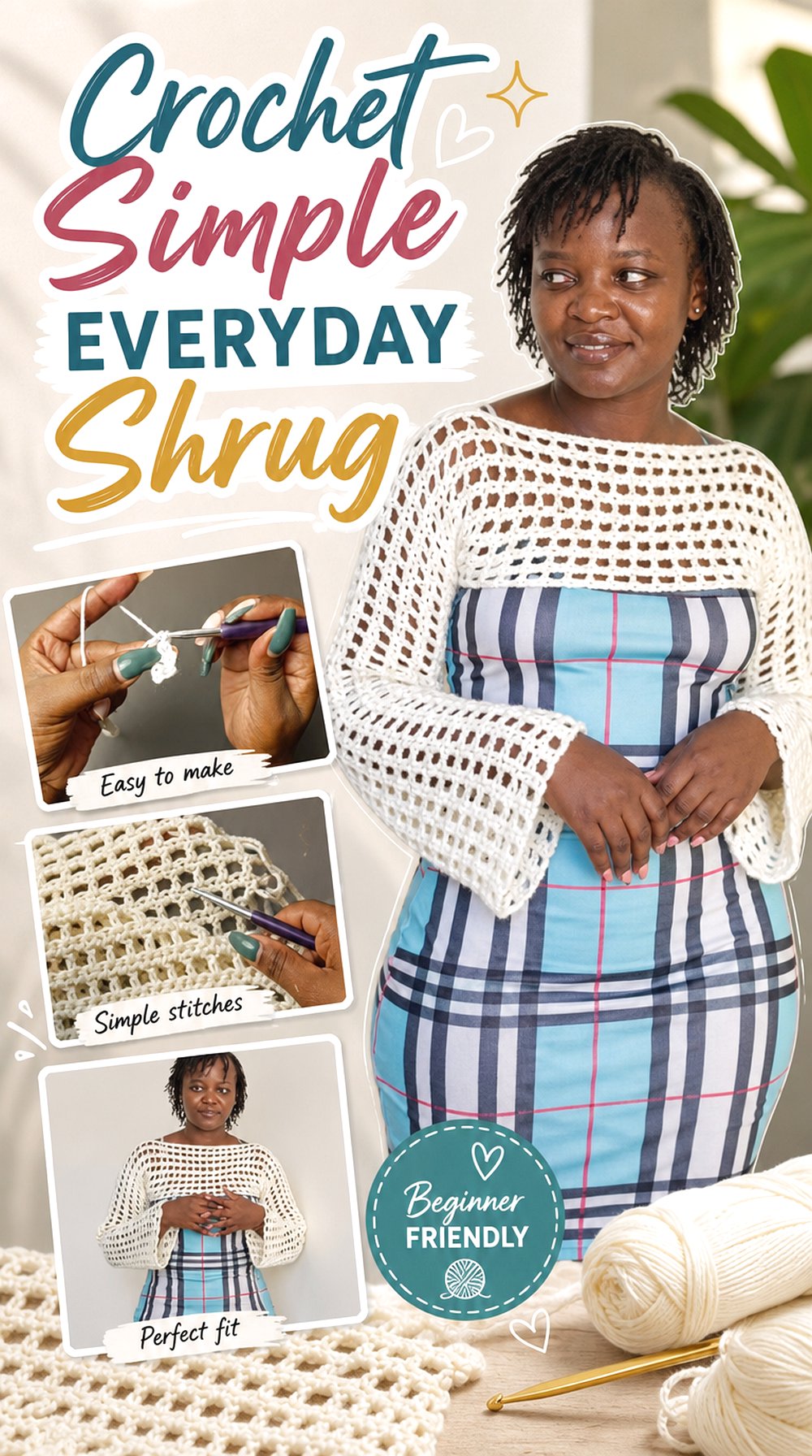
A clean everyday shrug is a good starting point for readers who want a wearable layer without dramatic sleeves or heavy shaping. This option focuses on a straightforward shrug shape that can sit over tanks, dresses, or fitted tops while keeping the front open. Its main appeal is the balanced look: enough sleeve and shoulder coverage to feel like a garment, but not as bulky as a cardigan.
Check the Fit Information
A simple shrug still needs careful fit checking because the shoulder width, sleeve opening, and back coverage affect how it sits on the body. Readers should compare their own measurements with the creator’s sizing guidance before choosing yarn or beginning the garment. A shrug that is too narrow can pull across the upper back, while too much width may shift around during wear.
Consider Layering Needs
This kind of everyday shrug works best when readers think about what will be worn underneath it. A fitted tank, slip dress, or close top will usually show the shrug shape more clearly than a loose shirt. Since the front remains open, coverage depends on the base outfit, so planning the underlayer helps avoid surprises once the piece is finished.
Review the Full Guide First
Before starting, it is worth watching the full tutorial once to understand how the main fabric turns into the final shrug shape. This is especially useful for garment makers who are more familiar with flat scarves or blankets. Seeing the full path from fabric to wearable layer makes it easier to pause at the right moments and check proportions as the piece grows.
Creator: LaDenser Crochets
2. Crochet Beachy Sal Bolero

The Sal Bolero has a light cropped shape that reads more like a short layering jacket than a loose sleeve-only shrug. It is a useful pick for readers who want shoulder coverage with a more polished outline. The shorter body can work over dresses, beach layers, or simple summer tops, while the bolero shape keeps the project different from the wider cocoon-style shrugs later in the list.
Look at the Neckline Shape
A bolero’s neckline has a big effect on how formal or relaxed the finished piece looks. Readers should notice how the front edges sit near the chest and shoulders, especially if they want to wear it over a dress. A more open neckline may feel lighter, but it also makes the base layer more visible, so the outfit underneath matters.
Confirm the Garment Length
Cropped boleros can vary from very short shoulder covers to pieces that reach lower on the ribs. Before choosing this project, readers should check where the sample ends on the body and compare that with their preferred coverage. Length matters most when pairing the bolero with high-waisted skirts, sundresses, or sleeveless tops.
Look for Written Instructions
This tutorial is connected to a downloadable pattern option, so readers who prefer written support should check what is available from the creator. Some crocheters follow video alone, while others like a printed reference for measurements, shaping, or finishing. Confirming the format first can make the project feel more manageable from start to finish.
Creator: Ophelia Talks Crochet
3. Crochet Fairy Bell Sleeve Shrug
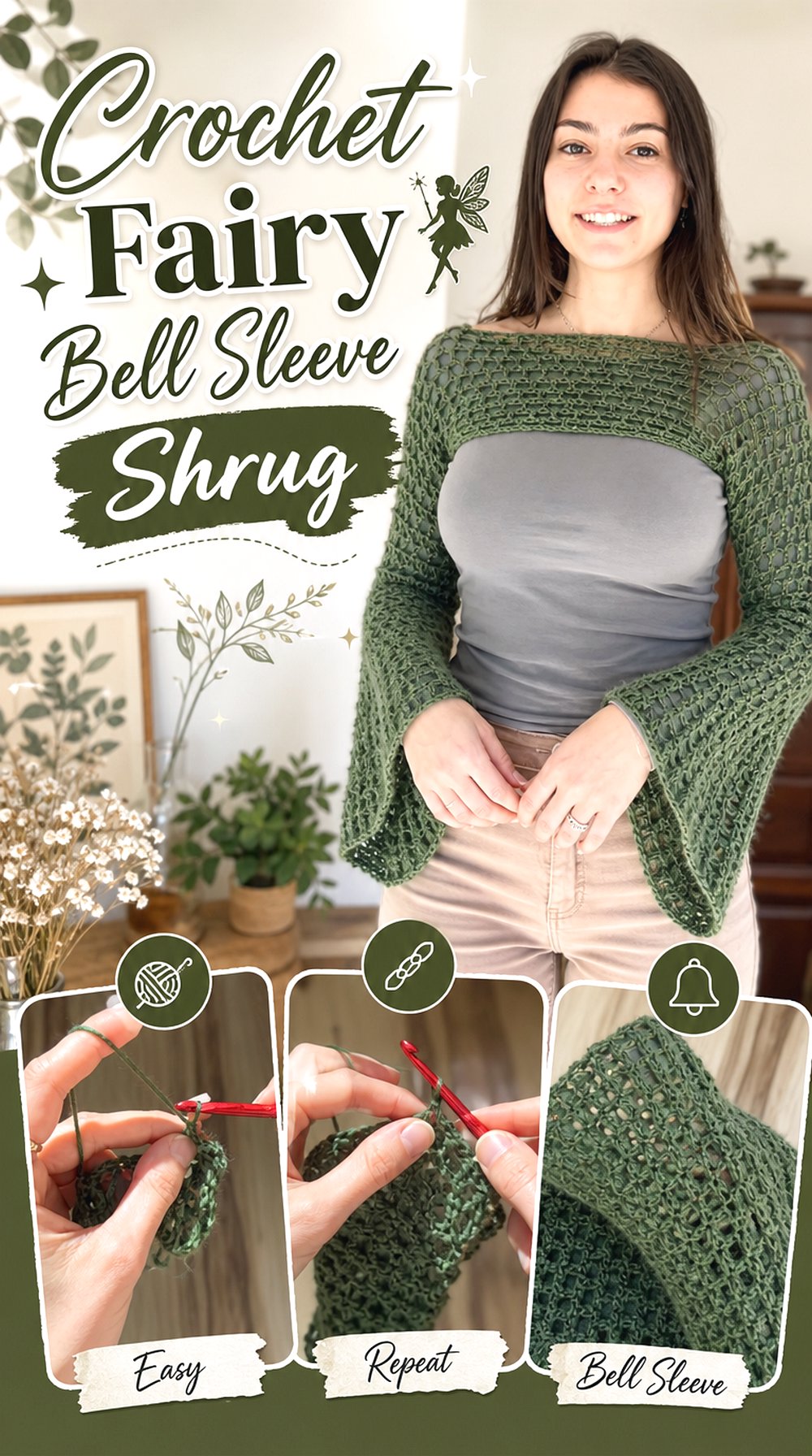
This fairy-style shrug stands out because the sleeves are part of the personality of the garment. The bell shape gives the piece a softer, more dramatic outline, while the cropped body keeps it from feeling like a full sweater. It may suit readers looking for a festival, cottagecore, or fantasy-inspired layer, especially when the goal is sleeve movement and visual shape rather than heavy coverage.
Review the Sleeve Finish
The sleeve finish is the key feature here, so readers should pay close attention to how wide and long the bell sleeves appear in the final reveal. A dramatic sleeve can change how the shrug feels during daily wear. Before starting, it helps to decide whether the intended result should be soft and flowing, only slightly flared, or strongly statement-making.
Watch the Armhole Fit
A shrug with long sleeves still needs a comfortable armhole. Readers should check how the upper sleeve sits near the shoulder and underarm, because that area controls movement. A bell sleeve may look loose at the wrist but still need structure near the top, so fit should be checked before continuing too far into the sleeve length.
Compare the Shape as You Work
Because this design includes visible shape changes, readers may want to compare both sides often. Matching sleeve length and flare matters more in a statement-sleeve shrug than in a simple rectangle scarf. A small progress note can help track where shaping begins and where the second sleeve should match the first.
Creator: Natalie
4. Crochet Color Block Bolero Shrug
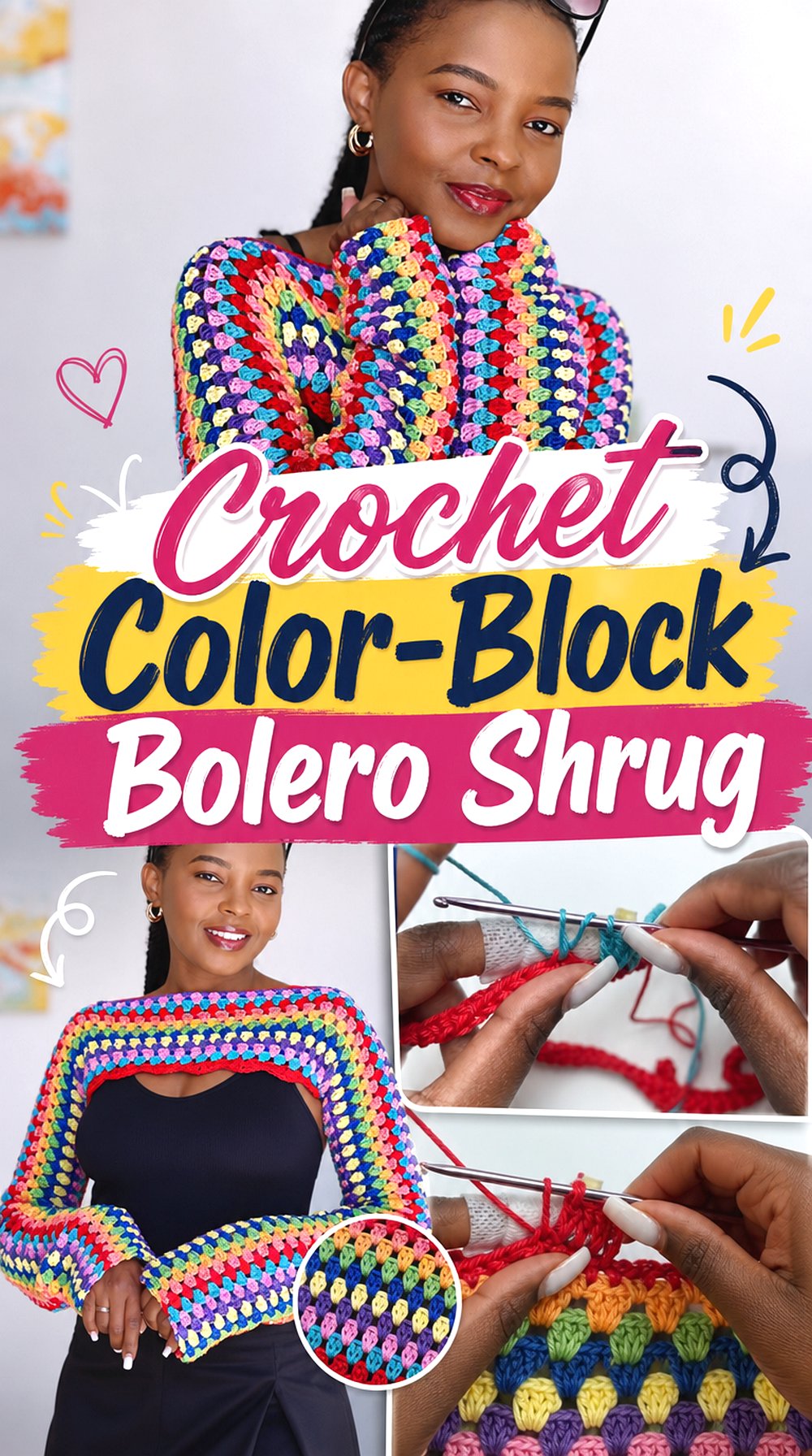
A color-block bolero gives this collection a brighter, more graphic option. Instead of relying only on shape, the finished piece uses multiple colors to make the cropped shrug more noticeable. It is a good match for readers who want a small garment with a strong visual surface, especially when the rest of the outfit is simple enough to let the color placement stand out.
Plan the Color Layout
Color changes can make a bolero look intentional or busy, depending on placement. Readers should study the finished sample and decide whether they want a similar multi-color look or a calmer palette. The useful check is balance: colors near the sleeves, front edges, and back should feel planned so the small garment does not look uneven.
Confirm the Material List
This project lists specific supplies, but readers should still record the full material information before buying anything. Multi-color projects can require more planning because every shade needs to be available in enough quantity. It is also worth checking whether the creator’s yarn choice affects drape, because a cropped bolero should not feel stiff around the shoulders.
Check the Final Assembly View
With a color-block garment, the final assembly view matters because seams and color joins become more visible. Readers should look carefully at how the sections meet and how the edges are finished. This helps avoid a result where the color work looks neat in separate pieces but feels disconnected once the shrug is worn.
Creator: AC Crochets
5. Crochet Ribbed Cuff Bolero Shrug

This bolero-style shrug has a more defined garment feel because the cuffs are part of the finished look. The ribbed cuff detail helps separate it from looser mesh sleeves and cocoon shapes. It may suit readers who want a cropped layer with a closer sleeve finish, especially if they like the contrast between a soft shrug body and a more controlled edge at the wrists.
Check the Creator’s Size Notes
This project is described as made to measure, so readers should not treat it like a fixed-size garment. The useful starting point is the creator’s measuring section and how the piece is checked against the body. Made-to-measure projects can be flexible, but they also require careful attention so the shrug does not become too tight across the shoulders or sleeves.
Review the Cuff Finish
The cuffs are a major part of the finished style, so readers should look closely at their width, placement, and how snug they appear. A cuff changes the sleeve from a loose tube into a more finished garment edge. Anyone who dislikes tight wrist finishes should review this section before committing to the project.
Mark Your Stopping Point
A made-to-measure shrug can be easier to follow when readers mark where they pause, especially between panel work, sleeve assembly, and cuffs. That simple habit helps keep both sides consistent. It also makes it easier to return to the tutorial without losing track of the section that controls fit.
Creator: yaejiyea
6. Crochet Beginner Mesh Sleeve Shrug
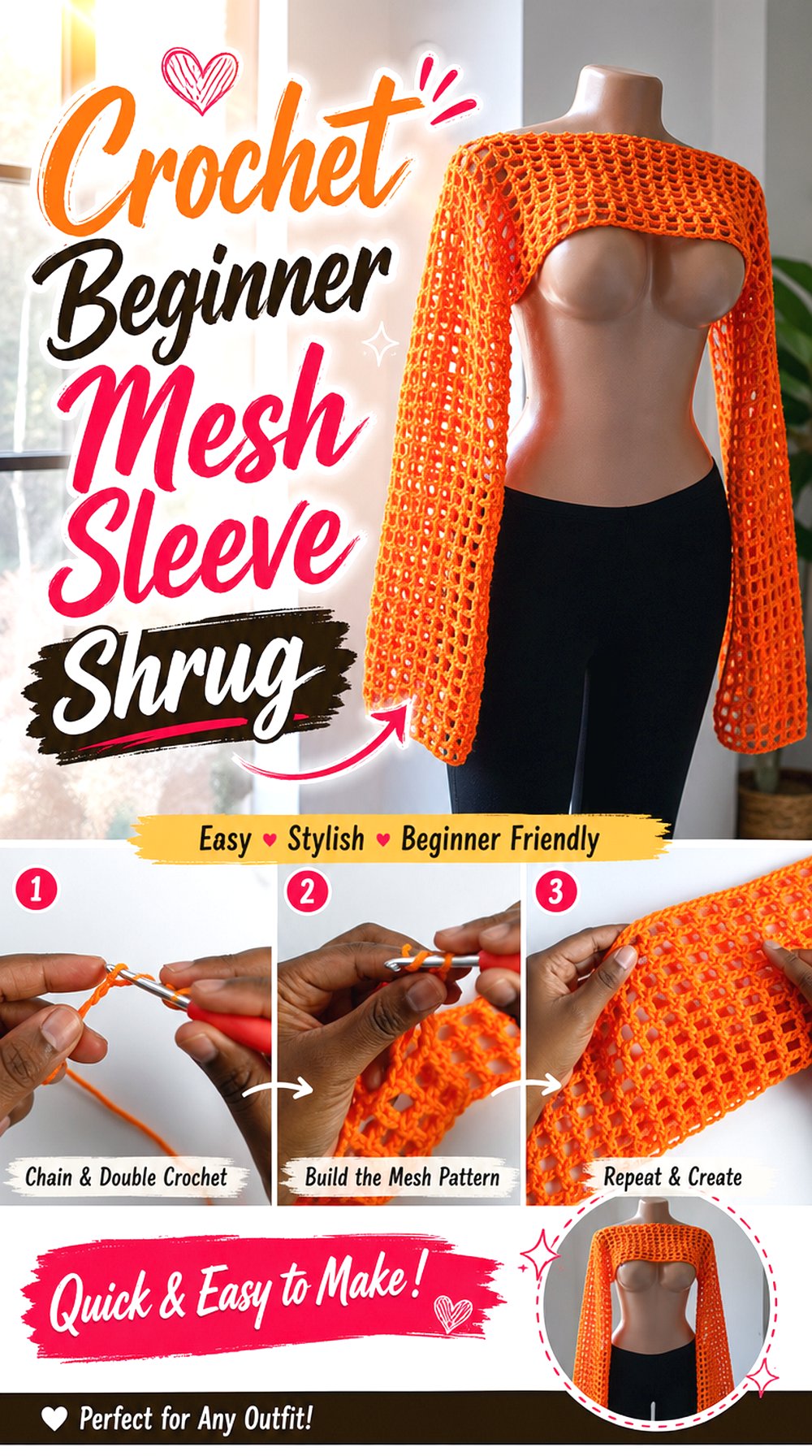
A mesh sleeve shrug is one of the most open shapes in this group. It gives arm and shoulder coverage while keeping the body light and airy, which makes it different from a bolero jacket or cocoon cardigan. This option is useful for readers who want a simple mesh look that can layer over fitted tops, bralettes, or dresses without covering too much of the base outfit.
Think About Coverage
Mesh shrugs are open by design, so coverage depends heavily on what is worn underneath. Readers should decide whether they want the mesh to be a decorative sleeve layer or part of a more covered outfit. The open spaces may look light and modern, but they will not behave like a solid cardigan.
Confirm the Finished Width
The width across the shoulders and arms controls whether this kind of shrug sits neatly or pulls. Readers should check how the creator measures the piece and compare that with their own shoulder span. Since mesh fabric can stretch differently depending on yarn and tension, checking width during progress is especially important.
Use the Close-Up Sections
A mesh pattern can look repetitive, but close-up sections still matter for keeping the spacing consistent. Readers should slow down when the tutorial shows the beginning rows, turning points, and any joining areas. Those parts establish the neatness of the finished mesh and help both sleeves look even.
Creator: Chris Threads
7. Crochet Star Detail Shrug

The star-detail shrug brings a decorative motif into the collection without turning the garment into a full novelty piece. The stars give the surface a clear theme, while the shrug shape keeps it wearable as a cropped layer. It may appeal to readers who want a more playful finish than plain mesh, but still want a project that functions as a shoulder and sleeve cover.
Keep the Star Detail Visible
The stars are the feature that makes this shrug different, so readers should think about contrast and placement before choosing colors. If the stars blend too closely into the base fabric, the main design detail may disappear. A useful check is whether the motif can still be seen from a normal outfit-viewing distance.
Check What Is Included
Decorative garments can involve both the main shrug and extra motif work. Readers should review the full supply list and the order of sections before beginning so they know what the project includes. This helps avoid reaching the finishing stage and realizing that motif placement, attachment, or extra yarn has not been planned.
Watch the Finishing Stage Closely
Motif-based projects often depend on the finishing stage for a clean result. Readers should slow down when the tutorial reaches the point where the stars become part of the finished shrug. Placement, direction, and neat attachment can affect whether the final piece looks balanced across the front, sleeves, or back.
Creator: Ascarcrochets
8. Crochet Freehand Cozy Sleeve Bolero

A freehand sleeve bolero has a looser, more personal feel than a fixed pattern-style shrug. This tutorial focuses on creating sleeve coverage that can work as a cozy cold-weather accessory or a cropped layer. It stands apart from the mesh options because the mood is warmer and more sleeve-focused, making it useful for readers who want arm coverage without a full sweater body.
Consider the Intended Season
This project is presented with fall and winter styling in mind, so readers should think about when they plan to wear it. A cozy sleeve bolero may be more useful over long dresses, fitted tops, or indoor outfits during cooler months. The yarn and sleeve coverage should match that intended use rather than a hot-weather layering need.
Confirm Any Extra Components
Freehand projects can still need careful preparation. Readers should check whether the creator uses stitch markers, measuring tools, or other finishing supplies before starting. Since the result is wearable, not just decorative, small missing tools can make it harder to keep sleeve length, shape, and fit consistent.
Recheck Before Moving Ahead
A freehand approach benefits from frequent checking. Readers should pause before major transitions, especially where the sleeve shape or body opening changes. This avoids continuing too far with a fit issue that could have been corrected earlier. For a shrug, small differences on each side may become visible once both arms are worn.
Creator: Strawberry Sirens
9. Crochet Blanket Cocoon Shrug

The blanket cocoon shrug is the roomiest and most relaxed option in this list. Instead of a close bolero fit, it drapes around the body with a soft open shape that can feel closer to a wearable wrap. This makes it useful for readers who want more back coverage, a looser outline, and a garment that can sit casually over jeans, dresses, or simple tops.
Think About Overall Drape
A cocoon shrug depends on drape more than sharp shaping. Readers should look at how the finished piece falls at the back, sides, and arm openings before choosing it. A soft oversized shape can be comfortable for layering, but it will not look like a fitted bolero. The desired silhouette should guide the project choice.
Confirm the Finished Dimensions
This type of shrug can look very different depending on the rectangle size and how it is seamed. Readers should check the finished dimensions provided by the creator and compare them with the amount of coverage they want. Size matters because the same construction idea can become cropped, oversized, or blanket-like.
Consider How It Will Be Stored
A larger cocoon shrug may need more storage space than a small sleeve bolero. Readers should think about whether it will be folded on a shelf, hung on a hanger, or kept with seasonal layers. Heavier or larger crochet garments can stretch if stored poorly, so keeping the yarn label and care information is useful.
Creator: Jewels and Jones
10. Crochet Granny Square Cocoon Shrug

This granny square cocoon shrug turns a familiar square-based idea into a wearable layer. The finished shape offers more back coverage than a sleeve-only shrug, while the granny square structure gives it a recognizable crochet texture. It is a strong option for readers who like motif-style construction but want the final item to become a cardigan-like shrug rather than a blanket or bag.
Check the Finished Footprint
A granny square cocoon shrug begins with a shape that needs enough size to wrap into a garment. Readers should check how large the square becomes before shaping, because that determines the back width, sleeve opening, and overall drape. A square that looks generous flat may still need careful checking once it is transformed into a shrug.
Watch the Shaping Section Closely
The important moment is when the square becomes a wearable cocoon. Readers should slow down during the shaping section and compare the orientation carefully. With square-based projects, turning or folding the wrong way can affect the armholes and the way the finished shrug hangs on the shoulders.
Plan the Back View
The back is a major part of this project’s look, so readers should consider how the granny square center will appear when worn. A clear back motif can be attractive, but uneven tension or color placement may stand out. Looking at the back view before finishing helps the shrug feel intentional from every angle.
Creator: Shyler crochets
11. Crochet Clean Bell Sleeve Shrug
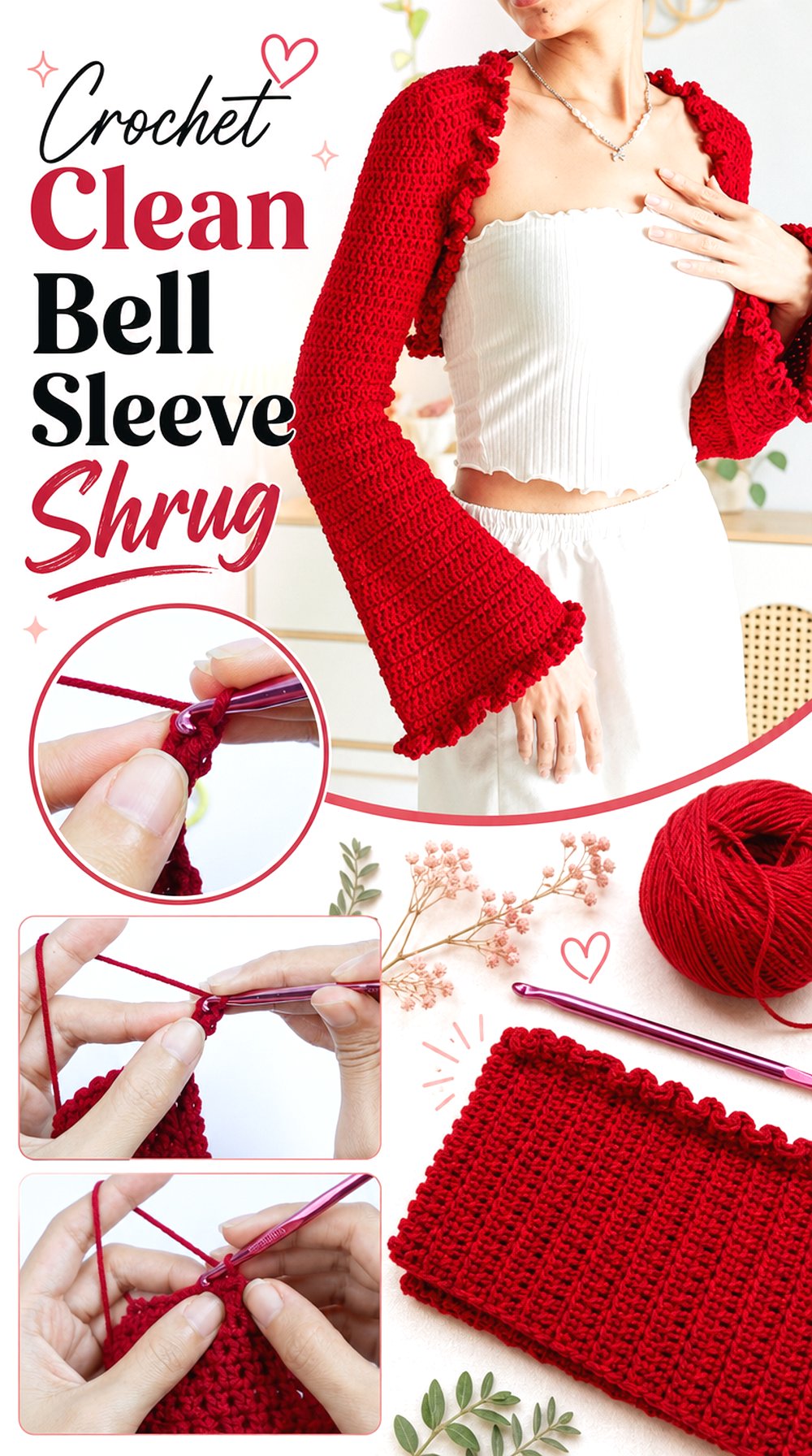
This bell sleeve shrug gives readers another statement-sleeve choice, but with a cleaner, more straightforward look than the fairy-style option above. The finished piece focuses on long sleeves, an open cropped body, and a clear bell shape. It may suit readers who want visible sleeve flare without extra motifs, heavy color blocking, or a full cocoon silhouette.
Compare the Sleeve Flare
Bell sleeves can be subtle or dramatic, so readers should compare the amount of flare shown in the finished garment with their own wearing habits. Wider sleeves make a stronger outfit statement, but they may also need more attention around bags, bracelets, or daily tasks. The sleeve shape should match how the shrug will actually be used.
Confirm the Material List
This tutorial provides a clear materials section, which is helpful for planning before starting. Readers should still check the full list directly from the creator and avoid substituting without considering drape. A bell sleeve depends on how the fabric hangs, so yarn texture and weight can change the final look noticeably.
Check the Neck Opening
The neck opening affects whether the shrug sits high, wide, or slightly off the shoulder. Readers should notice how the sample rests at the neckline and decide if that shape works with their intended outfits. A wide opening may pair well with tanks or dresses, while a closer one may feel more secure.
Creator: Chenda DIY
12. Crochet Lacy Fireflies Cocoon Shrug

The lacy Fireflies cocoon shrug gives the final spot to a more open, decorative rectangle-based layer. It differs from the blanket cocoon shrug because the focus is airy lace texture and a decorative border rather than a plain cozy wrap effect. This option may suit readers who want more body drape than a bolero but a lighter visual finish than a solid cocoon cardigan.
Think About the Openwork Texture
Openwork gives this shrug its light appearance, so readers should think about how much coverage they want from the finished garment. A lace-style cocoon can layer beautifully over dresses, tanks, or simple tops, but the base outfit will remain visible. The open texture is part of the design, not something to expect to behave like solid fabric.
Review the Size Chart
This tutorial includes size information, so readers should compare the listed size range with their own body measurements before beginning. Cocoon shrugs can feel forgiving, but the width and length still affect the armhole placement and overall drape. Checking the size chart first helps readers choose the closest intended fit.
Pause at Major Shape Changes
A rectangle-based cocoon shrug may look simple until the armholes and border are added. Readers should pause when the tutorial moves from flat fabric to wearable shaping. That point determines how the layer rests on the shoulders and how clean the arm openings look, so it deserves more attention than a repeated stitch section.
Creator: Let’s All Crochet
Conclusion
These crochet shrug ideas cover several useful directions: close boleros, mesh sleeve layers, bell sleeves, decorative stars, granny-square shaping, and relaxed cocoon drape. Choose a fitted bolero when shoulder coverage and a neat outline matter most, or pick a cocoon shrug when back coverage and easy layering are the priority. Mesh and bell sleeve designs work well when the sleeves are the main feature. For exact construction details, sizing, and finishing steps, follow the original tutorials linked with each creator.
FAQs
How do I choose the right crochet shrug style?
Start with how much coverage you want. A bolero gives a cropped garment shape, a sleeve shrug focuses on arms and shoulders, and a cocoon shrug adds more back and side drape. Also consider the outfits you plan to wear underneath, because open-front and mesh designs depend heavily on the base layer.
What should I check before starting a crochet shrug tutorial?
Check the creator’s size guidance, material list, gauge or measurement notes when provided, and the final reveal. For shrugs, the most important areas are shoulder width, sleeve opening, neckline, cuff finish, and garment length. Watching the full tutorial first can prevent surprises during shaping or assembly.
Are mesh crochet shrugs good for coverage?
Mesh crochet shrugs are better for light layering and visual texture than full coverage. The open spaces are part of the design, so the top or dress underneath will show. They can be useful for warm-weather outfits, festival styling, or adding sleeves without the weight of a solid cardigan.
Can I change the yarn in a crochet shrug project?
Only change yarn after checking the creator’s material notes and considering fit. Yarn weight, fiber, and drape can affect sleeve width, stretch, armhole comfort, and how the finished shrug hangs. For wearable projects, it is safer to make a small test piece and compare measurements before committing.
Can I sell a crochet shrug made from a YouTube tutorial?
Do not assume selling is allowed just because the tutorial is public. Check the creator’s description, pattern terms, website, or shop listing for permission. Some creators allow finished-item sales, some limit them, and some do not clearly state terms. When it is unclear, ask the creator directly before selling.