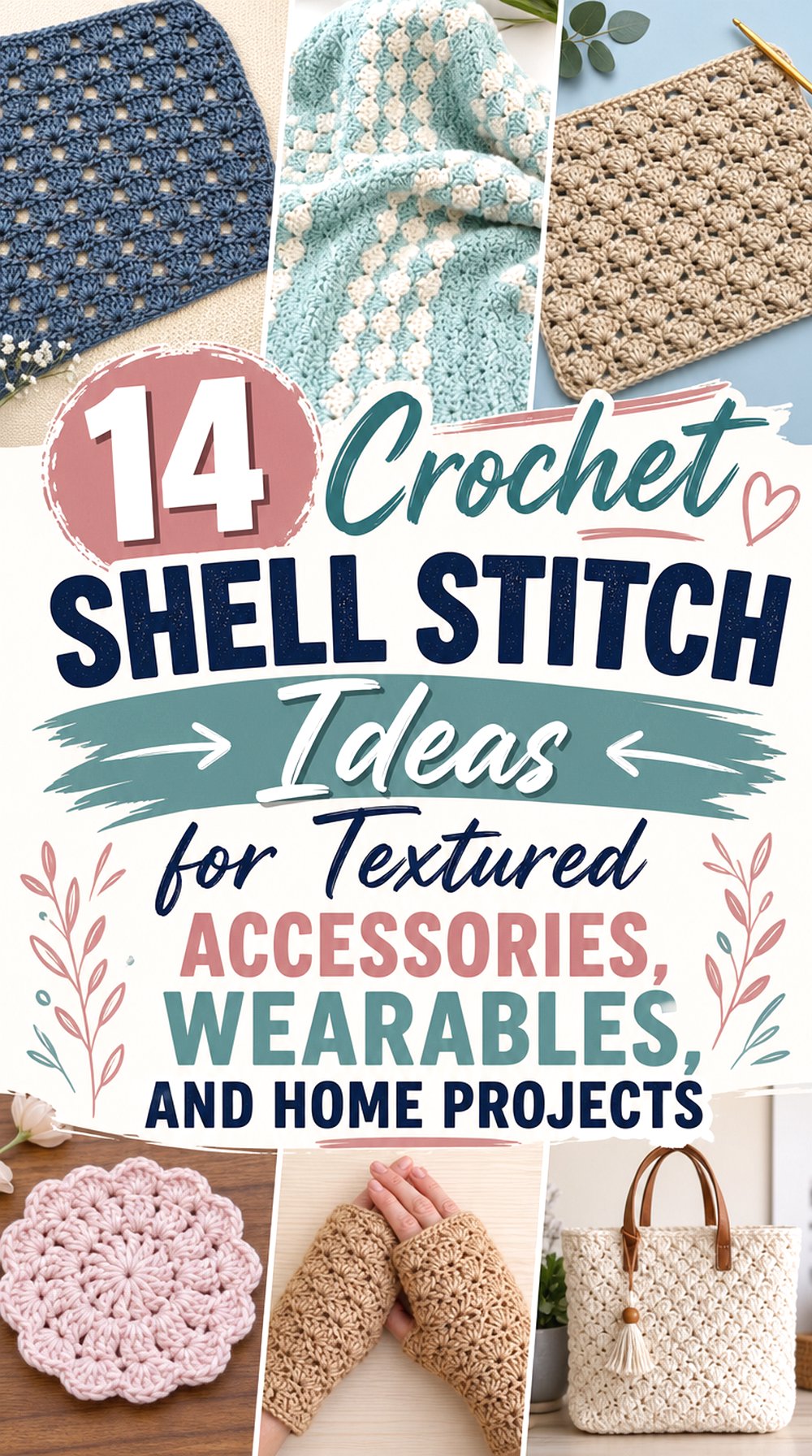
14 Crochet Shell Stitch Ideas for Textured Accessories, Wearables, and Home Projects

Shell stitch crochet can move in many directions, from soft blankets and scarves to fitted garments, textured bags, and small table pieces. The repeated fan-like texture gives each project a clear surface pattern, but the final use changes a lot depending on scale, yarn weight, shaping, and finishing.
This list brings together shell stitch ideas that do not all feel alike. Some are flat and simple to place, like a coaster or table runner. Others need more fit planning, such as a dress, skirt, cardigan, or top. Use the project notes to compare shape, coverage, size, and practical details before opening the original tutorial for the exact making instructions.
Quick List
- Crochet Chunky Shell Stitch Throw Blanket
- Crochet Soft Shell Stitch Baby Blanket
- Crochet Classic Shell Stitch Scarf
- Crochet Lacy Shell Stitch Shawl
- Crochet Shell Stitch Headband
- Crochet Shell Stitch Fingerless Gloves
- Crochet Shell Stitch Beanie Hat
- Crochet Open Shell Stitch Top
- Crochet Long Shell Stitch Cardigan
- Crochet Shell Stitch Dress
- Crochet Shell Stitch Skirt
- Crochet Shell Stitch Tote Bag
- Crochet 3D Shell Stitch Coaster
- Crochet Shell Stitch Table Runner
What to Compare Before Choosing a Shell Stitch Project
The first choice is not only the item type. Shell stitch behaves differently depending on where it is used. On blankets and scarves, the texture can spread out in long rows and becomes the main surface feature. On wearables, the same stitch affects coverage, drape, and fit, so measurements matter more. Bags and table pieces need a different kind of planning because edges, openings, flatness, and shape control become important.
Also notice how much of the finished item depends on exact sizing. A coaster or headband may be easier to judge visually, while a cardigan, dress, or skirt needs closer attention to the creator’s measurements, size notes, and finishing details.
1. Crochet Chunky Shell Stitch Throw Blanket

A chunky shell stitch throw gives the stitch pattern a bold, raised look. Because the blanket is meant as a larger home piece, the main appeal is the repeated texture across a broad surface rather than small decorative detail. This idea works well for readers who want a shell stitch project with a cozy, room-focused purpose.
Compared with the baby blanket later in this list, this throw has a heavier visual presence. It is better suited to sofas, reading chairs, or bed layers where the thicker shell pattern can stand out.
The Chunky Texture Is the Main Feature
The shell rows create the strongest visual effect when they are worked at a larger scale. For this kind of blanket, readers should think about where the finished throw will sit and how much texture they want in that space. A chunky project may look more substantial than a lighter baby blanket, so the stitch pattern becomes part of the room’s look.
Size Planning Matters More Than Color
The creator’s description notes that the blanket size can be customized, which makes size planning a useful early decision. A lap throw, sofa throw, and bed accent do not need the same finished dimensions. Before buying supplies, readers should decide the intended placement and then use the original tutorial’s guidance for the exact foundation and sizing details.
Creator: Treasurie
2. Crochet Soft Shell Stitch Baby Blanket
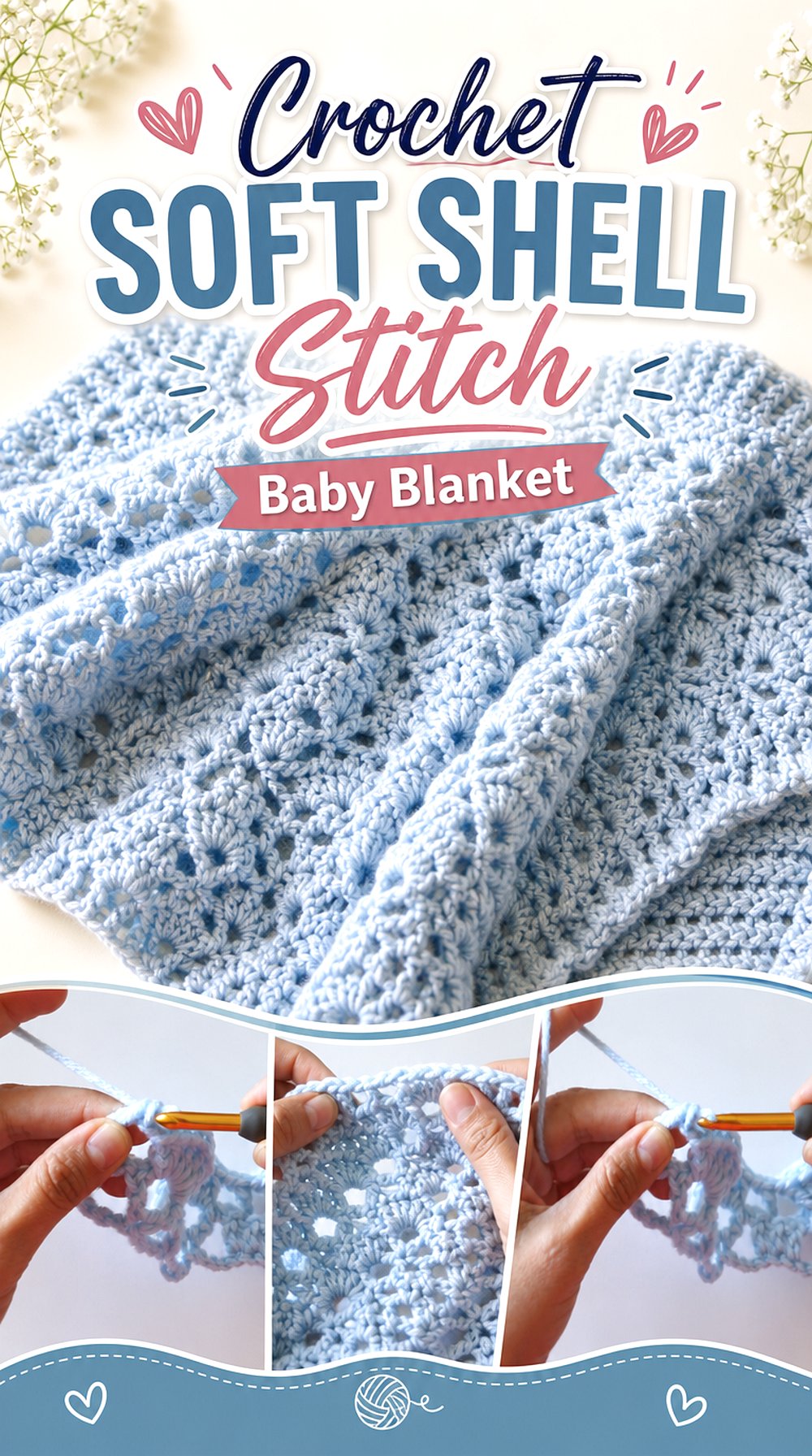
A shell stitch baby blanket uses the same fan-like texture in a softer, smaller-scale way. The finished item is still rectangular and practical, but it feels more nursery-focused than the chunky throw. The shell pattern gives the blanket a neat all-over surface without needing extra motifs or separate decorative pieces.
This option may suit readers looking for a baby gift idea, but size, yarn fiber, and care information should be checked carefully before choosing materials. A baby blanket needs more practical thought than a general decorative throw.
A Smaller Scale for Nursery Use
The baby blanket format keeps the shell stitch organized across a manageable surface. Readers should compare this project with the chunky throw if they want the same stitch family but a softer purpose. The important decision is whether the finished piece is being planned for display, gifting, stroller use, or general baby-room layering.
Confirm Yarn and Care Before Gifting
For baby items, yarn choice and care matter more than color alone. The tutorial identifies the project as a baby blanket, but readers should still check the material list and keep the yarn label information for washing guidance. Do not assume a finished blanket is machine washable or suitable for every baby-use situation unless the source and yarn label support that.
Creator: Sirin’s Crochet
3. Crochet Classic Shell Stitch Scarf
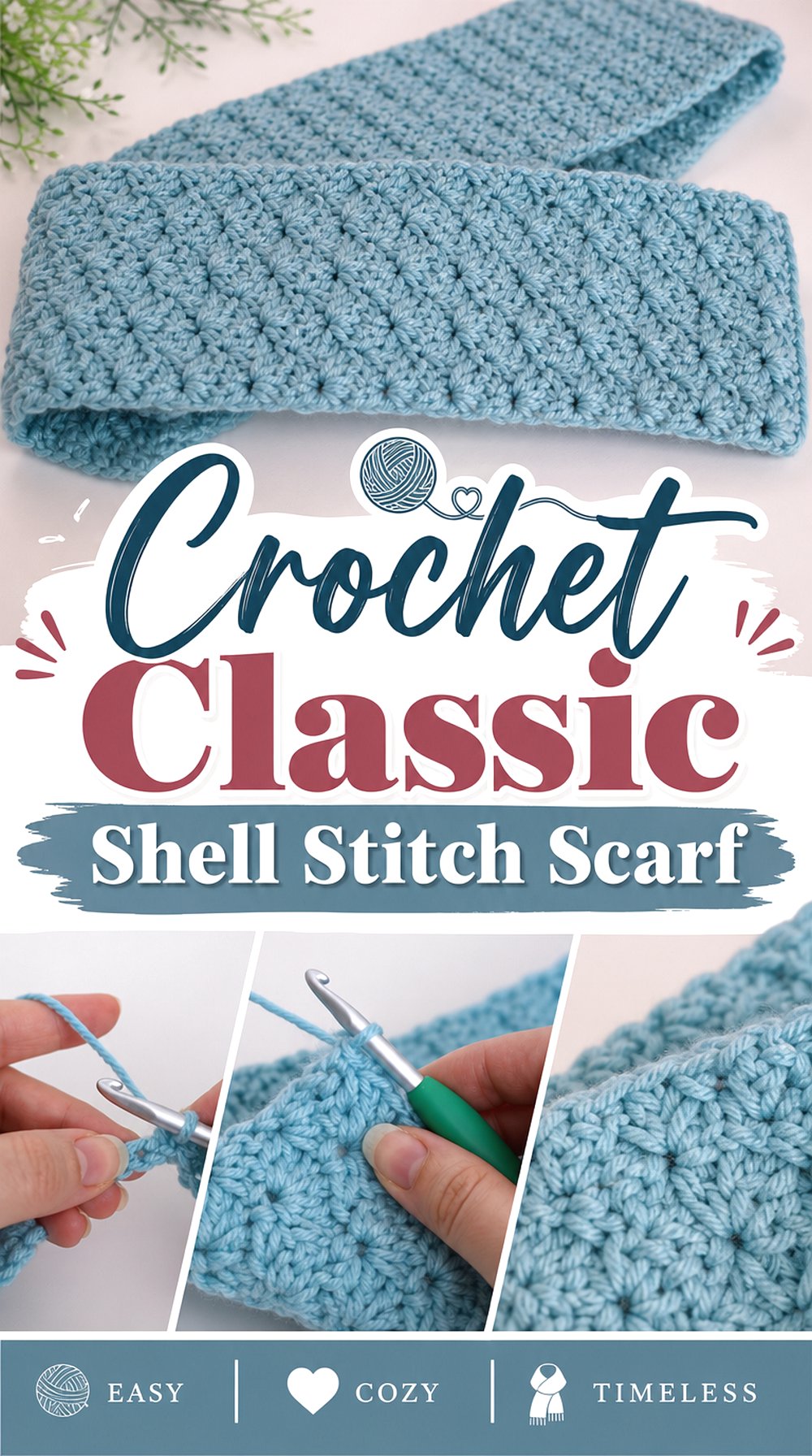
A shell stitch scarf is a straightforward way to use the pattern in a long, wearable rectangle. The repeated texture runs along the length, making the finished scarf more decorative than a plain solid stitch scarf while still staying simple in shape. This project is especially useful for readers who want a shell stitch accessory without garment shaping.
Unlike the shawl, headband, or gloves, the scarf relies mostly on length and edge neatness. The creator’s description includes a finished size of 7 x 60, which gives readers a concrete point to compare with their preferred scarf length.
Length Is Already Part of the Appeal
The listed 7 x 60 size suggests a long, narrow scarf shape. Readers who prefer a shorter neck scarf or a fuller wrap should compare that measurement with pieces they already wear. Length affects styling, layering, and how much bulk sits around the neck, so it is worth checking before following the project exactly.
Solid or Variegated Color Direction
The source mentions solid color, variegated color, and scrap-yarn possibilities. That makes color planning a visible design choice rather than an afterthought. A solid yarn can make the shell rows easier to read, while a mixed yarn may give the scarf more movement. Readers should choose based on whether they want texture or color changes to stand out first.
A Simple Rectangle Needs Clean Edges
Because the scarf shape is not complicated, the edges carry more visual weight. Uneven tension can be easier to notice on a long rectangle than on a small coaster or textured bag. Readers may want to watch the starting and turning areas carefully in the original tutorial so the shell pattern stays even from end to end.
Creator: Amanda Crochets
4. Crochet Lacy Shell Stitch Shawl
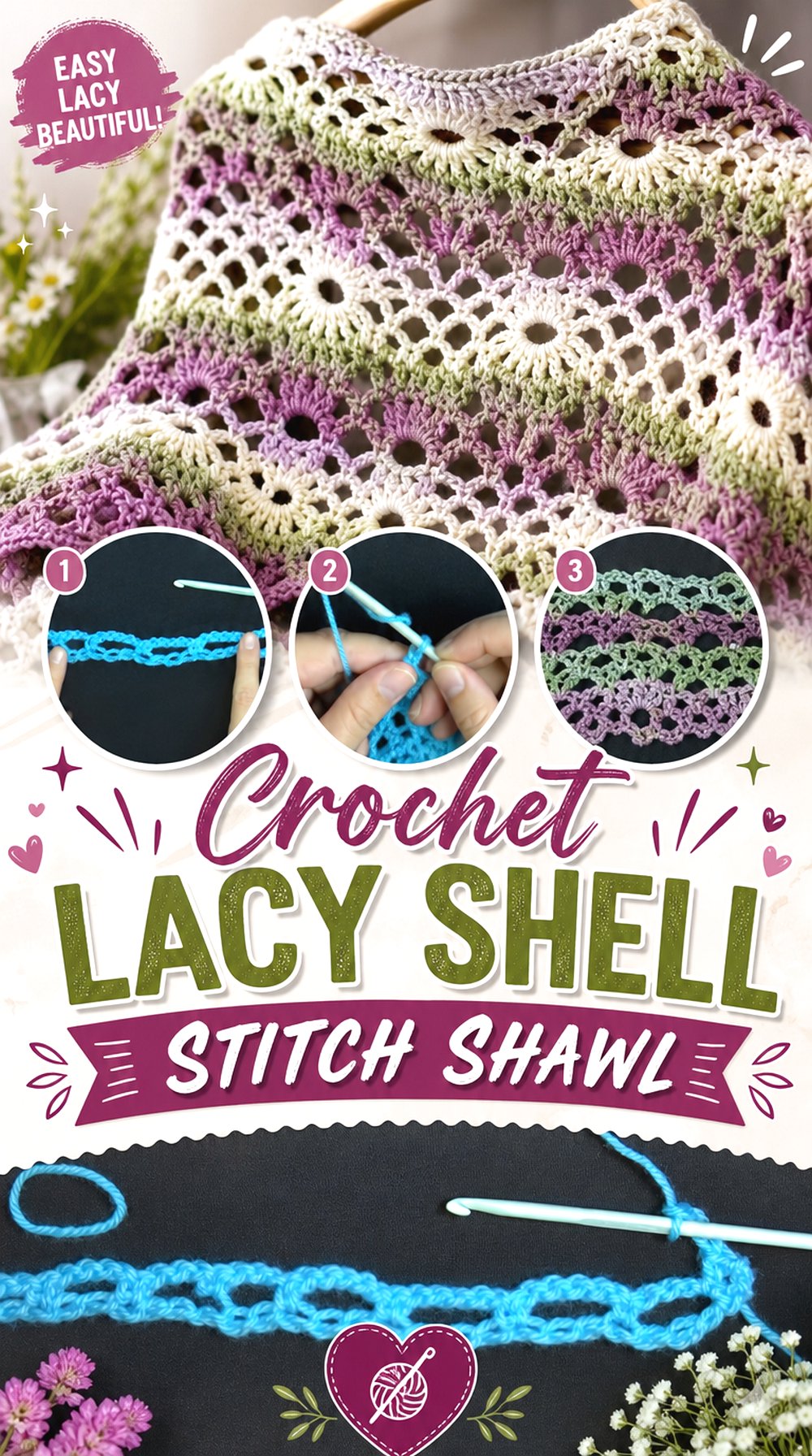
This shell stitch shawl uses larger fan-style sections to create a lacy wrap effect. It has more drape and openness than the scarf, so it belongs in a different category even though both are worn around the shoulders or neck. The finished look is wider, airier, and more decorative.
Readers who enjoy stitch texture with open spacing may prefer this project over the blanket or cardigan. Since a shawl is often styled across the shoulders, width, length, and edge shape are the practical details to watch.
The Lacy Fan Layout Needs Space
A lacy shell shawl needs enough width for the fan pattern to show clearly. If the finished piece is too narrow for the intended use, it may feel closer to a scarf than a wrap. Readers should compare the project’s measurements and finished view with how they plan to wear it, especially over dresses, tops, or coats.
Charts and Written Help May Matter
The description mentions written pattern support and chart information. That can be useful for readers who do not want to rely only on video watching. A shell stitch shawl has repeated texture, so a chart or written reference can make it easier to track the pattern without replaying the same section repeatedly.
Loose Beginning Edges Deserve Attention
The source notes attention to chaining loosely at the beginning. For a shawl, that matters because a tight starting edge can affect drape and width. Readers do not need to change the design, but they should pay attention to the early setup so the finished wrap does not pull unevenly along one side.
Creator: Meladora’s Creations for Crochet
5. Crochet Shell Stitch Headband
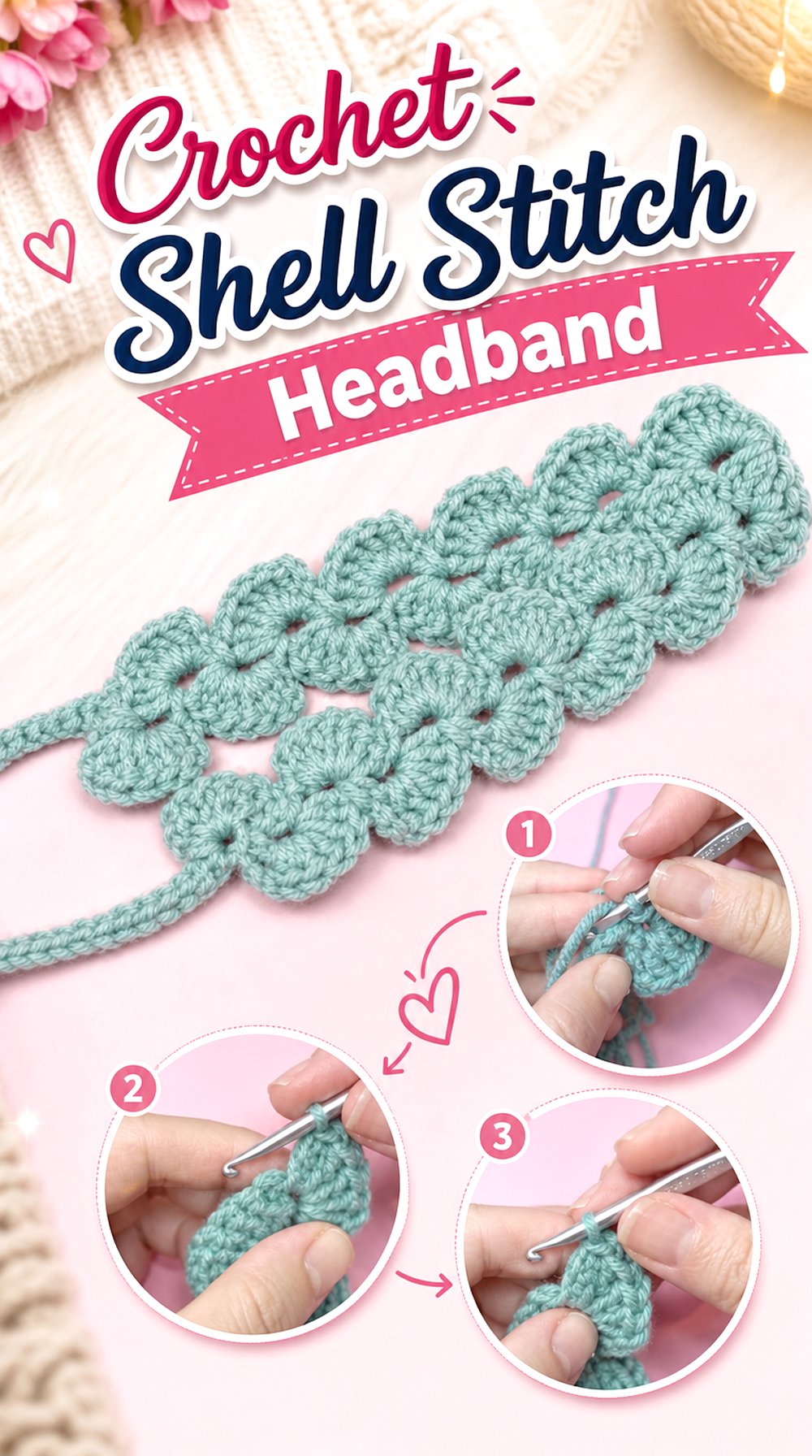
A shell stitch headband keeps the project small while still showing the texture clearly. This is a useful idea for readers who want a wearable accessory without committing to a full hat, scarf, or garment. The finished piece is narrow, so the shell stitch becomes a decorative band rather than an all-over fabric.
The main practical question is fit. A headband needs enough stretch and length to sit comfortably, and the finished width affects whether it feels more like a hair accessory or an ear-warmer style piece.
Fit Is the Main Practical Question
Unlike a scarf, a headband has to sit around the head with a more specific fit. Readers should check how the creator handles sizing and compare it with the intended wearer. Even a small difference in length can change how securely the finished band sits, especially if it will be worn over hair or around the ears.
Surface Texture Works Best When Uncrowded
The shell stitch has a clear scalloped texture, so the headband does not need much extra decoration to look finished. A smooth yarn color may make the stitch pattern easier to see. Readers who choose a highly variegated yarn should expect the color movement to compete more with the shell detail.
Creator: Crochet Jewel
6. Crochet Shell Stitch Fingerless Gloves

Shell stitch fingerless gloves are smaller than a scarf or shawl but need more shape control. The lacy texture gives the gloves a decorative surface, while the open-finger design keeps the hands partly uncovered. This project stands apart from the headband because two matching pieces are needed.
The finished gloves may work as a light accessory rather than heavy cold-weather coverage. Readers should focus on hand fit, wrist length, and whether the shell pattern leaves the amount of coverage they want.
Hand Fit Needs More Attention
Fingerless gloves sit on an area that moves often, so fit is more important than it is for a flat coaster or scarf. Readers should check whether the tutorial explains sizing or adjustment options. The glove should not be judged only by the stitch pattern, because thumb placement, hand width, and wrist fit affect how wearable the pair feels.
Pair Matching Is Part of the Finish
A glove project has to look balanced as a pair. Even if each glove is small, tension differences can make one piece look longer or wider than the other. Readers may want to keep progress notes or compare the two pieces as they go, using the original tutorial for the exact making details.
Lacy Coverage Changes How They Wear
The shell stitch gives these gloves a more open, decorative look than a dense mitten-style accessory. That makes them useful for style and light layering, but readers should not assume they provide full warmth. The amount of openness should be compared with the intended season and outfit use.
Creator: Crochet with GG
7. Crochet Shell Stitch Beanie Hat
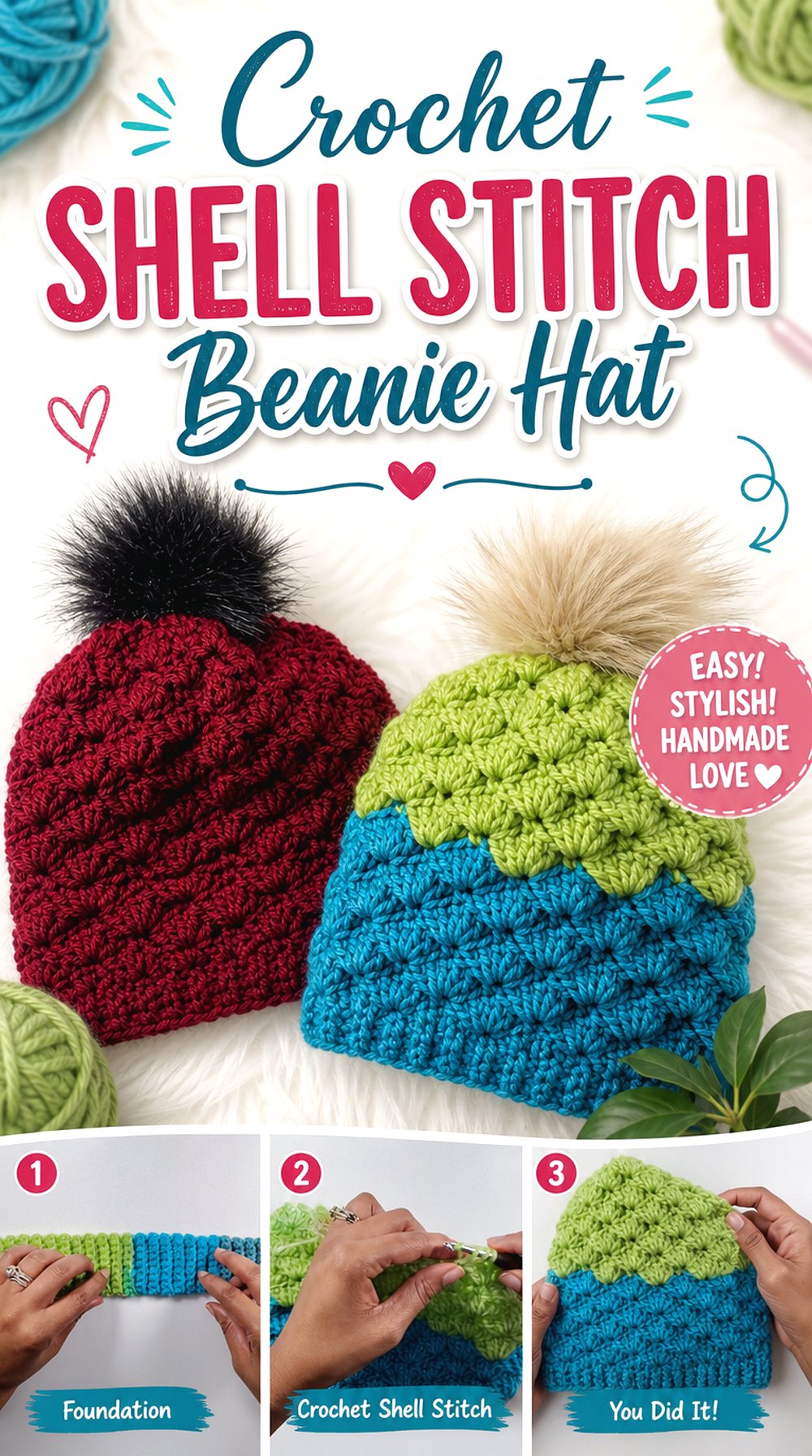
A shell stitch beanie turns the stitch pattern into a rounded accessory with a defined crown. This project differs from the headband because it covers the full head and needs shaping at the top. The source title notes adult and child size options, which makes sizing an important part of the project choice.
The pom-pom shown in the tutorial details gives the beanie a more finished winter-accessory look. Readers who prefer a simpler hat can treat that as a style decision to verify in the original source.
Adult and Child Size Options
Because the tutorial is presented for adult and child sizes, readers should choose the size path before starting. A beanie depends on circumference and depth, not just the stitch repeat. The shell texture may look good in several sizes, but the finished hat still needs to match the wearer’s head measurements.
Pom-Pom Is a Style Choice
The material list includes a faux fur pom-pom, which changes the finished look of the hat. Readers should decide whether they want that detail before buying supplies. A pom-pom can make the beanie look more playful or seasonal, while leaving it off may keep the shell stitch as the main feature.
Crown Shape Deserves a Close Look
8. Crochet Open Shell Stitch Top
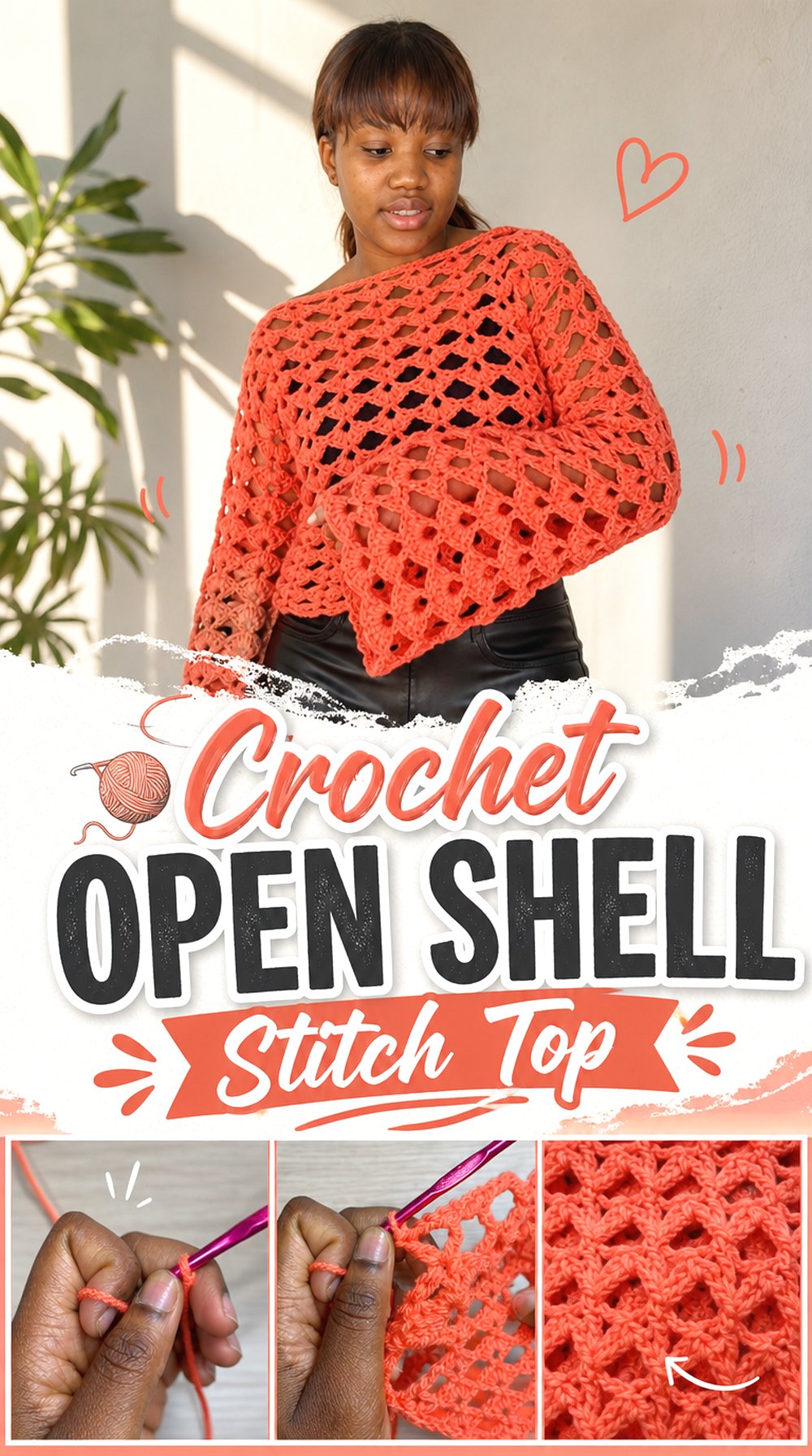
An open shell stitch top uses the pattern as part of a garment fabric, so coverage and measurements matter more than they do for accessories. The project can be worn as a top or sweater-style layer, depending on yarn, length, and how the maker follows the sizing guidance.
This option is more involved than the scarf, headband, or gloves because the finished piece has to relate to the body. The shell openings also make layering an important reader decision.
Measure the Body Areas the Creator Lists
The source description lists measurements such as bust, top length, armhole, sleeve width, and sleeve length. Those points should guide readers before they begin. A shell stitch top cannot be chosen by appearance alone, because a comfortable fit depends on comparing the project information with the wearer’s own measurements.
Open Shell Coverage Needs Layering
The visible stitch style creates an open textured fabric. Readers should plan what they will wear underneath and whether they want the top to be a main garment or a layer. This is especially important if the finished top will be worn outside the home, over a fitted base, or in a setting where coverage matters.
Sleeve and Length Choices Change the Look
The source notes size and length guidance, so readers should think about the silhouette they want before following the project. A shorter length can feel more like a cropped layer, while a longer body or sleeve changes the styling. The original tutorial should be used for the exact adjustment method.
Creator: 🧶Mihankushea🧶
9. Crochet Long Shell Stitch Cardigan
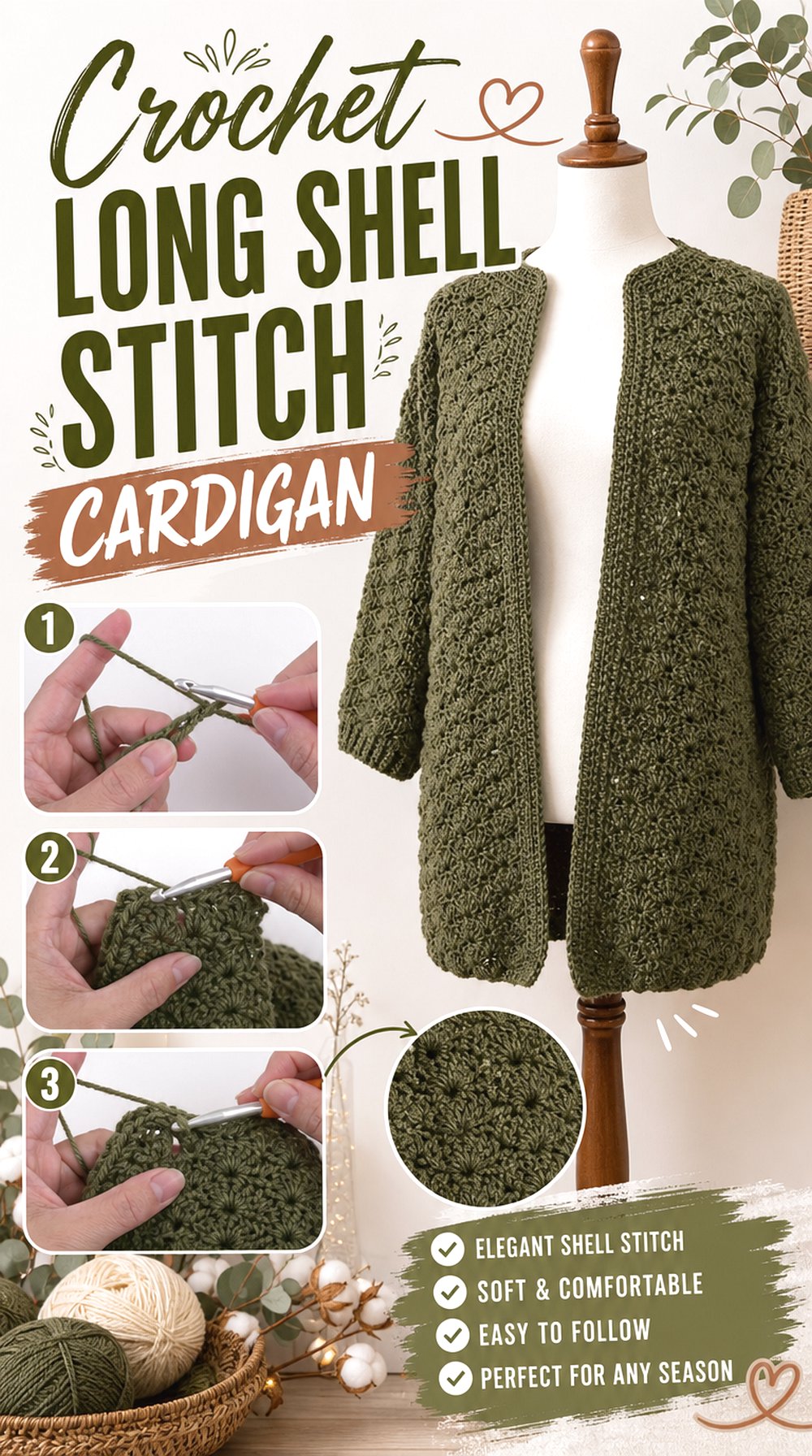
A shell stitch cardigan gives the pattern a fuller garment role, with body length, sleeves, and front opening all affecting the finished piece. The tutorial description identifies it as a cardigan made using shell stitch, and the finished form is more structured than a scarf or shawl.
This project is a better match for readers who want a wearable layer with more coverage. It also needs more fit checking, because a cardigan has to work across the shoulders, front panels, sleeves, and overall length.
A Longer Open Front Changes Styling
The cardigan format creates an open-front layer rather than a pullover. That makes it useful over simple tops or dresses, but it also means the front edges and body width matter visually. Readers should look at the finished front view and decide whether they prefer a relaxed open shape or a closer cardigan fit.
Compare the Listed Measurements
The source description includes finished measurements and notes the creator’s own size context. Readers should compare those measurements with the intended wearer instead of assuming the cardigan will fit the same way. A shell stitch garment can look different when stretched, layered, or worn over bulkier clothing.
Seaming Determines the Final Shape
A cardigan depends on how the separate areas come together. Readers should pay close attention to the joining and finishing portions without trying to guess from the finished photo alone. The shell texture can make alignment more visible, so the original tutorial is important for the exact construction details.
Creator: LovinglyNie
10. Crochet Shell Stitch Dress
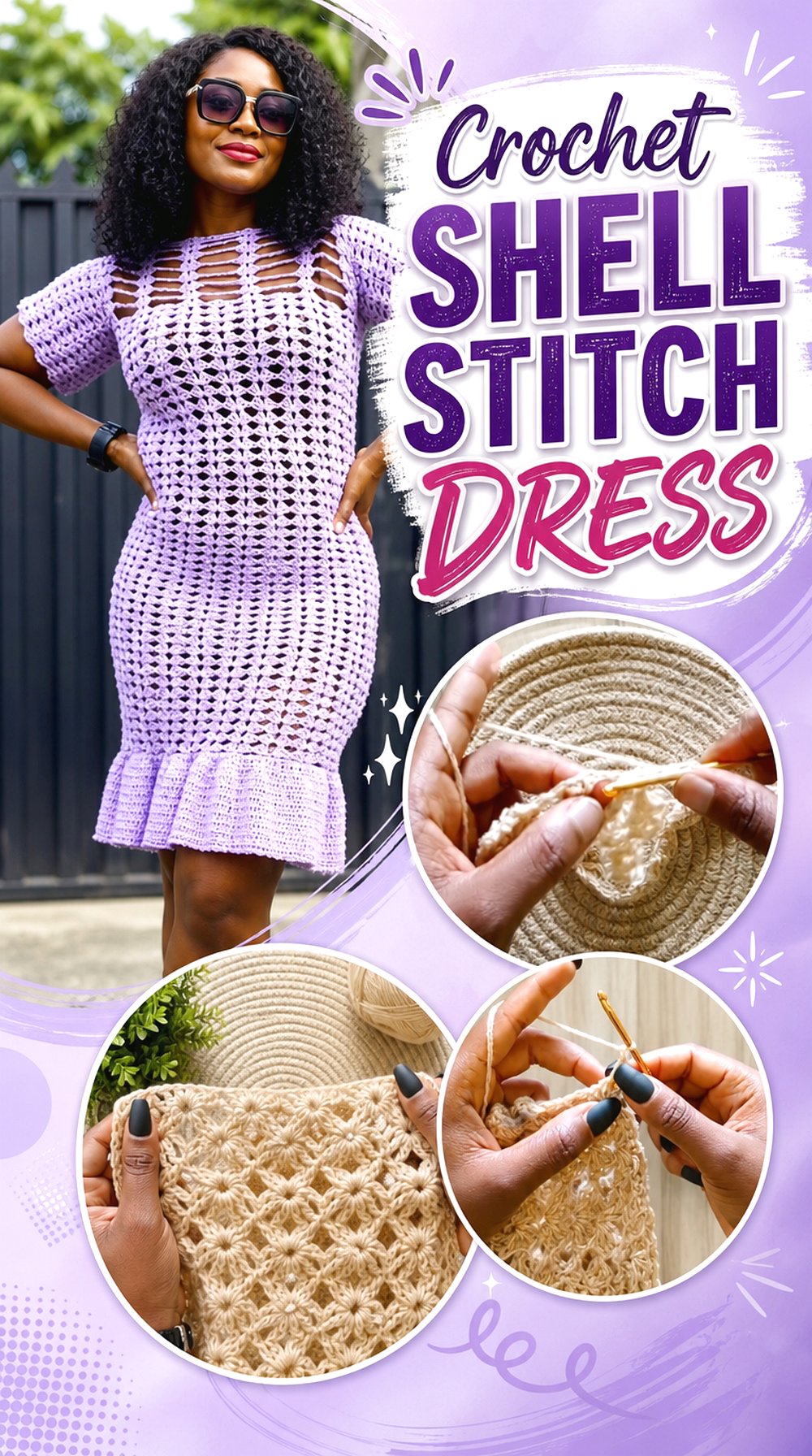
A shell stitch dress turns the texture into a full outfit piece, which makes it one of the more planning-heavy ideas in this list. The finished item needs attention to length, body fit, coverage, and how the shell pattern sits across a larger garment area.
Compared with the skirt or top, the dress combines more fit zones in one project. Readers who choose this option should spend extra time reviewing sizing support and the finished views before starting.
Garment Size Should Be Verified
The source notes a written PDF pattern for XS–5XL, but readers should still confirm what is included and what size information applies to the video. A dress has less room for guessing than a scarf or blanket. Bust, waist, hip, and length preferences can all affect whether the finished garment suits the wearer.
Shell Texture Carries the Whole Dress
Because the shell stitch is spread across a full dress, the texture becomes the main design element. Readers should choose colors and yarn finishes that let the stitch pattern remain visible. A very busy yarn may soften the shell definition, while a simpler color can make the repeated texture easier to see.
A Dress Needs More Planning Than Accessories
This is not just a larger version of a small shell stitch project. A dress needs more supply planning, more fit checking, and more patience with finishing. Readers should review the full guide before buying materials so they understand how the creator handles the garment shape.
Creator: Thisisfrances
11. Crochet Shell Stitch Skirt

A shell stitch skirt focuses the texture below the waist, giving the finished garment movement and surface detail without making a full dress. The source describes the skirt as worked from the waistband down and notes that the video tutorial is for size S, with written pattern support for more sizes.
This project is a useful middle ground between accessories and full garments. It still needs body measurement checks, but the fit questions are more concentrated around the waist, hips, and length.
Waistband and Length Set the Use
For a skirt, the waistband and finished length decide how practical the piece will be. Readers should think about whether they want a casual skirt, a beachy layer, or an outfit piece before choosing yarn and length. The shell stitch adds texture, but fit is what makes the finished garment wearable.
Only One Video Size Is Stated
The description notes that the tutorial is for size S. Readers making another size should not rely only on the video view. They should check the creator’s written sizing information or any linked pattern details before beginning, especially if they need a different waist or hip measurement.
Written Sizing Can Help Beyond the Demo
The source mentions a written pattern for XS–2XL. That can be useful for readers who need size guidance outside the demonstrated version. A shell stitch skirt may look simple in photos, but written support can help clarify measurements, customization, and fit decisions without guessing.
Creator: Loops Only Crochet
12. Crochet Shell Stitch Tote Bag
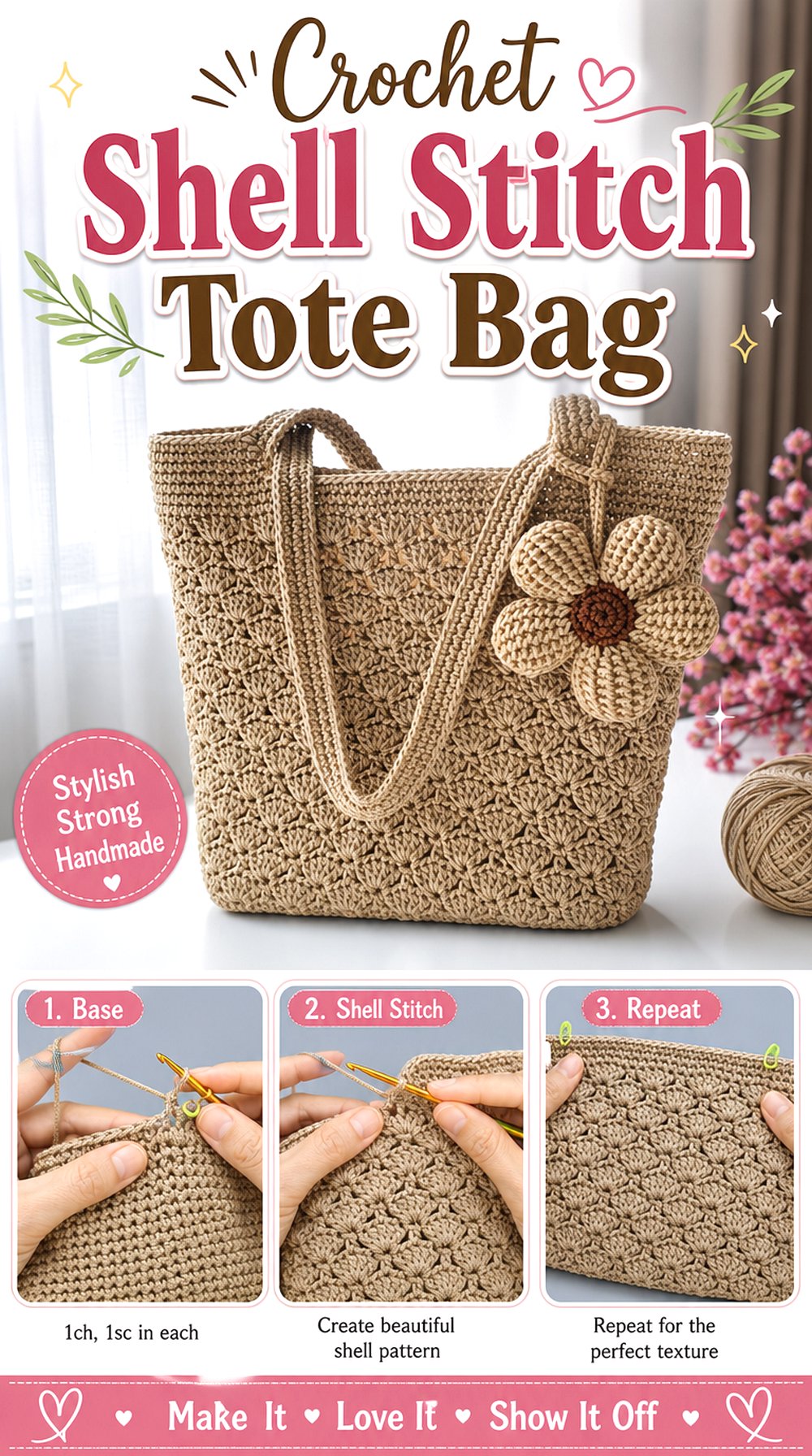
A shell stitch tote bag uses the texture in a practical carrying shape. The finished item is different from the wearables because the key questions are opening, handles, structure, and what the bag can reasonably hold. The shell stitch gives the surface a decorative rhythm without turning the project into a purely display piece.
This idea may suit readers who want a handmade bag with a textured front and everyday styling potential. Still, bag use should be matched with the creator’s details, especially if the tote will carry more than light items.
Open Top Access Changes Daily Use
A tote-style bag is easy to reach into, but readers should check how the top opening is handled. An open top may be convenient for casual use, while a closure may be preferred for small items. The original tutorial should be reviewed for any finishing or security details before deciding how the bag will be used.
Handle Shape Should Match What You Carry
The handles are a practical part of the finished piece, not just decoration. Readers should look at their placement, width, and attachment style in the tutorial. A bag intended for light daily items has different needs from a market-style carryall, so the handle area deserves attention before supplies are chosen.
Texture Needs Enough Room to Read
The shell stitch pattern works best when the surface has enough space for the texture to show. On a tote, that means the body of the bag becomes the main display area. Readers who choose strong color changes should consider whether the stitch pattern or the color contrast should be the first thing people notice.
Creator: Chompu Handicrafts
13. Crochet 3D Shell Stitch Coaster
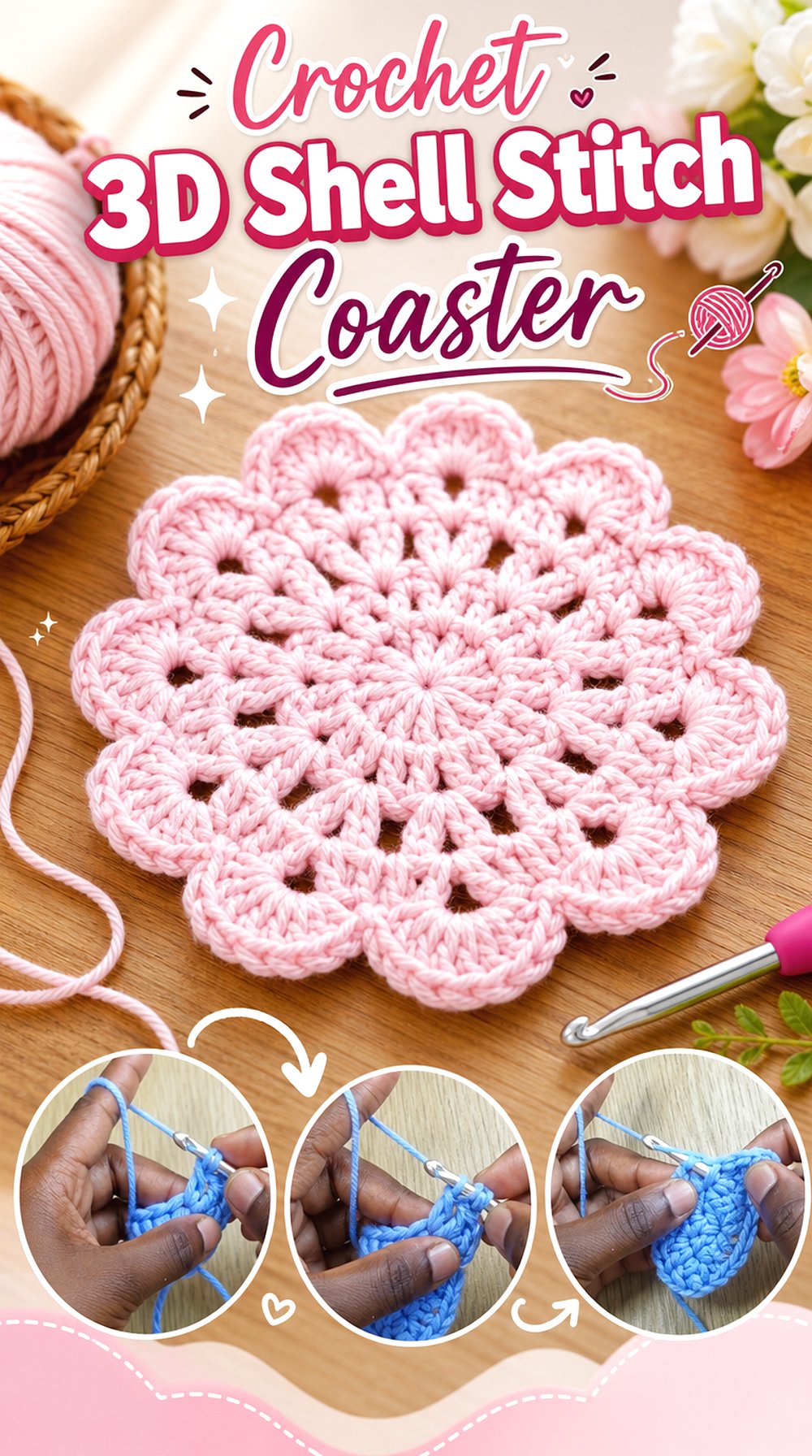
A 3D shell stitch coaster is one of the smallest ideas in this collection, but the texture is easy to notice because the project is compact. The source description identifies it as a 3D wavy shell stitch coaster with a border, giving it a more shaped look than a plain flat circle or square.
This project is useful for readers who want shell stitch detail in a small home item. It also makes flatness and consistency important because a coaster has to sit neatly on a table.
Small Scale Makes the Shell Detail Bold
On a coaster, the shell stitch does not have to cover a large area to stand out. The raised or wavy effect becomes the main feature because the item is viewed up close. Readers who want a small project with visible texture may prefer this over a blanket or garment.
Flatness Matters on a Table
A coaster needs to sit flat enough for regular tabletop use. Since the project has a 3D wavy shell look, readers should watch the finished shape and border carefully. If the item is mainly decorative, a stronger raised texture may be fine; if it will hold cups often, stability matters more.
A Set Needs Consistent Sizing
One coaster can be slightly forgiving, but a full set looks better when the pieces match. Readers planning several coasters should use the same yarn, hook, and tension approach across the set. The original tutorial should be followed for exact details so the finished pieces stay as even as possible.
Creator: Tsungie
14. Crochet Shell Stitch Table Runner

A shell stitch table runner stretches the texture into a long home decor piece. Unlike a coaster, this project is meant to cover more surface area and guide the look of a table setting. The shell stitch creates a repeated pattern that can work as a centerpiece base without needing many extra decorations.
This idea is especially useful for readers who want a practical home project that is still decorative. The main decisions are finished length, table width, color direction, and whether the runner is for everyday use or a seasonal display.
Long Narrow Shape Guides Placement
A table runner needs to match the table better than a blanket or scarf does. Readers should decide whether it will sit centered, hang over the ends, or stay fully on the tabletop. The shell pattern may draw the eye along the length, so placement should be planned before starting.
Table Width Should Lead the Size Choice
The source description includes size information and notes that the runner can be customized. Readers should measure their table before choosing the finished dimensions. A runner that is too wide can crowd place settings, while a very narrow one may look more like a strip than a table feature.
Seasonal Color Can Change the Mood
The table runner format is easy to shift through color. Neutral yarn can make it usable across seasons, while deeper or brighter shades can make it feel more festive. Readers should keep the shell texture in mind when choosing color, because strong contrast can either highlight or distract from the repeated stitch pattern.
Creator: Raji’s Craft Hobby
How to Choose Which Shell Stitch Project to Start With
For a home project, choose by placement first. The chunky throw needs the most room, the baby blanket has a softer gift-focused use, and the table runner or coaster works better for smaller surfaces. For accessories, the scarf is the most rectangular option, while the headband, gloves, and beanie need more fit awareness.
Wearables require the most careful checking. The top, cardigan, dress, and skirt all depend on measurements, coverage, and how the shell texture sits on the body. The tote bag sits between categories: it is not fitted, but the opening, handles, and body structure still affect how useful it will be.
Conclusion
These crochet shell stitch ideas show how one stitch style can create very different finished projects. The throw and baby blanket focus on broad texture, while the scarf and shawl use the stitch for wearable drape. Smaller accessories like the headband, gloves, and beanie need fit checks, and the garment projects require the most measurement planning. For home decor, the coaster and table runner make the shell pattern useful at a smaller scale.
Choose the project by purpose first, then use the original YouTube tutorials for exact construction details, sizing, and finishing guidance.
FAQs
What can I make with crochet shell stitch besides blankets?
Shell stitch can work in many project types, including scarves, shawls, headbands, gloves, beanies, bags, skirts, dresses, cardigans, coasters, and table runners. The best choice depends on how much shaping you want. Flat projects are more about texture and edges, while wearables need closer attention to fit, coverage, and measurements.
Is shell stitch better for flat projects or wearables?
Shell stitch can work for both, but the planning is different. Flat projects such as blankets, scarves, coasters, and runners mainly need size and edge control. Wearables such as tops, skirts, dresses, and cardigans also need body measurements, coverage checks, and careful review of the creator’s sizing notes.
How should I choose yarn for a shell stitch project?
Start by checking the creator’s material list and the yarn label. A smoother yarn can make the shell texture easier to see, while variegated yarn may add more color movement. For baby items, wearables, and home pieces that may need cleaning, care information matters as much as appearance.
What should I verify before following a shell stitch wearable tutorial?
Check the size range, finished measurements, garment length, coverage, and whether adjustments are explained. For tops and cardigans, pay attention to bust, armholes, sleeves, and body length. For skirts and dresses, waist, hip, and length information are especially important. Do not assume one demonstrated size will fit everyone.
Can I sell finished items made from YouTube shell stitch tutorials?
Do not assume selling is allowed just because a tutorial is public. Check the creator’s description, linked written pattern, website terms, or licensing notes. Some creators allow finished-item sales, some place limits, and some do not clearly state terms. Local labeling, safety, and business rules may also apply.