

A crochet neck warmer can be much more than a short tube of yarn. The shape of the opening, amount of neck coverage, closure method, fabric density, and overall length all change how a finished piece feels with coats, sweaters, and everyday winter layers.
These 11 crochet neck warmer ideas include close ribbed cowls, adjustable button wraps, a twisted Möbius design, a pointed bandana cowl, a Tunisian keyhole scarf, a hooded version, lightweight lace, a compact shawl collar, a longer infinity loop, and a braided statement cowl. Instead of choosing only by stitch appearance, use the comparisons below to think about head opening, bulk, drape, warmth, hardware, and how securely you want the neck warmer to stay in place.
Quick List
- Crochet Ribbed Pull-On Neck Warmer
- Crochet Shell-Texture Button Neck Wrap
- Crochet Möbius Twist Neck Cowl
- Crochet Folded V-Stitch Chunky Cowl
- Crochet Pointed Bandana Neck Warmer
- Crochet Tunisian Keyhole Neck Warmer
- Crochet Ribbed-Cuff Hooded Neck Warmer
- Crochet Lightweight Lace Neck Cowl
- Crochet Close-Fit Shawl Collar Cowl
- Crochet Chunky Infinity Neck Warmer
- Crochet Braided Button Neck Cowl
Choose the Opening Before You Choose the Stitch Pattern
The first useful comparison is how the neck warmer gets on and off. A fixed cowl has to pass over the head, so a snug finished neck circumference is not helpful if the opening does not stretch enough to wear comfortably. Buttoned and keyhole styles solve that problem differently: one opens or overlaps, while the other locks a narrow scarf end into position without separate hardware.
Longer infinity designs offer more drape but create extra bulk once wrapped. Hooded versions need enough room for both the neck and head sections to sit comfortably. Before changing yarn, hook size, or width, check what part of the original construction controls the opening. A small change there can affect wearability more than a decorative stitch change.
Yarn Density Changes Both Warmth and Bulk
A dense ribbed, Tunisian, or chunky fabric can block more moving air around the neck, but that same thickness may feel crowded beneath a high coat collar. Open lace does the opposite: it gives lighter visual weight and more airflow, making it better suited to mild weather or decorative layering than to maximum wind protection.
Yarn texture matters as much as weight. Highly fuzzy yarn can soften stitch definition in cables, ribs, braids, or lace, while a clearer yarn surface lets structural details remain visible. For anything worn directly against the neck and jaw, also consider how the yarn feels against skin. Check the yarn label for fiber content and care instructions rather than assuming two yarns of the same weight will behave identically.
Plan the Height Around the Clothes You Actually Wear
A tall cowl can be folded, scrunched, or pulled higher, but extra height is not automatically warmer if the fabric bunches uncomfortably under the chin. Short neck warmers are easier to fit beneath jackets, while pointed bandana designs shift some of their coverage downward across the upper chest instead of adding more fabric around the entire neck.
Try to picture the project with the outerwear you intend to use. A large hood and a high jacket collar may compete for the same space. A thick double-wrapped infinity loop can overwhelm a fitted coat, while an open lace cowl may disappear beneath a wide neckline. When adapting a tutorial, compare the intended height and opening to your favorite coat before committing to the final proportions.
1. Crochet Ribbed Pull On Neck Warmer
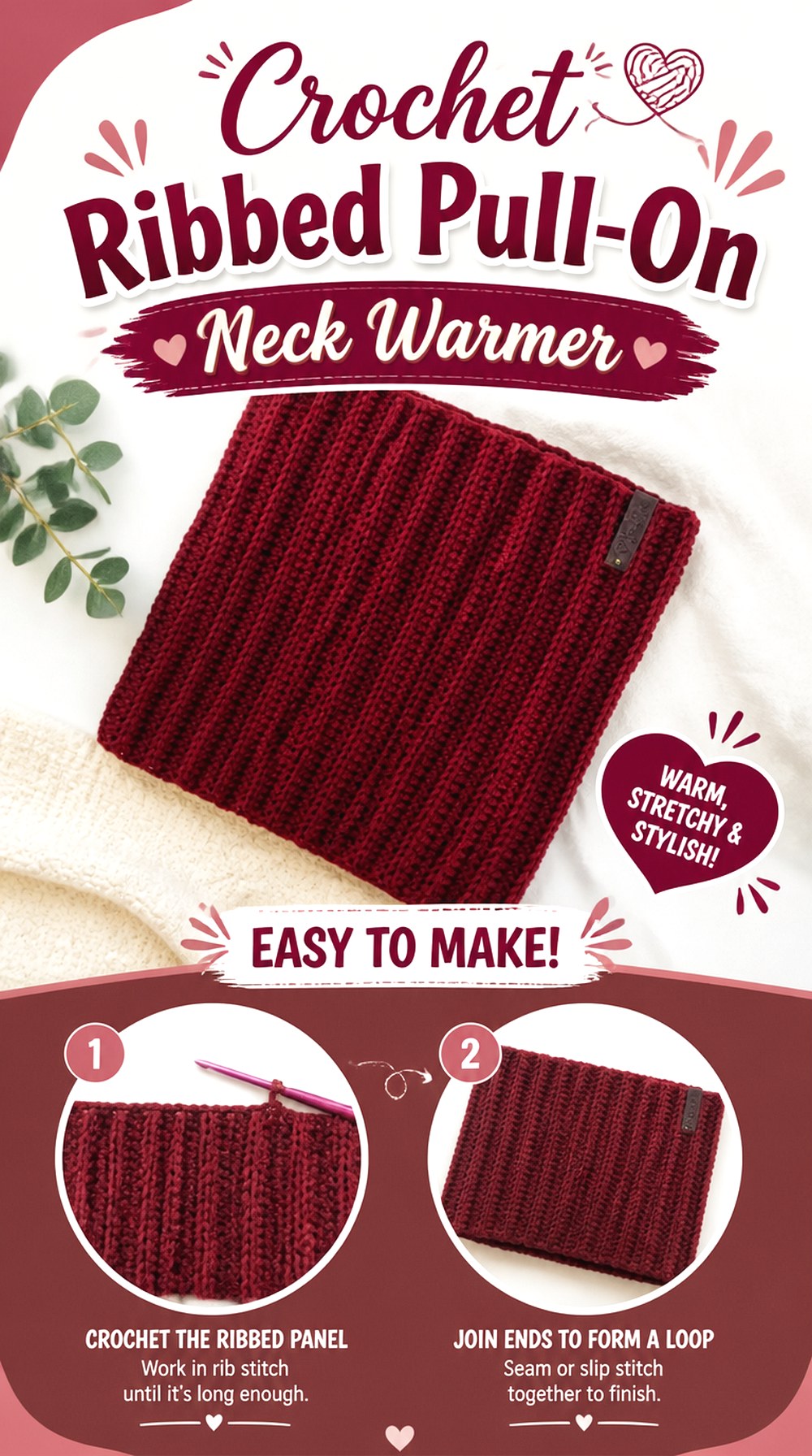
A close ribbed cowl is one of the most streamlined ways to add warmth without loose scarf ends. This version is based on a tutorial specifically presented as a ribbed crochet neck warmer, giving the finished piece a vertical, knit-like surface and a compact silhouette.
This shape makes sense when you want a neck warmer that can stay under a jacket rather than becoming the main accessory. The trade-off is that a closed cowl needs enough opening and stretch to pass over the head comfortably, even if you ultimately want it to sit closer around the neck.
Ribbing Needs Recovery as Well as Stretch
A ribbed fabric may expand when pulled over the head, but pay attention to how well it returns afterward. If a yarn substitution stretches significantly and does not recover, a cowl that begins close-fitting can gradually feel looser. Swatch the ribbed fabric and gently stretch it before committing to the full circumference.
Fiber, stitch tension, and construction all affect this behavior, so do not choose a substitute solely because the yarn label lists the same weight.
Test the Head Opening Before Final Finishing
For any fixed pull-on neck warmer, the smallest practical circumference is not simply the wearer’s neck measurement. It also has to move over the head without uncomfortable pulling.
Before completing a permanent seam or final edge, test the opening in the same direction it will be worn. If the ribbing only passes over the head when stretched aggressively, adding a little more room may give the finished piece better long-term shape.
A Low-Profile Cowl Layers More Easily
The compact tube format keeps fabric concentrated at the neck instead of spreading across the shoulders or chest. That can make it a useful choice with structured jackets, zip-up coats, or other outerwear where a bulky scarf would compete with the collar.
When adapting the height, consider whether you want the fabric to stand upright, fold once, or scrunch naturally. Those three looks require different amounts of vertical fabric.
2. Crochet Shell Texture Button Neck Wrap
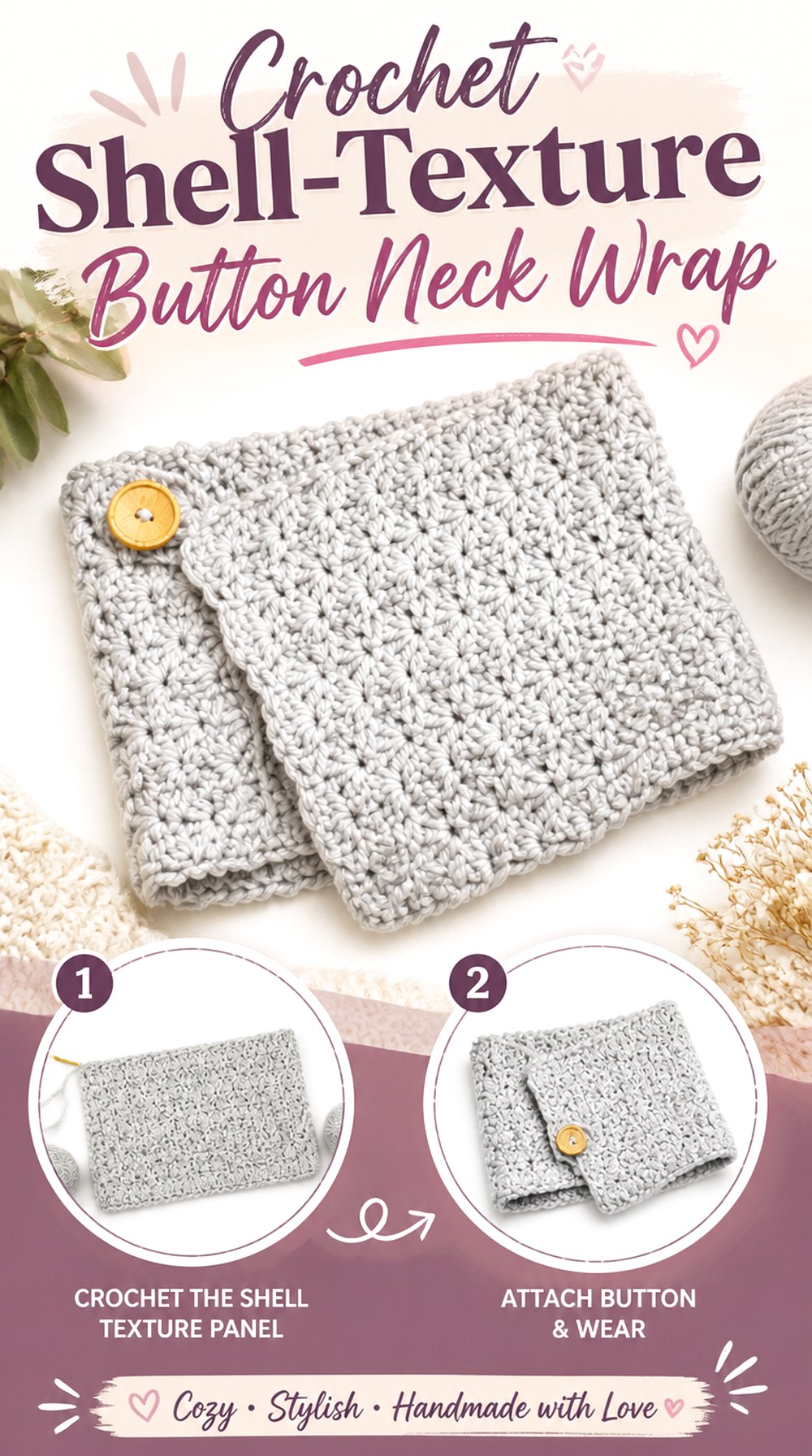
A buttoned neck wrap gives you something a fixed tube cannot: the ability to open the piece completely and control how much the ends overlap. Fiber Flux’s tutorial uses a shell-textured fabric and a button closure, creating a neck warmer that reads more like a short wrap or collar than a conventional circular cowl.
That makes it particularly useful for readers who dislike pulling a finished accessory over their hair. The decorative closure also becomes part of the front design, so button choice, overlap, and the way the fabric sits against the upper chest matter more than they would on a seamless tube.
Button Position Controls More Than Decoration
Moving a button changes the amount of overlap and therefore the finished neck opening. Before attaching it permanently, pin or temporarily secure the closure and try the wrap with the clothing you expect to wear underneath.
A position that looks neat over a thin shirt may feel restrictive over a thick sweater. Conversely, too little overlap can leave the front neckline more exposed than you intended.
Match the Hardware to the Crochet Fabric
A button needs to work with the actual opening or loop provided by the design rather than simply looking attractive on top of the yarn. Compare the button diameter with the closure area before sewing it on.
If you substitute significantly thinner or thicker yarn, check the relationship again. A button that works perfectly with the original fabric may slip through a larger opening or strain a smaller one after the yarn change.
Flat Construction Makes Fit Easier to Preview
One advantage of a wrap-style neck warmer is that you can drape the unfinished fabric around the neck before completing the closure. Use that opportunity to decide how much overlap you want and where the upper edge should sit relative to the jaw.
This is particularly helpful when making a gift because a slightly more forgiving overlap can be easier to wear than a precisely fitted closed tube.
Original Tutorial and Creator Credit
Creator: Fiber Flux
3. Crochet Möbius Twist Neck Cowl

The Möbius cowl creates its shape with a deliberate half twist rather than a standard untwisted ring. The Crochet Crowd’s tutorial demonstrates that twist directly and also notes that the project can be worked without it if you prefer a conventional round cowl.
Visually, the twist encourages the fabric to turn and overlap instead of falling as a perfectly even tube. That makes this option interesting when you want sculptural drape without a separate button, tie, or keyhole. It is still a fixed opening, however, so the starting size must balance easy pull-on access with the amount of neck coverage you want.
The Twist Changes Where the Fabric Naturally Folds
A Möbius construction distributes one intentional turn throughout the loop. Once worn, that affects how the upper and lower edges cross and where extra fabric tends to gather.
If you like symmetrical, straight horizontal edges, a standard cowl may suit you better. Choose the Möbius version when the slightly irregular overlap is part of the look you want rather than something you plan to flatten out.
More Drape Can Mean Less Precise Neck Contact
Because the twisted loop creates movement and overlapping sections, it may not sit against the neck in exactly the same way as a close ribbed tube. That is useful when you prefer visual volume and room to arrange the fabric.
For stronger wind protection, pay attention to the finished opening and how the folds settle. Decorative volume and close coverage are related, but they are not always the same thing.
Get the Initial Join Right Before Building Height
A deliberate half twist is very different from accidentally twisting a normal foundation chain. Check the orientation carefully at the stage shown in the tutorial before continuing.
Once substantial height has been added, correcting the wrong join means undoing far more work. Treat the first completed section as a construction checkpoint and confirm that the fabric is turning exactly as intended.
Original Tutorial and Creator Credit
Creator: The Crochet Crowd
4. Crochet Folded V- Stitch Chunky Cowl

This chunky neck warmer starts from a textured V-stitch fabric and uses folding and seaming to give the finished cowl a more shaped front than a plain circular tube. ChristaCoDesign’s tutorial also presents two finishing options, with a button available as one choice.
The combination of thick yarn, open V-shaped texture, and directional folding makes this project feel substantial without relying on a long scarf loop. It works well when you want the neck warmer itself to be visible over a sweater or coat. Because the yarn is bulky, the finishing method deserves as much attention as the stitch pattern.
Folding Creates Front Volume Without Extra Length
Instead of wrapping a long piece around the neck repeatedly, the folded construction concentrates volume in a shorter accessory. That can create a fuller front while keeping the back comparatively compact.
Before seaming, arrange the fold around the neck and look at where the thickest section lands. If you change the dimensions, remember that extra width can become extra folded bulk rather than simply giving you more circumference.
Thick Yarn Makes Every Seam More Noticeable
A seam that feels insignificant in fine yarn can become a firm ridge in super-bulky fabric. Keep that in mind when changing yarn or making the cowl tighter.
The seam should support the shape without creating a hard lump against the neck. Before securing the finishing permanently, feel both sides of the joined area and decide which orientation is more comfortable and visually tidy.
Choose the Finish by How You Want to Put It On
A permanently joined finish gives a simple pull-on accessory, while a button detail changes both the appearance and potentially how the front can be arranged. ChristaCoDesign’s video specifically includes two finishing options.
If easy removal matters, compare those options before finishing rather than adding hardware afterward. The closure should be part of the construction decision, not an afterthought.
Original Tutorial and Creator Credit
Creator: ChristaCoDesign
5. Crochet Pointed Bandana Neck Warmer
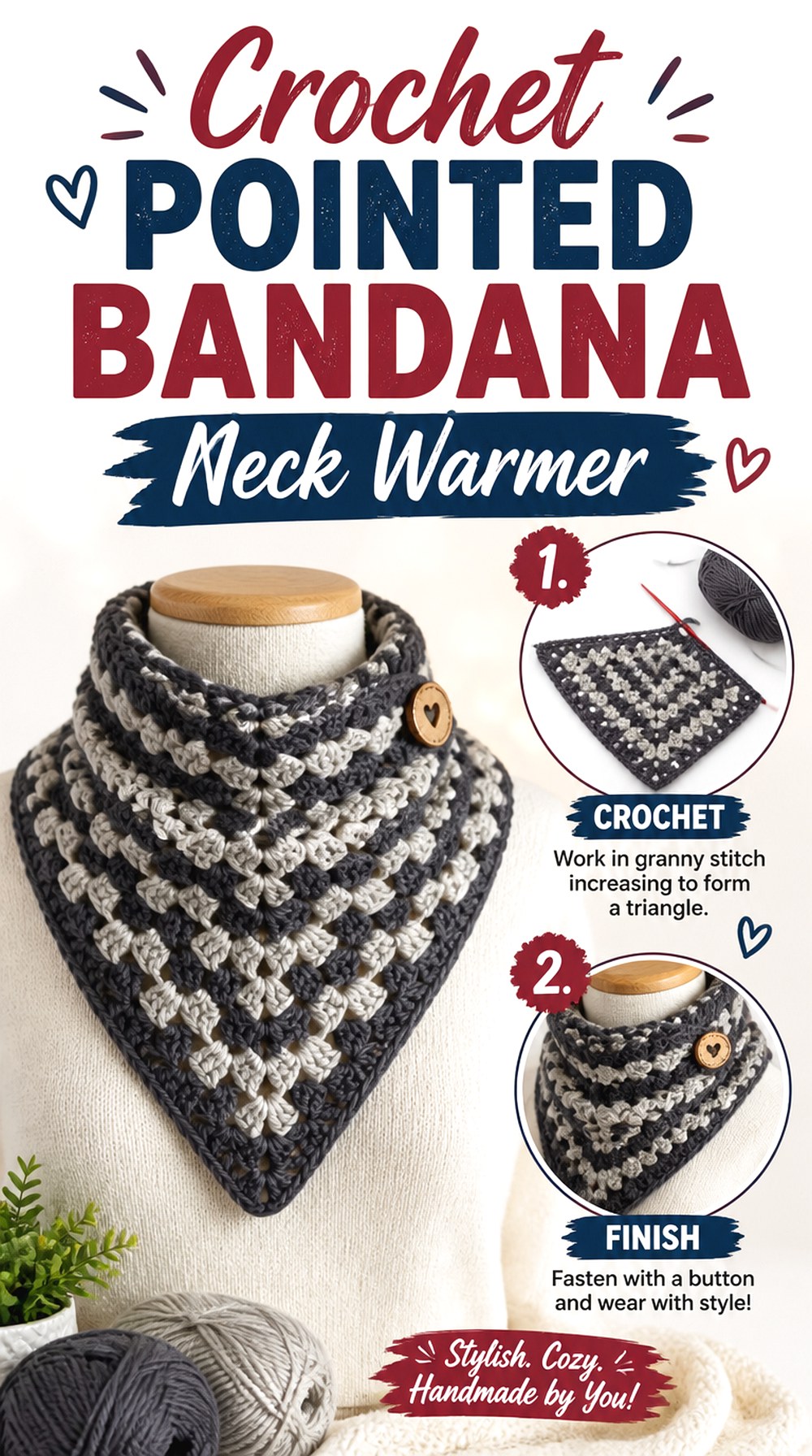
A bandana cowl shifts the visual weight downward with a pointed front rather than building the same height around the entire neck. Tamara Kelly’s City Chic tutorial shows a short cowl with a distinct bandana-style point, giving this project a noticeably different silhouette from the round and folded designs above.
The pointed section can fill the gap at an open coat or sweater neckline without requiring a thick stack of fabric beneath the chin. It also gives color placement and stitch patterning more visual space at the front, making the neck warmer read as a styled accessory instead of only a practical tube.
The Point Moves Coverage Toward the Upper Chest
Adding a triangular front does not necessarily mean adding the same amount of warmth everywhere. Compared with a tall cowl, the bandana shape concentrates extra coverage below the throat.
That can be useful with V-neck coats, open jackets, or sweaters where a conventional short cowl leaves a visible gap. If your priority is coverage up to the jaw or lower face, however, compare the back and side height rather than judging by the long front point.
Treat the Back Opening as a Separate Fit Question
The dramatic front can make it easy to focus only on the triangle, but the upper cowl still has to sit comfortably around the neck and pass over the head if there is no opening.
When resizing or changing yarn, check the back neck area before evaluating the point. A beautifully shaped front will not compensate for an opening that is too restrictive or one that sits too loosely to stay positioned.
Color Changes Become Part of the Silhouette
On a pointed cowl, horizontal or directional color sections can emphasize the widening and narrowing of the front. If you use contrasting yarns, lay the work out periodically and look at the whole triangle rather than evaluating each stripe on its own.
A highly variegated yarn can compete with the shape, while clearer color blocks can make the point more obvious. Neither is wrong; they simply create different visual priorities.
Original Tutorial and Creator Credit
Creator: Tamara Kelly – Moogly
6. Crochet Tunisian Keyhole Neck Warmer

A keyhole scarf solves the “loose ends” problem without converting the entire accessory into a closed tube. The Mosty Toasty tutorial from justtheworsted uses Tunisian crochet and creates a keyhole that lets one section pass through the other, helping the neck warmer stay positioned without buttons.
The Tunisian ribbed surface also gives this project a distinctly different fabric from traditional crochet cowls. Because the piece remains scarf-like, you gain more control over how tightly it crosses the front of the neck. The keyhole itself, however, becomes an important fit and finishing feature rather than merely a decorative opening.
The Keyhole Acts as the Closure
Unlike a decorative eyelet, this opening has to accommodate the portion of scarf that passes through it. That means its practical relationship to the scarf thickness matters.
If you substitute a significantly bulkier yarn or create a much thicker fabric, verify the keyhole before finishing the entire length. It should hold the end securely without requiring excessive pulling that distorts either the opening or the surrounding stitches.
Tunisian Fabric Has Its Own Weight and Hand
The tutorial uses Tunisian crochet to create a ribbed, knit-like appearance. That technique can produce fabric that feels different from an open shell or loose conventional crochet cowl.
When substituting yarn, make a useful-size swatch rather than judging by the skein. Look at thickness, flexibility, and how easily the fabric bends around the neck. A neck warmer that looks soft while flat may still feel too firm once doubled at the front.
Position the Slot Before Judging the Final Length
The keyhole controls where the two sections cross, so its position influences the amount of fabric remaining beyond the closure. Follow the tutorial’s construction first before deciding how you would adapt overall length.
If making a personal version, hold a similarly sized strip of fabric around your neck and note where you prefer the crossing point. That gives you a practical comparison without reconstructing or changing the creator’s stitch sequence.
Original Tutorial and Creator Credit
Creator: justtheworsted
7. Crochet Ribbed Cuff Hooded Neck Warmer

A hooded cowl combines neck coverage with an attached hood, eliminating the need to coordinate a separate scarf and hood when temperatures drop. A Crocheted Simplicity’s full tutorial uses bulky yarn and shows the cowl body, ribbed cuff, seaming, and finishing as one complete project.
This option has the greatest upper-body coverage in the collection, but it also occupies more space around a jacket collar. The hood should have enough room to move naturally when raised while the lower section remains comfortable around the neck. Think of it as a combined accessory rather than simply a taller version of a normal cowl.
Hood Volume Must Work With the Neck Section
The hood needs enough depth and flexibility to come over the head without pulling the cowl upward. If the neck portion is very tight, raising the hood can make the entire accessory feel restrictive.
When considering yarn substitutions, look at drape as well as thickness. A fabric that is too stiff may hold a strong hood shape but feel bulky when the hood is worn down around the shoulders.
A Ribbed Edge Can Help Define the Face Opening
The ribbed cuff creates a different visual and structural edge from the main cowl fabric. A clearly defined edge can help the hood sit intentionally around the face instead of looking like an oversized tube pulled upward.
If you change yarn, compare how sharply the ribbing shows. Very fuzzy fibers may blur the transition, while a smoother yarn will make the ribbed section more visible.
Check It With Your Winter Coat Before Finalizing
Hoods, scarves, and tall coat collars all compete for space at the back of the neck. Try the unfinished hooded cowl with your coat before deciding whether the lower portion needs extra height or volume.
If it already fills the collar area comfortably, adding more fabric may cause bunching rather than improving warmth. This is one project where the intended outerwear should influence proportion choices early.
Original Tutorial and Creator Credit
Creator: A Crocheted Simplicity – Jennifer Renaud
8. Crochet Lightweight Lace Neck Cowl
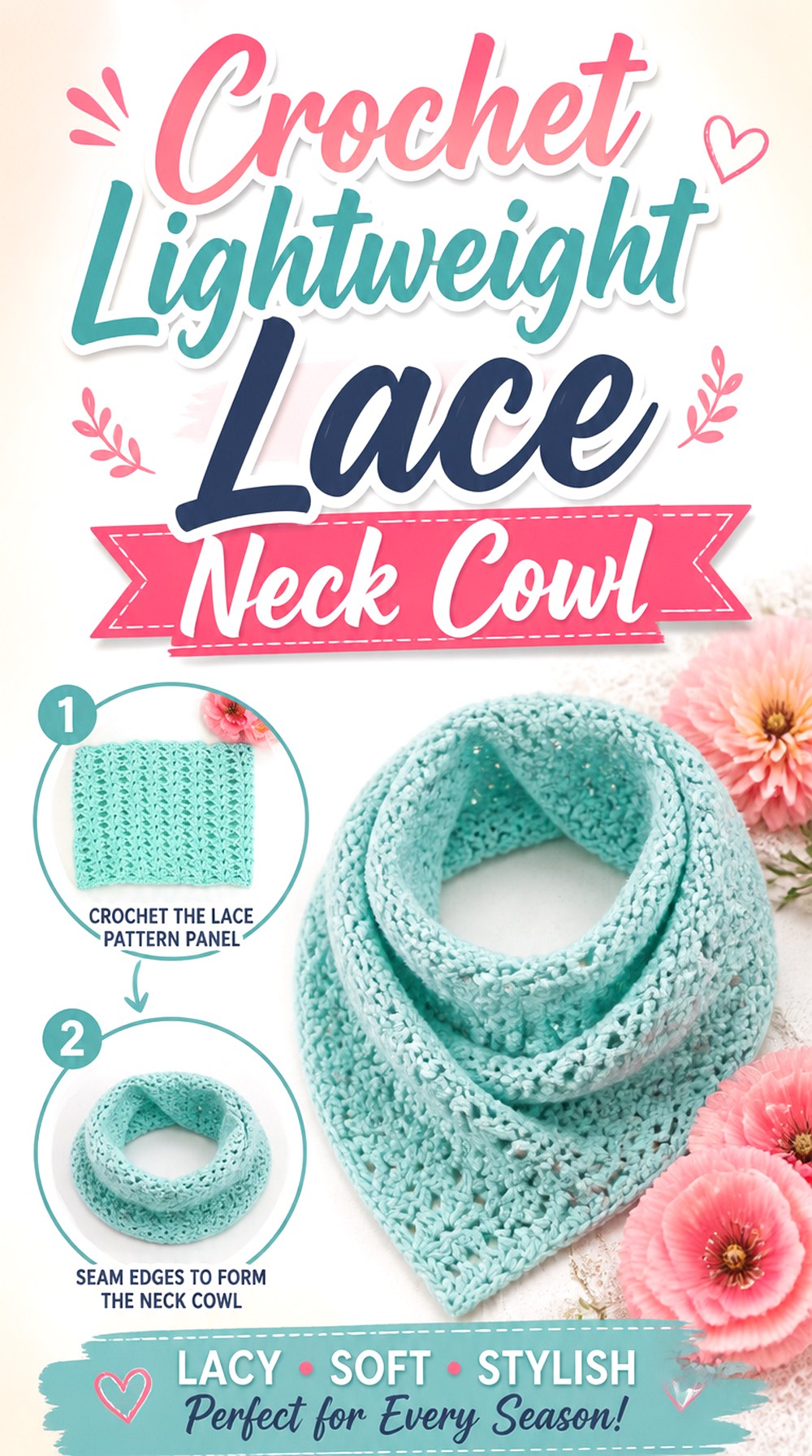
Not every crochet neck warmer needs dense winter fabric. Treasurie’s lace cowl uses an openwork stitch pattern with worsted-weight yarn, creating a lighter tube with visible spaces between stitch groups.
This is a useful alternative for transitional weather, indoor layering, or outfits where a chunky cowl would add too much bulk. The open pattern also makes stitch definition more important because the spaces are part of the design. In exchange for that lighter appearance, you get less solid fabric between your neck and moving cold air, so compare it with denser options according to the conditions in which you plan to wear it.
Openwork Changes the Warmth Equation
A lacy cowl can cover the neck while still allowing more airflow than ribbing, Tunisian fabric, or chunky double crochet. That makes it a different type of neck warmer rather than simply a decorative version of the same thing.
Choose it when you want lighter coverage and visible texture. For harsh wind or prolonged outdoor exposure, a denser cowl may provide a more appropriate fabric structure.
Keep the Lace Repeat Clear After Substitution
The negative space is part of the finished design. If you change yarn, make sure the new fiber allows the open sections and clusters to remain visible rather than collapsing into one dense surface.
A very fuzzy yarn can obscure the edges of lace openings. A much stiffer yarn may preserve every hole but reduce the soft drape that lets the cowl settle comfortably around the neck.
Blocking Can Affect Both Shape and Opening
The accompanying pattern specifically recommends blocking to improve stitch definition. Because blocking can also influence final dimensions, evaluate the neck opening after the fabric is treated in the way recommended for the chosen yarn.
Do not rely entirely on the pre-blocked size when deciding whether a fixed cowl will pass comfortably over the head.
Original Tutorial and Creator Credit
Creator: Treasurie
9. Crochet Close Fit Shawl Collar Cowl
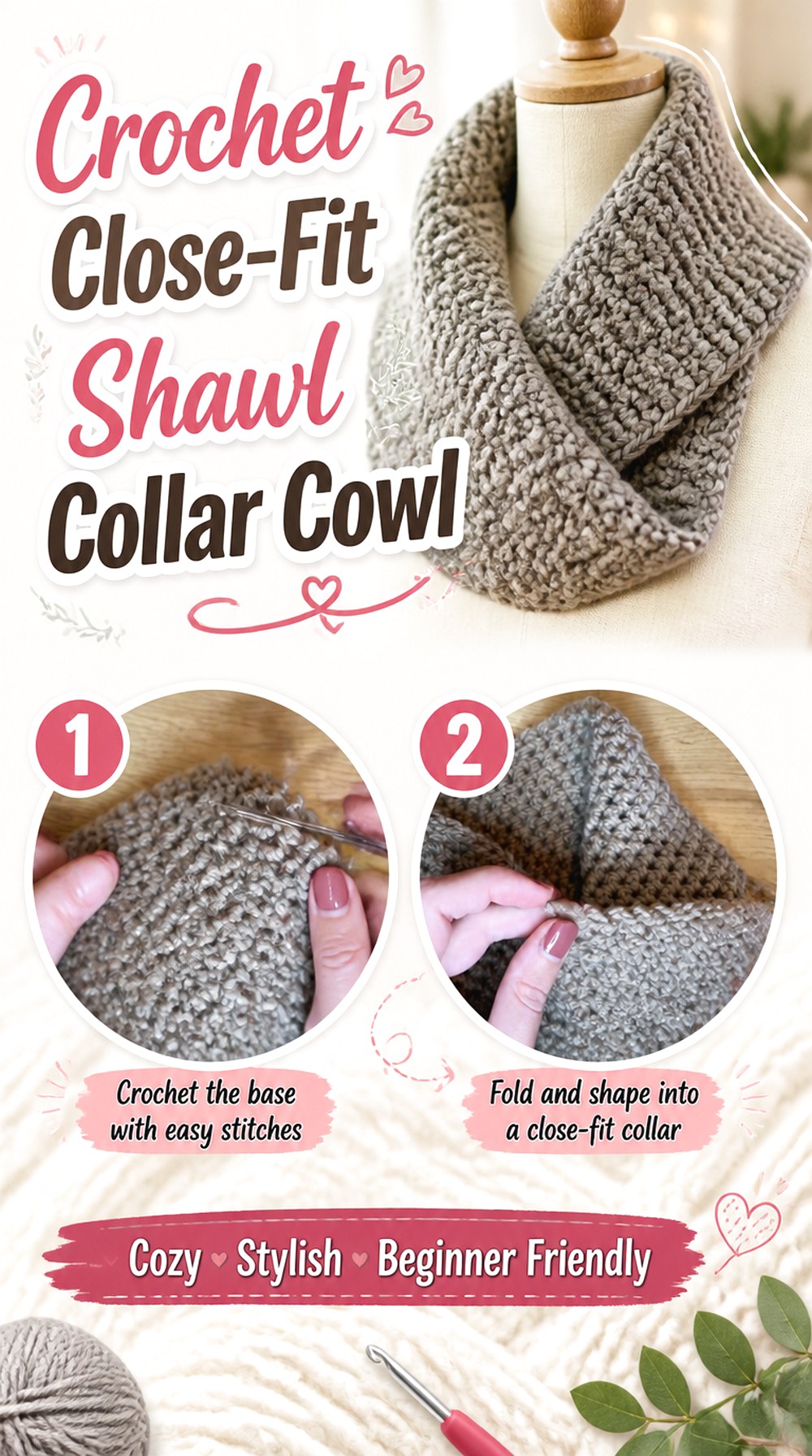
This simple shawl-collar cowl uses a compact loop shape intended to fit fairly close around the neck. Lana Loca’s tutorial presents it as a small loop scarf and demonstrates a straightforward construction using basic crochet techniques.
Its appeal is proportion rather than elaborate surface design. Compared with the pointed bandana, buttoned wrap, or hooded options, this shape keeps attention around the neckline and creates a clean collar effect. It is a practical direction when you want a quick-looking accessory that can sit neatly with a coat, but the simplicity means circumference and height become especially noticeable.
The Collar Effect Depends on Proportion
A shawl-collar style can sit upright, curve outward, or fold depending on the amount of fabric and how firm the yarn feels. Before adding extra height, consider where the top edge will land.
If it reaches too high for the wearer’s neck length, the cowl may press against the jaw. A slightly shorter collar can look more intentional than a taller version that constantly needs adjusting.
Simple Stitches Put More Attention on Tension
Highly textured projects can visually disguise minor variations. A clean, minimal cowl shows the overall stitch consistency and edge line more clearly.
Check your work periodically by laying it flat rather than waiting until the last round. If the opening begins to flare or tighten noticeably, correcting the tension earlier will preserve a more balanced collar shape.
Keep the Circumference Compatible With Outerwear
A close cowl works especially well when it can sit inside or just above a coat neckline. Too much circumference may collapse into extra folds, while too little can make a non-opening loop difficult to pull on.
Use your own head-opening requirement and the tutorial’s intended construction as the main references instead of trying to match a generic “neck warmer” measurement.
Original Tutorial and Creator Credit
Creator: Lana Loca – moderne Handarbeiten
10. Crochet Chunky Infinity Neck Warmer

An infinity scarf gives you more length than a conventional cowl, allowing the same continuous loop to be arranged in multiple layers. Designs by Phanessa’s tutorial specifically demonstrates both a chunky cowl and a longer infinity-scarf option, so this idea uses the extended version as a true double-layer neck warmer.
The extra length creates adjustable volume: wear the loop more openly or wrap it closer when you want more fabric around the neck. That versatility comes with a trade-off. Chunky yarn doubled around the neck can create considerably more bulk than a short fixed cowl.
Length Determines Whether It Functions as an Infinity Scarf
A loop that works well as a close cowl may not have enough circumference for a comfortable second wrap. The tutorial distinguishes between the shorter cowl and longer infinity versions.
Decide which finished function you want before starting rather than assuming you can add a small amount of length at the end. The ability to wrap depends on the completed circumference and fabric flexibility.
Double Layers Amplify Chunky-Yarn Bulk
Thick yarn can feel soft and substantial in a single layer, but wrapping the same fabric twice changes how much volume sits around the neck and upper chest.
Consider the coats you normally wear. A generous infinity loop can look balanced over a simple sweater or open coat while feeling crowded beneath a closely fitted zip collar.
Protect the Starting Loop From an Accidental Twist
Unlike the intentional Möbius project, an infinity scarf normally needs a correctly aligned starting loop. Before beginning the main body, spread the foundation out and make sure the edge is oriented consistently before joining.
That small check prevents an unintended twist from becoming permanent and keeps the final loop behaving the way the tutorial demonstrates.
Original Tutorial and Creator Credit
Creator: Designs by Phanessa
11. Crochet Braided Button Neck Cowl

For the most dimensional option in this collection, Karen Valladares’s cowl uses crocheted sections arranged into a pronounced braided effect and finishes with multiple buttons. The tutorial is specifically for a braided scarf-cowl and lists four large buttons among the materials.
This design has a stronger statement shape than the smooth shawl collar or ribbed tube because the braid itself creates raised structure across the front. It can work especially well when you want the neck warmer to remain visible over outerwear. Because both the braiding and closure affect the final shape, evaluate the project as assembled fabric rather than judging only the individual crochet sections.
The Braid Adds Real Three-Dimensional Thickness
Braiding layers crochet over and around itself, so the final front can be substantially fuller than one flat strip of the same yarn. Keep that in mind when choosing fiber and yarn weight.
A substitution that seems only slightly heavier on the skein can become noticeably bulkier once multiple sections overlap. If you want the braid to remain defined without becoming stiff, compare both stitch clarity and flexibility in a sample.
Multiple Buttons Make Closure Placement Important
The original tutorial uses four large buttons. With several pieces of hardware involved, spacing influences how evenly the cowl closes and how the braid is supported.
Before sewing every button permanently, temporarily position them and check the front from multiple angles. A neat flat arrangement on a table can shift once the curved neckline puts the fabric under tension.
Finish the Structural Parts Before Judging Fit
Loose crochet sections can behave differently once braided, overlapped, and secured. Do not make major fit conclusions from a single unfinished strand.
As the structure comes together, check whether the braid remains flexible enough to follow the neckline and whether the closure sits comfortably. If adapting length, remember that additional braid can change both visual scale and weight at the front.
Which Crochet Neck Warmer Shape Should You Choose?
| Neck Warmer Style | Opening or Closure | Main Coverage | Main Trade-Off |
|---|---|---|---|
| Ribbed pull-on | Fixed | Close neck coverage | Opening must still pass over the head |
| Shell button wrap | Buttoned | Adjustable front overlap | Hardware placement affects fit |
| Möbius cowl | Fixed twisted loop | Layered neck coverage | Less symmetrical drape |
| Folded chunky cowl | Seamed or button finish | Full front volume | Thick folds can add bulk |
| Bandana cowl | Fixed upper opening | Neck plus pointed upper-chest coverage | Less uniform height around the neck |
| Tunisian keyhole | Self-locking keyhole | Adjustable crossed front | Keyhole must suit fabric thickness |
| Hooded cowl | Pull-on hood and cowl | Head and neck | More fabric around coat collars |
| Lace cowl | Fixed | Light neck coverage | More airflow than dense designs |
| Shawl collar | Fixed | Compact neckline | Height needs to suit the wearer |
| Chunky infinity | Long continuous loop | One or multiple layers | Double wrapping increases bulk |
| Braided button cowl | Multiple buttons | Dimensional front coverage | Braiding and hardware add structure |
For the smallest profile, start with the ribbed or shawl-collar styles. Choose the button wrap or keyhole design if you want easier adjustment without depending on a fixed head opening. The bandana shape adds more coverage below the throat, while the hooded option extends protection to the head. Lace is the lightest-looking choice, and the infinity or braided designs make more of a visual statement.
Conclusion
The most useful crochet neck warmer is the one whose construction matches how you actually dress for cool weather. Choose ribbing or a compact shawl collar for a low-profile layer, buttons or a keyhole when adjustability matters, a bandana cowl for extra front coverage, and a hooded design when you want the neck and head handled by one accessory. Lace keeps the look lighter, while Möbius, infinity, folded, and braided styles create progressively more volume.
Once you have chosen the shape, check the original tutorials for the creators’ exact construction details before changing yarn, proportions, joins, or closures. Small fit decisions around the opening and height often matter more than decorative color changes.
Frequently Asked Questions
How snug should a crochet neck warmer be?
It should be close enough to give the level of coverage you want without restricting comfortable head, neck, or jaw movement. For a fixed cowl, the critical checkpoint is whether the finished opening can pass over the wearer’s head without aggressive stretching.
Buttoned and keyhole styles allow more adjustment, so they may be preferable when exact pull-on sizing is difficult or when the neck warmer will be worn over different layers.
Is a cowl or buttoned crochet neck warmer easier to fit?
A buttoned wrap usually gives you more room to adjust the overlap after the main fabric is made. That can make it more forgiving than a closed tube, especially for gifts.
A pull-on cowl has a cleaner uninterrupted shape but requires you to consider both the intended neck fit and the head opening. Neither construction is automatically better; choose according to whether adjustability or a seamless appearance matters more.
Which crochet neck warmer shape gives more chest coverage?
A pointed bandana cowl directs more fabric below the throat and across the upper chest than a simple short tube. A wider button wrap can also create front overlap.
If your main problem is a gap above an open coat or V-neckline, those shapes may be more useful than simply increasing the height of a conventional cowl, which puts additional fabric around the entire neck.
Can I substitute a different yarn weight in a neck-warmer tutorial?
Sometimes, but changing yarn weight can alter circumference, thickness, drape, stitch definition, closure openings, and the amount of bulk around the neck. Do not assume that changing the hook alone will preserve the original fit.
Check what the creator specifies, make a swatch when fit matters, and pay special attention to fixed openings, keyholes, braids, or buttons because those structural features may stop functioning correctly if the fabric changes substantially.
Is lace crochet warm enough for a neck warmer?
Openwork provides neck coverage but allows more airflow than dense ribbing, Tunisian crochet, or chunky fabric. That can make a lace cowl useful for mild weather, indoor layering, or decorative cold-season outfits.
For stronger wind protection, choose a denser construction or layer the lace piece with clothing underneath. The right choice depends on the conditions rather than the word “cowl” alone.
What should I check before making a crochet neck warmer as a gift?
Prioritize the opening and closure method. A fixed tube needs enough room to pass over the recipient’s head, while a buttoned wrap or keyhole design usually allows more fit flexibility.
Also consider whether the person typically wears high coat collars, prefers lightweight accessories, or dislikes bulky fabric near the jaw. When exact sizing information is unavailable, an adjustable construction can reduce the number of assumptions you need to make.


