Crochet moss stitch has a neat woven look, which makes it useful across many kinds of projects. In this collection, the stitch appears in soft blankets, simple accessories, wearable layers, small storage pieces, and everyday bags. The range matters because moss stitch can look calm and flat in a coaster, flexible in a scarf, structured in a basket, and more garment-like when used in cardigans or vests.
These ideas are not all the same rectangle with a new color. Some focus on drape, some on shape, some on carrying style, and others on small practical details like openings, edges, or finished size. Use the list to compare what kind of moss stitch project fits your space, wardrobe, gift plan, or daily use.
Quick List
- Crochet Color-Block Moss Stitch Throw Blanket
- Crochet Linen Stitch Baby Blanket
- Crochet Moss Stitch Scarf With Tassels
- Crochet Moss Stitch Triangle Shawl
- Crochet Moss Stitch Neck Cowl
- Crochet Moss Stitch Beanie
- Crochet Moss Stitch Ear Warmer
- Crochet Moss Stitch Fingerless Gloves
- Crochet Scrap-Yarn Moss Stitch Cardigan
- Crochet Linen Stitch Vest
- Crochet Moss Stitch Market Bag
- Crochet Moss Stitch Japanese Knot Bag
- Crochet Moss Stitch Zipper Pouch
- Crochet Moss Stitch Pencil Case
- Crochet Round Moss Stitch Baskets
- Crochet Moss Stitch Coaster
What to Compare Before Choosing a Moss Stitch Project
The main decision is not only size. Moss stitch changes character depending on the item. In blankets and scarves, the surface looks steady and woven, so color placement and edge finishing become noticeable. In bags and baskets, the same stitch needs more attention to shape, opening, handles, and whether the item is soft or structured. For wearables, fit information matters more than the stitch itself, especially around necklines, armholes, sleeve openings, and garment length.
Small projects such as coasters, pouches, and ear warmers are useful for seeing how the stitch behaves before choosing a larger item. For any tutorial, check the creator’s supply notes, finished measurements, and any extra components before buying materials.
1. Crochet Color Block Moss Stitch Throw Blanket
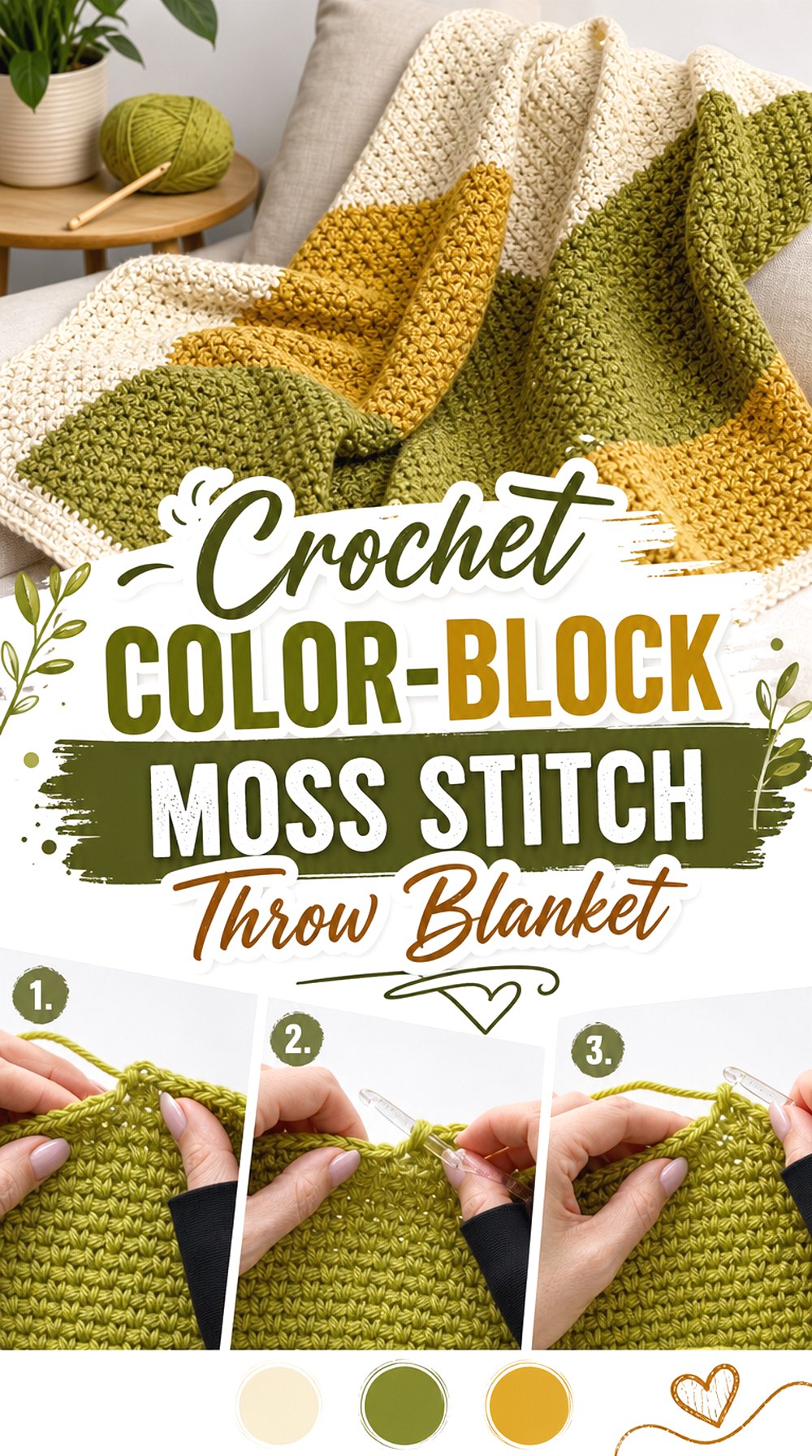
A full blanket is one of the clearest ways to show off the quiet texture of moss stitch. This tutorial focuses on a moss stitch blanket that can work well for using leftover or scrap yarn, so the finished piece has a practical stash-busting angle without needing a complicated surface pattern.
The broad rectangular shape makes this different from the smaller accessories in the list. It is a better match for readers who want a larger project where the stitch texture, color changes, and overall blanket size matter more than shaping details.
Color Changes Carry the Design
With a moss stitch blanket, the stitch pattern stays visually steady, so color becomes one of the main design choices. Readers planning a scrap-style blanket should think about how strongly they want the colors to contrast. Softer changes can make the blanket look blended, while sharper changes will make each section stand out more clearly.
Finished Size Is the Main Planning Detail
A blanket needs more planning than a scarf or coaster because the finished size affects both use and materials. Before committing to a large version, readers should check the creator’s notes and compare the shown blanket size with their own purpose, such as couch use, bed layering, or a smaller lap blanket.
Creator: How To Crochet With TheMailoDesign
2. Crochet Linen Stitch Baby Blanket

This baby blanket uses linen stitch, another common name for moss stitch, in a softer nursery-style format. The finished look is more gentle and compact than a full throw blanket, which makes it a different choice from a large stash blanket or wearable accessory.
The project is useful for readers who want the moss stitch texture in a smaller blanket with a more planned appearance. Since baby items need careful material decisions, readers should rely on the creator’s supply information and yarn-label care details instead of guessing from appearance alone.
A Smaller Blanket Needs Clear Measurements
Baby blankets can vary a lot in finished size, so dimensions are worth checking early. A blanket intended for display, stroller use, or general nursery layering may not need the same measurements. Readers should confirm the size given by the creator and decide whether that size fits their intended use.
Soft Texture Does Not Replace Care Checks
The stitch surface looks neat and even, but care information should still come from the yarn label and any notes provided with the tutorial. This matters more for baby projects than for decorative home pieces because washing, fiber choice, and softness are practical concerns that should be verified before starting.
Border and Edge Finish Affect the Final Look
On a small blanket, the edges are easy to notice. A clean border can make the moss stitch center look more finished, while a simpler edge may keep the project understated. Readers should look at the final blanket view and decide whether the edge treatment matches the style they want.
Creator: Exquisite Crochet UK
3. Crochet Moss Stitch Scarf With Tassels

This scarf uses moss stitch in a long, wearable strip with tassels giving the ends a more finished look. It stands apart from the cowl and shawl because it remains an open-ended accessory that can be wrapped, folded, or worn loose depending on the finished length.
The design is especially useful for readers who like visible color play. The moss stitch keeps the fabric orderly, while the tassel finish adds movement at the ends without turning the scarf into a complicated garment.
Tassels Change the End Finish
The tassels are a visible part of the scarf, not just a small extra. Readers who prefer a cleaner edge may want to look closely at how the ends appear before deciding. The tassels can make the scarf feel more decorative, while a plain finish would create a quieter look.
Length Affects How It Wears
A scarf needs enough length for the wearer’s preferred styling. Before choosing yarn or colors, readers should check the creator’s information and compare the finished look with how they usually wear scarves. A longer scarf gives more wrapping options, while a shorter one keeps the shape simpler.
Color Order Is Worth Planning
Because the scarf is long and narrow, color changes can become a strong visual feature. Readers using several yarn colors should decide whether they want a balanced order, a scrap effect, or repeated sections. Moss stitch can make those transitions look tidy, but the final mood still depends on color placement.
Creator: Hooked by Robin
4. Crochet Moss Stitch Triangle Shawl

A triangle shawl gives moss stitch a different shape from a scarf or cowl. Instead of a straight strip, the finished piece spreads from the center into a wider triangular form, which makes it more useful for shoulder coverage or draped styling.
This project suits readers who want moss stitch to feel light and wearable without making a full garment. The visible triangle shape also makes the finished size important, because a small version may feel more like a scarf while a larger version can behave more like a wrap.
The Triangle Shape Sets It Apart
The main appeal here is the triangular outline. It creates a clear center point and a wide top edge, so the project has a different drape from a rectangle scarf. Readers should look at the finished view and decide whether they want a neck scarf shape or fuller shoulder coverage.
Top Edge Width Matters
The tutorial notes a finished top-edge measurement, which is useful for judging scale. Readers should compare that width with how they plan to wear the shawl. A larger version may offer more coverage, while a smaller one may be easier to style around the neck.
Yarn Choice Will Change the Drape
The same moss stitch can hang differently depending on yarn weight and fiber. Readers should use the creator’s material notes as the starting point and avoid assuming that every yarn will create the same softness or spread. This is especially important for a shawl, where drape affects the whole look.
Creator: Blossom Crochet
5. Crochet Moss Stitch Neck Cowl

A cowl is a compact way to use moss stitch around the neck without the loose ends of a scarf. The finished item reads as a looped accessory, so it has a neater shape than the tassel scarf and takes less styling decision than the triangle shawl.
This is a good option for readers who prefer a contained wearable. Since a cowl sits close to the neck, the most important points to review are finished circumference, height, and how the fabric appears when worn or displayed.
A Closed Shape Needs Size Review
Unlike a scarf, a cowl cannot simply be wrapped another way if the finished size feels off. Readers should check the creator’s sizing notes and compare them with the amount of neck coverage they prefer. The height of the cowl matters as much as the circumference.
Texture Shows in a Small Area
Moss stitch gives the cowl a calm, woven surface without needing large motifs. Since the project is compact, small details like edge neatness and color choice are easy to notice. A simple color can emphasize the texture, while a variegated yarn may make the surface look busier.
Creator: LovinglyNie
6. Crochet Moss Stitch Beanie
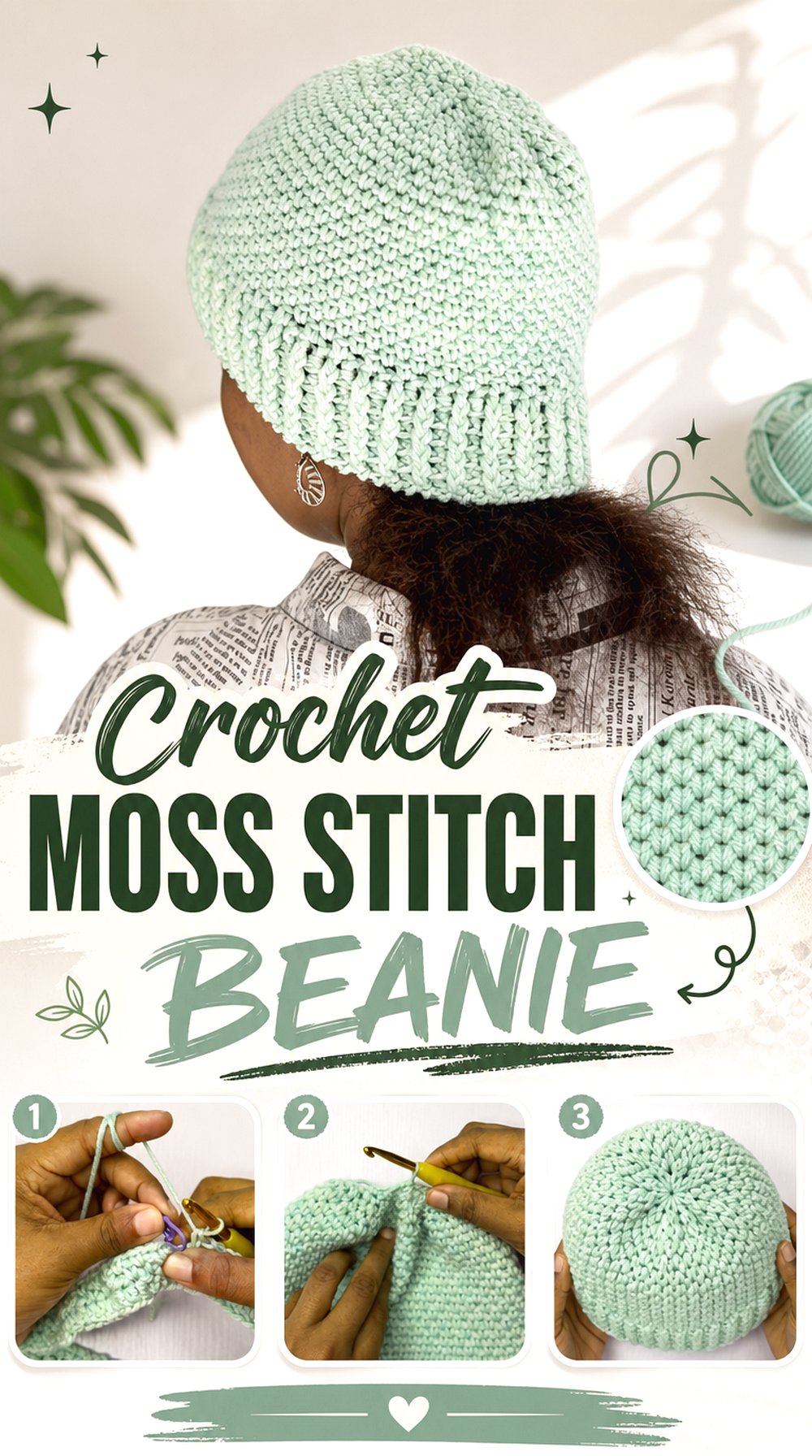
This beanie uses moss stitch in a fitted headwear project. It differs from the ear warmer because it covers the crown, and it differs from the cowl because fit is more precise. The tutorial notes an adult-size sample and advises taking measurements, which is an important point for readers to keep in mind.
A moss stitch beanie is useful for seeing how the stitch behaves in a rounded wearable. The finished shape should be checked from the top, sides, and lower edge before deciding whether it matches the wearer’s preferred hat style.
Measurements Should Lead the Project
A beanie is not as forgiving as a flat scarf. Readers should measure carefully and compare their numbers with the creator’s guidance before choosing a final size. Yarn type, hook size, and tension can all affect the finished fit, so the shown sample should not be treated as a universal size.
The Lower Edge Affects Comfort and Style
The bottom edge is the part that frames the face and controls how the hat sits. Readers should look at whether the finished beanie appears snug, folded, or simple at the edge. That detail can change both the look and how much coverage the hat provides around the ears.
Crown Shape Is Worth Watching
Since moss stitch is being used in a rounded item, the crown shaping is one of the areas to follow carefully in the original tutorial. Readers should compare the shape as it develops and make sure the crown view matches the finished sample before moving too far ahead.
Creator: FTK Crochet
7. Crochet Moss Stitch Ear Warmer

An ear warmer keeps the moss stitch project narrow and wearable. It is more compact than a beanie and can be a better choice for someone who wants ear coverage without a full hat. The band shape also makes the stitch texture easy to see across the front.
This project is useful for readers who want a small accessory with fit as the main concern. Because the piece sits around the head, the finished circumference and seam or join area are more important than decorative extras.
Fit Around the Head Comes First
An ear warmer needs to sit securely without relying on a full crown shape. Readers should check the sizing guidance and compare it with the intended wearer’s head measurement. A band that is too loose may not stay in place, while one that is too tight may be uncomfortable.
The Join Area Should Look Neat
The join or seam area can be visible depending on how the ear warmer is worn. Readers should look at the finished view and decide whether they like the way the band closes. A neat join helps the moss stitch texture remain the focus instead of drawing attention to the back.
Creator: Stitch Stitch Boom
8. Crochet Moss Stitch Fingerless Gloves
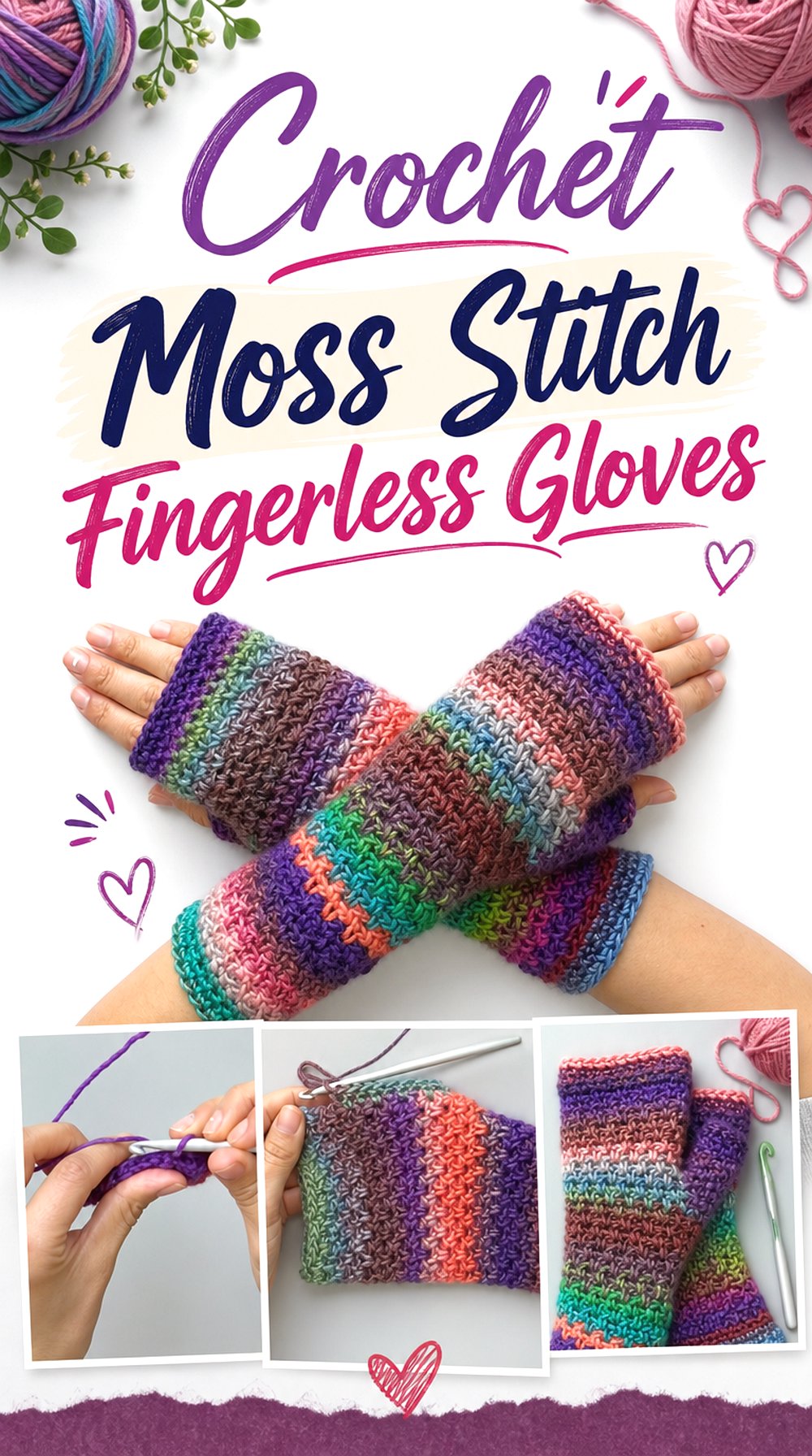
Fingerless gloves bring moss stitch into a smaller fitted accessory where shaping matters. The project is different from the beanie and ear warmer because the hand opening, thumb area, and edges all affect how the finished item functions.
The tutorial describes gloves made with moss stitch and includes work both back and forth and in the round. That makes this a useful pick for readers who want something more shaped than a flat scarf but not as large as a cardigan or vest.
Thumb Placement Needs Attention
The thumb opening is the detail that separates fingerless gloves from a simple tube. Readers should watch that section carefully in the original tutorial and compare the placement with the finished sample. A small change in placement can affect how the glove sits on the hand.
Edges Shape the Finished Fit
Top and bottom edges help the gloves look complete and can influence how they sit around the wrist and fingers. Readers should check whether the edging style matches their preference for a simple or more defined finish. The edge also helps distinguish this project from a plain moss stitch rectangle.
Subtitles May Help With Following Along
The source notes English subtitles, which may be helpful for viewers who want extra support while following the spoken instructions. Readers who rely on captions should turn them on before beginning and review the full guide once so they know where the shaping and edging sections appear.
Creator: Chabepatterns
9. Crochet Scrap Yarn Moss Stitch Cardigan
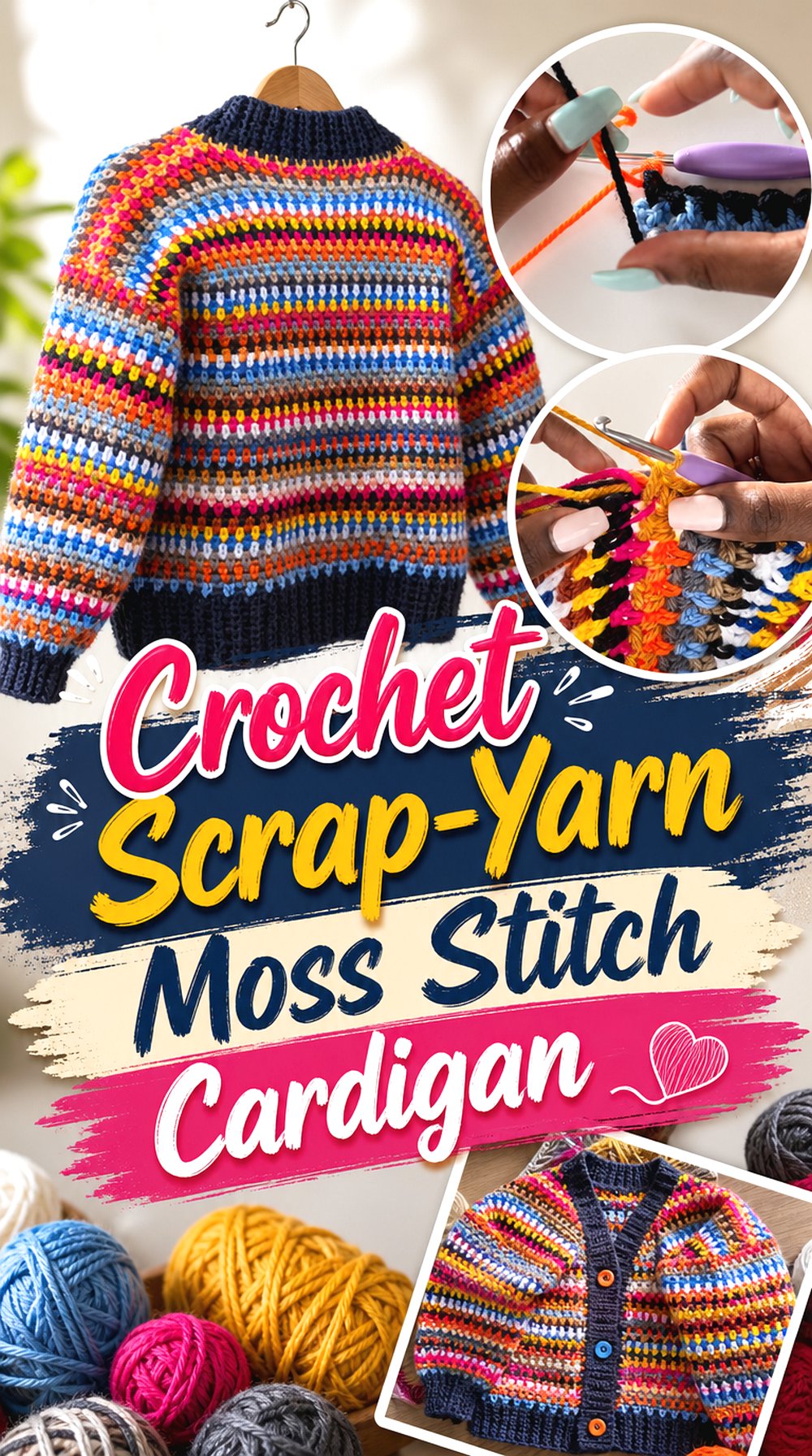
This cardigan uses moss stitch in a larger wearable layer and has a scrap-yarn direction. It is one of the most clothing-focused ideas in the list, so readers should think about fit, length, sleeve shape, and color placement before starting.
Unlike the scarf or shawl, a cardigan needs the finished pieces to work together around the body. The multicolor look makes the project visually different from the calmer home pieces, while the moss stitch helps keep the surface organized even with varied yarn colors.
Color Mixing Is Part of the Look
The cardigan is built around a multicolor scrap-yarn idea, so color variation is expected rather than hidden. Readers should decide whether they want a bold patchwork effect or a more controlled palette. Moss stitch can soften the transitions, but the final cardigan will still be shaped by color choices.
Fit Information Is More Important Than Stitch Choice
For a wearable, the stitch is only one part of the decision. Readers should check the garment size information, compare it with their own measurements, and watch how the cardigan sits on the body. Length, width, and sleeve fit matter more here than they would on a blanket.
Yarn Differences Need Careful Review
The source mentions using scrap yarn, including different sizes and textures. Readers who want a similar approach should review the creator’s notes before combining yarns. Mixed yarn can create a lively look, but it also makes checking gauge, drape, and finished feel more important.
Creator: AC Crochets
10. Crochet Linen Stitch Vest
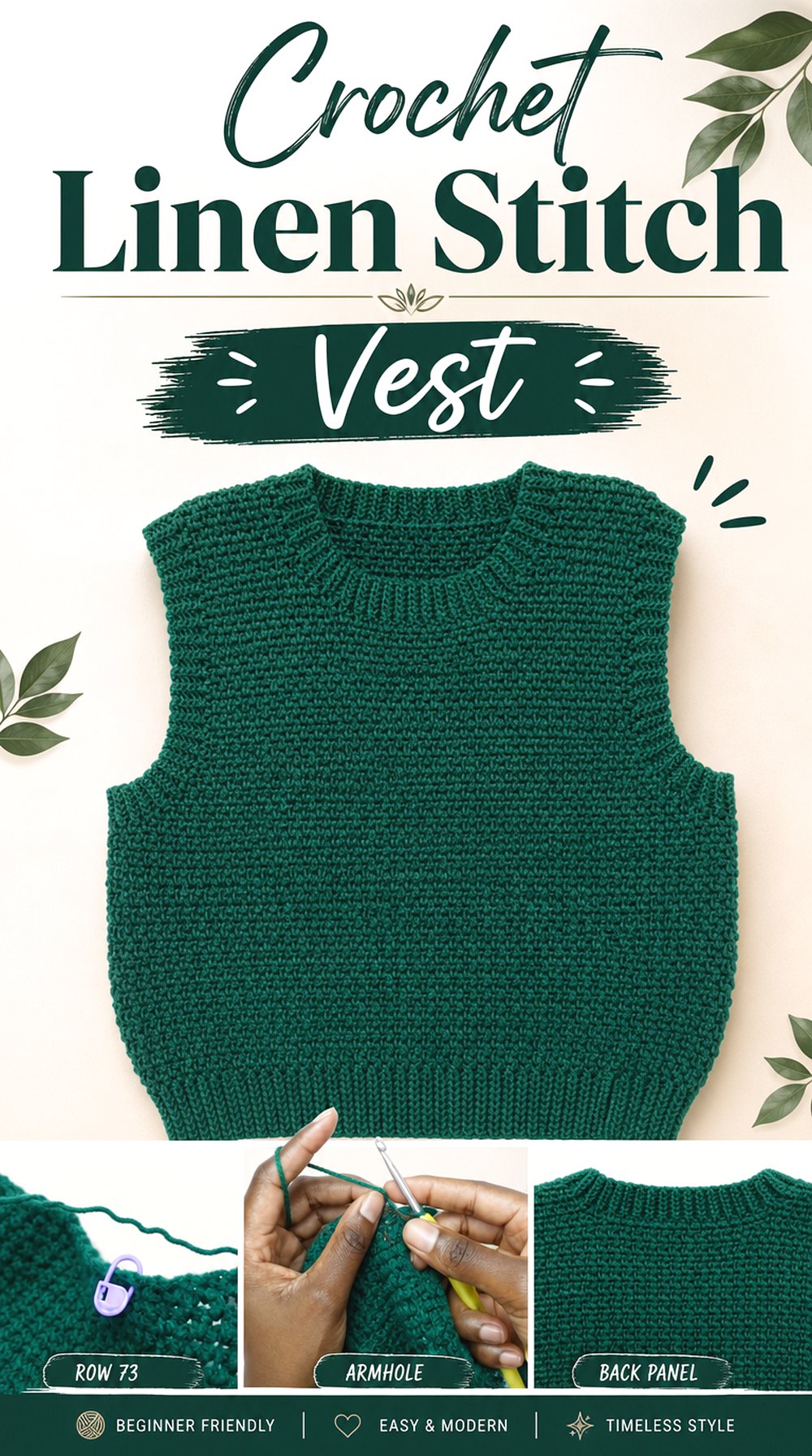
A vest gives moss stitch a wearable shape without full sleeves. This tutorial uses linen stitch, which fits the moss stitch family, and the finished project is more fitted than a scarf but less involved than a cardigan. That makes it a useful middle point for readers comparing wearable options.
The design includes visible edges and arm openings, so the most important decisions are size, coverage, and how the vest will layer over other clothing. Readers should confirm the creator’s measurements and material notes before starting.
Armholes Define the Wearability
The armholes are one of the first features to examine in a vest. Readers should look at how open they appear and how the finished sample sits around the upper body. A vest can look neat in front but still need careful checking around the arm opening.
Layering Changes the Size Decision
A vest is usually worn over something else, so readers should consider the clothing they plan to wear underneath. A close fit may look more streamlined, while a looser fit may allow more layering. The creator’s size information should be compared with both body measurements and preferred ease.
Edge Finishing Gives the Vest Structure
The edges around the neckline, armholes, and hem can make a simple moss stitch vest look more complete. Readers should pay attention to those final views before deciding whether the project matches their style. A clean edge can also help the fabric hold a clearer garment shape.
Creator: Brenda DIY
11. Crochet Moss Stitch Market Bag

This market bag uses moss stitch for the main body, making it a practical contrast to the wearables and blankets. The finished purpose is carrying, so readers should think about opening size, handle placement, and how flexible the body appears.
It is different from the Japanese knot bag because it has a more direct market-bag purpose. The source notes that the speaking pace may be fast and not especially suited to absolute beginners, so viewers may want to preview the full tutorial before choosing it.
Opening Size Affects Daily Use
A market bag needs an opening that works for the items someone plans to carry. Readers should look at the top shape and decide whether the bag appears better for light errands, produce, yarn, or casual carrying. The opening should be judged from the finished sample, not guessed from the stitch alone.
Handle Placement Deserves a Close Look
Handles control how a bag hangs and how the body carries weight. Readers should watch the handle area carefully in the original tutorial and check whether the attachment style is clearly shown. Since the project is meant to be carried, handle placement matters more than decorative texture.
Preview the Teaching Pace First
The creator notes that the tutorial moves quickly. Readers who like slower instruction should review the video before gathering supplies and be ready to pause or replay sections. This is especially useful around shaping, handle work, or any point where the bag changes from flat fabric into a finished form.
Creator: Her Science
12. Crochet Moss Stitch Japanese Knot Bag

A Japanese knot bag has a distinct carrying style because the handles interact to close and carry the bag. That feature makes this idea very different from the market bag, even though both are crochet bags. The moss stitch gives the surface a tidy texture while the handle shape creates the main function.
This tutorial is a good choice for readers who want a small bag with an interesting closure. The project description also mentions using one or more colors, so it can be planned as a simple solid bag or a scrap-friendly piece.
The Handles Are the Closure
The handles are not just decoration on this bag. They are part of how the bag closes and carries, so readers should look carefully at the finished handle lengths and how they pass through each other. This is the feature that makes the knot bag different from a standard tote.
Bag Size Should Match the Intended Contents
A knot bag can look compact even when the texture is dense. Readers should confirm the finished scale before deciding what they want to use it for. It may be better for small daily items, yarn notions, or gifting than for bulky errands, depending on the size made.
Color Use Can Stay Minimal or Scrappy
The tutorial allows room for color choice, including using more than one color. Readers who want the handle shape to stand out may prefer a simpler palette. A scrap-style version can look more playful, but the handle and opening should still remain easy to see.
Creator: Crochet Musings
13. Crochet Moss Stitch Zipper Pouch
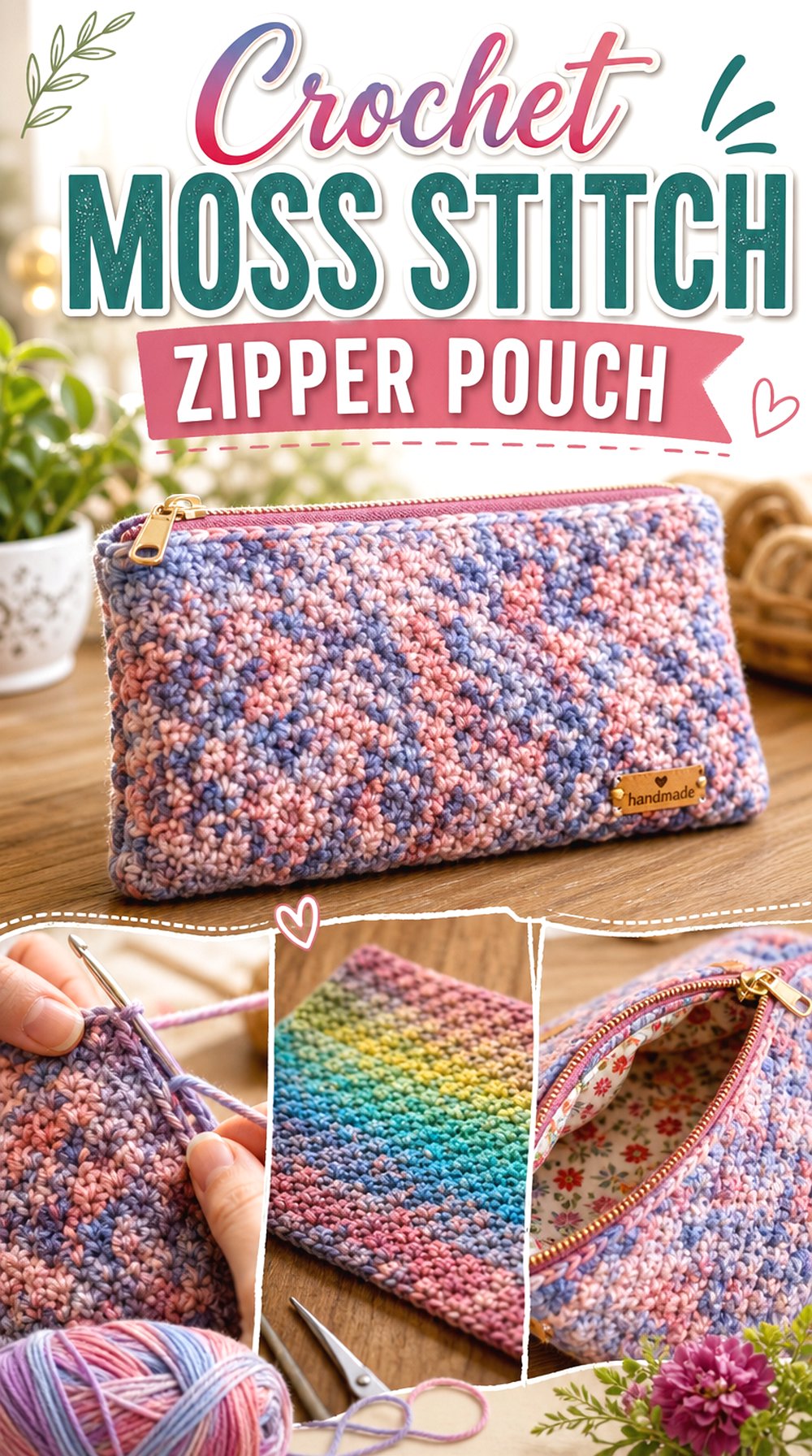
A zipper pouch turns moss stitch into a small organizer with a more secure closure than an open basket or market bag. The finished item can work for notions, small supplies, or lightweight personal storage, depending on size and lining decisions.
This idea is different from the pencil case because it leans more toward a general pouch format. The source points viewers toward zipper-lining help, so readers should pay attention to what is included directly and what may need support from an additional guide.
The Zipper Is the Key Feature
The zipper changes the pouch from a simple sleeve into a closed organizer. Readers should check how the zipper area is handled and whether they are comfortable following any separate finishing reference. A neat zipper can make the moss stitch fabric look more polished and useful.
Interior Finish Matters for Small Items
Small items can catch on loose ends or gaps if the inside is not finished cleanly. Readers should look for any lining or inside view and decide whether the pouch will suit the items they want to store. A notions pouch and a cosmetic pouch may need different finishing expectations.
Shape Depends on the Final Seams
A pouch needs clean edges and corners to look intentional. Readers should watch the finishing views carefully, especially where the sides and zipper meet. The moss stitch surface may look simple, but the final shape comes from how evenly the pouch is closed and finished.
Creator: Crochet Cavalier
14. Crochet Moss Stitch Pencil Case
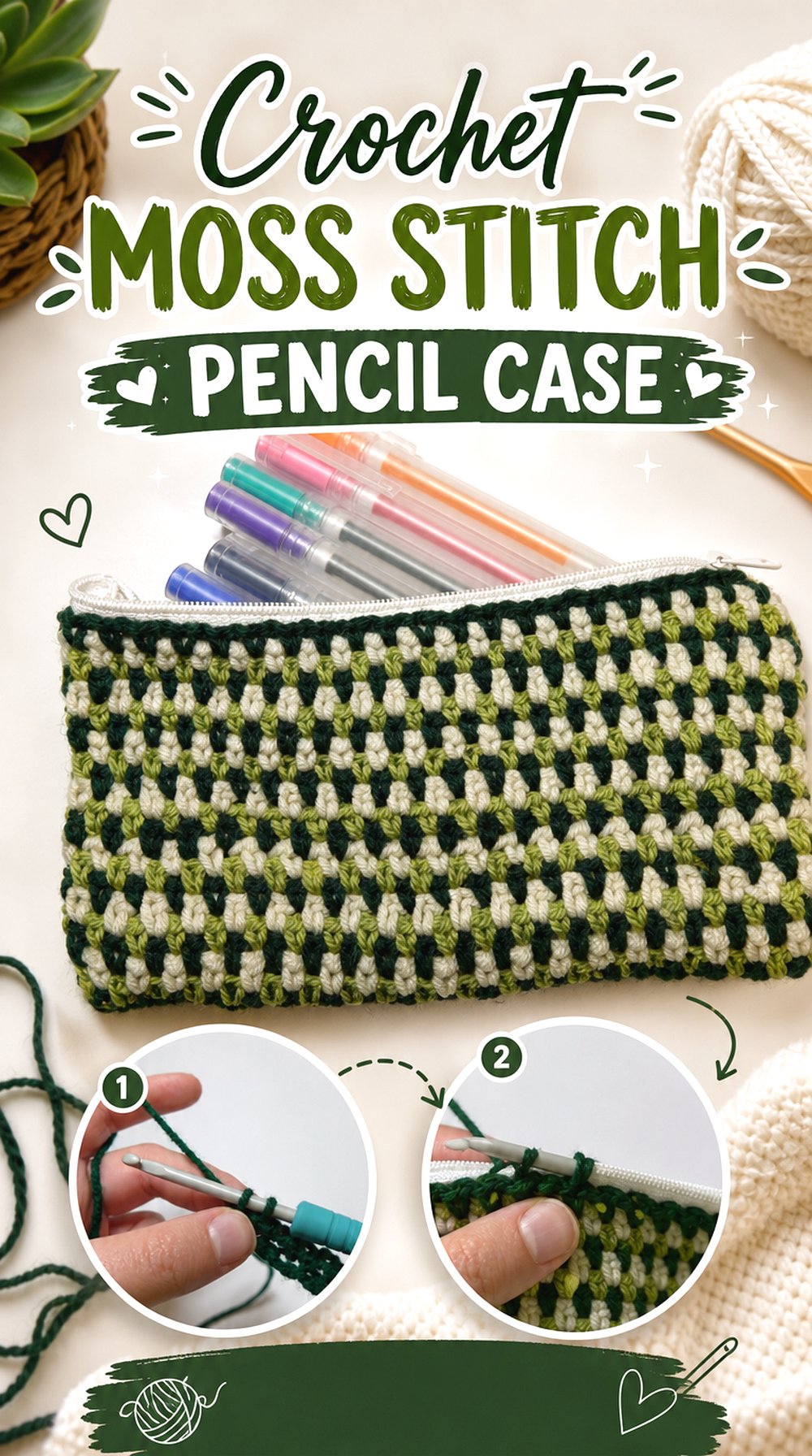
This pencil case uses moss stitch for a slim everyday storage piece. It is described as a pencil case and makeup bag style, which makes it useful beyond school supplies as long as the finished size matches the reader’s needs.
Compared with the zipper pouch, this one has a more specific long-case purpose. The neat moss stitch texture keeps the surface understated, while the shape is practical for pencils, hooks, pens, or other slim items that need a dedicated place.
Length Is More Important Than Width
For a pencil case, the length needs to fit the items being stored. Readers should compare the finished case with the pencils, hooks, or tools they plan to use inside it. A pouch that is wide enough but too short will not work well for long supplies.
A Slim Shape Keeps It Portable
The narrow case format is useful for slipping into a backpack, project bag, or desk drawer. Readers who want a makeup bag version should check whether the depth and opening are enough for their items. The moss stitch surface keeps the case visually tidy without adding bulky decoration.
Closure Details Should Be Clear
Any case meant for transport needs a closure that suits the contents. Readers should look at the finished opening and closing method before deciding what to store in it. Pens and hooks may need a different level of containment than soft notions or small craft extras.
Creator: Twins in Stitches
15. Crochet Round Moss Stitch Baskets
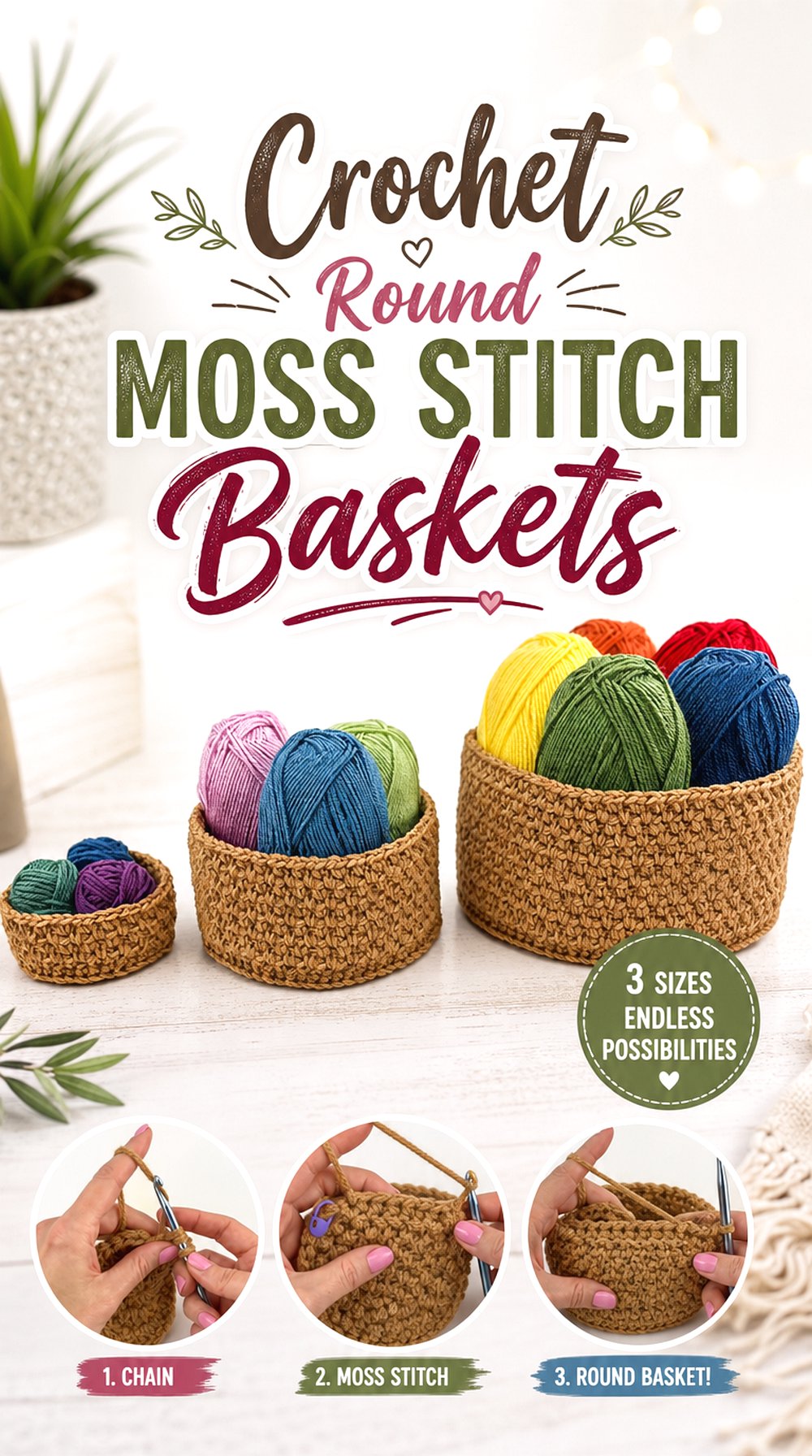
Round baskets show moss stitch in a storage-focused home project. The tutorial includes classic round baskets in three sizes, so this idea offers more flexibility than a single pouch or coaster. The finished pieces can be compared by height, diameter, and intended placement.
This is a strong option for readers who want moss stitch to help with organization. Because baskets need shape, the main things to check are side firmness, base shape, and whether the finished size fits the items or space the reader has in mind.
Three Sizes Give More Placement Options
A set of sizes makes the project easier to match to different spaces. A smaller basket may suit notions or small accessories, while a larger one may work better for visible tabletop storage. Readers should confirm the size information and choose based on where the basket will sit.
The Base Controls Stability
A round basket depends on a stable base. Readers should pay attention to how flat the finished basket sits in the final view. If the base looks too soft for the intended use, they may need to think carefully about material choice and whether the creator gives enough shaping guidance.
Side Height Changes the Use
Short sides make contents easier to see, while taller sides can hold more visually. Readers should choose a basket size by both footprint and height, not just diameter. This matters if the basket is meant for yarn scraps, bathroom items, desk supplies, or display storage.
Creator: Jo to the World Creations
16. Crochet Moss Stitch Coaster
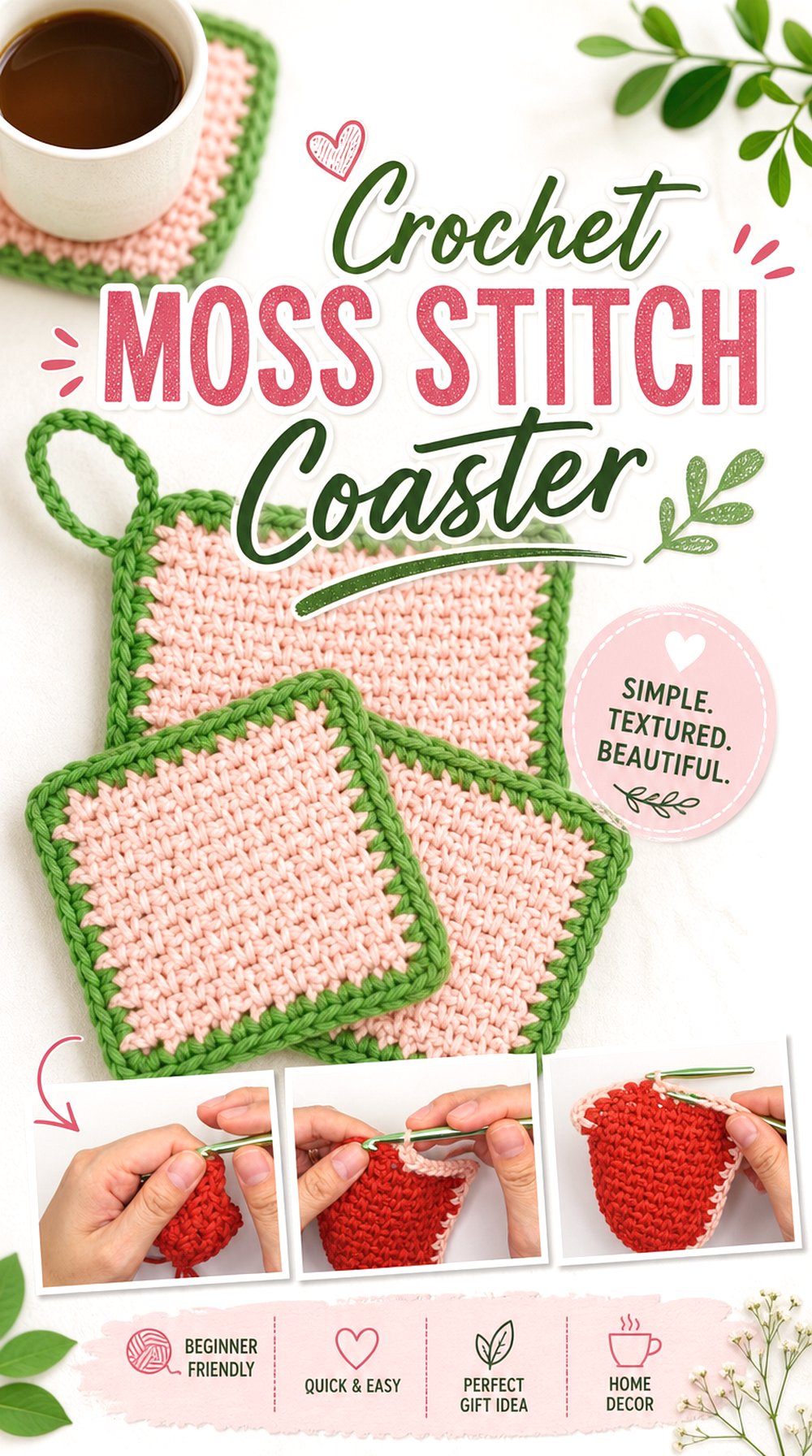
A coaster is the smallest project in this list, but it still shows the moss stitch texture clearly. The finished square format makes it useful for readers who want a low-commitment way to practice even edges, a border, and a tidy flat shape.
This idea is different from the basket and pouch because it does not need depth, straps, or fit. Its success depends on flatness, clean corners, and a size that works under a cup, small vase, or simple table display.
Flatness Is the Main Goal
A coaster needs to sit flat to be useful on a surface. Readers should compare their work with the finished view and avoid ignoring curling or uneven corners. Because the project is small, blocking or finishing choices can affect the final appearance more noticeably.
Border Finish Frames the Stitch
The border gives the small square a clearer edge and helps the moss stitch center look complete. Readers should look at the finished coaster and decide whether the border style suits their table setting. A simple border keeps attention on the woven-looking texture.
Material Notes Are Worth Checking
The creator lists cotton yarn in the materials, which is common for small table pieces. Readers should still check the full supply list and yarn label before starting. Fiber choice affects care, absorbency, and how the coaster behaves with daily use.
Creator: Jess Crafting
Choosing Between These Moss Stitch Ideas
For the largest visual payoff, the throw blanket, baby blanket, cardigan, and vest give moss stitch more room to show. For smaller practice projects, the coaster, ear warmer, pencil case, and zipper pouch keep the commitment lower while still producing finished items. The scarf, shawl, cowl, beanie, and gloves are best compared by how much coverage and fit control the wearer wants.
For practical storage, the market bag, Japanese knot bag, zipper pouch, pencil case, and baskets each solve a different need. The market bag is the most open carrying option, the knot bag has the most distinctive handle closure, and the baskets are better for staying in one place.
Conclusion
These crochet moss stitch ideas show how one texture can move between very different project types. Choose a blanket if you want a larger surface for color and rhythm, a scarf or shawl if drape matters most, or a beanie, ear warmer, gloves, vest, or cardigan if fit is the main decision. For everyday function, the bags, pouch, pencil case, basket, and coaster keep the stitch practical in smaller forms.
Before starting, compare the finished shape, size notes, closures, edges, and material details in the original tutorials. Those source videos are the best place for the exact construction steps and any project-specific counts or finishing directions.
FAQs
What is the difference between crochet moss stitch and linen stitch?
In many crochet tutorials, moss stitch and linen stitch are used for the same or very similar fabric: a neat, woven-looking surface often made with simple stitches and spaces. The exact wording can vary by creator, so readers should follow the terminology used in the selected tutorial instead of mixing instructions from different sources.
Which moss stitch project should I choose first?
A small flat item, such as a coaster, ear warmer, scarf, or simple pouch, may be easier to review before choosing a larger blanket or garment. Small projects let readers focus on edge neatness, stitch rhythm, and tension. For fitted wearables or bags, check the tutorial once before starting so the shaping and finishing are clear.
Is moss stitch good for bags?
Moss stitch can work well for bags when the project is designed for that purpose, but readers should still check the finished structure, opening, handle placement, and any lining information. A market bag, knot bag, and zipper pouch each use the stitch differently, so choose based on the carrying style rather than the stitch name alone.
What should I check before making a moss stitch wearable?
For wearables, check the size range, measurements, fit shown on the body, neckline, armholes, sleeve or hand openings, and garment length. Moss stitch gives texture, but it does not solve fit by itself. Compare the creator’s measurements with your own and review any adjustment notes before buying yarn.
Can I change yarn for a moss stitch project?
You may be able to change yarn, but the result can change in size, drape, thickness, and texture. This matters especially for garments, cowls, hats, bags, and baskets. Use the creator’s supply notes and make a small sample when size or structure matters. Keep the yarn label for care information.
Can finished items from YouTube moss stitch tutorials be sold?
Do not assume selling is allowed just because a tutorial is public. Check the creator’s pattern terms, video description, website policy, or licensing notes. Some creators allow selling finished items with conditions, while others may not state terms clearly. Local labeling, safety, and business rules may also apply depending on the item.