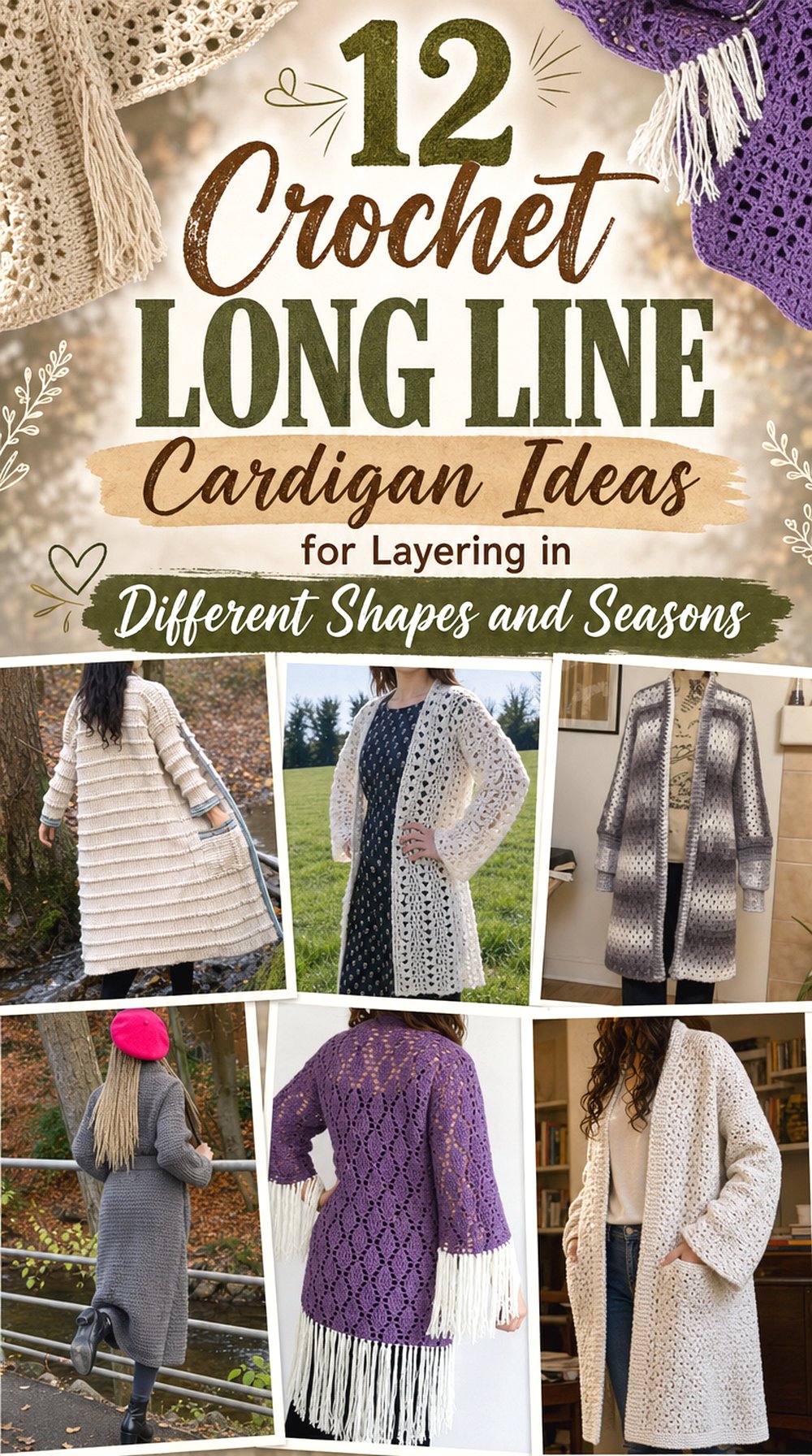
12 Crochet Longline Cardigan Ideas for Layering in Different Shapes and Seasons

Longline crochet cardigans can range from soft summer dusters to heavier coat-style layers, so the right project depends on more than length alone. Some designs have belts, hoods, pockets, fringe, ribbed texture, granny squares, or kimono shaping, while others focus on a clean open-front outline that can sit over simple outfits.
This collection gives readers several ways to compare long cardigan shapes before choosing a tutorial. The projects below include ankle-length, calf-length, belted, hooded, coat-inspired, textured, and lighter seasonal options, with one YouTube tutorial from a different creator for each idea.
Quick List
- Crochet Ankle-Length Fall Duster Cardigan
- Crochet Belted High-Collar Duster Cardigan
- Crochet Hooded Longline Cardigan
- Crochet Buttoned Long Coat Cardigan
- Crochet Classic Ribbed Long Cardigan
- Crochet Summer Duster Cardigan
- Crochet Long Granny Square Cardigan
- Crochet Calf-Length Open Front Cardigan
- Crochet Duster Cardigan with Pockets
- Crochet All-Sizes Straight Duster Cardigan
- Crochet Boho Fringe Duster Cardigan
- Crochet Pom-Pom Edge Kimono Cardigan
Why These Crochet Longline Cardigans Are Worth Making
A longline cardigan gives more coverage than a cropped sweater while still keeping the front open for layering. That makes shape especially important. A duster can create a long vertical line, a hooded cardigan can feel more covered around the neckline, and a belted version gives the option of wearing the front more defined.
These projects are also useful for comparing finishing details. Pockets, ribbing, side slits, fringe, buttons, belts, and granny squares all change how the cardigan hangs and how much attention the edges receive. Before starting, readers should check the creator’s measurements, size notes, material list, and any linked written pattern.
1. Crochet Ankle Length Fall Duster Cardigan
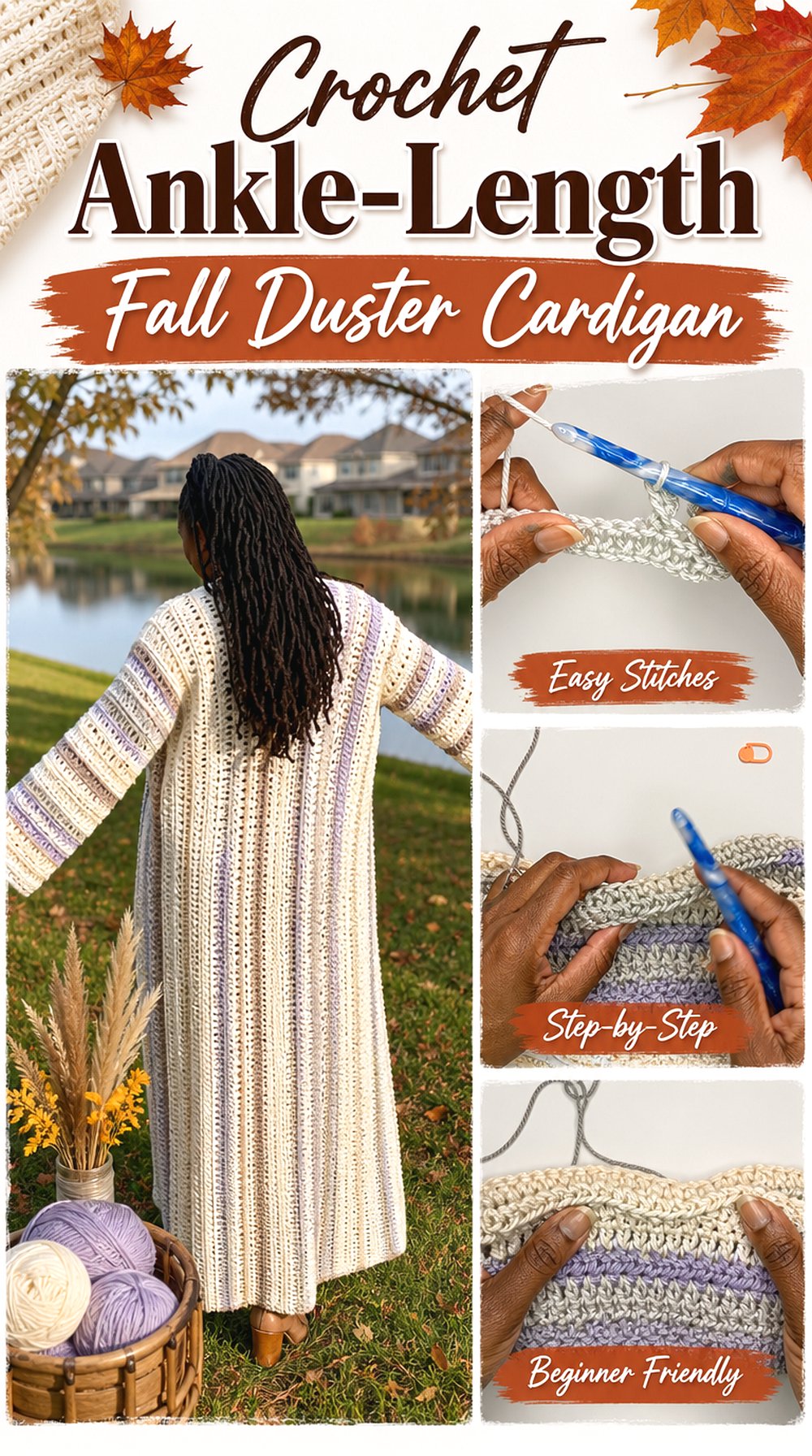
This long duster cardigan has a dramatic ankle-length shape, making it one of the strongest options in the collection for readers who want a coat-like crochet layer. The open front keeps the outline relaxed, while the long body gives the finished piece a clear fall layering feel.
The project is especially different from shorter cardigans because the length becomes the main design feature. Readers should think about where the hem will fall on their own height and how much movement they want through the lower body.
Confirm the Cardigan Length
An ankle-length cardigan can look very different on each wearer, so length is the first detail to check. The source describes the cardigan length from shoulder to ankles, which is useful for planning. Readers who prefer a mid-calf or lower-calf finish should compare the creator’s measuring approach with a cardigan or coat they already own.
Think About Lower-Body Movement
A very long cardigan needs enough room through the body so it does not feel restrictive when walking or sitting. This project uses a long duster outline, so readers should pay attention to how the front panels hang and how the lower edge moves in the final view. A soft open front may be easier to layer than a tightly closed coat shape.
Watch the Panel Joining Closely
The body is worked in a way that brings the front and back sections together, so the joining points matter for the finished drape. Readers should slow down around the panel connection and sleeve sections, then compare the cardigan shape before moving ahead. Keeping a simple note of measurements can help prevent one side from ending longer than the other.
Creator: Crochet State of Mind
2. Crochet Belted High Collar Duster Cardigan
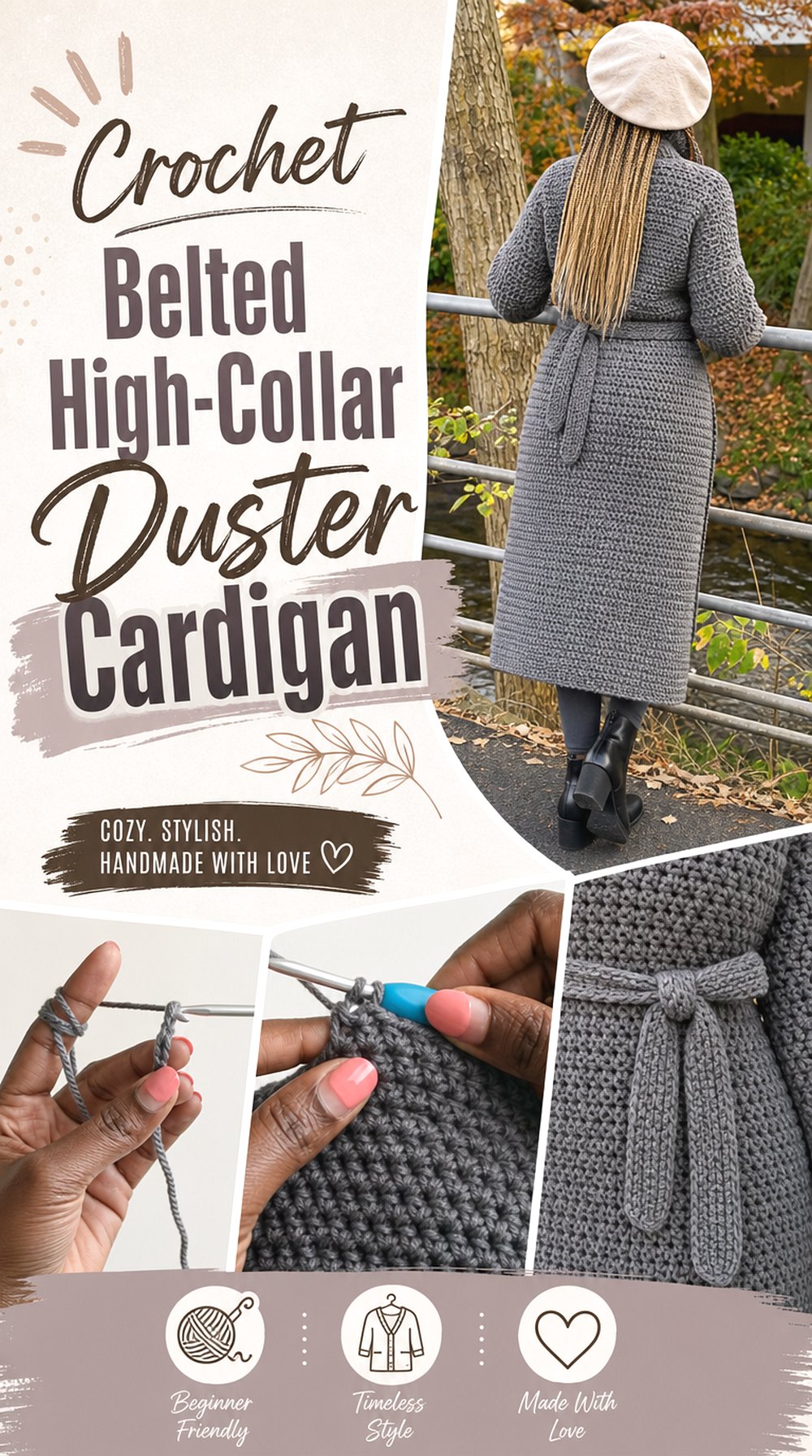
A belt, high collar, and slit side pockets make this duster feel more structured than a plain open cardigan. The long body gives it the coverage readers expect from a longline layer, while the belt creates an optional waist detail when the front needs more shape.
This is a useful pick for anyone comparing practical finishing features. The pockets and collar change how the cardigan may be worn, and the belt makes it different from the loose dusters in this list.
Look Closely at the Belt
The belt is the feature that changes this cardigan from a simple duster into a more defined layer. Readers should check where the belt sits on the body and whether they like that placement before committing. A belt can add shape, but it also affects how the front panels overlap and how the cardigan hangs when tied.
Check the Pocket Placement
Slit side pockets need to sit at a comfortable height to be useful. Before starting, readers should review the pocket section and compare the placement with their own arm reach. Pockets can add function, but they also add extra finishing work, so it is worth checking whether the source gives enough visual clarity for the desired result.
Consider the High Collar
The high collar gives the neckline more presence than a flat open band. That can make the cardigan feel warmer and more coat-like, but it also changes the look around the neck and shoulders. Readers who usually layer cardigans over scarves, collars, or high-neck tops should think about how much neckline bulk they prefer.
Creator: AC Crochets
3. Crochet Hooded Longline Cardigan
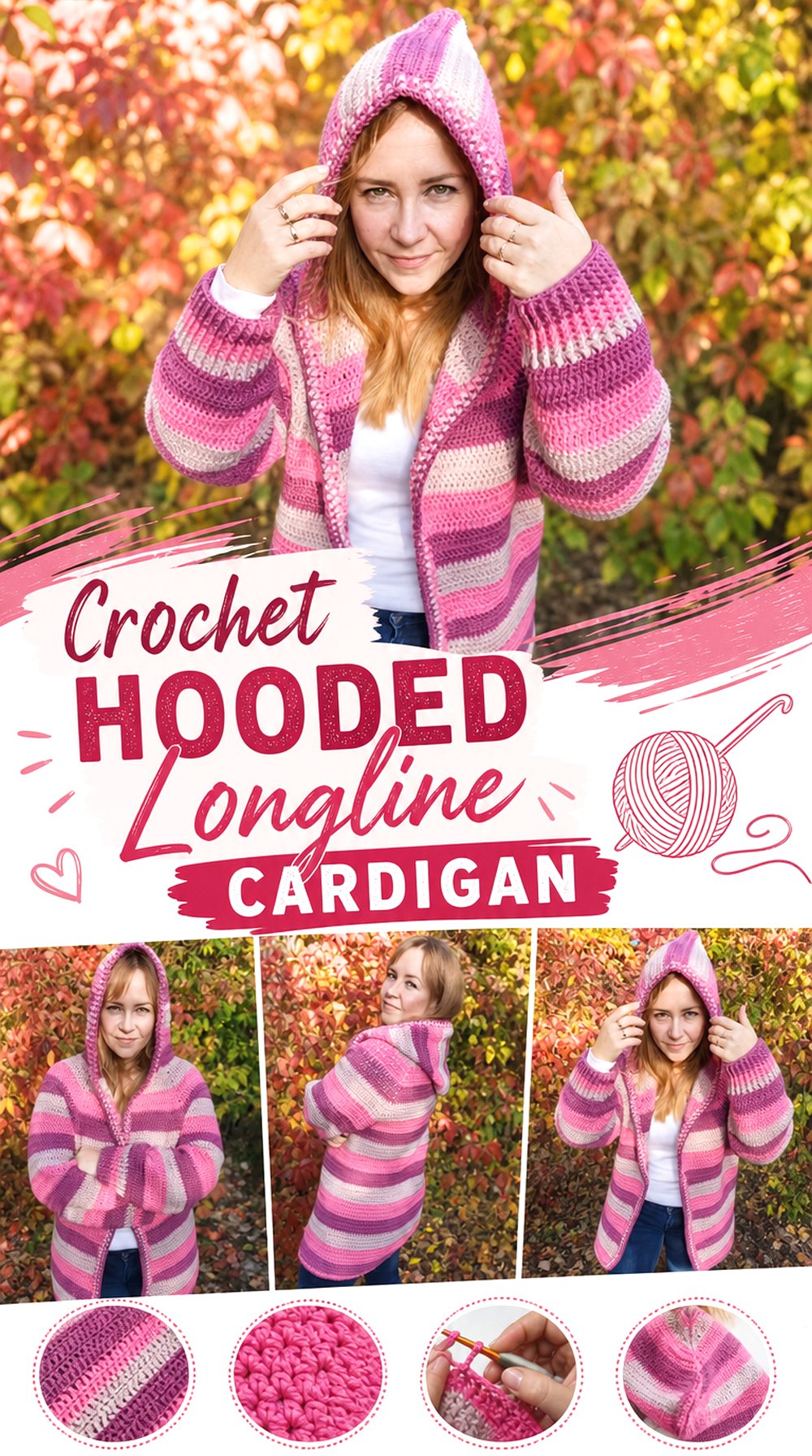
The hood gives this long cardigan a casual, covered shape that stands apart from the open-neck dusters and kimono styles. The finished look is thicker and more relaxed, with a long body, sleeves, cuffs, and a hood as the main design points.
This project may appeal to readers who want a cardigan that feels closer to a cozy outer layer. The hood is the feature to study carefully because it affects the neckline, back view, and overall balance of the garment.
Check the Hood Shape
A hood changes the whole upper section of a cardigan. Readers should look at how deep the hood appears, where it meets the neckline, and how it sits when not worn. Since the hood adds extra weight at the back, it is helpful to check the final view before deciding whether this project matches the intended layering style.
Review the Sleeve Finish
The source mentions cuffs, which help define the sleeves and keep the long cardigan from looking unfinished at the wrists. Readers should pay attention to how the sleeve edges are completed and whether the cuffs look fitted or relaxed. Sleeve finish matters because it affects how easily the cardigan can be worn over long-sleeve tops.
Confirm the Size Planning Notes
A long hooded cardigan needs more planning than a short open layer because the body, sleeves, and hood all affect fit. The creator describes planning the size in the tutorial, so readers should pause around that section and record their own measurements. This is especially important when using yarn that may drape differently from the example.
Creator: plotkadesign
Original Tutorial and Creator Credit
4. Crochet Buttoned Long Coat Cardigan
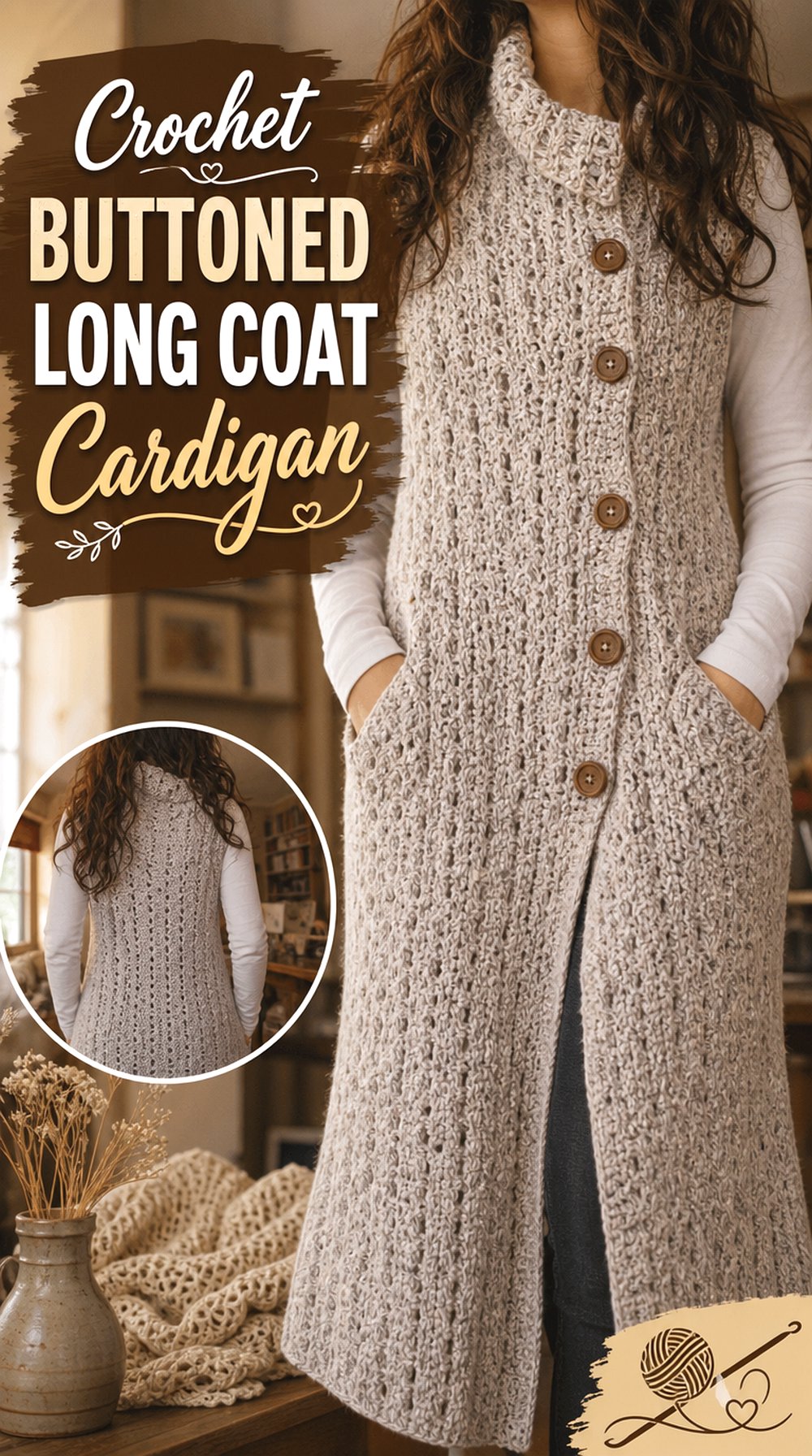
This long coat-style cardigan has a more tailored feeling because the source lists buttons as part of the project materials. The shape is still crochet and cardigan-based, but the button detail moves it closer to a light handmade coat.
It is a good contrast to the open dusters because readers can compare whether they want a long cardigan that closes at the front. The coat-inspired look also makes the front band, button area, sleeve choice, and finished length worth reviewing before starting.
Confirm How the Front Closes
Buttons can make a long cardigan feel more finished, but they also require careful placement. Readers should check how many buttons are used, where they sit, and whether the finished view shows the front closed clearly. A closure affects fit across the bust and hips, so the front measurement should be reviewed before choosing a size.
Think About Coat-Like Structure
A long coat cardigan needs enough structure to support its own length. The source presents it as a long coat cardigan, so readers should look at the body panels, seams, and edge finish with that in mind. The goal is not to guess stiffness, but to decide whether the visible result has the amount of shape they want.
Check the Sleeve Option
The source notes both a sleeveless version and yarn for sleeves, so readers should confirm which version they plan to make before buying supplies. A sleeved long cardigan will feel more covered and take more material, while a sleeveless version may layer differently. The final choice should match the intended season and wardrobe use.
Creator: MayaLunaCorazon DIY CROCHET & BUSINESS
5. Crochet Classic Ribbed Long Cardigan
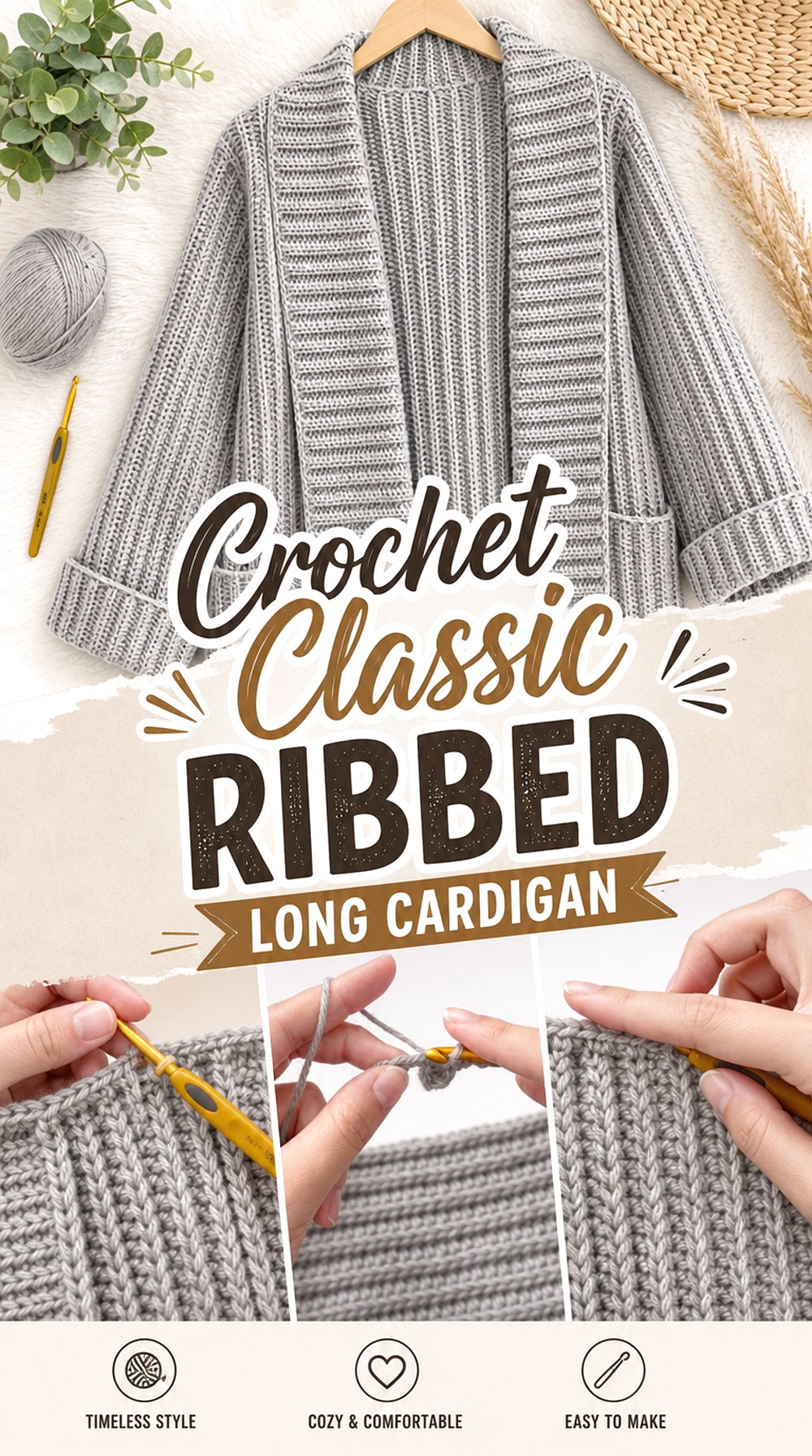
A ribbed surface gives this long cardigan a clean, everyday look that feels different from the granny square, fringe, and hooded options. The texture is the main feature, so the finished piece reads as simple but not plain.
This project is useful for readers who prefer longline layers with pockets, ribbed shaping, and a wearable neutral outline. Because ribbing can affect stretch and drape, the size notes and finished measurements are important to review before choosing yarn or adjusting length.
Study the Ribbed Texture
The ribbed look is what gives this cardigan its classic character. Readers should check whether they like the vertical and horizontal texture shown in the finished view, especially around the body and sleeve areas. Ribbing can make a garment look more polished, but it also means consistency matters across large panels.
Note the Finished Measurements
The linked information for this project includes a size range and finished measurements, which is helpful for a long cardigan. Readers should compare bust, sleeve, armhole, and length information with a garment that already fits well. Long cardigans can become too narrow or too oversized quickly if the starting size is chosen only by label.
Plan the Pocket Position
Pockets add everyday usefulness, but placement changes how the cardigan looks on the body. Readers should check where the pockets sit in relation to the hem and side seams. Since this is a long cardigan, pockets placed too low may be awkward, while pockets placed too high may interrupt the clean ribbed front.
Creator: Yarnalina
6. Crochet Summer Duster Cardigan
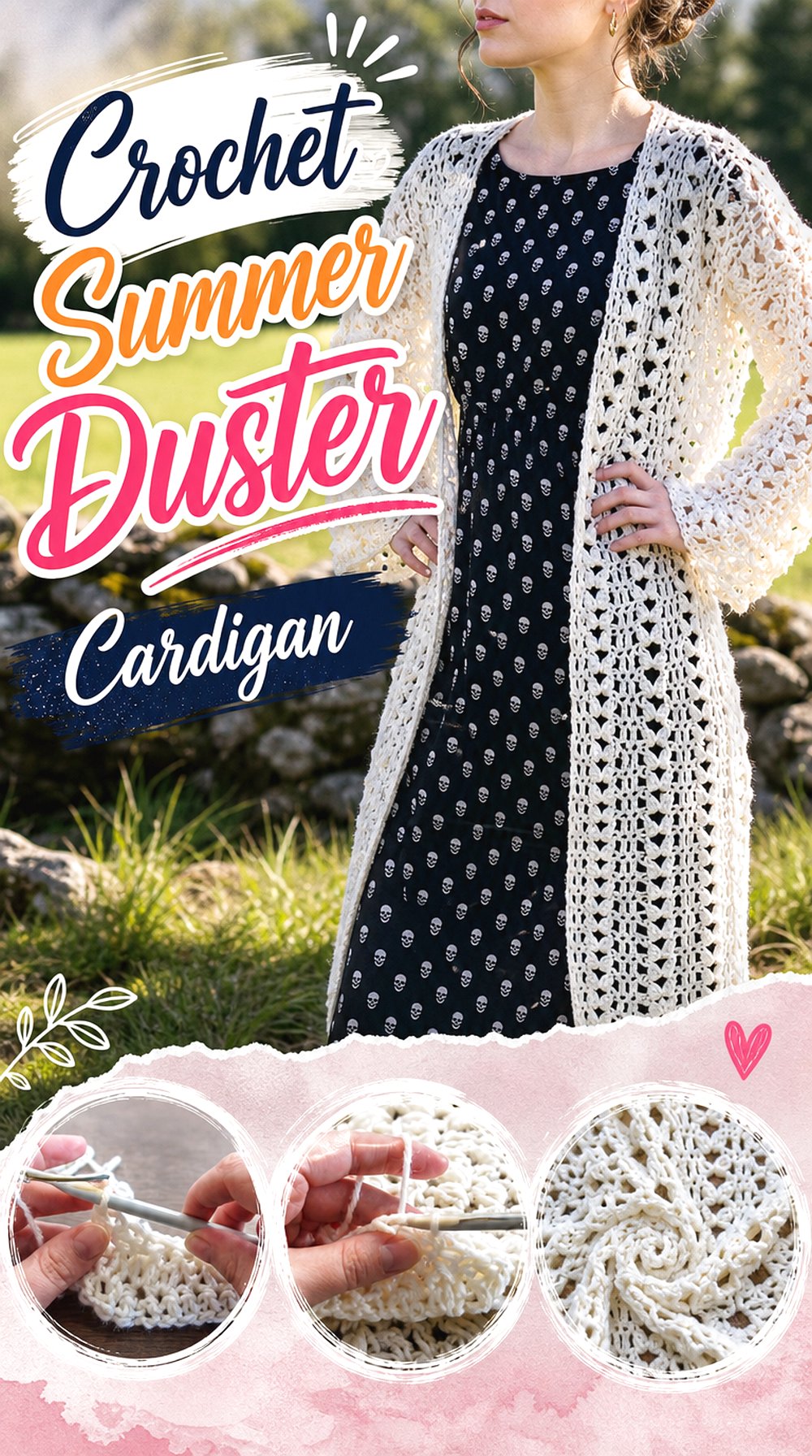
This summer duster offers a lighter longline direction for readers who do not want every cardigan to feel like cold-weather outerwear. The open-front duster shape gives coverage while keeping the styling simpler than a belted or hooded cardigan.
The project works well in this collection because it shows how a long cardigan can be seasonal without relying on heavy details. Readers should focus on the material information, all-size guidance, and how the finished duster hangs over an outfit.
Consider the Intended Season
A summer duster should be judged differently from a thick fall cardigan. Readers may want to look for an open shape, comfortable length, and layering potential over sleeveless or short-sleeve clothing. The source identifies this as a summer duster, so the main decision is whether the coverage and yarn choice match the climate where it will be worn.
Plan Before Buying Supplies
The source gives basic supply direction and points readers to the blog for yarn amounts. That makes planning important. Before buying yarn, readers should check the full material list, size notes, and any yardage information from the creator. A long duster can use more yarn than its light appearance suggests.
Check the Front Edge
A duster cardigan depends heavily on its front edge because there may be no buttons or belt to distract from it. Readers should look at how the opening hangs, whether the edge appears clean, and how the front panels fall. A neat front edge helps a simple summer layer look intentional rather than unfinished.
Creator: Hey Carrie
7. Crochet Long Granny Square Cardigan
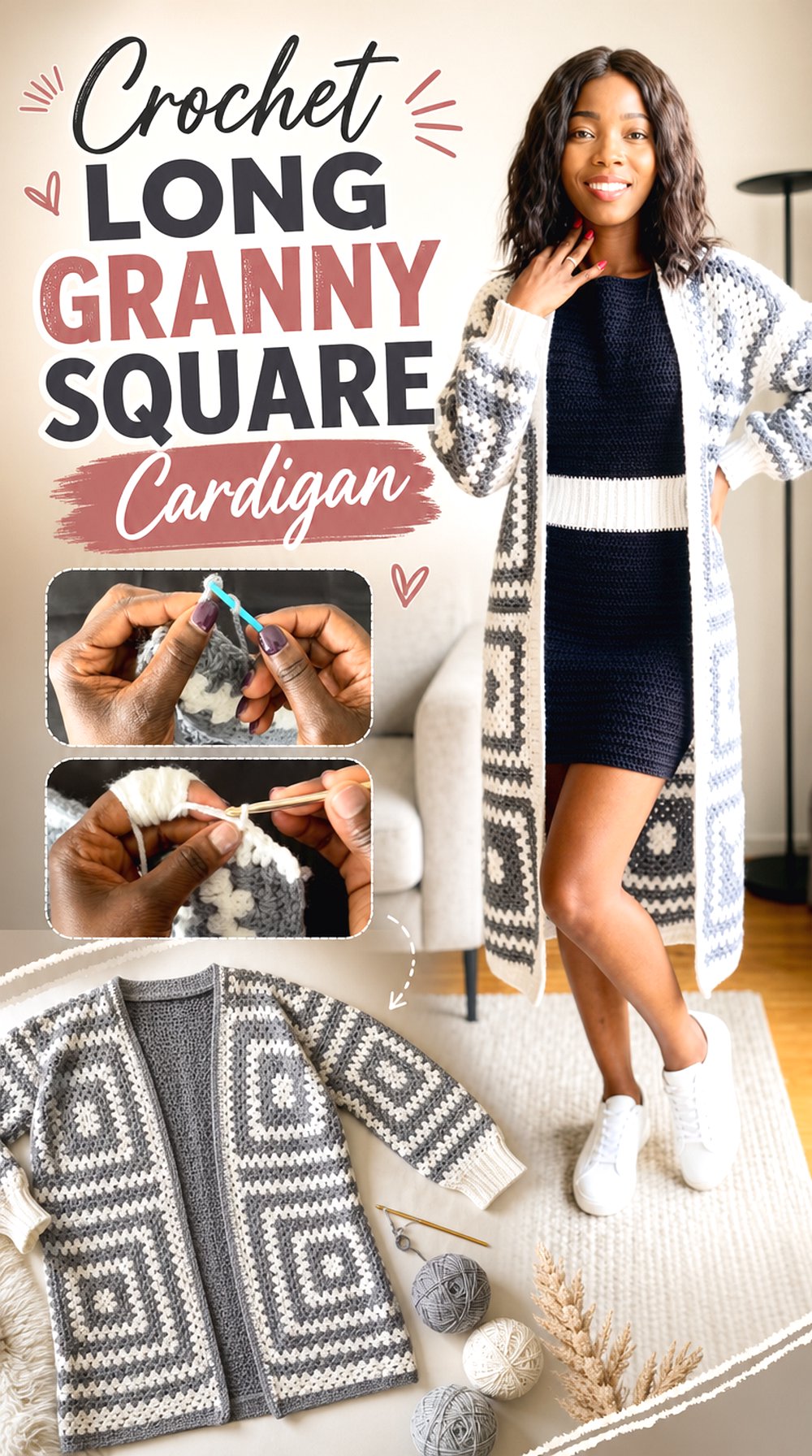
Granny squares give this long cardigan a clear motif-based look, making it one of the most decorative options in the article. Instead of relying on one continuous texture, the finished garment is built around repeated square sections that create color, rhythm, and visible join lines.
This project is different from the ribbed and duster styles because the layout matters as much as the fit. Readers should think about square placement, color balance, sleeve shape, and how the longer length affects the overall pattern.
Plan the Square Layout
A granny square cardigan needs a layout that looks balanced from the front, back, and sleeves. Readers should review the finished view and think about how colors or motifs are distributed. Even when following the creator’s exact plan, it helps to lay pieces out visually before joining so the long shape does not feel uneven.
Watch the Joining Stage Closely
The joins are a major part of the finished cardigan because every square edge contributes to the garment structure. Readers should slow down when the tutorial reaches assembly and compare the direction of each piece. A long cardigan has more surface area, so one misplaced section can affect both the pattern flow and the final fit.
Think About Visual Weight
A long granny square cardigan can become visually bold, especially if strong colors are used. Readers who want a softer look may prefer a limited palette, while those who like statement pieces may enjoy higher contrast. The useful point is to decide the color direction before making many squares, because changes later may require extra reworking.
Creator: Simply Angel Tiah
8. Crochet Calf Length Open Front Cardigan
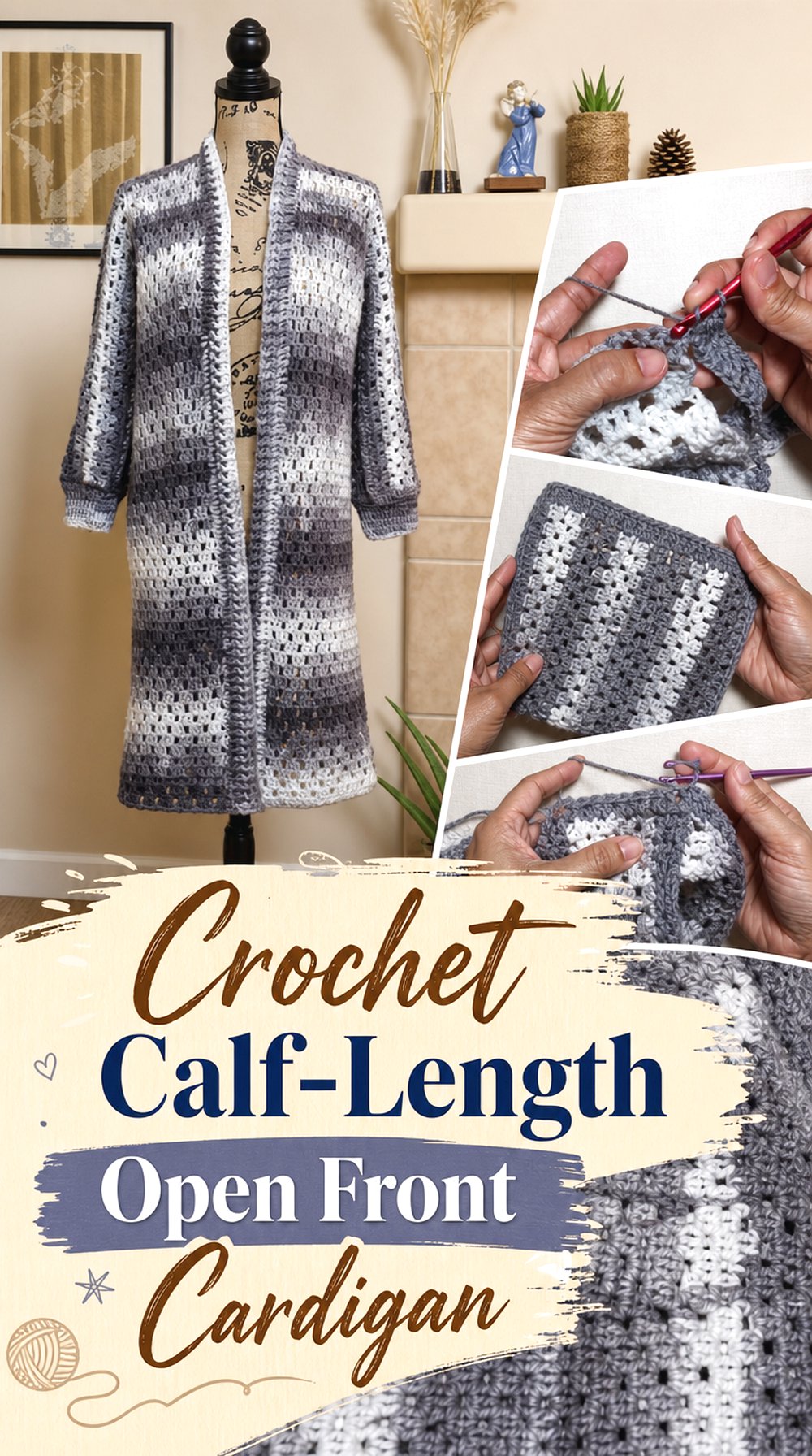
This open-front cardigan is described as reaching toward the calf, giving it a longline shape without the ankle-length drama of a full duster. The simple front and long body make it a useful middle option for readers who want coverage but still prefer a cleaner cardigan outline.
The project also works for comparing seasonal use because the source describes lightweight yarn and spring-to-fall wear. Readers should confirm the length, back view, and front panel drape before choosing it as an everyday layer.
Confirm the Calf-Length Goal
Calf length is a useful target, but it changes with height. Readers should measure from shoulder to the preferred hem point before starting, then compare that number with the creator’s guidance. This prevents the cardigan from becoming shorter than expected or drifting into a longer duster length that may not suit the intended outfit.
Look at the Open Front
The open front keeps this cardigan easy to layer, but it also means the two front panels need to hang evenly. Readers should watch how the finished piece sits at the shoulders and falls down the body. If the front panels look narrow or wide compared with personal preference, the size notes should be reviewed carefully.
Match the Layering Season
The source describes lightweight yarn for spring to fall, so readers should keep season in mind when choosing materials. A long cardigan can become heavy if the yarn is too dense, while a lighter yarn may create more drape. The creator’s material information should be checked before substituting yarn for a different climate.
Creator: Crafting Shed
9. Crochet Duster Cardigan with Pockets
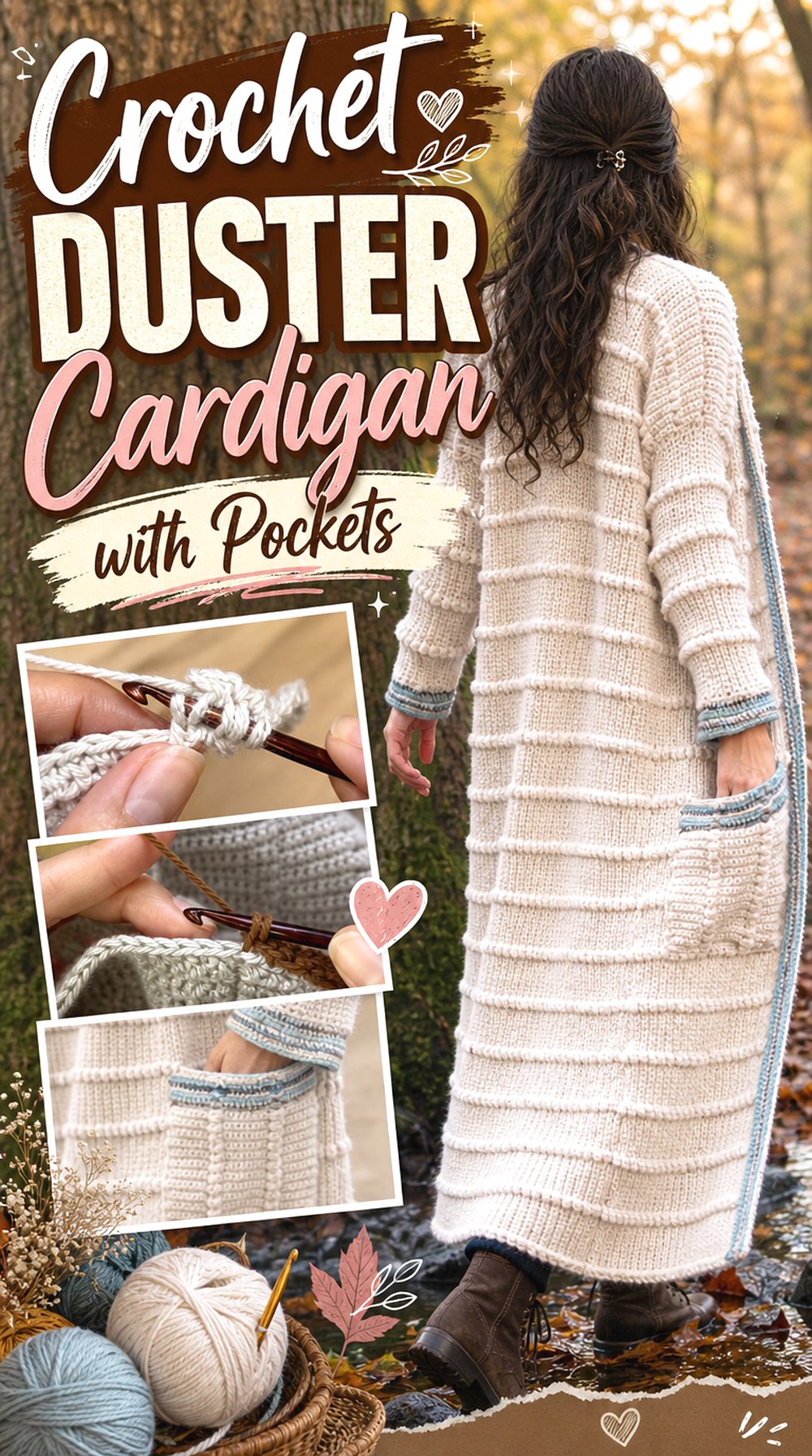
This duster cardigan includes pockets, giving readers a practical longline option that still keeps the relaxed open-front cardigan feeling. The project has an autumn duster direction, so it sits between a simple everyday cardigan and a more coat-like layer.
It differs from the belted high-collar version because the pockets are the main practical feature rather than the waist shaping. Readers should focus on the body length, pocket placement, and whether the extra written pattern support is useful for their preferred way of following instructions.
Check the Pocket Use
Pockets can be helpful on a long cardigan, but they should be checked for placement and size before relying on them. Readers should look at the final view and decide whether the pockets appear decorative, practical, or both. The source identifies the project as a cardigan with pockets, but exact use should still be judged from the tutorial.
Consider the Autumn Duster Shape
An autumn duster usually needs enough coverage for layering without becoming as structured as a coat. Readers should compare the length and body width with the kinds of tops they plan to wear underneath. A relaxed longline cardigan may be easier to throw over casual clothing, while a narrower shape may need more careful sizing.
Look for Written Support
The creator mentions a written pattern option, which may help readers who do not want to rely only on video. Before starting, it is worth checking whether that written support matches the preferred size and format. Some crocheters follow long garment projects more comfortably when they can compare the video with written notes.
Creator: Crochet Lyn
10. Crochet All Sizes Straight Duster Cardigan
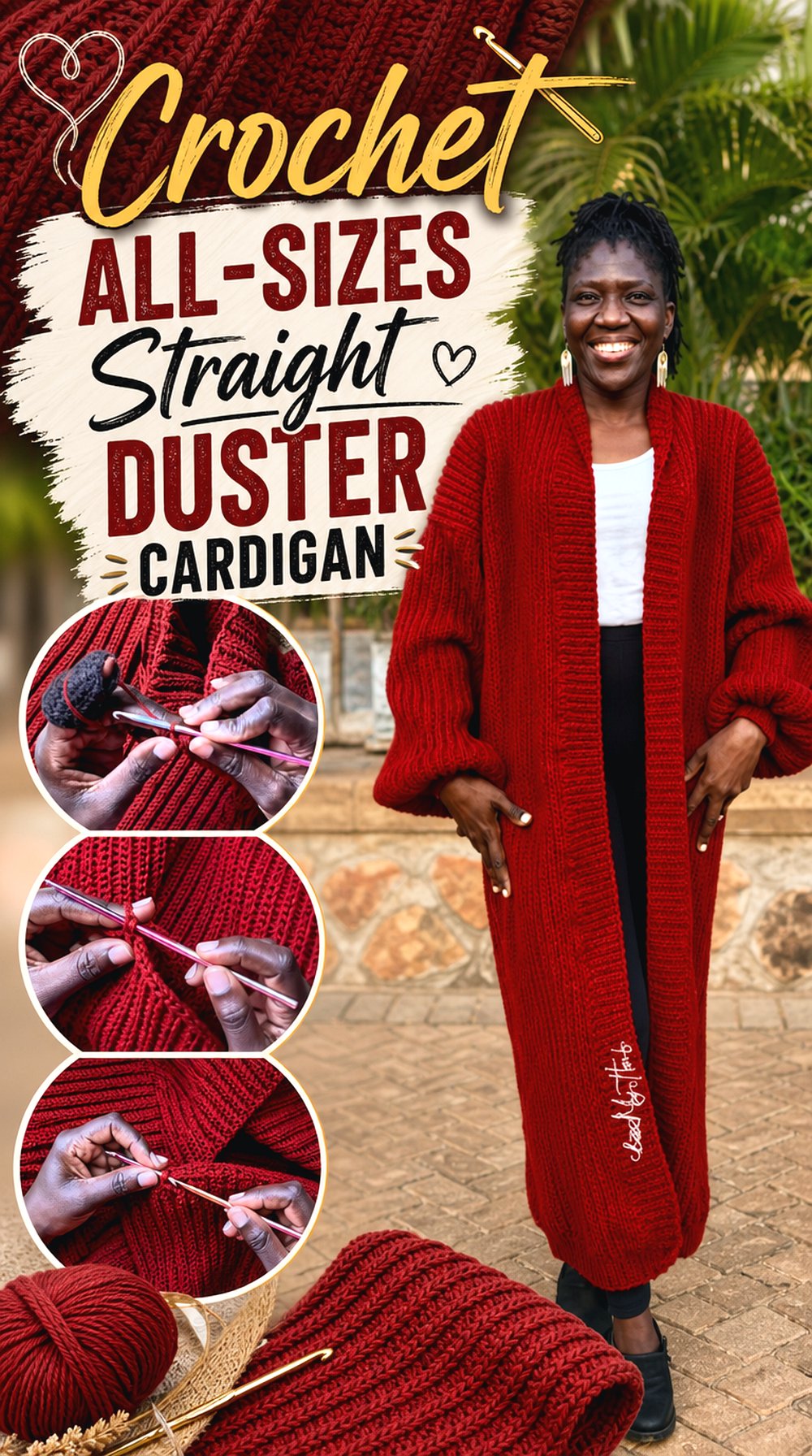
This duster cardigan is useful for readers who want a longline project with measurement guidance across sizes. The finished idea is straightforward: a long cardigan shape that can work as a simple layering piece without extra hood, belt, fringe, or granny square detail.
That cleaner direction makes it different from the more decorative projects in the list. Readers should pay close attention to the all-size measurement information, because a straight duster depends on body length, front width, and shoulder fit to look balanced.
Review the All-Size Measurements
The source says the tutorial includes measurements for all sizes, which is valuable for a long cardigan. Readers should pause at the measurement section and write down the numbers that apply to them. Longline garments need careful planning because added length can change yarn needs, drape, and the overall proportion of the finished cardigan.
Keep the Shape Balanced
A straight duster does not use a belt, hood, or fringe to change the outline, so the main shape must do the work. Readers should compare the front panels, back width, and hem length as they follow along. A clean duster can look very polished when the sides and lower edge stay even.
Decide on Styling Before Lengthening
Extra length may be tempting, but it should match the intended outfit and height. A duster that falls below the preferred point may feel less useful for daily wear. Readers should decide whether they want knee, calf, or lower-calf coverage before adjusting, then return to the creator’s measurement guidance for exact construction details.
Creator: Creator: BzzzMagicHands🧶
11. Crochet Boho Fringe Duster Cardigan
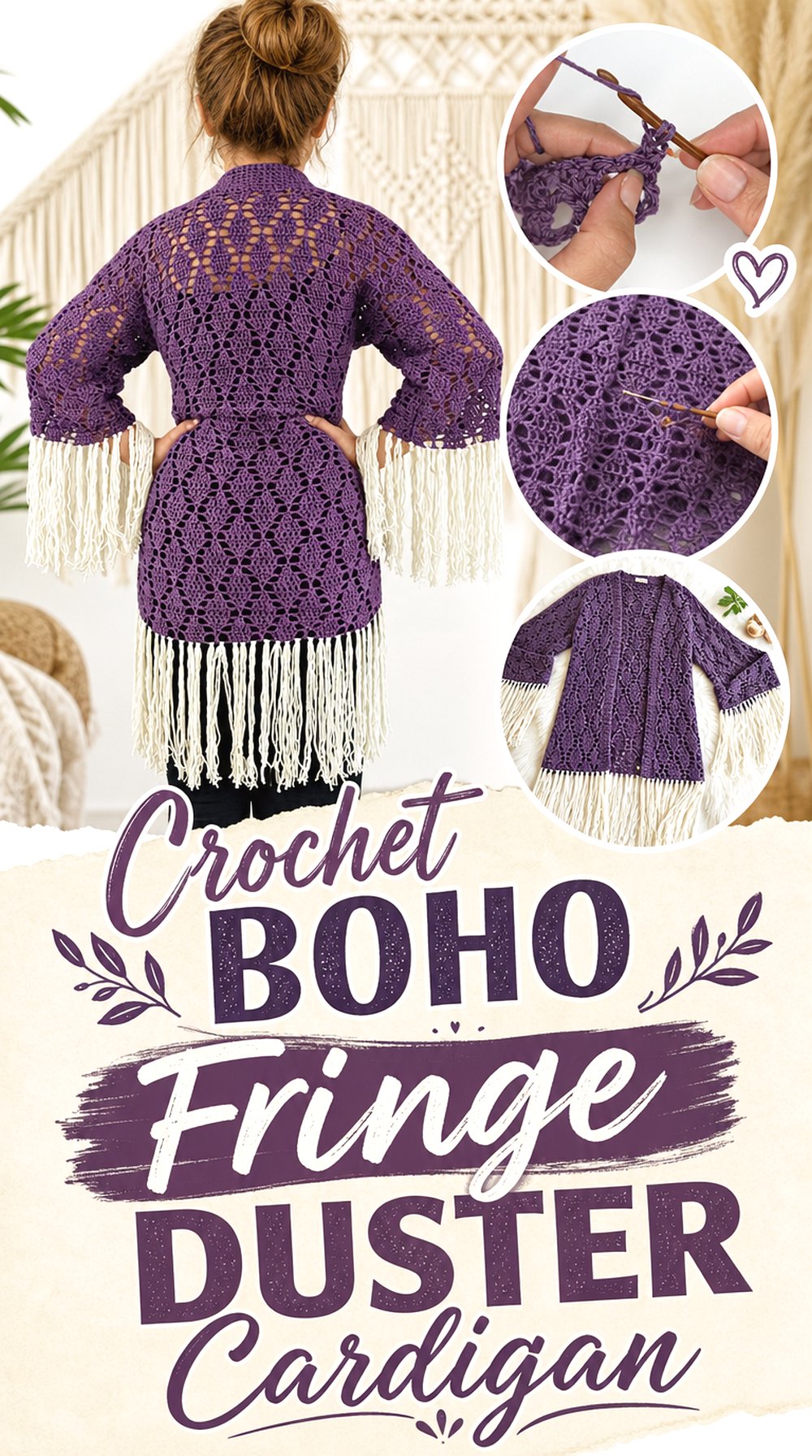
The dramatic fringe makes this boho duster one of the most movement-focused options in the collection. It also has a kimono-like throw-on feeling, so the finished cardigan reads more relaxed and decorative than a ribbed or buttoned long coat cardigan.
This project may suit readers who want a long layer with visible edge detail. The fringe, sleeve seams, front trim, and leaf-stitch texture are the details to check carefully because they create the finished personality of the cardigan.
Check the Fringe Placement
Fringe changes the lower edge and movement of the cardigan. Readers should review where it is attached and how much visual length it adds below the body. A duster may already be long, so fringe can make the finished piece feel even longer. That detail should be considered before choosing where the cardigan will fall.
Look at the Kimono Shape
This project has a throw-over kimono direction, so the body may feel different from a fitted cardigan with shaped sleeves. Readers should look at the shoulder area, sleeve opening, and side seams in the finished view. The looser outline can be useful for layering, but it should still match the amount of coverage desired.
Slow Down the Finishing Sections
The source includes sections for seaming, front trim, and fringe, which are important to the final look. Readers should take extra care during finishing because these details are highly visible on a boho duster. Marking the stopping point and replaying the trim section can help keep both front edges consistent.
Creator: WestCorkCrochet
12. Crochet Pom Pom Edge Kimono Cardigan
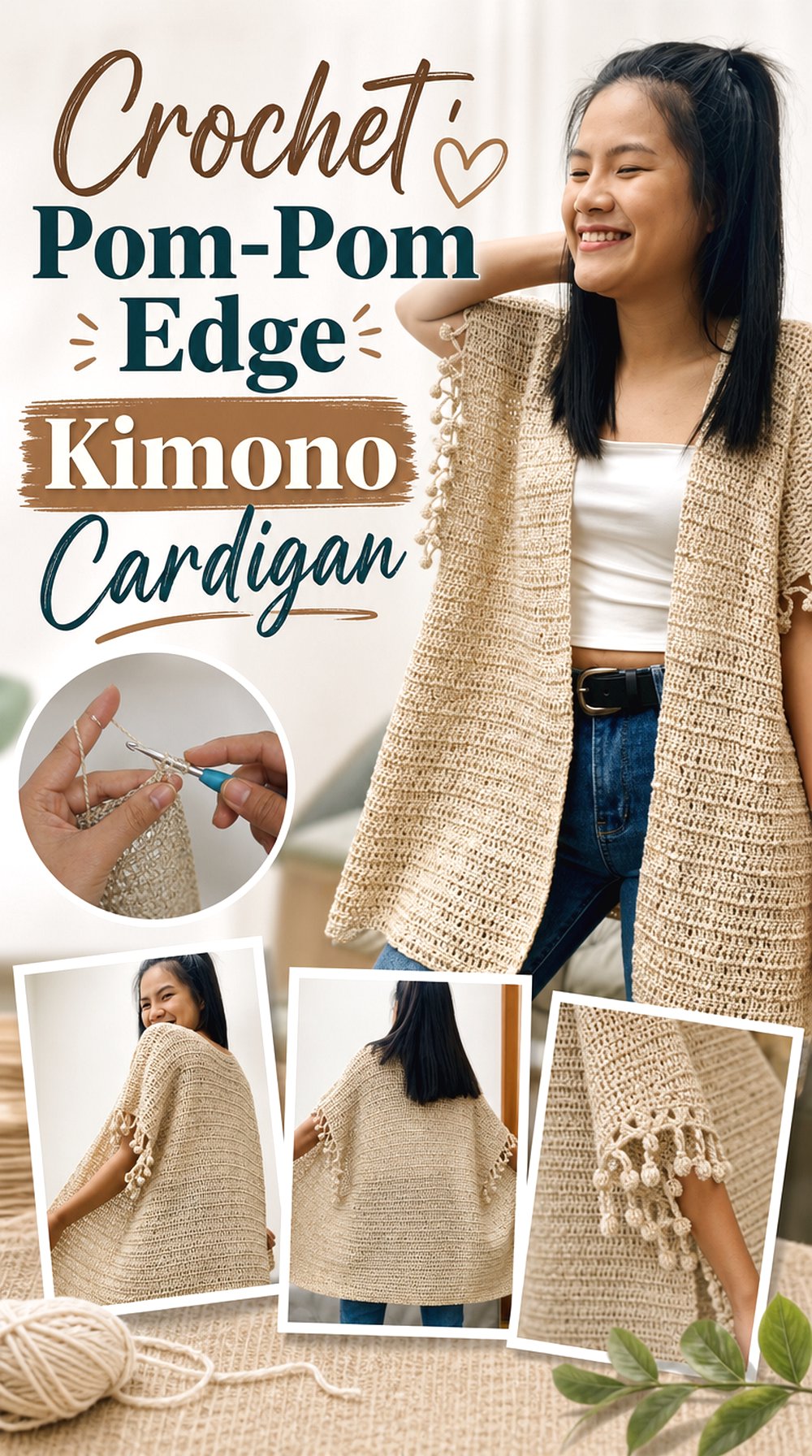
This kimono cardigan brings a softer, more decorative edge to the longline cardigan mix. The open shape and optional pom-pom border make it feel lighter than a hooded cardigan or coat-style design, while still giving readers a wearable layering project.
It is a good final option for readers who want a cardigan that focuses on drape and border detail. The source includes a size range and blocked measurements, so readers should compare those notes carefully before deciding how the finished length will sit.
Look at the Border Detail
The pom-pom border is optional in the source, but it strongly affects the finished style. Readers should decide early whether they want that extra edge detail or prefer a cleaner finish. A border can make a simple kimono cardigan feel more decorative, but it may also change how the front and hem visually frame the outfit.
Check the Size Range
The source lists sizes from XS to 4XL, which gives readers a starting point for fit comparison. Before beginning, it is useful to check the demonstrated size, finished measurements, and any blocking notes. Kimono cardigans often depend on drape, so the finished width and length should be compared with personal layering preferences.
Consider Warm-Weather Layering
A kimono cardigan can work well when readers want coverage without the look of a heavy sweater. The open front, relaxed body, and border option make this project feel more suited to lighter styling than the high-collar or hooded choices. Readers should still check the creator’s yarn information before assuming how the cardigan will feel.
Creator: KnitcroAddict
Conclusion
These crochet longline cardigan ideas cover several different layering needs. Choose the ankle-length or straight duster styles for maximum length, the belted or buttoned designs for more front definition, and the hooded cardigan for extra coverage around the neckline. The ribbed, granny square, fringe, and kimono projects bring stronger surface or edge detail, while the summer duster keeps the look lighter. Use the original tutorials for exact construction details, measurements, and creator-specific instructions before starting.
FAQs
How do I choose the right crochet longline cardigan length?
Start by deciding where the hem should fall: upper thigh, knee, calf, or ankle. Then compare that point with the creator’s finished measurements or measuring guidance. Longline cardigans can look very different depending on height, so it helps to measure a garment you already like before choosing a tutorial.
Should I pick a hooded, belted, or open-front cardigan?
Choose based on how the cardigan will be worn. A hood adds coverage and a casual look, a belt gives the front more shape, and an open-front duster is easier to layer loosely. The best option is the one that matches the clothes you plan to wear underneath.
What should I check before changing yarn?
Check the creator’s yarn weight, hook information, gauge notes, and finished measurements first. A longline cardigan can become heavier, stretchier, shorter, or wider when yarn is changed. Keep the yarn label for care details, and make a test swatch when the tutorial or written pattern asks for one.
Are pockets useful on crochet longline cardigans?
Pockets can be useful, but placement matters. On a long cardigan, pockets that sit too low may be uncomfortable, while pockets that sit too high may affect the front appearance. Look for a clear pocket section in the tutorial and check whether the creator shows the finished cardigan from enough angles.
Can I sell a cardigan made from a YouTube tutorial?
Do not assume selling is allowed. Check the creator’s pattern terms, video description, linked written pattern, shop listing, or license notes. Some designers allow finished-item sales, while others add limits or require permission. Credit alone does not automatically give permission to sell or reuse protected pattern material.