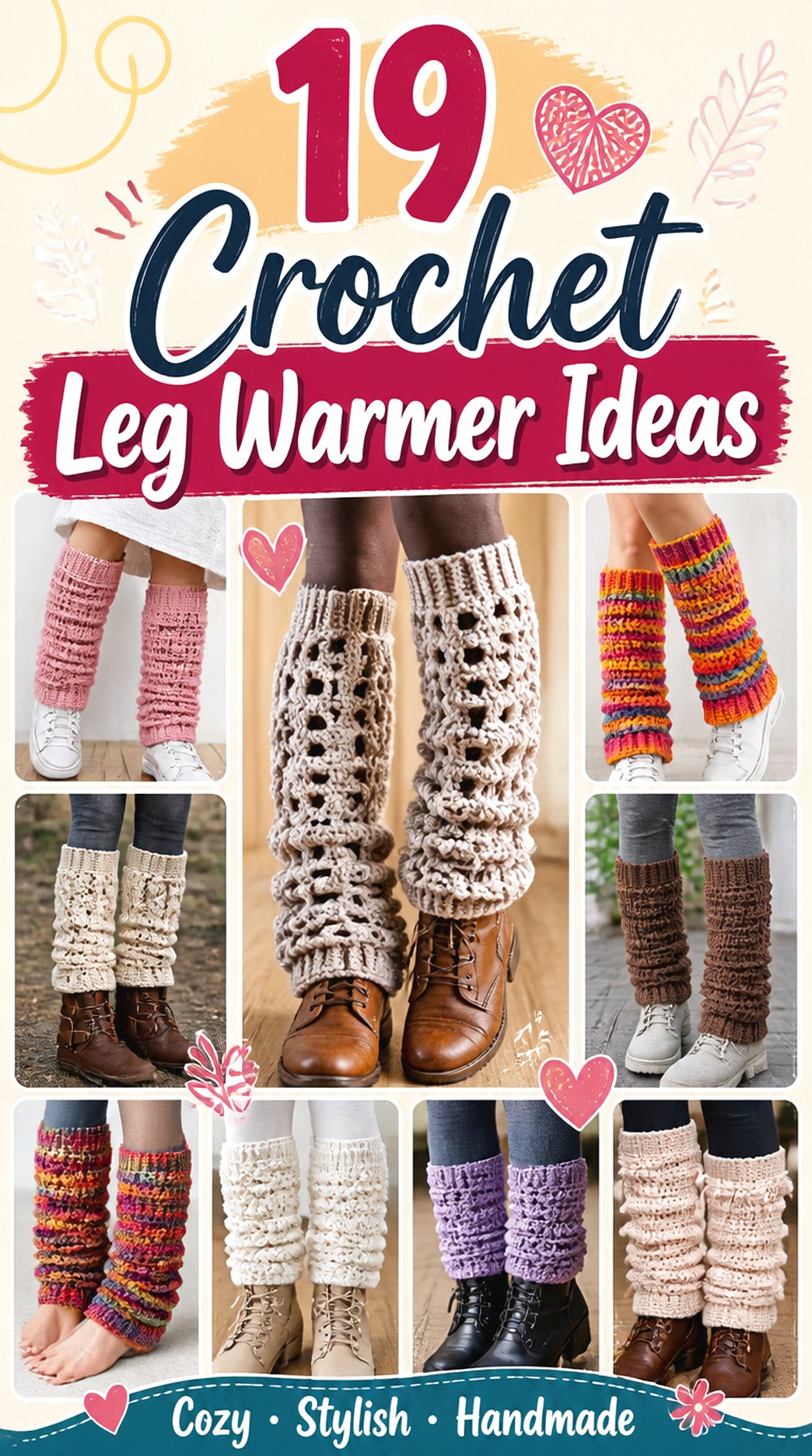

Crochet leg warmers can be compact layers that disappear neatly into a winter outfit or dramatic accessories designed to be noticed. The biggest differences are not simply yarn color. Height, stretch, cuff construction, surface texture, flare, decorative edging, and the way the lower edge meets your shoes can completely change how a finished pair looks and feels.
These 19 crochet leg warmer ideas cover short boot-friendly shapes, fitted ribbing, oversized fluffy textures, shell stitches, bows, ruffles, Tunisian crochet, cables, scalloped edges, playful accents, and thigh-high coverage. Each project is paired with an original YouTube tutorial from a different creator. Use the comparisons and checkpoints below to narrow the list by fit, styling, construction, and the amount of decorative detail you actually want.
Quick List
- Crochet Adjustable Calf-and-Ankle Leg Warmers
- Crochet No-Frills Classic Leg Warmers
- Crochet Flat-Seamed Ribbed Leg Warmers
- Crochet Faux-Knit Ribbed Leg Warmers
- Crochet Slouchy Textured Leg Warmers
- Crochet Shell-Stitch Slouchy Leg Warmers
- Crochet Chunky Flared Leg Warmers
- Crochet Thick Fluffy Bow Leg Warmers
- Crochet Almond-Stitch Bow Leg Warmers
- Crochet Scalloped Forest-Fern Leg Warmers
- Crochet Cherry-Accent Leg Warmers
- Crochet Measurement-Based Bow Leg Warmers
- Crochet Tunisian Ribbed Leg Warmers
- Crochet Sculpted Cable Leg Warmers
- Crochet Ruffled Made-to-Measure Leg Warmers
- Crochet Longer Everyday Leg Warmers
- Crochet Curly-Texture Leg Warmers
- Crochet Short Boot-Friendly Leg Warmers
- Crochet Thigh-High Heel-Gap Leg Warmers
Measure for Grip, Slouch, and Height Before Choosing
A leg warmer has to pass over the foot and ankle while also fitting the calf, so one circumference rarely tells the whole story. Start by deciding whether the finished fabric should hug the leg, sit softly against it, or deliberately collapse into folds. Fitted ribbing and tall designs need more attention to stretch and recovery; oversized or flared styles have more visual room but still need an upper edge that stays where intended.
Height changes the planning too. Measure the area you actually want covered rather than copying how high a sample happens to sit on its model. For tall pairs, consider the changing circumference from ankle to calf and potentially above the knee. For short pairs, check where the lower edge will meet your shoes or boots. Tutorials that use measurement-based customization are particularly useful when your preferred proportions differ from the creator’s sample.
Yarn Structure Can Change the Finished Silhouette
Smooth yarn makes ribbing, shells, cables, and post-stitch textures easier to see. Fuzzy, curly, or very bulky yarn shifts attention from stitch definition toward softness and volume. Neither effect is automatically better; the right choice depends on whether the stitch pattern or the yarn itself is supposed to be the main visual feature.
Weight matters because leg warmers hang vertically. A dense, long piece can become heavier as its height increases, while a lighter or more open fabric may collapse into a softer slouch. When substituting yarn, do not assume identical hook sizing will reproduce the source fit. Compare the creator’s material information, your fabric’s stretch, and the measurements that matter for your legs. Keep the yarn label so you can follow its fiber-specific washing and care guidance later.
Think About Shoes Before Finalizing the Lower Edge
The ankle area can determine whether a pair looks sleek or awkward once it is actually worn. A narrow lower cuff can disappear neatly into a boot, while a broad flare is designed to sit over the shoe and become part of the silhouette. Ruffles, scallops, cherries, bows, and other low-positioned decorations also need enough visible space to make sense.
Before committing to length, try to picture the intended footwear. Chunky sneakers can visually balance a large flare, while low-profile shoes leave decorative edging completely exposed. Tall boots may hide details placed near the ankle. Open-heel designs solve the shoe question differently by extending part of the warmer toward the foot while leaving the heel exposed. Choosing the footwear relationship first can save you from finishing an elaborate edge that disappears every time the pair is worn.
1. Crochet Adjustable Calf and Ankle Leg Warmers
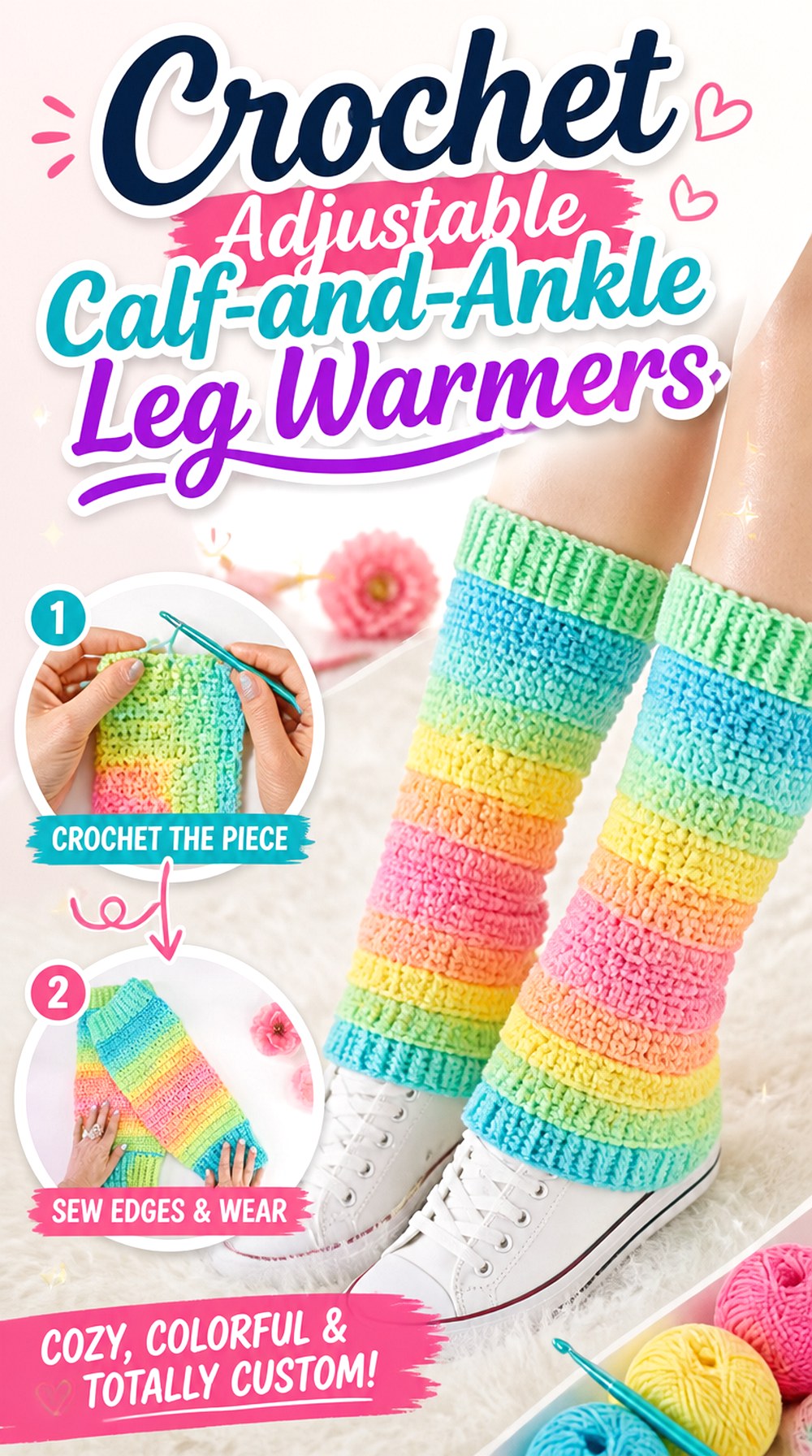
This customizable style is useful when fit matters more than decorative extras. The Treasurie tutorial specifically presents adjustments for calf size, ankle width, and height, making it a strong starting point for someone who wants control over the finished proportions instead of simply recreating one sample size. The visible design stays relatively classic, which keeps attention on shape and everyday wear rather than embellishment.
Compared with the ruffled, cherry, cable, and oversized designs later in this list, this pair is a practical foundation. It can help you understand how leg-warmer measurements interact before you move into more complicated silhouettes.
Separate Calf Fit From Ankle Fit
The calf is normally wider than the ankle, so checking both areas gives you more useful information than measuring one part of the leg. This tutorial’s emphasis on customizing both points makes it particularly relevant for readers who find straight tube shapes either too loose at the ankle or restrictive higher up.
When planning your pair, also consider whether it will be worn over bare legs, tights, leggings, or another layer. Measure with the type of layering you actually expect to use.
Height Should Match the Intended Slouch
Adding length does not automatically mean the top edge needs to sit higher. Extra fabric can also create intentional folds around the calf and ankle. Decide which effect you want before adjusting the project.
If you prefer a smooth silhouette, compare the intended finished height directly against your leg. If you want visible slouch, allow the source tutorial’s adjustment method to guide the construction rather than simply forcing a taller fitted tube downward.
2. Crochet No Frills Classic Leg Warmers
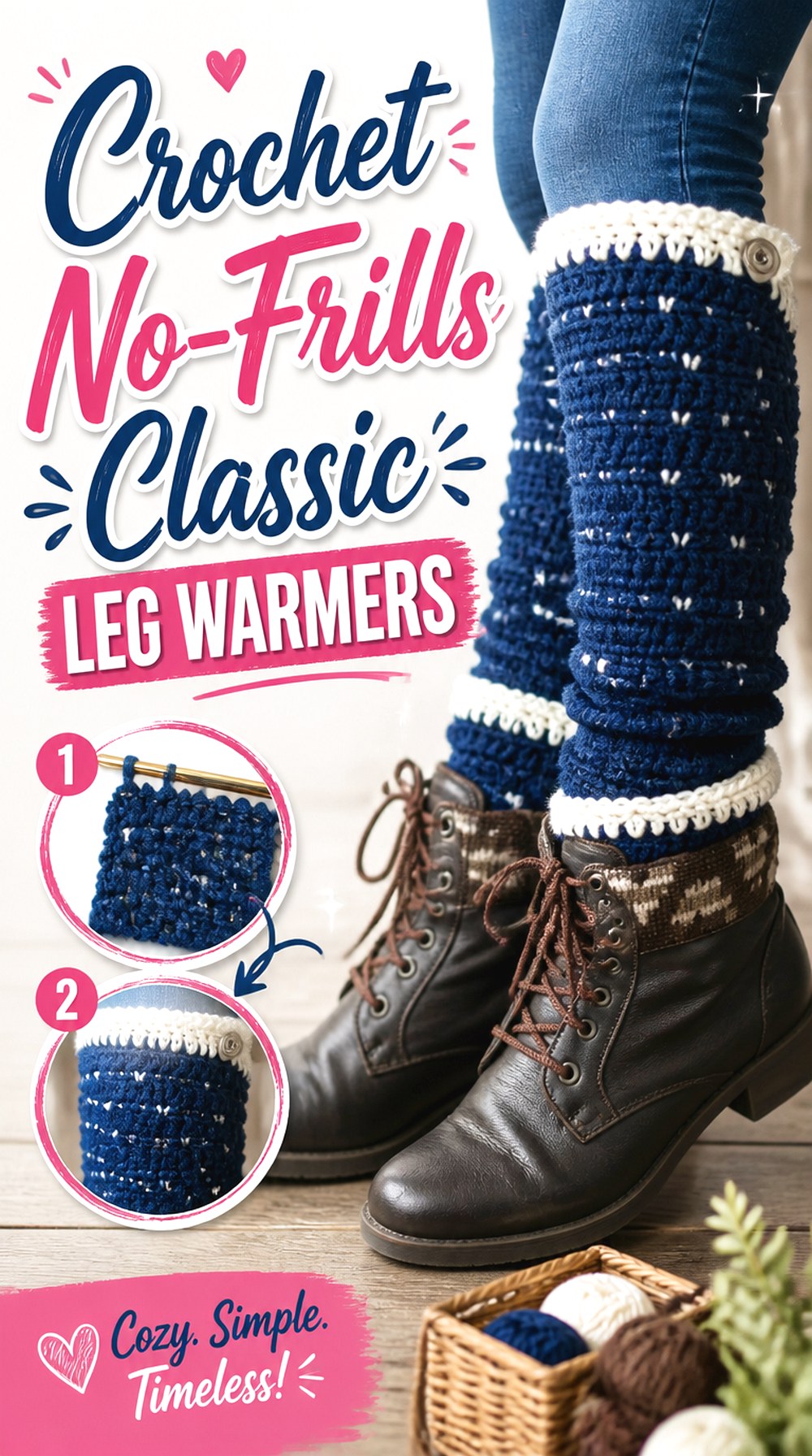
For a pair that keeps the silhouette simple, Crochet MC’s tutorial offers a straightforward leg warmer without the bows, scallops, cables, or lacing that dominate many fashion-focused designs. The finished form works well as a reference point for comparing more decorative ideas because the tube itself remains the main object rather than a background for embellishments.
This direction suits a reader who wants the leg warmers to function as a layer first. A plain surface also means yarn color and overall proportion carry more of the visual weight, so even modest adjustments can noticeably change the finished style.
A Simple Shape Makes Uneven Fit More Obvious
Without ruffles or strong texture to distract the eye, differences between the two finished pieces can stand out. Compare both leg warmers regularly for height and width instead of waiting until the second one is complete.
The same applies to the seam or joining area. A straightforward design looks most polished when the closing line does not noticeably twist or pull the fabric. Use the creator’s construction as the reference rather than improvising a different joining method midway through the project.
Plain Fabric Leaves More Room for Styling
A quiet design works with more types of footwear because there is no fixed decorative element that must remain visible. It can sit with boots, sneakers, or casual shoes depending on the finished height and circumference.
That flexibility is the main reason to choose this version over a highly themed pair. If your wardrobe already contains strong colors or prints, a cleaner leg warmer can add crochet texture without creating another competing focal point.
Original Tutorial and Creator Credit
Creator: Crochet MC
3. Crochet Flat Seamed Ribbed Leg Warmers
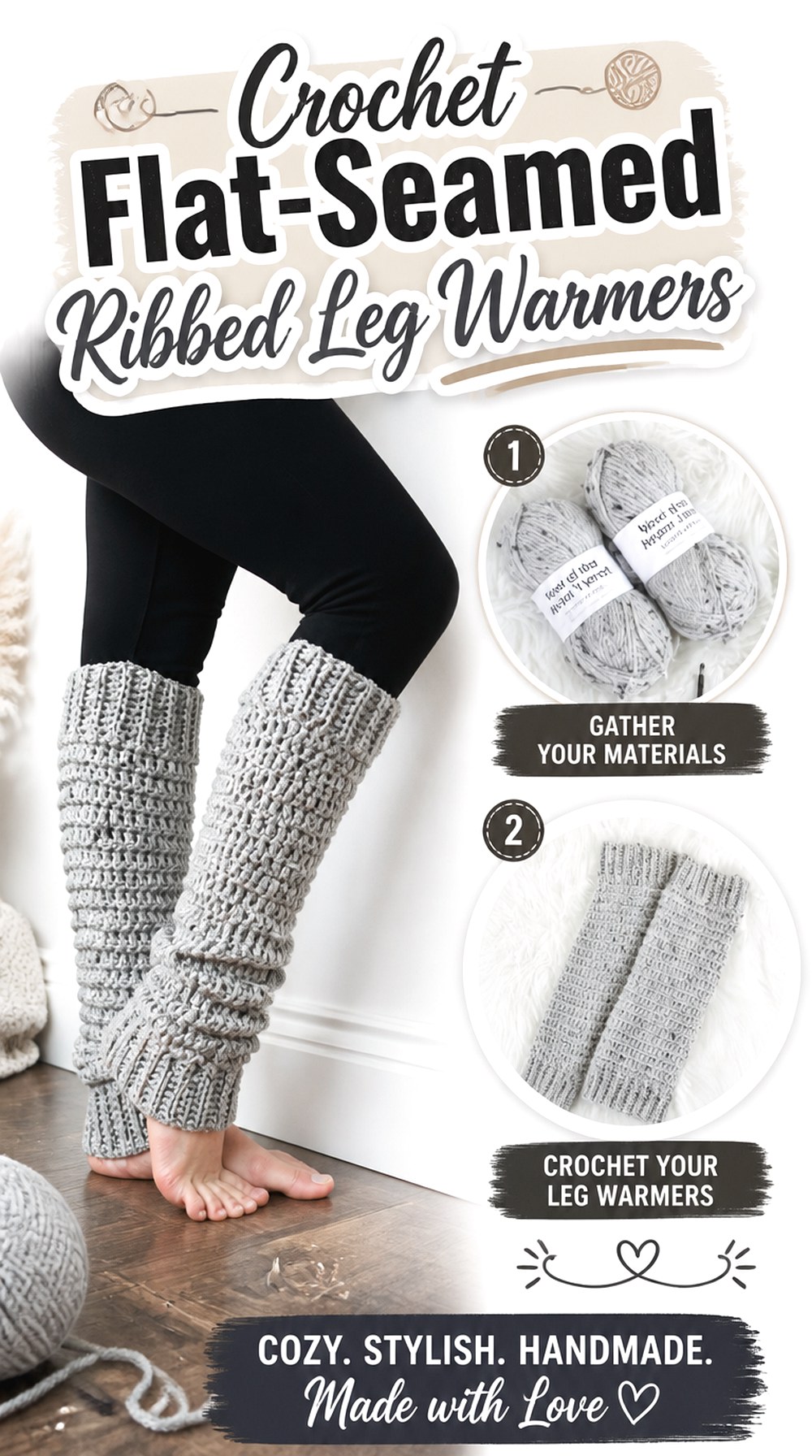
Ned & Mimi’s leg warmers provide a different construction route: the accompanying pattern is offered in multiple sizes, and the project is worked flat before being seamed into its final tube shape. The design combines pronounced ribbing with a clean, structured silhouette, giving it a more garment-like finish than loose or heavily flared alternatives.
The source also provides size-specific information through its written pattern. That makes this option worth considering when you prefer clearly separated sizing support rather than a completely improvised made-to-measure approach.
Flat Construction Makes the Seam a Visual Checkpoint
When a leg warmer is created flat and then closed, the final seam becomes part of the fit. Before finishing both pieces, check that the seam does not create an unexpectedly stiff ridge or pull one side shorter.
Flat construction can also be convenient for comparing the two unfinished pieces side by side. Matching their dimensions before seaming is generally easier than discovering a length difference after both have already become tubes.
Multiple Sizes Help With Starting Proportions
The source supports sizes ranging from baby through adult options rather than presenting one universal finished measurement.
Treat those sizes as the creator’s pattern framework, not a substitute for checking your own calf. A size label alone cannot tell you how you prefer the warmer to sit over leggings or whether you want more slouch. Compare your actual measurements with the source sizing information before committing.
Original Tutorial and Creator Credit
Creator: Ned & Mimi
4. Crochet Faux Knit Ribbed Leg Warmers
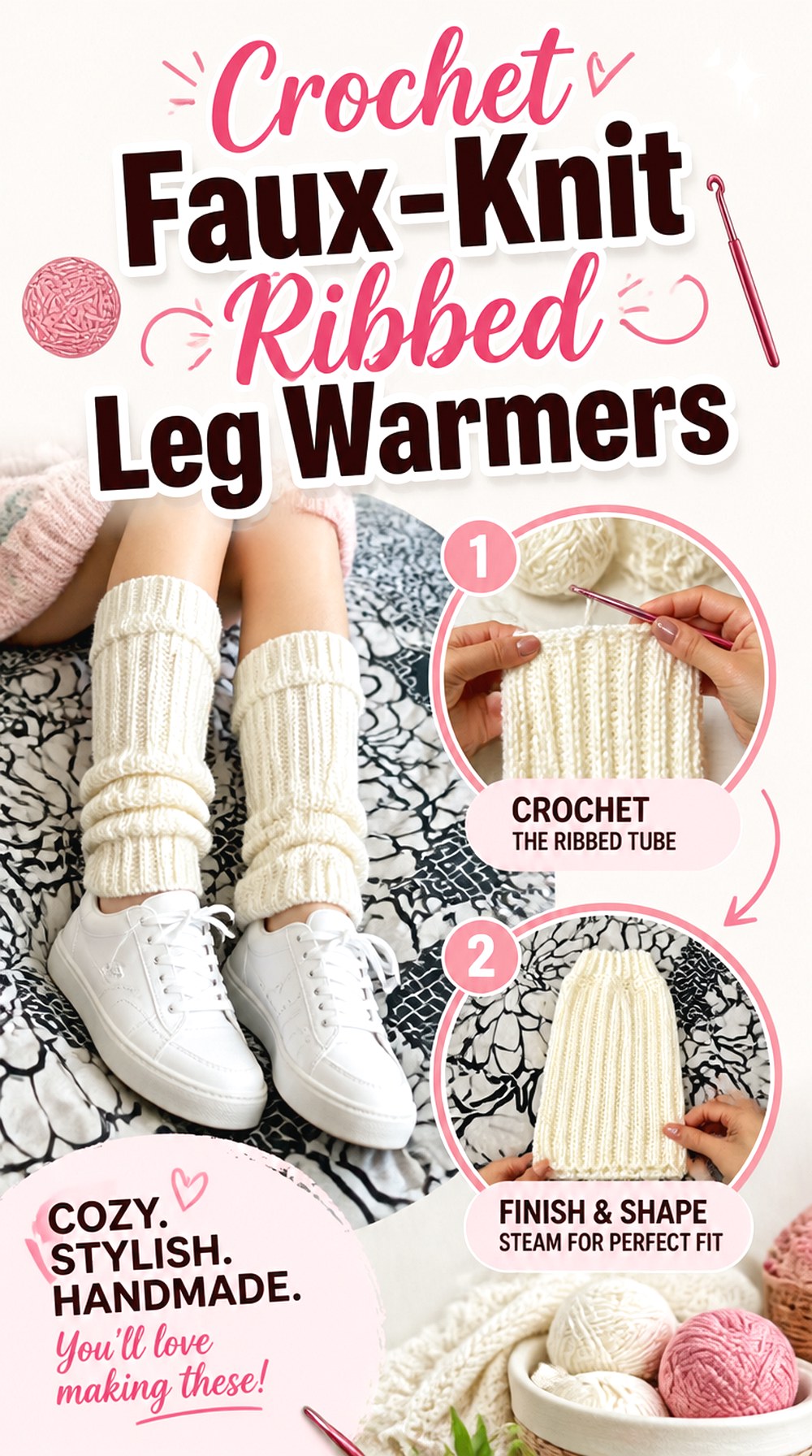
Strong vertical ribbing gives this Kae Neebs pair a faux-knit appearance that feels cleaner and more fitted than a heavily textured shell or cable design. The tutorial focuses on ribbed fabric, seaming, a separate upper cuff area, and final shaping, so the edge treatment is an important part of the overall silhouette rather than an afterthought.
Choose this direction when you want the leg warmer itself to resemble a wardrobe basic. It has visible texture, but that texture remains orderly and repetitive rather than sculptural or decorative.
Vertical Ribs Reward Consistent Tension
Long rib lines can reveal changes in stitch tension more clearly than irregular texture. Compare the width of the fabric at several points while you work, particularly if you tend to loosen your grip during longer repetitive sections.
If one warmer gradually becomes wider, correct the tension difference before finishing its partner. Making two pieces at the same time in alternating sessions can also make differences easier to notice.
Steam or Blocking Must Suit the Fiber
The creator includes steaming in the tutorial, but that does not make steaming appropriate for every possible substitute yarn.
Check the fiber content and care instructions for the yarn you actually use before applying heat. The goal is to improve the finished shape without flattening texture, damaging fibers, or permanently changing the fabric in a way the original material would not have experienced.
Original Tutorial and Creator Credit
Creator: Kae Neebs
5. Crochet Slouchy Textured Leg Warmers
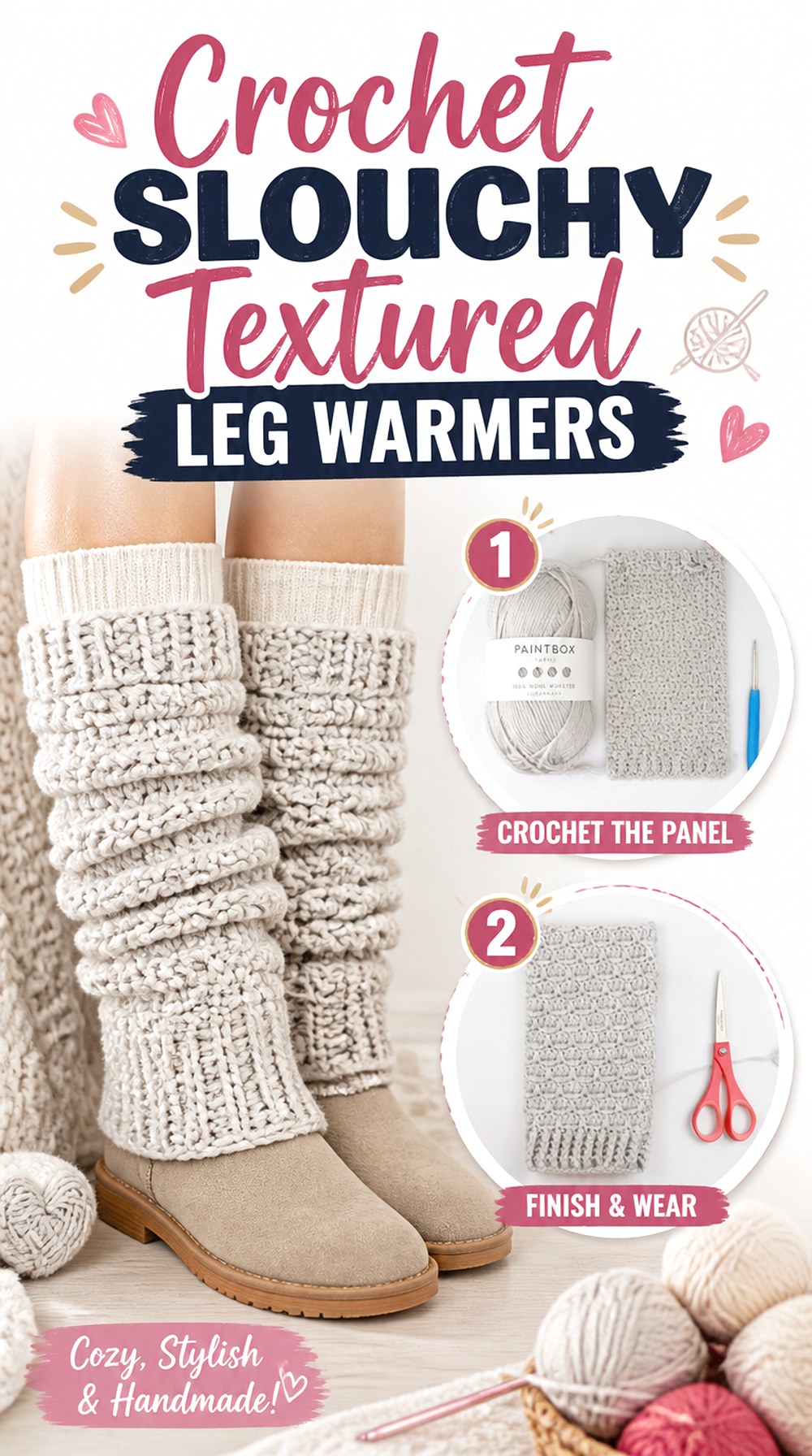
Sigoni Macaroni’s project shifts the emphasis from a close-fitting tube toward intentional slouch. Ribbed edges frame a textured central section, giving the fabric enough visual structure to stay interesting when it folds around the lower leg. The source also discusses resizing and changing the length, which matters because additional length in this design can become part of the slouched silhouette rather than simply extending coverage upward.
This is a useful middle ground between plain everyday leg warmers and exaggerated flared styles. The result still reads as wearable layering, but the extra fabric becomes an intentional styling feature.
Extra Length Needs Somewhere to Fall
If you make a slouchy pair longer, consider where the folds will collect. A long warmer with a narrow ankle can stack densely, while more room through the body can create broader folds.
Try the first piece against the footwear you expect to wear before duplicating its length. Boots and sneakers create different stopping points, and the same amount of extra fabric may not drape the same way with both.
Ribbed Edges Control a Relaxed Center
The contrast between a more controlled cuff and a looser body is important here. A slouchy leg warmer still needs an upper area that behaves predictably enough to keep the extra fabric from sliding continuously downward.
When substituting yarn, check how well the fabric springs back after being stretched. A very soft yarn that stays elongated may create more collapse than the source sample.
Original Tutorial and Creator Credit
Creator: Sigoni Macaroni
6. Crochet Shell Stitch Slouchy Leg Warmers
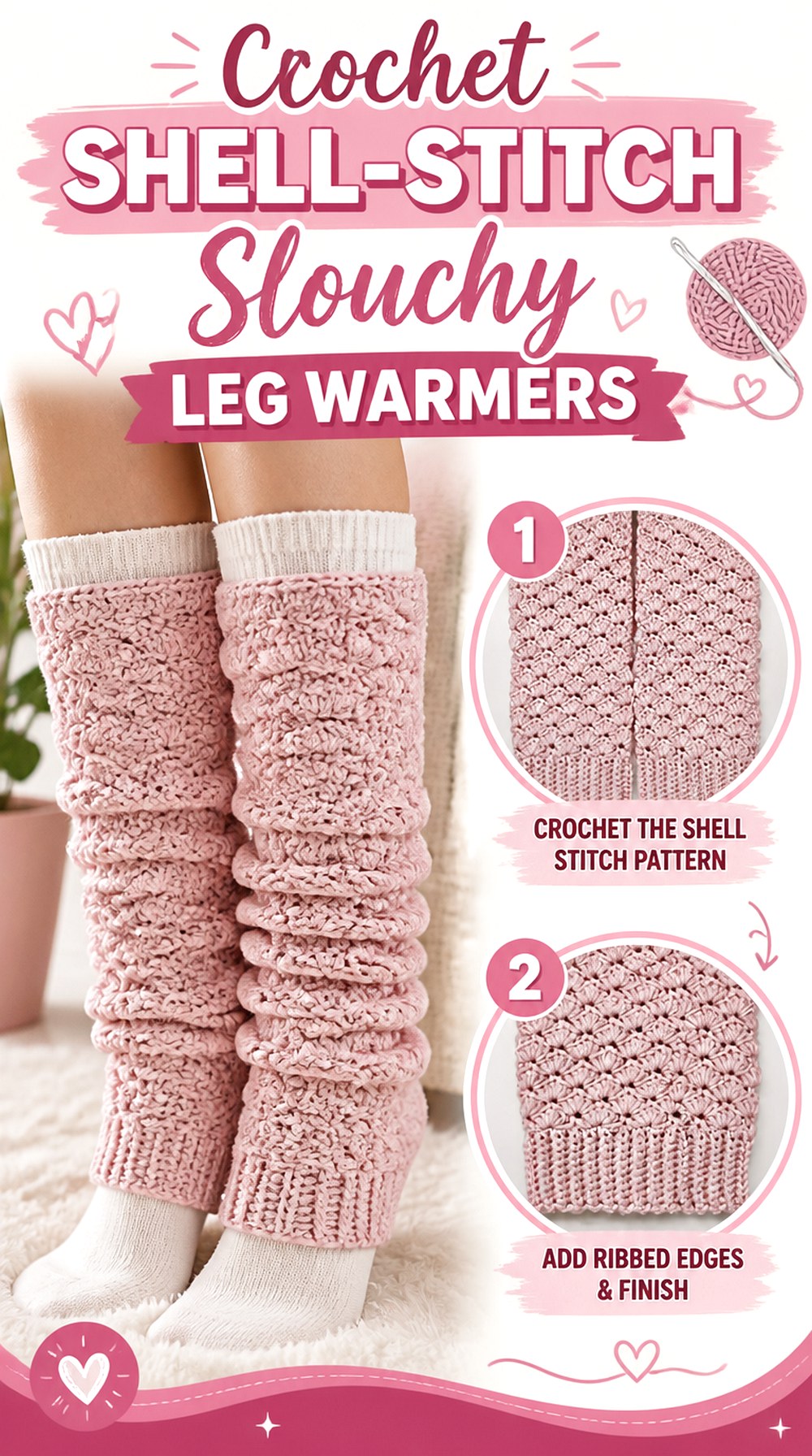
Shell texture creates a more decorative surface than plain ribs while keeping the overall piece recognizable as a classic calf-length leg warmer. Crochet With Akita combines shell stitch with ribbed sections and specifically frames the finished pair as customizable slouchy leg warmers.
The shells create small repeating areas of shadow and openness, so yarn choice becomes more visually important. A smooth yarn helps the pattern read clearly, while a fuzzy or heavily variegated yarn may soften the shell definition. This design is a good option when you want visible stitch work without adding separate appliqués or trims.
Shell Texture Looks Different When Compressed
A shell pattern viewed flat may open more clearly than the same fabric gathered into slouchy folds. Decide which version you care about most: strong visible stitch definition or a softer layered surface.
If you intend to wear the pair heavily slouched, look closely at the tutorial’s finished result rather than judging the stitch solely from close-up construction footage.
Ribbing Frames the Decorative Body
The top and bottom ribbing visually contain the shell section, which helps prevent the design from looking unfinished at the edges. It also gives you a clear point for comparing how snugly the project meets the leg and footwear.
If you change the body length, preserve the overall proportion of the cuffs in your planning rather than allowing the decorative center to overwhelm the edges.
Original Tutorial and Creator Credit
Creator: Crochet With Akita
7. Crochet Chunky Flared Leg Warmers
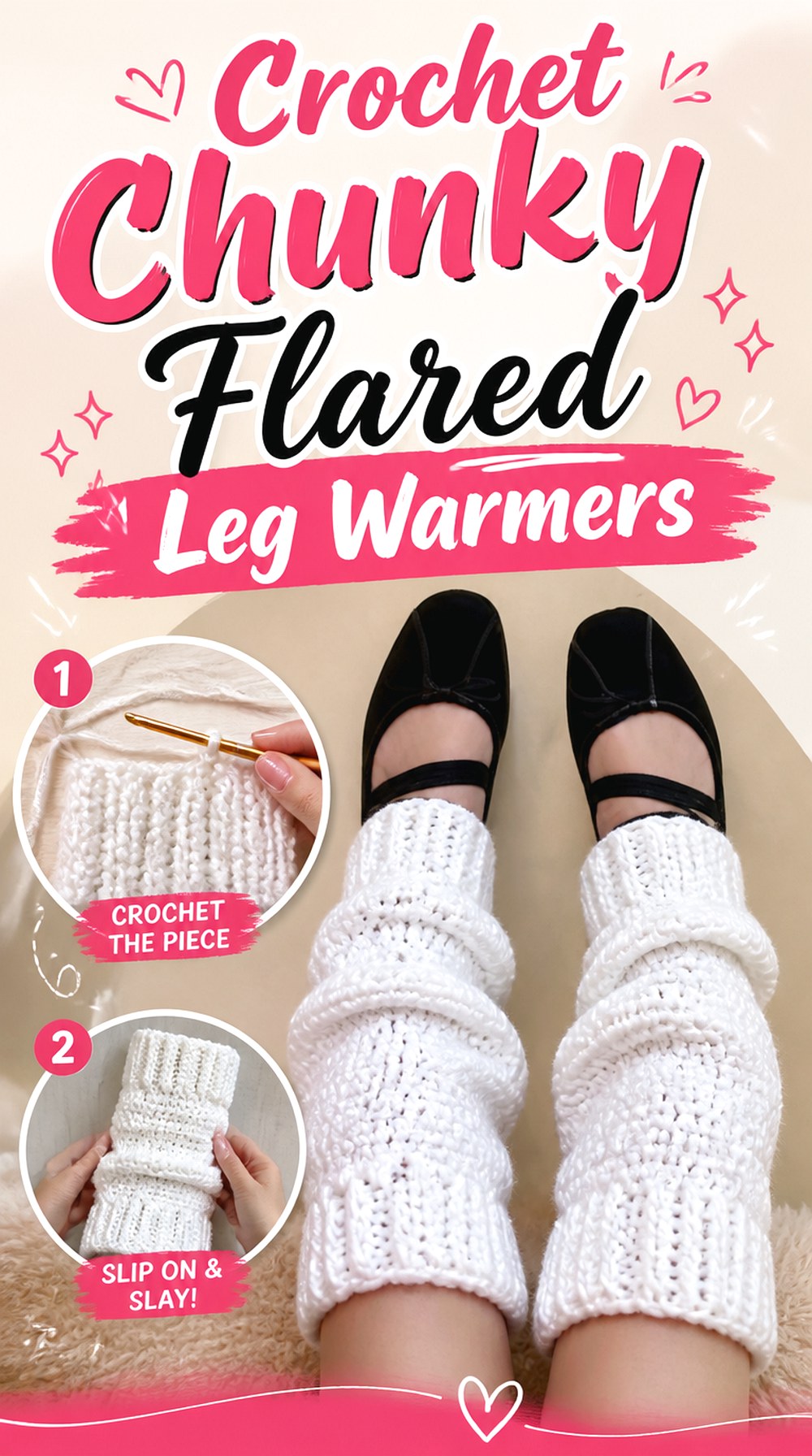
Nat’s record uses a noticeably wider lower edge, producing leg warmers designed to spread over shoes instead of remaining a straight tube from calf to ankle. The creator specifically discusses styling the finished pair over different footwear, and the flare is the feature that separates this idea from fitted and slouchy designs.
This is an outfit-first option. The lower portion becomes part of the shoe silhouette, making the project feel more like a statement accessory than a quiet insulation layer. Chunky construction further amplifies that visual volume.
The Flare Should Be Planned With Footwear
A wide lower edge can look deliberate over a substantial shoe but oversized against very narrow footwear. Before choosing your final proportions, place a measuring tape or scrap fabric around the shoe area to visualize how much spread you actually want.
If most of your shoes are hidden under the finished flare, the lower edge becomes one of the most visually dominant parts of the project.
Chunkier Fabric Adds More Visual Weight
Thicker yarn can produce a stronger silhouette, but it also makes every fold and overlap larger. If your goal is a soft, dramatic flare, that can be an advantage. If you prefer a cleaner line, compare a less bulky project elsewhere in the list.
Pay particular attention to the transition from calf width into the expanding lower section; that change is what makes the design look intentional rather than simply oversized.
Original Tutorial and Creator Credit
Creator: nat’s record
8. Crochet Thick Fluffy Bow Leg Warmers
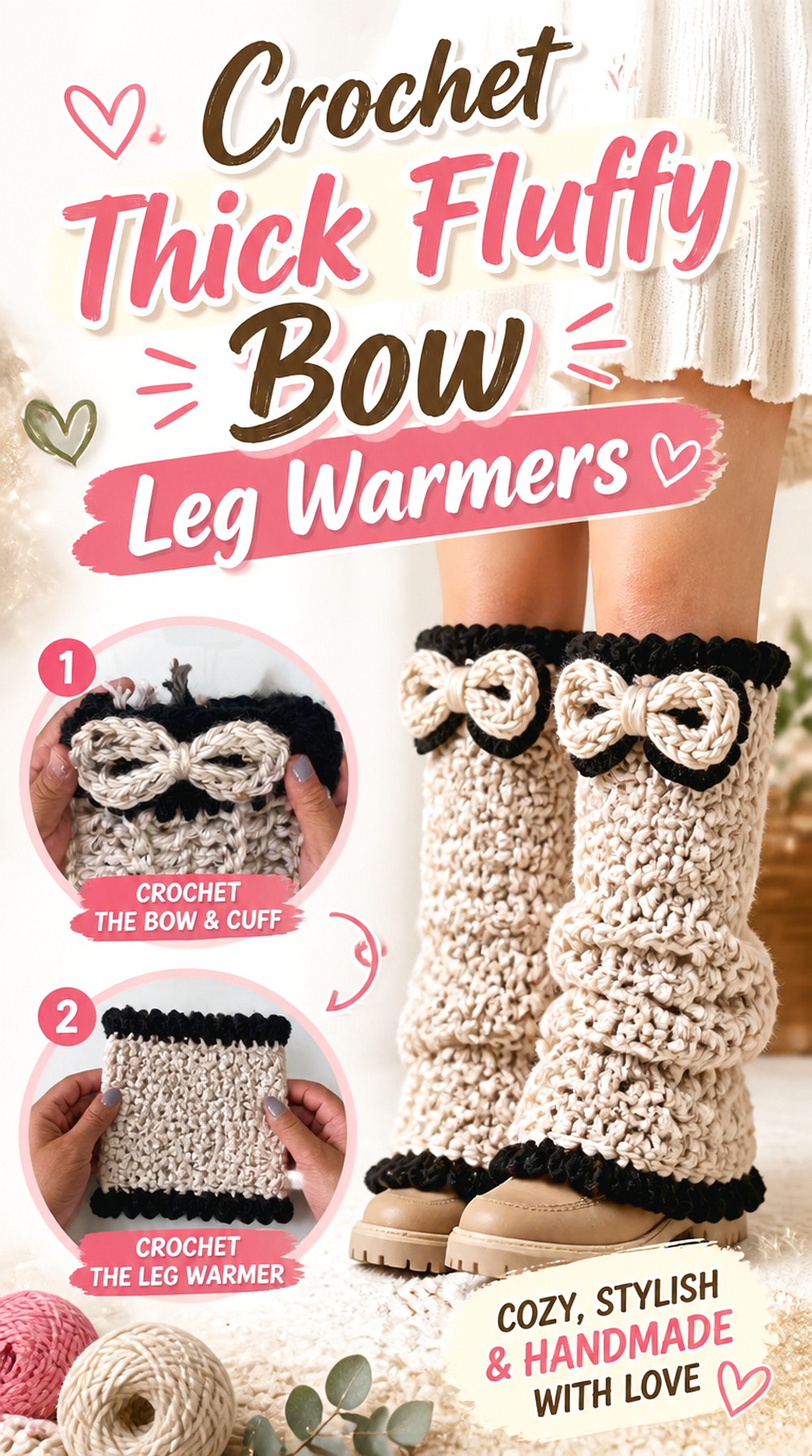
Charle Rae’s version combines an oversized, fluffy appearance with a decorative bow. The source presents the finished warmers as thick and XXL, making volume—not precise stitch definition—the first thing you notice.
This project differs from the smaller bow styles because the entire warmer already has a strong silhouette before the embellishment is added. It can work well when the goal is exaggerated cozy styling, but that same volume means you should think about how the pair interacts with pants, shoes, and the amount of bulk you find comfortable around the calf.
Fluffy Yarn Softens Crochet Definition
If you substitute yarn, decide whether preserving the fuzzy surface or the visible stitch structure matters more. Smooth yarn may make the construction clearer but can substantially change the mood of a project designed around plush volume.
Before crocheting the second leg warmer, compare the first against your leg and footwear. Thick fabric occupies more physical space than a smooth DK or worsted design.
Keep the Bow Proportional to the Volume
A small bow can disappear visually against an oversized warmer, while a very large one can make an already bulky design difficult to style. Use the creator’s finished result as the scale reference, then decide whether you want the bow to blend into the piece or become the focal point.
Also consider where the bow will sit relative to boots or pants so it does not spend most of its time hidden.
Original Tutorial and Creator Credit
Creator: Charle Rae
9. Crochet Almond Stitch Bow Leg Warmers
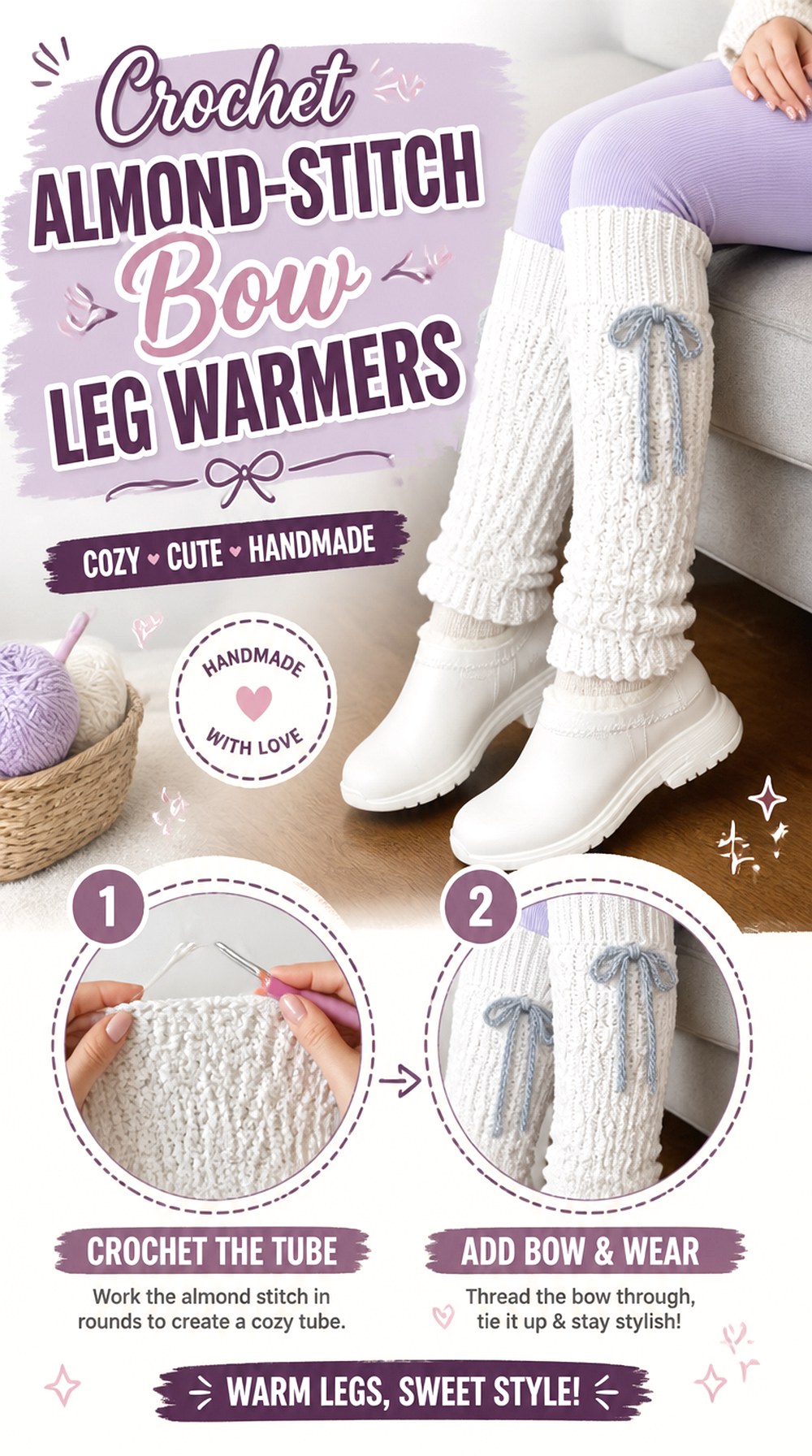
Petpetcrochets combines a textured almond-stitch body with ribbed cuffs and a bow, creating a decorative pair that feels more refined than an oversized fluffy version. The creator describes the design as measurement based, so fit remains important despite the strong styling details.
The project works well for readers who want decoration distributed across the entire surface rather than concentrated only at the edge. Texture, cuff definition, and the bow all contribute, so color choice should leave enough visual breathing room for those elements to remain distinguishable.
The Almond Texture Needs Enough Definition
The body pattern is a central feature, so a yarn that completely obscures stitch definition may remove much of what makes this design different. Smooth yarns generally let raised or clustered textures cast clearer shadows.
Before substituting materials, compare a small sample to the creator’s finished fabric. Focus on density and texture rather than trying to match appearance only through color.
Bow Placement Should Work With Your Shoes
Because the bow creates a clear front-facing accent, orientation matters when the warmers are worn. Decide where you want that detail to sit and keep the placement consistent between both legs.
Low footwear keeps the decoration exposed. If you mainly wear tall boots, check whether the bow would be covered before investing time in an embellishment that is meant to be seen.
Original Tutorial and Creator Credit
Creator: petpetcrochets
10. Crochet Scalloped Forest Fern Leg Warmers
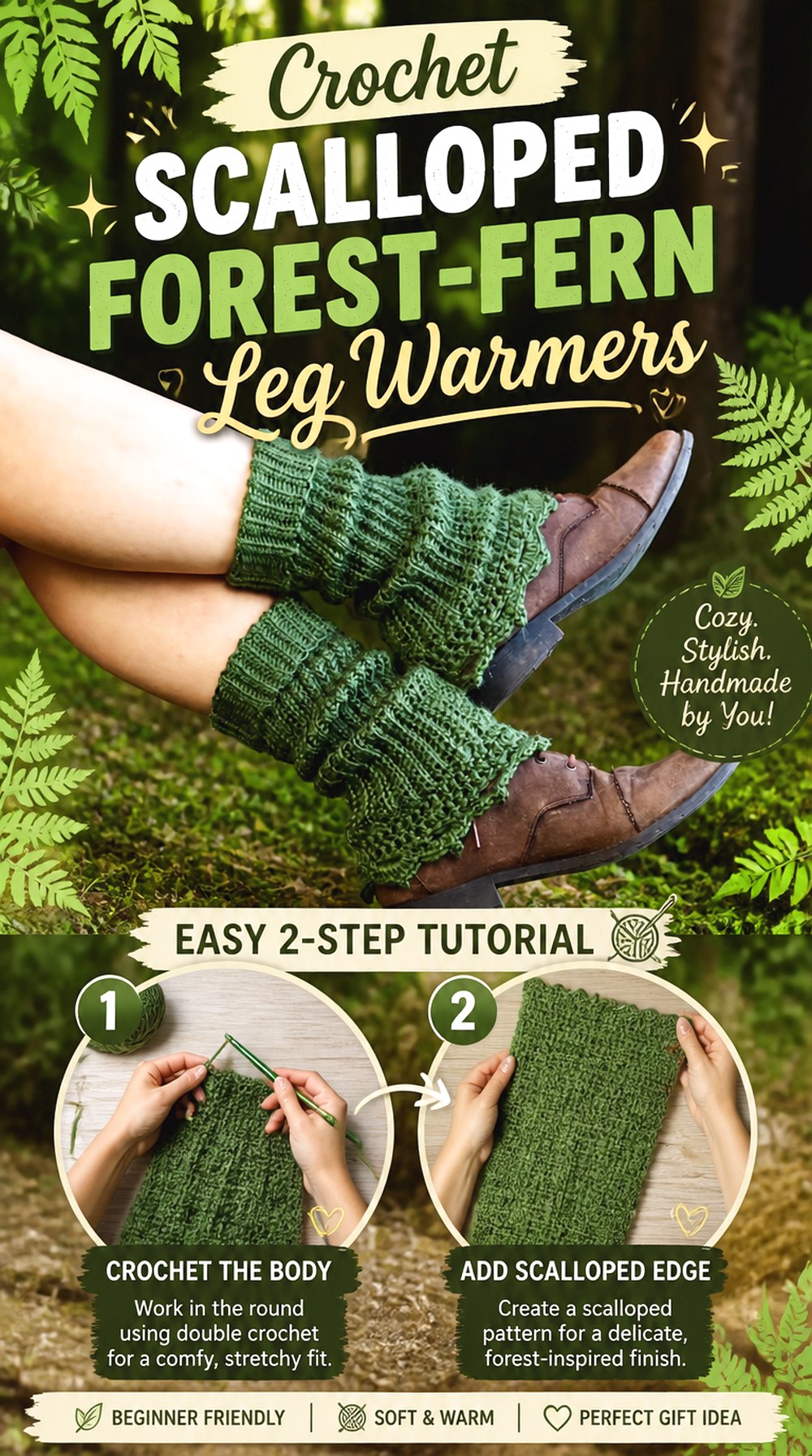
Forest Lily’s Forest Fern design uses a made-to-measure approach with a decorative scalloped trim, giving the pair a softer cottagecore or fantasy-inspired finish without relying on a separate appliqué. The creator also discusses customization and construction directly in the tutorial.
This is a strong choice if you like a shaped edge but do not want the fullness of a ruffle. The scallops create a repeating outline that is noticeable without adding as much extra volume around the ankle. The result sits between practical layering and clearly decorative crochet.
Scallops Need Space to Stay Visible
A decorative edge loses much of its effect if it is pushed entirely inside a boot. Plan the lower length around shoes that leave at least part of the trim exposed.
If the scallops begin to curl or overlap more than expected, compare the fabric’s tension and the creator’s finished edge before assuming blocking will solve everything. A substituted yarn may behave differently.
Made-to-Measure Construction Rewards Early Checking
Because the design is customizable rather than dependent on one fixed size, check the developing piece against your intended leg position while adjustments are still easy.
Do not focus exclusively on circumference. Also confirm that the scalloped edge lands where you want it and that the top remains secure enough for the height you selected.
Original Tutorial and Creator Credit
Creator: Forest Lily
11. Crochet Cherry Accent Leg Warmers
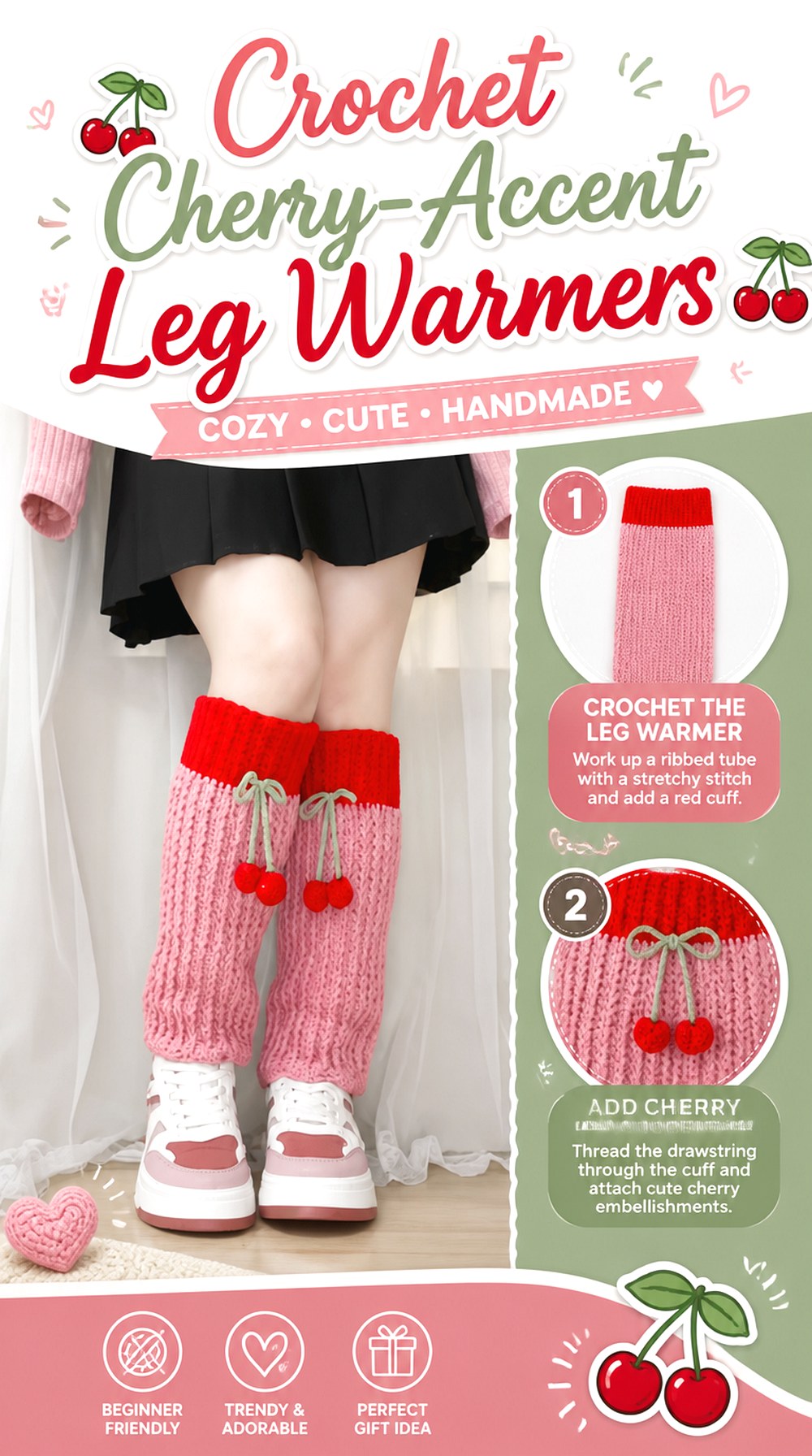
Vivi Crochet’s project adds a recognizable cherry motif and decorative lower edging to the leg warmer, moving the piece firmly into playful statement-accessory territory. The source shows a ribbed starting section, a textured body, shaped edging, and separate cherry components.
Unlike a bow that can be adapted into many aesthetics, the cherry establishes a clear theme. Choose this project because you want that character to be visible. If the finished warmers will usually disappear beneath tall boots or wide pants, much of the work that distinguishes this design could be hidden.
Motif Placement Should Match on Both Legs
A recognizable appliqué makes differences in placement easier to spot. Before permanently attaching each cherry, position both warmers side by side and compare the height and orientation of the motifs.
You can also temporarily pin or tack the pieces in place and check them while the warmers are worn. The best flat-lay position is not always the most balanced position on the leg.
Decorative Edging Changes the Ankle Shape
The lower edge has its own visual rhythm, so it should be considered alongside the cherry rather than treated as a separate afterthought. Together, these details make the bottom portion busier than a standard cuff.
Pairing the warmer with relatively simple footwear can give those elements enough space to read clearly.
Original Tutorial and Creator Credit
Creator: Vivi Crochet 🌷
12. Crochet Measurement Based Bow Leg Warmers
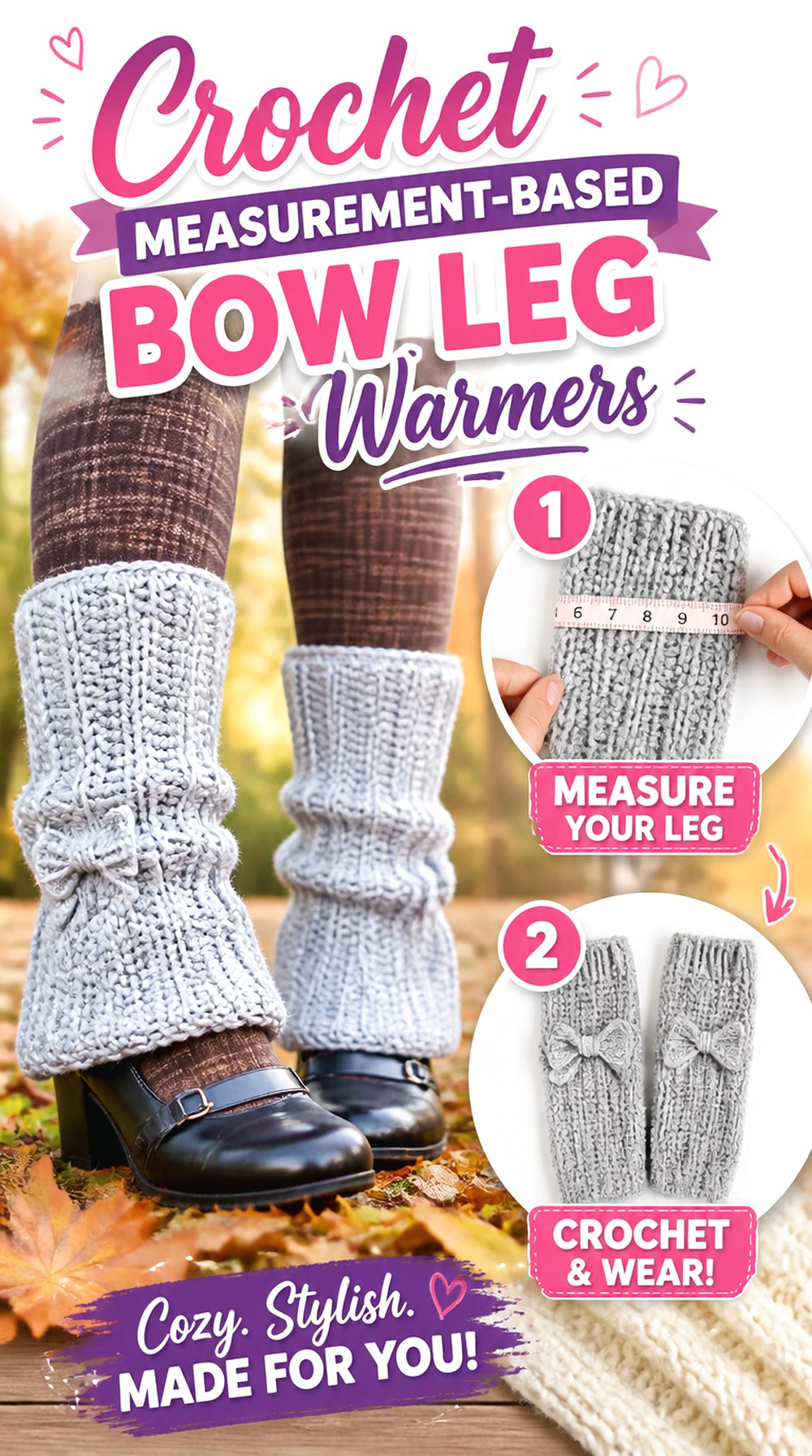
StelarCrafts offers another bow-focused direction, but the design is framed around measuring for size and adding the bow as a finishing option. That makes it easier to treat the decoration as an adaptable styling decision instead of the core construction feature.
This pair suits readers who want a relatively approachable silhouette that can be personalized after the main wearable shape is established. Compared with the almond-stitch bow warmers, the emphasis here is less on a distinctive all-over stitch texture and more on fit plus a clean decorative finish.
Fit the Main Warmer Before Adding Decoration
Treat the bow as the finishing layer. First confirm that the leg warmer itself reaches the intended height and sits comfortably around the calf.
This sequencing prevents a common planning problem: choosing the bow’s placement based on a flat piece, then discovering that it lands awkwardly once the fabric stretches around the leg.
Repeated Bows Need Consistent Orientation
If both leg warmers use the same embellishment, establish a reference point before attaching it. You might align it relative to a seam, a cuff edge, or the visual front of the warmer.
The exact position can be customized, but consistency is what makes the pair look intentional. Check the placement while both pieces are worn, not only when they lie flat.
Original Tutorial and Creator Credit
Creator: StelarCrafts
13. Crochet Tunisian Ribbed Leg Warmers
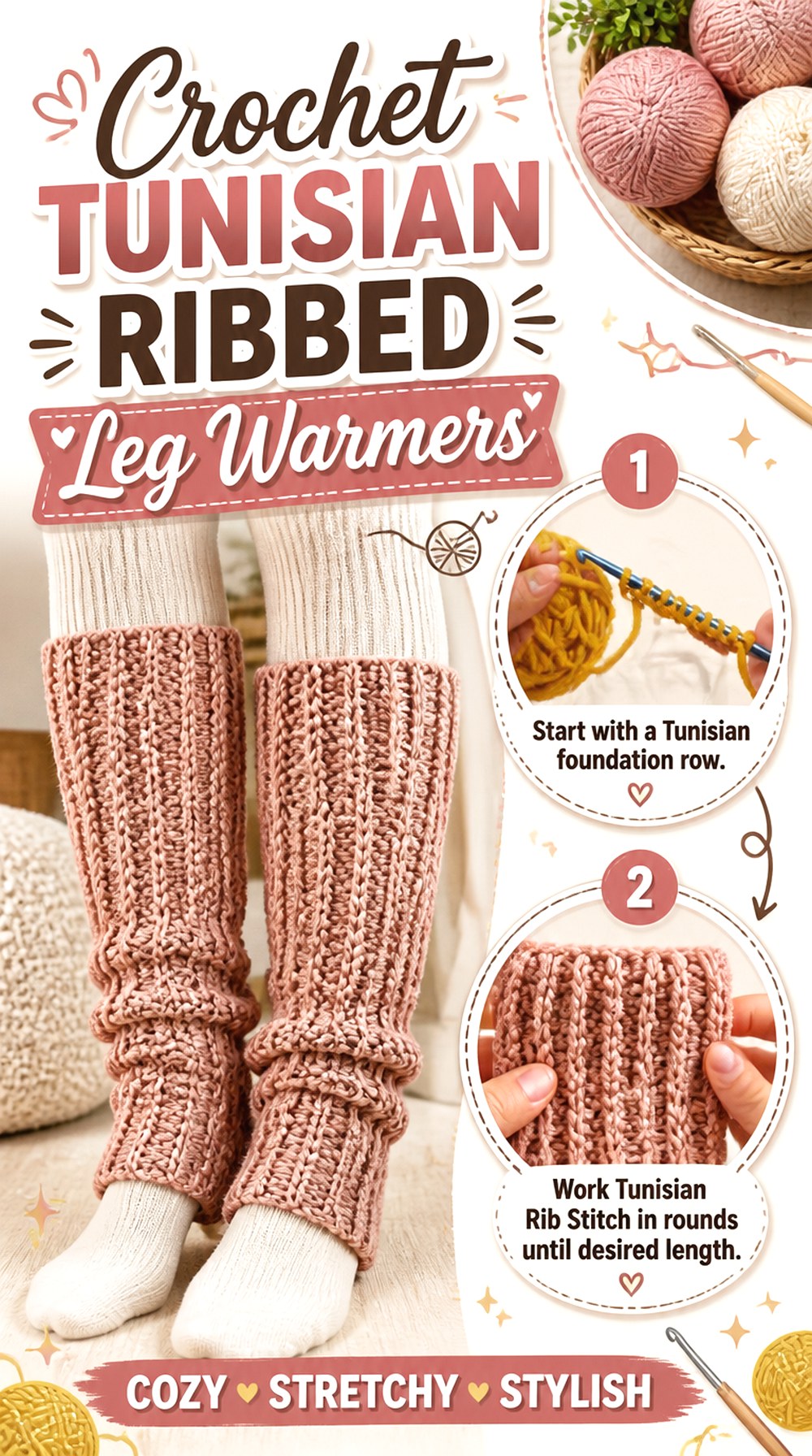
Cosmaudí’s project introduces Tunisian crochet, using Tunisian knit and purl stitches to create a fabric that looks substantially different from conventional crochet ribbing. The tutorial also covers seaming and includes an optional cord that can be used for lacing or as a drawstring.
Choose this idea when learning format matters as much as the finished accessory. The structure gives you a chance to practice a different crochet technique while still ending with a practical wearable. The optional cord also allows the top edge to become more visibly styled.
Tunisian Fabric Deserves Its Own Swatch
Do not assume your usual crochet tension will translate directly to Tunisian crochet. The fabric formation and hook handling are different enough that a small sample is useful before you commit to an entire pair.
Compare both width and drape. A fabric that looks attractive flat may feel too stiff for the amount of slouch or close fit you intended.
A Drawstring Changes the Upper Edge
The tutorial’s optional cord provides a different solution to top-edge styling than fixed ribbing alone.
If you use it, check that the finished cord sits comfortably and that the ends do not interfere with your intended outfit or activity. For casual fashion use, it can become a decorative feature; for a cleaner look, you may prefer the warmer without it.
Original Tutorial and Creator Credit
Creator: cosmaudí
14. Crochet Sculpted Cable Leg Warmers
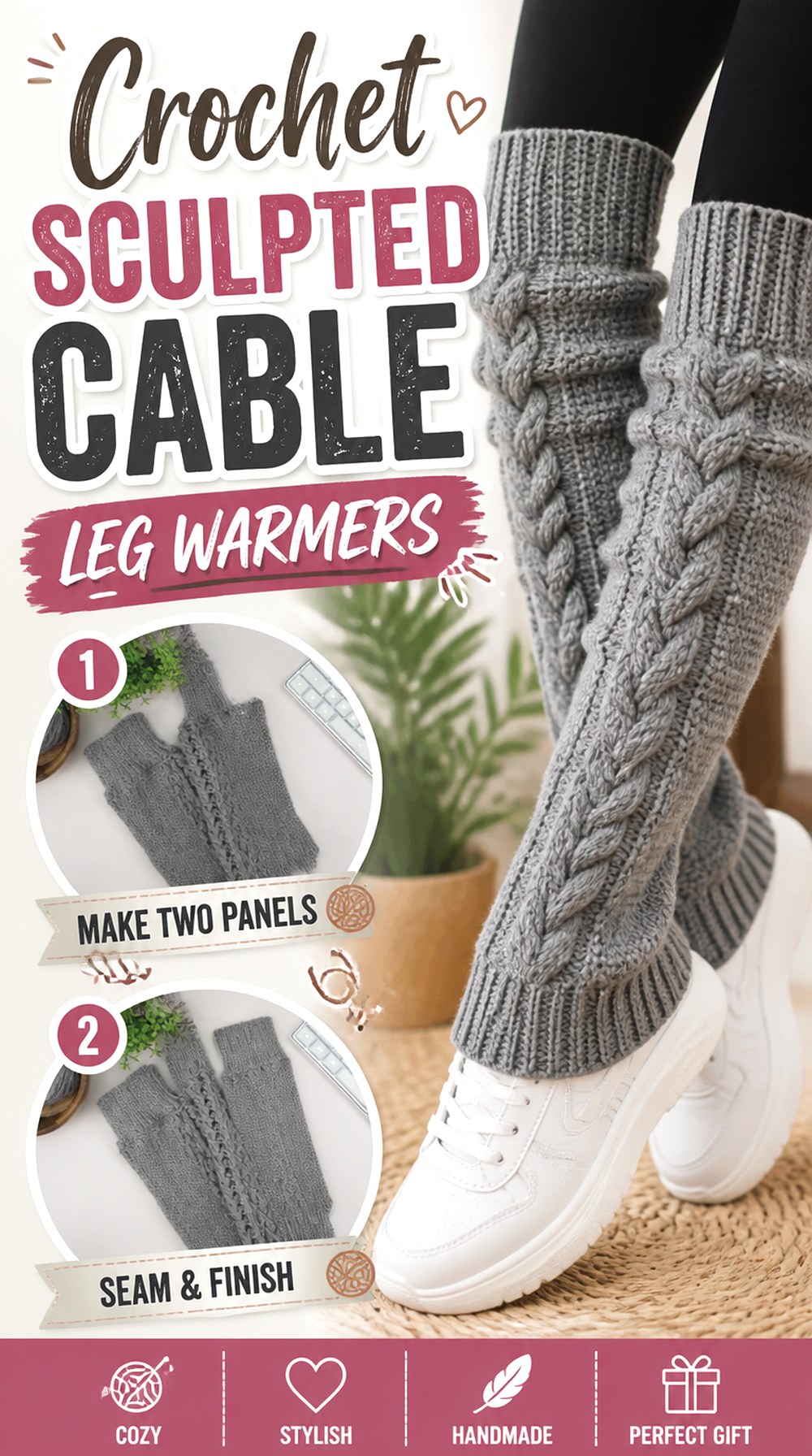
TCDDIY’s cable-stitch design is one of the most structurally detailed options in the collection. The tutorial combines cable-style texture with additional shaping elements, including side sections and upper and lower finishing areas, rather than relying on one simple repeated tube.
Raised cable texture produces stronger light and shadow than smooth ribbing, so the surface becomes the main design feature. This project is a better match for someone who wants crochet technique to be clearly visible than for someone looking for a quiet basic layer.
Solid Colors Let Raised Cables Read Clearly
Highly variegated yarn can compete with sculpted texture because both color changes and stitch relief ask for attention. A simpler color treatment usually makes shadows around the cable elements easier to see.
If you do use a multicolor yarn, crochet a sample of the actual textured section first. You may find that subtle color variation works while rapid changes obscure the cable effect.
More Shaping Means More Checkpoints
The source divides the construction into several functional areas rather than one uninterrupted tube.
That gives you useful moments to compare the piece against your leg before proceeding. Pay attention to how the structured portions meet each other; if one area is already too tight or too loose, continuing can magnify the mismatch.
Original Tutorial and Creator Credit
Creator: TCDDIY
15. Crochet Ruffled Made to Measure Leg Warmers
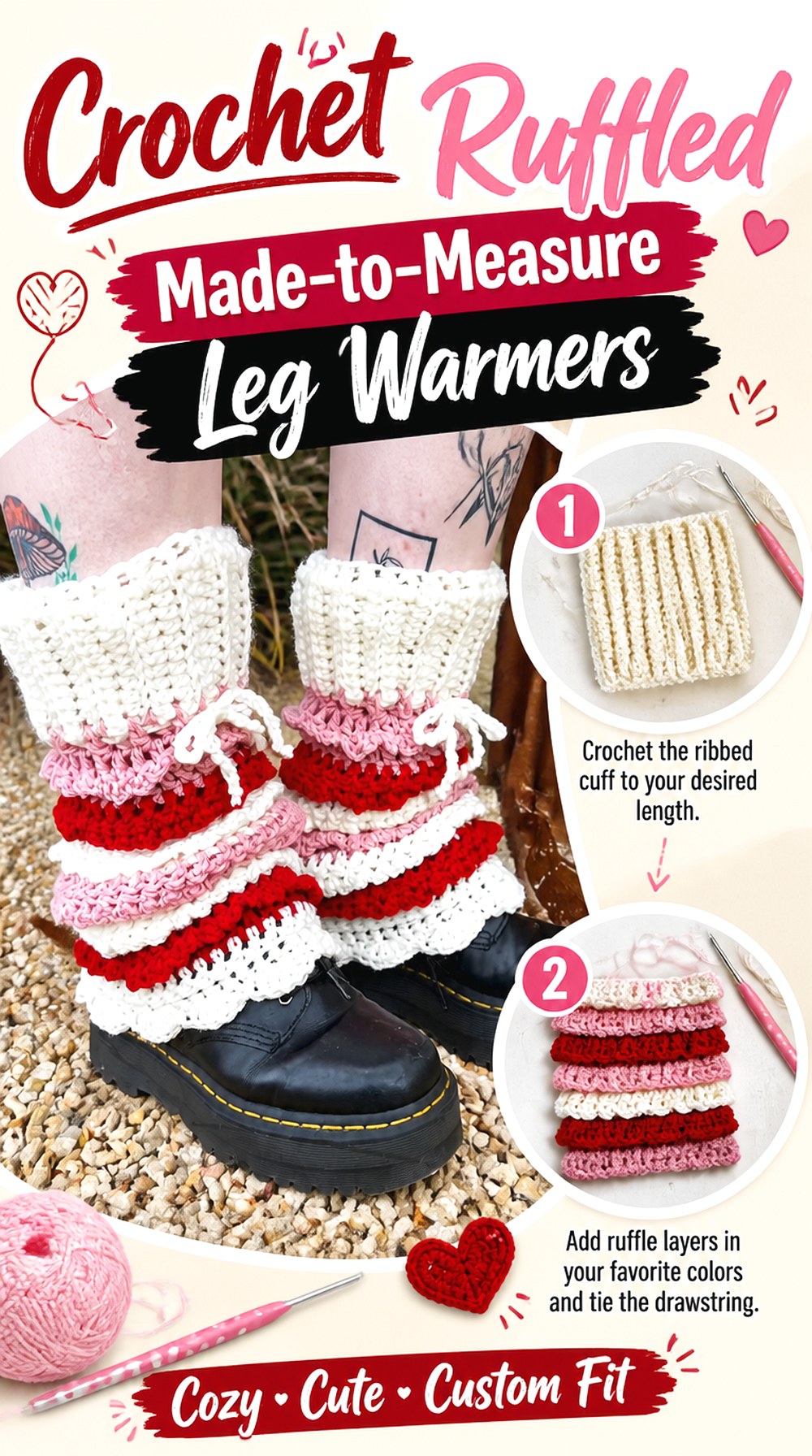
Melody Yarn Tinka’s ruffled leg warmers make the lower edge the star. The tutorial is presented as a size-inclusive, made-to-measure project and uses a prominent frilled finish that gives the pair a much softer and more playful silhouette than straight cuffs.
Ruffles add visual width and movement, so this design works best when the edge will remain visible. It is a particularly clear alternative to the Forest Fern scallops: both reshape the lower border, but a ruffle produces more volume while scallops create a flatter decorative outline.
Decide How Full You Want the Lower Edge to Feel
Ruffles can quickly become the largest-looking part of a leg warmer. Before choosing contrasting colors or adding more visual emphasis, consider whether you want the frill to blend into the main fabric or act as the focal point.
The wider the perceived edge, the more it interacts with the shape of your shoes. Test the first finished warmer with footwear before finalizing its partner.
Made-to-Measure Does Not Mean Skip Fit Checks
Custom sizing is most useful when you actually compare the work to the intended wearer. Check the top edge before investing time in the decorative finish.
If the main warmer slides down, a beautiful ruffle will not correct that structural issue. Resolve the fit first, then treat the frill as the finishing layer.
Original Tutorial and Creator Credit
Creator: Melody Yarn Tinka
16. Crochet Longer Everyday Leg Warmers
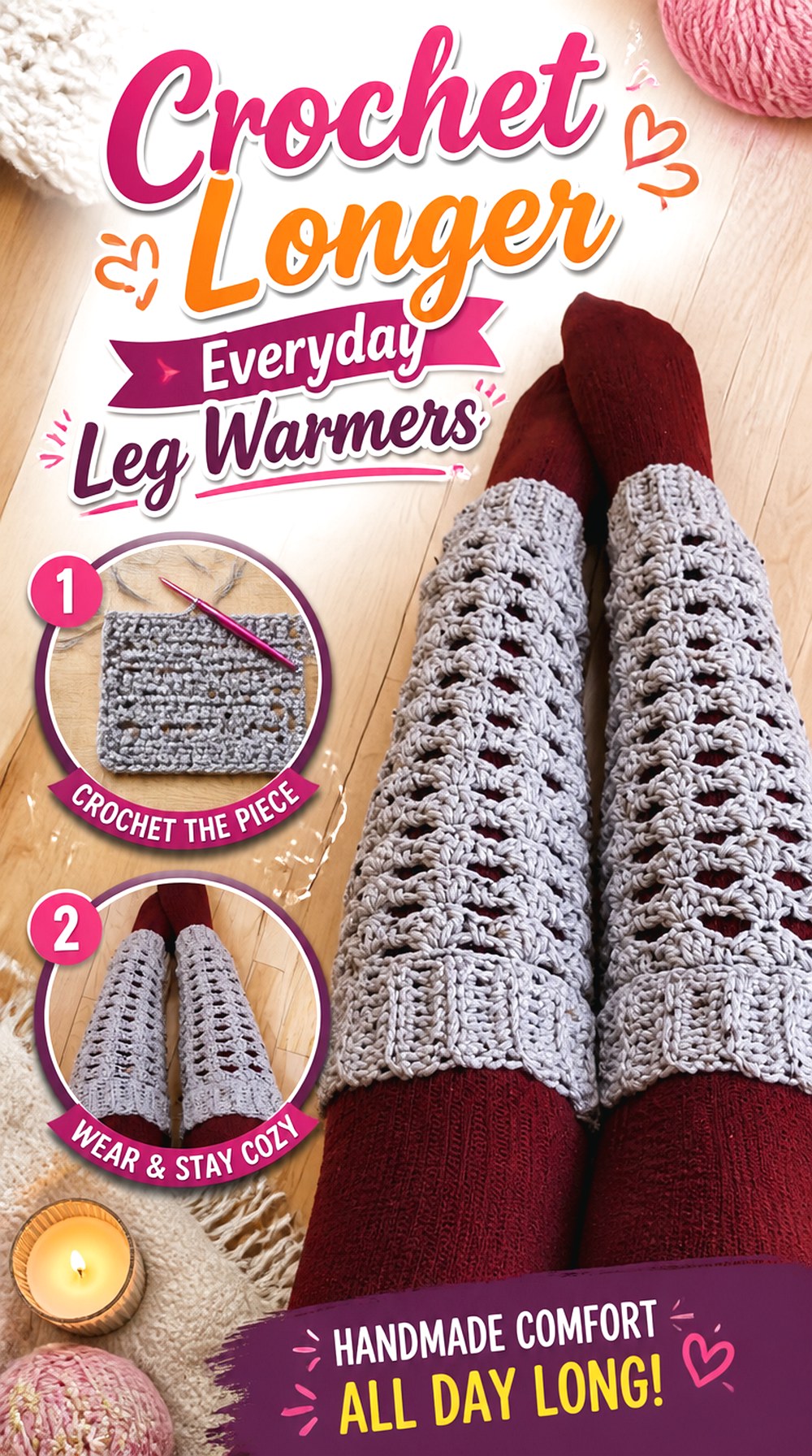
Bag-O-Day Crochet offers an everyday leg-warmer style that emphasizes adaptable sizing rather than a novelty detail. The associated project information describes a longer finished piece, making this a useful choice when you want more calf coverage without moving into a thigh-high silhouette.
This pair fills an important gap in the collection: it has more presence than a short boot warmer but remains easier to integrate into everyday outfits than ruffles, cherries, giant bows, or a dramatic shoe-covering flare.
Longer Coverage Magnifies Width Differences
As a leg warmer extends farther up the calf, it encounters more changes in circumference. A width that feels comfortable near the ankle can behave differently higher up.
Use the tutorial’s sizing approach rather than assuming a straight tube will automatically sit the same way across the whole leg. Try the first warmer on before reproducing it exactly.
Everyday Styling Benefits From a Quiet Surface
When a leg warmer covers more area, even simple fabric becomes a noticeable part of an outfit. A restrained surface makes it easier to combine the pair with textured coats, patterned leggings, or prominent boots.
If you want the leg warmers themselves to become the focal point, that is when a cable, shell, ruffle, or appliqué design elsewhere in this list may make more sense.
Original Tutorial and Creator Credit
Creator: Bag-O-Day Crochet
17. Crochet Curly Texture Leg Warmers
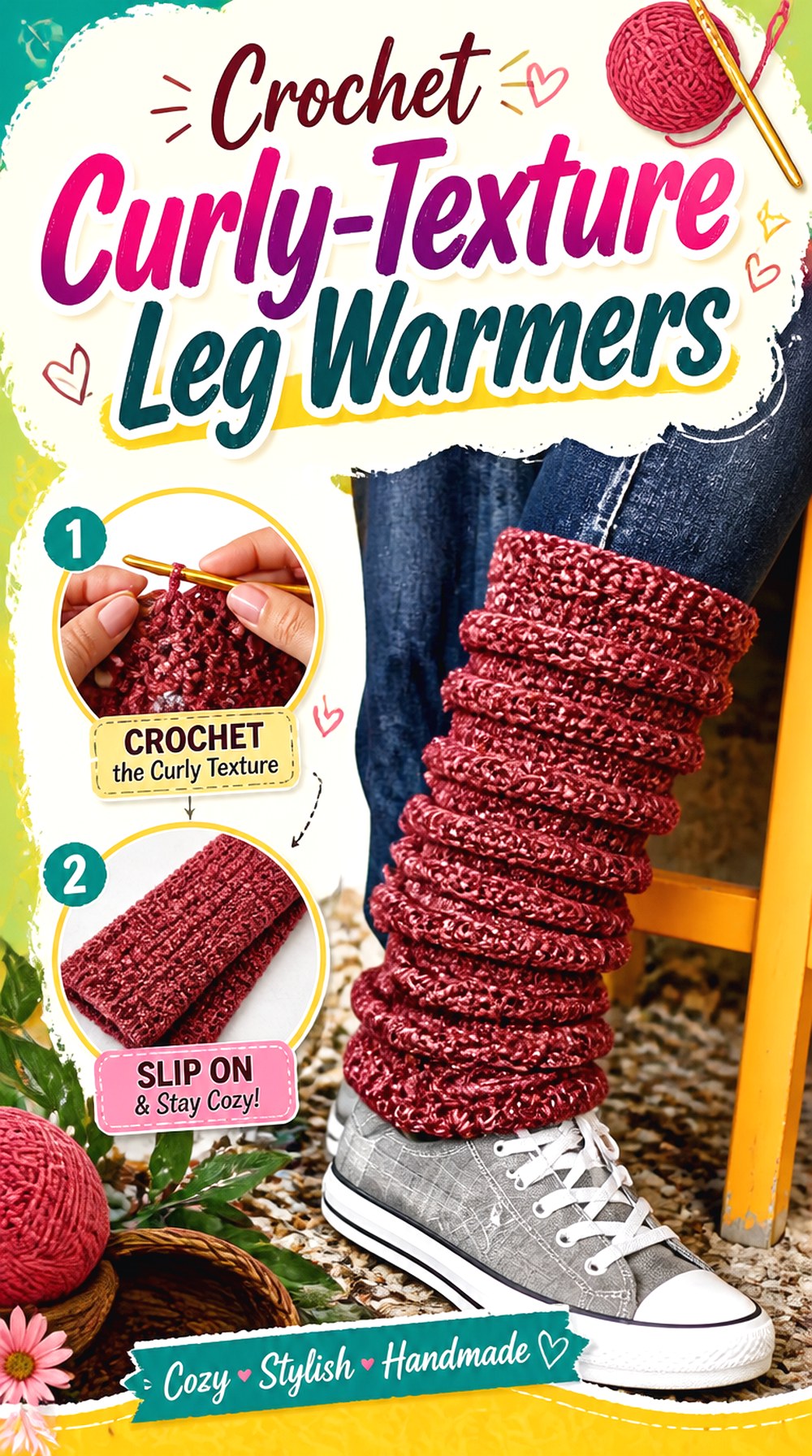
The Crochet Crowd uses curly-textured yarn in this adult leg-warmer tutorial, so the fiber surface itself becomes a major part of the finished look. The creator also notes that the calf area can be made longer or shorter.
This is a useful contrast to cable, almond, and shell projects where stitch definition carries the design. Here, the yarn creates much of the visual softness. Choose it when you like a fuzzier, more tactile appearance and are comfortable with stitches being less visually crisp than they would be in smooth yarn.
Novelty Texture Can Hide Small Stitch Details
Curly yarn can make it harder to see individual loops clearly. That may be part of the appeal in the finished project, but it can also change the working experience.
If you are substituting a similarly textured yarn, make sure you can still identify stitches comfortably enough to maintain consistent construction. The best-looking finished fiber is not useful if it makes the project unnecessarily difficult to track.
Adjustable Calf Length Changes the Proportion
Because the source allows the calf section to be shortened or lengthened, you can decide whether the fuzzy texture should sit mainly around the lower leg or occupy a taller area.
A longer version increases the amount of visually soft fabric, while a shorter one keeps the texture concentrated near footwear. Choose based on the outfit effect rather than warmth alone.
Original Tutorial and Creator Credit
Creator: The Crochet Crowd
18. Crochet Short Boot Friendly Leg Warmers
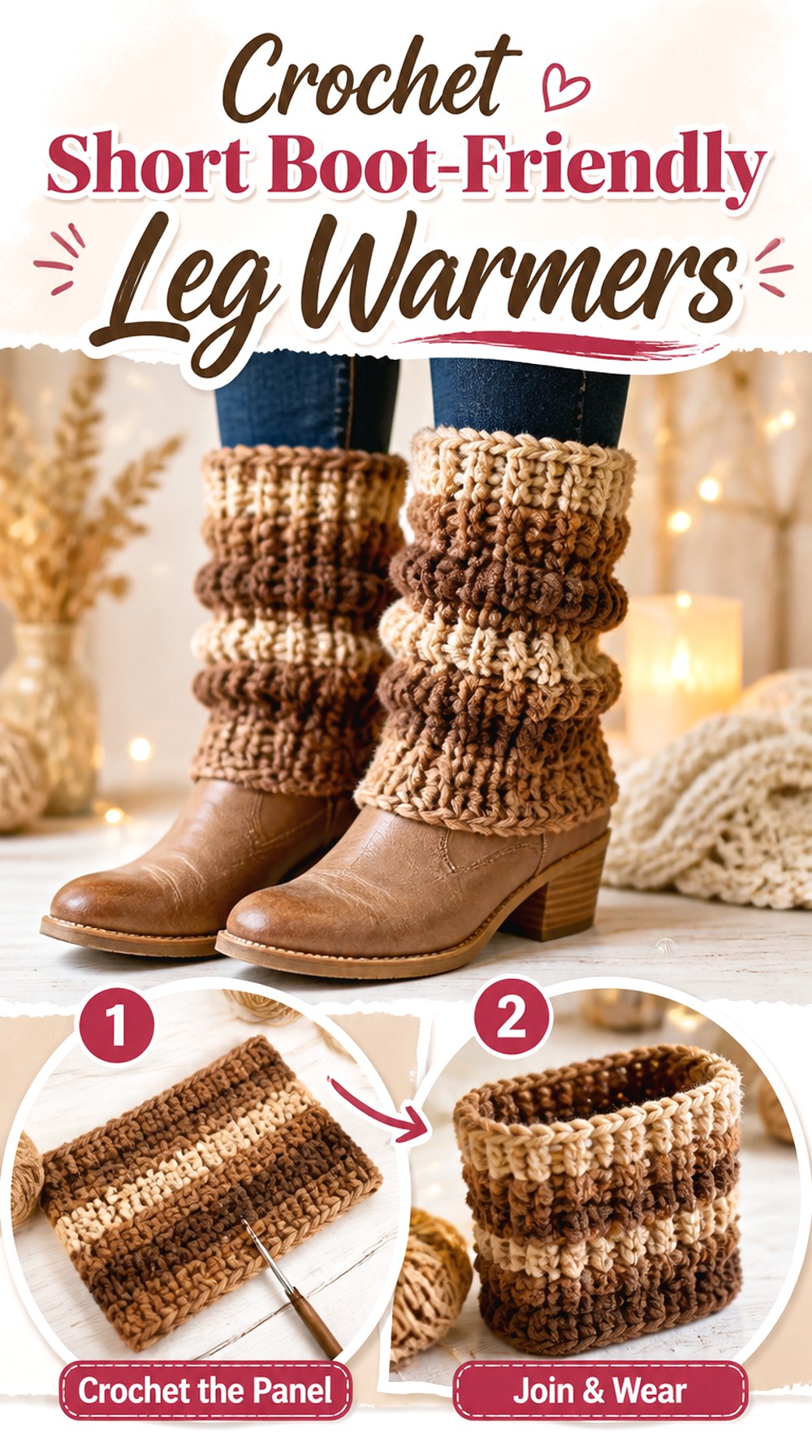
B.Hooked Crochet’s classic project creates a comparatively compact leg warmer that works well as a bridge between full calf coverage and a boot cuff. The accompanying pattern information shows a shorter finished height than many of the tall options in this collection, making it useful when you want warmth and crochet texture without covering most of the lower leg.
A shorter warmer can also be easier to coordinate with boots because less fabric needs to fold, flare, or remain visible above the shoe. The simple silhouette keeps the focus on fit and yarn rather than embellishment.
Shorter Length Reduces Forced Slouch
When there is less excess fabric, the warmer can sit more cleanly between ankle and calf rather than stacking into multiple folds. That makes it useful for readers who like the idea of leg warmers but do not want an exaggerated 1980s-inspired slouch.
Check where your boot shaft ends before deciding whether the source proportions give you enough visible crochet above it.
A Compact Project Still Needs Stretch
Short does not mean fit can be ignored. The opening still has to pass over the foot and sit comfortably once in position.
If you change yarn, compare how far the fabric stretches and how well it returns to shape. A shorter piece that becomes permanently loose can migrate downward just as easily as a taller one.
Original Tutorial and Creator Credit
Creator: B.Hooked Crochet
19. Crochet Thigh High Heel Gap Leg Warmers
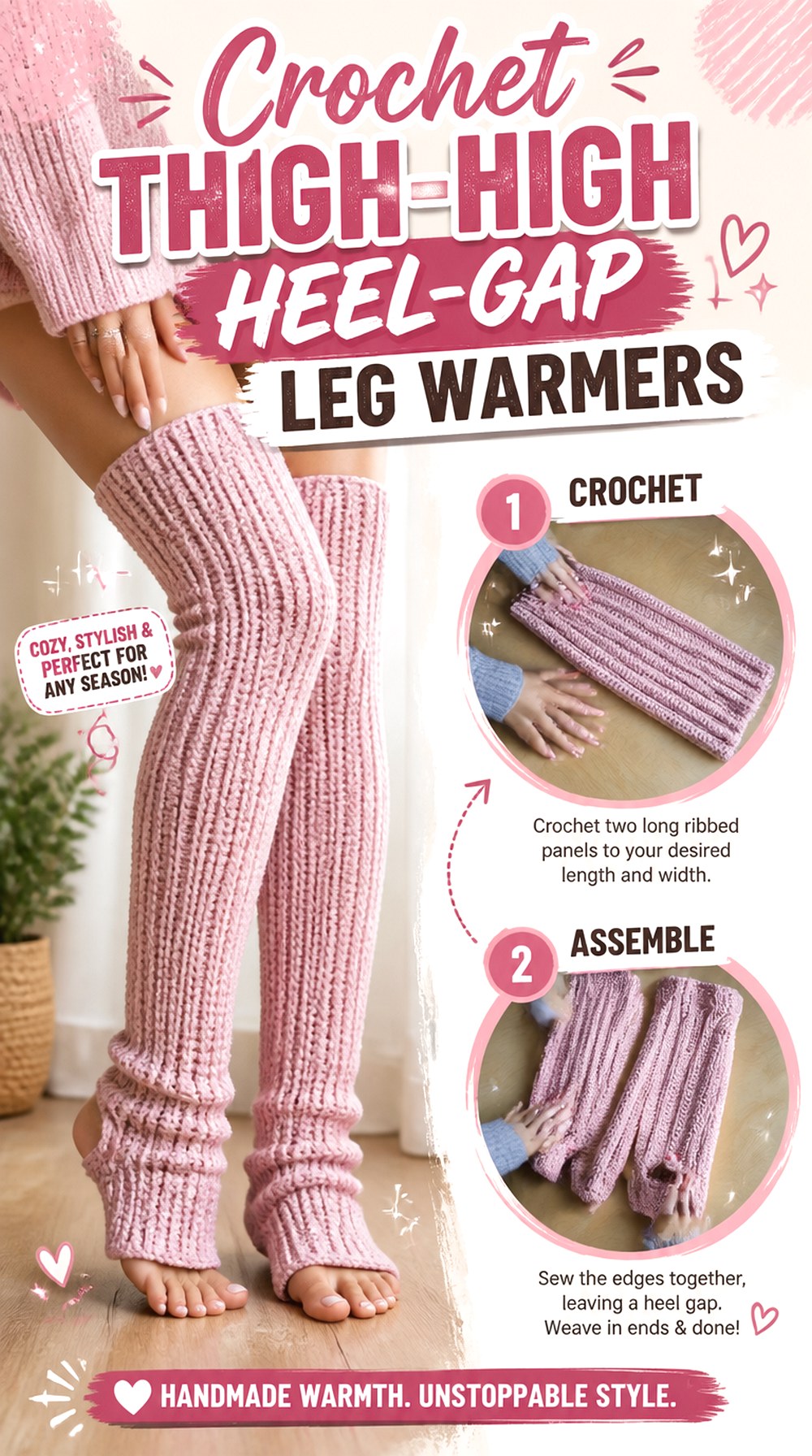
Cassandra Paz takes the category much farther up the leg with thigh-high coverage and a heel gap. This changes the project from a conventional calf warmer into a larger athleisure-inspired layer where the calf, knee, upper leg, and foot relationship all matter.
The heel opening is equally important. Rather than ending entirely above the shoe, part of the warmer extends toward the foot while leaving the heel exposed. That makes this design the most structurally distinct option in the collection and one of the most dependent on careful fit planning.
Thigh-High Coverage Needs Several Measurements
A calf measurement cannot represent the entire leg at this height. Compare the intended fit around the calf, near the knee, and higher on the leg before assuming one circumference will work throughout.
Also think about movement. A tall piece that feels fine while standing should still allow comfortable bending at the knee. Use the creator’s tutorial for the actual construction rather than trying to create shaping from guesswork.
The Heel Gap Changes the Footwear Relationship
An open heel allows the lower portion of the warmer to extend around the foot differently from an ordinary tube. Review the creator’s finished view with the type of footwear you expect to use.
The opening should not be treated as a decorative cutout. Its placement influences how the lower section sits, so adapting the overall length requires considering the foot position as well as the leg.
Tall Designs Need Reliable Top-Edge Support
The more fabric hanging below the upper edge, the more important that edge becomes to the finished wearing experience. Confirm what the tutorial uses and decide whether those materials and that method suit your comfort preferences.
If you substitute yarn, recheck stretch and weight because a heavier finished fabric may behave differently from the creator’s sample.
Choosing Between the 19 Crochet Leg Warmer Styles
For the quietest everyday layering, compare the adjustable calf-and-ankle pair, classic no-frills version, longer Bag-O-Day style, or short B.Hooked warmers. Ribbing becomes the main attraction in the Ned & Mimi and Kae Neebs projects, while Sigoni Macaroni adds more intentional slouch.
If surface texture is your priority, the shell, Tunisian, curly-yarn, almond-stitch, and cable versions create noticeably different fabrics. For stronger outfit styling, the chunky flare, fluffy bow, cherry accents, scallops, ruffles, and StelarCrafts bow option place more emphasis near the ankle.
The thigh-high heel-gap design is the clearest choice when maximum height and a distinct foot treatment matter more than a classic calf-warmer shape.
Conclusion
The most useful way to choose among these 19 crochet leg warmer ideas is to start with silhouette rather than decoration. Pick compact or straightforward warmers for easy layering, ribbed or shell-textured pairs when you want stitch definition, flared and ruffled versions when the ankle should become a focal point, and the thigh-high design when coverage completely changes the look.
Then compare stretch, footwear, yarn texture, and how much sizing adjustment the project requires. Small embellishments are much easier to change than an uncomfortable circumference or an awkward finished height. Once you have chosen the shape that fits your intended use, follow the original tutorial for its exact construction details.
Frequently Asked Questions
How should I measure my legs before choosing a crochet leg warmer tutorial?
At minimum, think about the widest part of the calf, the ankle area, and the height you want the finished warmer to cover. Taller designs may also require attention around the knee and upper leg. Measure over the type of clothing you expect to wear underneath if the warmers will normally sit over leggings or pants. Then compare those measurements with the tutorial’s sizing or adjustment method rather than relying solely on a size label.
Should crochet leg warmers be tight enough to stay up without elastic?
That depends on the construction, yarn, height, and the creator’s intended design. Ribbed or fitted warmers rely on fabric stretch differently from loose slouchy styles, while thigh-high designs may use additional support. A warmer should not need to feel uncomfortably tight to remain wearable. Follow the source project’s fit method and check the developing piece before finishing both sides.
Which crochet leg warmer styles work best over shoes?
Flared designs are specifically suited to making the lower edge visible over footwear, while ruffles, scallops, bows, and cherry accents can also work well when paired with low shoes that do not hide them. A narrow ribbed cuff is usually easier to position inside or directly above a boot. Decide whether the warmer should cover part of the shoe or stop cleanly above it before choosing the project.
Can I substitute a different yarn in these leg warmer tutorials?
Possibly, but a substitute can change circumference, stretch, weight, drape, stitch visibility, and finished height. The difference is especially noticeable with chunky flares, curly yarn, fluffy styles, fitted ribbing, and tall leg warmers. Compare your fabric with the source material before making the full pair. If measurements change, use the creator’s adjustment guidance where available rather than assuming the original stitch or row information will produce the same dimensions.
How can I keep two crochet leg warmers the same size?
Compare the pieces during construction rather than finishing one and relying on memory for the second. Record any customization you make, including changes to length or fit, and periodically place the two pieces together to compare dimensions. Differences in crochet tension can accumulate over a long project, so an early comparison is easier to correct than discovering that one finished leg warmer is noticeably taller or wider.
What should I check before adding bows, cherries, ruffles, or scalloped edging?
Confirm the basic warmer fits first. Then check where the decoration lands while the piece is actually worn and whether your usual footwear will cover it. Matching embellishments should also be positioned consistently between both legs. For appliqués or separate decorative pieces, make sure the attachment is secure enough for normal wear and follow the creator’s tutorial for its intended finishing method.
Are thigh-high crochet leg warmers just longer versions of calf warmers?
Not really. A thigh-high warmer passes through several changes in leg circumference and crosses the knee area, so fit and movement become more complicated. Designs that extend toward the foot may also include heel openings or other shaping that a standard tube does not need. Use a tutorial designed for thigh-high coverage rather than simply adding a large amount of length to an ordinary calf-warmer pattern.