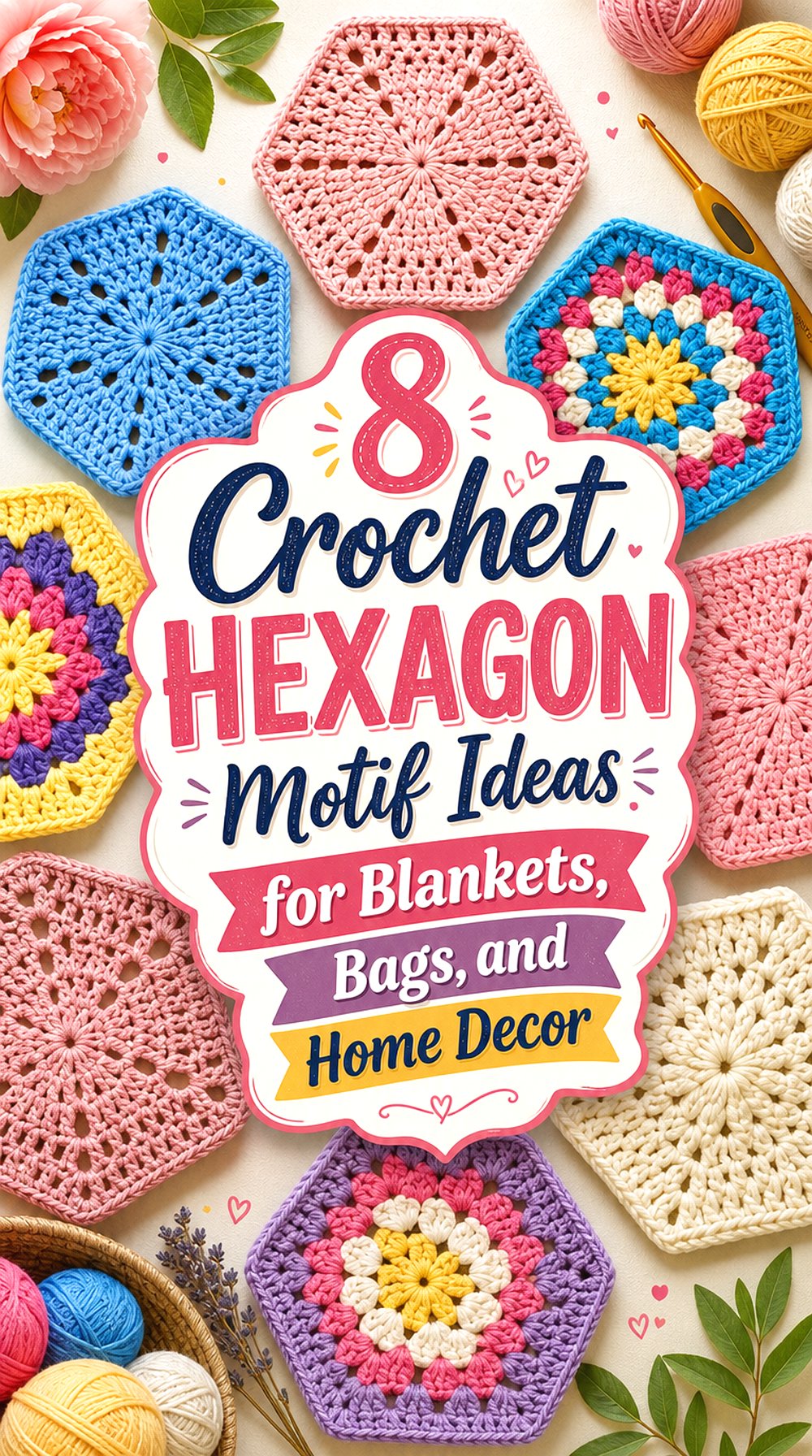

Crochet hexagon motifs can look simple, floral, lacy, textured, or dimensional depending on the center, corners, and surface detail. That makes them useful when you want a repeatable shape but do not want every project to feel like a basic square layout.
This collection includes motifs that could suit blankets, bags, table pieces, wall displays, cushions, and other joined projects. Some choices are flatter and cleaner, while others add open spaces, flower centers, raised petals, or join-as-you-go planning. Use the list to compare the finished look first, then open the original tutorial for the exact construction details.
Quick List
- Crochet Clean Solid Hexagon Motif
- Crochet Classic Granny Hexagon Motif
- Crochet Soft Flower-Center Hexagon Motif
- Crochet African Flower Hexagon Motif
- Crochet Lightly Textured Join-As-You-Go Hexagon Motif
- Crochet Open Lace Hexagon Motif
- Crochet Diamond Granny Hexagon Motif
- Crochet Raised 3D Flower Hexagon Motif
What to Compare Before Choosing a Hexagon Motif
The biggest difference between crochet hexagon motifs is how much visual weight each one brings to a joined project. A solid hexagon gives cleaner coverage and can make a calmer background. Granny and lace versions leave more open space, so the finished piece may look lighter and more decorative. Flower and 3D flower motifs draw attention to each individual hexagon, which works well when the motif itself is meant to be the feature.
Also compare the edges. A hexagon with neat, consistent corners is easier to plan in rows or honeycomb layouts. For blankets, bags, and home decor panels, make one sample first and measure it before committing to a large number of motifs.
1. Crochet Clean Solid Hexagon Motif
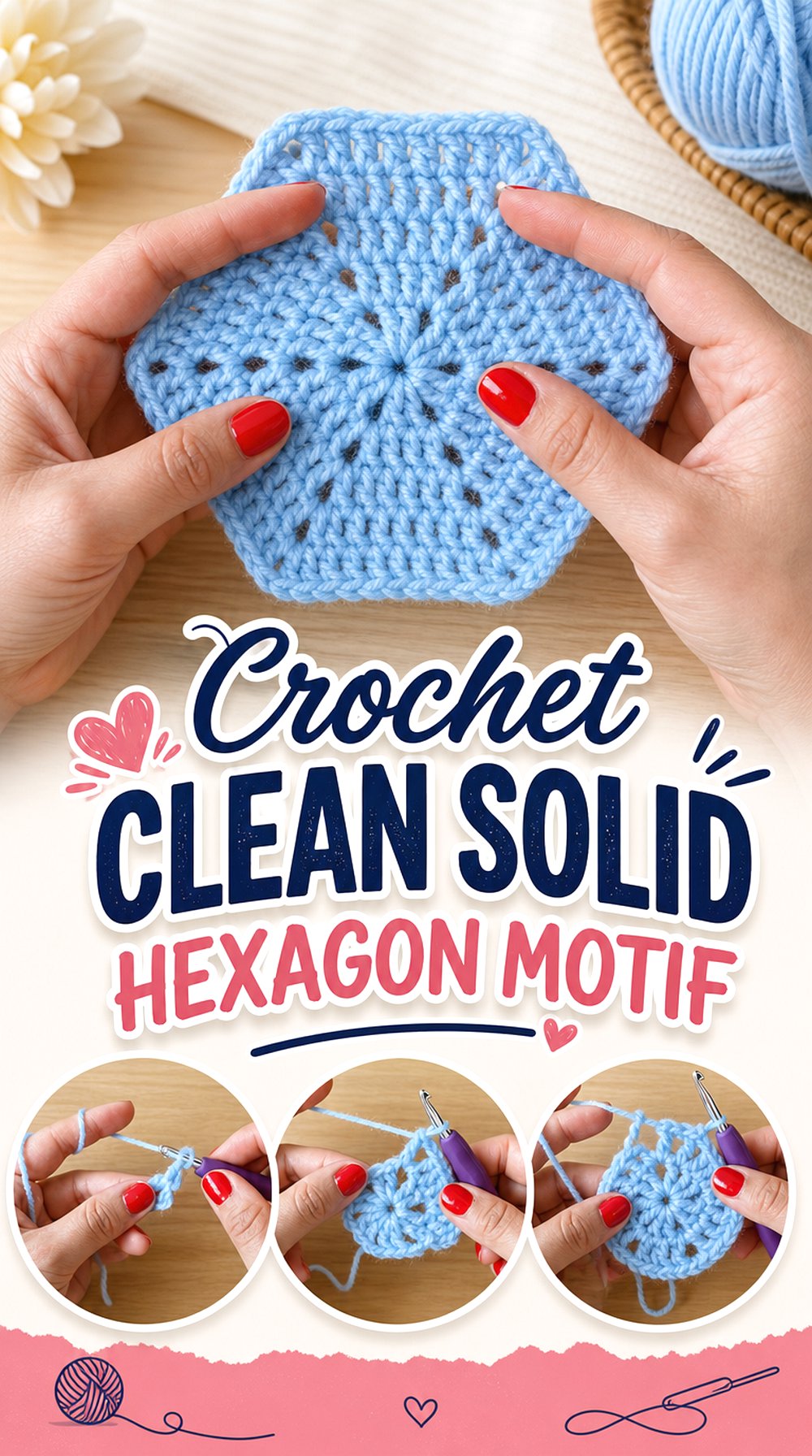
A solid hexagon motif gives this list its most filled-in option. The finished shape is flat, clear, and easy to imagine in practical joined pieces such as coasters, patchwork blankets, wall hangings, or simple panels. Because the surface is not dominated by large openings or raised flowers, color choice and edge consistency become the main design features.
This is a useful option when the hexagon shape matters more than heavy texture. It can also help balance more decorative motifs in a mixed layout, as long as the finished sizes work together.
Where a Solid Shape Works Best
A filled-in hexagon can suit projects where coverage matters, such as table pieces, blankets, or panels that should not feel too open. It also gives color-block layouts a cleaner look because the shape reads clearly from a distance. Before planning a large project, readers should decide whether they want the motif to be a quiet background unit or the main visual feature.
Size Control Matters With This Motif
Because the shape is plain, uneven sizing is easier to notice. A small change in tension can make joined hexagons look slightly wavy or crowded. Make one sample first, lay it flat, and measure across the widest points before choosing how many motifs to make. This is especially useful for blankets, wall pieces, or anything that needs a planned finished width.
Edge Neatness Is the Main Visual Check
The edges and corners carry much of the finished look in a solid hexagon. When watching the original tutorial, pay close attention to how the corners are formed and how the final edge sits. A neat edge can make later joining or border work look cleaner, while a rounded or uneven edge may change the layout.
Creator: Keep Calm and Crochet
2. Crochet Classic Granny Hexagon Motif
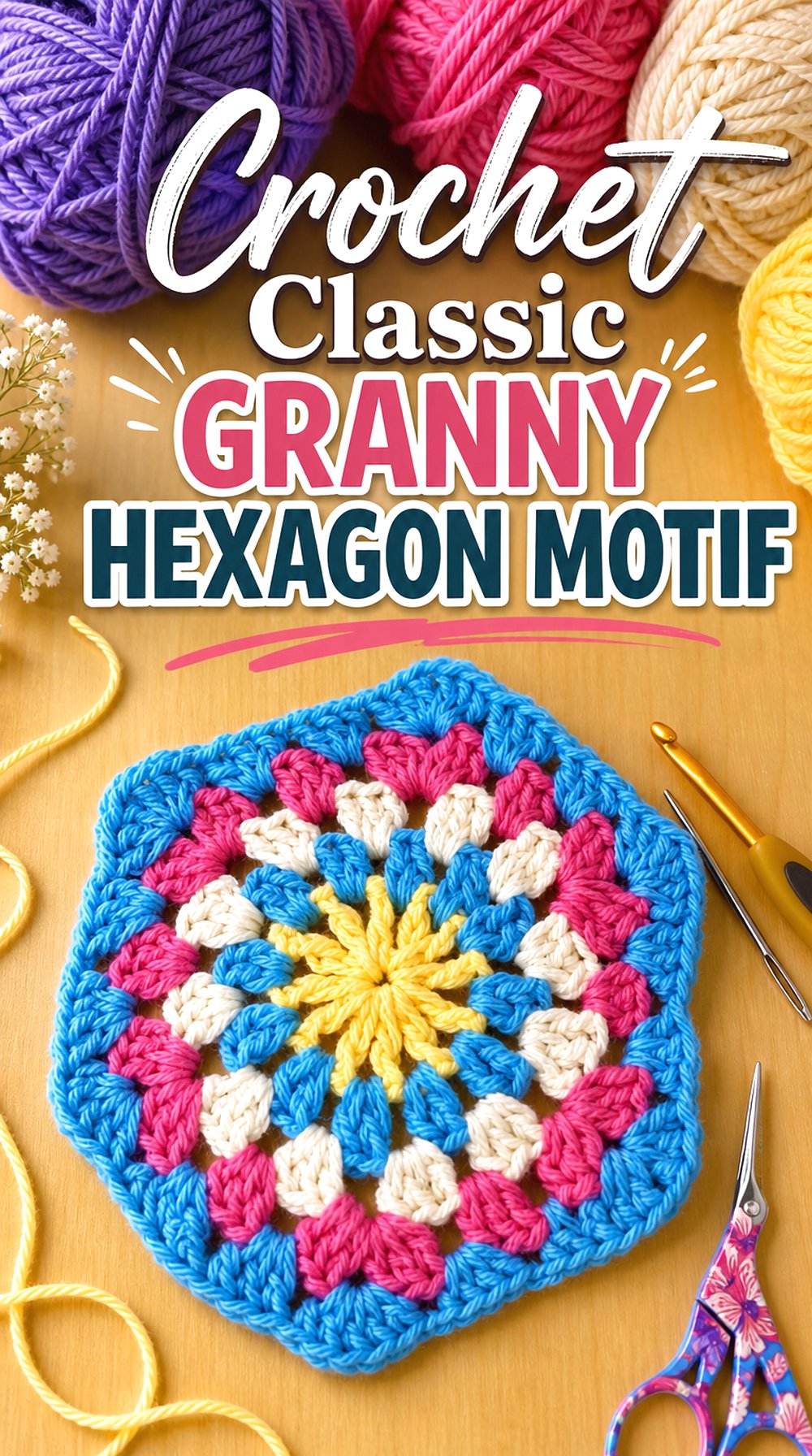
The classic granny hexagon brings the familiar open granny look into a six-sided shape. It has more breathing room than a solid motif and can work well when you want a joined project to feel lighter, more graphic, or more traditional. The repeated open sections also make color placement more noticeable.
This motif is a good contrast to the solid hexagon because the finished result depends less on a plain filled surface and more on rhythm. It may suit blankets, decorative panels, or projects where the gaps are part of the look.
Open Spaces Change the Finished Look
A granny-style hexagon naturally creates more visible spacing than a solid motif. That can make a finished blanket or panel feel lighter, but it also means the background underneath may show through. Readers choosing this motif should think about whether the open look fits the intended use, especially for home items placed over patterned surfaces.
Color Planning Has More Impact Here
Color changes can strongly affect a granny hexagon because each section is easy to read. A simple two-color plan can look crisp, while many colors can create a scrap-style effect. Before making a full set, decide whether every motif will match or whether the project will rely on varied color placement for movement.
Join Layout Before Making Many
Hexagons do not stack like squares, so layout planning matters. A granny hexagon can look very different when joined in straight honeycomb rows, staggered groups, or small clusters. Lay out a few sample pieces before making a large pile, especially if the final project needs a straight edge or a specific width.
Creator: Fiber Flux
3. Crochet Soft Flower Center Hexagon Motif
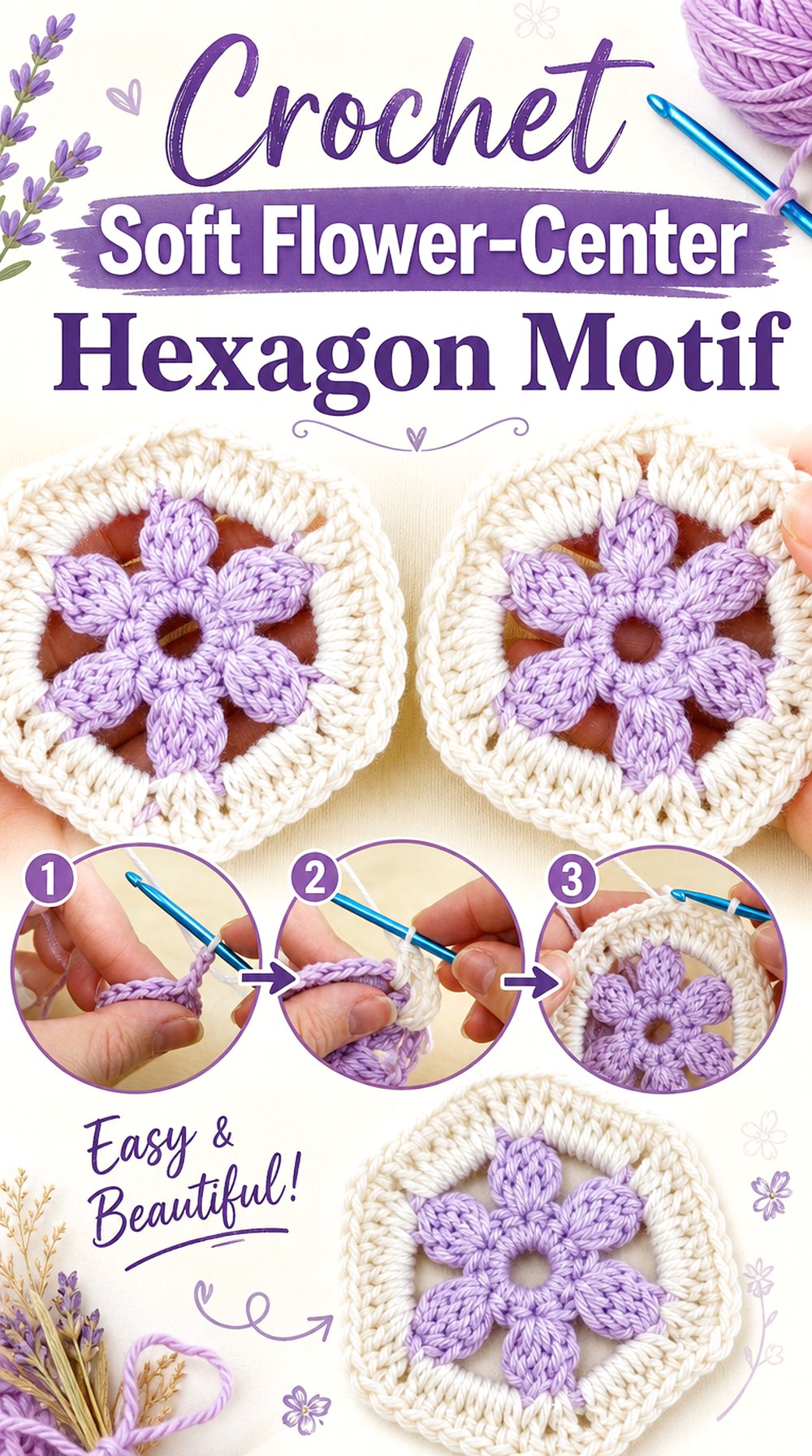
This flower-center hexagon is for readers who want the motif to carry a clear decorative focal point. Instead of looking like a plain geometric block, the center draws the eye first and the hexagon edge frames it into a joinable shape. That makes it useful for blankets, cushion fronts, bags, or accent panels where each motif should feel intentional.
Compared with the classic granny option, this one feels more floral and less grid-like. The best use depends on whether the flower center should stand out strongly or blend into the surrounding colors.
Keep the Flower Center Visible
The flower detail is the main reason to choose this motif, so color contrast matters. If the center and surrounding rounds are too close in shade, the flower may become less distinct in a larger project. Readers may want to test one motif with their planned colors before making multiples, especially for cushions or bags where the motif will be viewed up close.
The Corners Frame the Design
A flower-center motif still needs a clean hexagon outline to join neatly with other pieces. The corners should not disappear into the floral center or pull the motif out of shape. When following the source, watch how the flower transitions into the outer hexagon so the finished piece stays balanced rather than looking like a flower inside an uneven frame.
A Good Match for Decorative Panels
This motif can work well when the finished project is meant to be seen as a display surface, such as a pillow front, wall piece, or featured blanket section. It may be less subtle than a plain hexagon, so it is worth deciding whether every motif should include the same flower or whether it should be mixed with simpler hexagons.
Creator: Bella Coco
4. Crochet African Flower Hexagon Motif
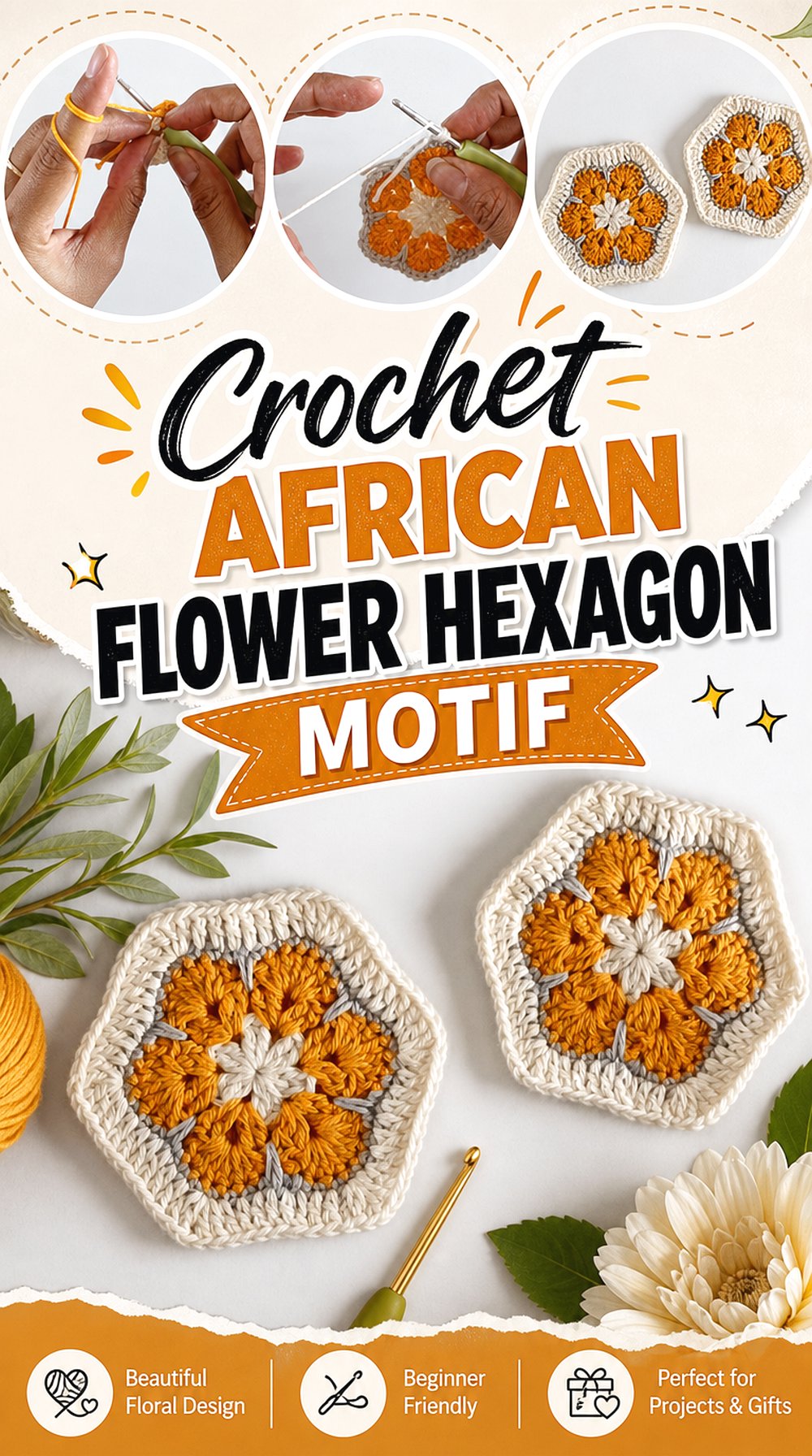
The African flower hexagon has a strong center design with petal-like shaping and a defined outer edge. It is one of the more recognizable floral hexagon styles and can make a joined project look patterned even before any border or final finishing is added. The motif works especially well when the flower shape is meant to repeat across the whole project.
This option feels more structured than a soft flower-center motif because the flower and outline both play important roles. It can suit blankets, bags, and decorative pieces where repeating floral geometry is the main effect.
The Center Defines the Whole Motif
The center is not just a small detail here; it sets the character of the entire hexagon. A high-contrast center can make each motif stand alone, while softer shades can make the repeat feel calmer. Readers should decide whether they want a bold flower field or a quieter joined surface before choosing colors.
Use Contrast Deliberately
African flower motifs often rely on visible separation between the flower area and the outer shape. Too little contrast can flatten the design, while too much contrast can make a large project feel busy. A simple test motif is useful before committing to many pieces, especially for blankets and bags where repeated color changes can dominate the final look.
Joining Many Motifs Needs a Plan
Because this motif has a clear center, the direction and placement of each hexagon affect the final layout. A planned arrangement can keep the flower repeat balanced, while random placement may create a more patchwork look. Before joining, lay several motifs together and check whether the centers line up in a way that suits the project.
Creator: Dream Weaver Crochet
5. Crochet Lightly Textured Join As You Go Hexagon Motif
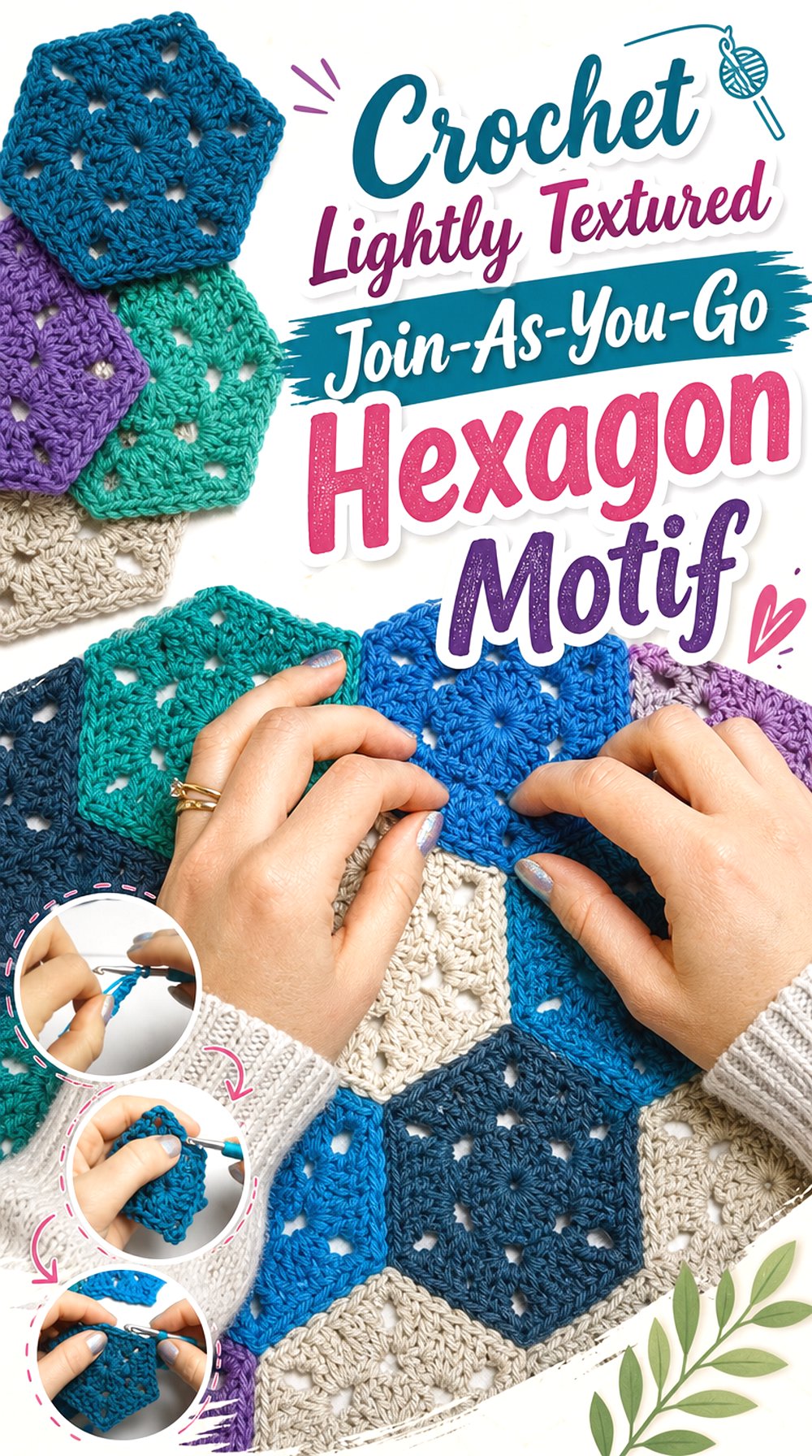
This textured hexagon adds surface interest without turning the motif into a heavy 3D piece. The finished look is still flat enough for joined layouts, but the texture gives each hexagon more definition than a plain solid shape. It is a useful middle option between the clean solid motif and the more decorative flower designs.
The join-as-you-go format also makes this choice different from the others. Instead of thinking only about individual motifs, readers need to think about how each piece will connect as the project grows.
Texture Without a Heavy Surface
The texture gives the motif a more detailed look while keeping the hexagon shape easy to see. This can be useful for blankets or panels where a plain surface might feel too flat. Readers should look at the finished sample and decide whether the texture is subtle enough for a large project or better used as an accent.
The Join-As-You-Go Format Changes Planning
A join-as-you-go motif rewards early layout decisions. Since pieces may be connected during the making process, color order, placement, and project shape should be considered before many motifs are finished. This approach can reduce later seaming, but it also leaves less room to rearrange every piece at the end.
When a Scrap Layout Makes Sense
Textured hexagons can be useful for scrap-style projects because the surface detail helps each small color area feel intentional. Still, not every leftover yarn will behave the same way. Readers should compare fiber weight, thickness, and finished size before mixing scraps, especially if the project needs to lie flat.
Review the Joining Section Closely
The joining portion is the detail that separates this idea from a standard standalone motif. Watch that section carefully before starting a full project so the connection method makes sense. It is better to understand the joining rhythm on a small sample than to discover layout issues after many hexagons are already made.
Creator: Hooked by Robin
6. Crochet Open Lace Hexagon Motif
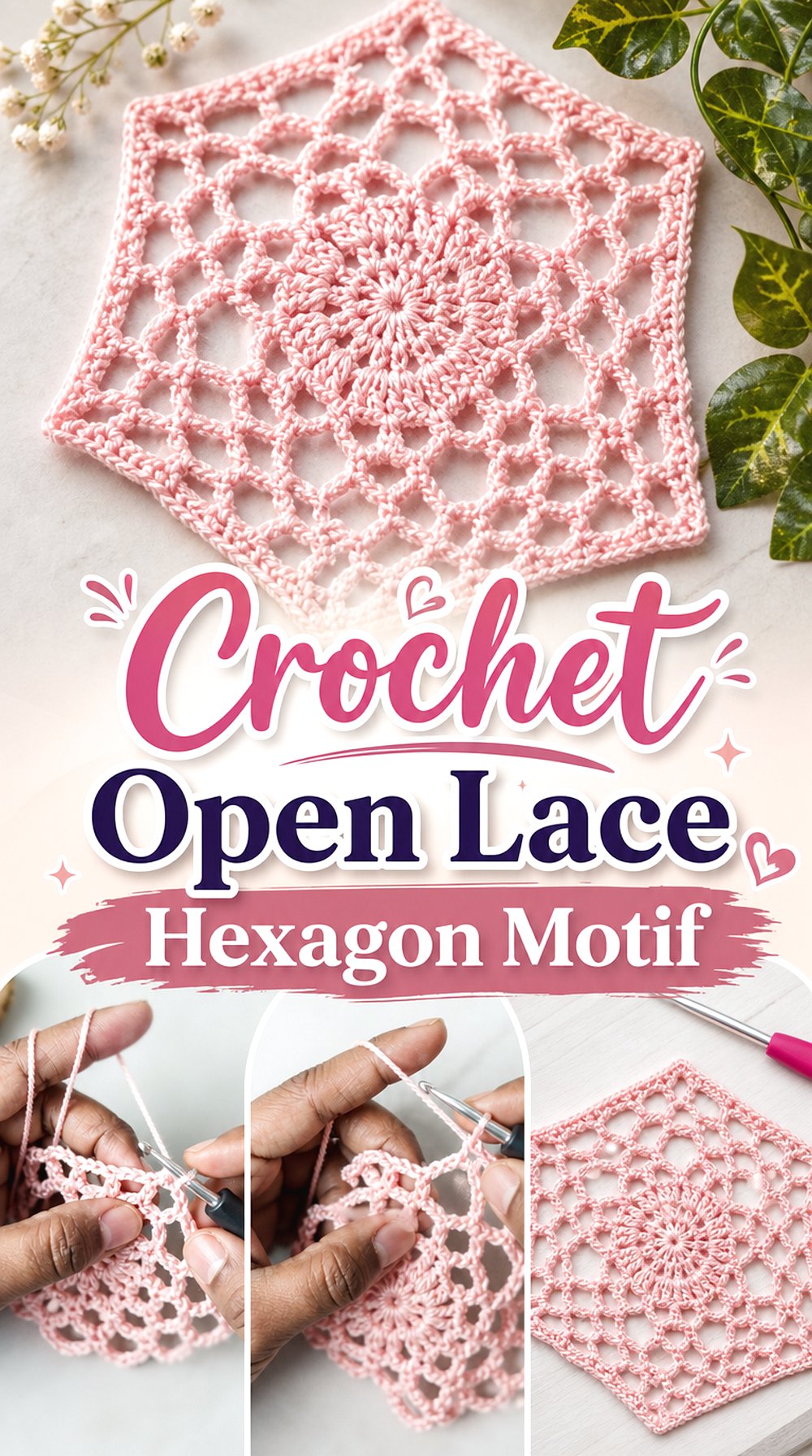
The lace hexagon is the airiest option in this group. Its openwork look makes it suitable for projects where drape, lightness, and decorative spacing matter more than dense coverage. The source presents it for shawls, table centers, and similar joined pieces, which gives the motif a different purpose from the denser blanket-friendly hexagons.
This idea is best for readers who want the hexagon shape to feel delicate. It may not be the right choice for every practical item, but it can make a beautiful repeated surface when the open spaces are part of the design.
The Openwork Needs the Right Project
A lace hexagon can look lovely in shawls, table pieces, or decorative panels, but the open spaces change how the item behaves. It may not offer the same coverage as a solid motif, and small objects can show through if it is used for storage. Choose this motif when the airy look is an advantage, not a problem to work around.
Plan for Drape Instead of Thickness
The finished feel of a lace motif depends heavily on yarn choice and blocking. The source notes a fine yarn and hook size, but readers should still make a sample with their own materials before deciding on a large project. A heavier yarn may change the openness, while a finer yarn may make the motif more delicate.
Joining Placement Affects the Final Surface
Lace hexagons can lose their clean look if the joins pull too tightly or distort the open sections. When planning a shawl, runner, or table center, watch how the motifs sit together and whether the edges stay even. This is especially important for pieces that will be displayed flat or draped over furniture.
Creator: TLH Patterns
7. Crochet Diamond Granny Hexagon Motif
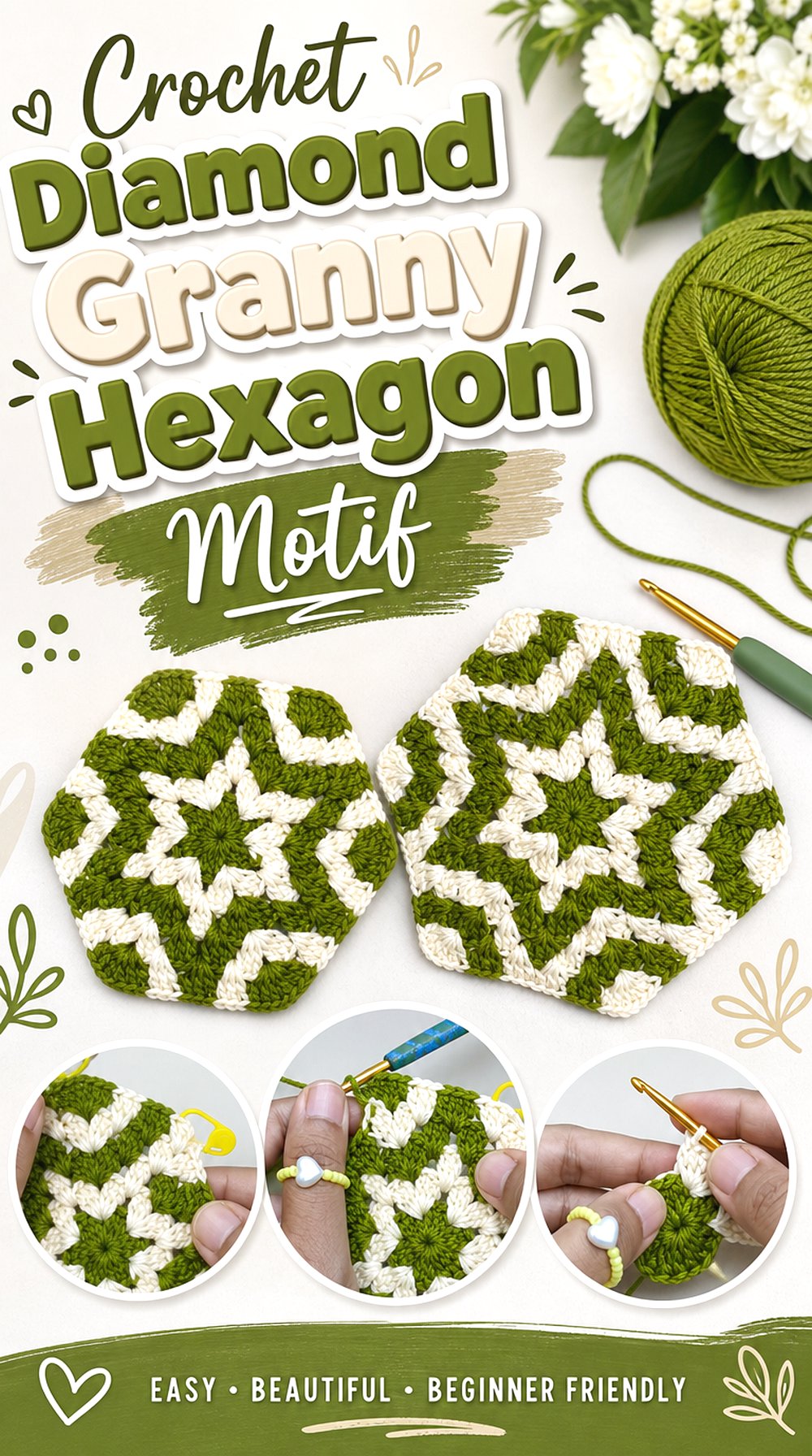
The diamond granny hexagon adds a directional design inside the six-sided shape. Unlike a plain granny hexagon, this motif has a more graphic center effect that can guide the eye across a joined layout. It may suit bags, blankets, cardigans, or decorative panels where the motif needs more movement than a basic open hexagon.
This is a good choice for readers who like granny-style spacing but want a stronger internal pattern. The diamond detail can make each hexagon feel more designed, especially when colors are placed carefully.
The Diamond Layout Gives Direction
A diamond shape inside a hexagon creates visual movement, so motif placement matters. Turning every hexagon the same way can create a more orderly pattern, while rotating them may create a busier look. Before joining, arrange several samples and check whether the diamond direction supports the final project shape.
Before Choosing It for a Garment
The source mentions uses such as cardigans, but garment projects need extra care. Motifs for wearables should be checked against body measurements, drape, and comfort before making a large set. A motif that looks neat as a flat sample may behave differently when joined into a shaped or wearable piece.
Color Changes Should Stay Organized
The diamond feature depends on color placement being clear enough to read. If too many shades compete, the internal shape may become less visible. Readers may want to choose one main background direction and one accent direction before making multiples, especially for bags or blankets where the pattern repeats often.
Creator: Tutorial Rajut
8. Crochet Raised 3D Flower Hexagon Motif
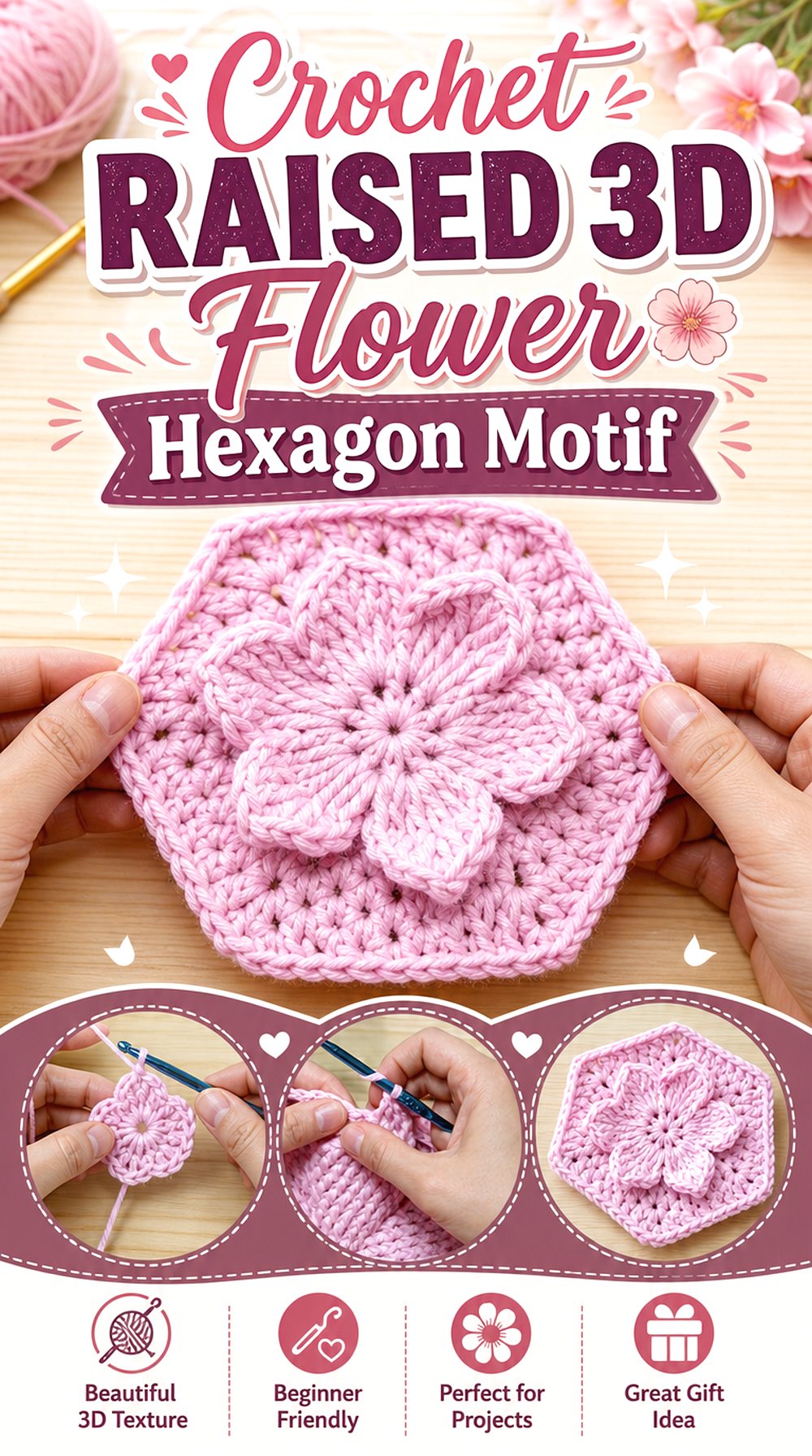
The raised 3D flower hexagon is the most dimensional option in this article. The flower sits as a strong surface feature, while the hexagon outline makes the motif joinable for bigger pieces. It can work well when the finished project is meant to have texture and a decorative focal point, such as a bag panel, cushion, blanket section, or table piece.
This is not the quietest motif in the group. It is best when the raised flower is the reason for choosing the project, not just an extra detail.
Raised Petals Need Space Around Them
A 3D flower motif needs room to be seen. If the project will include many motifs, the raised petals can create a busy surface, especially with high-contrast colors. Readers should decide whether they want every hexagon to be dimensional or whether this motif would work better as an accent among flatter pieces.
Best Uses for a Dimensional Motif
This motif may suit decorative projects where texture is welcome, such as cushion fronts, bags, or display pieces. For items that need to lie very flat, stack easily, or slide under objects, the raised flower could be less practical. Match the motif to a project where the surface detail will not get in the way.
Watch the Final Shape From Above
With a dimensional center, it is still important that the outer hexagon stays clear and even. A top-down view helps readers check whether the petals sit inside the shape without pulling the corners out of place. This matters most if the motifs will be joined edge to edge.
Extra Bulk Is the Tradeoff
Raised details can add texture, but they can also add thickness. That may be attractive on a bag or cushion, but less useful for a lightweight shawl or flat table runner. Before making many motifs, create one sample and decide whether the added bulk fits the final project.
Creator: oana boutique crochet &knitting
Choosing Between Flat, Open, and Dimensional Hexagons
For the cleanest coverage, start with the solid hexagon. For a more open traditional look, the classic granny hexagon or diamond granny hexagon gives more space and pattern movement. Flower-center and African flower motifs are better when each hexagon should stand out as a decorative unit. The textured join-as-you-go option is useful when the joining method matters as much as the motif itself.
For lighter shawls, table centers, or airy panels, the lace hexagon is the better match. For bags, cushions, and display pieces where texture is welcome, the raised 3D flower hexagon gives the strongest surface detail.
Conclusion
These crochet hexagon motif ideas give readers several ways to use the same six-sided shape. The solid motif is the calmest and most filled-in, while the granny and lace versions feel lighter. The flower, African flower, diamond, textured, and 3D flower motifs add stronger visual identity for projects where each hexagon should be noticed.
Choose by final use first: dense motifs for coverage, open motifs for airy decorative pieces, and raised motifs for texture. Once the style is chosen, use the original YouTube tutorials for the exact construction details, joining method, and any creator notes before making a full set.
FAQs
What can crochet hexagon motifs be used for?
Crochet hexagon motifs can be joined into blankets, bags, cushions, table pieces, wall panels, shawls, and decorative home projects. The best use depends on the motif style. Solid hexagons give more coverage, lace hexagons feel lighter, and raised flower hexagons work better where texture is meant to be seen.
How do I choose between solid, granny, and lace hexagons?
Choose a solid hexagon when you want a cleaner, denser surface. Pick a granny hexagon when you want open spacing and a more traditional motif look. Choose lace when the project should feel airy or decorative. Make one sample first, because yarn weight and tension can change how open or firm the motif feels.
Should all hexagon motifs be the same size before joining?
Yes, a joined project is easier to manage when the motifs are close in size. Even small differences can affect the edge, layout, and finished shape. Before making many pieces, measure a sample motif and keep notes on the yarn, hook, and tension used so later motifs stay consistent.
Can I mix different crochet hexagon motif designs in one project?
You can mix designs, but the motifs should be tested together first. Check that the finished sizes, edge shapes, and thicknesses work well side by side. A solid motif and a flat granny motif may combine more easily than a lace motif and a raised 3D flower motif, which can have very different surfaces.
What should I verify before making many motifs from a YouTube tutorial?
Check the finished size, yarn information, hook size, joining method, edge shape, and whether the tutorial includes any written notes or extra links. For bags, garments, or large blankets, also confirm how the motifs will be arranged. A single test motif can prevent size and layout problems later.
Can I sell finished items made from these hexagon motif tutorials?
Do not assume that a public tutorial automatically gives permission for selling finished items. Check the creator’s current description, website, pattern terms, or licensing notes before selling anything made from a tutorial. Also check local business, labeling, and safety requirements if the finished item is intended for customers.