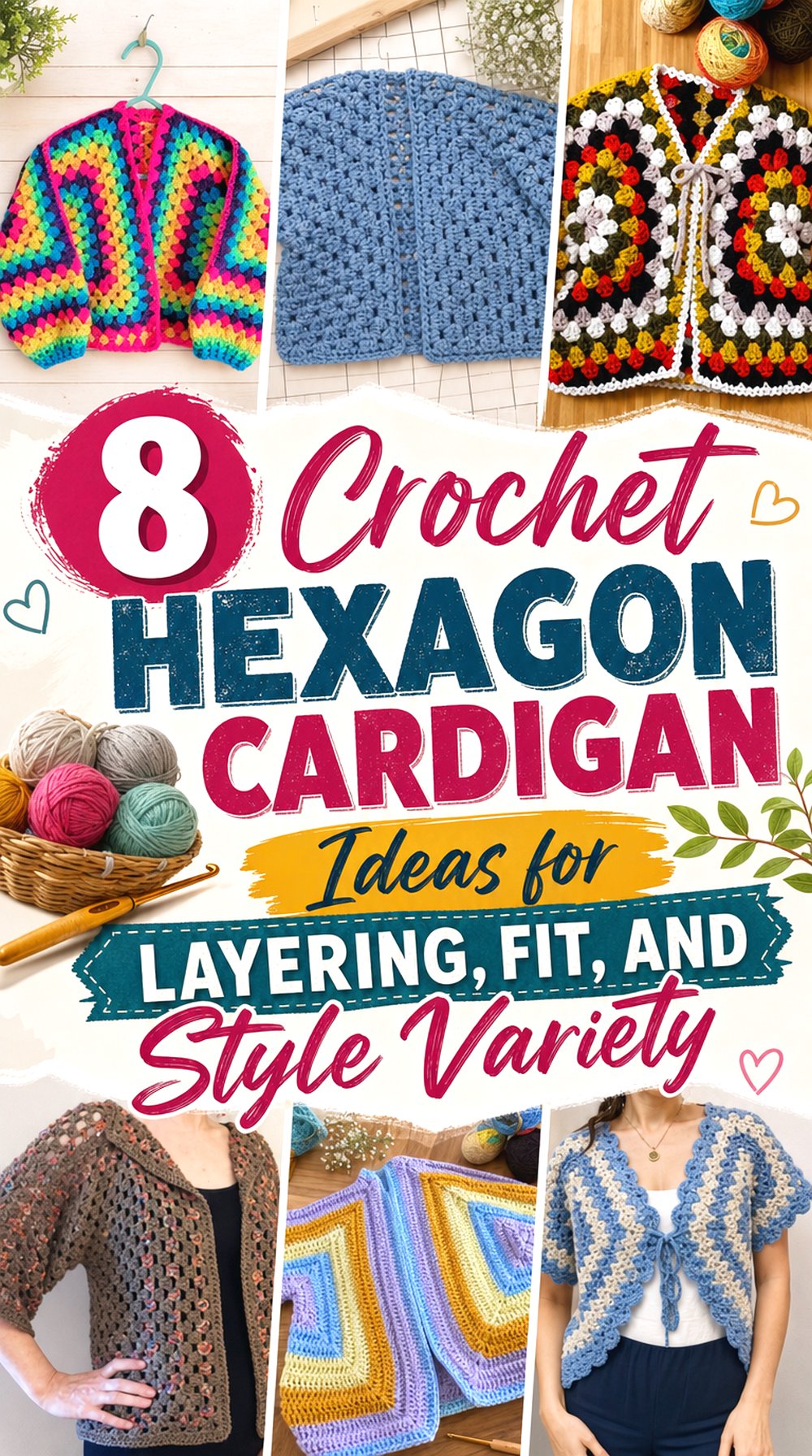

Crochet hexagon cardigans can look very different depending on the stitch texture, sleeve finish, body length, front opening, and sizing method. This collection brings together eight cardigan ideas that all use the hexagon concept but lead to different finished looks, from chunky tie-front layers to solid fabric, striped styling, kids’ sizing, and made-to-measure shaping.
Use this list to compare what kind of cardigan suits your closet or gift plan before choosing a tutorial. Some options focus on custom fit and shaping details, while others highlight color flow, cuffs, collar finishing, or a smaller child-size version.
Quick List
- Crochet Custom-Fit Hexagon Cardigan with Collar
- Crochet Chunky Tie-Front Hexagon Cardigan
- Crochet No-Sew Hexagon Cardigan with Cuffs
- Crochet Size-Inclusive Hexagon Cardigan with Extensions
- Crochet Cake-Yarn Hexagon Cardigan with Soft Color Flow
- Crochet Solid Hexagon Cardigan with Sleeve Shape Options
- Crochet Classy Striped Hexagon Cardigan
- Crochet Kids Granny Hexagon Cardigan
Why These Crochet Hexagon Cardigans Are Worth Making
Hexagon cardigans are useful because the basic construction can support many finishing choices. A wider body, added back section, longer sleeves, front tie, collar, cuff, or border can change the finished garment without turning it into a completely different category. That makes this type of cardigan especially helpful for readers who want to compare fit and finishing before committing to one project.
They also offer room for different styling goals. A chunky version may work as a bold outer layer, while a solid-stitch or striped version can feel neater and more structured. Kids’ versions add another practical angle because sizing, length, and sleeve treatment matter in a different way for a growing wearer.
1. Crochet Custom Fit Hexagon Cardigan with Collar
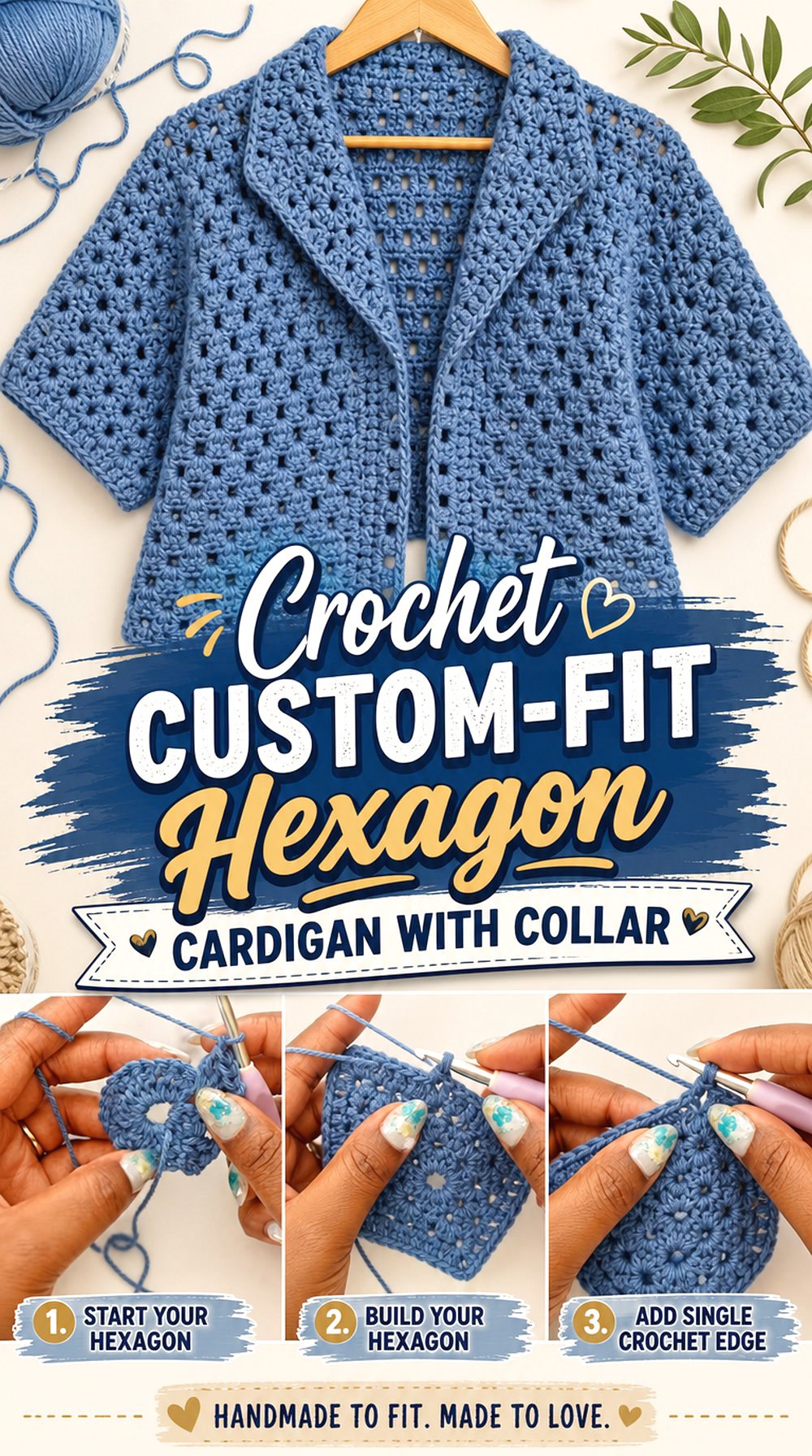
A custom-fit hexagon cardigan is a strong option when the goal is more than a simple folded shape. This version focuses on building from the base hexagons, then checking dimensions, widening the body, extending the neck area, lengthening the sleeves and body, and finishing with a collar. The result is useful for readers who want a cardigan that feels planned around measurements rather than chosen only by yarn color.
Check the Fit Planning
Fit planning matters most on this cardigan because the design includes dimension checks before the finished shape is finalized. Readers should pay close attention to the measuring points and compare them with a cardigan they already like wearing. That helps avoid choosing a length or body width that looks fine flat but feels wrong once layered over clothing.
Review the Collar Finish
The collar gives this cardigan a more finished neckline than a plain open edge. Before starting, it is worth looking at how much structure the collar adds around the front opening and neck. A collar can make the cardigan feel more polished, but it also affects how the front hangs, especially when worn over bulkier tops.
Confirm the Adjustment Points
This project includes several places where the body, neck, sleeves, and length can be adjusted. Instead of treating those as casual extras, readers should mark the sections that affect their own fit goals. A simple progress note can help track what was changed, so both sides of the cardigan stay balanced.
Creator: TL Yarn Crafts
2. Crochet Chunky Tie Front Hexagon Cardigan
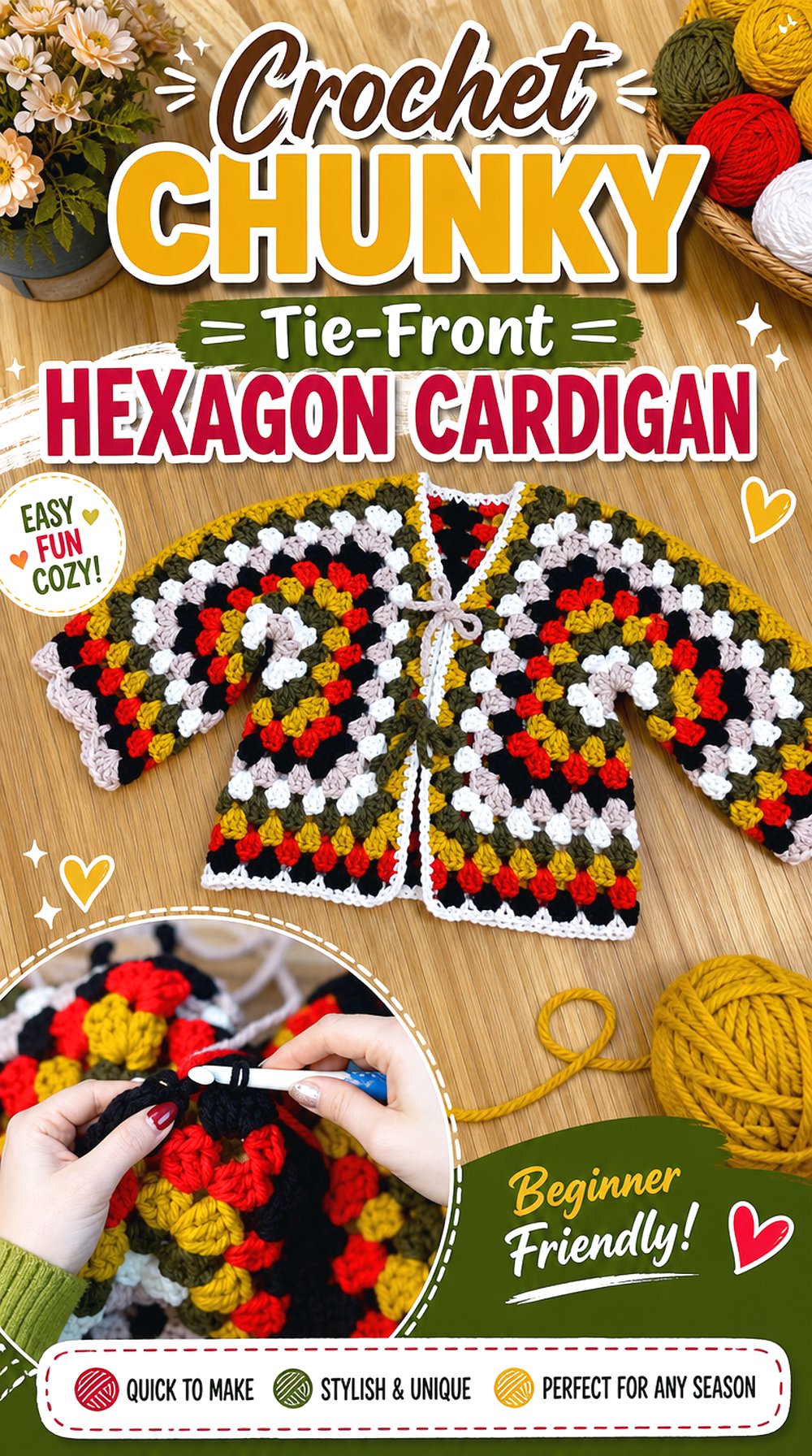
A chunky tie-front hexagon cardigan has a bolder look because the yarn and front closure both stand out. The tutorial includes a chunky cardigan approach, left and right side shaping, sleeve length, back extension, bottom length, edging around the opening, and front ties. This idea is different from the collar cardigan because the front tie becomes part of the styling and the heavier texture gives the finished layer more visual weight.
Think About the Front Ties
Front ties change how the cardigan sits when worn open or gently closed. Readers should check where the ties are placed and how they affect the front edge before deciding if this closure suits their wardrobe. A tie-front finish may feel more casual than a button band or full collar, so it is worth matching it to the intended outfit style.
Consider the Chunky Texture
A chunky hexagon cardigan can create strong stitch definition and a noticeable silhouette. That texture may be the main reason to choose this version, but it also makes fit decisions more important. Readers should compare the body length, sleeve length, and front drape carefully because thicker fabric can feel visually heavier than a lighter cardigan.
Watch the Side Shaping
This design separates the left and right cardigan sides before joining and finishing. The side shaping deserves careful attention because small mismatches can show at the shoulder, sleeve, or back. Pausing to compare both halves before moving ahead can help the finished cardigan look balanced from the front and back.
Creator: Brunaticality
3. Crochet No Sew Hexagon Cardigan with Cuffs
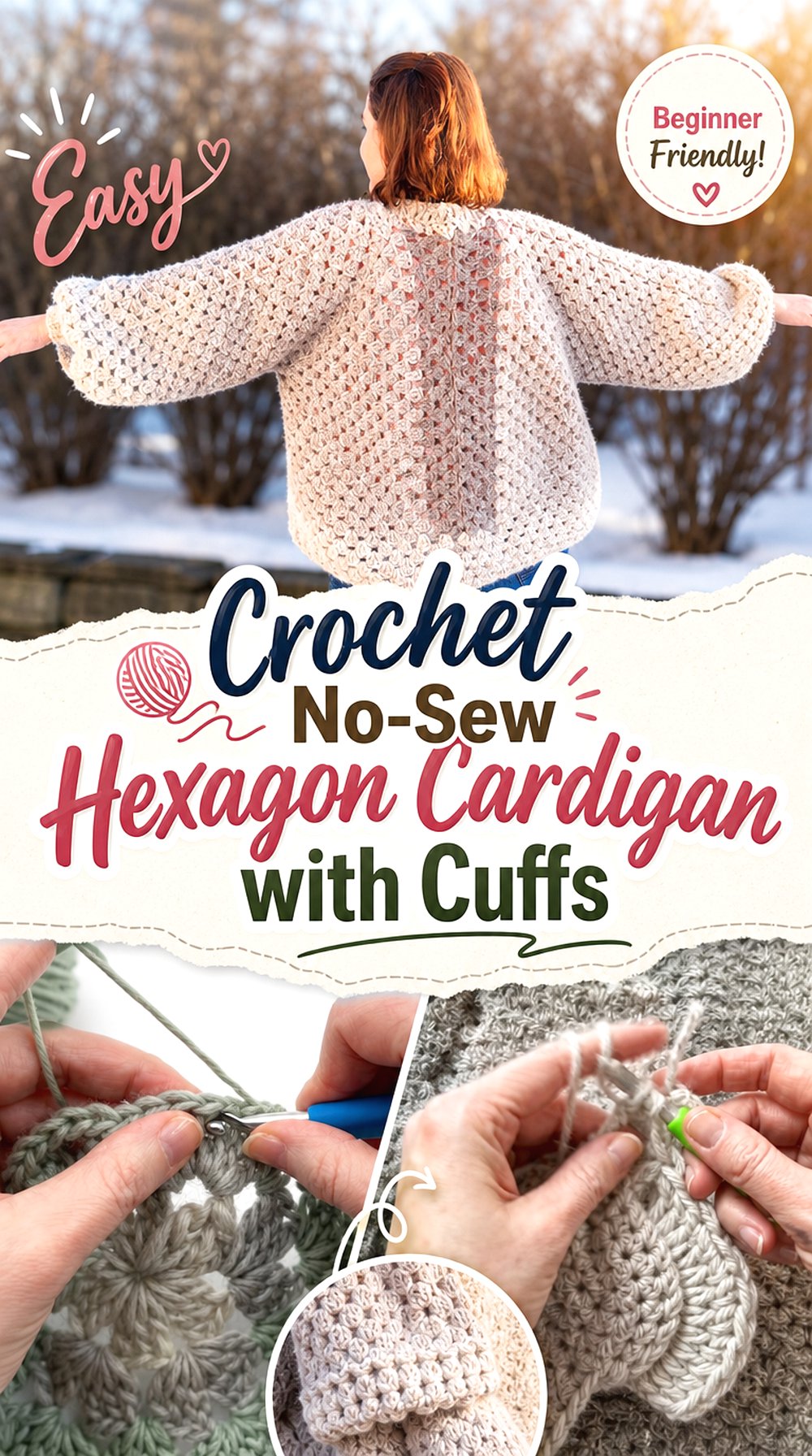
A no-sew hexagon cardigan may appeal to readers who like the idea of shaping and joining through crochet rather than relying on separate sewn seams. This tutorial is built around hexagons, arm shaping, arm extension, cuffs, neck room, connecting the pieces, working around the cardigan, adding length, and finishing the opening. The cuffed sleeves make it feel more controlled than a loose-sleeve version, while the no-sew focus gives the project its own practical identity.
Check the No-Sew Join
The no-sew approach is the key feature here, so readers should review how the pieces connect before starting. It is still important to understand where the shoulders, sides, and back will meet. A join made through crochet can look clean, but only if the matching edges are lined up carefully as the garment takes shape.
Review the Sleeve Cuffs
Cuffs can make a hexagon cardigan feel neater at the wrist, especially if the main sleeve shape is roomy. Readers should check how the cuff sits compared with the sleeve body and whether the tutorial explains the transition clearly. This is also the place to confirm that the finished sleeve style suits the wearer’s preferred fit.
Plan the Opening Finish
The opening finish affects the whole front line of the cardigan. Since this version includes work around the cardigan and around the opening, readers should not treat that stage as an afterthought. A clean edge can help the garment hold its outline, while a rushed edge may make the front look uneven.
Creator: Crochet with Yarnhild
4. Crochet Size Inclusive Hexagon Cardigan with Extensions
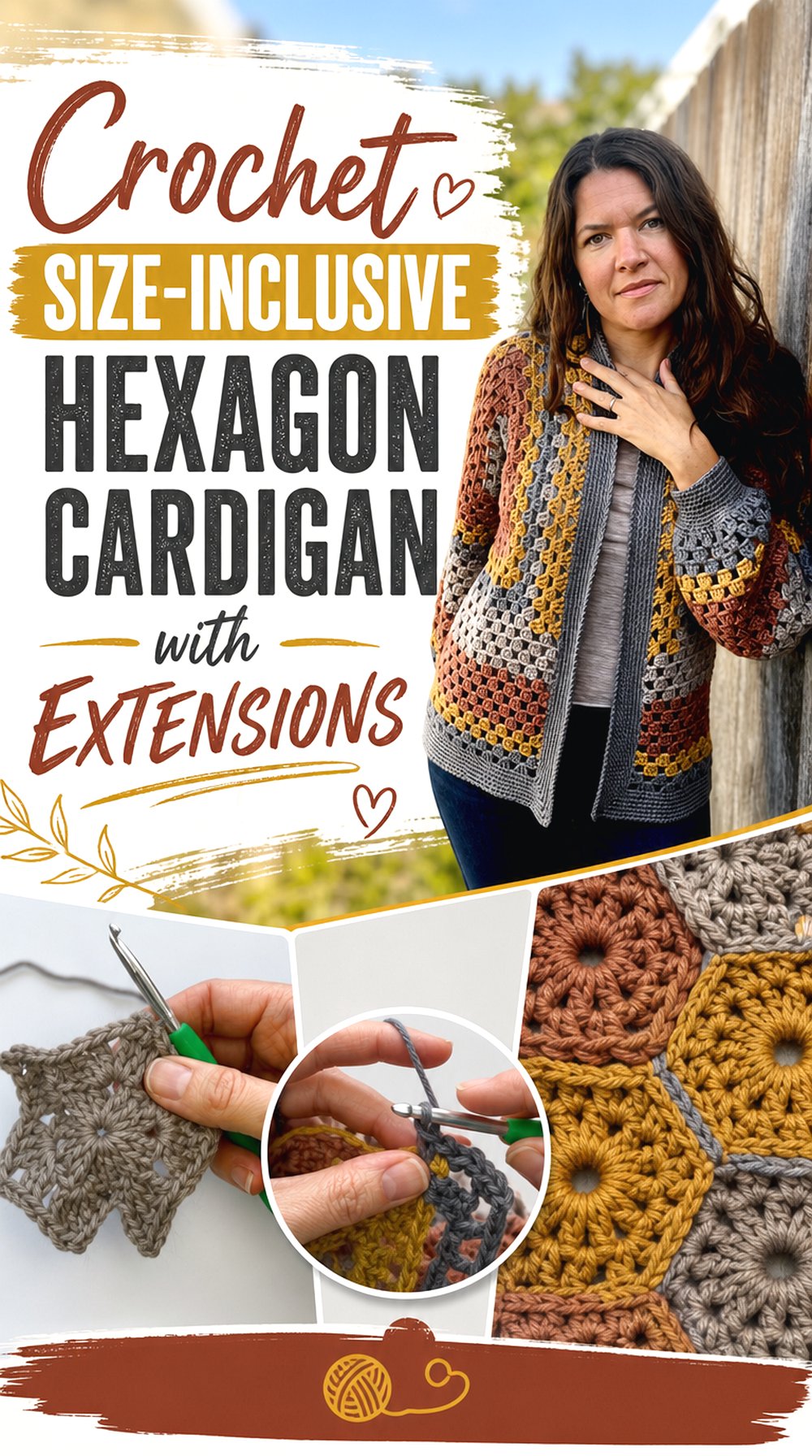
This size-inclusive hexagon cardigan is useful for readers who want a clear size range and shaping beyond two plain hexagons. The project includes front and back extensions, shoulder and back seaming, sleeves, cuffs, and a border. Because the written pattern is listed with sizes XS–5XL, this idea stands apart from more informal made-to-measure options and gives readers a stronger reason to review size notes before choosing their yarn and fit direction.
Review the Size Range
A listed size range helps readers choose more deliberately, but it does not replace measuring. Compare the pattern’s size notes with body measurements and the amount of ease preferred in a cardigan. This is especially important for a hexagon shape because sleeve width, body width, and length can change together unless the design includes separate extension sections.
Check the Front and Back Extensions
The front and back extensions are important because they help shape the cardigan beyond the basic folded hexagon form. Readers should look closely at where those extra sections are added and what they change in the finished garment. Extensions can improve coverage and fit, but they need to stay even from side to side.
Inspect the Border Finish
The border gives the cardigan its final outline, so it is worth reviewing before the project feels complete. A border can clean up the opening, hem, and edges, but it may also add width or visual weight. Readers should check how the border looks on the finished sample and decide whether that edge suits their preferred style.
Creator: Off the Beaten Hook
5. Crochet Cake Yarn Hexagon Cardigan with Soft Color Flow
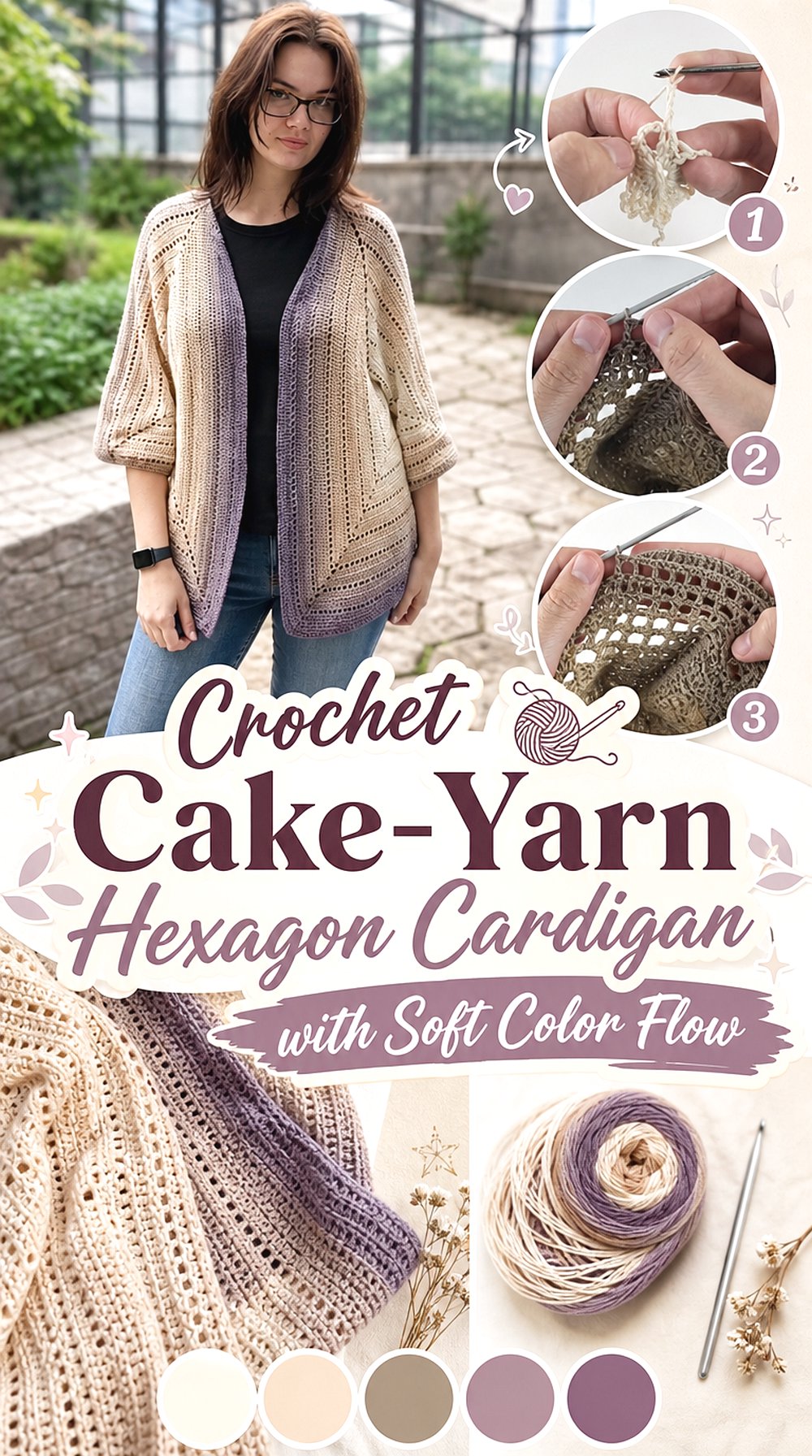
A cake-yarn hexagon cardigan is mainly about letting the yarn’s color changes become part of the garment. This step-by-step cardigan tutorial lists Yarnart Flowers Cake Yarn in the description and focuses on the familiar hexagon cardigan structure. Compared with striped or solid options, this idea may suit readers who want softer color movement across the body and sleeves without planning every color change by hand.
Consider the Color Placement
Cake yarn can create gradual color shifts, but the placement may not land exactly where a reader expects on both sides of a cardigan. It is useful to look at the finished result and decide whether mirrored color placement matters. Some makers may like an organic flow, while others may want to plan more carefully before starting the second half.
Confirm the Basic Stitch Comfort
The description notes that viewers should be familiar with basic crochet stitches such as chain, slip stitch, and double crochet. That makes this a good project to review honestly before beginning. Readers who are still unsure about those movements may want to practice them separately so the cardigan shaping is easier to follow.
Compare Both Hexagon Halves
With color-changing yarn, matching the two sides can matter as much as matching the shape. Readers should compare the halves as they grow, especially if the yarn cake creates noticeable color sections. This does not mean the colors must be identical, but the overall balance should look intentional when the cardigan is folded and joined.
Creator: Darya CrochetLife
6. Crochet Solid Hexagon Cardigan with Sleeve Shape Options
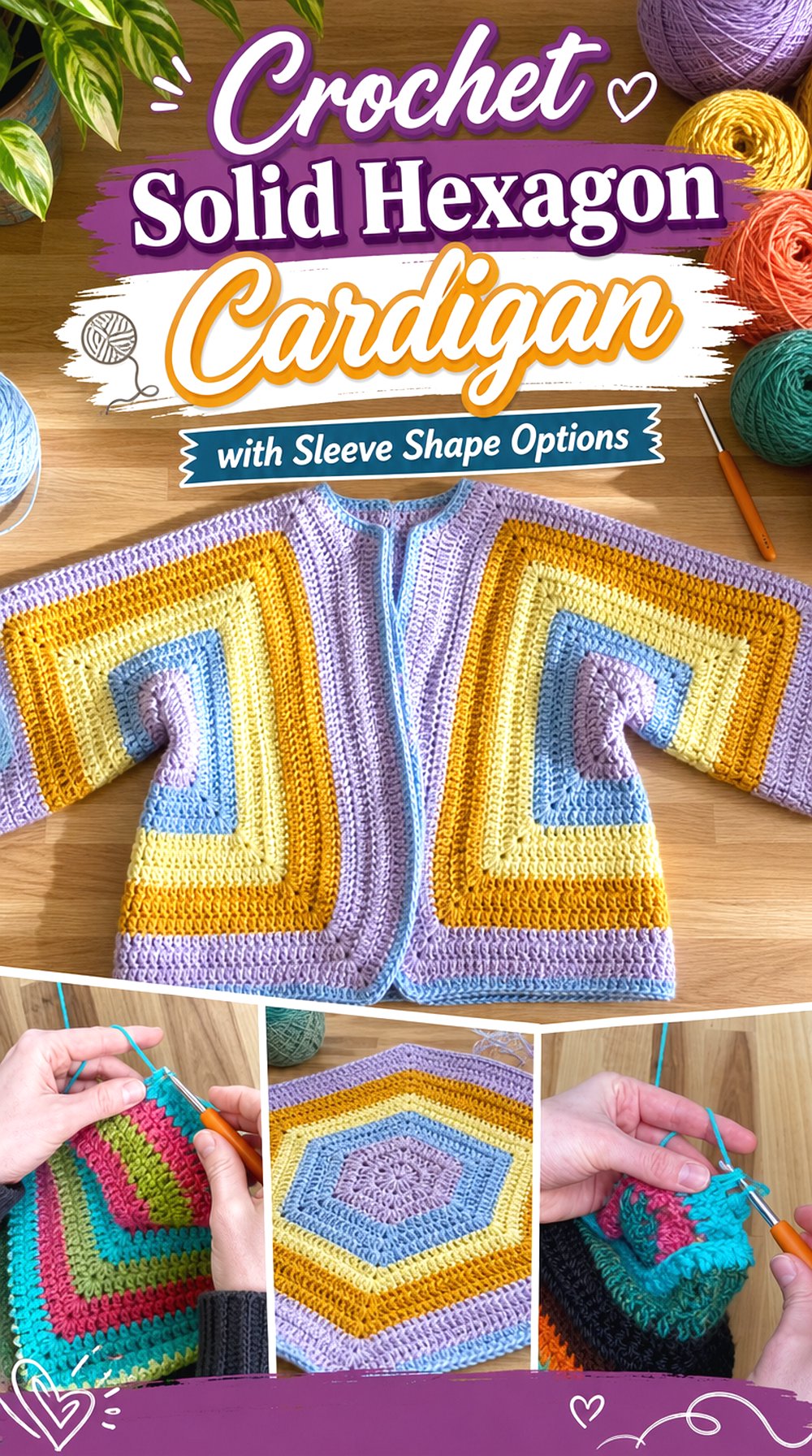
A solid hexagon cardigan gives a different look from open granny-style fabric because the surface appears more filled in. This tutorial focuses on making a solid hexagon, attaching two hexagons into a sweater shape, and exploring different sleeve shapes, including full sleeves, cuffed sleeves, puff sleeves, and balloon sleeves. That makes it a useful pick for readers who want the hexagon cardigan idea but prefer a more covered fabric and more sleeve-style decisions.
Think About Fabric Coverage
The solid hexagon approach can offer more visual coverage than an open granny-style cardigan. Readers should still check the finished look rather than assuming it will behave like a sewn jacket. Crochet fabric has its own drape, so the amount of coverage, weight, and movement should be judged from the finished garment view.
Choose a Sleeve Direction
The sleeve options are the standout feature of this project. A full sleeve, cuffed sleeve, puff sleeve, or balloon sleeve can change the whole mood of the cardigan. Readers should decide which shape they want before they are deep into the project, because sleeve style affects the final outline as much as color or length.
Confirm the Supplies Listed
The description lists flexible yarn choices along with basic finishing tools, a hook, stitch markers, and scissors. Before buying supplies, readers should record the creator’s material notes and decide how closely they want to follow the sample. A different yarn may change the fabric feel, so the finished look should be checked against the tutorial’s guidance.
Creator: Totally Stitchcraft – Sarah
7. Crochet Classy Striped Hexagon Cardigan
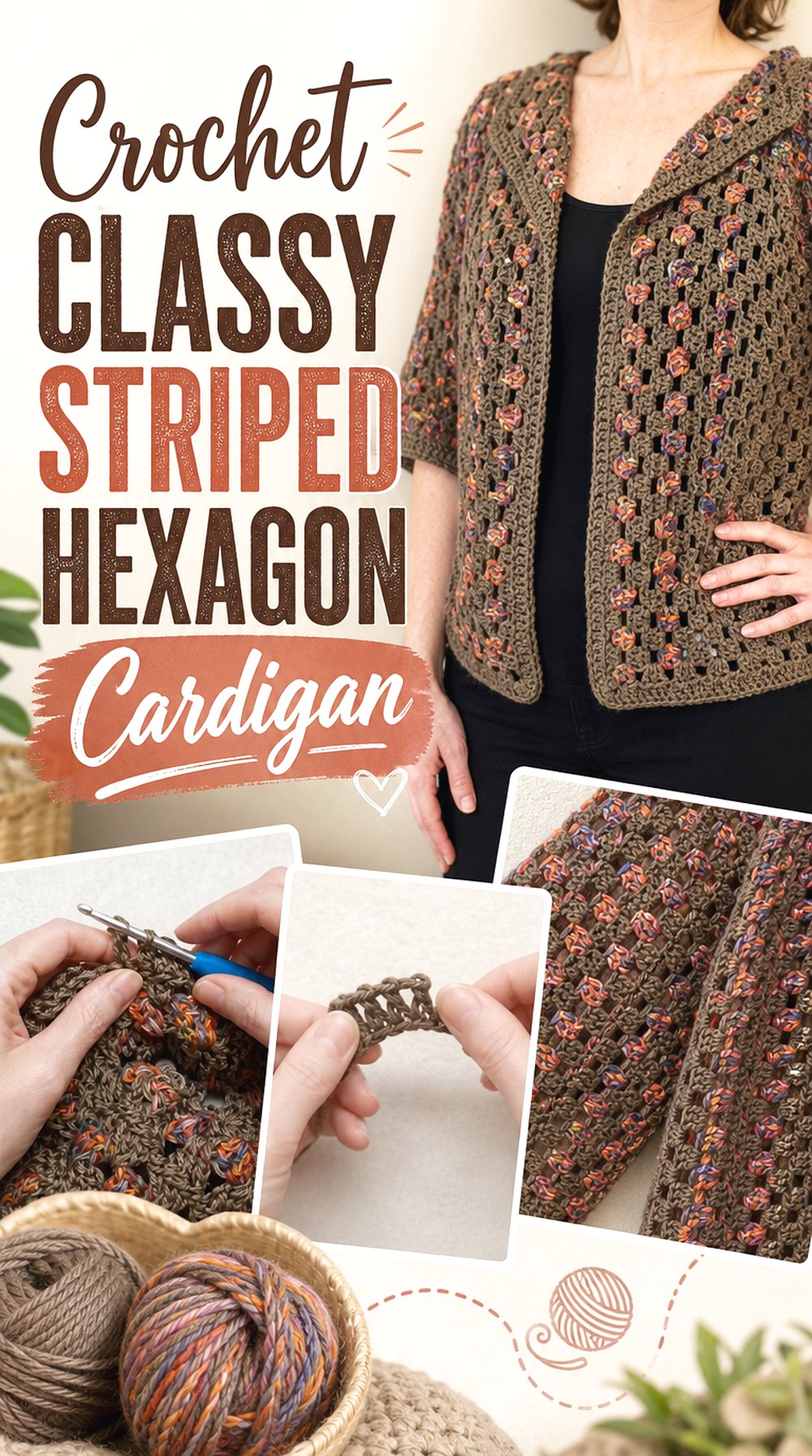
A striped hexagon cardigan is a good choice when the shape is simple but the surface needs more direction. This tutorial presents a classy hexagon cardigan that can be made with or without the striped design, which gives readers a clear style decision at the start. Compared with the cake-yarn option, the stripe approach feels more planned and graphic because the color changes can be treated as a design feature.
Decide on Stripes First
Stripes are easiest to manage when the color plan is chosen early. Readers should decide whether they want the striped look or the non-striped version before gathering supplies. That choice affects the rhythm of the cardigan and may also change how strongly the hexagon construction is noticed in the finished garment.
Look at the Overall Style
The “classy” angle works best when the colors, edges, and fit all support a cleaner look. Readers should review the finished cardigan and decide where it would fit in their wardrobe. A striped cardigan can feel bold or quiet depending on contrast, so the color relationship matters more than simply picking favorite shades.
Check the Written Pattern Link
The video description points readers to a written pattern in a blog post. Anyone who prefers reading while watching should confirm that link before beginning. Having both formats available can make it easier to review measurements, finishing notes, or stitch placement without repeatedly searching through the video.
Creator: Crochet with Patricia
8. Crochet Kids Granny Hexagon Cardigan
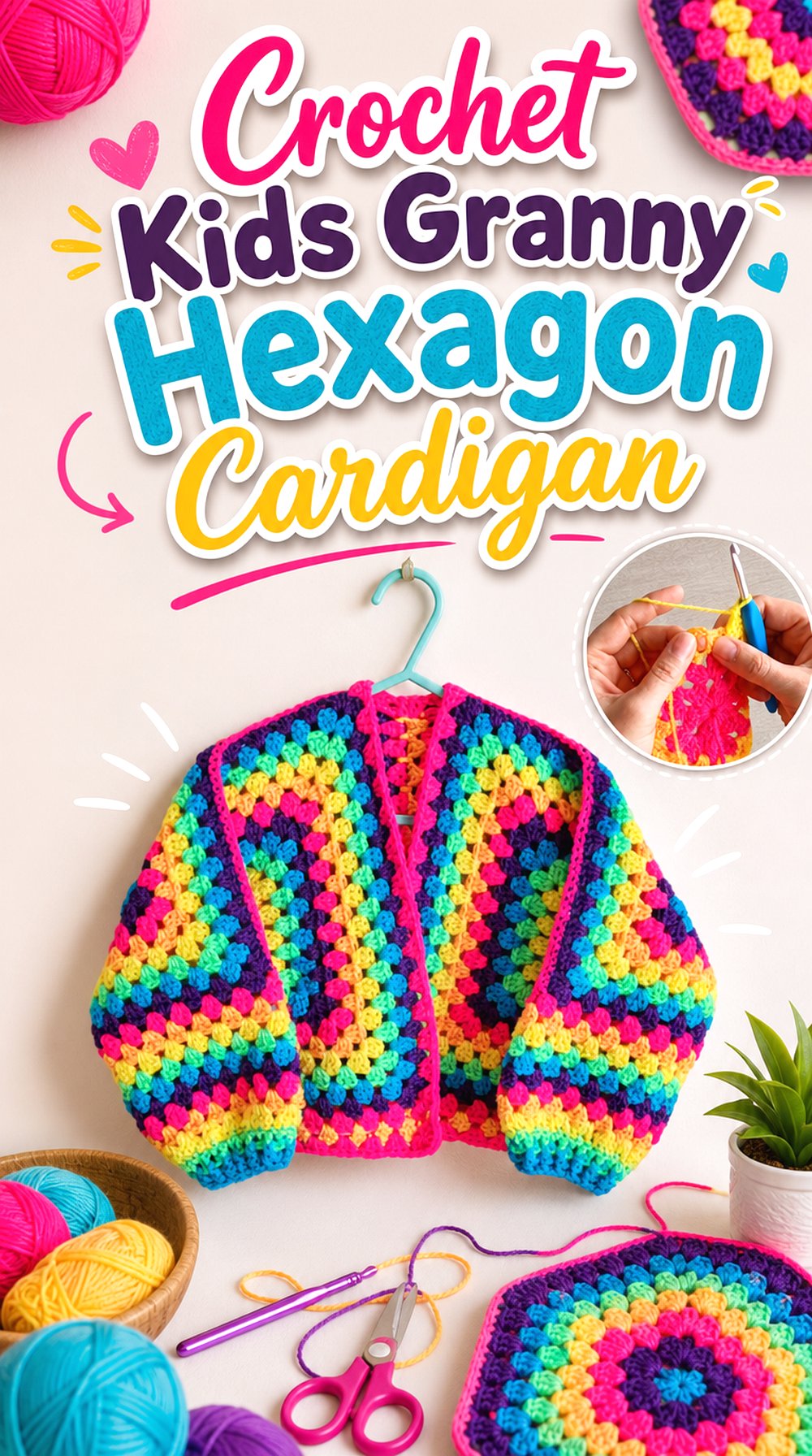
A kids granny hexagon cardigan brings the same folded-hexagon idea into a smaller wearer-focused project. This tutorial is made for children and includes an age range from 1 to 12 years, made-to-measure guidance, options for cuffed or uncuffed sleeves, and the choice to add extra length. It stands apart from the adult cardigans because child sizing, sleeve length, and growth room all need a different kind of attention.
Measure for the Child’s Fit
Kids’ cardigans need careful measuring because age alone does not guarantee the right fit. Readers should use the measurement guidance from the creator and compare it with the child’s actual body or a cardigan that already fits well. This is especially useful when choosing sleeve length and body length for comfortable layering.
Choose Cuffed or Uncuffed Sleeves
The sleeve option gives this cardigan useful flexibility. Cuffed sleeves may feel neater at the wrist, while uncuffed sleeves can keep the shape simpler. Readers should decide which finish makes sense for the child’s movement, preferred sleeve feel, and the yarn being used, then follow the creator’s exact guidance for that version.
Consider Extra Length
The option to add length is practical for a child-size cardigan because the body may need more coverage than the basic hexagon shape provides. Before adding length, readers should check where the cardigan falls on the child or a similar garment. Extra rows can change the look, so the final length should be chosen with the wearer in mind.
Creator: Craft and a Cuppa
Conclusion
These crochet hexagon cardigan ideas show how much variety can come from one construction family. Choose the custom-fit collar version for a more planned adult cardigan, the chunky tie-front for a bold casual layer, the no-sew or size-inclusive options for clearer finishing choices, and the solid or striped versions for stronger surface direction. The cake-yarn cardigan suits softer color flow, while the kids’ granny cardigan focuses on child sizing and length. Use the original tutorials for exact construction details before starting.
FAQs
How do I choose the right crochet hexagon cardigan tutorial?
Start by choosing the finished use first: adult layering, child sizing, chunky outerwear, softer color flow, or a cleaner solid fabric. Then review the tutorial’s sizing information, finishing stages, and any written pattern support. A cardigan with extensions or measurement guidance may be better when fit is the main concern.
Should I use the same yarn shown in the tutorial?
Use the creator’s material list as the first reference, especially when the cardigan depends on drape, thickness, or color flow. Changing yarn can affect sleeve width, body length, and how the cardigan hangs. When the tutorial allows flexible yarn choice, still make a note of the measurements and fit checks before buying supplies.
What should I check before making a hexagon cardigan for a child?
For a child-size cardigan, check chest measurement, sleeve length, body length, and whether the creator gives age or measurement guidance. Children’s sizing can vary widely, so age alone is not enough. Also review whether the sleeves are cuffed, uncuffed, or adjustable, because wrist fit can affect daily wear.
Are cuffs, collars, ties, and borders important on hexagon cardigans?
Yes, finishing details can change both fit and style. Cuffs can control sleeve openings, a collar can define the neckline, ties can shape the front closure, and borders can clean up the edges. Before choosing a tutorial, look at which finishing elements are included and decide which ones match the cardigan you want.
Can I sell a crochet hexagon cardigan made from a YouTube tutorial?
Check the creator’s own terms before selling finished items. Some creators allow sales of finished pieces, some limit commercial use, and some have separate paid patterns or licensing notes. Do not assume that a public tutorial gives permission to sell, copy, repost, or reuse the creator’s photos, charts, or written materials.