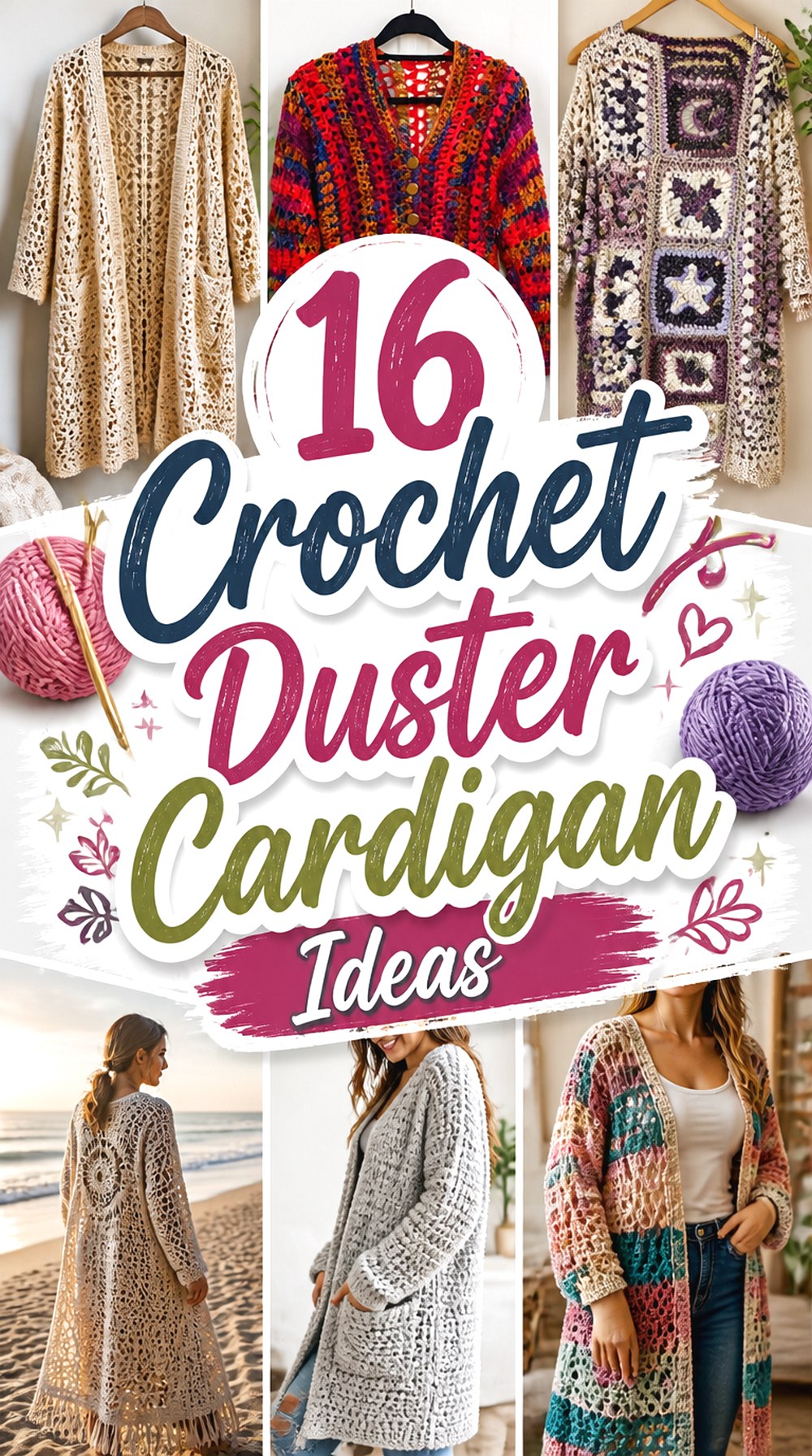

A crochet duster can range from a lightweight layer that moves like a kimono to a substantial long cardigan with pockets, ribbing, and enough coverage for cool weather. That variety matters because length alone does not determine how a duster will feel. Stitch density, yarn weight, sleeve shape, front width, and construction can turn two similarly long cardigans into very different garments.
These 16 ideas include dedicated duster tutorials as well as selected long or adjustable cardigan constructions that offer useful routes for planning duster proportions. You will find granny-square layouts, mesh fabrics, oversized silhouettes, textured surfaces, pockets, a hood, short sleeves, and minimalist longline shapes. The notes below focus on choosing the right construction, checking fit before committing to all that extra length, and understanding where an adaptation needs more planning than simply adding rows.
Quick List
- Crochet Airy Open-Front Duster Cardigan
- Crochet Scrap-Granny Maxi Duster Cardigan
- Crochet Relaxed Made-to-Fit Duster Cardigan
- Crochet Hooded Pocket Duster Cardigan
- Crochet Short-Sleeve Summer Duster Cardigan
- Crochet Breezy Summer Duster Cardigan
- Crochet Waffle-Texture Longline Duster Cardigan
- Crochet Oversized Pocket Duster-Style Cardigan
- Crochet Ribbed Pocket Duster-Style Cardigan
- Crochet Minimal Oversized Duster Cardigan
- Crochet Granny-Back Hexagon Duster Cardigan
- Crochet Longline Granny Hexagon Duster Cardigan
- Crochet Buttoned Mesh Duster Cardigan
- Crochet Color-Block Alpine Duster Cardigan
- Crochet Rose-Granny Kimono Duster Cardigan
- Crochet Lightweight Lace Long Duster Cardigan
Choose the Finished Length Before You Commit to the Body
“Duster” does not describe one universal hem position. A cardigan that falls comfortably below the knee on one wearer may sit much higher or lower on another. Instead of choosing length only from the tutorial sample, decide where you want the finished hem to fall while wearing the shoes and clothing you expect to pair with it.
Also account for the fabric itself. A long, loose crochet panel can gain length under its own weight, particularly when the stitch pattern is open or the yarn has significant drape. Make and block a useful swatch when the tutorial calls for gauge, then consider how that fabric behaves when hanging. For adjustable tutorials, measure from the same body reference point the creator uses rather than transferring a length from an unrelated cardigan.
Yarn Weight Can Change the Whole Character of a Duster
Adding length increases the amount of fabric hanging from the shoulders, so yarn choice becomes especially noticeable in a duster. An airy fabric can create movement and layering without looking bulky, while a denser or heavier fabric can produce more warmth and a stronger coatigan effect.
That does not mean one yarn weight is automatically better. The important point is matching the yarn to the tutorial’s intended gauge and fabric. Substituting a dramatically heavier yarn into a light duster design can alter the width, shoulder load, sleeve behavior, and overall drape. Conversely, an extremely light substitute may lose the structure that defines pockets, bands, or textured stitches. When substituting, compare gauge and the blocked fabric rather than relying on the yarn label alone.
Check Armholes, Front Edges, and Pockets as the Length Grows
Long garments magnify small fit problems. An armhole that already feels low can drop farther as the body stretches, and front bands that are worked too tightly can pull a long open cardigan upward instead of hanging vertically.
Pockets deserve similar attention. On a long cardigan, their position affects both usefulness and visual proportion, while the contents can add localized weight. Before permanently attaching separate pockets, pin them in place and try on the cardigan if the construction allows it. For adaptable cardigan tutorials, confirm shoulder width and armhole depth before extending the hem. Making a standard cardigan longer is much easier when the upper-body fit is already correct.
1. Crochet Airy Open Front Duster Cardigan

This idea centers on a floaty open-front silhouette that can function as a cardigan, kimono, robe, or cover-up. AC Crochets presents a measurement-driven duster construction rather than restricting the garment to one fixed body size, making this a useful direction when the most important feature is personalized length. The relatively uncomplicated overall shape keeps the visual emphasis on drape and movement instead of a busy motif layout. The accompanying project information describes a paneled body with sleeves added afterward and specifically notes that airy fabrics may grow, which is important when planning a long hem.
Let the Fabric Hang Before Locking In the Hem
An airy duster can look noticeably longer once the entire garment is assembled. That matters more here than with a cropped cardigan because the lower body adds substantial hanging fabric. Before assuming the initial measurement will equal the final worn length, follow the creator’s measurement guidance and pay attention to any growth notes for the chosen yarn and stitch combination.
The Open Front Makes Layering More Flexible
With no full front closure determining torso circumference, this silhouette works naturally over different base layers. Still, the two front sections should hang evenly rather than pulling toward the back. Compare front and back lengths during finishing and check the cardigan on the body before treating unevenness as a decorative feature.
2. Crochet Scrap Granny Maxi Duster Cardigan

For a more graphic result, a granny-square duster turns the entire long silhouette into a motif layout. Dreamcrochets’ tutorial is specifically built around granny squares and shows the major stages from motifs through joining, sleeves, and finishing. This makes the design meaningfully different from a cardigan where squares appear only as accents. Because a full duster contains many repeated joins, the blocked size and consistency of the squares affect the garment far more than color placement alone. It is also a useful direction for combining planned colors with compatible leftovers instead of treating every square identically.
Blocked Square Size Controls the Garment Grid
Do not plan the duster only from an unblocked first motif. If squares change after blocking, that difference multiplies across every row and column of the garment. Make several representative squares, finish them consistently, and compare dimensions before committing to the complete layout.
Plan Color Distribution Across the Whole Back
A long granny duster gives the back panel a large visual field. Arrange finished motifs on a flat surface before joining so concentrated dark, bright, or high-contrast areas do not appear accidentally lopsided. This is particularly useful when working from scraps, where yarn quantities naturally vary.
Joining Quality Matters More on a Maxi Length
Small differences in joining tension can accumulate down a long side seam or motif column. If a section begins to ripple or draw inward, investigate motif dimensions and joining tension before adding more rows of squares. Correcting the mismatch early is simpler than trying to force the entire garment flat later.
Original Tutorial and Creator Credit
Creator: Dreamcrochets
3. Crochet Relaxed Made to Fit Duster Cardigan

This relaxed duster from BzzzMagicHands is a useful option when sizing guidance matters more than elaborate surface decoration. The tutorial is explicitly presented as a duster cardigan and states that measurements for multiple sizes are included. That makes it a practical contrast to highly motif-driven designs: the focus here is the overall long silhouette and wearable proportion. Before choosing it, think about how much room you want through the body and sleeves, because a relaxed cardigan can move from intentionally oversized to simply too large if width and length are both increased without reference to the tutorial’s measurements.
Separate Length Decisions From Width Decisions
Wanting a dramatic duster hem does not automatically mean the body also needs extra width. Follow the sizing information for the upper body first, then decide whether the intended length needs alteration. Keeping those two decisions separate helps preserve the shoulder and armhole relationship.
Check Sleeve Proportion Against the Long Body
A long cardigan creates a strong vertical line, so sleeve length and volume become visually prominent. Try the developing garment against your body measurements rather than judging the sleeve in isolation. A sleeve that looks generous on a table may feel quite different once the shoulder is carrying the finished duster.
Original Tutorial and Creator Credit
Creator: BzzzMagicHands🧶
4. Crochet Hooded Pocket Duster Cardigan

A hood immediately changes a duster from a simple long layering piece into something closer to a casual coatigan. TCDDIY’s tutorial also includes pockets, cuffs, a bottom band, and a front band, so the finishing details are a major part of the finished silhouette rather than optional afterthoughts. The result suits someone who wants more structure and visual substance than a loose beach-style duster. Because the hood and pockets add fabric to an already long garment, yarn weight and overall garment weight deserve more attention here than they would on a sleeveless mesh layer.
A Hood Adds Weight at the Neck and Shoulders
The hood pulls from the neckline when hanging down the back. That makes a stable shoulder fit particularly useful. Before adding extra body length beyond the tutorial sample, consider the combined weight of the body, hood, sleeves, and pockets rather than looking at each element separately.
Pocket Placement Should Work With Your Reach
Long cardigans provide plenty of vertical space for pockets, but that does not mean every position is comfortable. If you alter body length, use the creator’s construction as your guide while checking whether the pocket location still falls naturally for your hands.
Bands Need to Hang Flat Along a Long Edge
Front edging runs through one of the most visible areas of this design. Uneven pickup tension can make a long front edge ripple or draw up. Stop periodically during finishing and lay the cardigan flat to check that both sides behave similarly before completing the entire band.
Original Tutorial and Creator Credit
Creator: TCDDIY
5. Crochet Short Sleeve Summer Duster Cardigan
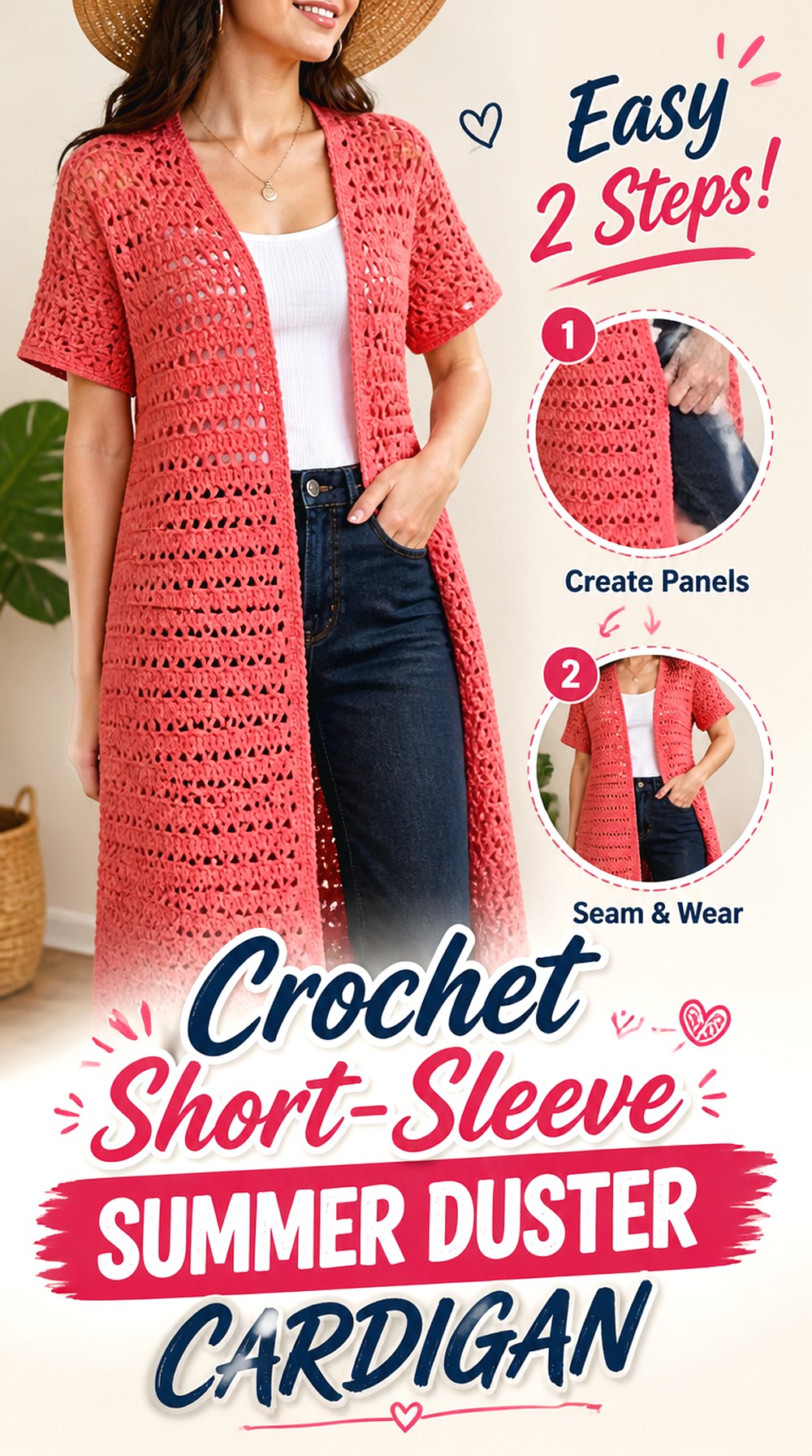
Crazy Cool Crochet’s long cardigan offers a distinctly lighter direction, using short sleeves and an open stitch treatment rather than trying to make a warm coat substitute. The tutorial description identifies double crochet and V-stitch elements and presents the garment as a spring or summer layer. Short sleeves also reduce the amount of yarn hanging from the shoulders, allowing the long body to carry most of the visual drama. This is a useful choice for someone who wants the length of a duster without full arm coverage.
Open Fabric Needs Enough Stability at the Shoulders
Open stitches can provide attractive movement, but the shoulder area still supports the entire long body. If substituting yarn, make a fabric sample and check whether it stretches substantially under gentle hanging weight before assuming it will behave like the tutorial garment.
Short Sleeves Keep the Silhouette Visually Light
The sleeve length makes this project different from heavy long-sleeved dusters. It can layer over tanks, dresses, or fitted tops without placing another full layer along the arms. When adjusting length, keep that light-versus-long balance in mind rather than automatically adding more width as well.
Original Tutorial and Creator Credit
Creator: Crazy Cool Crochet
6. Crochet Breezy Summer Duster Cardigan
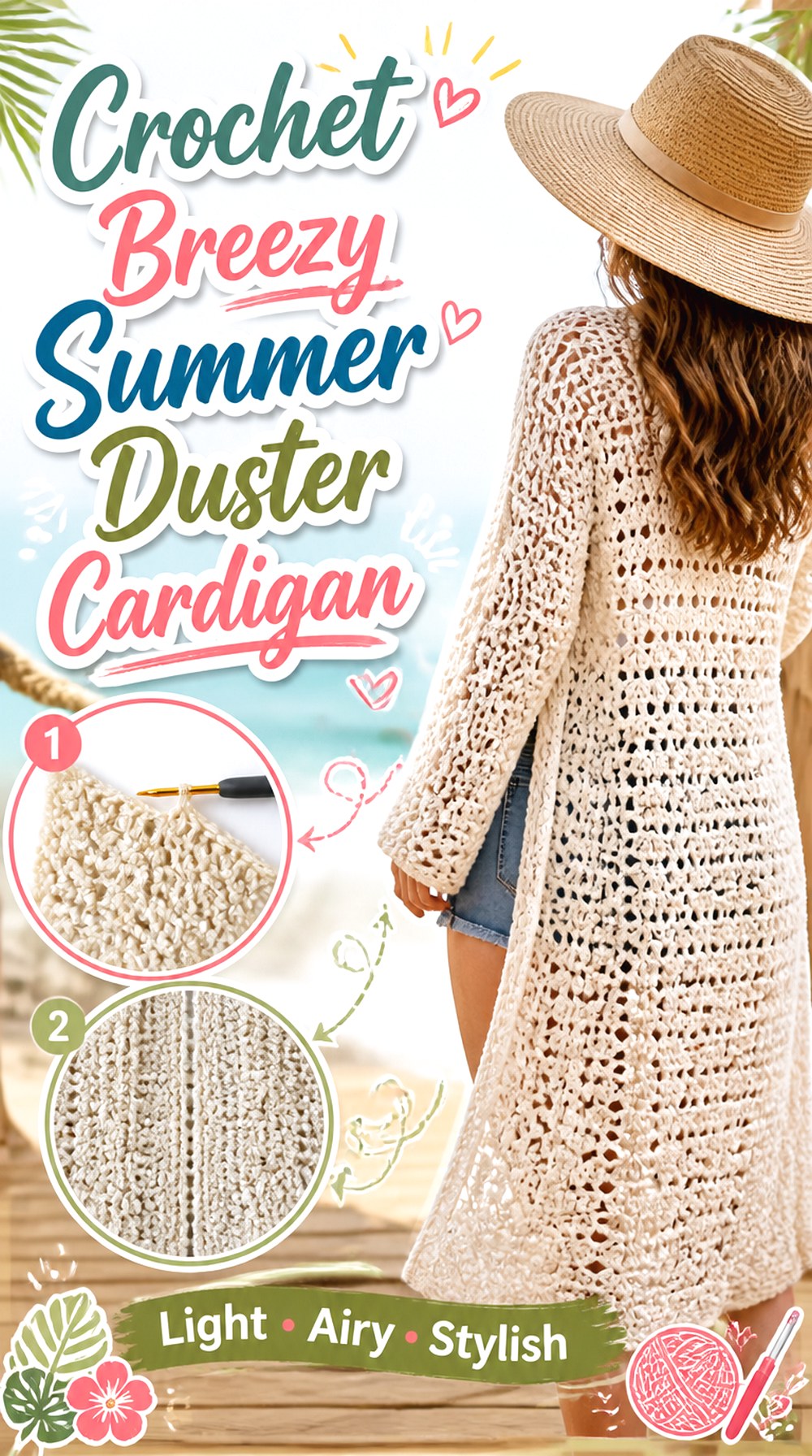
Hey Carrie’s summer duster provides another warm-weather option, but with a different fabric and styling direction from the short-sleeve design above. The tutorial is explicitly titled as a summer duster and is presented for multiple sizes. This is a good project to compare with denser fall cardigans if you like long coverage but do not want every duster to read as outerwear. The most important planning question is not simply “How long?” but how much fabric you want moving around the body in warmer conditions.
Keep Ease Intentional in a Warm-Weather Layer
A summer cardigan generally benefits from room for movement, but excessive width plus substantial length can create more fabric than expected. Choose the tutorial size from its guidance instead of automatically sizing up because the garment is open front.
Test the Drape Before Making a Yarn Substitution
A substitute can match nominal yarn weight yet produce a noticeably firmer fabric. For a summer duster, that change affects movement and how comfortably the long fronts fall. Compare your swatch with the tutorial’s intended gauge and assess the fabric after blocking before completing large panels.
Original Tutorial and Creator Credit
Creator: Hey Carrie
7. Crochet Waffle Texture Longline Duster Cardigan
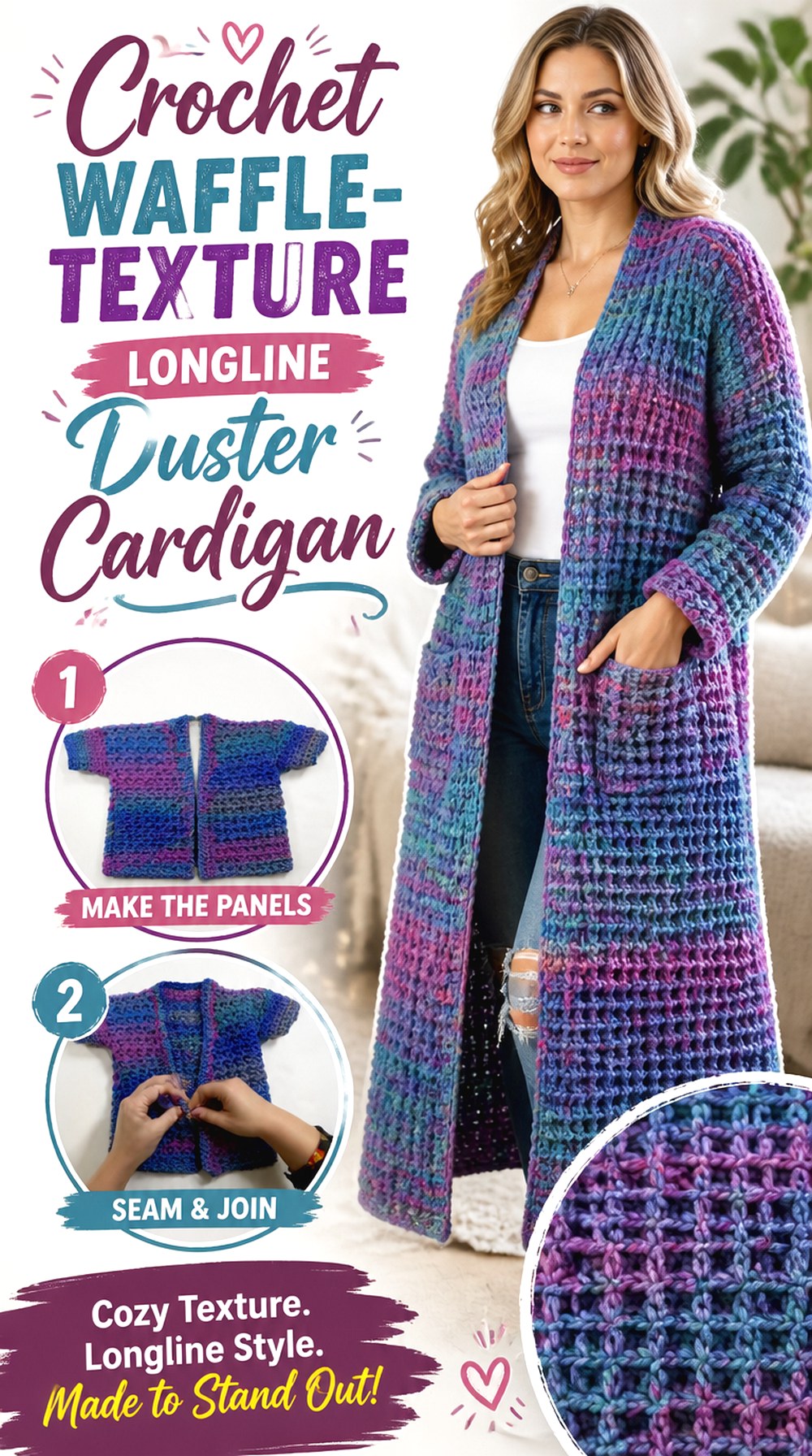
The World Traveler cardigan from Marly Bird offers a more substantial longline option with a pronounced waffle-like texture created from a repeating stitch pattern. The supporting tutorial describes it as a bulky oversized sweater and covers a broad size range. Compared with an airy mesh duster, this approach places far more emphasis on surface texture, warmth, and a cozy oversized silhouette. That makes it a useful duster-style direction for cool-weather layering, provided you are comfortable with the additional fabric weight of a long textured cardigan.
Texture Can Shorten the Visual Line
Strong horizontal or pebbled texture makes a cardigan look visually denser than open mesh. If you want a sleek duster effect, consider how the tutorial’s intended ease and hem length interact rather than making the garment both extremely wide and extremely long.
Heavier Fabric Needs Shoulder Support
A long textured body concentrates considerable fabric below the shoulder. Match the pattern gauge carefully and avoid treating a dramatically heavier yarn as a simple substitution. A change in weight can affect shoulder drop, sleeve position, and the finished hem.
Original Tutorial and Creator Credit
Creator: Marly Bird
8. Crochet Oversized Pocket Duster Style Cardigan

For The Frills’ oversized pocket cardigan is not presented as an ankle-skimming maxi duster, so treat it as a longline base rather than an exact duster pattern. Its slouchy proportions, wide sleeves, and large patch pockets make it useful for someone who wants a casual duster-style layer and is comfortable adapting length carefully. The source describes a long, legging-friendly silhouette, while the oversized fit creates a softer outline than the more tailored long cardigans in this collection.
Extend Length Only After the Upper Fit Is Settled
If you want to turn a long cardigan into a deeper duster, establish shoulder width, armhole position, and body width first. Adding length does not correct an upper body that is already too loose. Use the tutorial for the original construction, then make any length adjustment within that framework.
Large Pockets Need Proportional Placement
If the body becomes longer, pockets that looked centered on the original sample can appear unusually high. Before sewing them permanently, pin them to the finished or nearly finished cardigan and check the position while standing naturally.
Original Tutorial and Creator Credit
Creator: forthefrills
9. Crochet Ribbed Pocket Duster Style Cardigan

Chenda DIY’s ribbed cardigan introduces a knit-like vertical texture and pockets, creating a noticeably different surface from granny motifs, V-stitches, or mesh. The tutorial also discusses adjusting the garment larger or smaller, making it useful as a reference for a longer customized cardigan. Because the source is a cardigan tutorial rather than a dedicated maxi duster pattern, anyone extending it should determine finished length before beginning the long body pieces and preserve the original fit relationships around the shoulders and sleeves.
Vertical Ribbing Rewards Consistent Tension
Ribbed crochet makes small tension changes easy to see because the lines run continuously through the garment. On a long panel, inconsistent row height can also affect hem alignment. Compare corresponding panels as you work rather than discovering a major length difference during seaming.
Decide Whether Pockets Should Blend or Stand Out
Ribbing already provides strong visual direction. Matching pocket texture can make them recede into the cardigan, while contrasting orientation can emphasize them. Whichever effect you prefer, place them only after checking how any added duster length changes the body’s proportions.
Original Tutorial and Creator Credit
Creator: Chenda DIY
10. Crochet Minimal Oversized Duster Cardigan

Sirin’s Crochet provides an oversized cardigan tutorial intended to be adaptable across sizes. That makes it useful for a minimalist duster idea where the appeal comes from uninterrupted fabric and generous proportions instead of motifs, color blocking, or complex trims. It should still be approached as an adaptable cardigan foundation rather than assuming every length modification has already been calculated for you. Set the desired duster hem on your own body and keep the tutorial’s upper construction intact unless you have a specific reason to alter it.
Oversized Does Not Need to Mean Oversized Everywhere
You can preserve a relaxed body without making sleeves or armholes disproportionately large. Decide which area should provide the ease. A dramatic long body paired with controlled sleeves often produces a cleaner duster line than increasing every dimension together.
Plain Fabric Makes Finishing More Visible
Without motifs or strong texture to distract the eye, neckline edges, seams, and the hem become important visual features. Lay the garment flat during finishing and correct twisting or uneven edge tension before it becomes part of the final silhouette.
Original Tutorial and Creator Credit
Creator: Sirin’s Crochet
11. Crochet Granny Back Hexagon Duster Cardigan

Alyssia Creates combines hexagon-cardigan construction with granny squares positioned along the back, which gives this idea a strong focal feature instead of covering every surface with identical motifs. The tutorial discusses customizable sizing, making it a useful starting point for a longer interpretation. For a duster adaptation, the main planning challenge is maintaining a deliberate relationship between the back motif column, the body extension, and the front length. Simply adding fabric at the bottom without considering motif placement could leave the decorative section visually stranded near the shoulders.
Let the Back Motifs Set the Visual Rhythm
Decide whether the granny squares should remain concentrated through the upper back or continue farther down a lengthened body. Both choices can work, but they create different results. Sketching the back as a simple grid before adding length helps keep the motif placement intentional.
Match Added Sections to the Hexagon Fabric
Any extension should cooperate with the existing construction rather than behaving like an unrelated border. Compare stitch density, stretch, and blocked width between the hexagon sections and whatever fabric you plan to use below them.
Original Tutorial and Creator Credit
Creator: Alyssia Creates
12. Crochet Longline Granny Hexagon Duster Cardigan

This second hexagon direction keeps the classic granny hexagon itself as the central construction idea. Annie | Hooks and Heelers demonstrates the recognizable folded-hexagon cardigan format and includes measurement guidance. To make this concept duster-like, the important distinction is that the original tutorial should remain the guide for the upper garment while any added length is treated as a deliberate adaptation. Unlike a rectangular duster, a hexagon cardigan grows in interconnected dimensions, so extending the original hexagon indiscriminately can affect width and sleeve size as well as body length.
Do Not Enlarge the Hexagon Only to Gain Length
With hexagon construction, more rounds generally influence several garment dimensions at once. If your upper-body fit is already correct, consider a lengthening method compatible with the tutorial instead of continuing to enlarge every part of the hexagon.
Check the Side and Back Hem Together
A lengthened hexagon cardigan can develop a different visual line from a straight rectangular cardigan. Lay the garment flat and inspect the side transitions as well as the center back before committing to a large lower extension.
Original Tutorial and Creator Credit
Creator: Annie | Hooks and Heelers
13. Crochet Buttoned Mesh Duster Cardigan
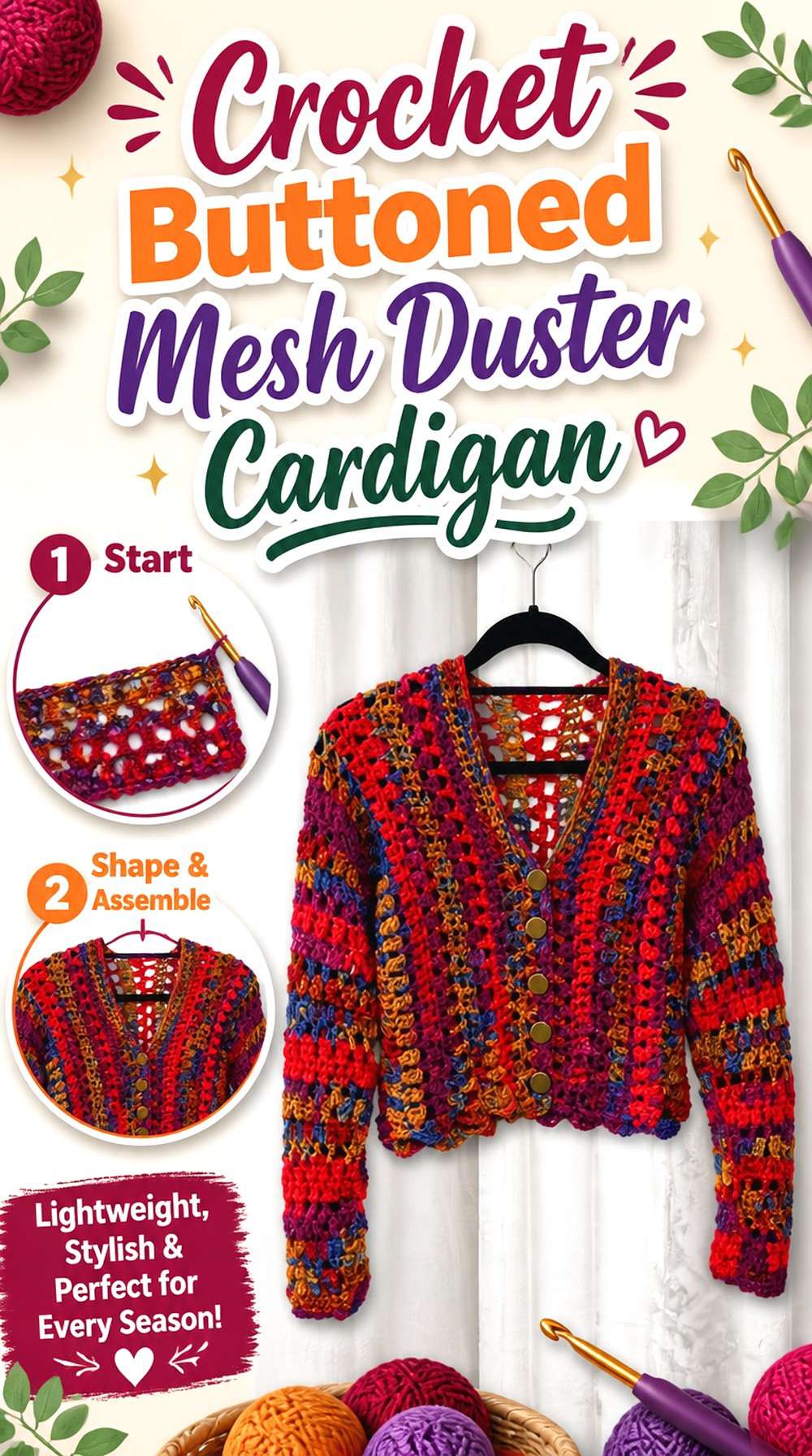
Brunaticality’s mesh cardigan offers an open fabric with a buttoned front detail, giving it a different function from completely open-front dusters. The original project is a mesh cardigan with long sleeves and an optional sleeveless route, so a duster version should be considered an intentional length adaptation rather than a claim that the tutorial supplies a maxi hem. The combination is appealing when you want a breezy long layer that can still be drawn together at the front.
Buttons Need a Stable Edge
Mesh stretches more readily than dense fabric, while buttons place concentrated stress on specific points. If you lengthen the body, make sure the front edge remains stable enough that added garment weight does not distort button placement.
Open Mesh Shows the Layer Underneath
Unlike a dense cardigan, this style visually interacts with whatever is worn beneath it. When choosing duster length and color, think of the underlayer as part of the overall look rather than treating the cardigan as a completely opaque outer garment.
Keep a Long Mesh Hem Away From Snagging Hazards
A very open, low hem can catch more easily than a compact fabric. Choose a practical finished length for how and where you expect to wear the cardigan, particularly if the stitch pattern creates large open spaces.
Original Tutorial and Creator Credit
Creator: Brunaticality
14. Crochet Color Block Alpine Duster Cardigan
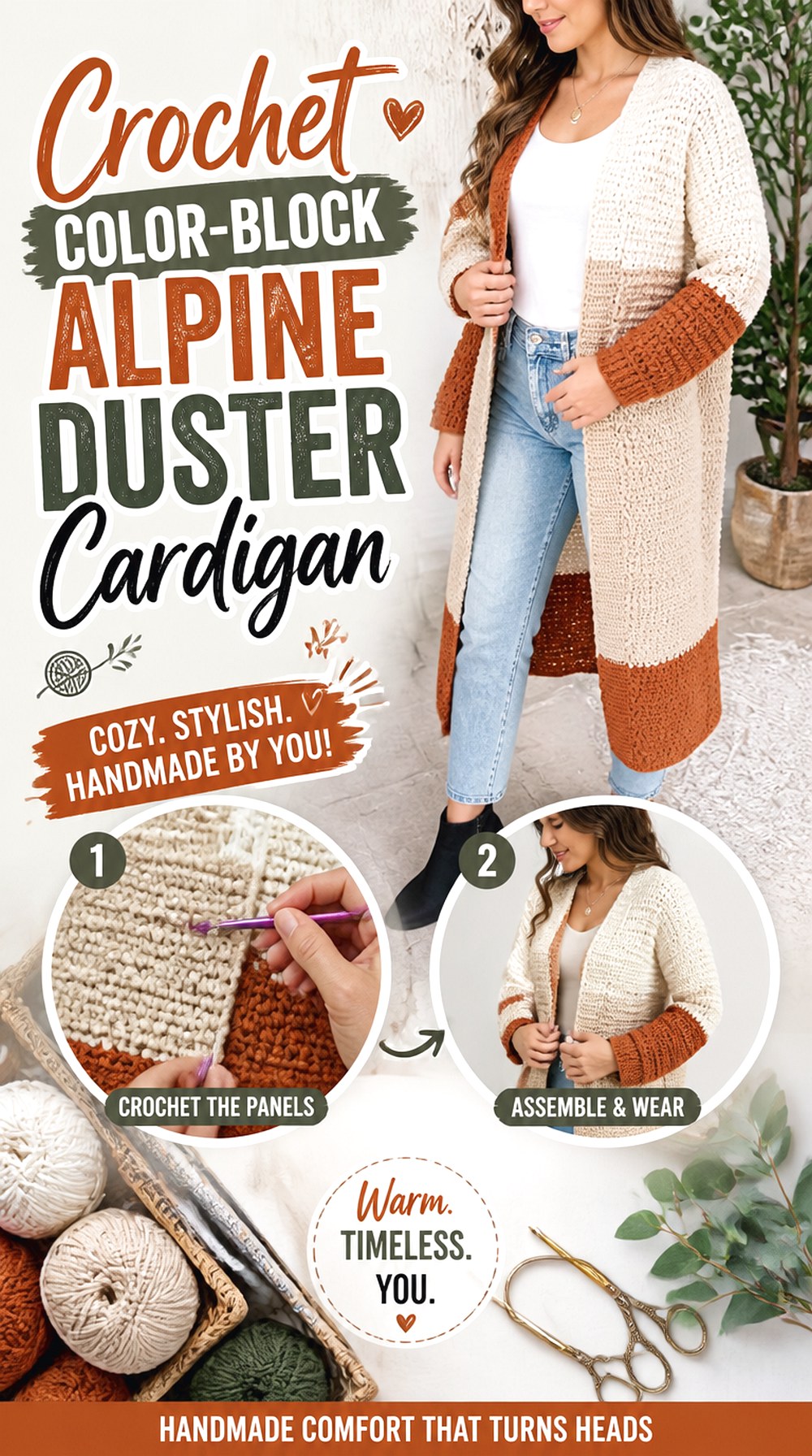
Briana K’s Robin Duster is one of the clearest statement options in this collection. It combines a genuinely long duster silhouette with color blocking and alpine-stitch texture, and the body-and-sleeve construction is designed to come together with two principal seams. The creator lists sizing from XS through 5X and describes the garment as a duster rather than a standard cardigan that needs to be lengthened. This makes it a strong choice if you want visual impact without relying on dozens of joined motifs.
Color Blocks Can Change Perceived Proportion
Broad horizontal color areas break up the long vertical line. Before substituting a different color sequence, sketch where major transitions will sit on the body. A high-contrast change near the hip creates a different visual effect from one placed closer to the hem.
Alpine Texture Adds Substance
The textured fabric is part of this duster’s character, so substituting yarn should preserve more than stitch gauge alone. Compare whether the new yarn still shows the texture clearly and whether the blocked swatch remains flexible enough for a long wearable.
Two-Seam Construction Makes Alignment Important
A simplified seam count does not remove the need for careful matching. Before joining, compare the corresponding edges and color transitions so the completed cardigan does not shift visually from one side to the other.
Original Tutorial and Creator Credit
Creator: Briana K
15. Crochet Rose Granny Kimono Duster Cardigan
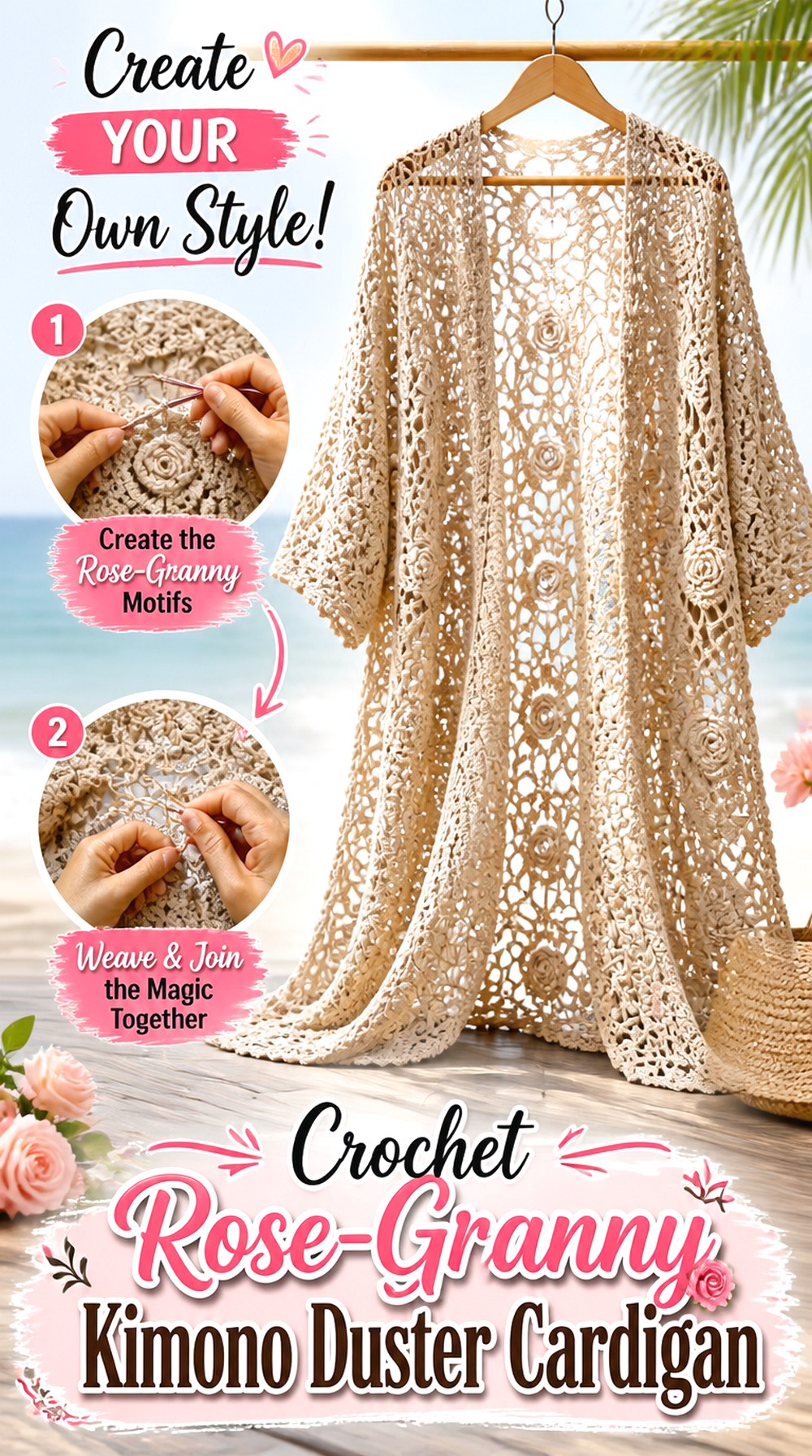
TheKnottyLace takes granny-square construction in a more decorative kimono direction. The project is explicitly described as a long kimono or duster and uses floral-style granny motifs to create a flowing beach-cover or layering silhouette. The tutorial and supporting pattern cover sizes from XS through 4XL. Compared with the scrap-granny duster earlier, this design depends more strongly on repeating a coordinated statement motif, so motif consistency and orientation become part of the finished design language rather than simply a way to build fabric.
Repeat the Motif Consistently Before Joining
When the flower square is the primary visual feature, variations in tension become easier to spot across the broad back. Finish and block a representative group before final assembly so you can identify any outliers in size.
Orientation Matters on a Long Kimono
A directional floral or bobble detail can look inconsistent if motifs rotate unintentionally. Lay the full back and front arrangement out before joining, especially if you alter the creator’s color choices.
Think About Beach Cover-Up Versus Everyday Cardigan Use
A long granny kimono can work as either, but those uses may lead to different yarn priorities. Follow the tutorial’s requirements for the original version; if substituting, decide whether you value airflow, structure, softness, or washability most and then confirm gauge with the replacement.
Original Tutorial and Creator Credit
Creator: TheKnottyLace
16. Crochet Lightweight Lace Long Duster Cardigan
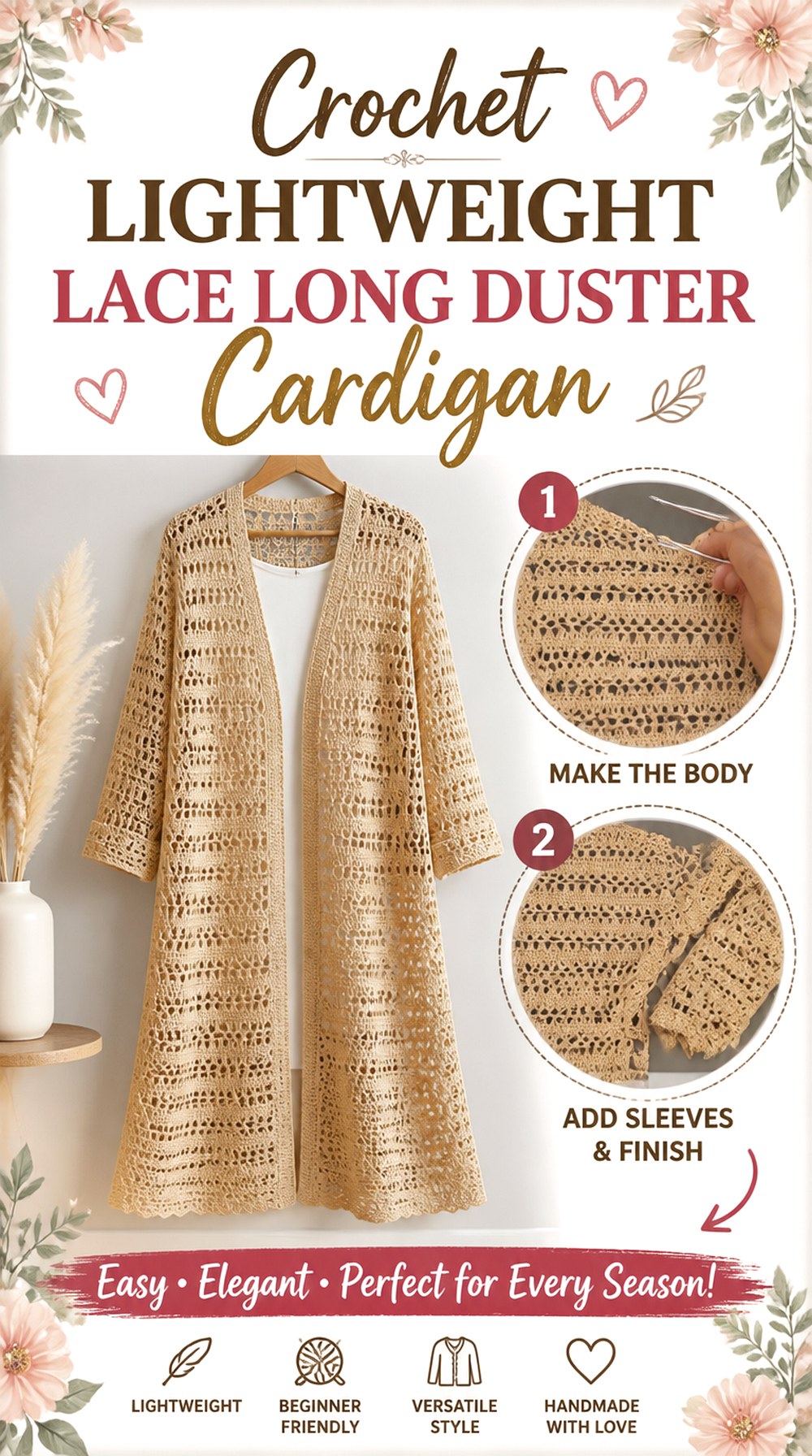
InterUnet’s long cardigan provides a finer, more lace-oriented finish than the chunky or heavily textured options above. The supporting project page identifies a light yarn, long sleeves, decorative open areas, and a long-cardigan construction, making it a useful option for someone who prefers a narrower, more delicate visual texture. The published source is tied to a specific sample size rather than the broad size ranges offered by some other projects, so this is one to choose when the provided sizing works for you or when you already understand how to evaluate garment adjustments responsibly.
Fine Fabric Creates Length Without the Same Bulk
A lighter yarn can make a long cardigan feel visually less massive, but the trade-off is that the fabric may show tension inconsistencies more clearly. Take time to confirm gauge and make sure the lace sections remain even across large panels.
Check the Published Size Before Starting
This tutorial should not be treated as automatically size-inclusive. The associated source lists a particular sample size, so compare the available garment information with your own intended fit before investing in a full duster-length project.
Picot and Tie Details Give the Hem a Different Finish
Small decorative finishing elements have more presence on an otherwise restrained long cardigan. If adapting the piece, preserve enough visual breathing room around those details rather than adding several unrelated borders or embellishments at once.
Which Crochet Duster Style Should You Choose?
If you want the most obvious duster silhouette without adapting a shorter cardigan, start with the dedicated designs from AC Crochets, Dreamcrochets, BzzzMagicHands, TCDDIY, Briana K, TheKnottyLace, or the other explicitly long-cardigan sources. They already place length at the center of the garment.
For warm weather, the short-sleeve, airy, mesh, and kimono designs reduce visual density. Granny-square versions make the garment itself the statement, while Briana K’s color blocking delivers impact through broad sections instead of repeated motifs. If pockets and warmth matter more, the hooded, waffle-textured, ribbed, or oversized longline cardigans make more sense. The standard-cardigan tutorials in the collection are best treated as construction references for deliberate duster adaptations, not as instructions to extend blindly.
Conclusion
The most useful way to choose among these 16 crochet duster cardigan ideas is to decide what you want the extra length to accomplish. For movement and warm-weather layering, look toward airy, mesh, short-sleeve, or kimono constructions. Choose granny motifs or color blocking when the long surface should become the main visual feature. For cooler conditions and everyday layering, pockets, denser texture, ribbing, or a hood add more substance.
Whichever direction you choose, settle the upper-body fit before adding dramatic length and consider how the yarn behaves under the weight of a finished long garment. Use the original tutorials for their exact construction, sizing, stitch counts, and assembly details rather than transferring instructions from one cardigan to another.
Frequently Asked Questions
How long should a crochet duster cardigan be?
There is no universal duster length that works for every height or style. Decide where you want the finished hem to sit on your own body, then compare that measurement with the tutorial’s measuring method. Knee, below-knee, mid-calf, and longer silhouettes can all read as longline cardigans, but practicality matters. Consider stairs, outdoor surfaces, footwear, and how much the completed crochet fabric may stretch when worn.
What yarn weight works well for a crochet duster?
Use the yarn weight and gauge specified by the tutorial unless you are comfortable recalculating and testing substitutions. Long garments amplify differences in weight and drape. A light yarn can create movement without excessive bulk, while a thicker yarn can produce a warmer coatigan effect. The important checkpoint is the blocked fabric: it should meet the required gauge and still have the structure or drape the design needs.
How can I keep a long crochet cardigan from stretching too much?
Start with accurate gauge and use a yarn whose behavior suits the design. Because a duster carries more fabric below the shoulders than a short cardigan, make and block a representative swatch rather than judging yarn straight from the skein. Store the finished garment according to the fiber’s care needs; if hanging causes visible shoulder distortion, folded storage may be more appropriate. Always follow the yarn manufacturer’s care guidance.
Can I turn a regular crochet cardigan tutorial into a duster?
Sometimes, but adding rows is not automatically enough. First confirm that the cardigan’s shoulder width, armholes, front opening, and body width fit correctly. Then determine how the construction creates length. With simple vertical panels, extension may be relatively straightforward. With hexagons, shaped pieces, or directional stitch patterns, continuing the existing construction can change other dimensions too. Treat the modification as garment planning rather than a universal formula.
Should I block cardigan pieces before assembling a crochet duster?
Follow the tutorial’s instructions, but blocking can be especially informative when motif dimensions or panel alignment determine fit. For a granny-square duster, consistent blocked motifs make layout planning and joining more predictable. For long panels, a representative blocked swatch helps reveal potential growth and drape. Do not force pieces to measurements that conflict with the creator’s specified gauge or sizing.
How do I keep pockets from looking too low or too high after changing duster length?
Do not rely solely on the original pocket position if you substantially change the body length. When construction permits, finish enough of the cardigan to try it on, then temporarily pin the pockets where your hands reach comfortably. Check them from both the front and side before attaching them. Their position should work functionally while also looking proportional to the new hem and front opening.


