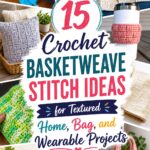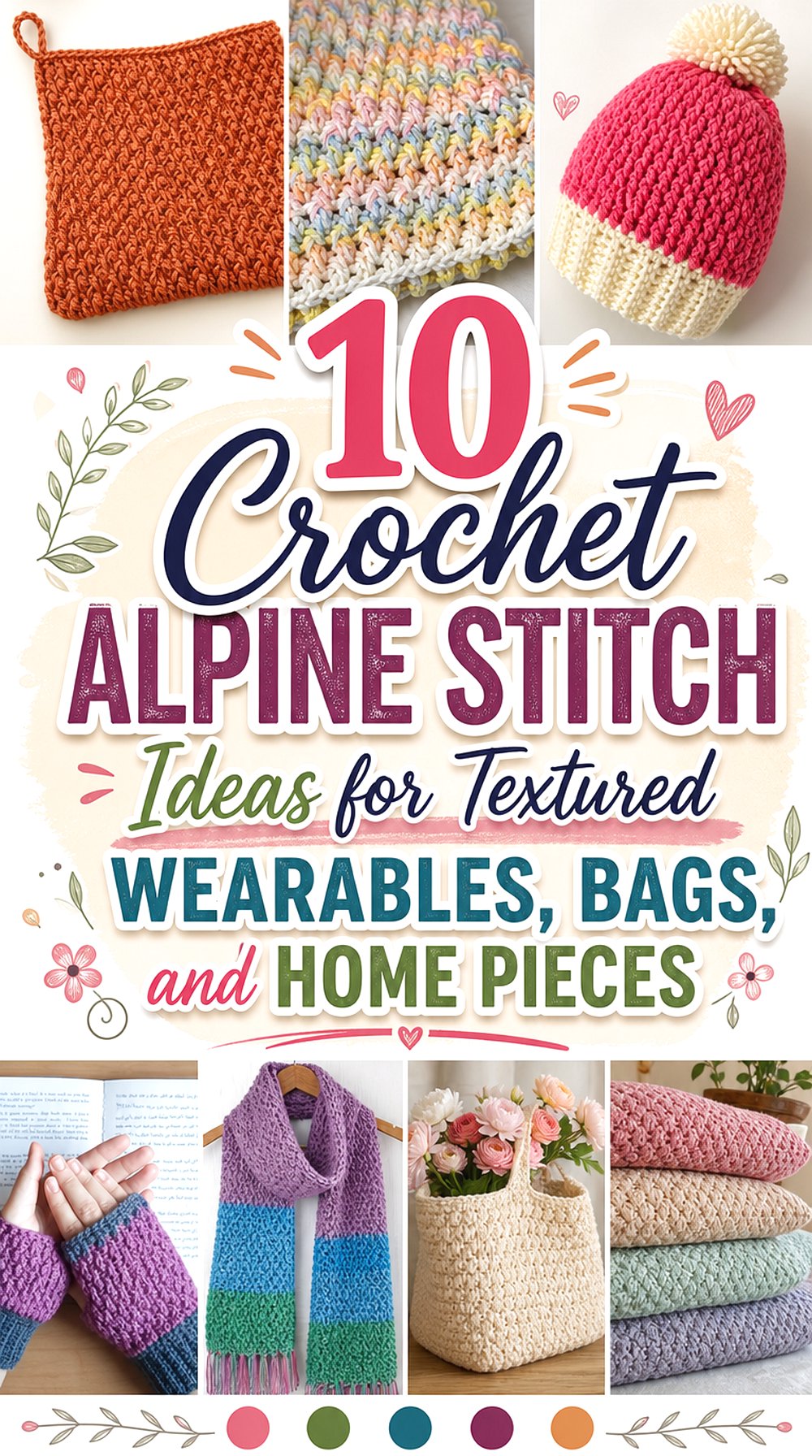

Alpine stitch gives crochet projects a raised, nubby surface that can look cozy, structured, or decorative depending on how it is used. In this collection, the stitch shows up across blankets, accessories, bags, garments, and home pieces, so the projects are not all serving the same purpose.
Some ideas focus on warmth and layering, such as the hat, scarf, ear warmer, gloves, and cardigan. Others use the same texture for practical shapes, including a handled bag, button pouch, cushion cover, baby blanket, and potholder. Use the list to compare size, use, closure, fit, and finishing details before opening the original tutorial for the exact construction.
Quick List
- Crochet Alpine Stitch Baby Blanket
- Crochet Alpine Stitch Long Scarf
- Crochet Alpine Stitch Textured Hat
- Crochet Alpine Stitch Ear Warmer
- Crochet Alpine Stitch Fingerless Gloves
- Crochet Alpine Stitch Made-to-Measure Cardigan
- Crochet Alpine Stitch Structured Handbag
- Crochet Alpine Stitch Button Pouch
- Crochet Alpine Stitch Cushion Cover
- Crochet Alpine Stitch Textured Potholder
What to Compare Before Choosing an Alpine Stitch Project
The main difference between these alpine stitch projects is not only size. The stitch creates a raised surface, so it can make a blanket feel visually plush, give a hat or ear warmer more texture, and help a bag or pouch look more defined. For wearables, check fit, coverage, and whether the tutorial gives enough size information for the body part involved. For bags and pouches, pay attention to the opening, handle, button, and inside finish. For home pieces, confirm the finished footprint and how the item will be used or stored. Alpine stitch can be decorative, practical, or both, but each project asks for a different kind of planning.
1. Crochet Alpine Stitch Baby Blanket
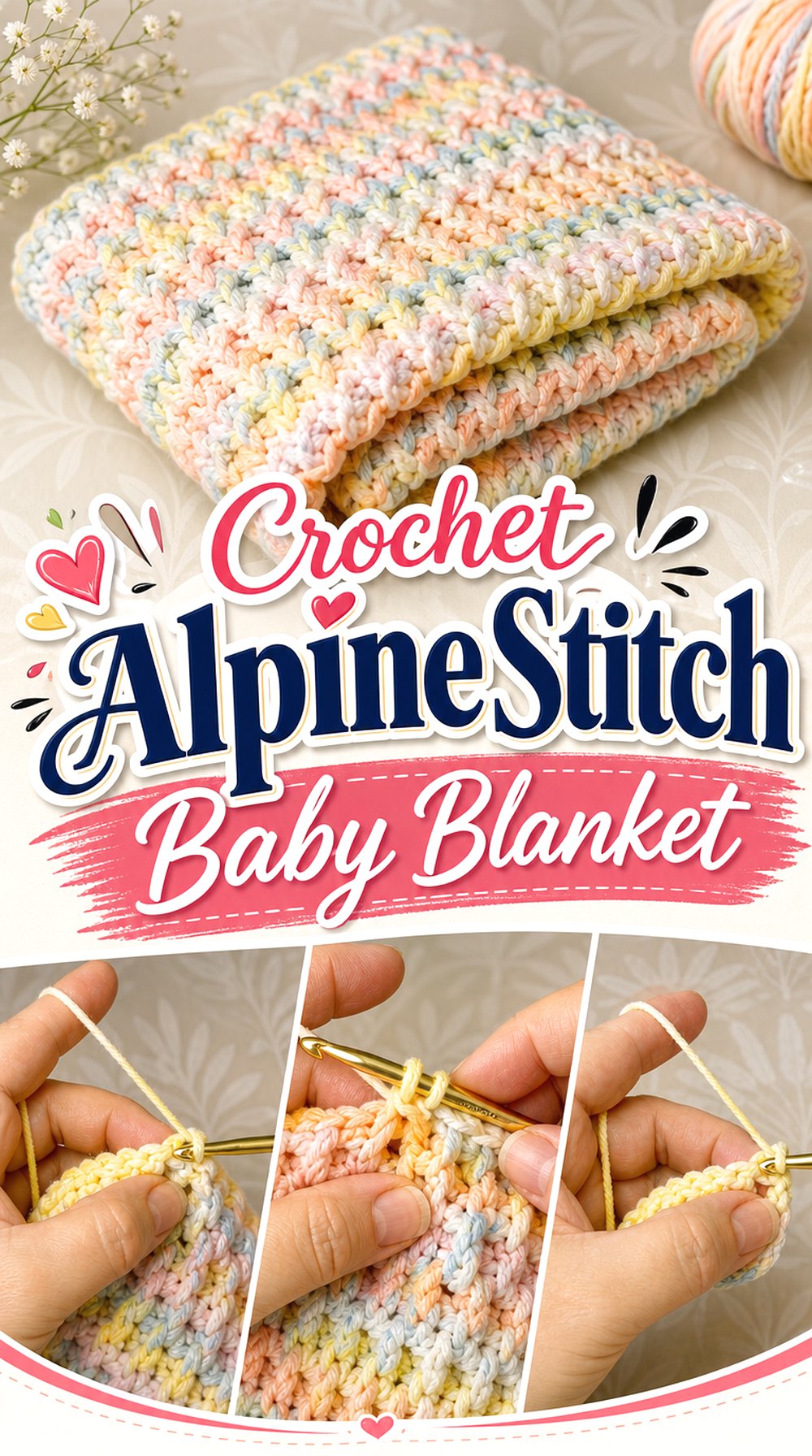
A baby blanket is one of the most straightforward ways to let alpine stitch become the main surface feature. This option focuses on a soft rectangular blanket with raised texture across the fabric, giving it a more dimensional look than a plain stitch blanket. The source describes a baby blanket format and notes that the size can be adjusted for cot, pram, or lap blanket use.
This idea stands apart from the smaller accessories because size and edge consistency matter more here. It is best for readers who want one larger project where the stitch repeat becomes the visual focus.
Blanket Size Changes the Purpose
A baby blanket, cot blanket, pram blanket, and lap blanket do not need the same finished size. The creator’s information notes an adjustable format, so readers should decide the intended use before choosing supplies. A blanket meant to sit in a stroller may need different planning from one kept as a nursery keepsake or lap cover.
Neat Edges Matter on a Larger Piece
The source specifically mentions keeping edges neat and straight, which is especially important on a blanket because uneven sides are easy to notice over a larger rectangle. Before starting, readers may want to watch how the edges are handled and decide whether they are comfortable maintaining the same width across a long project.
Use the Original Notes for Adjustments
Because the tutorial includes size-adjustment guidance, it is worth reviewing the full guide before buying yarn. Readers should not assume that changing the blanket size only changes the length. A larger or smaller version can affect yarn quantity, border planning, and the finished drape, so the creator’s sizing notes should lead those decisions.
Creator: Cindy M’s Crochet Corner
2. Crochet Alpine Stitch Long Scarf
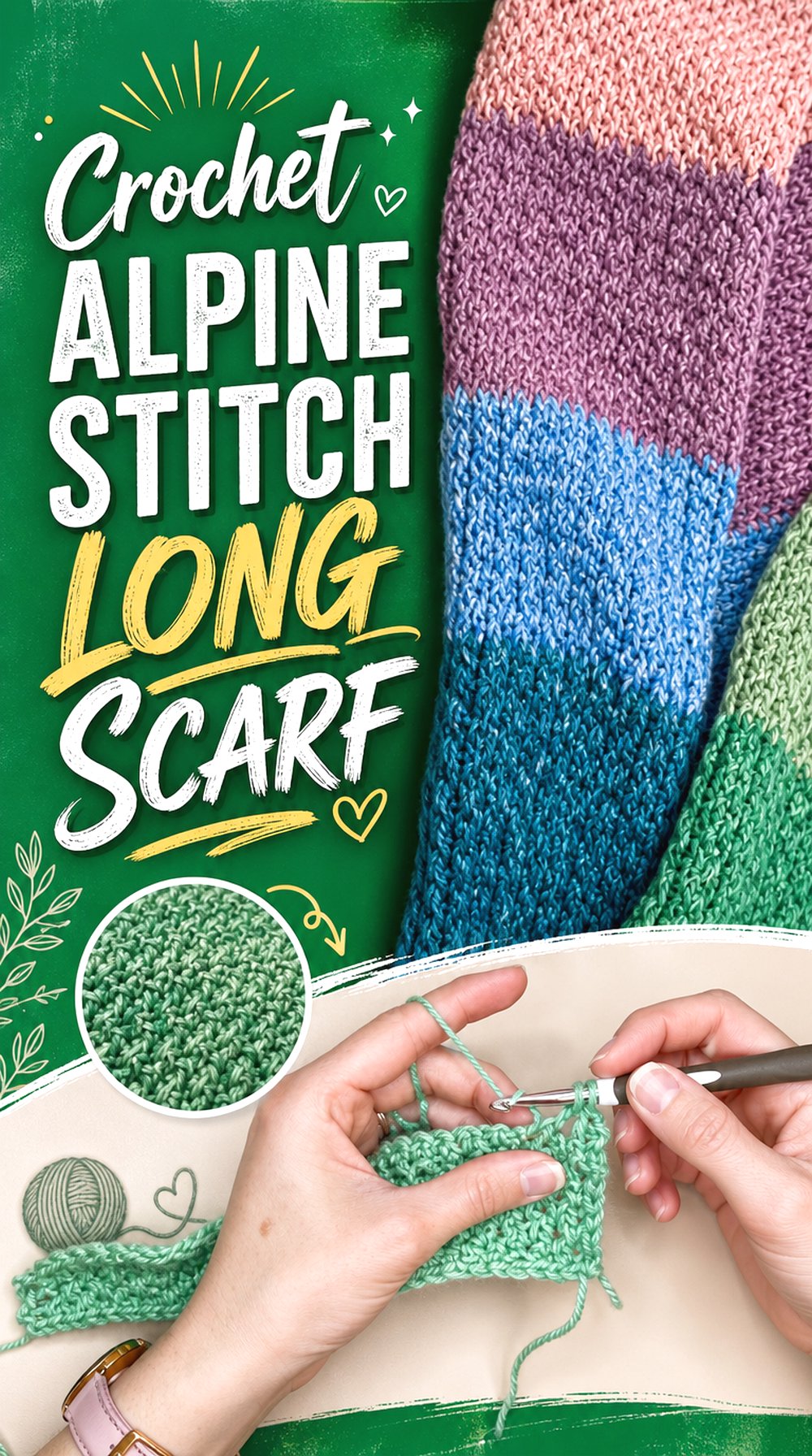
A long scarf gives alpine stitch a narrow, wearable format where the raised texture can run the full length of the piece. This project is useful for readers who like repeated stitch work but do not want to commit to a blanket-sized item. The finished scarf shape also makes it easier to focus on width, length, and how bulky the texture feels around the neck.
Unlike the hat or ear warmer, this project is not fitted to one exact body area. The main decision is how much length and texture the wearer wants in a simple cold-weather accessory.
Width and Length Are the Main Choices
A scarf can feel very different depending on whether it is narrow and easy to wrap or wider with more coverage. Since alpine stitch has a raised surface, readers should think about how much fabric they want around the neck. The original tutorial and any linked written directions are the best places to confirm starting width and planned length.
Texture Can Add Visual Weight
Alpine stitch gives the scarf a stronger surface pattern than a smooth stitch. That can make a plain color look more detailed, but it may also make the scarf look heavier than an open stitch design. Readers choosing yarn should consider how clearly they want the raised rows to show rather than relying only on color.
Written Directions May Help With Repeats
The source mentions written directions, which can be useful for a project with repeated rows. A scarf may involve a lot of the same rhythm, so having a place to check the repeat can help readers avoid losing track. The video remains the main construction source, but written support may make the project easier to follow.
Creator: Yarn by the Glass
3. Crochet Alpine Stitch Textured Hat
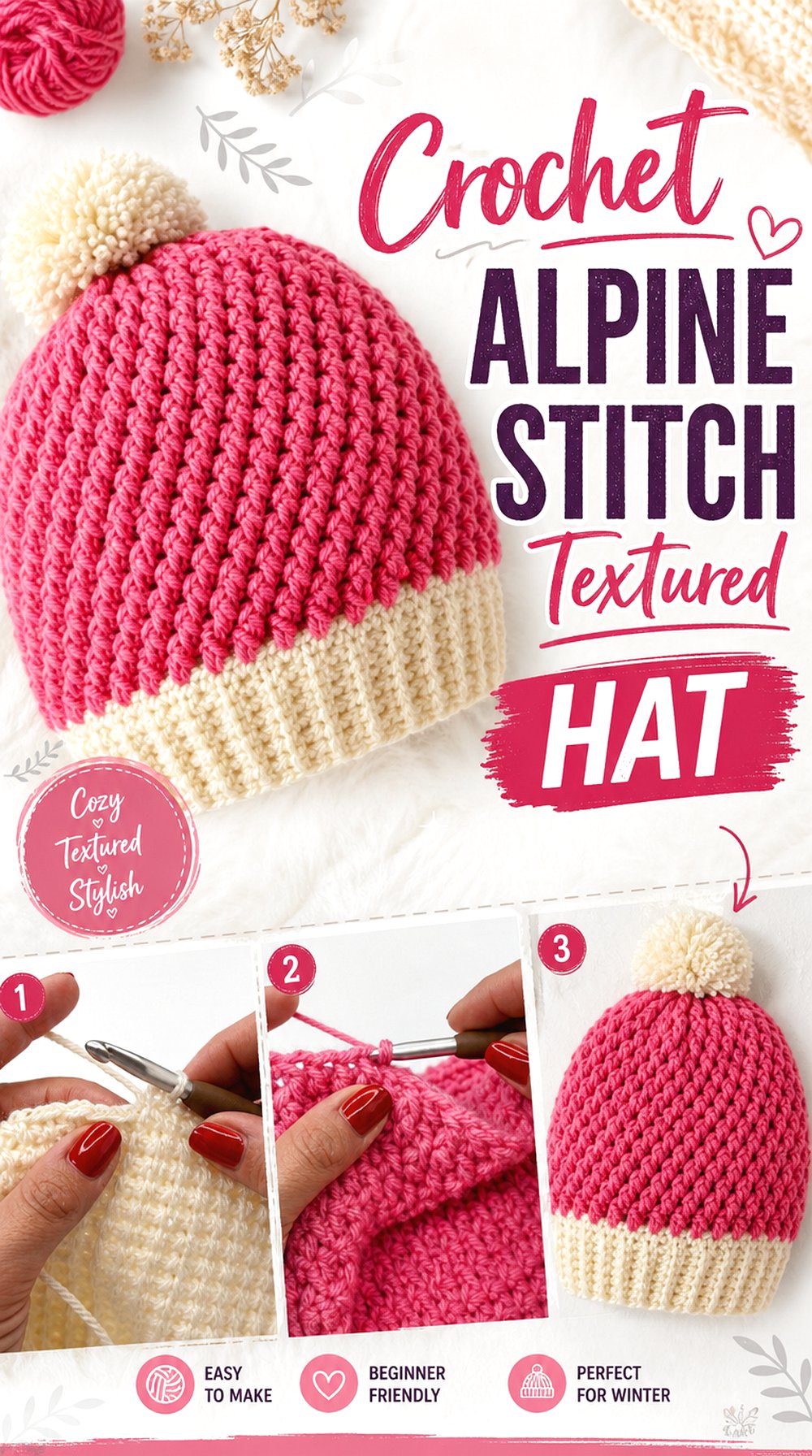
A hat puts alpine stitch into a rounded wearable shape, which makes it different from the flat blanket, scarf, and cushion projects. The raised texture becomes part of the whole cap rather than a flat panel, so the project depends on the shape staying even as it grows.
This idea suits readers who want a compact wearable project with a clear finished result. Since hats rely on fit, the most important details to verify are sizing, crown shape, and how the lower edge sits when worn.
Hat Fit Is the First Detail to Verify
A finished hat needs to match the wearer more closely than a scarf or blanket. Readers should check whether the creator gives sizing guidance, finished measurements, or advice for adjusting the length. Alpine stitch can create a dense-looking fabric, so the final fit matters as much as the surface texture.
Round Shaping Needs Careful Watching
The rounded structure is the key difference between this idea and the flat alpine stitch projects. Viewers should pay close attention when the shape changes from the top area into the body of the hat. This is not about copying the instructions from the article; it is about knowing where the video will need the most attention.
Edge Finish Affects How the Hat Wears
The lower edge controls how the hat frames the face and sits near the ears. Before choosing this project, readers may want to look at the finished edge in the tutorial and decide whether it gives the coverage they want. A small difference in length can change how practical the finished hat feels.
Creator: Claudetta Crochet
4. Crochet Alpine Stitch Ear Warmer
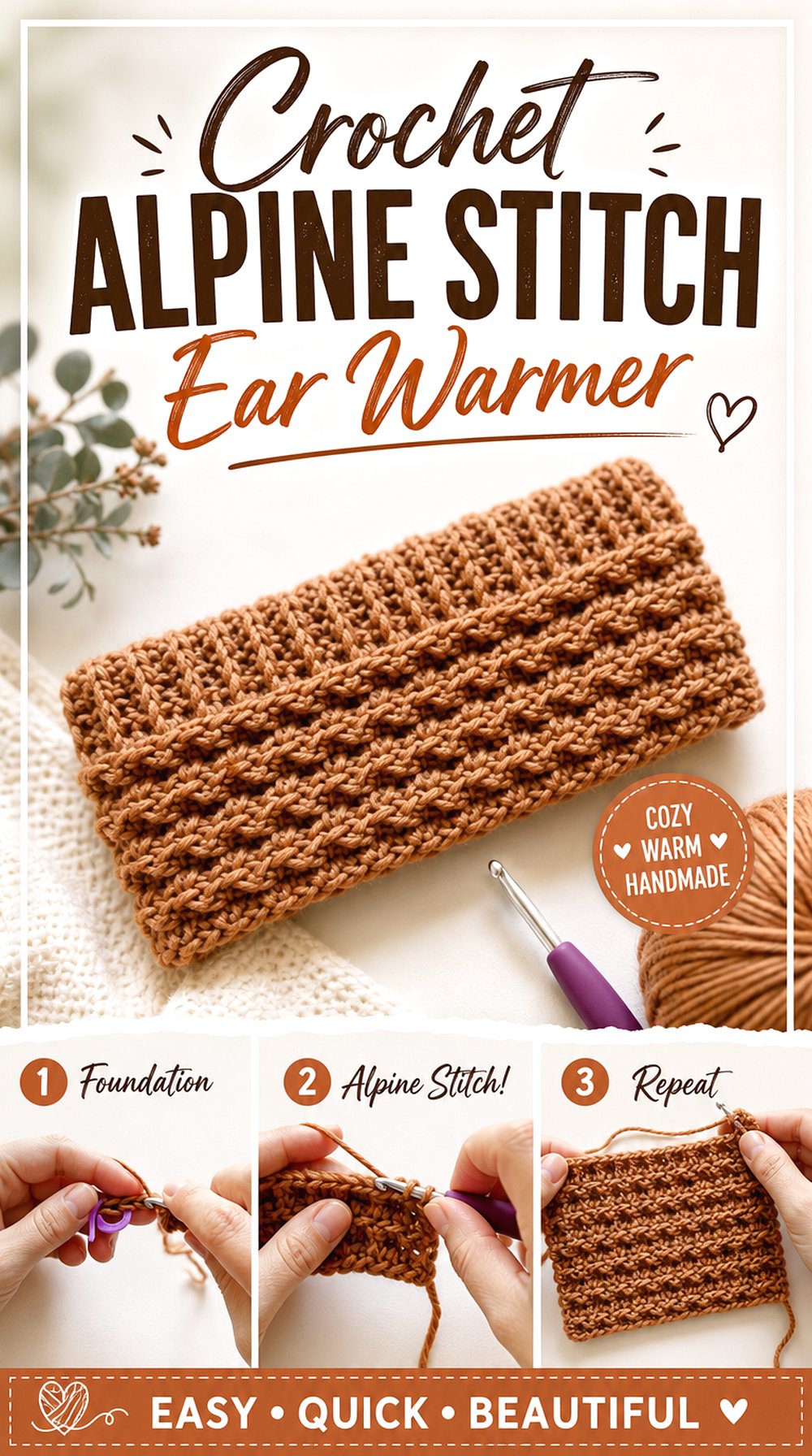
An ear warmer uses alpine stitch in a smaller band-style wearable, making it a lighter project than a hat but still focused on warmth and texture. The source describes an alpine stitch ear warmer and notes a rich burnt orange sample, which shows how color can support the raised stitch detail without needing extra decoration.
This project is different from the hat because it leaves the top of the head open. It is a better match for readers who want coverage around the ears while keeping the finished shape compact.
Band Width Controls the Coverage
The main practical feature of an ear warmer is how much of the ear area it covers. Readers should check the finished width and compare it with the coverage they prefer before following the project. A narrow band may feel more like a hair accessory, while a wider band can give a stronger cold-weather look.
Assembly Creates the Final Shape
The source includes an assembly section, which matters because a band-style accessory depends on how the ends meet. Readers should watch that portion closely instead of judging the project only from the flat stitched fabric. A neat join or seam area can make the difference between a clean wearable and one that feels unfinished.
Color Can Highlight the Raised Rows
The sample color mentioned in the source works well as a reminder that alpine stitch does not need a complicated palette. A solid or lightly tonal yarn can keep attention on the raised rows. Readers who choose a highly busy yarn may want to check whether the stitch texture still remains easy to see.
Creator: Bags by Bento | Taylor
5. Crochet Alpine Stitch Fingerless Gloves
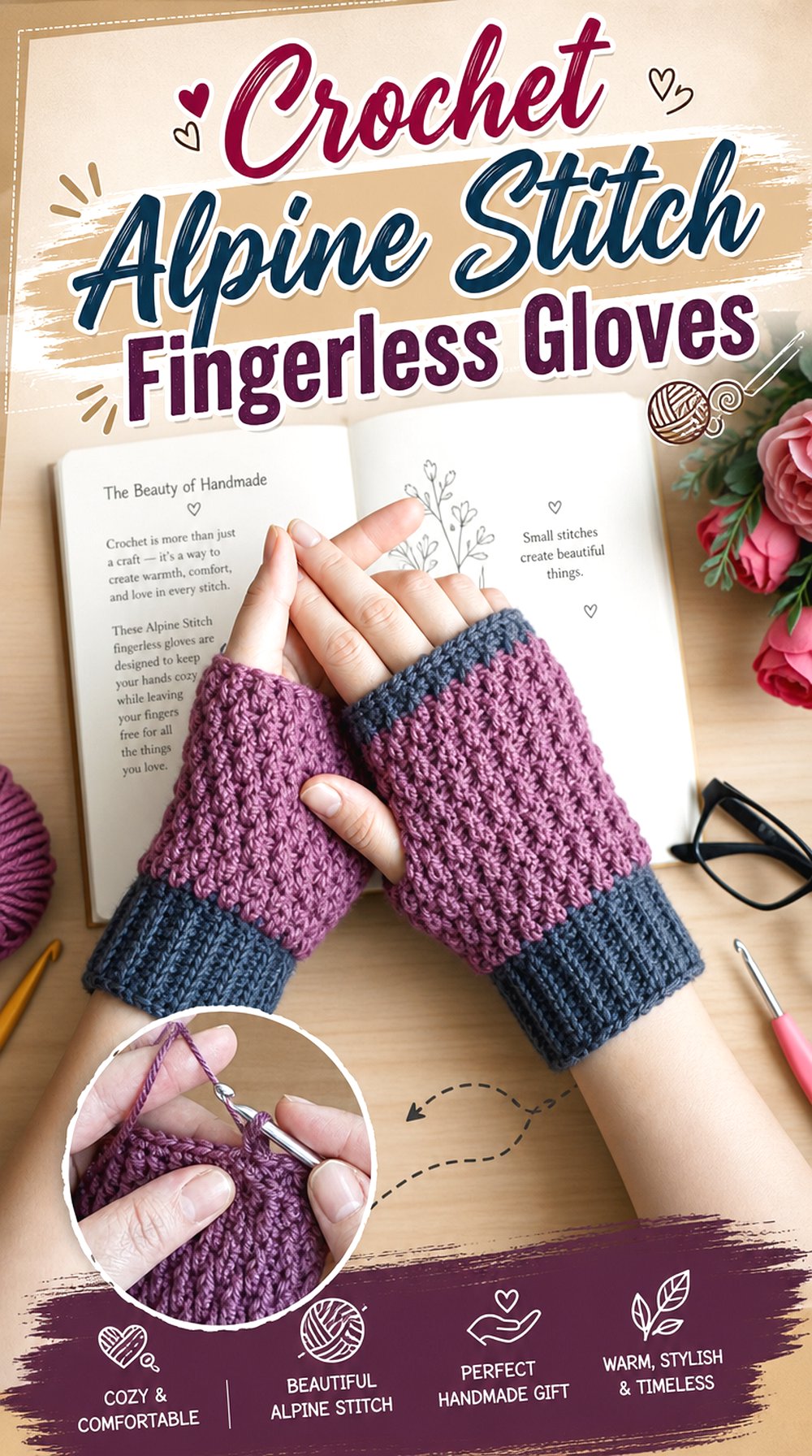
Fingerless gloves turn alpine stitch into a pair of hand accessories rather than one flat or single wearable piece. The project stands out because the finished items need to work together as a matching set while still leaving the fingers free. That makes fit and hand placement more important than they are in a scarf or blanket.
This option is useful for readers who want a smaller wearable project with more shaping decisions. The source information is brief, so watching the full guide before starting is especially important.
Hand Fit Is the Main Decision
Fingerless gloves need a closer fit than most of the other projects in this list. Readers should check how the finished glove sits around the palm and wrist before deciding whether this project matches their needs. A glove that is too loose or too tight can affect how useful the finished pair feels.
Thumb Placement Needs a Clear View
The thumb opening is one of the details that separates fingerless gloves from a simple wrist warmer. Readers should look for a clear view of that area in the original tutorial and make sure they understand how the opening is positioned. This is a key verification point because it affects comfort and movement.
Matching the Pair Takes Attention
A pair of gloves needs consistent length, texture, and finishing on both sides. Alpine stitch makes differences easier to see because of its raised surface. Readers may want to keep simple progress notes while following the tutorial so the second glove matches the first as closely as possible.
Creator: Ozzy Crochet
6. Crochet Alpine Stitch Made to Measure Cardigan
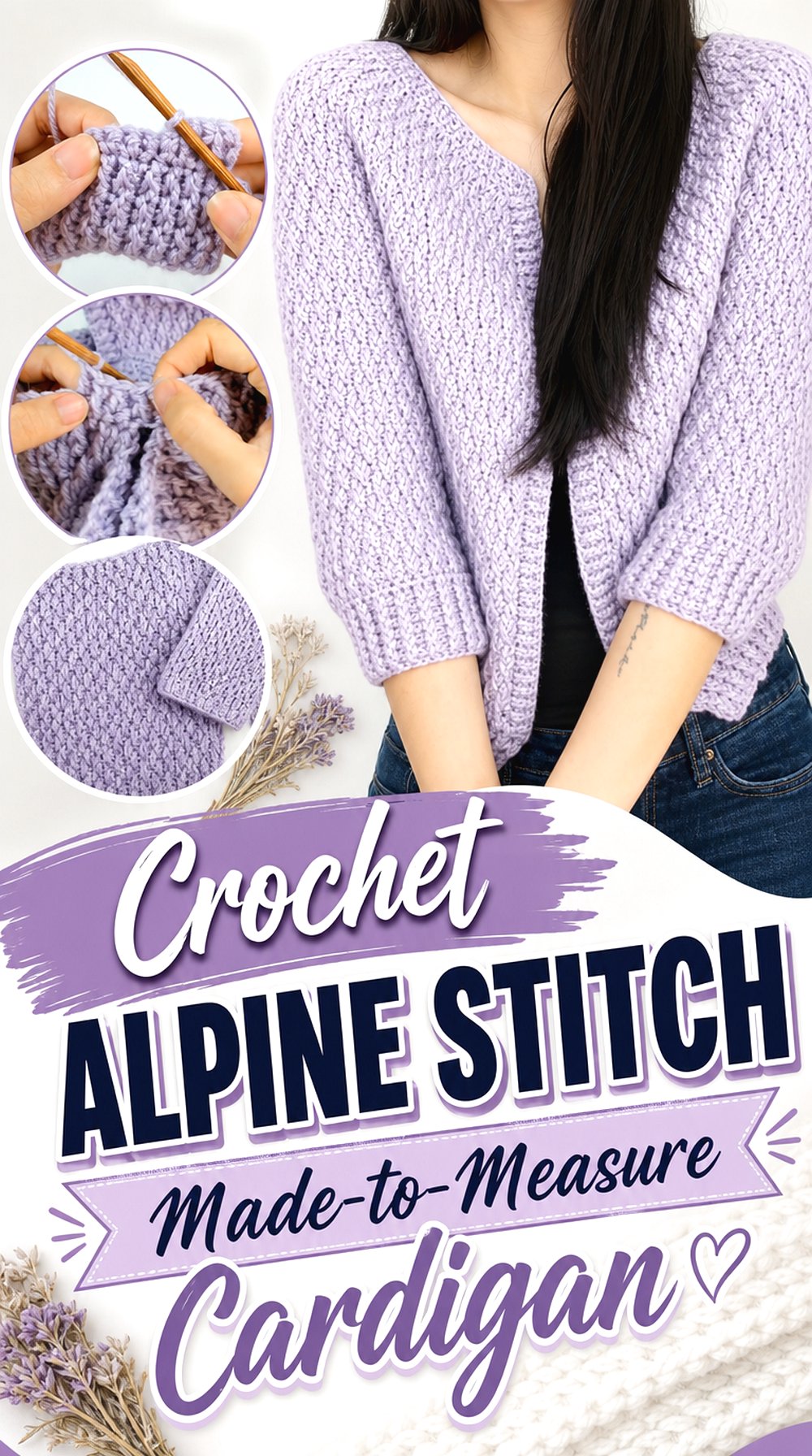
This cardigan gives alpine stitch a larger garment role, using the texture across a wearable layer rather than a small accessory. The source describes a made-to-measure cardigan with a raglan style, along with sections for collar, front band, body, armhole, sleeve, and cuff. That makes it one of the more planning-heavy ideas in the list.
Compared with the hat or ear warmer, this project depends on body measurements and garment proportions. It is best for readers who want alpine stitch in a full clothing piece and are willing to track fit details carefully.
Made-to-Measure Notes Are Essential
A made-to-measure garment depends on the wearer’s own measurements instead of one fixed finished size. Readers should record the key measurements before starting and follow the creator’s fit guidance closely. This is especially important for a cardigan because width, length, sleeves, and armholes all need to work together.
Raglan Shaping Changes the Fit
The source describes the cardigan as raglan style, which means the shoulder and upper body shaping deserve careful attention. Readers should watch how the body and armhole areas develop before moving too far ahead. The alpine stitch texture is attractive, but fit will decide whether the cardigan becomes practical to wear.
Front Band and Collar Set the Finish
The front band and collar are named sections in the tutorial, so they are not minor details. They frame the open front and can change the overall look of the cardigan. Readers should check how wide those areas appear and whether the finished front line matches the kind of layering piece they want.
Sleeve and Cuff Length Need Checking
Sleeves can affect both comfort and styling. Since the source includes sleeve and cuff length sections, readers should treat those as planning points rather than afterthoughts. Before buying supplies or choosing yarn, it helps to decide whether the cardigan should have a closer sleeve finish or a more relaxed look.
Creator: TCDDIY
7. Crochet Alpine Stitch Structured Handbag
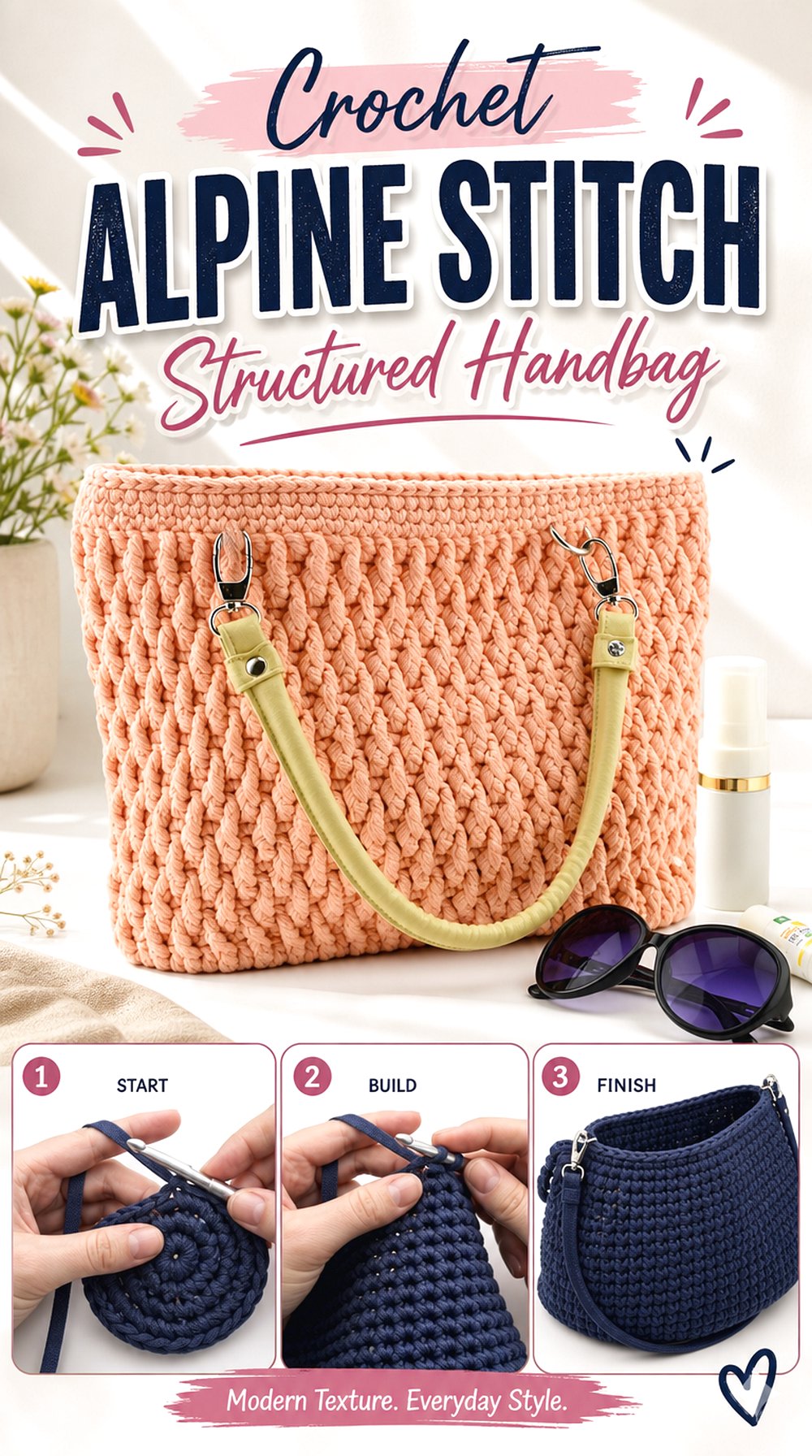
A handled handbag gives alpine stitch a more structured and practical direction. The source describes a crocheted bag using alpine stitch and references Hobbii Ribbon yarn and handle choices, so the finished idea is more than a flat pouch. It has a bag shape, a base, and separate handle decisions.
This project is different from the small button pouch because it is meant to be carried by hand rather than used as tiny storage. Readers should focus on the base, opening, handles, and whether the finished bag suits light daily use.
Handle Choice Shapes the Finished Bag
The source mentions choosing handles, which is a major style and function point for this project. Handles can change the look of the bag and how it is carried. Readers should check what kind of handles the creator uses and whether extra hardware or accessories are needed before gathering supplies.
The Base Gives the Bag Its Form
A handbag needs a bottom shape that supports the rest of the piece. Readers should watch how the base is formed in the original tutorial and compare the finished shape from the front and side. This matters because alpine stitch gives surface texture, but the base controls how the bag sits.
Opening and Inside Finish Are Worth Reviewing
Before relying on this as a daily bag, readers should check how the top opening looks and whether the inside finish is shown clearly. The tutorial source focuses on making the bag, but lining, closure, and inside neatness are still practical details to review. Small items may need extra planning if the bag stays open.
Creator: Hobbii
8. Crochet Alpine Stitch Button Pouch
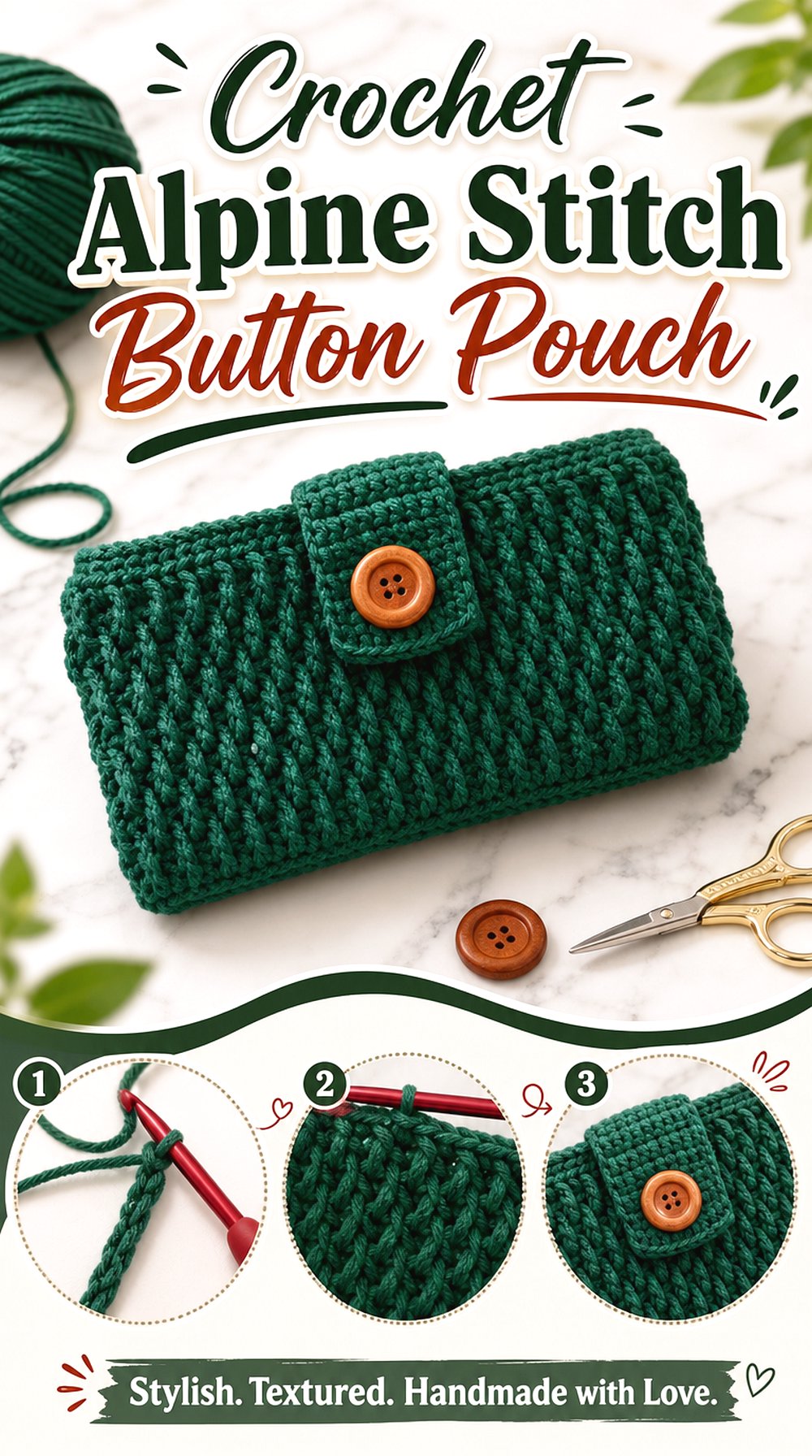
A small button pouch uses alpine stitch in a compact storage piece. The source describes a textured alpine stitch pouch made with a button, which gives this project a clear closure detail and a smaller finished purpose than the handbag. It may suit little items, gift packaging, or organized storage inside a larger bag.
The button is the feature that separates this from an open pouch or drawstring bag. Readers who like small practical projects should still confirm the finished size, because a pouch only works well when it fits the items intended for it.
Button Closure Defines the Use
The source lists a button as part of the pouch, so the closure is central to the finished piece. A button can help keep the flap or opening more controlled, but readers should still check how secure the closure appears in the finished sample. It is a useful detail for small storage, not a promise of complete protection.
Small Capacity Needs a Purpose
A compact pouch should be chosen for specific contents. Readers may want to decide whether they need it for notions, small accessories, gift items, or another light use before starting. Alpine stitch adds texture, but it does not change the basic limitation of a small pouch: the finished dimensions matter.
Save the Material List Before Shopping
The source gives yarn, hook, and button details, so readers should review that supply information before buying anything. A pouch with a button depends on the closure matching the scale of the finished fabric. Changing materials may also change how large or firm the pouch feels.
Creator: achirpyhook crochet
9. Crochet Alpine Stitch Cushion Cover
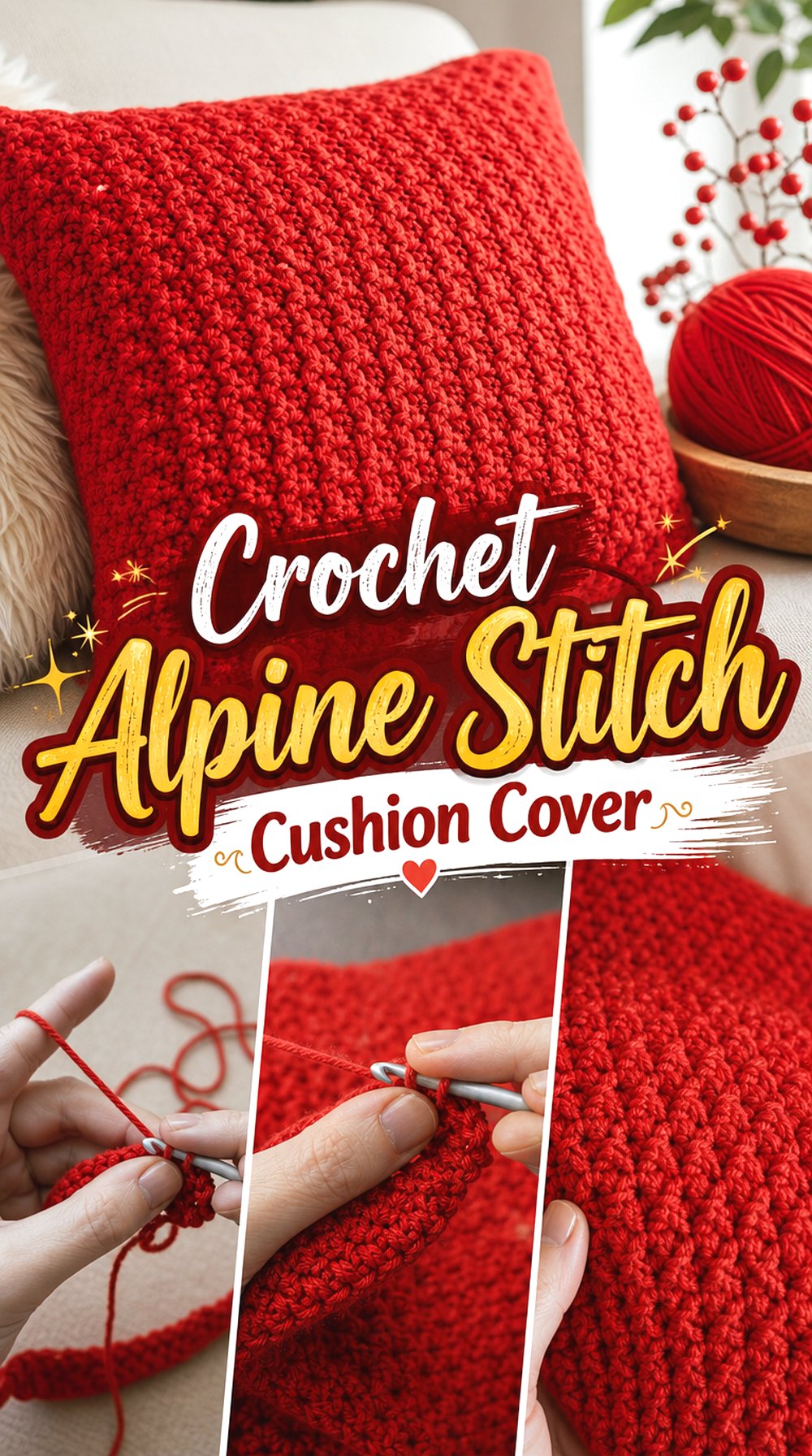
A cushion cover turns alpine stitch into a home decor surface. The raised texture works well on a pillow because the front panel can become the main visual detail without needing extra motifs or color changes. The source describes a crochet pillow or cushion made in alpine stitch, giving this idea a clear home-use purpose.
This project differs from the blanket because it needs to fit around an insert rather than lie flat on its own. Readers should think about insert size, front texture, back finish, and closure before choosing it.
Fit It to the Pillow Insert
A cushion cover needs to match the insert it will hold. Readers should check whether the tutorial gives finished measurements or guidance for adjusting the cover. A cover that is too loose may look baggy, while one that is too small may distort the textured alpine stitch surface.
Texture Works as the Main Design
The alpine stitch surface can carry the design without extra decoration. This makes the cushion a good option for readers who want a home piece where stitch definition matters more than shape complexity. A solid yarn or simple color direction may help the raised pattern stay clear on the finished pillow.
Back and Closure Details Need a Look
A cushion cover is not only about the front panel. Readers should watch how the back or closing area is handled so they know whether the insert can be removed or whether the finish is more permanent. The closure style can affect cleaning, storage, and how neatly the pillow sits on a chair or sofa.
Creator: Oficina Dali
10. Crochet Alpine Stitch Textured Potholder
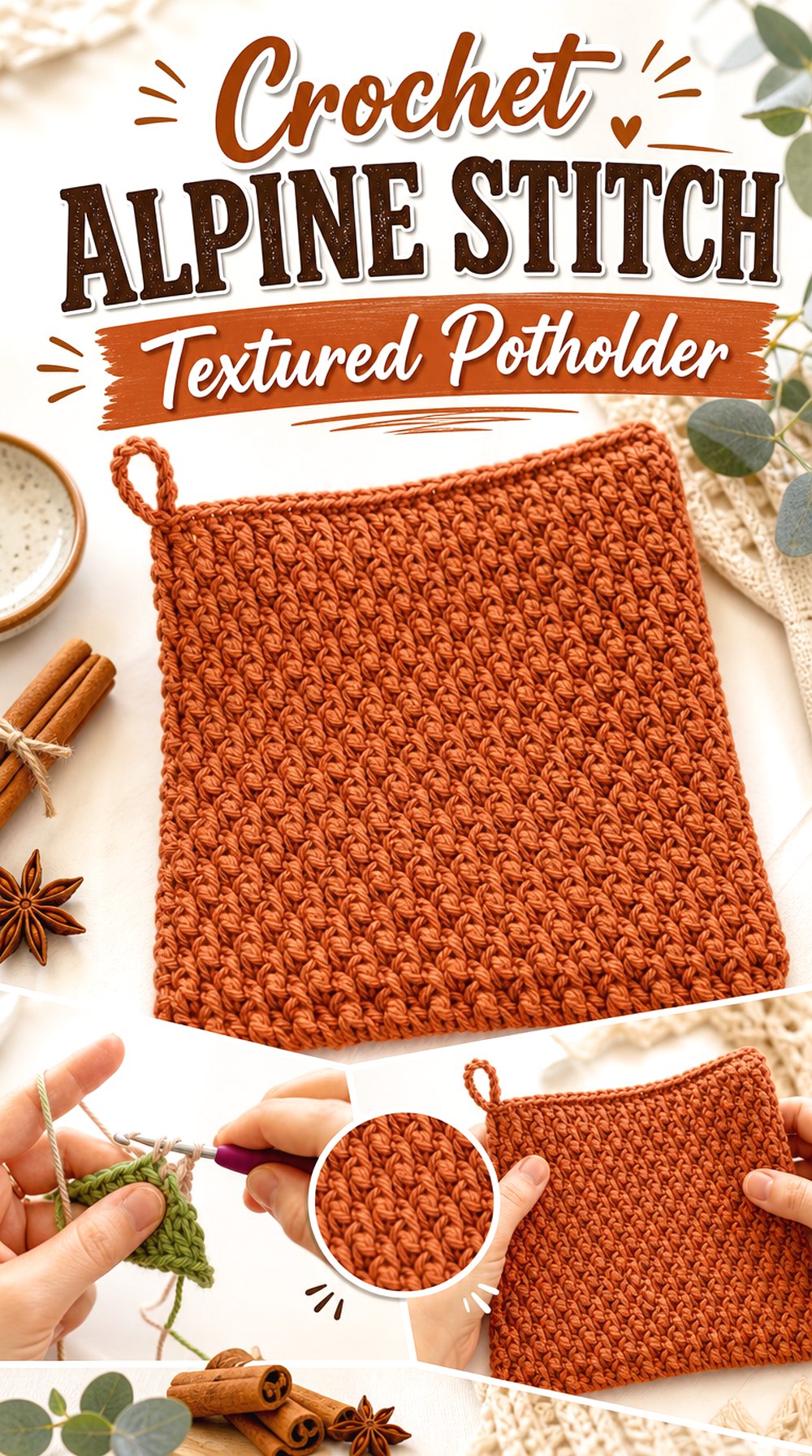
A potholder is a smaller home project where alpine stitch is used for a thick-looking textured surface. The source describes a potholder made with alpine stitch and lists cotton yarn among the materials, which is a practical point for a kitchen-focused item. This project is compact, but the finishing details still matter.
Compared with the cushion cover, the potholder is meant for handling and storage in a kitchen area rather than display on furniture. Readers should pay attention to yarn information, thickness, size, and hanging options before starting.
Cotton and Thickness Matter Here
The source lists cotton yarn for the potholder, which is an important material detail to review. Readers should not swap materials without checking the creator’s notes and the yarn label. A potholder is a functional kitchen item, so fiber choice, thickness, and finished fabric behavior deserve more attention than they might on a purely decorative project.
Hanging Loop Changes Storage
The source includes a section for adding a loop, which can make the finished potholder easier to hang near a stove, hook rail, or prep area. Readers who prefer drawer storage may not care as much, but anyone wanting visible kitchen storage should check how the loop is placed and finished.
Size Choice Affects Daily Use
The creator lists more than one size option in the source information, so readers should decide how they plan to use the potholder before choosing a size. A smaller version may store easily, while a larger one may cover more surface. The best choice depends on kitchen habits and available storage space.
Creator: This Pixie Creates
How to Choose the Right Alpine Stitch Idea
Choose the baby blanket or cushion cover when the goal is a larger textured surface with a simple shape. Pick the scarf, hat, ear warmer, gloves, or cardigan when fit and wearability matter more than flat dimensions. The handbag and button pouch are better for readers who want alpine stitch in a useful storage piece, while the potholder keeps the project small and kitchen-focused. For a first alpine stitch project, a smaller item may feel more manageable, but the best choice depends on whether the reader wants to wear, carry, display, or use the finished piece.
Conclusion
These crochet alpine stitch ideas show how one raised texture can move across very different project types. The baby blanket and cushion cover use the stitch as a broad surface feature, while the scarf, hat, ear warmer, gloves, and cardigan turn it into wearable texture. The handbag and button pouch focus on storage and closure details, and the potholder brings the stitch into a compact kitchen item.
Before choosing, compare the finished use first: wear it, carry it, display it, or use it around the home. The original tutorials should be followed for exact construction details, sizing, materials, and finishing.
FAQs
What is alpine stitch best used for in crochet projects?
Alpine stitch works well when the finished project benefits from raised texture. In this list, it appears on blankets, scarves, hats, gloves, bags, pouches, cushions, and potholders. It is especially useful when the surface pattern should be visible without adding separate motifs, appliqués, or complicated color changes.
Which crochet alpine stitch idea is best for a smaller project?
The ear warmer, fingerless gloves, button pouch, and potholder are the smaller options in this collection. Each one still has details to check, such as fit, closure, or material choice. A smaller project can be a practical way to focus on the stitch texture without committing to a blanket or cardigan.
What should I check before making an alpine stitch wearable?
For wearables, check finished size, fit, coverage, and shaping. A scarf mainly needs length and width planning, while a hat, ear warmer, gloves, and cardigan need closer attention to body fit. Use the creator’s tutorial notes for exact measurements, adjustment guidance, and any size information provided.
Can I change yarn for an alpine stitch project?
Yarn changes can affect size, thickness, drape, and stitch definition. For a decorative item, the main concern may be appearance. For a wearable, bag, or potholder, the choice can affect fit and function. Always review the creator’s material list and keep the yarn label available for fiber-specific care information.
Are alpine stitch bags and pouches good for everyday use?
They may work for light use, but the details matter. Check the opening, closure, handle, lining, base, and finished dimensions before deciding how to use the item. A structured handbag and a small button pouch serve different purposes, so the tutorial should be reviewed carefully for the exact finished format.
Can I sell items made from these YouTube tutorials?
Do not assume selling is allowed just because a tutorial is public. Check each creator’s pattern terms, video description, linked written pattern, and any licensing notes before selling finished items. Local business, labeling, and safety requirements may also apply depending on the item and where it will be sold.