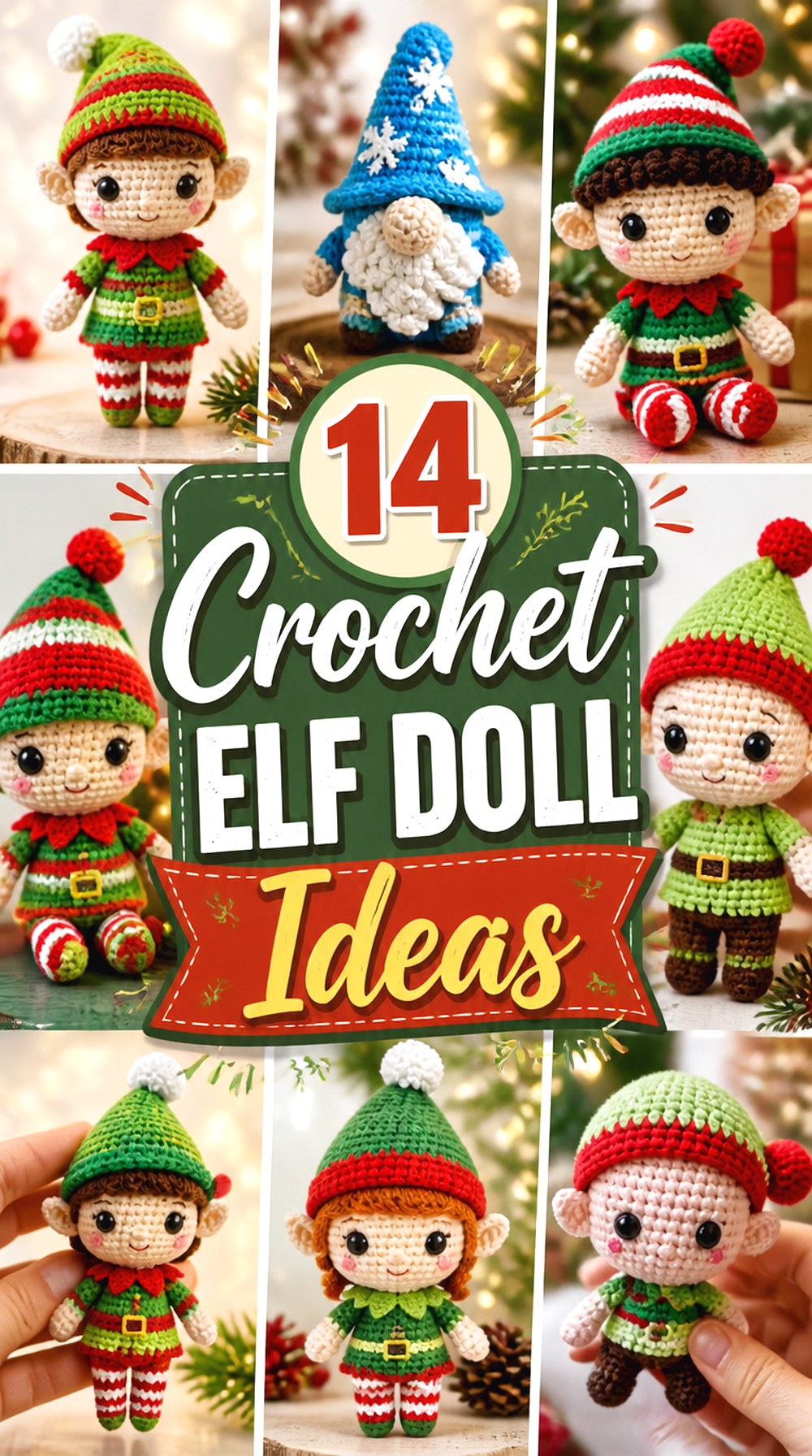

Crochet elf dolls can take surprisingly different forms. Some are long-limbed characters made to sit on a shelf, while others are tiny ornaments, chunky plush dolls, detailed dress-up figures, or stylized holiday decorations. The shape matters because it changes more than the finished look: it also affects stuffing, assembly, display, handling, and how much attention the finishing details need.
These 14 crochet elf doll ideas cover that wider range rather than repeating one classic elf in different colors. You can compare compact and full-size forms, sewn and low-sew construction, embroidered and dimensional details, long legs versus seated bodies, and traditional versus whimsical silhouettes. Each idea is also paired with an original YouTube tutorial so you can use this article for planning and comparison, then follow the creator for the exact construction.
Quick List
- Crochet Long-Leg Shelf Elf Doll
- Crochet Mini Elf Girl Doll Ornament
- Crochet Chunky Christmas Elf Plush Doll
- Crochet Heirloom Dress-Up Elf Doll Pair
- Crochet No-Sew Mushroom Elf Doll Ornament
- Crochet Star-Body Elf Doll Ornament
- Crochet Hair-and-Collar Christmas Elf Doll
- Crochet Striped-Leg Elf Doll with Dress Detail
- Crochet Tiny Keychain Elf Doll
- Crochet Pom-Pom Hat Elf Doll
- Crochet Shoe-and-Hat Christmas Elf Doll
- Crochet Sitting Christmas Elf Doll
- Crochet Gnome-Style Elf Doll for Display
- Crochet Jaunty-Hat Elf Ornament Doll
Choose an Elf Doll by Shape and Display Style
Start with where the elf will live after it is finished. A long-legged doll makes sense for a shelf edge because the dangling legs become part of the presentation. A sitting doll needs a body and limb arrangement that looks natural when supported from below. Ornament-scale elves need a compact silhouette that remains readable among tree branches, while a chunky plush can carry larger facial and clothing details.
The same distinction helps when choosing a gift. A decorative heirloom doll can justify more clothing and finishing work, whereas a small seasonal ornament may benefit from fewer projecting pieces. Before choosing a tutorial, look at the finished result rather than the color palette alone and ask whether its proportions suit your intended display.
Yarn, Stuffing, and Structure Change the Character
Amigurumi fabric normally needs enough density to keep stuffing from showing through. Changing the yarn or hook from a tutorial can alter both the finished scale and the firmness of that fabric, so a substitution should be treated as a new material decision rather than an automatic one-to-one swap.
Stuffing also affects character. Firm stuffing can sharpen a rounded head or stabilize a display piece, but overfilling narrow legs or arms can make them stiff and distort their intended pose. Plush yarn exaggerates volume, while smoother yarn gives small details and color changes a clearer outline. When the elf depends on long limbs, a tall hat, a star body, or a mushroom cap, check the silhouette periodically rather than waiting until final assembly to judge the proportions.
Plan the Face and Small Parts Before Gifting
Elf dolls often use eyes, buttons, bells, beads, pom-poms, ribbons, or hanging hardware. Those additions can be perfectly appropriate for display decor but should not automatically be treated as suitable for a baby, young child, or pet. Consider the intended recipient before attaching small or potentially detachable pieces.
Embroidered facial features are one option when you want a flatter finish, while safety eyes create a different expression and need to be installed at the appropriate stage of construction. For ornaments, remember that the hanging loop is another functional component: attach it securely and decide where the doll needs to balance before committing to its location. Always follow applicable toy-safety guidance when the finished elf is intended for play rather than decoration.
1. Crochet Long Leg Shelf Elf Doll

This shelf-style crochet elf gets much of its personality from elongated striped legs, defined boots, and limbs that can hang naturally over an edge. My Little Crochet World presents the project as a two-part tutorial; the first video covers features including the striped legs, boots, arms, collar, and ears, while the companion continues the remaining doll and assembly.
This is a useful direction when you want the elf itself to become part of a mantel, bookcase, or seasonal shelf arrangement. Compared with compact ornament dolls, the long limbs create more movement and make the sitting position a major part of the finished design.
Long Limbs Need Even Stuffing
Narrow arms and legs can change shape quickly if one section receives noticeably more stuffing than another. Add filling gradually and compare matching limbs before closing them. If the goal is a relaxed shelf pose, avoid making every limb so rigid that it projects straight outward.
This matters especially with striped legs because uneven width is easy to notice when the color changes create repeated horizontal reference lines.
Check the Sitting Point Before Final Assembly
A shelf doll is judged from its seated position rather than from how well it can stand unsupported. Before permanently arranging the limbs, place the unfinished body on the type of edge where you expect to display it.
Notice where the body naturally bends, whether the legs hang freely, and whether the arms compete with the pose. That simple visual check can prevent a finished elf that continually tips backward or looks unnaturally stiff.
Boots and Stripes Carry the Shelf-Elf Silhouette
With this style, the footwear and leg pattern occupy a large portion of the visible doll. That means neat color transitions and similarly shaped boots can make a bigger visual difference than adding extra embellishments later.
If you customize the palette, preserve enough contrast between the leg stripes and shoes for the long lower body to remain readable from across a room. Subtle colors can work, but very similar values may make the characteristic striped legs disappear visually.
2. Crochet Mini Elf Girl Doll Ornament

Little Crochet Farm’s elf girl offers a much smaller holiday character with a distinctly doll-like face, hair, hat, and compact body. The tutorial is organized into major sections for the head, body, arms, hat, hair, assembly, and embroidered eyes, making the finished figure especially relevant for anyone comparing small dolls with larger shelf or plush options.
Because the scale is compact, hairstyle and facial finishing contribute a large share of the personality. It can work naturally as a small seasonal display piece or ornament-style doll without needing the extended limbs and large clothing pieces found in the more elaborate ideas below.
Hair Placement Controls the Silhouette
On a small doll, even a modest amount of hair can change the apparent width of the head and how much of the hat remains visible. Before securing every strand or section, view the elf from the front, sides, and back.
Aim for a balanced outline rather than judging the hair only at close range. If you customize the hairstyle, confirm that it does not crowd the ears, hide the face, or push the hat into an unintended angle.
Embroidered Features Create a Flatter Face
The tutorial includes embroidered eyes rather than making the face depend entirely on inserted plastic features. That gives this doll a different visual character from plush designs that use prominent safety eyes.
When embroidering your own expression, make both sides in relation to the centerline of the face. Small differences are amplified at ornament scale, so check the face from arm’s length before deciding the placement is finished.
Keep Ornament Hardware Separate From Doll Finishing
If you want to hang the finished elf, treat the hanging loop as a functional addition rather than simply tying yarn to the hat. First determine how the doll balances when suspended.
A loop placed too far forward or backward can make the elf tilt awkwardly. The exact hanger is an adaptation rather than part of the doll’s appearance, so choose a method appropriate to the finished weight and intended display location.
Original Tutorial and Creator Credit
Creator: Little Crochet Farm
3. Crochet Chunky Christmas Elf Plush Doll
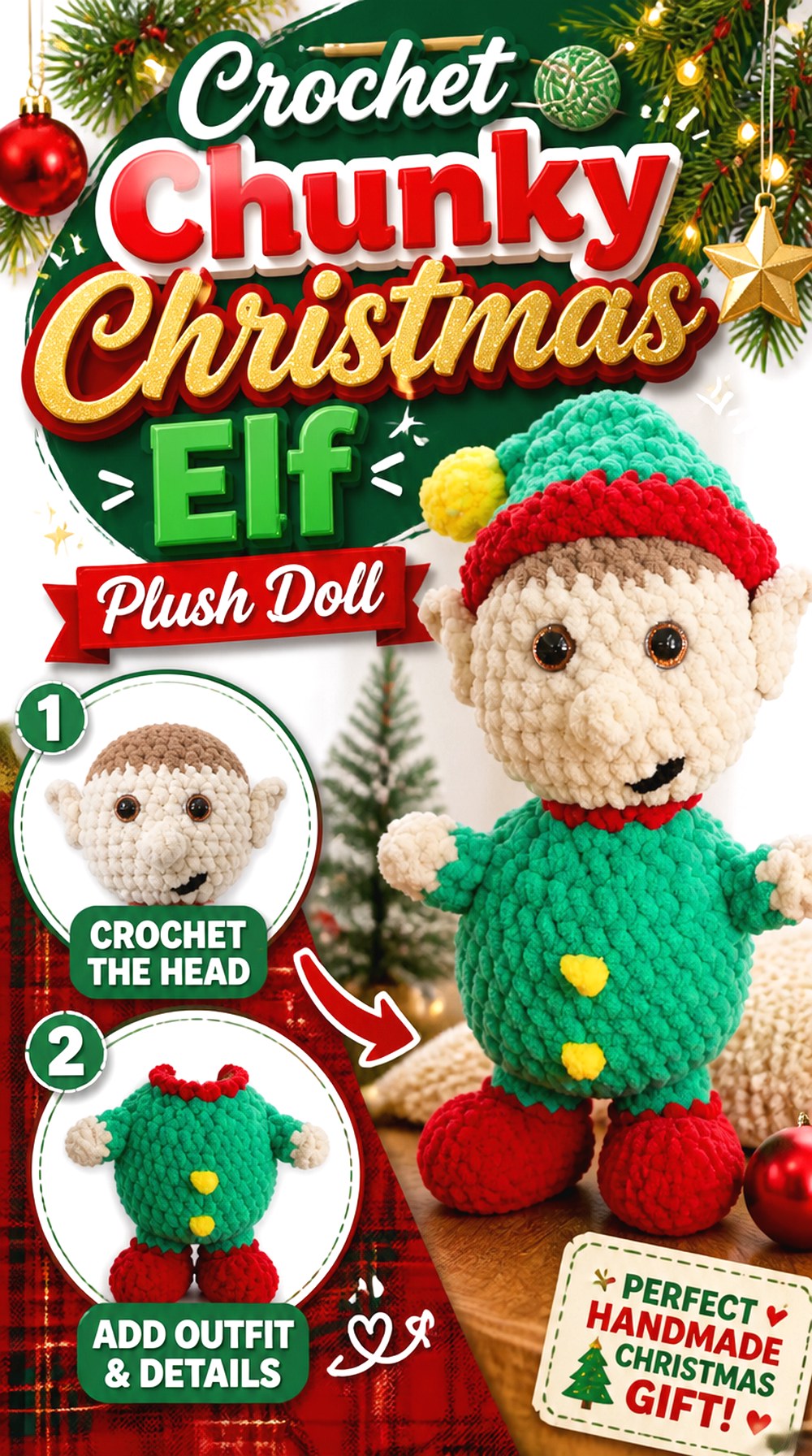
For a softer, fuller result, Maria’s Blue Crayon takes the elf in a plush direction using blanket yarn. The source design has a rounded, squishy body, with the main body and head worked as one piece before additional details are added. The creator also states that the finished example is 12 inches tall with the hat.
The broad shapes make this elf visually different from narrow-limbed amigurumi. It is a good reference when you want a substantial Christmas plush rather than a delicate ornament, and when bold blocks of red, green, skin tone, and hair color suit your decorating style better than tiny stitched details.
Blanket Yarn Magnifies Every Proportion
Thicker plush yarn makes a small shaping decision visually larger. A slightly wider head, longer hat, or fuller arm can change the character more dramatically than it would in a fine-yarn doll.
If you substitute another yarn, do not assume the original dimensions will remain the same. Watch the developing proportions instead, especially the relationship between the body, head, arms, ears, and hat. The finished plush should look intentional as a whole rather than like enlarged individual parts.
One-Piece Head and Body Reduce a Major Seam
The source design works the body and head together, while the arms and other details are handled separately. This removes one prominent body-to-head assembly point, which can help a chunky plush keep a smooth central silhouette.
It does not eliminate finishing, however. You still need to pay attention to the placement of projecting details because bulky yarn can make small positioning differences more visible.
Treat Safety Eyes as a Gifting Decision
The creator’s materials include safety eyes. Before following that choice automatically, decide whether your elf is decorative or intended for play and whether small hard parts are appropriate for the recipient.
An embroidered face changes the appearance but can be considered when a flatter feature is preferable. Whatever method you choose, decide before closing the head so you still have access to the inside when needed.
Original Tutorial and Creator Credit
Creator: Maria’s Blue Crayon
4. Crochet Heirloom Dress Up Elf Doll Pair
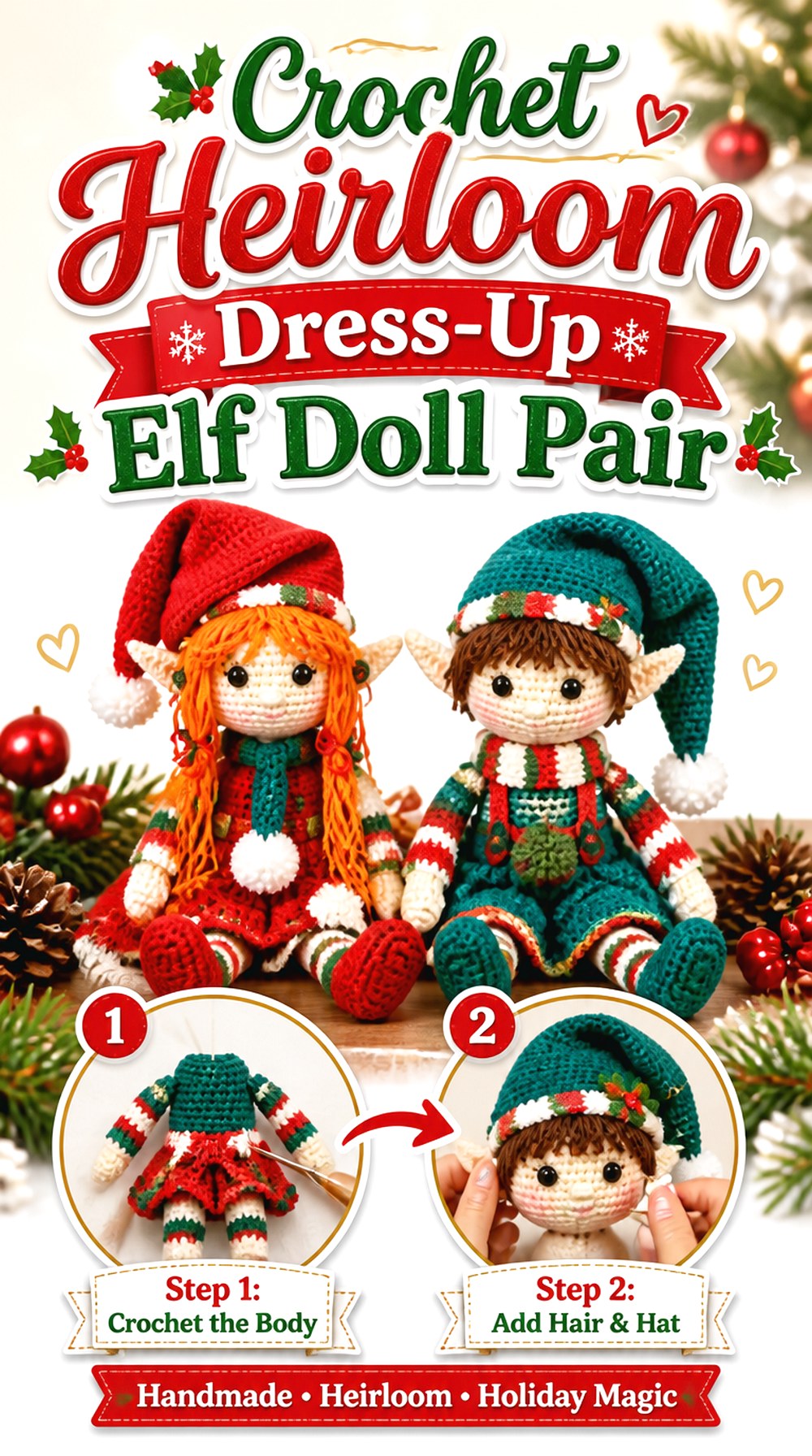
HelenMay Crochet approaches the Christmas elf as a more involved doll project, with both girl and boy versions and separate outfit-focused portions in the broader tutorial series. The first video introduces the materials and starts the doll; later parts cover additional doll construction, a girl dress, scarf, and boy outfit.
That makes this option stand apart from one-look ornaments. The appeal is the fuller character presentation and the possibility of displaying coordinated elves together. It is better suited to someone who enjoys doll finishing and clothing details than someone looking primarily for a compact project with minimal post-crochet assembly.
Outfit Pieces Turn the Doll Into a Display Character
Separate clothing gives you more control over how formal, traditional, or playful the finished elf appears. It also introduces additional fit decisions: clothing should complement the doll body rather than hide its proportions or bunch awkwardly at the arms and neck.
Before changing yarn or making large style substitutions, consider how those changes may affect both the doll and the pieces intended to fit around it.
Plan Two Elves as a Coordinated Pair
If you intend to make both versions, choose the overall palette before beginning the second elf. Repeating one or two colors can visually connect the pair while different clothing keeps each character distinct.
You do not need identical outfits or mirrored colors. The more useful checkpoint is whether the pair looks related when displayed side by side, particularly if both will become part of the same annual holiday arrangement.
More Components Mean More Finishing Decisions
A dress-up doll naturally has more edges, joins, and movable layers to assess than a one-piece plush. Allow room in your project plan for sewing, hiding ends, adjusting clothing, and checking the final pose.
Rushing those final stages can undo the visual benefit of the extra detail. Before calling the doll finished, view it fully dressed from several angles and correct twisted clothing or uneven accessory placement.
Original Tutorial and Creator Credit
Creator: HelenMay Crochet
5. Crochet No Sew Mushroom Elf Doll Ornament

This mushroom-costumed elf from Anvi’s Granny Handicrafts blends a Christmas character with woodland styling. The design is categorized as a soft doll and presented as a no-sew mushroom elf that can serve as an ornament, keychain, bag charm, or small display doll.
The broad mushroom cap creates a very different silhouette from a conventional pointed elf hat. It is particularly useful when you want an elf collection to lean toward woodland Christmas decor or when you prefer a compact figure whose identity comes primarily from one strong costume shape rather than long limbs and elaborate clothing.
The Mushroom Cap Is the Main Visual Anchor
The cap occupies a large percentage of the overall silhouette, so its width, color, and relationship to the face matter more than adding numerous tiny embellishments. When customizing, check the doll from eye level rather than only from above.
A cap that becomes disproportionately large can hide the elf underneath, while one that is visually weak may lose the woodland character that makes this idea different from a conventional Christmas elf.
No-Sew Construction Changes the Finishing Workflow
The source specifically presents this project as a no-sew design. That does not mean there is nothing to plan at the end. Color changes, facial features, yarn tails, shaping, and any optional hanging hardware still influence the polish of the finished object.
The advantage is that you can focus less on aligning numerous separately crocheted limbs and more on keeping the integrated figure clean and symmetrical as it develops.
Decide Between Ornament, Charm, and Shelf Use
The creator lists several possible uses, including ornament, keychain, bag charm, and small doll. Choose your intended function before adding hardware.
A tree ornament is mainly judged by how it hangs; a charm will experience more movement and abrasion; a shelf figure needs to look balanced when stationary. Those uses can call for different finishing choices even when the crocheted core is identical.
Original Tutorial and Creator Credit
Creator: Anvi’s Granny Handicrafts
6. Crochet Star Body Elf Doll Ornament
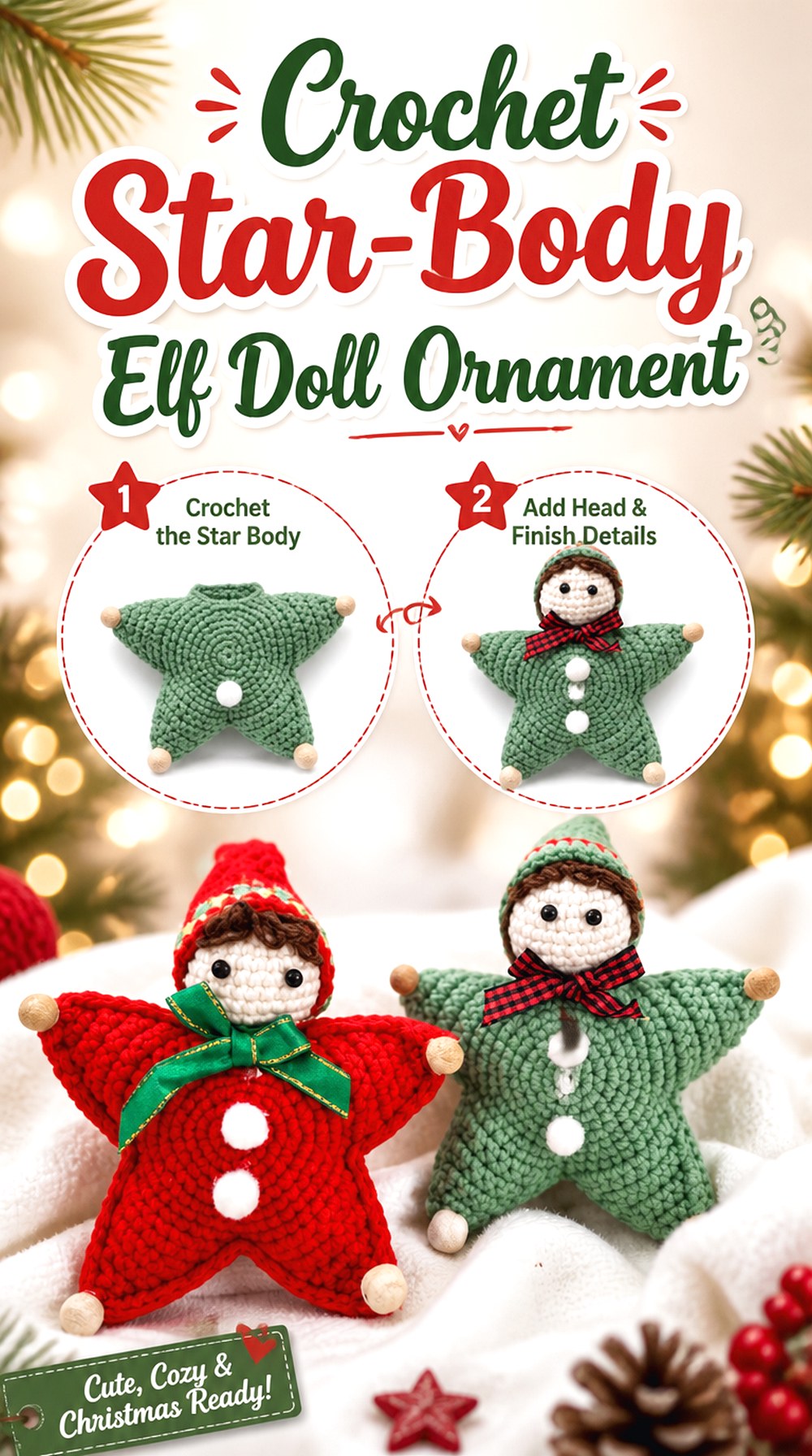
Instead of giving the elf a conventional torso and legs, kimcraft builds this holiday character around a stuffed star-shaped body, then adds the head, hat, and decorative details. The tutorial clearly separates the star body, head, hat, and final assembly, making the unconventional construction easy to identify before you begin.
This is primarily a decorative elf rather than a traditional humanoid doll. The star spreads the color and shape across a wider area, so it reads well as a festive ornament. It is a strong choice for a collection that already contains standard dolls and needs one intentionally graphic, Christmas-decoration silhouette.
The Star Shape Needs Balanced Stuffing
A star only reads clearly if its points remain distinguishable. Stuff the body with attention to symmetry rather than packing all the filling into the center.
Compare opposite points and smooth the shape before final closure. If one side is much fuller, the ornament may hang at an angle and the head can appear off-center even when it was attached correctly.
Decorative Add-Ons Can Change Hanging Weight
The source tutorial uses additional decorative elements around the completed elf. Ribbons, beads, buttons, or similar embellishments add personality, but they also shift weight away from the crocheted center.
If the piece will hang, test the balance after each substantial addition. For a child- or pet-accessible environment, reconsider small detachable embellishments and place the ornament where it can be displayed appropriately.
Let the Star Body Stay Readable
Because the star is the distinguishing feature, avoid covering so much of it with trim that it becomes a generic stuffed shape. The head should look intentionally connected to the star rather than swallowing the top point.
Color contrast helps here. You can make the face and hat visually prominent while still preserving a clearly outlined star underneath.
Original Tutorial and Creator Credit
Creator: kimcraft
7. Crochet Hair and Collar Christmas Elf Doll
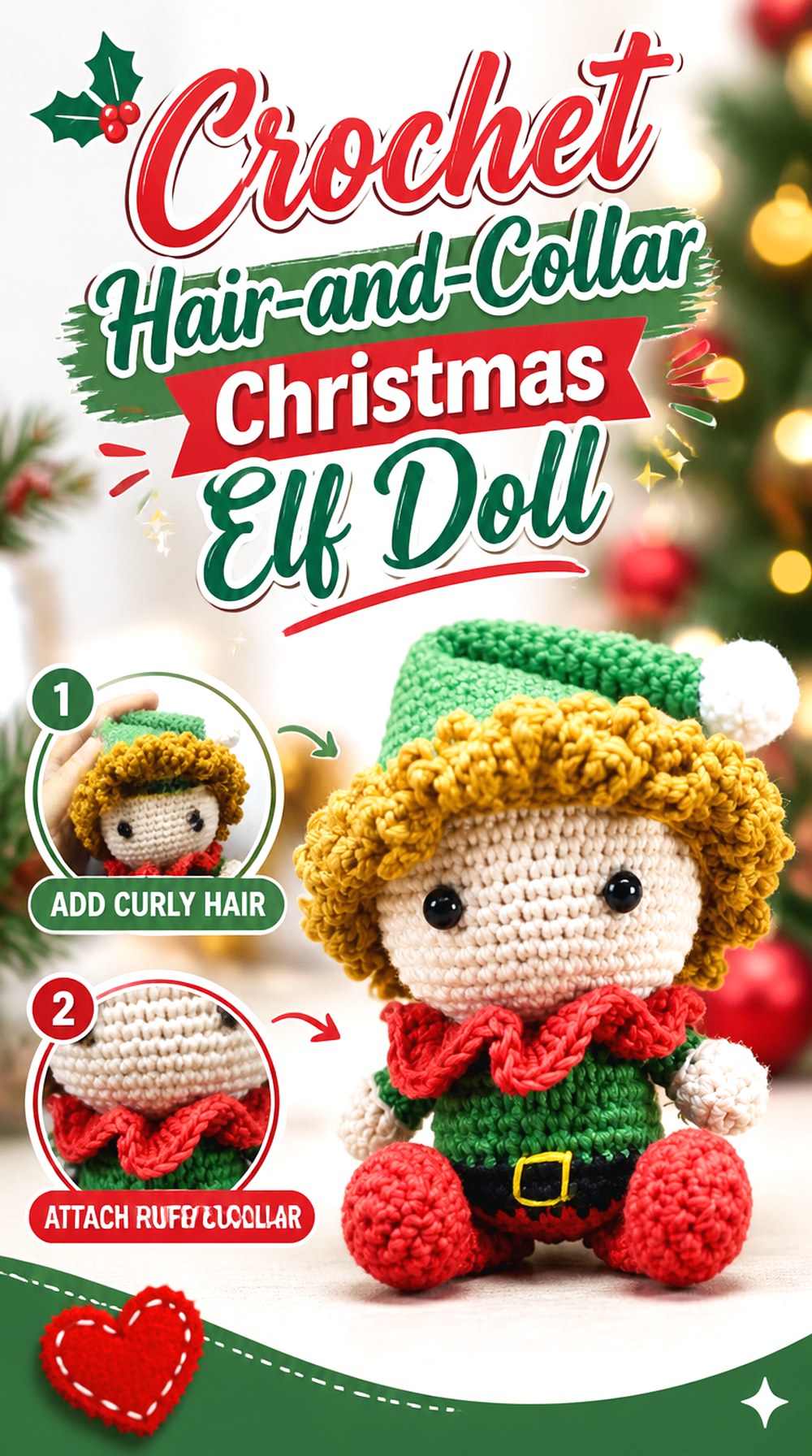
Odinka Wisanindhi’s Christmas elf puts noticeable emphasis on the face-framing details. The first tutorial specifically covers the head and body along with the collar and hair, giving this doll a more character-focused appearance than designs where the hat does nearly all of the visual work.
That combination makes the idea useful if you want a recognizable doll rather than a simplified ornament. Hair can establish the character before the hat is added, while the collar creates a clear break between face and clothing. Those two features also provide obvious customization points without requiring you to redesign the underlying body.
Hair and Collar Create the Character Frame
Think of the hair and collar as two boundaries around the face. If both become very full, the head may look crowded; if both are too visually quiet, the expression can dominate the doll.
When changing colors or hair styling, put the unfinished elements together temporarily and look at the entire upper body. The goal is balance among hair, face, collar, ears, and hat rather than making each feature individually prominent.
Face Placement Matters More With a Framed Head
Once hair and a collar direct attention toward the face, uneven eye or mouth placement becomes easier to notice. Establish a visual centerline before finishing the expression, especially if the hairline is asymmetrical.
Check from normal viewing distance as well as close up. Crochet stitches can make a feature appear centered when counted mechanically but slightly shifted when seen as part of the completed head.
Secure Small Decorative Details for the Intended Use
Hair strands, collar points, and other embellishments add dimension, but their finishing should match the doll’s purpose. A display elf can tolerate details that would be inconvenient on a frequently handled toy.
Before gifting, inspect every attached component and consider whether an embroidered or more integrated detail would better suit the recipient. Decorative success and practical suitability are separate decisions.
Original Tutorial and Creator Credit
Creator: Odinka Wisanindhi
8. Crochet Striped Leg Elf Doll with Dress Detail
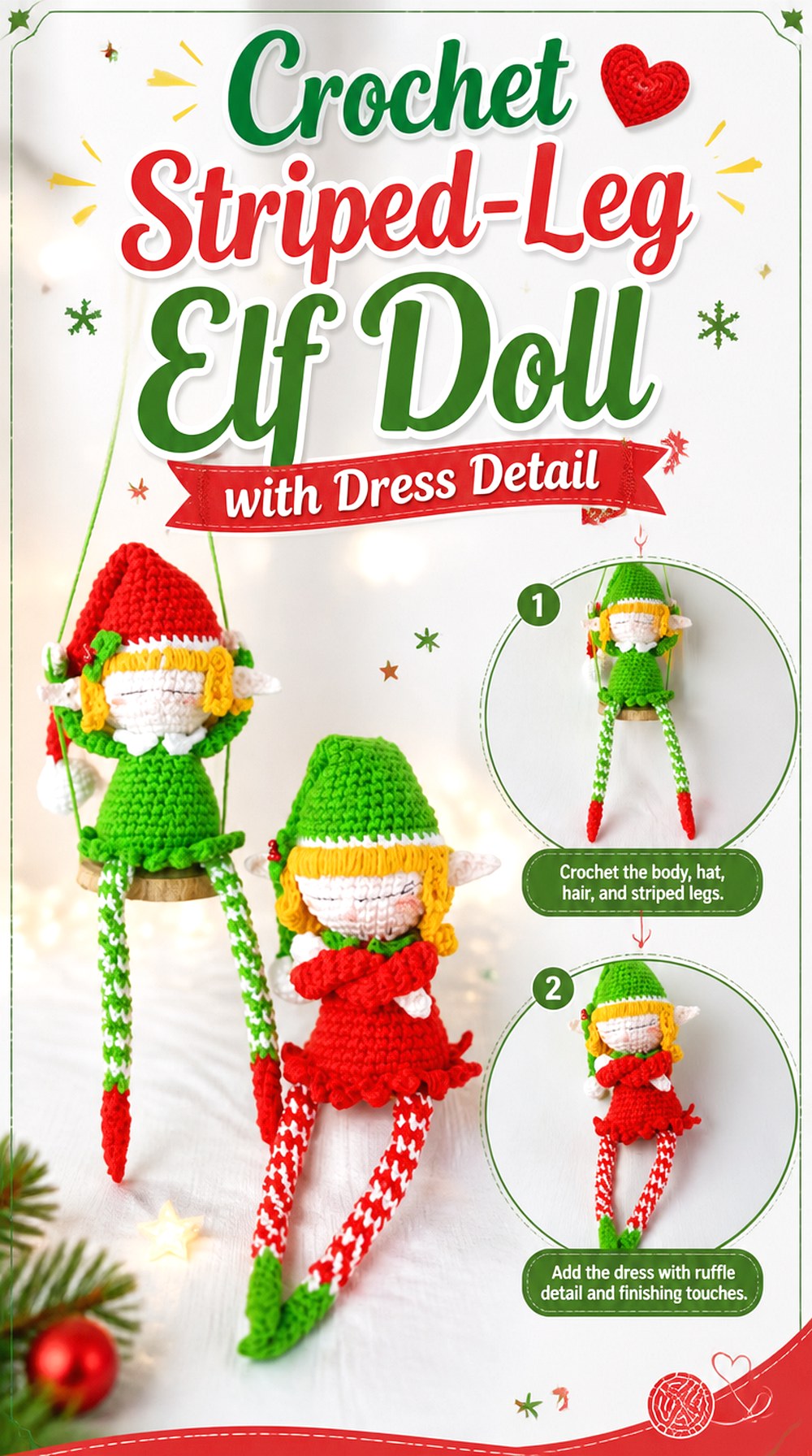
Canal crochet’s elf combines several traditional character cues in one design: long striped legs, a dress edge, collar, pointed ears, hair, and an extended hat. The accompanying project page also shows embroidered facial details and separates out the different decorative components used around the main body.
This design sits between a shelf elf and a more conventional dressed amigurumi doll. The long legs create movement, while the dress and hair give the upper body more visual detail. Choose it when you want a full Christmas character whose clothing is integrated into the overall silhouette rather than relying primarily on removable accessories.
Stripe Consistency Is Most Visible on Long Legs
Long narrow legs behave like visual measuring sticks. If one stripe is noticeably deeper, narrower, or more compressed than its partner, the difference can attract attention even when the actual leg lengths are close.
Place both legs beside each other before final attachment. Comparing the color boundaries is often an easier way to spot imbalance than measuring the overall length only.
The Dress Edge Should Sit Cleanly Over the Body
The decorative dress border adds width at a specific point on the torso. If it curls, bunches, or flares unevenly, it can make the whole body seem crooked.
Before moving on to final accessories, arrange the edge in its intended position and check the doll from the side as well as the front. A clean clothing line gives the striped legs a stronger visual starting point.
Embroidered Eyes Keep the Face Low-Profile
The source design uses embroidered eyes. That keeps the facial surface comparatively flat while the hair, ears, collar, and hat provide the three-dimensional interest.
If you modify the expression, keep the surrounding details in mind. A very elaborate face may compete with an already detailed upper body, while restrained embroidery allows the overall costume to remain the focus.
Original Tutorial and Creator Credit
Creator: Canal crochet
9. Crochet Tiny Keychain Elf Doll
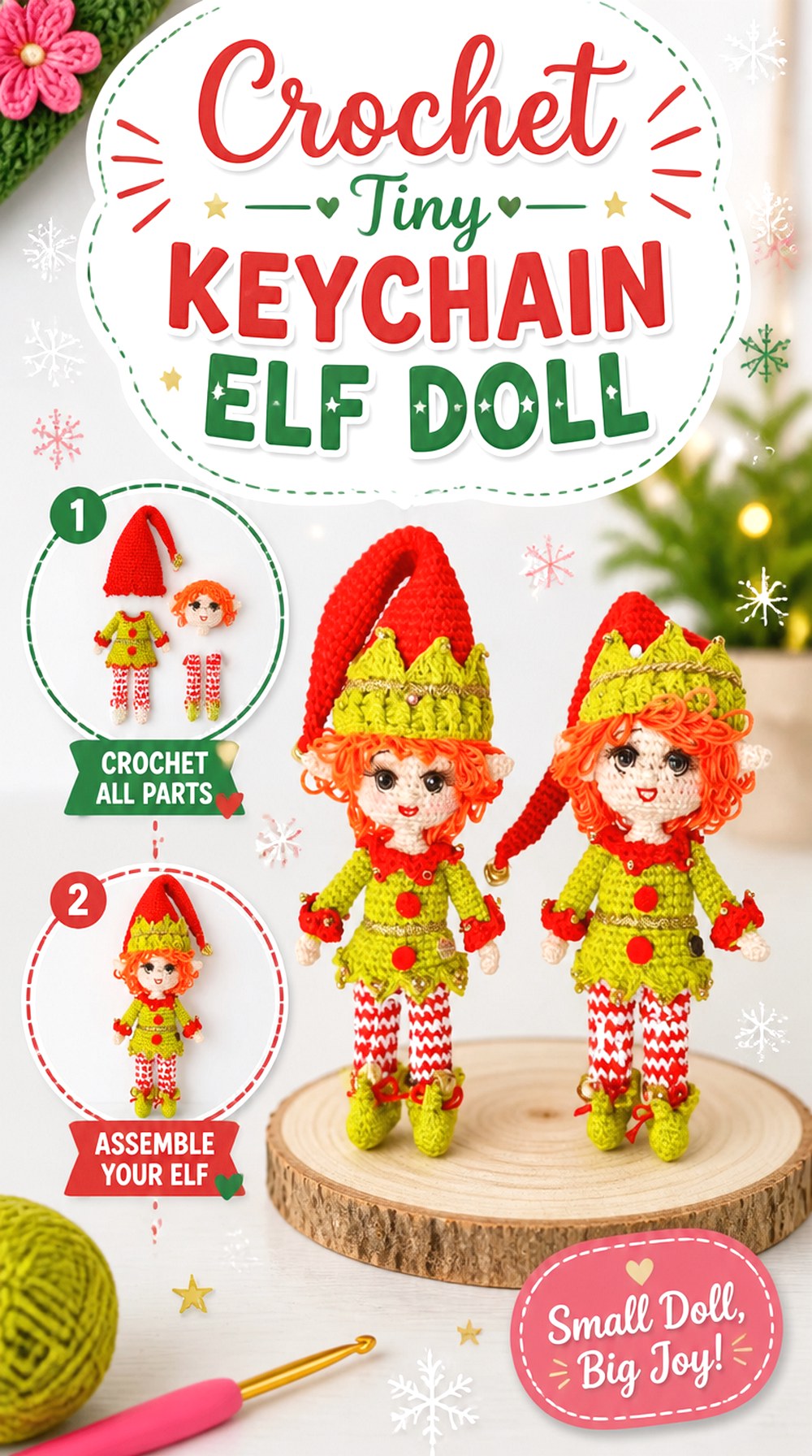
Amigurumis By Petus Ochoa turns the Christmas elf into a miniature doll that the creator also suggests can be used as a keychain. The tutorial is presented from the beginning through the finished mini elf, making it a useful contrast to larger plush and heirloom dolls.
At this scale, the goal is not to pack in every possible clothing detail. A clear hat, face, body, and recognizable holiday palette have more impact. It is a practical option when you want an elf that can become a small gift, bag decoration, or hanging character without occupying the space of a full shelf doll.
Keychain Scale Makes Every Join More Noticeable
Miniature work gives you fewer stitches over which to hide small alignment differences. An ear, arm, or hat that shifts by only a little can visibly alter the finished expression.
Pause before securing parts permanently and compare the figure from the front and back. Working smaller does not necessarily mean finishing deserves less attention; in many cases, the opposite is true.
Choose Hardware for Display, Not Assumed Load
If you convert the elf into a keychain, remember that the crochet tutorial establishes the doll, not a rated load-bearing accessory. Choose hardware suitable for your intended use and attach it to a structurally sensible part of the finished piece.
A decorative bag charm experiences different forces from an elf hanging quietly on a Christmas tree, so avoid making durability claims based only on the appearance of the crocheted fabric.
Small Scale Rewards Simple Color Blocking
Too many tiny color changes can make a miniature figure look visually busy. Strong areas of red, green, white, or another coordinated palette often read more clearly from a distance.
If you want a less traditional elf, change the palette while keeping enough contrast between the face, clothing, and hat for the character to remain recognizable.
Original Tutorial and Creator Credit
Creator: Amigurumis By Petus Ochoa
10. Crochet Pom Pom Hat Elf Doll

Cositas a Crochet Monterrey uses a component-based approach, with tutorial chapters covering the head, body, hands, feet, ears, hat, pom-pom, and final assembly. That makes the construction visibly different from one-piece or no-sew elf ideas.
The classic pointed hat and pom-pom keep the finished character firmly in Christmas territory, while separate pieces give you a chance to inspect proportions before everything becomes permanent. This style suits crocheters who do not mind assembly and who prefer being able to position individual limbs and facial elements rather than having most of the silhouette predetermined by continuous construction.
Separate Pieces Allow a Dry-Fit Before Sewing
One advantage of component construction is that you can position the parts together before committing to the final placement. Use that opportunity.
Pin or hold the arms, feet, ears, and hat where they appear balanced, then rotate the doll. A position that looks centered from the front may project awkwardly from the side. Final assembly is part of shaping the character, not merely a cleanup task.
The Pom-Pom Should Not Overpower the Head
A pom-pom adds movement and softness to a pointed hat, but its visual weight needs to suit the scale of the doll. If you substitute yarn or create your own pom-pom, compare it directly with the head and hat before attachment.
The goal is a finishing accent, not a top-heavy shape that makes the hat disappear underneath it.
Assembly Symmetry Matters at Hands and Feet
Separate extremities create obvious comparison points. Before sewing, check whether paired hands and feet point in compatible directions and sit at similar heights.
This is particularly important if you want the elf to appear balanced when seated or displayed upright. Adjusting placement before the stitches are secured is much easier than trying to correct the pose after every seam has been finished.
Original Tutorial and Creator Credit
Creator: Cositas a Crochet Monterrey
11. Crochet Shoe and Hat Christmas Elf Doll

Maia Maia crochet’s Christmas elf uses a multi-part learning format that begins with the legs, shoes, and lower body before moving through the body, head, arms, hat, and finishing in the related parts. The result follows the recognizable full-doll Christmas elf direction rather than reducing the character to a tiny ornament.
This option is useful when footwear and the overall vertical silhouette matter to you. Unlike the mushroom and star elves, the design reads through classic humanlike doll proportions, so the relationship among shoes, legs, torso, head, and hat needs to feel visually coherent.
Start With the Footwear Silhouette in Mind
Shoes form the visual base of this elf, so their shape influences how the rest of the doll appears above them. Compare the pair early and correct obvious differences before they become attached to a much larger body.
If the doll will be displayed upright, also consider how the finished shoe shape interacts with that pose. Do not assume decorative crocheted shoes automatically create a self-standing toy unless the source specifically demonstrates it.
A Tall Hat Changes the Doll’s Overall Balance
The elf is not visually finished at the top of the head; the hat extends the silhouette farther upward. When judging proportions, include that extra height mentally before deciding the head or body looks too large or small.
A very strongly stuffed or stiff hat gives a different effect from a softer one, so follow the source construction if you want the same final character.
Multi-Part Tutorials Benefit From Checkpoints
When a project spans several videos, it is easy to continue working without comparing completed components. At the end of each major section, review the current pieces together.
Check paired limbs, color direction, yarn tails that still need handling, and whether any feature needs access from the inside later. Catching those issues between tutorial parts is simpler than discovering them during final assembly.
Original Tutorial and Creator Credit
Creator: Maia Maia crochet
12. Crochet Sitting Christmas Elf Doll
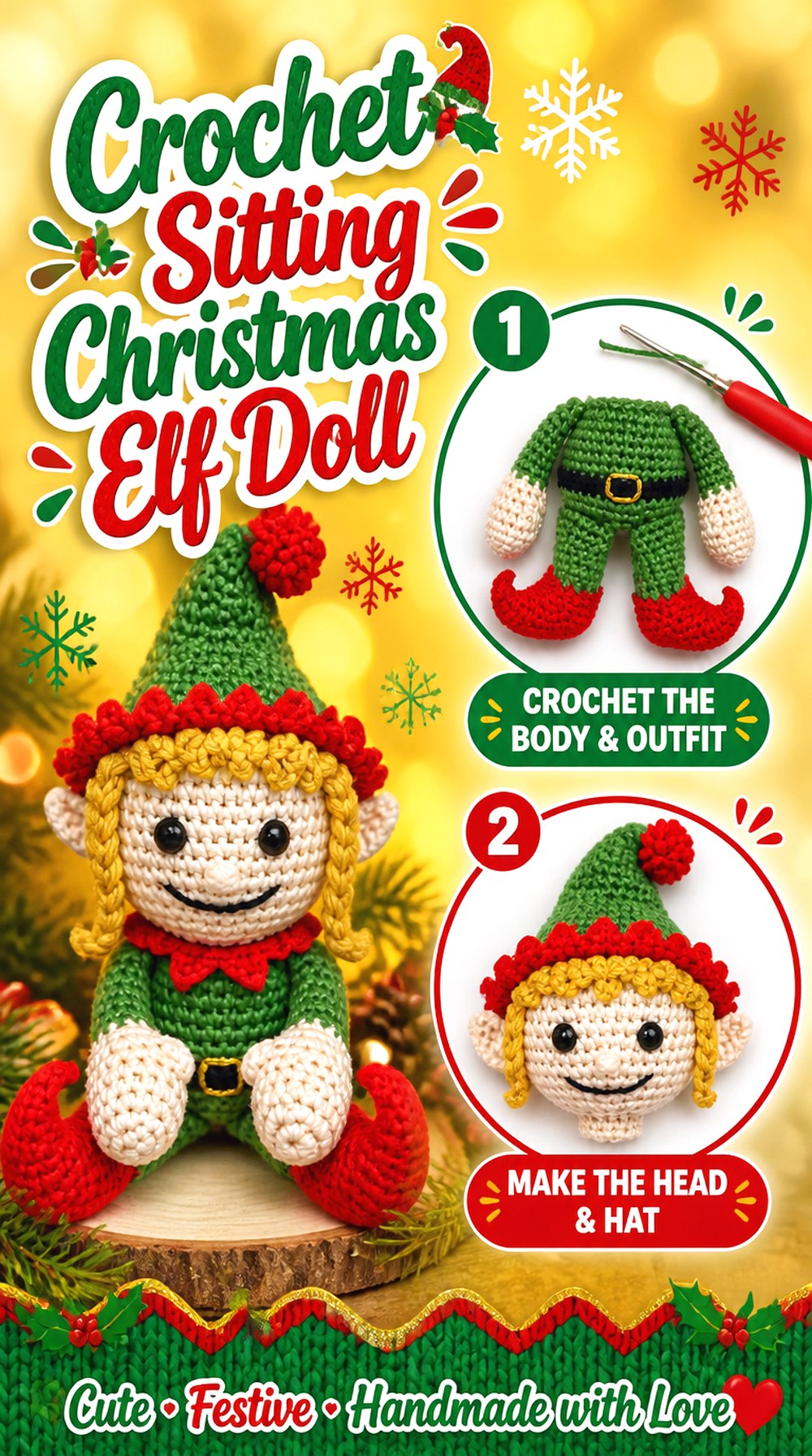
Rhonda Butler’s elf is designed around a seated pose rather than a long dangling shelf shape or a standing doll. The source describes the project as a full crochet-along in which the creator works through the stitches as well as sewing and attaching the components in real time.
That makes this idea particularly relevant when you want a compact figure for a tabletop, mantel, or grouped Christmas display. The body should be judged in the pose it is intended to hold. A successful sitting elf does not need to imitate the proportions of an upright doll because its bent legs and lower center of gravity are part of the design.
Build the Pose Into the Stuffing
For a sitting character, more stuffing is not automatically better. The lower body and limb joints need to retain the intended shape without becoming so rigid that the pose looks forced.
As you fill the pieces, periodically place them in roughly their final orientation. That gives you an early warning if the body is becoming too round to sit comfortably or a limb is losing the flexibility suggested by the source design.
Seat Stability Matters More Than Standing Balance
Judge this elf on a flat horizontal surface. If the body rocks backward or the legs push it to one side, identify the cause before all attachments are permanent.
Sometimes the issue is placement rather than crochet tension. A seated doll can look balanced even when it could never stand on its own, so avoid trying to force standing characteristics onto a project designed around a different pose.
Real-Time Assembly Helps With Limb Placement
The creator describes sewing and attaching the project in real time during the crochet-along. That can be particularly useful for a seated character because limb placement determines the final pose.
Use the visual demonstration to understand where the original design sits naturally, then pause as needed and compare your own doll rather than rushing to keep pace with the video.
Original Tutorial and Creator Credit
Creator: Rhonda Butler
13. Crochet Gnome Style Elf Doll for Display
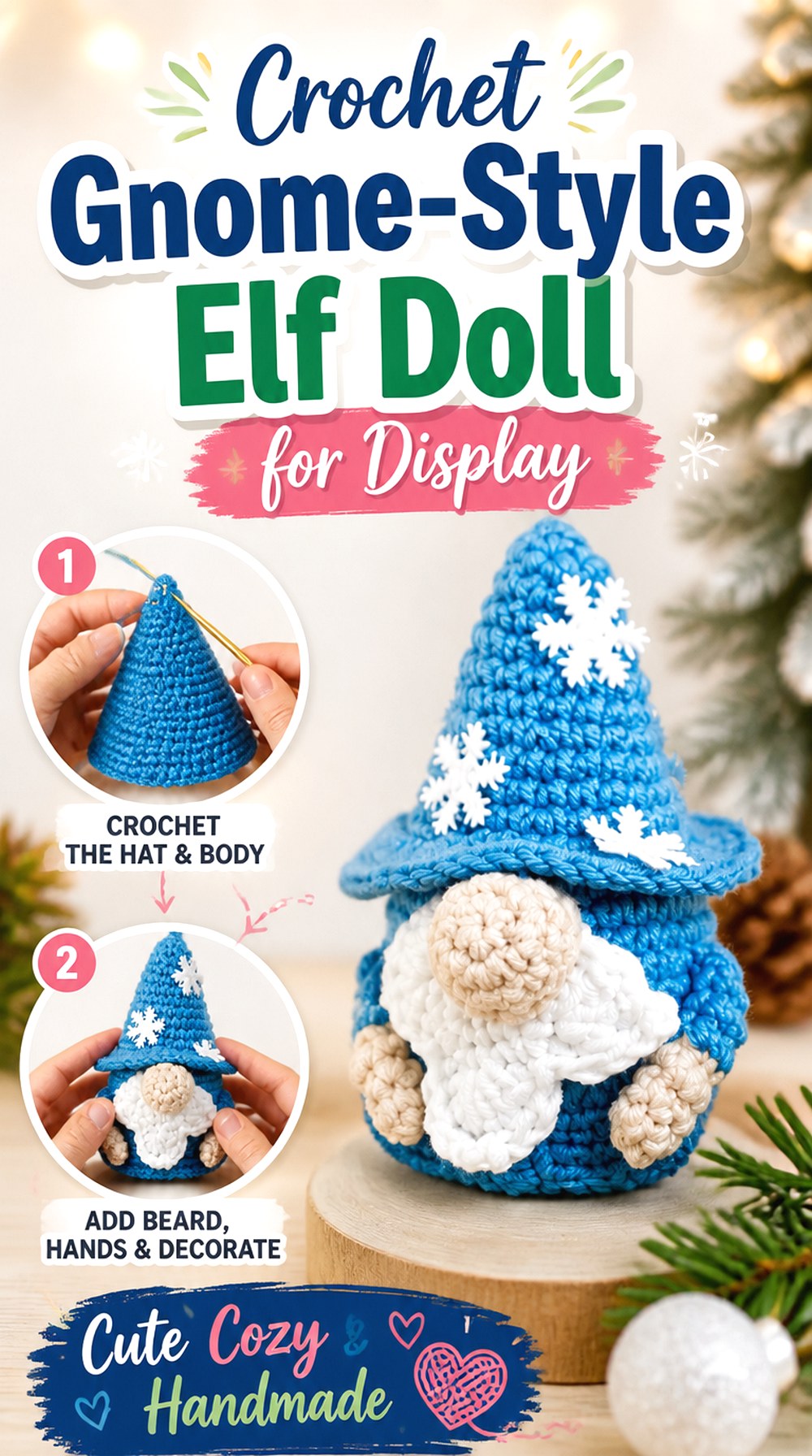
KnittingKitty’s tutorial sits at the visual border between a Christmas gnome and an elf, using the Spanish terms gnomo and duende in the video title. The creator describes the finished piece as a festive home decoration and invites color customization.
That hybrid styling gives this project a reason to exist beside the more humanlike dolls in the list. It works especially well for Scandinavian-leaning or rustic Christmas displays where a strong hat and compact body are more useful than detailed doll clothing. Choose it when you like the folklore-inspired side of holiday elves rather than a clearly toy-shop-style Santa helper.
Decide How Elf-Like or Gnome-Like You Want the Result
This project’s terminology intentionally overlaps the two character types. If you want the finished figure to read more clearly as an elf in your own display, color, facial treatment, ear emphasis, and surrounding decor can help establish that interpretation.
If you prefer the gnome-like quality, allow the simpler body and oversized holiday styling to remain the focus instead of adding unrelated doll details.
A Strong Hat Can Carry the Holiday Theme
In a compact folklore-style figure, the hat often accounts for much of the height and color. Treat it as part of the overall body shape rather than as a small accessory added at the end.
Before finishing, look at whether the hat appears centered and proportional from several angles. A slouch or tilt can add character, but it should look deliberate rather than caused by uneven stuffing or attachment.
Display Dolls Benefit From a Stable Base
The creator presents the result as holiday home decor. For that use, pay attention to how the bottom sits on the actual surface where you plan to place it.
A visually charming figure that constantly rolls or leans can become frustrating in a tabletop arrangement. Test the base before adding any optional decorations that could shift its center of gravity.
Original Tutorial and Creator Credit
Creator: KnittingKitty
14. Crochet Jaunty Hat Elf Ornament Doll

The Kindness Company’s elf is conceived as a compact Christmas figure that can be used as an ornament or small stuffy. The tutorial focuses on the recognizable elf face and jaunty holiday hat rather than a large wardrobe or exaggerated long legs.
That makes this a useful finishing point for the collection: it keeps the classic Christmas-elf identity while simplifying the overall silhouette. It is a good option when you want the face and hat to do most of the storytelling, or when a full-size doll would be too large for the planned display. It can also coordinate easily with other small handmade Christmas ornaments.
Keep the Ornament Silhouette Light and Clear
Tree ornaments are usually viewed among branches, lights, and other decorations. A simple, high-contrast outline is often more readable than a figure covered in many small details.
When choosing your colors, check how the hat, skin tone, and clothing separate visually. If everything is similar in value, the elf can disappear into a busy tree even when the stitches look excellent at close range.
A Jaunty Hat Adds Motion Without Long Limbs
This design gets much of its character from the hat and face, allowing it to look playful without the extended legs used by a shelf elf.
That is useful when hanging space is limited. Preserve the hat’s intended direction and shape when stuffing or finishing it, since changing its angle can noticeably change the personality of the entire ornament.
Choose Ornament or Stuffy Use Before Adding a Hanger
The creator notes that the design can function as an ornament or a stuffy. Decide which role matters most before attaching a loop.
For an ornament, locate the hanger so the face points outward when suspended. For a small stuffed figure, you may prefer to leave the top unobstructed. If the project is intended for play, evaluate all small parts separately from its suitability as decor.
Original Tutorial and Creator Credit
Creator: The Kindness Company
Which Crochet Elf Doll Style Should You Choose?
The most useful way to narrow the 14 options is by finished function rather than color. A long-limb or sitting elf makes sense when the pose is part of your holiday display. Mini ornaments prioritize a readable silhouette and low weight. Chunky plush yarn creates a larger, softer character, while an heirloom dress-up doll shifts more attention toward clothing and finishing.
| If You Want | Look First At |
|---|---|
| A mantel or shelf character | Long-Leg Shelf Elf or Sitting Christmas Elf |
| A small tree decoration | Mini Elf Girl, Star-Body Elf, or Jaunty-Hat Elf |
| A soft substantial plush | Chunky Christmas Elf Plush |
| More clothing and display detail | Heirloom Dress-Up Elf Pair |
| Fewer sewn components | No-Sew Mushroom Elf |
| A tiny charm-style figure | Tiny Keychain Elf |
| A woodland or folklore look | Mushroom Elf or Gnome-Style Elf |
| Classic full-doll proportions | Hair-and-Collar, Pom-Pom Hat, or Shoe-and-Hat Elf |
Conclusion
The strongest crochet elf doll idea depends on what you want the finished character to do. For a shelf display, the long-legged and sitting elves make the pose part of the design. The mushroom, star-body, mini girl, and jaunty-hat versions keep the scale compact for seasonal decorating, while the chunky plush offers a softer, fuller shape. Choose the heirloom pair when clothing and detailed presentation matter more than minimal assembly.
Whichever style you prefer, compare the finished silhouette, yarn behavior, small parts, and amount of assembly before starting. Once you have chosen the right format, use the original tutorials for the creators’ exact construction details rather than trying to transfer instructions between differently shaped dolls.
Frequently Asked Questions
What helps a crochet elf doll hold its shape without showing stuffing?
A dense crochet fabric and controlled stuffing both matter. If the stitches open enough for filling to show, changing only the amount of stuffing will not solve the fabric problem. Use the yarn and hook relationship specified by the tutorial when possible. If substituting materials, check the developing fabric before completing a large section. Add stuffing gradually as well; overfilling can stretch stitches, distort narrow limbs, and change the proportions the designer intended.
Can I use a different yarn from the elf tutorial?
Usually you can experiment with another yarn, but the finished size, texture, firmness, and proportions may change. A thicker yarn can make the doll substantially larger and can also enlarge details such as ears, hands, and hats. A finer yarn does the reverse. Match the hook appropriately to the new yarn while maintaining dense amigurumi fabric, and reconsider accessories such as eyes or pom-poms rather than assuming the source sizes will still look proportional.
Should I use safety eyes or embroidered eyes on a crochet elf doll?
Choose according to the intended appearance and use. Safety eyes create a dimensional, polished look and appear in some of the tutorials in this collection, while other creators use embroidery. Embroidered eyes create a flatter feature and can suit tiny dolls especially well. If the elf is intended for a baby, small child, pet-accessible space, or frequent play, assess all detachable parts carefully and follow applicable toy-safety guidance rather than assuming a component is appropriate simply because it is sold for crafts.
How can I make a crochet elf look natural when sitting on a shelf?
Start with a design intended to sit rather than forcing a standing doll into the same pose. Pay attention to the relationship between the lower body and legs, and avoid stuffing narrow limbs so firmly that they lose all flexibility. Before final limb attachment, place the body on a similar shelf edge and examine it from the front and side. The long-leg shelf elf and dedicated sitting elf in this list provide two different construction directions for that purpose.
Are tiny crochet elf ornaments automatically suitable as children’s toys?
No. Ornament scale and toy suitability are different questions. Hanging loops, bells, beads, buttons, safety eyes, decorative ribbons, keychain hardware, or other small pieces may be appropriate for seasonal decor but inappropriate for some play situations. Consider the recipient and intended use before finishing the project. If you want to adapt an ornament into a toy, review each component and the applicable safety guidance rather than relying on the original decorative use.
Can I make a crochet elf larger just by using thicker yarn?
Using thicker yarn with an appropriately matched hook will generally increase the scale of an amigurumi project, but it does not guarantee that every detail will remain visually balanced. The hat, eyes, hair, ears, embellishments, and stuffing requirements all need to suit the enlarged body. Instead of aiming for a specific unverified final measurement, crochet enough of the new material to assess the fabric and proportions, then decide whether the tutorial still gives the look you want.