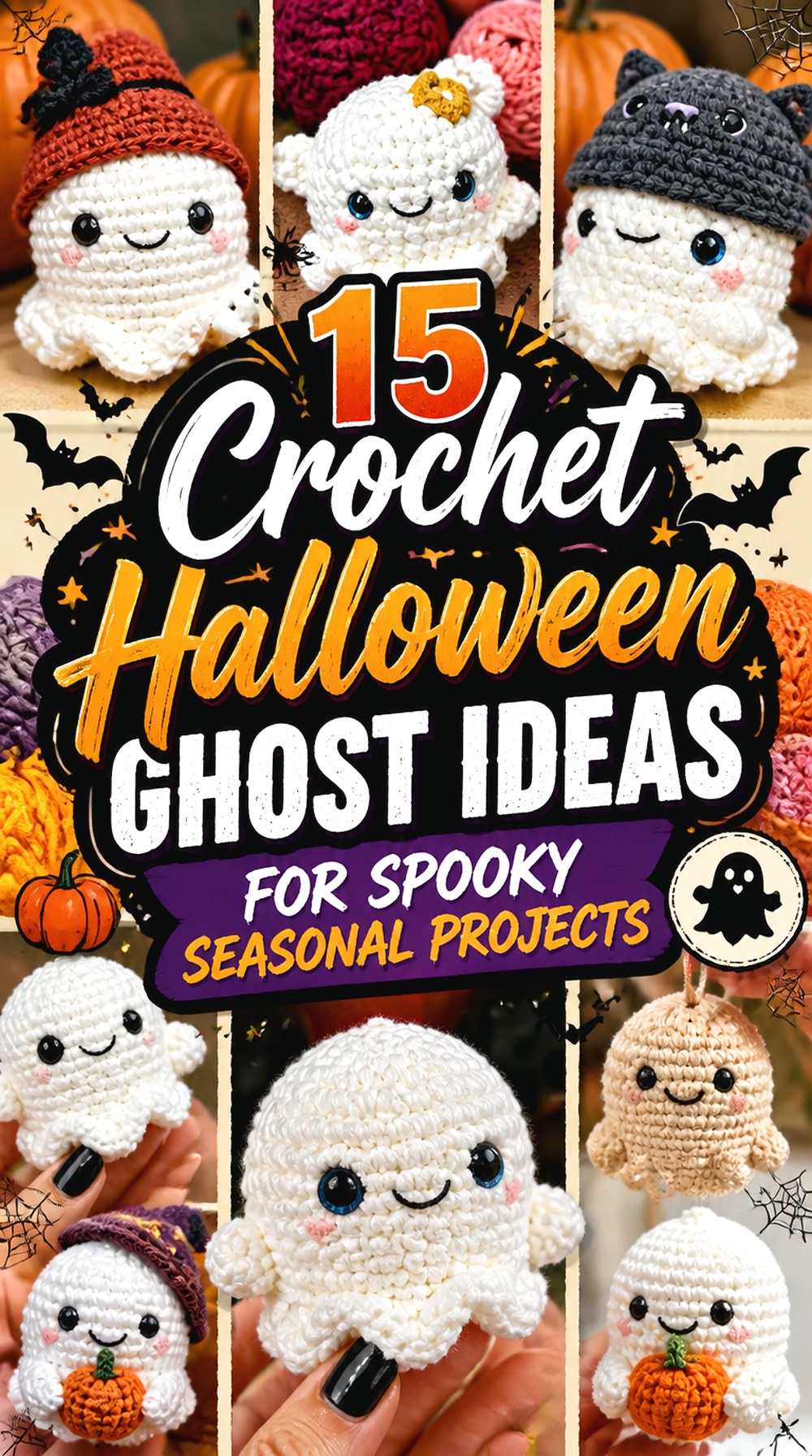

Crochet Halloween ghosts can take very different forms. A flat ghost coaster behaves nothing like a stuffed plushie, while a granny-square ghost gives you a modular piece that can become part of a larger blanket, garment, or decoration. There are also pillows for statement decor, hanging ghosts for walls and mantels, small charms, practical bags, and compact appliqués.
The useful choice is not simply which ghost looks cutest. Think about where the finished piece will live, whether it needs to lie flat or hold a three-dimensional shape, how much handling it will receive, and how easily you want to store it when Halloween is over. The 15 ideas below use different constructions and purposes so you can compare projects rather than choosing from a collection of nearly identical amigurumi ghosts.
Quick List
- Crochet Checkered Ghost Pillow Cover
- Crochet Shaped Ghost Accent Pillow
- Crochet Mini Ghost Garland
- Crochet Hanging Ghost Wall Decoration
- Crochet Ghost Halloween Bag
- Crochet Witch-Hat Ghost Wind-Chime Charm
- Crochet Mini Ghost Keychain
- Crochet Flat Ghost Coaster
- Crochet Integrated Ghost Granny Square
- Crochet Solid-Background Ghost Granny Square
- Crochet Granny-Square Ghost Hanging Ornament
- Crochet Raised Ghost Appliqué
- Crochet No-Sew Ruffled Ghost Amigurumi
- Crochet Posable-Sheet Standing Ghost
- Crochet Witch-Hat Ghost Plushie
Choose the Ghost Format Before You Choose the Yarn
The intended form should guide your material decision. A pillow or stuffed ghost benefits from fabric that keeps the filling contained and preserves the silhouette. A coaster or appliqué has a different priority: it needs to settle reasonably flat without bulky edges competing with the design. For a bag, stretch and handle stability matter more because the fabric will be carried rather than simply displayed.
Granny squares add another consideration. If several squares will eventually be joined, compare their blocked dimensions before committing to a larger layout. Even attractive motifs can become awkward to combine when their borders or density behave differently. For hanging pieces, also consider the weight of decorative additions because they can pull a lightweight ghost out of shape.
Plan Halloween Display and Storage at the Same Time
Seasonal crochet may spend more months in storage than on display, so construction affects more than the October look. Flat appliqués, squares, coasters, and garlands can usually be organized with less bulk than heavily stuffed decorations. Pillows make a larger statement, but a removable cover and a permanently stuffed shaped pillow have very different storage needs.
Look at attachment points before hanging any ghost from a wall, shelf, bag, or key ring. The decorative body may be soft while the hanging loop or hardware receives repeated pulling. Small eyes, beads, buttons, charms, and other detachable parts also deserve extra consideration when a project could reach young children or pets. When safety matters, check the creator’s recommendations and choose finishing methods appropriate for the recipient rather
1. Crochet Checkered Ghost Pillow Cover
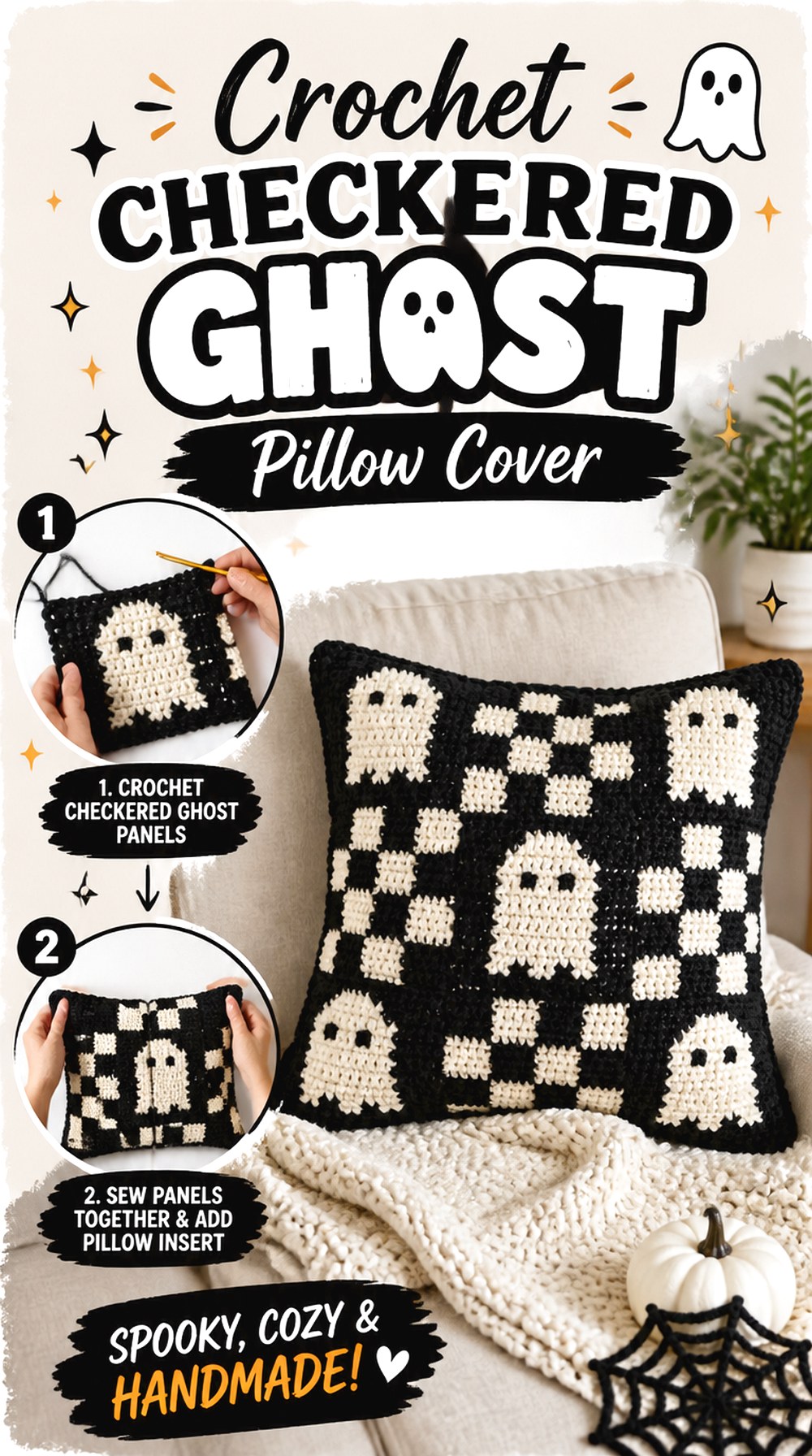
This pillow idea turns the ghost theme into a graphic home-decor piece rather than a character-shaped plush. The Turtle Trunk tutorial combines ghost imagery with contrasting checkerboard sections, so the overall effect reads as a Halloween textile even from farther across a room. Because it is designed as a pillow cover, it also gives you a different seasonal-storage option from a permanently stuffed ghost.
This style suits a sofa, chair, or bed where a square cushion makes more sense than a freestanding amigurumi figure. The repeated square construction also makes alignment and finishing especially important.
Square Alignment Makes the Graphic Design Work
With a checkerboard layout, small differences between individual units can become much more obvious once everything is assembled. Compare finished square dimensions before final joining rather than relying only on how they look straight from the hook. Blocking can help establish a consistent planning size, but the relevant question is whether the pieces actually match one another after the treatment you intend to use.
Also look at the orientation of every ghost before assembly. A single rotated motif is far harder to correct after the cover has been fully joined.
A Removable Cover Changes Seasonal Storage
A cover-style project can be appealing when storage space is limited because the crochet shell and pillow insert do not necessarily have to remain together all year. Before choosing this approach specifically for that advantage, confirm how the tutorial handles the back and opening.
If you adapt the idea to another insert, compare the completed crochet panel with the actual cushion rather than assuming two items sold under similar size labels will behave identically. Crochet stretch, seam depth, and the fullness of the insert can all change the final appearance.
2. Crochet Shaped Ghost Accent Pillow

Instead of placing ghost motifs on a square cushion, this option makes the ghost itself the pillow. Crochet by Colleen’s tutorial produces a soft, recognizable ghost silhouette that can work as a larger accent among pumpkins, blankets, and other Halloween decorations. That change in shape gives it more personality than a conventional cushion but also makes stuffing and outline control more noticeable.
Choose this route when the silhouette is meant to be part of the decoration. It works particularly well where a flat square pillow would feel too ordinary, although the three-dimensional form requires more storage space after the season ends.
Stuffing Controls the Ghost’s Outline
A shaped pillow relies on its outer contour. Uneven stuffing can make one section look overfilled while another collapses, so evaluate the silhouette from several angles rather than judging only the front. The goal is not simply to add as much filling as possible.
If you substitute yarn, remember that a more flexible fabric and a firmer fabric will respond differently to the same amount of stuffing. Make adjustments based on the actual crochet shell instead of trying to force it to match an assumed finished dimension.
Facial Placement Has More Impact on a Large Pillow
Eyes and other facial details occupy a relatively small part of the project, yet their spacing strongly affects the expression because the surrounding body is so simple. Position temporary markers before permanently attaching or embroidering facial features.
This is especially useful if you alter the yarn or overall scale. Placement that looks balanced on the tutorial’s version may need to shift on a modified pillow. Check the face while the pillow is close to its intended stuffed shape rather than assessing it only on a completely flat panel.
Full-Shape Decor Needs a Storage Plan
Unlike a pillow cover that can potentially be separated from its insert, a stuffed ghost pillow keeps most of its volume year-round. That is worth considering when you make several seasonal pieces.
Avoid compressing a finished item more aggressively than its yarn, stuffing, or embellishments can tolerate. Check the yarn’s care information before cleaning or storing it, especially when mixing different fibers for facial details or trim. Proper storage should preserve the shape rather than creating new creases that have to be corrected every fall.
Original Tutorial and Creator Credit
Creator: Crochet by Colleen
3. Crochet Mini Ghost Garland
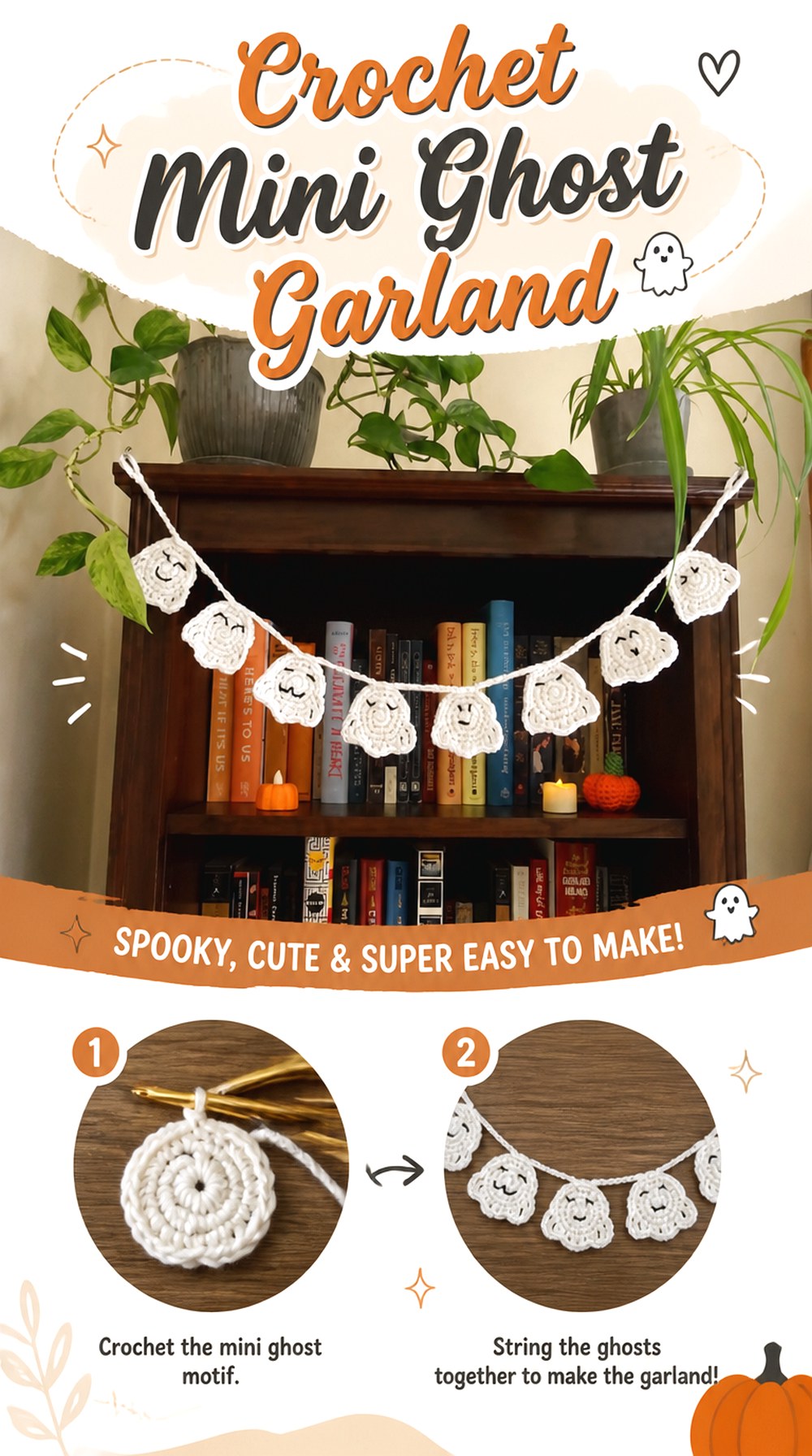
A ghost garland spreads the Halloween theme across a mantel, doorway, shelf, or wall without requiring one large decorative object. Janelle Irene’s tutorial focuses on a series of small ghosts arranged as a hanging decoration, making this idea particularly useful when you want repetition and movement rather than a single centerpiece.
The main design choice is not only how each ghost looks individually. Spacing, hanging direction, and the relationship between the motifs become part of the finished piece. It is also a practical option for anyone who likes Halloween decorations that can be packed relatively flat when the season ends.
Spacing Determines How the Garland Reads From Across the Room
Before permanently fixing every ghost along the connecting strand, preview the garland near its intended display location. A mantel may favor a different spacing rhythm than a narrow shelf or doorway.
Too little space can make separate ghost shapes visually merge, while very wide spacing may weaken the repeated motif. Adjust according to the width you actually need to cover instead of treating spacing as a purely decorative afterthought. Also check whether each ghost naturally faces the direction you want once gravity acts on the hanging piece.
Keep the Hanging System Proportional to the Motifs
Small ghosts do not need an oversized connector competing with them visually. At the same time, a very delicate hanging strand still has to support repeated setup, removal, and storage.
Look at the attachment area on each motif before adapting the garland. Pulling from a narrow or loosely stitched point can distort a small shape. If the piece will hang where children or pets can reach it, position cords and detachable decorations appropriately rather than treating the garland as a toy.
Original Tutorial and Creator Credit
Creator: Janelle Irene
4. Crochet Hanging Ghost Wall Decoration
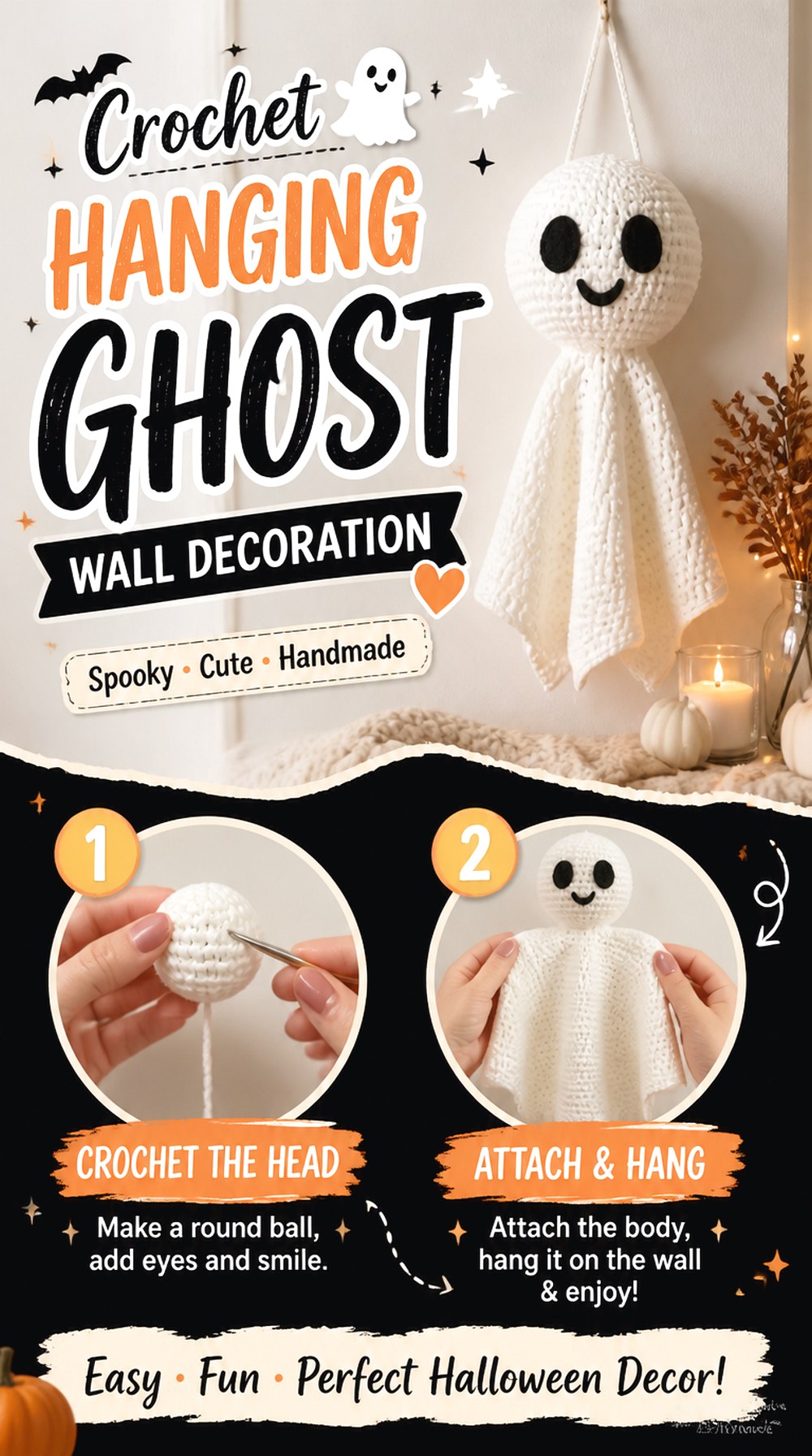
This hanging ghost from Meladora’s Creations for Crochet moves away from tiny bunting and toward a single, more noticeable suspended decoration. The tutorial presents a ghost designed specifically to hang, including a defined head, facial features, and its own hanging chain. That gives it a different visual role from a flat appliqué or a freestanding stuffed figure.
Consider this design for a wall, hook, or other Halloween display point where the entire silhouette can hang freely. Because gravity is part of the finished look, substitutions that make the fabric noticeably heavier or stiffer can affect the result more than they would on a flat motif.
Test the Top Attachment Before Final Display
The hanging point supports the entire decoration, so inspect that area after the ghost has reached its finished weight. A loop that looks centered while the piece is lying on a table may make the ghost tilt once suspended.
Hang it temporarily before committing to the final display location. This gives you an opportunity to check balance, facial orientation, and whether any lower sections fold inward. For a modified version, the best attachment position should follow the finished center of balance rather than an assumed midpoint.
Drape Helps Create the Suspended Ghost Effect
A hanging ghost benefits from enough flexibility to look soft rather than rigid, but excessive stretch can pull the body longer over time. When substituting yarn, make a small fabric sample and consider how it hangs under its own weight.
This is one reason the same yarn is not automatically ideal for both an amigurumi figure and a wall decoration. Stuffed forms rely more heavily on containment and shape retention; suspended forms also reveal how the fabric drapes vertically.
Original Tutorial and Creator Credit
Creator: Meladora’s Creations for Crochet
5. Crochet Ghost Halloween Bag
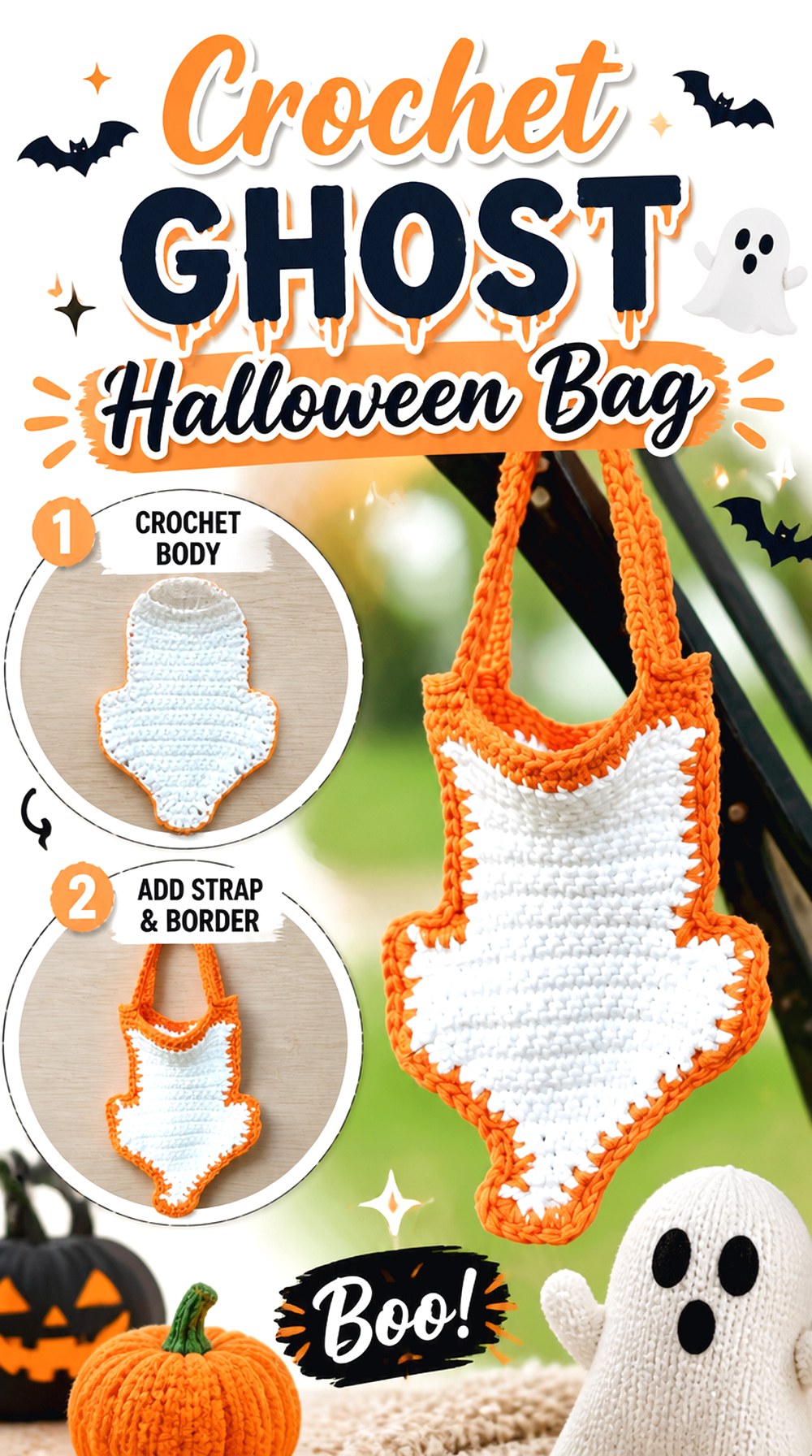
A ghost bag turns the Halloween motif into something functional. Wow! Crochet Designs presents a complete ghost-themed bag, giving this option a very different set of decisions from decorative pillows or plushies: the opening has to be usable, the handles have to remain comfortable, and the body should look convincing both empty and while carrying something.
This could suit a seasonal accessory or a lightweight Halloween carrying bag, depending on the finished scale shown in the tutorial and your intended use. Avoid assuming that crochet fabric can carry a particular load; that depends on yarn, stitch structure, seams, handles, and any reinforcement you add.
The Opening Should Match What You Plan to Carry
A decorative bag can prioritize silhouette, while a frequently used bag needs an opening that makes contents easy to insert and remove. Watch how the tutorial’s finished opening behaves before deciding whether the design suits your purpose.
If security matters, confirm whether the original construction includes any closure rather than assuming one is present. Adding a button, drawstring, zipper, or other closure is an adaptation that can alter both tension and appearance, so plan it before finishing the top edge.
Handles Often Stretch More Than the Bag Body
A handle concentrates force into a relatively narrow strip of crochet. If you plan to use the bag rather than display it, check how much the handle stretches with a light trial load before carrying anything important.
A yarn or stitch structure that feels stable across the broad bag body can behave differently in a long narrow strap. If extra stability is needed, consider whether reinforcement or lining fits your intended use, but verify how any alteration will interact with the tutorial’s construction.
Preserve the Ghost Shape When the Bag Is Filled
A recognizable ghost silhouette can change when the bag expands around its contents. Before treating the finished piece as an everyday tote, test it with lightweight, nonvaluable items and observe the outline.
If keeping the decorative form matters most, the bag may be better suited to lighter contents. If capacity matters more, prioritize structural behavior over a perfectly crisp silhouette. Those are different goals, and the most appropriate choice depends on how you expect to use the finished piece.
Original Tutorial and Creator Credit
Creator: Wow! Crochet Designs
6. Crochet Witch Hat Ghost Wind Chime Charm
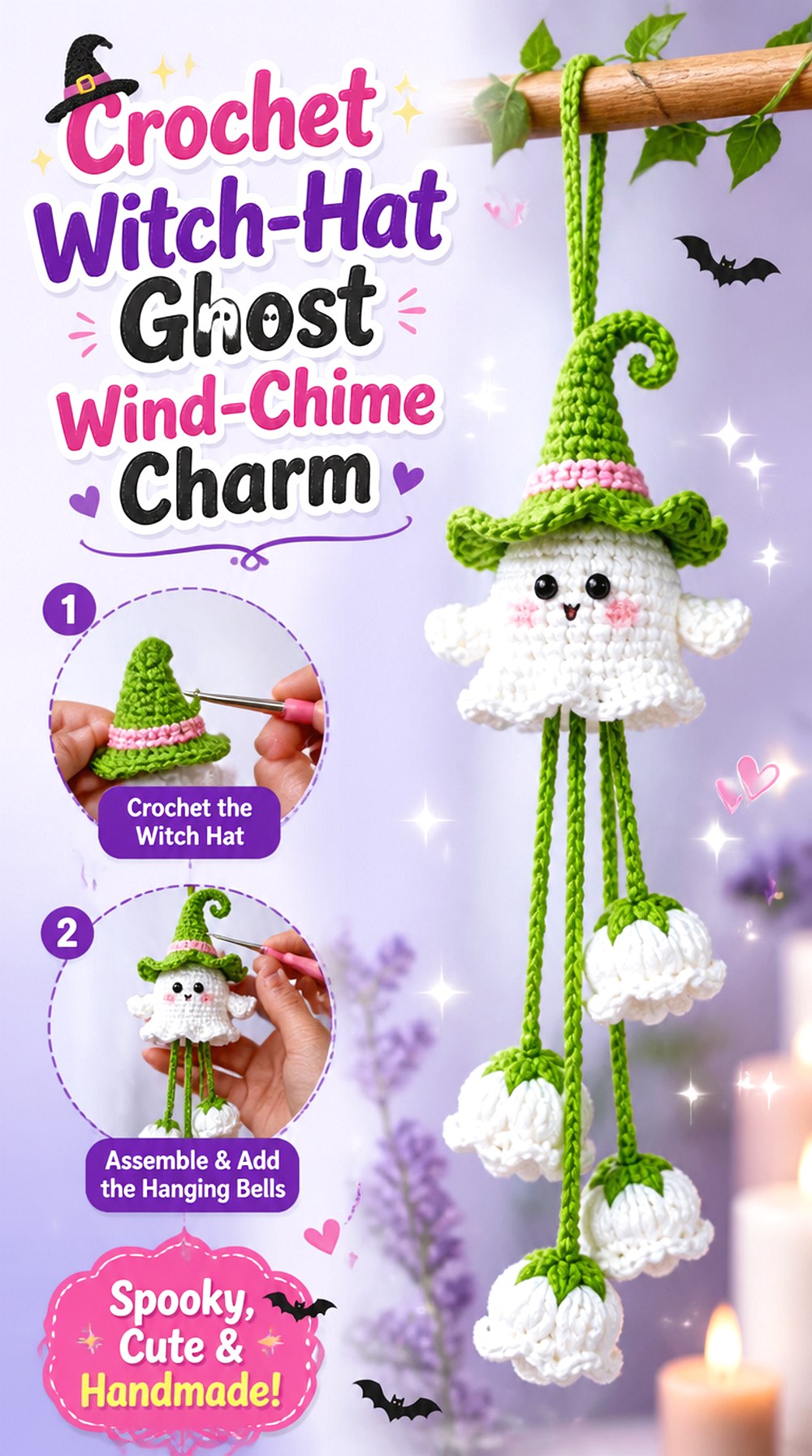
Mova DIY’s ghost project combines a small ghost with a witch-hat detail and suspended decorative elements, creating a charm with more vertical movement than a standard keychain. The finished idea can work as a hanging accessory where the stacked components are visible rather than compressed against a flat surface.
Its appeal comes from the combination of several small elements, so finishing deserves as much attention as the central ghost. This is a good choice when you want a miniature Halloween decoration with more visual detail than a single stuffed charm, while still keeping the overall project much smaller than wall decor or a pillow.
Balance the Lower Elements Before Fixing Their Position
With several components hanging below one another, alignment can change as soon as the charm is lifted. Assemble the pieces provisionally and hold the project from its final top attachment point before securing every detail.
This check helps reveal twisting, uneven drops, or a lower decoration that visually overpowers the ghost. If you change yarn types between elements, differences in weight can also shift the balance. Judge the piece while hanging rather than arranging it only on a flat work surface.
Tiny Accessories Make Finishing More Visible
Small projects leave less room for loose ends, oversized knots, or bulky attachment areas to disappear. Secure finishing details neatly and check the reverse or underside if the charm will rotate in use.
Hardware should also suit the size of the crochet piece. An attachment that is disproportionately heavy can stretch the top of a small ghost. If you plan to hang the charm somewhere mobile, make sure its placement will not interfere with visibility, movement, or safe operation of anything nearby.
Original Tutorial and Creator Credit
Creator: Mova DIY
7. Crochet Mini Ghost Keychain
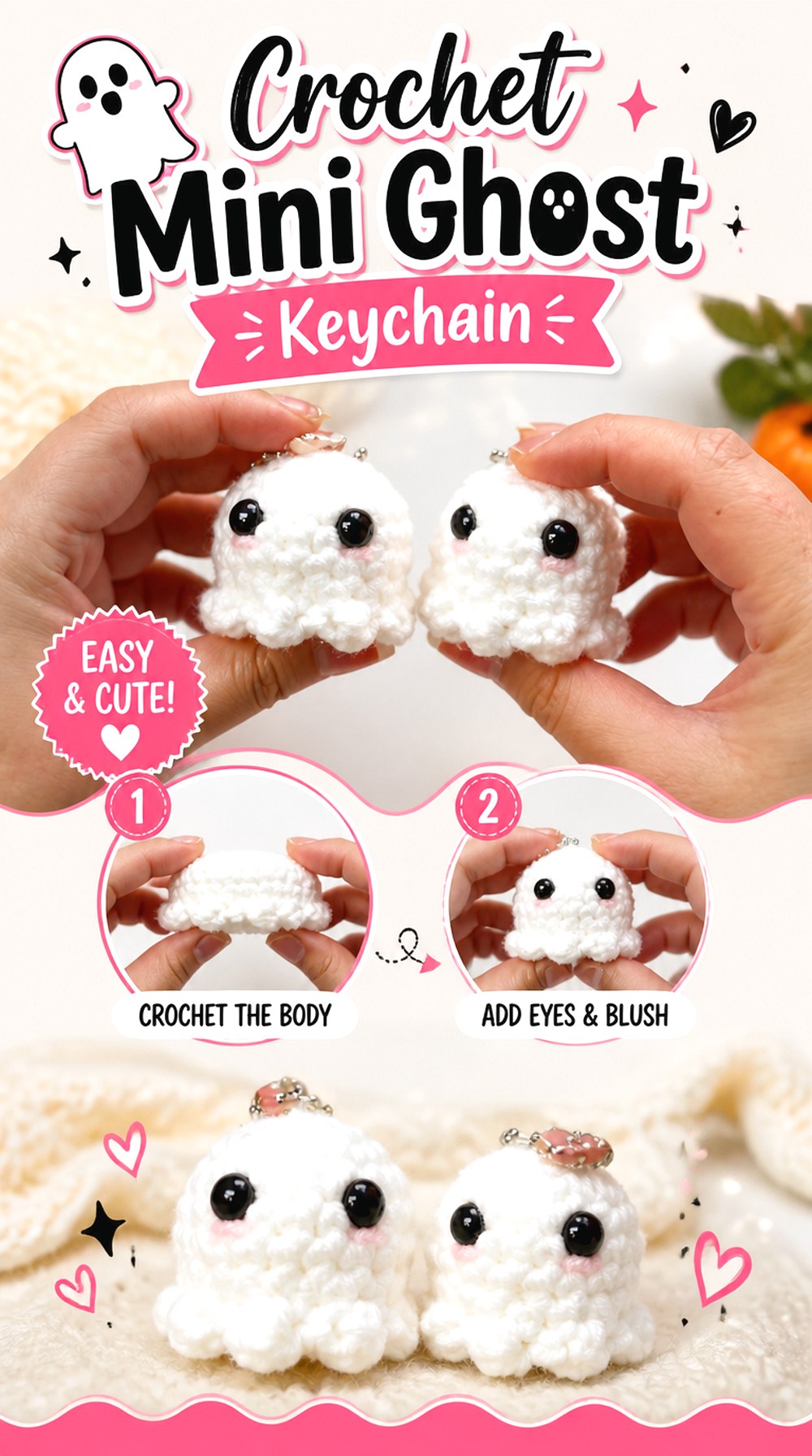
This miniature ghost from Artisan Gift Collection is designed around keychain use, so it offers a simpler hanging accessory than the multi-element wind-chime charm above. Its small scale makes it suitable for adding a Halloween accent to keys, a zipper pull, or a bag when a full plushie would be too bulky.
A keychain is handled much more often than shelf decor, however. The attachment point and facial details therefore matter beyond appearance. If you alter the original materials, check whether the finished ghost still feels proportional to the hardware and whether the crochet at the top can tolerate routine movement without visibly stretching.
Let the Hardware Scale Guide the Finished Look
A large clip can visually overwhelm a tiny ghost, while extremely small hardware may be awkward to attach securely. Before finishing the top of the piece, compare the crochet body with the ring or clasp you actually plan to use.
The hardware also adds its own weight. Hold the finished ghost from the ring and inspect whether the top stitches distort. If they do, reconsider the attachment method or intended use rather than assuming a decorative hanging point will automatically withstand repeated handling.
Flat Facial Details Reduce Snagging
Raised eyes or extra embellishments can be charming on display pieces, but a keychain regularly brushes against pockets, bags, and other objects. A flatter face can reduce the number of projecting details that may catch during use.
That does not make one finishing method universally better. It simply changes the trade-off between dimensional character and a smoother surface. If the keychain may be given to a young child, small detachable components require additional safety consideration.
Original Tutorial and Creator Credit
Creator: Artisan Gift Collection
8. Crochet Flat Ghost Coaster
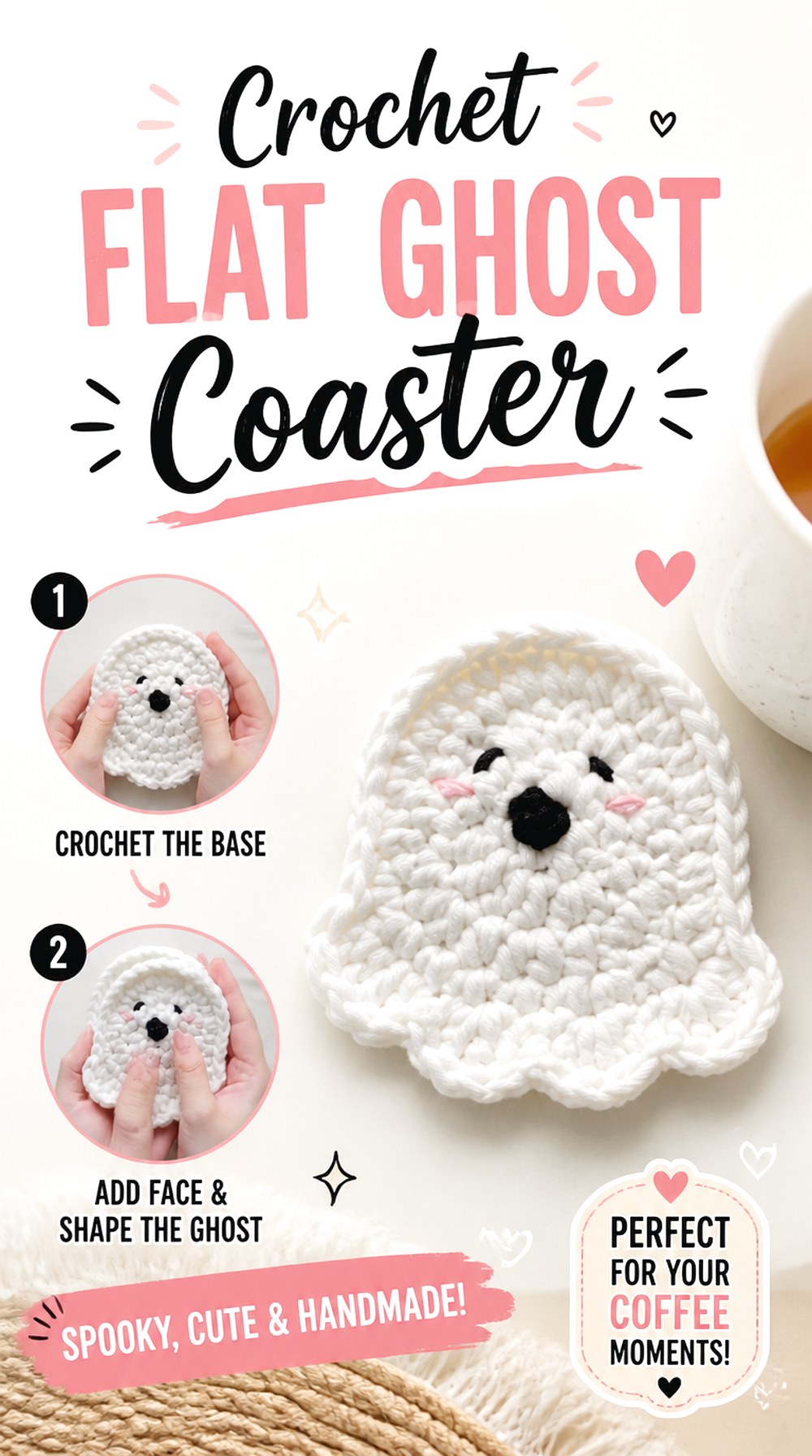
The ghost coaster from stringbbeans keeps the Halloween design almost completely flat, giving you a practical tabletop project instead of another stuffed character. The recognizable silhouette provides the seasonal interest while the low-profile construction makes the piece easier to store with other small linens or decorations.
This option is worth considering if you want ghost crochet that can actually sit beneath an item instead of only being displayed. Function introduces an important distinction, though: a coaster may encounter moisture or warmth, so yarn appearance alone is not enough to determine whether a fiber is appropriate for your particular use.
Flatness Matters More Here Than Plush Volume
A coaster that curls sharply or develops a raised center will not behave like a flat tabletop piece. Evaluate the fabric after finishing and after any care or blocking method appropriate to the yarn.
If the edge starts to wave, do not simply force it under an object and assume the issue will disappear. Changes in tension, yarn substitution, or finishing can alter the final plane. Compare the actual result with the function you want before making an entire matching set.
Check Fiber Information for Real Tabletop Use
Do not infer heat resistance from a yarn’s texture or from the fact that a finished object is called a coaster. Fiber content and manufacturer care guidance matter when the project will contact warm vessels, condensation, or repeated washing.
For purely decorative Halloween table settings, those functional demands may be modest. For routine beverage use, choose materials based on their documented properties. This is especially important when substituting a yarn that behaves very differently from the one demonstrated in the tutorial.
Original Tutorial and Creator Credit
Creator: stringbbeans
9. Crochet Integrated Ghost Granny Square
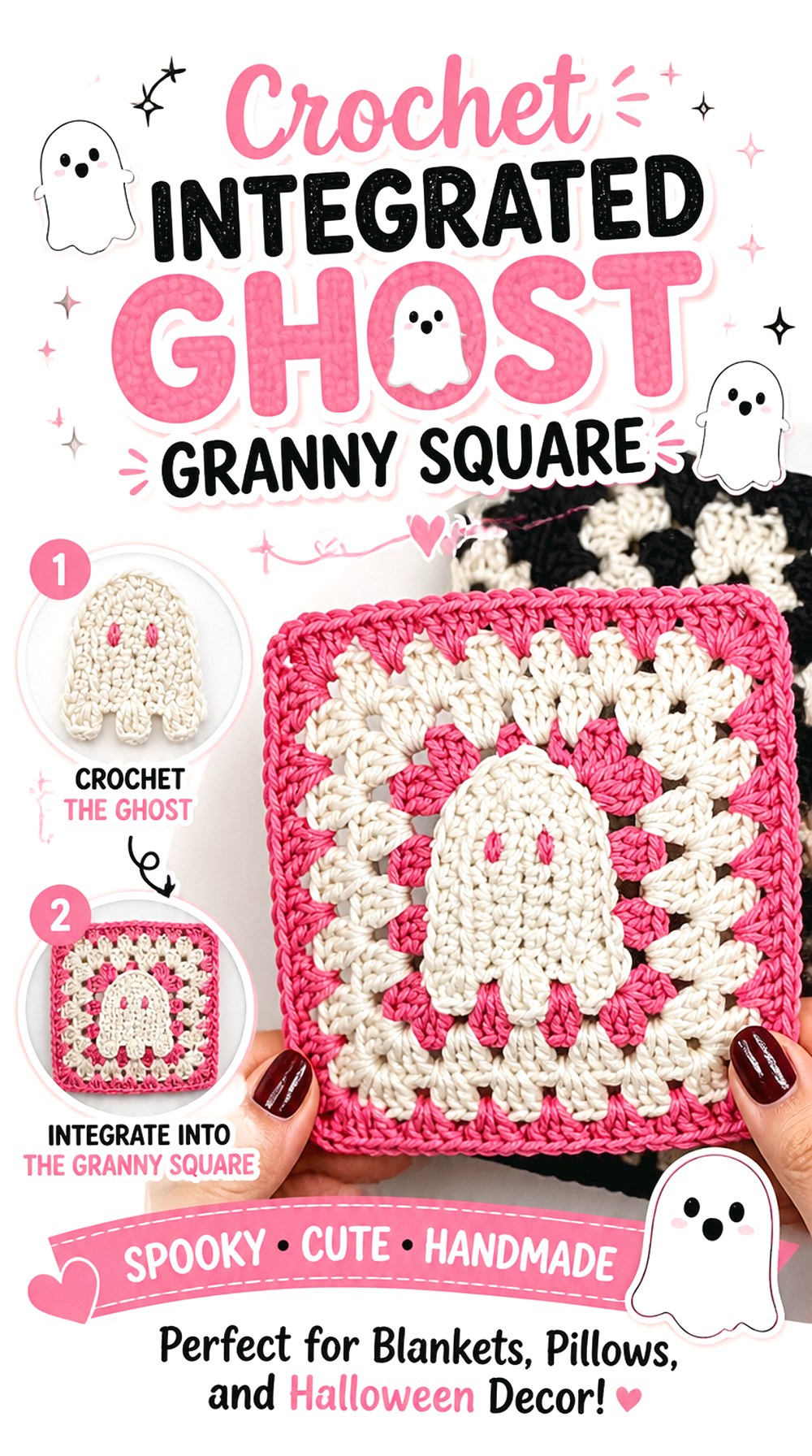
ElyseCrochets 💌 presents a ghost granny square that places the Halloween character directly inside a square format. That makes the project useful as a modular building block rather than a finished decoration with only one possible use. The creator notes potential uses including larger decor, clothing, and other projects, which makes compatibility with surrounding squares an important planning issue.
One square can stand alone as a sample or accent, but repeating it opens up many layout possibilities. Before planning a whole panel, check the blocked dimensions and edge structure so the motif fits the other components you intend to combine with it.
Block One Square Before Planning a Large Grid
A square’s usable planning size is more informative after the fabric has settled into the finishing treatment you intend to use. Make and evaluate a sample before calculating a large blanket, garment panel, or cushion layout.
For example, if your finished sample measures a certain width, multiplying that width by the number of squares gives only the approximate motif span. Joins, borders, seams, and intended ease still have to be considered separately. Treat the calculation as layout planning, not as a universal finished-size formula.
Ghost Direction Becomes Important When Squares Repeat
A clearly directional motif needs more layout attention than a neutral granny square. Before joining, place the complete set on a flat surface and check that every ghost faces the intended way.
You can also decide whether all motifs should align identically or whether deliberate rotation is part of the design. The key word is deliberate. Accidental changes in orientation are particularly noticeable when a simple character silhouette repeats across a larger panel.
Original Tutorial and Creator Credit
Creator: ElyseCrochets 💌
10. Crochet Solid Background Ghost Granny Square
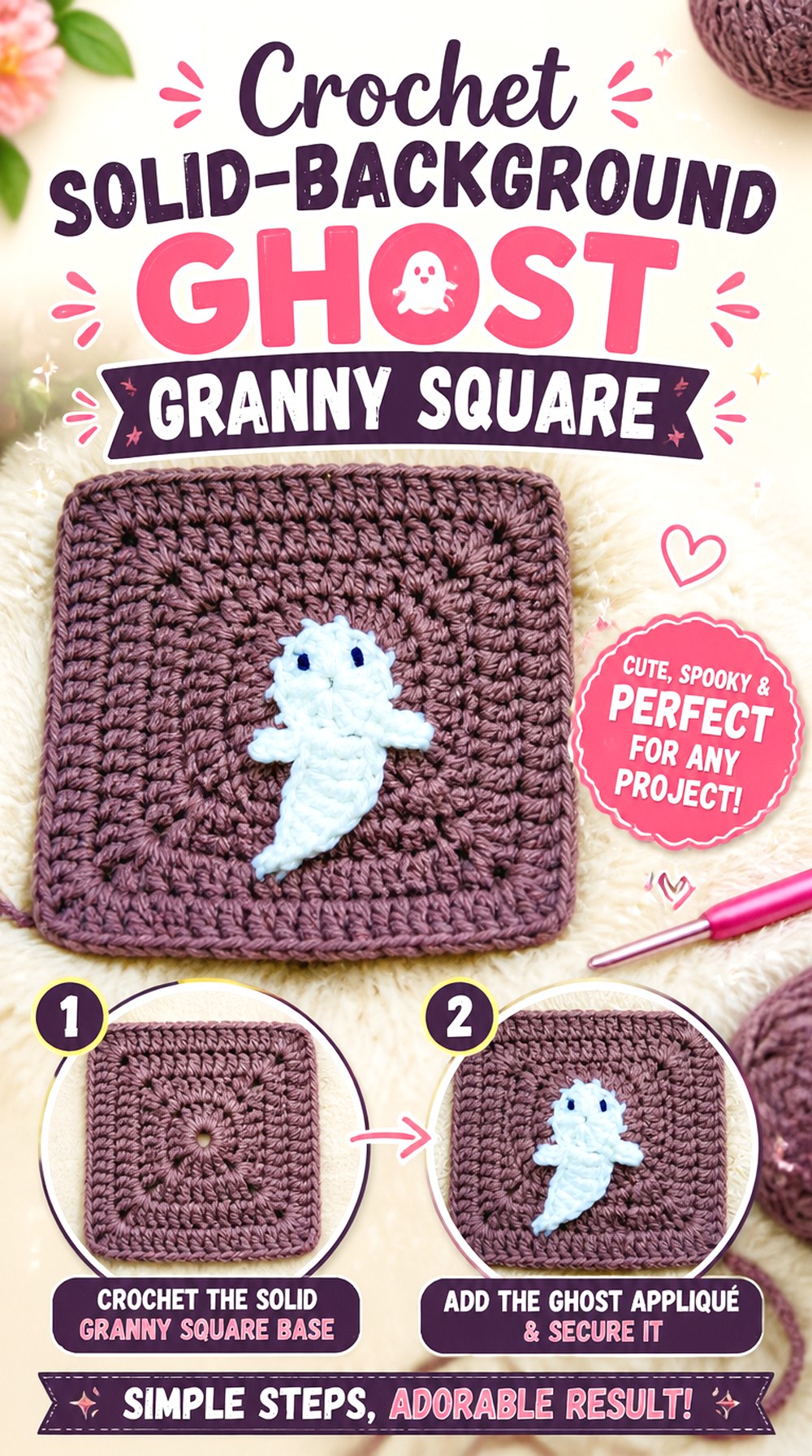
Raji’s Craft Hobby takes a different granny-square route by combining a ghost with a solid-looking square background. The creator specifically describes the project as a solid granny square without the open gaps associated with many classic granny-square designs. That difference can affect both appearance and how the motif mixes with other squares.
Choose this option when you want a more filled-in background around the ghost. It can work as an individual decorative square or as one unit in a larger project, but a denser square should be compared directly with any filler motif you intend to join beside it.
A Denser Background Changes the Visual Weight
Open and solid squares can have the same outer dimensions yet still feel very different once assembled. The more filled-in background gives the ghost a defined field around it and may make the motif read clearly against surrounding crochet.
When planning a mixed-square design, compare more than width. Look at flexibility, thickness, and how the edges respond when lightly stretched. A compatible join is easier to achieve when neighboring squares behave similarly rather than merely sharing an approximate measurement.
Match Borders Before Mixing Square Designs
Two ghost-square tutorials are not automatically interchangeable simply because both end in a square. Different border structures can place corners, stitch groups, or edge density differently.
If you want to combine this design with another motif, make one sample of each and compare their finished edges. If the dimensions differ, solve that compatibility issue before producing many repeats. Adding or altering a border can affect the final look, so treat it as a deliberate adaptation rather than a last-minute correction.
Original Tutorial and Creator Credit
Creator: Raji’s Craft Hobby
11. Crochet Granny Square Ghost Hanging Ornament
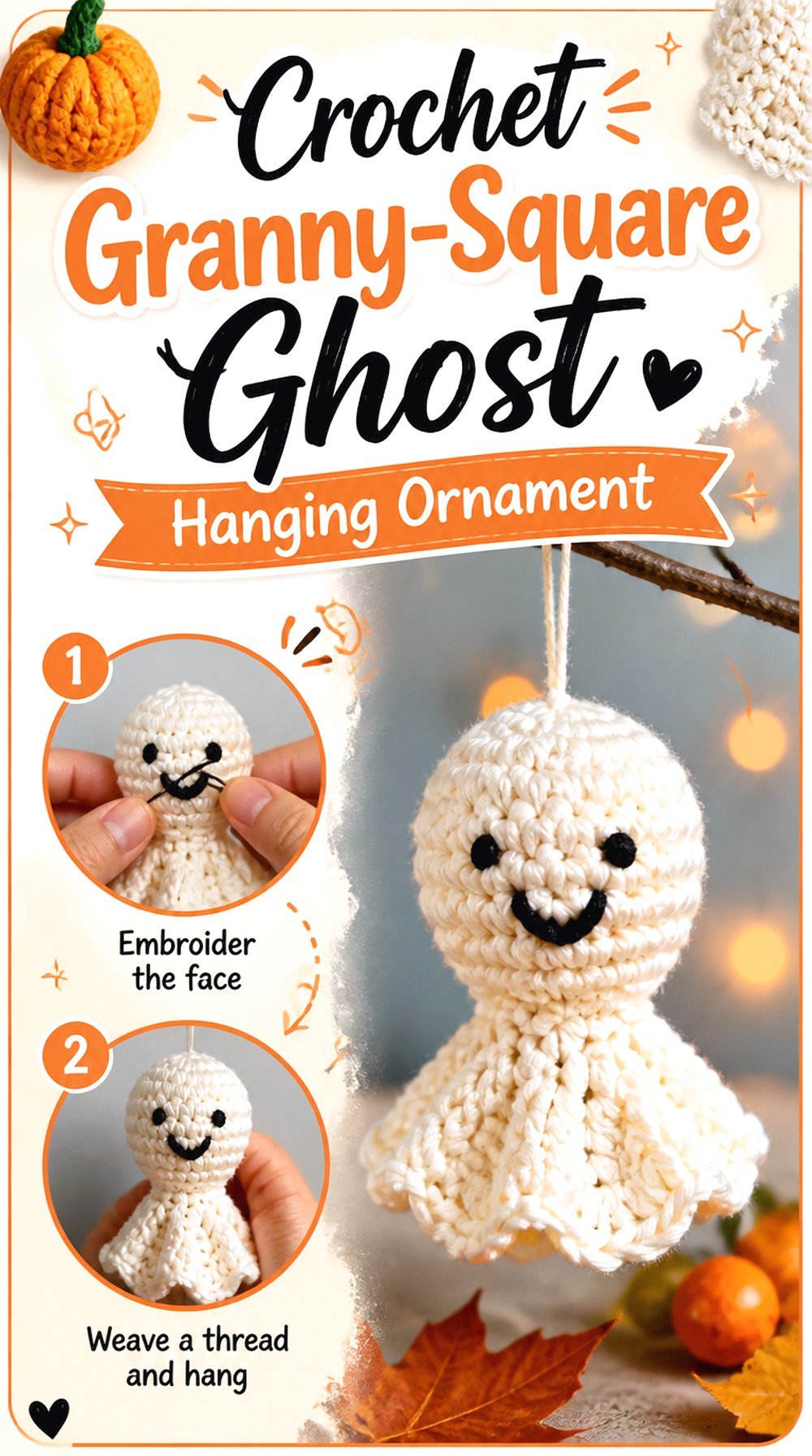
Jayda InStitches turns granny-square logic into a stand-alone ghost decoration rather than simply creating another square for a blanket. The result works as a small hanging Halloween piece with the recognizable geometry of a granny-square-based design.
That makes this an interesting middle ground between a motif and a three-dimensional ornament. It offers more presence than a flat appliqué without requiring the volume of a heavily stuffed plushie. Consider it when you want a small individual ghost for a seasonal hook, wall display, gift decoration, or similar hanging location.
The Square Structure Becomes Part of the Character
A conventional granny square usually disappears into a larger joined surface. Here, the square-based construction remains visually connected to the finished ghost, so edge shape and drape become design features rather than hidden joining details.
If you substitute yarn, assess whether the finished fabric still hangs cleanly. Excess stiffness can make a small suspended figure look rigid, while excessive softness can blur the intended outline. The best choice is the one that preserves the recognizable shape in the display position you plan to use.
Secure the Hanging Point Without Pulling the Top Out of Shape
A hanging ornament concentrates its weight at one location. Before attaching a long loop or decorative cord, hold the ghost from the intended top point and see whether that area stretches noticeably.
Keep the hanging method proportionate to the finished item, and avoid overly heavy hardware on a lightweight piece. For displays within reach of children or pets, cords and detachable decorations need appropriate placement and supervision rather than being treated as harmless simply because the object is made from yarn.
Original Tutorial and Creator Credit
Creator: Jayda InStitches
12. Crochet Raised Ghost Appliqué
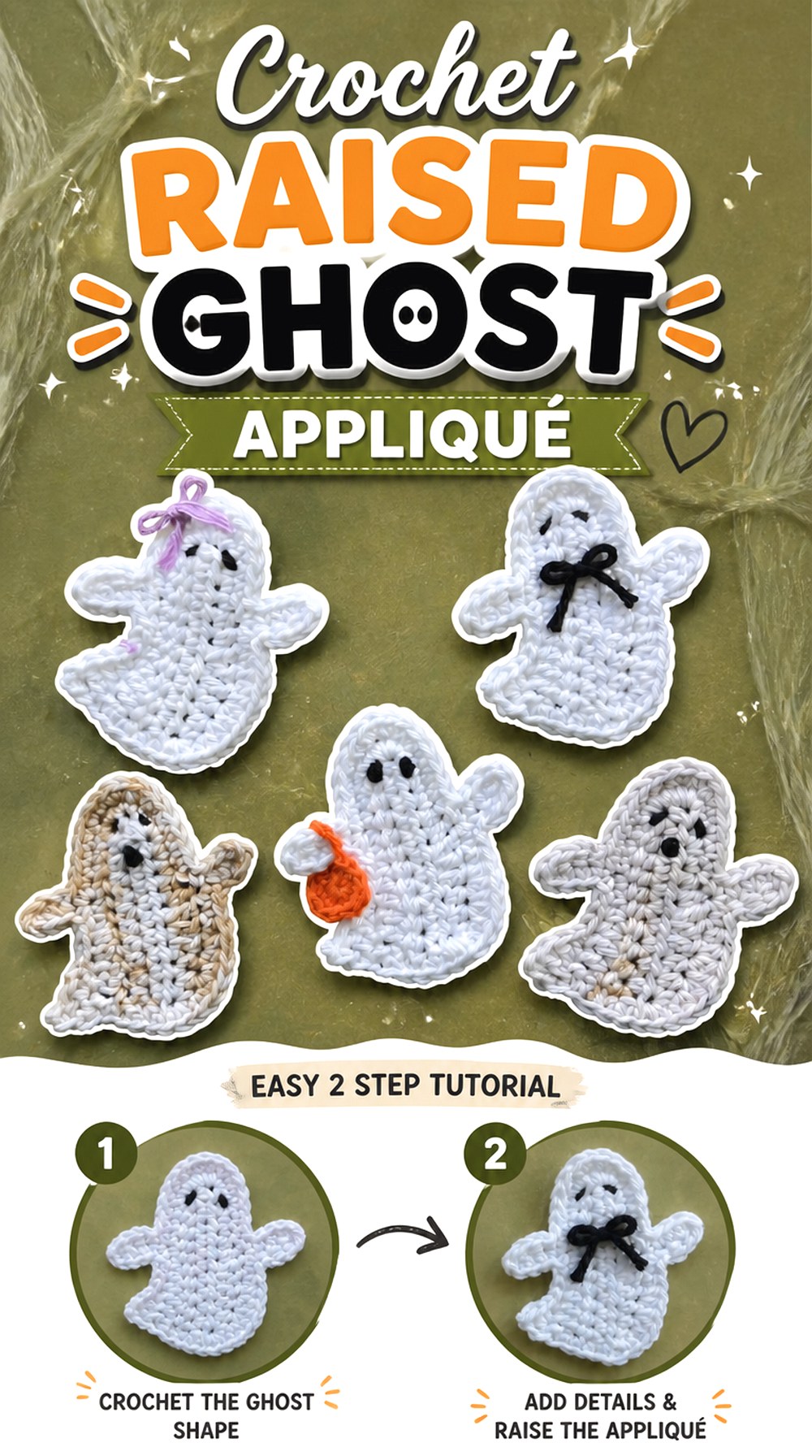
OhMeOhMyCrochet’s ghost appliqué is one of the most adaptable ideas in the collection because the finished piece can be attached to another crochet or fabric surface. The creator specifically presents it as an appliqué rather than a complete stuffed object, allowing the ghost to become an accent on a larger Halloween project.
This is a useful route if you already have a tote, cushion, square, garland concept, or other base that needs a seasonal detail. The important decision is where the appliqué will sit and how its weight and edge shape interact with that base.
Pin the Entire Shape Before Sewing It Down
An appliqué can look balanced when held loosely against a surface and then shift as the edges are attached. Position the complete ghost first and secure it temporarily at several points before permanent finishing.
This gives you a chance to check symmetry, orientation, and the amount of background visible around it. It is especially important on stretchier crochet fabric, where pulling the appliqué too tightly during attachment can distort the base and create ripples around the motif.
The Base Fabric Should Support the Extra Layer
Adding an appliqué creates a thicker area. On a sturdy tote or cushion that may be insignificant, while a very lightweight wearable or flexible accessory may respond differently.
Hold the appliqué against the intended project and let the fabric hang naturally before attaching it. If the base visibly sags or twists, a smaller or lighter motif may be more suitable. This simple check is more useful than assuming every flat crochet surface can support the same decoration equally well.
Original Tutorial and Creator Credit
Creator: OhMeOhMyCrochet
13. Crochet No Sew Ruffled Ghost Amigurumi
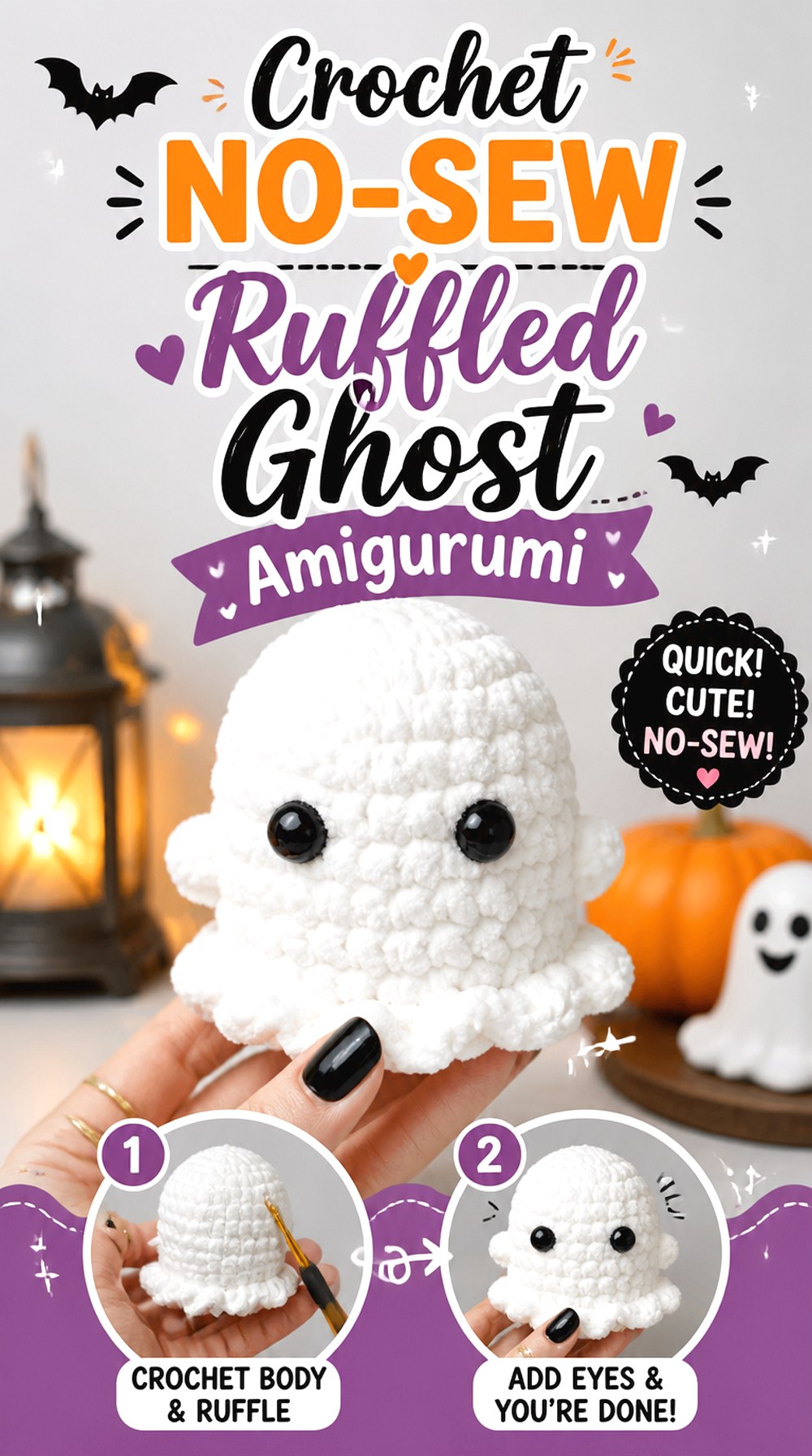
Rose and Lily Crochet’s miniature ghost takes the compact amigurumi route and uses a no-sew design. Its lower edge gives the character a flowing ghost-like shape, separating it visually from a simple round stuffed figure. The creator demonstrates the project with plush yarn and specifically cautions that safety eyes are not recommended for children younger than three.
This idea fits small shelf displays, Halloween groupings, or gift-style softies where you want a complete three-dimensional ghost without creating a larger pillow. Because stuffing sits directly behind the crochet fabric, stitch density and finishing are more functionally important here than on a flat motif.
Check for Stuffing Gaps Before Closing the Form
Plush yarn can make individual stitches harder to see, but the finished fabric still needs to contain the filling cleanly. Inspect the body while lightly stretching it under the amount of stuffing you actually intend to use.
If filling becomes visible, adding more stuffing usually makes the issue more obvious rather than solving it. Adjust the fabric or stuffing level based on the actual result. Yarn substitutions can change this balance, so do not assume the same hook-and-yarn behavior will transfer automatically.
Eye Choice Depends on the Recipient
The tutorial uses safety eyes but explicitly notes that they are not recommended for children under three. That warning matters if the ghost is intended as a gift rather than shelf decor.
For a recipient where detachable components are unsuitable, choose an age-appropriate alternative rather than simply following the decorative appearance of the sample. The same caution applies to any extra buttons, beads, or small accessories added during customization.
Let the Lower Edge Stay Visibly Ghostlike
The bottom silhouette is a major part of what separates this character from a generic stuffed ball. After stuffing, set the ghost on its intended display surface and check whether the lower edge still has a balanced shape.
Overhandling or compressing the base can change that outline. If you alter the fiber, compare how easily the edge holds its form before making several matching ghosts. A successful substitution should preserve both fabric coverage and the characteristic lower profile.
Original Tutorial and Creator Credit
Creator: Rose and Lily Crochet
14. Crochet Posable Sheet Standing Ghost
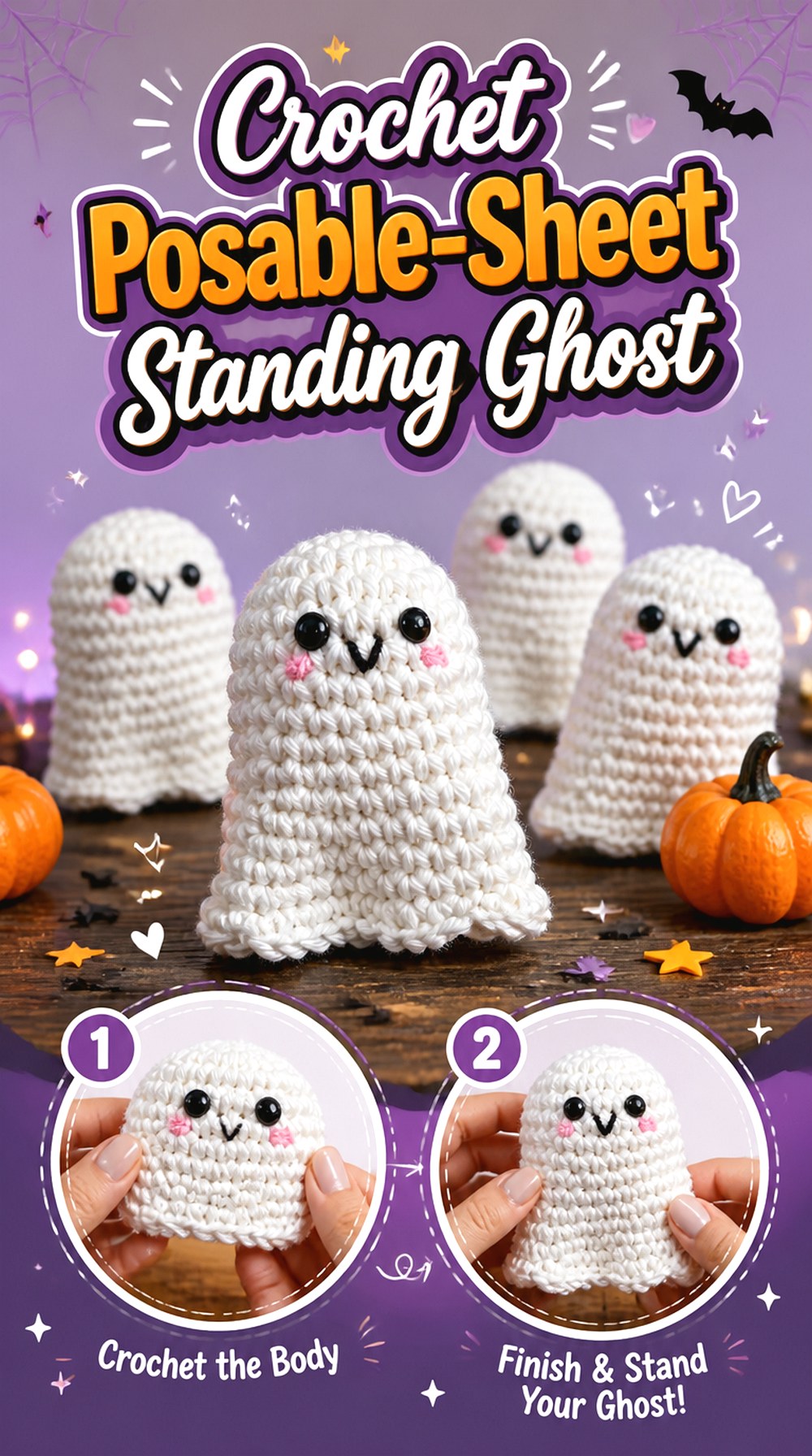
Hooked by Robin’s amigurumi ghost uses a draped, sheet-like outer form and is designed so the finished character can stand on its own. The creator also highlights the ability to shape the outer ghost layer, giving this project more sculptural control than a fixed rounded plush.
That makes it a strong choice for tabletop or shelf arrangements where the silhouette can be adjusted as part of the display. The creator also notes that the design can be adapted for hanging uses such as a keychain or garland, but its freestanding shape is what most clearly separates it from the flatter projects in this collection.
Drape Is Central to the Sheet-Ghost Silhouette
The outer layer needs enough movement to read as a draped ghost rather than a rigid shell. If you replace the demonstrated yarn, consider the behavior of the fabric instead of choosing only by color.
A heavier substitution may pull the lower portion downward, while a stiffer one can reduce the flowing outline. Make a small sample if the replacement differs substantially from the tutorial material. The goal is to understand its drape before investing in a complete character.
Check Stability on the Actual Display Surface
A freestanding decoration can behave differently on a smooth shelf, textured table runner, or soft mantel covering. After finishing, place it where you intend to display it and check whether the character remains upright without awkward leaning.
If you customize the ghost with additional accessories, repeat the check because added weight can alter the balance. Keeping the center of mass reasonably centered is more important for this project than it would be for a ghost designed only to hang.
Shaping Gives Each Finished Ghost a Different Pose
The tutorial’s shapeable outer form allows the lower sheet to contribute to the expression of the character. Use that flexibility intentionally rather than expecting every finished piece to settle into exactly the same curves.
This also makes the design interesting for a group display: similar ghosts can have slightly different silhouettes without relying only on color changes. When storing them, avoid crushing any shaped areas more firmly than the yarn can tolerate if you want to restore the same display easily next season.
Original Tutorial and Creator Credit
Creator: Hooked by Robin
15. Crochet Witch Hat Ghost Plushie
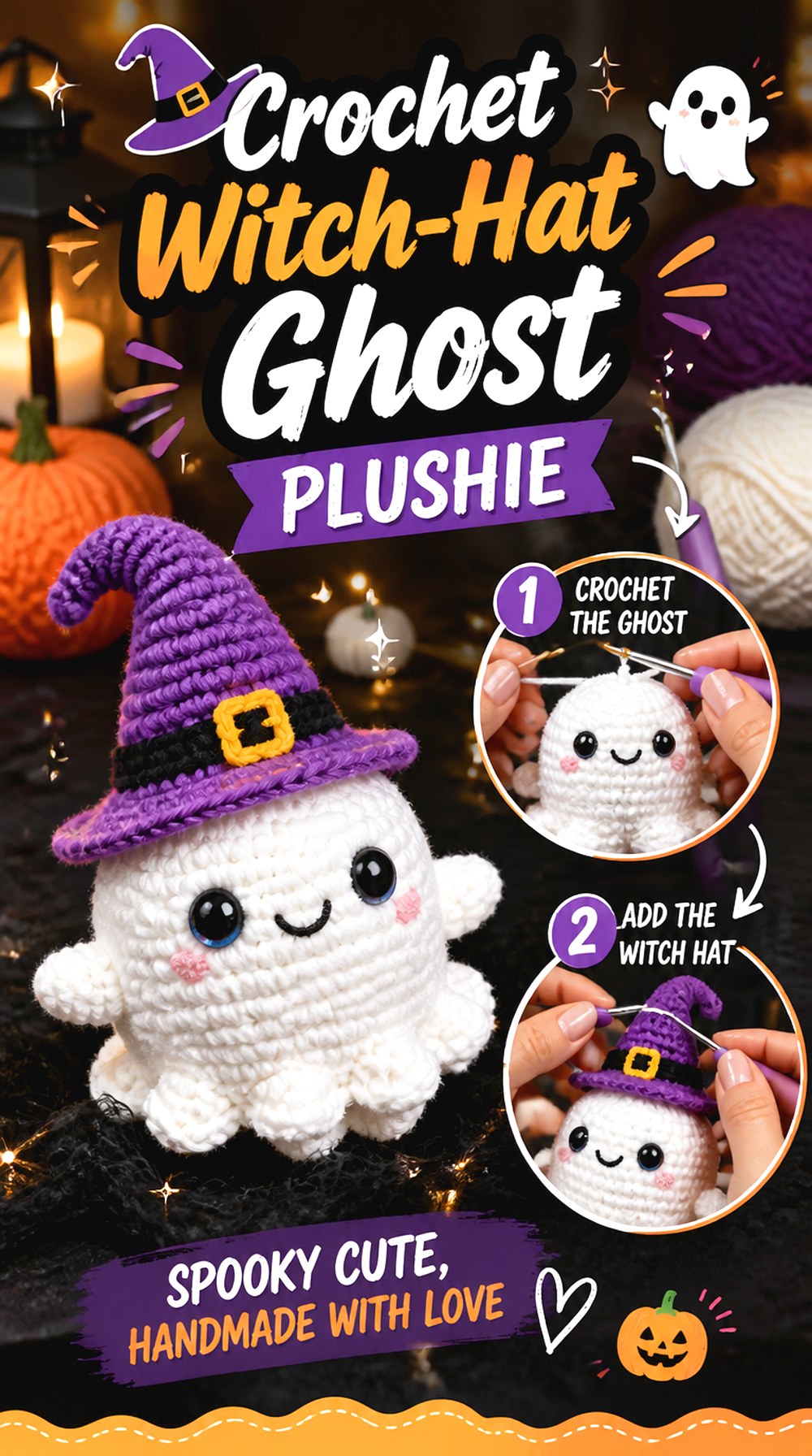
Annie Carraway Art’s ghost plushie tutorial adds costume-style personality to the basic Halloween ghost. The accompanying project material includes multiple ghost variations, and the video demonstrates witch-themed versions, making this a better fit for someone who wants a decorated character rather than a plain white ghost.
The plush yarn gives the concept a visibly soft, substantial appearance, while the hat introduces another shape that has to stay balanced against the body. This project works well as a shelf or tabletop character where the accessory can be seen clearly. It also offers room for color changes without reducing the project to color alone—the hat itself changes the silhouette.
The Hat Needs to Look Balanced With the Body
A hat that is technically attached can still look too heavy, too small, or off-center once the ghost is standing upright. Position it temporarily and view the character from the front and side before final attachment.
If you substitute substantially different yarn for the hat, compare its weight with the plush body. An accessory made in a much heavier fabric may pull the upper portion to one side. The finished balance matters more than matching a color palette perfectly.
Plush Yarn Can Hide Both Stitches and Mistakes
Soft blanket-style yarn creates the fuzzy surface associated with this version, but texture can make stitch identification and finishing less visually obvious while you work. Use the shape of the fabric as an additional checkpoint rather than depending only on being able to see every stitch clearly.
If you are new to the yarn, a small practice piece can help you understand its tension before starting the character. Avoid making unsupported assumptions that every chenille or blanket yarn behaves the same way.
Treat Costume Pieces as Real Attachments
A witch hat is not merely a color accent; it is an additional component that can be pulled or snagged. If the plushie will be handled rather than displayed, inspect attachment points accordingly.
For gifting, consider the recipient before adding any small detachable embellishments beyond what the tutorial demonstrates. A decorative shelf ghost and a soft object intended for a young child have different safety requirements, even if both start from the same crochet character concept.
Which Crochet Ghost Format Fits Your Halloween Plans?
| Project format | Strongest reason to choose it | Main checkpoint |
|---|---|---|
| Pillow or pillow cover | Larger seasonal statement | Shape, stuffing, or insert fit |
| Garland or hanging ghost | Decorates vertical or horizontal display space | Hanging balance and attachment |
| Bag, keychain, or charm | Combines Halloween styling with handling or use | Stretch and hardware security |
| Coaster, square, or appliqué | Flat, adaptable, easier-to-store format | Flatness, dimensions, and compatibility |
| Amigurumi or plushie | Three-dimensional character display | Fabric density, stuffing, and small-part safety |
The biggest distinction is between projects that must function and projects that only need to display well. A bag handle or keychain attachment receives repeated stress; a granny square needs to cooperate with neighboring motifs; a plush ghost depends on stuffing and fabric density; and a hanging decoration needs to look right under gravity. Choosing by those requirements first makes yarn color and character styling much easier decisions afterward.
Conclusion
These 15 crochet Halloween ghost ideas cover much more than one amigurumi shape. Choose the checkered or shaped pillow when you want a noticeable room accent, a garland or hanging ghost when vertical display space matters, and a coaster, appliqué, or granny square when compact storage and adaptability are priorities. The bag and small charms add function, while the final plush and amigurumi options create more dimensional characters.
Before substituting yarn or changing scale, consider what the project actually needs to do—lie flat, hang evenly, carry something, stand upright, or hold stuffing securely. Use the original tutorials linked with each idea for the creators’ exact construction details and demonstrations.
Frequently Asked Questions
Which crochet ghost ideas are easiest to store after Halloween?
Flat projects generally require less storage volume than permanently stuffed pieces. A ghost appliqué, coaster, granny square, or carefully packed garland can be easier to organize than a shaped pillow or bulky plushie. A pillow cover may also offer an advantage if its construction allows it to be stored separately from the insert. Whatever you choose, follow the care needs of the actual yarn and avoid folding embellishments in ways that permanently distort them.
Can I attach a crochet ghost appliqué to a bag or pillow?
Yes, provided the base can support the extra layer without sagging or puckering. Position the completed appliqué first, let the base hang or sit as it normally would, and check the proportions before permanent attachment. A stiff motif on a very soft fabric can affect drape, while pulling attachment stitches too tightly can distort the surrounding surface. If the item will be washed frequently, also make sure the fibers and care requirements are compatible.
How do I combine different ghost granny squares in one project?
Compare the finished, preferably blocked, dimensions before making a large batch. Equal outer width is a useful starting point, but also examine corner placement, edge structure, fabric density, and stretch. A solid-background ghost square may behave differently beside a more open motif even when both look similar on a ruler. Make one sample of each design and place them together before deciding whether an additional border or other adaptation is necessary.
Should I use the same yarn for ghost plushies and flat ghost decorations?
Not necessarily. A stuffed ghost needs fabric capable of containing filling and maintaining the intended form, while an appliqué or coaster places more emphasis on clean edges and flatness. Hanging ghosts introduce drape and weight as additional factors. If you substitute yarn, compare the behavior of a sample with the function of the finished item rather than choosing solely because the yarn has the right white or Halloween color.
Why can stuffing show through a crochet ghost?
Visible filling usually means the fabric opens enough under tension for the stuffing to appear between stitches. This may become more obvious as additional filling stretches the body. Yarn structure, hook choice, individual tension, and the particular fabric construction all contribute. Inspect a stuffed section under normal tension before closing the project. If you are following a creator’s tutorial, use their demonstrated materials as a reference point when evaluating substitutions.
Are safety eyes appropriate for crochet Halloween ghosts given to children?
That depends on the recipient and the specific product being used. In the Rose and Lily Crochet tutorial included above, the creator specifically states that the safety eyes used are not recommended for children under three. For projects intended for young children, evaluate age-appropriate alternatives and avoid assuming that a component called a “safety eye” is suitable in every situation. The same caution applies to buttons, beads, charms, and other small detachable embellishments.