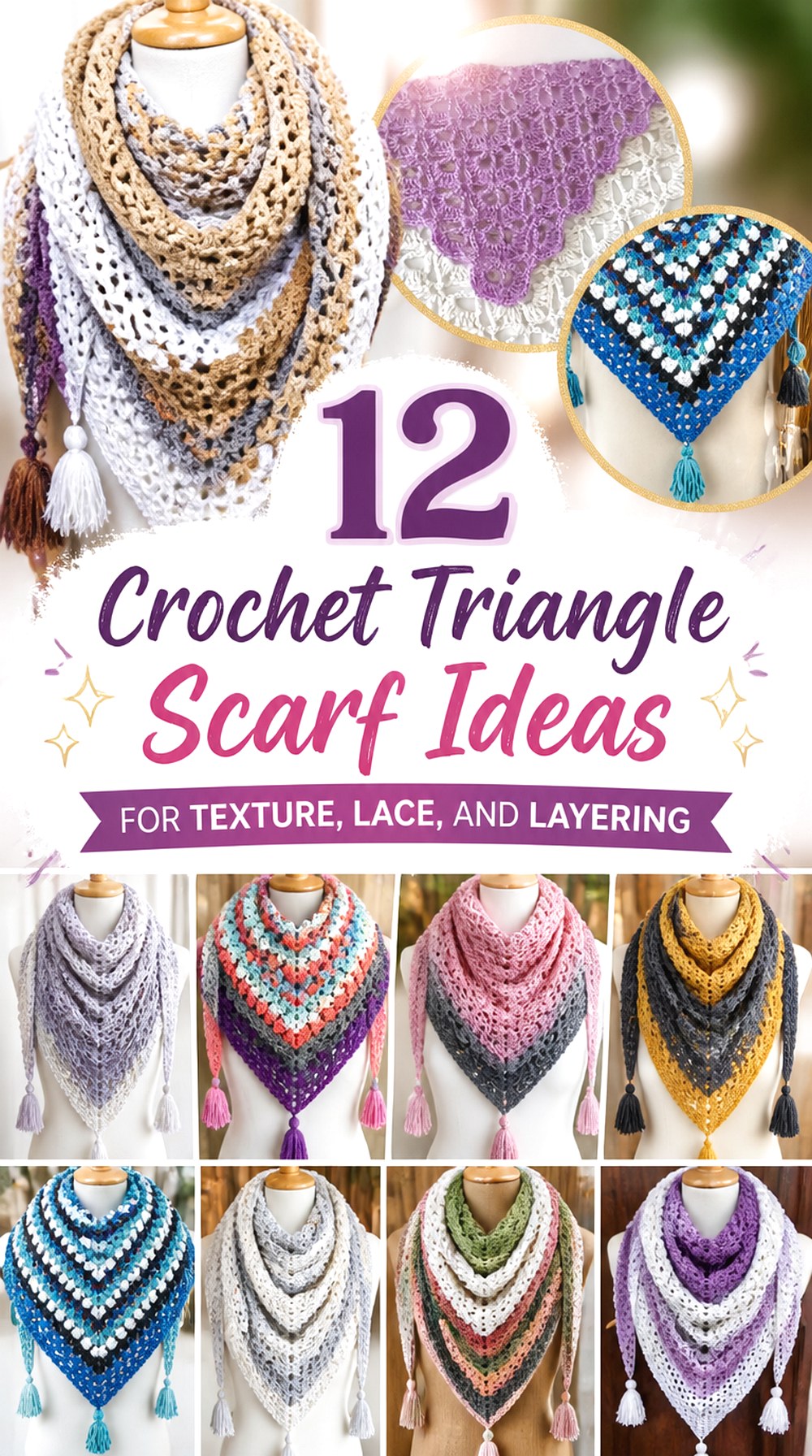

A crochet triangle scarf can be anything from a small bandana tied close to the neck to a generous shawl that covers the shoulders. The projects below show how much that familiar triangular outline can change once you alter the depth, stitch density, yarn weight, growth direction, edging, and intended way of wearing it.
This collection includes shallow textured scarves, open granny mesh, popcorn texture, lace, Tunisian crochet, bold color changes, V-stitches, and a compact bandana style. The goal is not simply to choose the prettiest finished piece. Compare how much coverage you want, whether you prefer structure or drape, where you want visual texture, and how much finishing you are comfortable doing. Each idea also points to an original creator tutorial for the exact construction details.
Quick List
- Crochet Open-Mesh Point-Up Triangle Scarf
- Crochet Shallow Ribbed Triangle Neck Scarf
- Crochet Popcorn-Texture Triangle Shawl Scarf
- Crochet Granny-Mesh Picot Triangle Scarf
- Crochet Lightweight Lace Triangle Wrap Scarf
- Crochet Tunisian Honeycomb Triangle Scarf
- Crochet Full-Drape Triangle Shawl Scarf
- Crochet Geometric Textured Triangle Scarf
- Crochet Stash-Stripe Triangle Gift Scarf
- Crochet Four-Color Granny Triangle Scarf
- Crochet Convertible Bandana Triangle Scarf
- Crochet Lightweight V-Stitch Triangle Scarf
Choose the Triangle Depth by How You Plan to Wear It
Triangle scarves with the same wingspan can feel very different around the body because the center depth controls where most of the fabric sits. A shallow triangle behaves more like a conventional neck scarf: the long ends do most of the wrapping while the center point adds interest without creating a large layer over the chest or back. A deeper triangle moves closer to shawl territory and provides more shoulder coverage.
Decide on the wearing style before assuming that “larger” is automatically better. For a front-point bandana look, check that the ends are long enough to tie or overlap comfortably. For shoulder coverage, pay more attention to center depth and wingspan together. If a tutorial does not state finished dimensions clearly, compare the creator’s finished piece with a scarf or shawl you already like before committing to a yarn purchase.
Yarn Choice Changes More Than the Warmth
Open mesh, V-stitches, lace, dense Tunisian fabric, and raised texture do not respond to yarn in the same way. A smooth yarn can make geometric stitches and ridges easier to see, while a highly textured or fuzzy yarn may soften those lines. Lighter yarn can help a deep triangle drape without becoming visually heavy; thicker yarn can turn even a relatively simple fabric into a substantial winter accessory.
Also consider how much the scarf will be folded around the neck. A yarn that feels comfortable in a flat swatch may feel much warmer once several layers overlap. When substituting yarn, make a small sample and judge the fabric rather than relying only on the yarn label. Check stitch definition, flexibility, thickness, and whether the open spaces or texture still look the way you want.
Construction Direction Affects When You Make Size Decisions
Some triangle scarves grow from a small point outward, while others begin around the top center and expand toward the lower point. A shallow scarf may also grow from one end before narrowing toward the other. These differences matter because they change when you can assess the final proportions.
With an adjustable expanding triangle, you can often stop when the dimensions suit your intended wearing style, provided the tutorial allows that modification. Bottom-up designs may make the final wingspan increasingly obvious as the rows widen. Directional color yarn also behaves differently depending on construction: stripes may run across the full triangle, radiate from the center, or appear in increasingly long bands. Before changing the size, check whether the tutorial includes a border or finishing repeat that depends on ending at a particular place.
1. Crochet Open Mesh Point Up Triangle Scarf

This triangle scarf is a good reference for readers who want an accessory that looks substantial without relying on dense fabric. Naztazia’s original version uses a mesh-like fabric and is worked from the lower point toward the wider top edge, so its size can be adjusted as the triangle expands. The creator presents it as both a scarf and shawl, making the concept useful when you want one piece that can shift between neck wrapping and wider draping.
The lighter visual density also separates this idea from the granny-cluster and Tunisian options later in the list.
Mesh Makes a Larger Scarf Feel Less Visually Heavy
Open spaces reduce the amount of solid crochet covering the body, which can make a generous triangle look lighter than a similarly sized dense scarf. That does not mean every mesh fabric will have identical drape, so judge a sample with your chosen yarn. A soft, flexible result suits loose wrapping; a firmer sample may hold the triangle shape more prominently when worn with the point in front.
Growing From the Point Makes Width Easy to Monitor
Because the triangle expands as the work progresses, you can periodically spread it flat and evaluate both center depth and top-edge width. Do not judge only by how long the sides appear on the hook. Try positioning the unfinished piece around your shoulders or neck once it is large enough to handle, then decide whether you need more wrapping room before completing the final edging.
2. Crochet Shallow Ribbed Triangle Neck Scarf
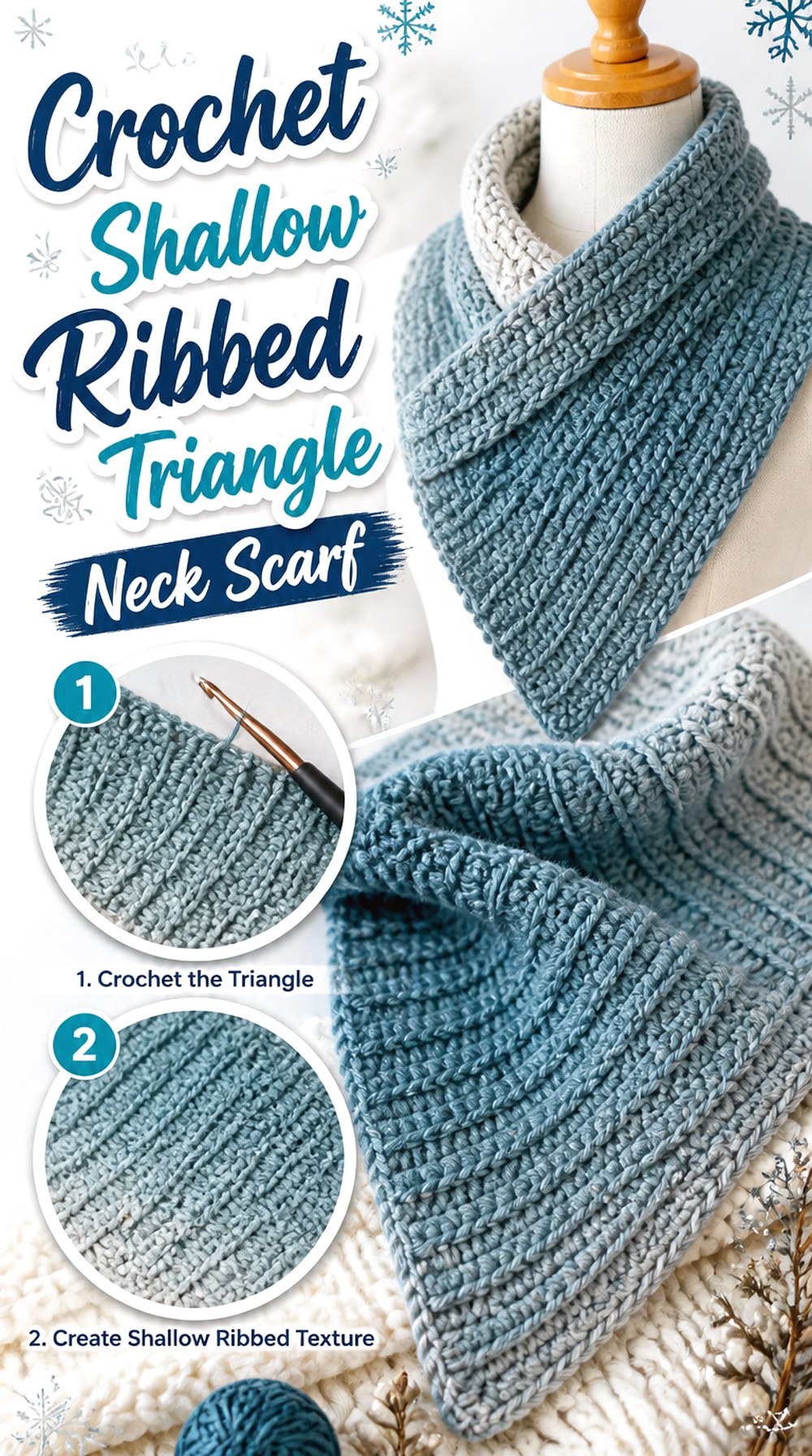
A shallow triangle is worth considering when you like the pointed look but do not want a deep shawl hanging over the torso. Rich Textures Crochet’s Winter Hues design uses back-loop half double crochet texture and forms a long, comparatively narrow triangle with optional tassels. The creator’s published sample is approximately 11 inches at its deepest point, emphasizing how different this silhouette is from a full shoulder wrap.
The result works more like a textured neck scarf with a triangular center than a conventional oversized shawl, making it a particularly useful contrast in this roundup.
A Shallow Center Keeps the Bulk Near the Neck
The long, narrow proportions put more fabric into the scarf ends and less into the center point. That can be practical if you normally wear scarves under a coat or prefer wrapping the ends around the neck rather than spreading a triangle across the shoulders. Before adapting the length, check that shortening the scarf will still leave enough end length for the way you intend to wrap or knot it.
Back-Loop Texture Needs Enough Definition to Show
Ribbed texture is part of the visual identity here, so a yarn substitution should preserve enough stitch definition for those horizontal lines to remain visible. A very fuzzy yarn may blur the ridges, while an extremely stiff yarn could make a shallow scarf sit awkwardly rather than bend around the neck. Swatch several rows and fold the fabric over itself; that quick check tells you more than viewing it flat.
Original Tutorial and Creator Credit
Creator: Rich Textures Crochet
3. Crochet Popcorn Texture Triangle Shawl Scarf
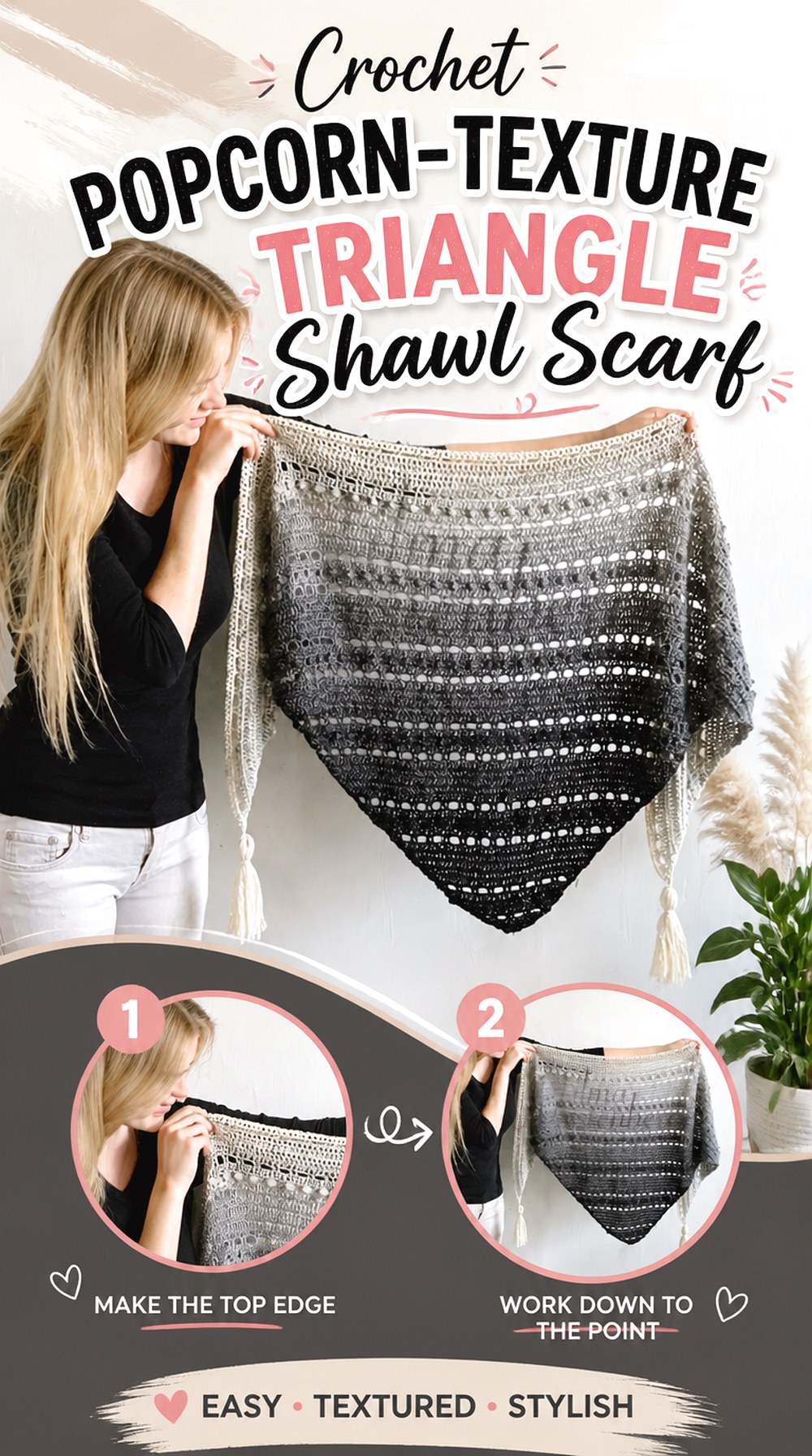
Raised popcorn texture changes the character of a simple triangular silhouette without requiring the entire fabric to be densely textured. Wilma Westenberg’s Pop-Up Shawl is worked from the bottom upward and combines predominantly plain crochet with open sections and a row of popcorn stitches. The original project uses a gradient yarn cake, which lets color changes and texture travel across the widening triangle together.
This is a useful direction when you want a scarf that still has broad areas of visual calm but gains a stronger tactile detail than a plain mesh or granny triangle.
Popcorn Rows Add Weight and Shadow
Raised stitches project farther from the surface than flat stitch rows. Even when used selectively, they create small shadows and can make those sections feel more substantial. If your yarn already has a lot of halo or texture, make a sample first to see whether the popcorn definition remains visible. A smoother yarn generally makes raised details easier to distinguish from the surrounding fabric.
Bottom-Up Growth Changes the Size Checkpoint
The first rows are small, while later rows span most of the final width. That means the project can feel as though it grows quickly at first and more slowly near the end. When deciding on size, spread the work flat rather than judging progress by row count. The relationship between width and depth matters more for wearability than simply adding a predetermined number of rows.
Gradient Yarn Turns Texture Into Visible Bands
A gradual color change can emphasize the widening geometry because each later color section occupies a longer path across the triangle. If you substitute solid yarn, the popcorn and open sections become the main visual rhythm instead. With a highly variegated yarn, check whether frequent color shifts compete with the raised texture rather than supporting it.
Original Tutorial and Creator Credit
Creator: Wilma Westenberg
4. Crochet Granny Mesh Picot Triangle Scarf

This design combines recognizable granny-style clusters with airier mesh sections, so the triangle does not read as one uninterrupted block of cluster stitches. Hooked by Robin’s tutorial also adds a picot border around all three edges of the finished shawl. The creator describes the finished fabric as airy and lightweight and demonstrates both the body pattern and the full border in the video.
Choose this direction if you enjoy the rhythm and familiarity of granny crochet but want stronger contrast between open and denser sections.
Mesh Bands Break Up Granny-Cluster Density
Alternating stitch densities can make a large triangle feel visually lighter than a continuous granny fabric. The open sections also create clearer horizontal divisions, which can be emphasized further by self-striping yarn. When substituting yarn, look for a combination that allows the cluster sections to remain distinct without making the mesh so loose that the finished piece loses its intended shape.
A Picot Border Gives Every Edge a Defined Finish
Because the decorative edging travels around the entire scarf, it affects more than the lower point. It creates a consistent frame along the top edge and both sloping sides. If you alter the size, leave enough yarn for that finishing stage rather than assuming the body should consume everything available.
Check the Border Before Changing the Final Scale
Decorative borders can change the final dimensions and the way an edge hangs. Before deciding that the body is exactly the right size, review the creator’s border section and consider how much visual presence it adds. For a smaller neck scarf, a strong edge can become proportionally more noticeable than it is on the larger tutorial sample.
Original Tutorial and Creator Credit
Creator: Hooked by Robin
5. Crochet Lightweight Lace Triangle Wrap Scarf
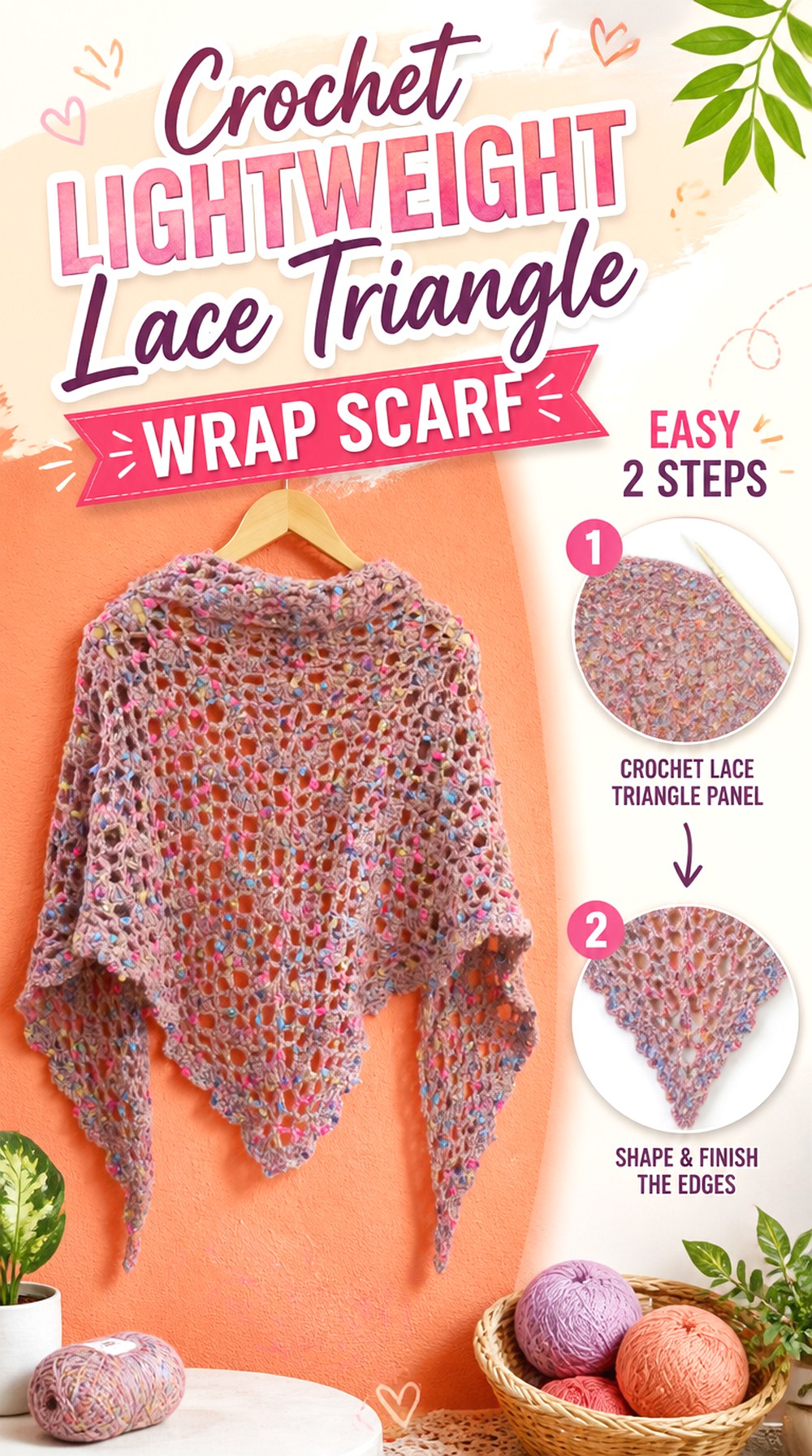
Sirin’s Crochet demonstrates a triangular lace shawl in a tutorial specifically presented for newer crocheters. The main appeal for this roundup is the open lace appearance: instead of relying on bulky yarn or raised texture, the scarf gets its visual interest from negative space and the repeated pattern across the triangle.
This type of project can bridge seasons more easily than a dense winter scarf, depending on the fiber you select. It also creates a dressier surface than the shallow ribbed or chunky geometric options, making it useful when the scarf is intended as a visible accessory rather than primarily as insulation.
Lace Benefits From a Careful Finishing Check
Open crochet can look compressed while it is still being worked. Before judging the final appearance, check the creator’s finishing guidance and the care requirements of your yarn. Blocking can help open stitch patterns display more clearly, but the appropriate method depends on the fiber. Do not apply heat or aggressive stretching without knowing what your chosen yarn can safely tolerate.
Choose Yarn That Keeps the Open Pattern Readable
A lace motif needs enough contrast between yarn and empty space for the design to show. Very fuzzy fibers can visually fill small openings, while stiff yarn may prevent the scarf from falling softly around the shoulders. Make a sample large enough to include several repeats, then hang it rather than evaluating it only on a table.
Original Tutorial and Creator Credit
Creator: Sirin’s Crochet
6. Crochet Tunisian Honeycomb Triangle Scarf

Tunisian crochet brings a noticeably different fabric to a triangle scarf. TL Yarn Crafts’ Lamia Wrap combines Tunisian simple stitch with honeycomb texture and grows from a very small beginning into an asymmetrical triangular wrap. The original tutorial uses a corded Tunisian hook and demonstrates the shaping and two contrasting stitch textures.
This is the strongest departure from conventional row-by-row crochet in the collection. Consider it when learning a different hook technique is part of the appeal and you want a scarf with a more substantial, highly defined surface.
Tunisian Fabric Changes the Drape Equation
Tunisian crochet can create a fuller fabric than very open lace or granny mesh, so yarn and hook choice strongly influence whether the triangle feels flexible or firm. If you substitute yarn, make a generous swatch and let it hang from one corner. You are looking for a fabric that bends and folds the way you want without losing the stitch definition that makes the honeycomb section distinctive.
A Corded Hook Is Part of the Project Planning
Unlike a small conventional crochet hook, the Tunisian tool must accommodate many active loops as the triangle becomes larger. Confirm the hook style and cord arrangement demonstrated in the tutorial before starting. If you already own Tunisian hooks, check that the setup works comfortably with the size of project you intend to make rather than assuming any hook from the set will be equally convenient.
Honeycomb Texture Reads Best Without Too Much Competition
The alternating Tunisian textures already create plenty of surface variation. A solid or softly tonal yarn can keep those stitch changes easy to see, while an extremely busy colorway may make them less obvious. If color is your priority, compare a small swatch in two yarn options before committing to the full wrap.
Original Tutorial and Creator Credit
Creator: TL Yarn Crafts
7. Crochet Full Drape Triangle Shawl Scarf

Ophelia Talks Crochet’s Gold Hill Shawl represents the classic full triangle at the more generous end of the scarf-to-shawl spectrum. The tutorial focuses on creating a wearable triangular shawl with enough area to drape across the upper body.
Use this idea as a comparison point if your real goal is shoulder coverage rather than a narrow neck accessory. A larger triangle gives you more styling options—across the back, over one shoulder, or with the point toward the front—but it also means that yarn weight and finished depth have a much bigger effect on comfort.
Full Triangles Offer More Than One Wearing Orientation
A generous triangle can be worn traditionally across the shoulders or rotated so the point sits toward the front. Those orientations distribute fabric differently around the neck. When evaluating the tutorial, pay attention to how the finished piece sits on the creator rather than assuming a single styling method. If you prefer the front-point look, check that the wings appear long enough for your preferred amount of overlap.
Verify the Finished Depth Before Choosing a Heavier Yarn
A deep shawl creates considerably more fabric than a shallow scarf. Substituting a much heavier yarn can therefore change the overall weight and warmth more dramatically than it would on a small bandana. If the tutorial’s measurements or material details differ from your plan, make a sample and compare its weight and flexibility before buying enough yarn for the entire project.
Original Tutorial and Creator Credit
Creator: Ophelia Talks Crochet
8. Crochet Geometric Textured Triangle Scarf

Bag-O-Day Crochet’s tutorial produces a triangle scarf or shawl built around a pronounced textured-triangle surface. The creator presents the project as suitable for either men or women and notes that viewers can choose their own yarn, making the geometry rather than a particular color palette the central feature.
This idea is a strong alternative to lace when you want the triangle itself to remain visually bold. Instead of relying on large openings, it uses surface texture to create interest, so stitch definition and yarn character become especially important decisions.
Textured Triangles Need Clear Stitch Definition
When the pattern’s visual identity comes from geometric texture, the yarn should let raised and recessed areas remain easy to distinguish. A smooth yarn can emphasize crisp lines, while a fuzzy yarn may soften them into a less graphic surface. Test a small section under normal room lighting; if you need to study it closely to find the texture, the finished scarf may not show the geometry as strongly as you expect.
Yarn Swaps Can Change Weight Faster Than Appearance
The creator allows flexibility in yarn choice, but that does not mean every yarn produces the same wearing experience. A thicker or denser substitute may make a deep scarf significantly heavier around the neck. Compare not only how the texture looks but also how a folded sample feels when doubled, because that is closer to the way a triangle scarf is usually worn.
A Restrained Palette Lets the Geometry Lead
Multiple colors can work, but strong stitch texture already gives the surface plenty of movement. If you want the triangular patterning to be the main feature, solids, tonal yarns, or slower color transitions are easier to read than a rapidly changing variegated yarn. Choose the yarn based on whether color or texture should be noticed first.
Original Tutorial and Creator Credit
Creator: Bag-O-Day Crochet
9. Crochet Stash Stripe Triangle Gift Scarf

Fiber Flux’s Quick Gift Triangle Shawl was designed around using leftover yarn and building a cozy striped triangle. The project uses an open granny-style structure, which gives multiple yarn colors room to form clear bands without creating an entirely solid fabric.
This makes the idea practical for a deliberately coordinated stash project: instead of choosing a single gradient cake, you decide where color changes happen. The result can look planned rather than random if you repeat colors, balance lights and darks, or reserve one color for a final section.
Scrap Stripes Work Better With a Color Rule
You do not need identical amounts of every leftover yarn, but some form of repetition keeps the scarf from feeling accidental. You might alternate a neutral between brighter colors, repeat a short sequence, or arrange colors from light to dark. Lay the yarns beside one another before starting so you can spot combinations that merge visually or overpower the rest.
Open Granny Spacing Keeps Color Changes Distinct
The spaces between stitch groups separate neighboring yarn bands, so each stripe gets a little visual breathing room. If you replace the original yarns, confirm that they are compatible enough in thickness to keep the fabric even. A noticeably thinner leftover can pull a section inward, while a much thicker one may create a ridge.
Let the Gift Recipient Determine the Final Scale
A gift scarf does not have to become a full shoulder shawl. If the construction allows size adjustment, decide whether the recipient usually wears compact neck scarves, large wraps, or something between the two. Final size also changes yarn demand, which matters when the entire concept is based on using limited leftovers.
Original Tutorial and Creator Credit
Creator: Fiber Flux
10. Crochet Four Color Granny Triangle Scarf

MJ’s Off The Hook Designs uses a classic granny-stitch triangle as the base for the Forest Trail Shawl, then makes color placement a major part of the finished appearance. The published design uses four colors and optional tassel finishing, creating a more deliberate striped composition than a single-color granny shawl.
This is a good project to compare with the stash-stripe scarf above. Both use color and granny-style fabric, but this version is better suited to readers who want an intentional limited palette rather than an assortment of leftovers.
Four Colors Make the Construction Lines Easy to Read
Color changes can emphasize the widening triangle and make each new section clearly visible. Before choosing shades, decide whether you want strong contrast or a quieter blend. High contrast makes every stripe distinct; neighboring tonal colors create a softer transition while still showing the overall shape.
Frequent Color Changes Create a Finishing Decision
A multi-color shawl can generate more yarn ends than a single-color version. Review how the tutorial handles color transitions and decide whether you are comfortable finishing ends as you work or reserving that task for later. Leaving every end until the very end can turn an otherwise finished scarf into a surprisingly large finishing job.
Tassels Should Match the Scarf’s Visual Weight
The published design includes tassels, but decorative finishing is also a scale decision. A large, saturated triangle can visually support substantial tassels more easily than a small neck scarf. If you resize the project, hold a temporary bundle of yarn at the corner before permanently attaching anything and check whether the proportion still looks balanced.
Original Tutorial and Creator Credit
Creator: MJ’s Off The Hook Designs
11. Crochet Convertible Bandana Triangle Scarf
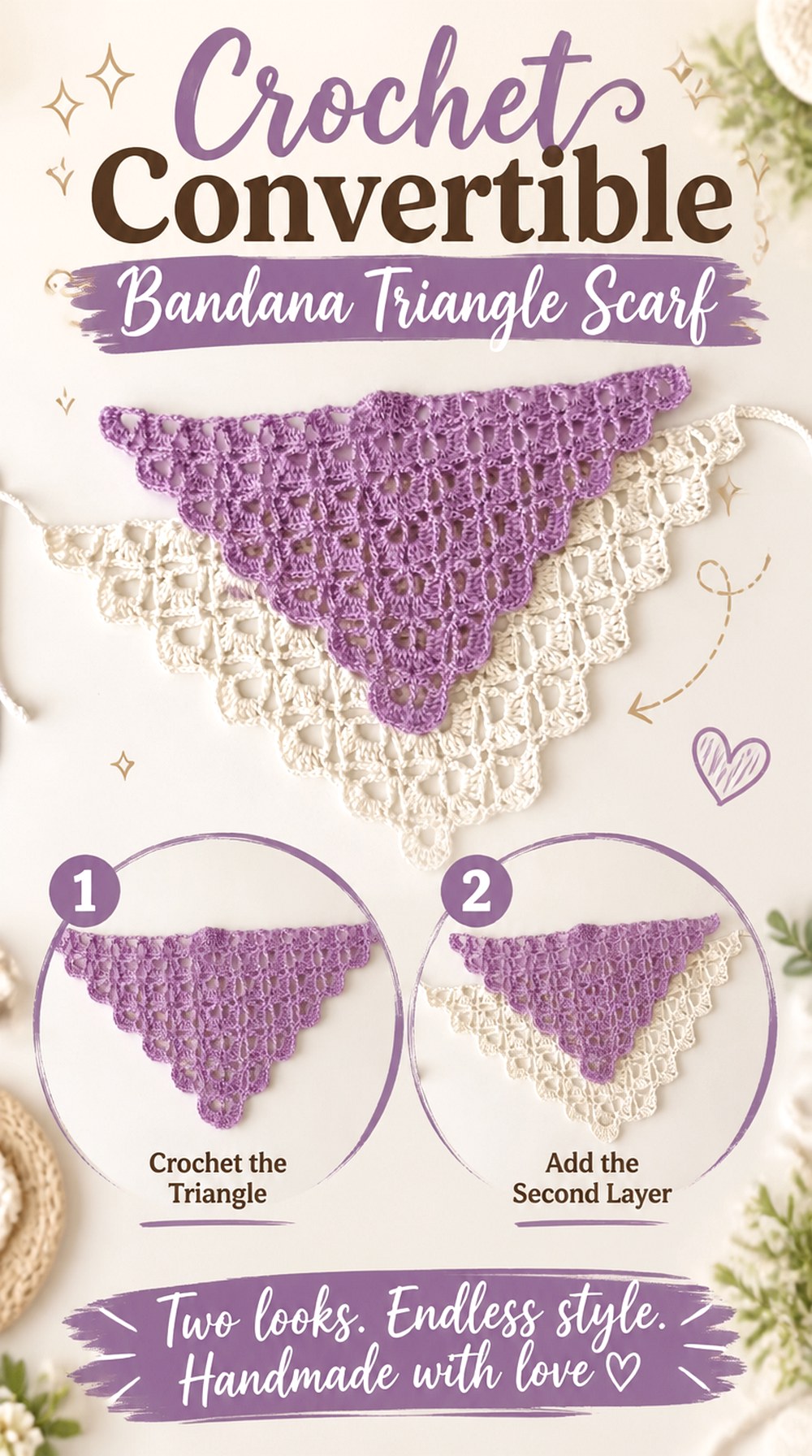
A crochet bandana uses the triangle in a much smaller format. Tuğba Kahcevioğlu’s tutorial presents the finished project as a multi-use piece that can be worn as a hair bandana or a neck scarf, making it distinctly different from the shoulder-covering shawls in this list.
This compact scale is useful when you want a quick styling accessory rather than significant warmth. It also changes the sizing priorities: the center triangle only needs enough depth for the intended look, while the outer edges or ends must provide enough room for secure, comfortable tying.
Bandana Scale Is About Tying Room, Not Shoulder Coverage
Do not evaluate this project by shawl-sizing logic. A bandana can have a relatively small center panel and still work well if the ends reach comfortably around the head or neck. Before finishing, test the piece in the exact orientation you intend to wear it and make sure the tie area does not need to stretch excessively to meet.
Hair Wear and Neck Wear Need Different Fiber Priorities
For a hair bandana, consider how the yarn feels against the hairline and whether the fabric grips or slides. For a neck scarf, softness and flexibility may matter more. If you want the same piece to do both jobs, use your swatch to test direct skin contact as well as knotting. Avoid assuming that a fiber comfortable in a larger shawl will automatically feel equally good when tied firmly.
Original Tutorial and Creator Credit
Creator: Tuğba Kahcevioğlu
12. Crochet Lightweight V Stitch Triangle Scarf

The final idea uses repeated V-stitches to create a light, regularly spaced triangle. Crochet For You’s tutorial presents a one-row-repeat V-stitch shawl made with lightweight yarn and two colors, so the construction creates both an open fabric and a clear repeating rhythm.
This project sits between mesh and lace: the openings are organized into an easy-to-see geometric grid rather than an elaborate motif. It is a useful choice when you want the scarf to remain flexible and airy but prefer a more consistent repeated structure than the mixed stitch sections found in some of the earlier designs.
V-Stitches Create a Repeating Airy Grid
The repeated open units distribute negative space throughout the triangle rather than concentrating it in occasional lace bands. That makes yarn thickness especially important. If your substitute is much heavier, the spaces may appear smaller and the fabric can become more substantial. Make a sample and judge the proportion of yarn to open space rather than trying to match appearance by color alone.
Two-Color Contrast Can Highlight the Triangle’s Growth
Using two colors gives you a straightforward way to emphasize different sections without managing a large palette. Strong contrast makes each change obvious, while related shades keep attention on the stitch pattern. Before changing colors, consider where the scarf is most visible when worn; a prominent contrast band near the outer edge can act almost like a border.
Lightweight Yarn Helps Preserve Flexibility
A large triangle contains a considerable amount of fabric even when the stitch pattern is open. Lighter yarn can help the finished scarf fold and wrap without feeling as bulky as a dense winter version. If you want to substitute a heavier yarn, test how several layers feel together rather than evaluating only one flat thickness.
Which Crochet Triangle Scarf Style Fits Your Goal?
| If your priority is… | Compare these ideas | Why |
|---|---|---|
| Minimal bulk around the neck | #2 and #11 | The shallow scarf and bandana keep the center triangle much smaller than a full shawl. |
| Airy fabric and visible open space | #1, #4, #5, and #12 | These rely on mesh, lace, or repeated openings rather than a fully dense surface. |
| Strong tactile texture | #3, #6, and #8 | Popcorn stitches, Tunisian honeycomb, and geometric texture make the fabric itself the focal point. |
| Color planning | #9 and #10 | One encourages leftover stripes; the other uses a controlled four-color palette. |
| Maximum shoulder coverage | #7 | Its full triangular proportions are closer to a traditional shawl than a compact neck scarf. |
| Learning a different construction style | #6 | Tunisian crochet changes both the tool setup and the character of the finished fabric. |
Conclusion
The most useful way to choose among these crochet triangle scarf ideas is to decide where you want the fabric to sit. For a compact neck accessory, start with the shallow ribbed scarf or bandana. Choose mesh, lace, or V-stitches when drape and open space matter more than dense warmth. Popcorn, geometric texture, and Tunisian honeycomb create a stronger surface, while the striped granny options put more emphasis on color planning.
Once you have chosen the shape and fabric style, make a swatch before changing yarn weight or fiber. That small check can prevent a scarf from becoming much heavier, stiffer, or less defined than expected. Use the original tutorials near each idea for the creators’ exact construction and finishing details.
Frequently Asked Questions
How do I decide between a crochet triangle scarf and a full triangle shawl?
Focus on center depth and intended coverage rather than the project name alone. A shallow triangle can have long ends for wrapping while adding very little fabric over the chest. A full shawl has substantially more depth and can spread across the shoulders. Look at finished measurements when the creator provides them, then compare those dimensions with a scarf or shawl you already wear comfortably.
Can I make a triangle shawl tutorial smaller and wear it as a scarf?
Sometimes, but confirm how the construction and border work before stopping early. An expanding triangle with a repeat that can end at different sizes is easier to adapt than a design whose edging or stitch sequence requires a specific stopping point. Also check the end length: a smaller center triangle may look right, but the wings still need enough length for your preferred wrapping or tying method.
Which stitch style gives a crochet triangle scarf the most drape?
Drape depends on the combined effect of yarn fiber, yarn thickness, hook size, stitch density, and finished size, so no single stitch guarantees it. Open mesh, lace, and V-stitches can create a lighter-looking fabric, while dense Tunisian or raised texture can feel more substantial. Swatch with the actual yarn and let the sample hang from a corner before deciding whether it has the flexibility you want.
Should I block a crochet triangle scarf?
Blocking can help straighten edges, even out the triangle, and open lace or mesh, but the correct method depends on the fiber. Check the yarn label and the creator’s finishing information first. Some fibers respond well to wet blocking, while others need different handling. Avoid applying high heat simply because you want the triangle to become flatter; inappropriate heat can permanently change some synthetic yarns.
How can I keep a crochet triangle scarf from feeling too bulky around my neck?
Start with shape before changing stitches. A shallow triangle or bandana naturally places less material at the center than a deep shawl. You can also compare lighter yarns and more open fabrics, but remember that several wrapped layers can still become warm. Test the unfinished scarf around your neck once it is large enough to handle so you can judge thickness before adding unnecessary size.
What should I check before substituting yarn in a triangle scarf tutorial?
Compare more than the printed yarn-weight category. Crochet a sample and examine stitch definition, thickness, flexibility, open-space size, and how the fabric hangs. Then consider the total project scale: changing to a substantially heavier yarn on a large shawl can increase both warmth and overall weight. If you want to match the creator’s finished dimensions closely, also verify the tutorial’s gauge and sizing information before continuing.