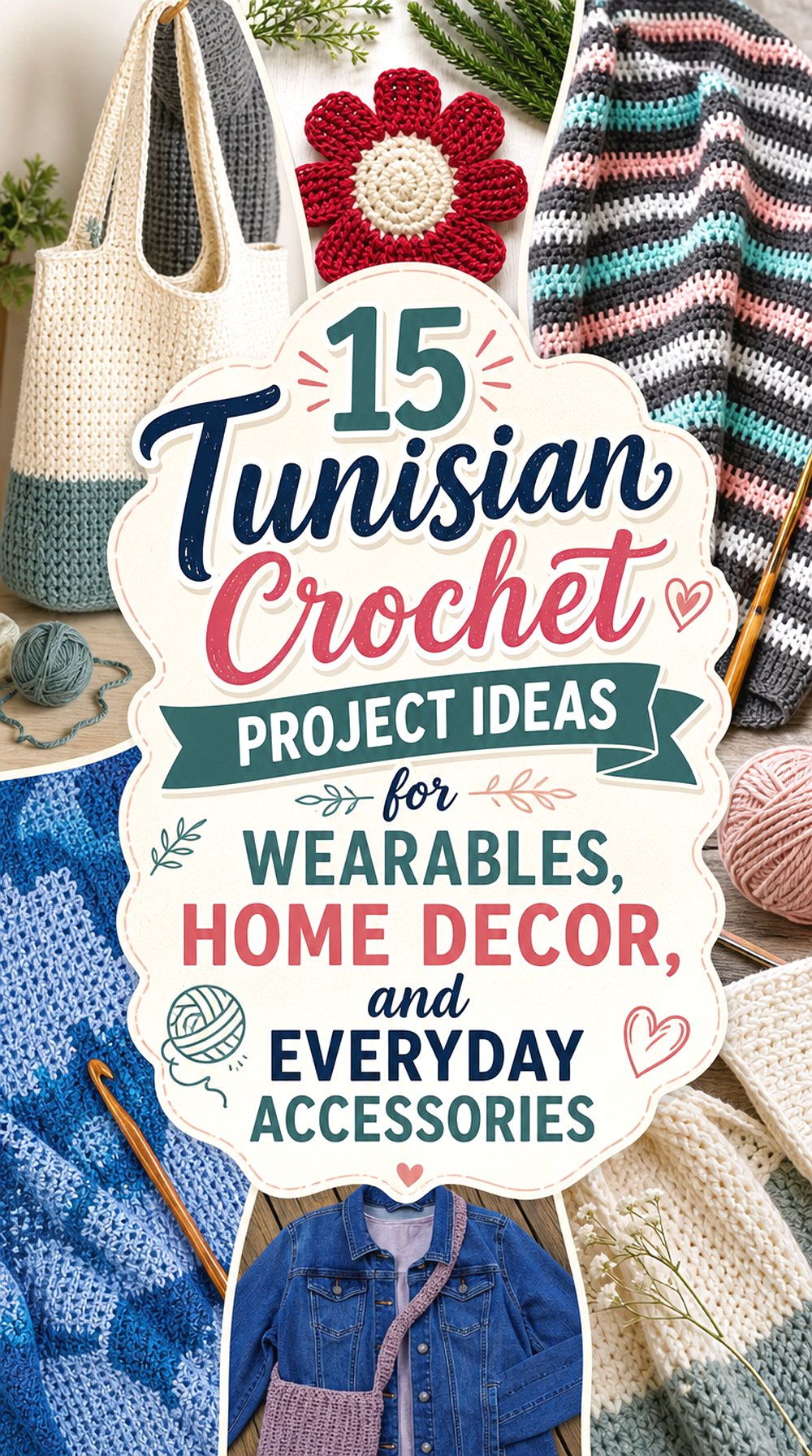
15 Tunisian Crochet Project Ideas for Wearables, Home Decor, and Everyday Accessories

Tunisian crochet can move in several useful directions, from small accessories to larger home pieces and wearable layers. This collection brings together projects that show that range clearly: bags with different carrying styles, kitchen and table pieces, cozy accessories, and garments that need more fit planning.
The ideas below are not meant to replace the original tutorials. They help readers compare the finished project type, think about practical details, and decide which source is worth opening first. Some projects are compact enough for focused practice, while others need more planning around size, shape, finishing, or everyday use.
Quick List
- Crochet Chunky Tunisian Tote Bag
- Crochet Tunisian Crossbody Phone Pouch
- Crochet Tunisian Drawstring Mini Pouch
- Crochet Tunisian Square Storage Basket
- Crochet Tunisian Full Stitch Throw Blanket
- Crochet Tunisian Long Scarf
- Crochet Tunisian Ribbed Cowl
- Crochet Tunisian Everyday Headband
- Crochet Tunisian Honeycomb Beanie
- Crochet Tunisian Fingerless Gloves
- Crochet Tunisian Cozy Sweater
- Crochet Tunisian Simple Stitch Vest
- Crochet Tunisian Entrelac Coaster
- Crochet Tunisian Simple Stitch Placemat
- Crochet Tunisian Flower Accent
What to Compare Before Choosing a Tunisian Crochet Project
A Tunisian crochet project can feel very different depending on its size and purpose. Small pieces like coasters, flowers, and pouches let readers focus on shape, edges, and texture without committing to a large item. Accessories such as scarves, cowls, gloves, and headbands bring fit, stretch, and comfort into the decision. Bags and baskets need more attention to openings, handles, storage use, and structure.
Larger projects, especially blankets and garments, deserve a slower review before supplies are chosen. Readers should check whether the creator provides measurements, a written guide, size notes, joining details, or clear finishing views. The best starting choice is usually the one that matches both the finished item needed and the amount of planning the reader wants to do.
1. Crochet Chunky Tunisian Tote Bag
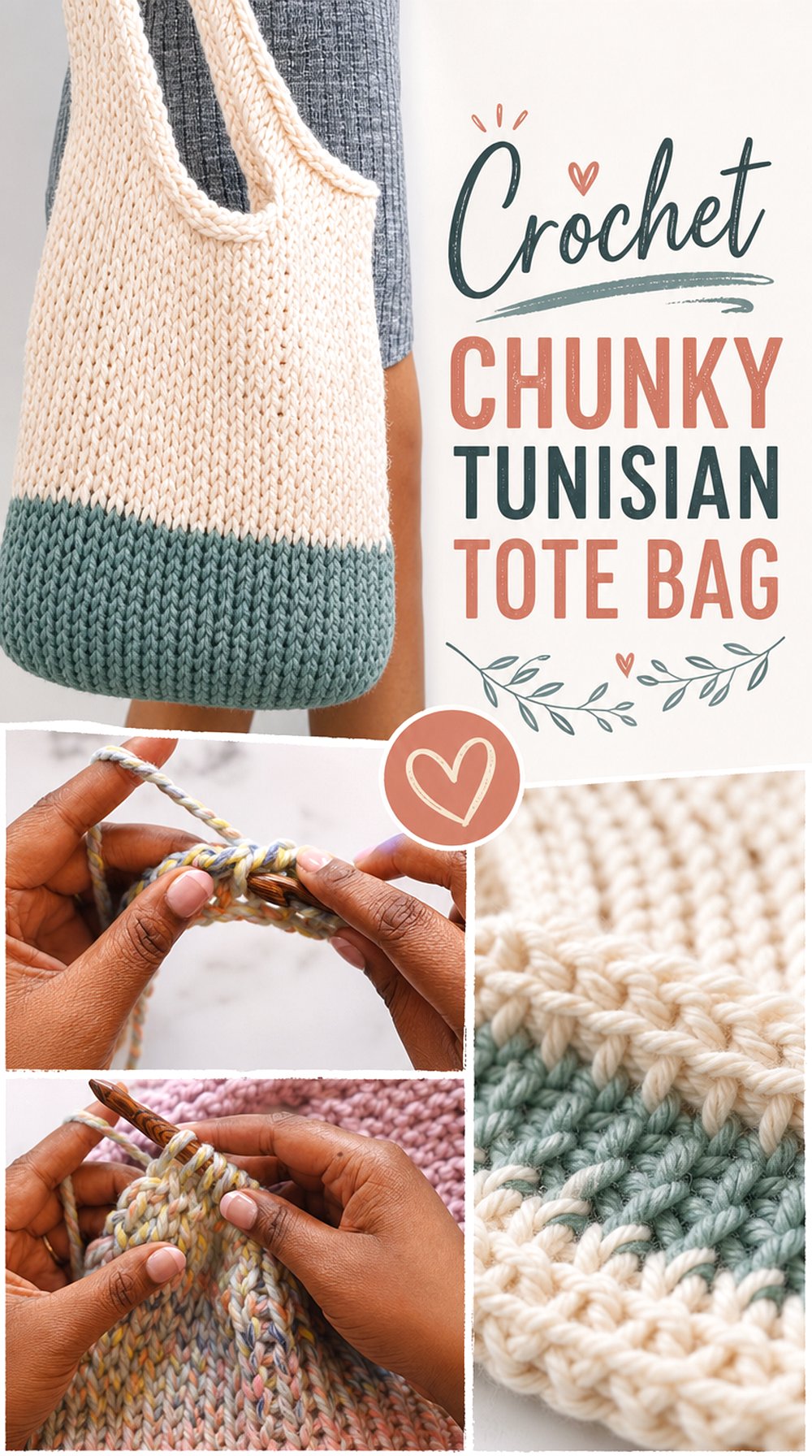
A chunky tote is a useful way to see Tunisian crochet as a finished everyday accessory rather than only a stitch sample. This version has a defined bag shape with built-in handles, so it sits apart from the smaller pouches and soft wearables in this list. The finished look is simple enough to show the dense Tunisian texture clearly, while the larger form gives readers something practical to compare with shoulder bags or storage baskets.
Because a tote is meant to carry items, the most important points are size, handle placement, and how the sides are finished. Readers planning daily use should look closely at the final shape before choosing supplies.
The Handle Shape Drives the Use
The handles are a major part of this tote’s design, not an afterthought. Their placement affects how the bag is held, how the top edge behaves, and whether the finished piece feels more like a hand tote or a casual carryall. Before starting, readers should compare the handle opening with the way they normally carry a bag and check whether the source gives enough visual guidance for finishing that area neatly.
Structure Matters More Than Color Here
The chunky body gives this tote a stronger visual presence than the smaller bag projects in the collection. That structure is part of the appeal, but readers should still avoid assuming it will hold every type of item without stretching or changing shape. A closer look at the finished sides, bottom area, and seaming will help readers decide whether this is better for light daily carry, gifting, or decorative storage.
Supplies Are Worth Reviewing First
This project uses a larger format than most small Tunisian practice pieces, so supply planning matters. Readers should review the creator’s material list before buying yarn or hooks, especially because the finished look depends on a bulky, solid texture. It is also useful to note whether blocking, finishing tools, or extra setup steps are included so the final tote has the clean shape shown in the source.
Creator: TL Yarn Crafts
2. Crochet Tunisian Crossbody Phone Pouch
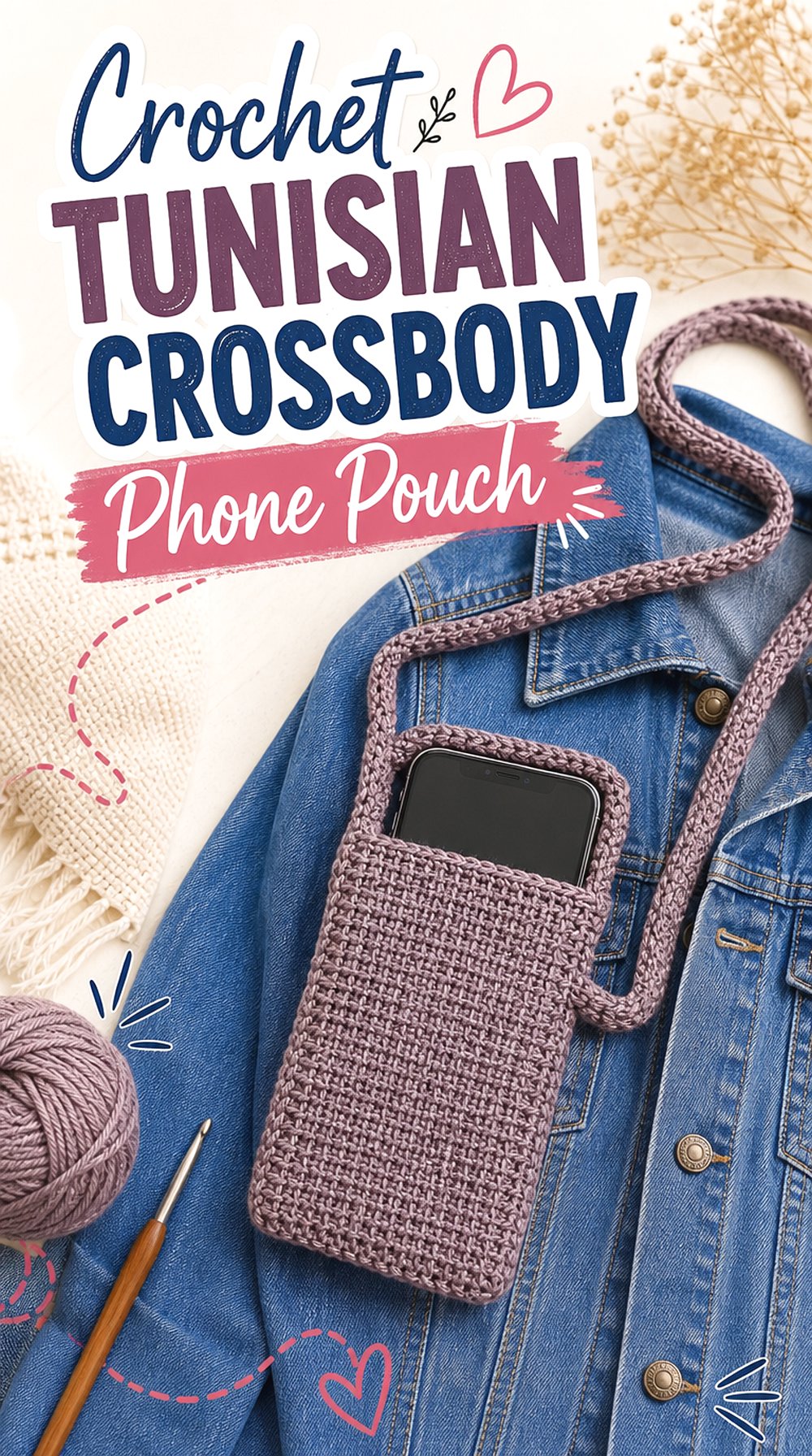
A crossbody phone pouch gives Tunisian crochet a more compact, hands-free purpose. Unlike the chunky tote, this project is built around a smaller item and a longer carrying style. The narrow pouch shape makes it useful for readers who want a project focused on front and back panels, strap placement, and a controlled finished size.
This kind of pouch is especially worth considering when the goal is light carry rather than storage. The finished piece should be judged by whether it suits the intended phone or small essentials, not by general bag capacity.
Phone Fit Comes First
A phone pouch needs a closer size check than a decorative bag. Readers should compare the finished shape with the device or item they actually want to carry and look for any measurement information supplied by the creator. Since phone sizes vary widely, it is better to verify the usable interior space before relying on the project for everyday use.
Strap Length Changes the Finished Purpose
The crossbody strap is what separates this project from a plain pouch. A longer strap may make it useful for hands-free carrying, while a shorter or fixed strap may suit only certain body heights or wearing preferences. Readers should watch how the strap sits in the finished view and check whether the tutorial gives enough information to adjust or confirm the length.
Look Closely at the Top Opening
For a phone pouch, the opening matters because small items can shift while being carried. The source title identifies it as a crossbody phone pouch, but readers should still check the top edge, closure situation, and how the phone appears to sit inside. It is safest to treat it as a light accessory unless the creator clearly confirms more secure carrying details.
Creator: Yarn Geek
3. Crochet Tunisian Drawstring Mini Pouch
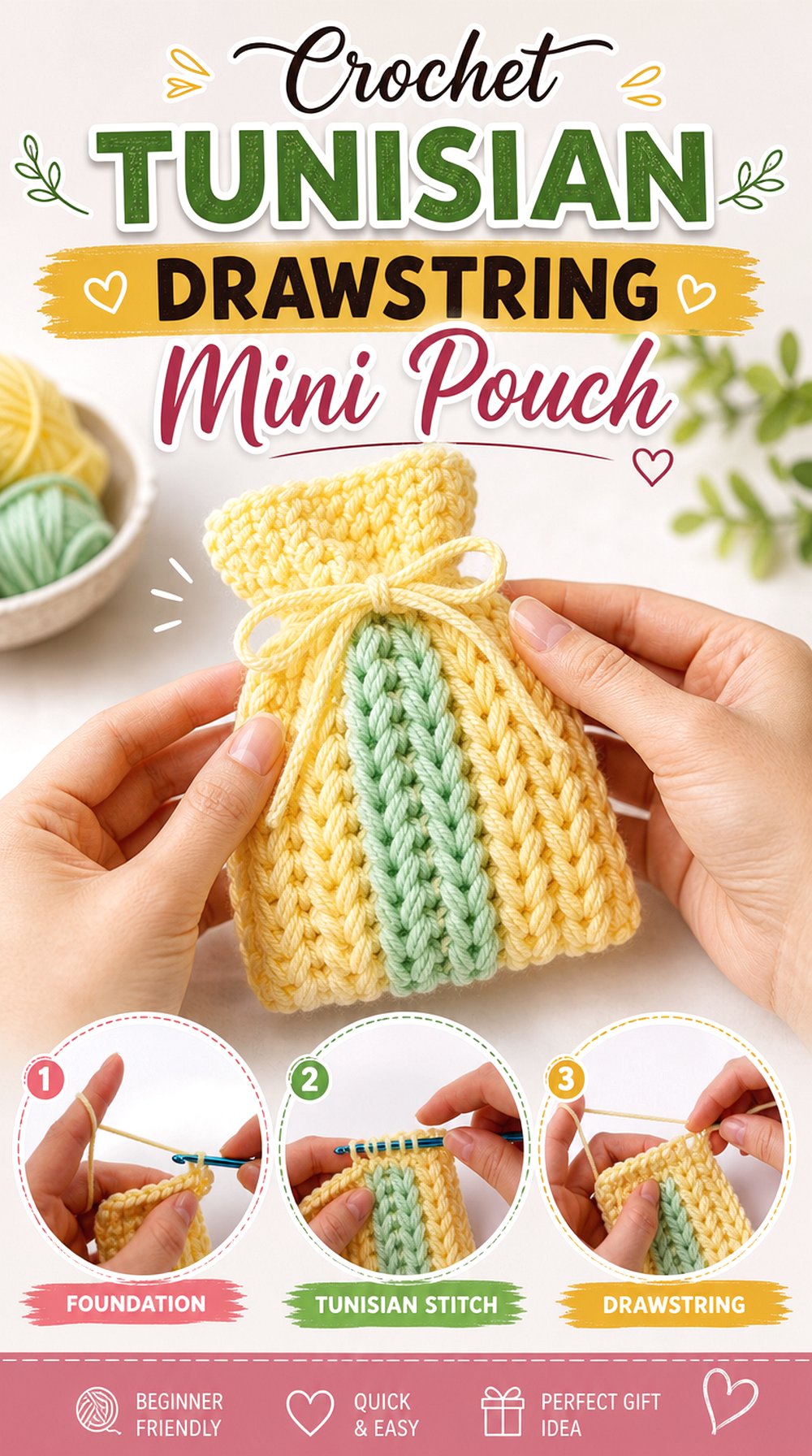
A drawstring pouch offers a different kind of Tunisian crochet project because the focus shifts from straps and flat panels to a gathered opening. This smaller shape may suit gift packaging, small accessories, or tidy storage for lightweight items. It also gives readers a project that looks more closed than a tote or basket without becoming a fitted case.
The drawstring detail is the feature to study. It changes how the pouch opens, how it closes, and how much the top edge can gather without distorting the finished shape.
The Gathered Top Defines the Pouch
The drawstring opening gives this project its main function. A gathered top can help keep small contents together, but readers should not assume it works like a firm zipper or hard closure. Before choosing this idea for a specific use, check how tightly the top closes and whether the finished opening looks smooth, bulky, or softly puckered.
A Small Shape Needs Clear Purpose
Mini pouches are useful when the reader has a realistic purpose in mind. They can work as gift holders, craft storage, or small accessory bags, but capacity should be judged carefully. The project is not competing with the tote or crossbody pouch; its value is in controlled small-item storage and a finished shape that can be made to feel decorative without needing a large surface area.
Cord Placement Is the Detail to Watch
A drawstring pouch depends on the cord or tie moving cleanly around the top. Readers should pay attention to how the closing area is formed in the source and whether the finished tie is shown clearly. The cord placement affects both appearance and function, so this is one of the most useful sections to review before committing to the project.
Creator: Create by K
4. Crochet Tunisian Square Storage Basket
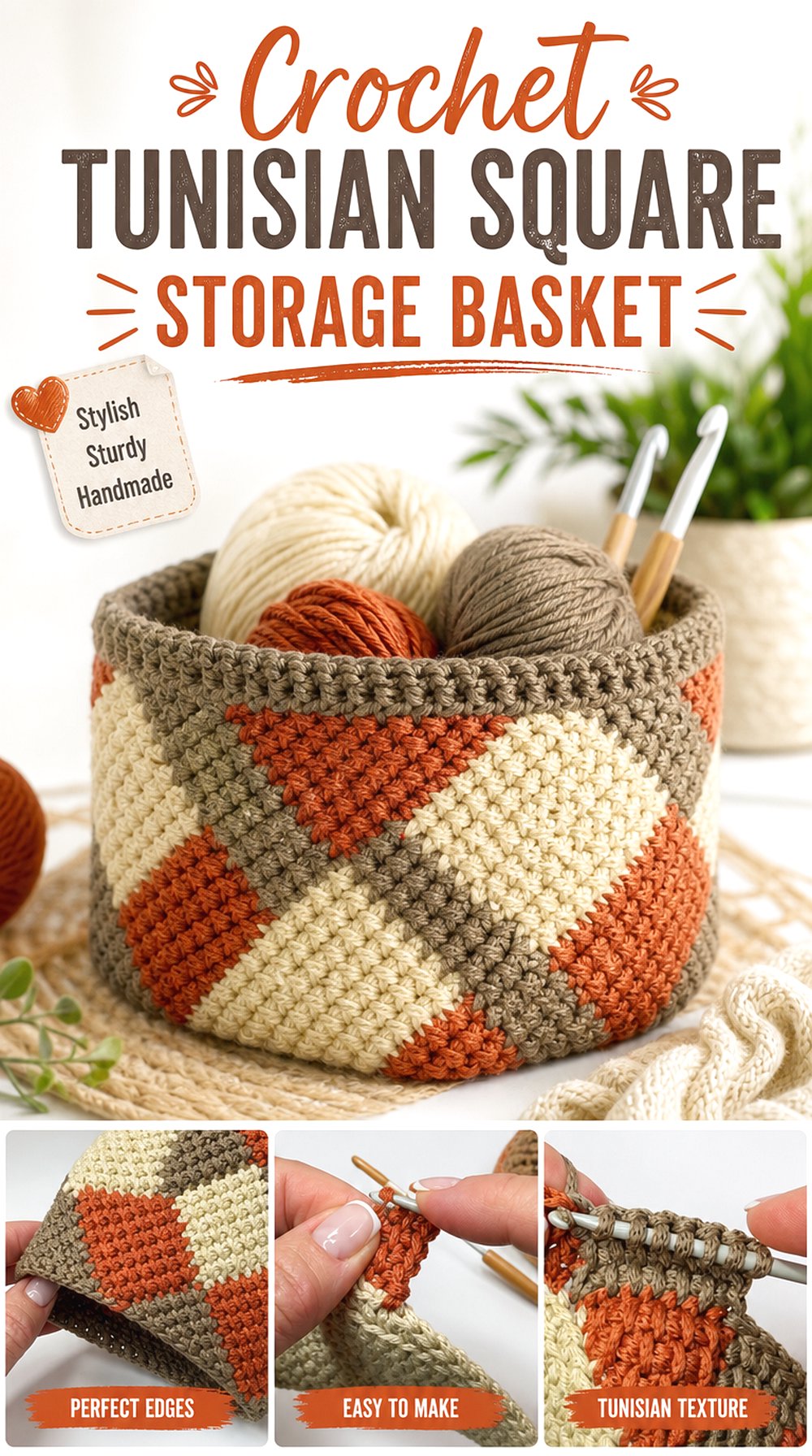
A Tunisian square basket brings the technique into home storage. The project stands apart from the bags because it is meant to sit in place rather than be worn or carried around. The square-based look can work for a shelf, desk, yarn corner, or small household items, depending on the final size and how firm the shape becomes.
Readers should treat this as a structure-focused project. The finished basket needs sides that look even, corners that make sense, and enough shape definition for its intended display spot.
Corners Give the Basket Its Character
The basket’s square form depends on how cleanly the corners are handled. Uneven corners can make a storage piece look less intentional, even if the stitch texture is attractive. Readers should watch the finished views carefully and compare the corners from more than one angle before deciding where the basket would look best.
Decide Between Display and Storage
This basket can be read as a decorative object or a practical container, but those uses are not identical. For display, the outside shape and stitch texture matter most. For storage, readers should think about the weight and type of items they plan to place inside. Unless the source clearly confirms strength or capacity, it is safer to choose light contents.
The Square Layout Needs Space
A square basket may fit differently from a round bowl or soft pouch. It can sit neatly against a wall or on a shelf, but the footprint should be checked before planning a matching set. Readers with limited surface space should confirm the approximate finished size from the tutorial or finished views before choosing this as a room organizer.
Creator: Soft Decor – Tatyana Chakur. We crochet !!!
5. Crochet Tunisian Full Stitch Throw Blanket
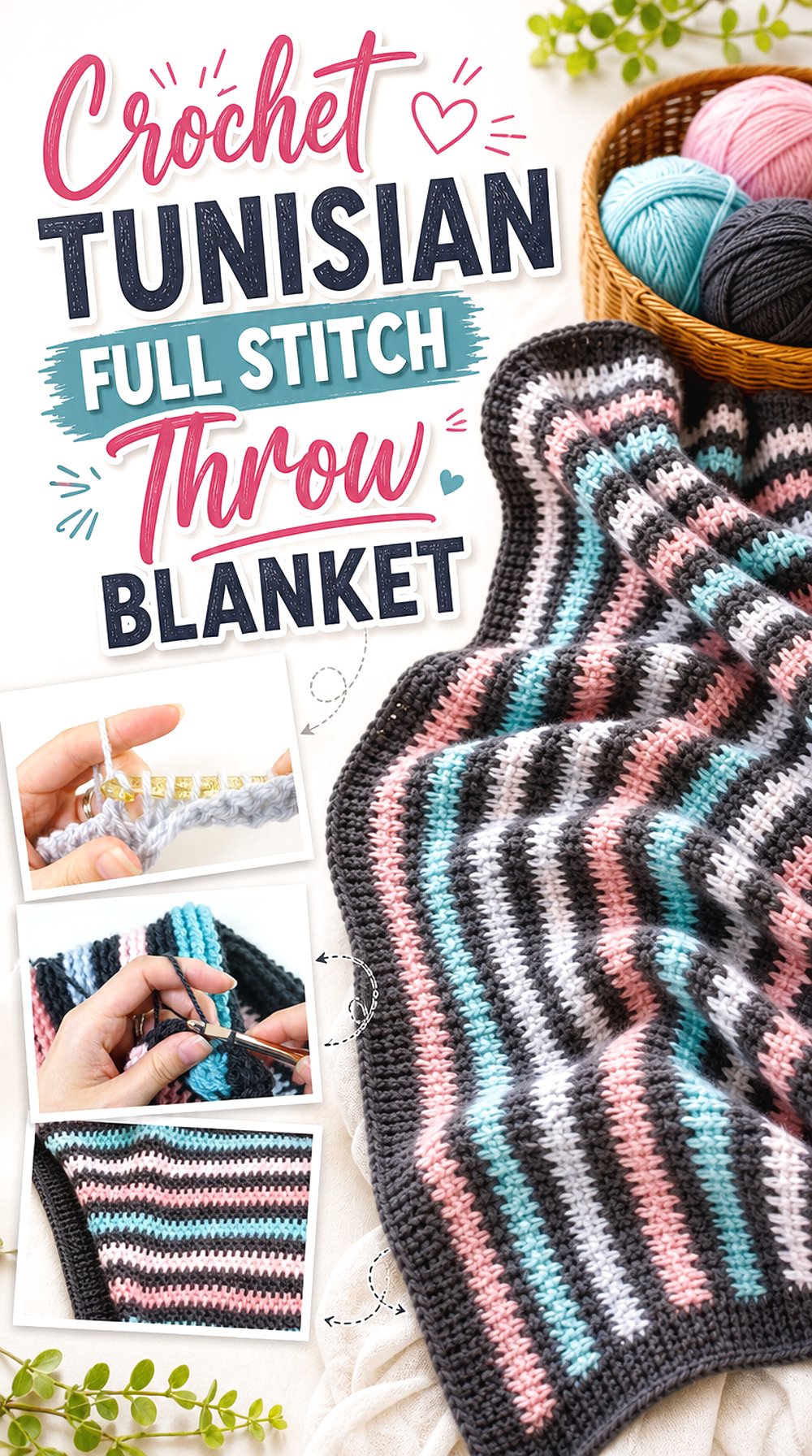
A Tunisian throw blanket is the largest home project in this list, and it gives the full stitch texture room to show. Unlike coasters, placemats, or small accessories, a blanket asks readers to think about patience, yarn quantity, edge consistency, and the final use in a living room or bedroom.
The source describes a full stitch Tunisian crochet blanket, so the finished fabric is the main attraction. This is a good option for readers who want a larger project with a simple visual direction rather than a small quick item.
Size Planning Comes Before Style
A blanket needs a clear size goal before supplies are chosen. Readers should decide whether they want a couch throw, bed accent, or smaller lap blanket, then compare that goal with the creator’s pattern information. Even a simple-looking blanket can become frustrating if the finished dimensions are not considered early.
Edges Need Consistent Attention
Large Tunisian pieces can show edge differences more clearly than small items. A blanket has long sides, so neat edges affect the overall finish and how the piece lies when displayed. Readers should watch for border information, edge treatment, and final shaping guidance in the original source rather than assuming the stitch texture alone will make the piece look finished.
A Larger Project Rewards Progress Tracking
Because this is a bigger project, readers may benefit from noting progress points as they work. That does not mean copying the pattern outside the source; it simply helps keep the project organized between sessions. Marking where the creator changes sections or finishes an edge can make it easier to return later without losing the project flow.
Creator: B.Hooked Crochet
6. Crochet Tunisian Long Scarf
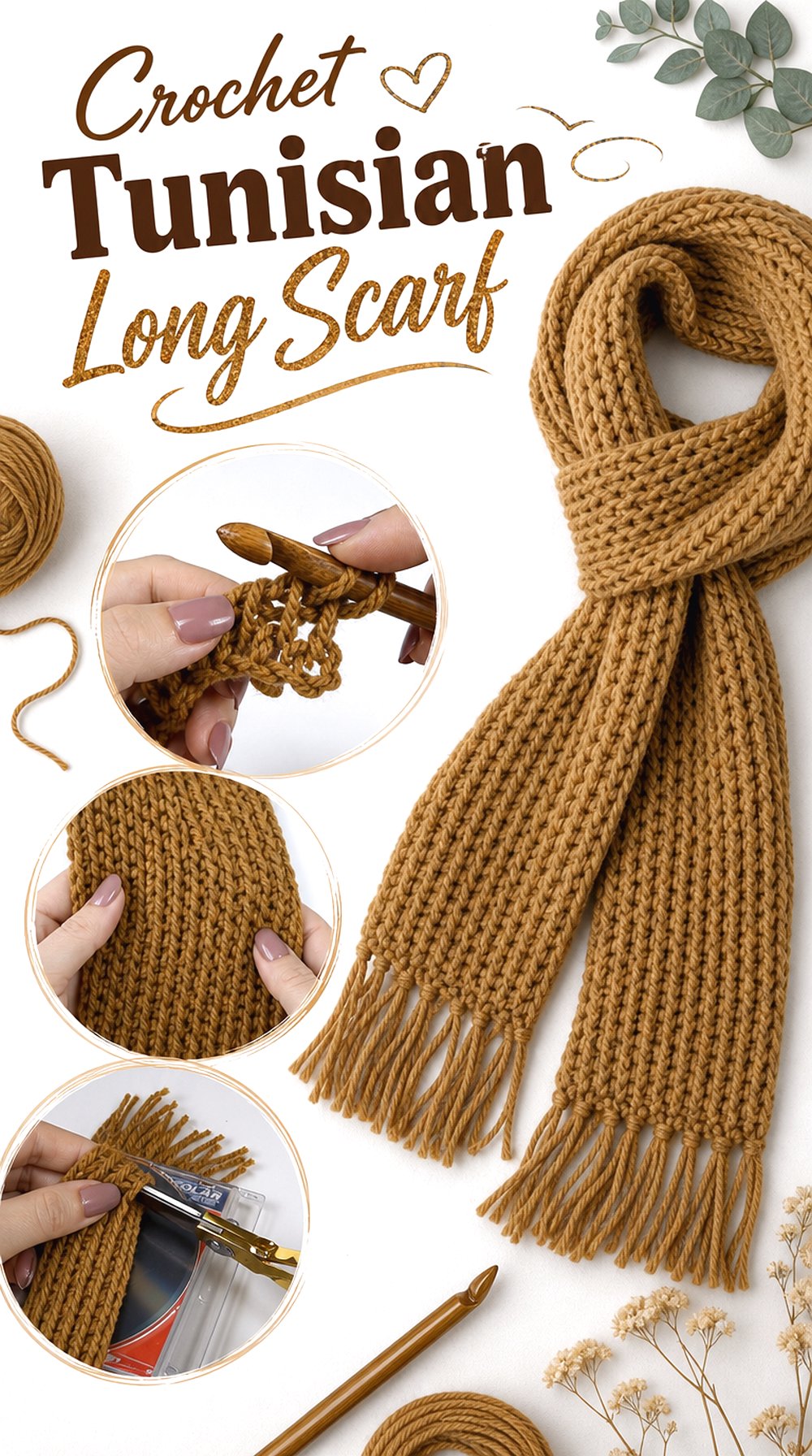
A long scarf is one of the clearest wearable ways to use Tunisian crochet texture. This project differs from the cowl and headband because it stays open-ended and can be styled in more than one way. The long rectangular shape also makes it easier to judge straight edges, fabric drape, and repeated texture across a larger surface.
Readers who want a wearable project without garment shaping may find a scarf easier to compare than a sweater or vest. The main checks are length, width, and how the finished fabric sits around the neck.
Length Affects Styling Options
The finished length determines whether the scarf can wrap, drape, or hang simply. Readers should check the creator’s information and final view before deciding whether this scarf suits their preferred styling. A longer scarf may offer more wrapping options, while a shorter one may feel cleaner and less bulky.
Straight Sides Are Part of the Finish
A scarf puts both long edges on display. Any unevenness can be more visible than it would be on a pouch or basket, so readers should watch how the sides look in the finished piece. It is worth paying attention to edge guidance and final presentation before choosing yarn or changing the project size.
Check the Fabric Feel Visually
The source is a video tutorial, so readers can use the finished movement and close-up views to judge the fabric. Tunisian crochet can create a dense texture, and a scarf needs to feel wearable rather than stiff. Without inventing softness or warmth claims, the practical step is to compare the drape shown in the source with the way the scarf will be used.
Creator: Professora Simone Eleotério (Lifebaby Sapatinhos)
7. Crochet Tunisian Ribbed Cowl
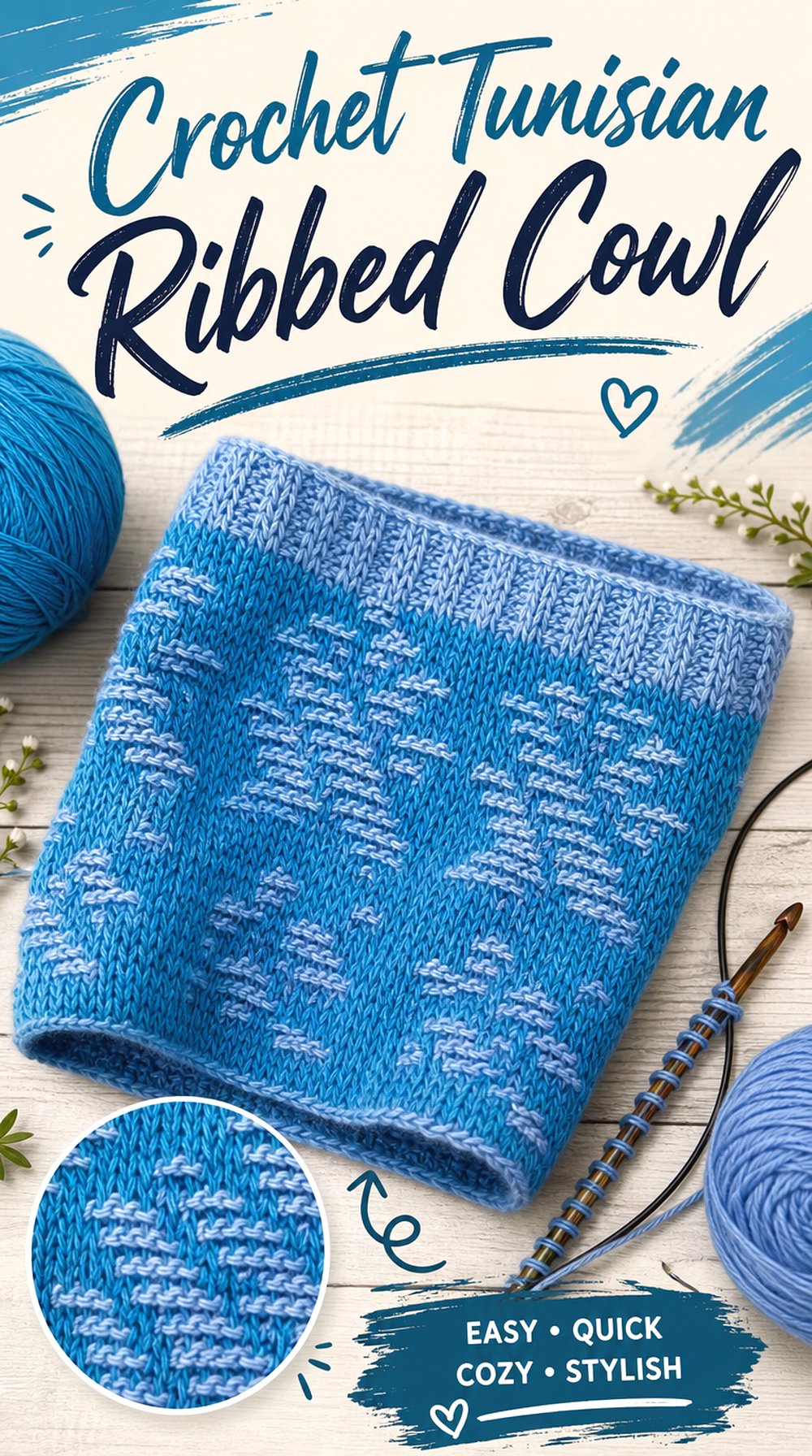
A cowl gives Tunisian crochet a closed, neckwarmer-style shape. This project is different from the scarf because it does not rely on loose ends or long draping. The source describes an Ice Queen Cowl worked in the round with ribbing and colorwork sections, so the finished piece has a more structured accessory feel.
This is a useful choice for readers who like wearable texture but want a smaller project than a sweater. The most important points are circumference, height, and whether the closed shape suits the intended layering style.
Closed Shape Means Fit Matters
A cowl needs to pass over the head and sit comfortably around the neck, so sizing matters differently than it does for a scarf. Readers should check the finished measurements or fit information from the creator before starting. A cowl that is too close may feel restrictive, while one that is too wide may not sit the way the finished example suggests.
Ribbing Frames the Finished Piece
The ribbed areas at the top and bottom help the cowl look complete. This kind of finish gives the accessory cleaner edges and makes the colorwork or center texture feel more intentional. Readers should review how the ribbing appears in the final view and decide whether they like that framed look before choosing this project over a simpler neck warmer.
Color Changes Need a Careful Review
The source description mentions two colors alternated through the colorwork section. Readers who want the same visual contrast should review the color placement before buying supplies. The color choice can change how bold or subtle the cowl looks, but the safest decision is to follow the creator’s guidance for the exact method and placement.
Creator: Exquisite Crochet UK
8. Crochet Tunisian Everyday Headband
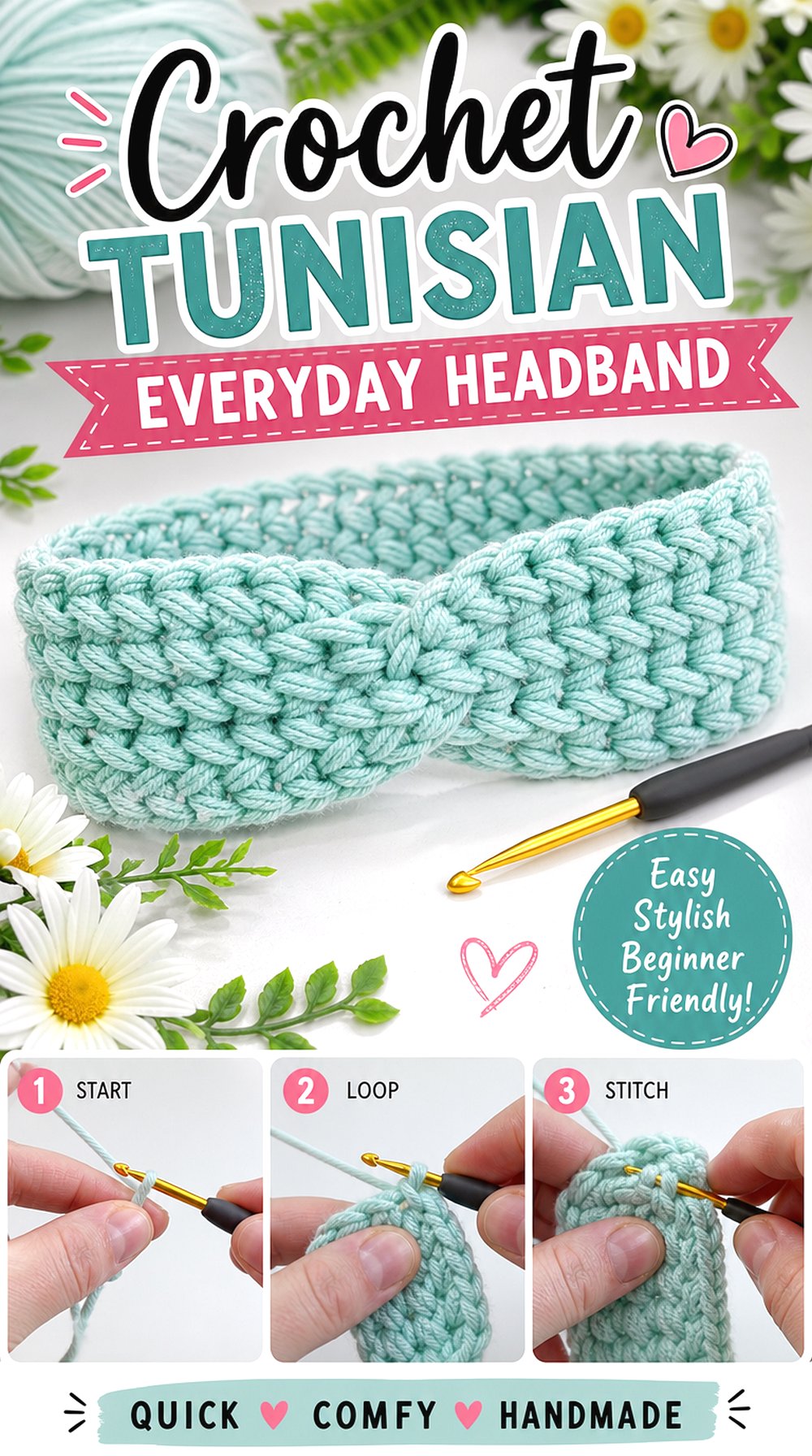
A Tunisian headband is a small wearable project with a clear purpose. It has less coverage than a hat, less length than a scarf, and fewer fit decisions than a full garment. That makes it useful for readers who want to try a wearable accessory without committing to sleeves, sizing charts, or large panels.
The finished band should be judged by width, stretch, and how it sits around the head. Since head size and styling preferences vary, readers should review the final view and any size notes before choosing this idea as a gift or personal accessory.
Width Changes the Look
A narrow headband reads more like a hair accessory, while a wider one can cover more of the ear area. Readers should look at the finished width shown in the source and decide whether it matches their intended use. This is especially important when the project is meant for everyday wear rather than only a decorative hair band.
Fit Is More Personal Than It Seems
Headbands need enough give to stay in place without feeling tight. The tutorial title presents this as a step-by-step headband pattern, but readers should still check whether measurement or adjustment information is provided. A small difference in size can affect whether the finished band sits flat, slides back, or feels comfortable.
The Join Should Look Smooth
Because a headband forms a circle, the joining area can be visible depending on how it is worn. Readers should study the finished seam or join before starting and note whether the source shows that area clearly. A neat join helps the project look finished from all sides, especially if the headband will be worn with the hair pulled back.
Creator: Knitting my hobby
9. Crochet Tunisian Honeycomb Beanie
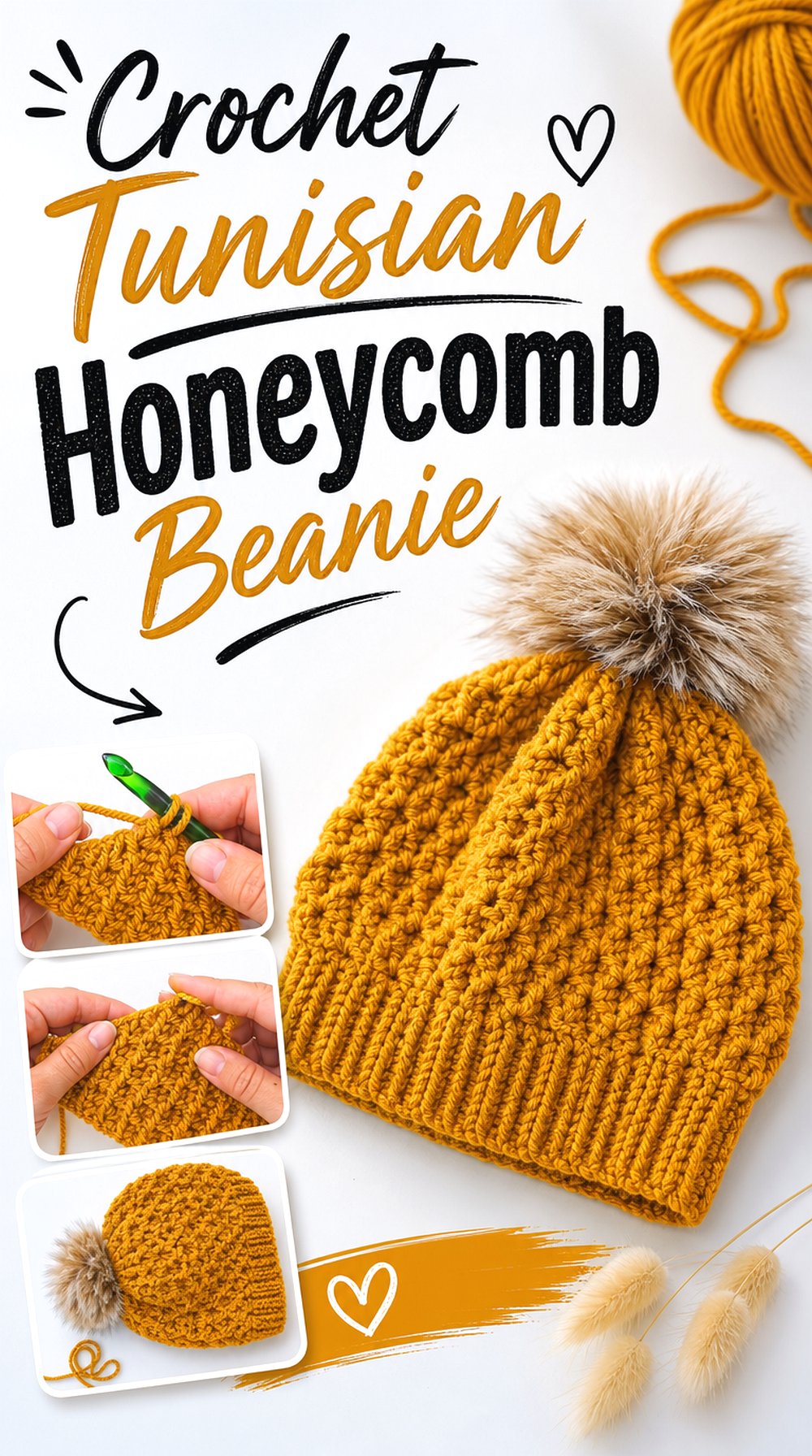
A honeycomb beanie shows a more shaped side of Tunisian crochet. The source describes a slouchy beanie worked with honeycomb stitch and finished with a pom pom, which gives the project a different purpose from the flat scarf, closed cowl, and narrow headband. This is a wearable item where height, brim, crown shape, and finishing all matter.
Readers considering this project should pay attention to how the hat sits in the finished view. A beanie needs a better fit check than a decorative project because the final size affects comfort and appearance.
The Slouch Changes the Silhouette
A slouchy beanie has extra height or relaxed shaping compared with a close cap. Readers should decide whether they want that softer profile before starting. The finished look may suit casual winter styling, but the actual amount of slouch should be confirmed from the source rather than assumed from the project name alone.
Brim and Body Work Together
The brim frames the face and helps define how the beanie sits. In this project, the textured body and lower edge need to look balanced, so readers should review the transition between those areas carefully. A clean brim can make the hat look intentional even when the upper shape is relaxed.
Pom Pom Placement Is Optional to Consider
The source describes the beanie as completed with a fluffy pom pom. Readers who like a simpler hat should decide whether that finishing detail fits their style, but any change should be made with the original construction in mind. The pom pom affects the final look more than the function, so it is a personal styling decision.
Creator: Diving Ducks Crochet
10. Crochet Tunisian Fingerless Gloves
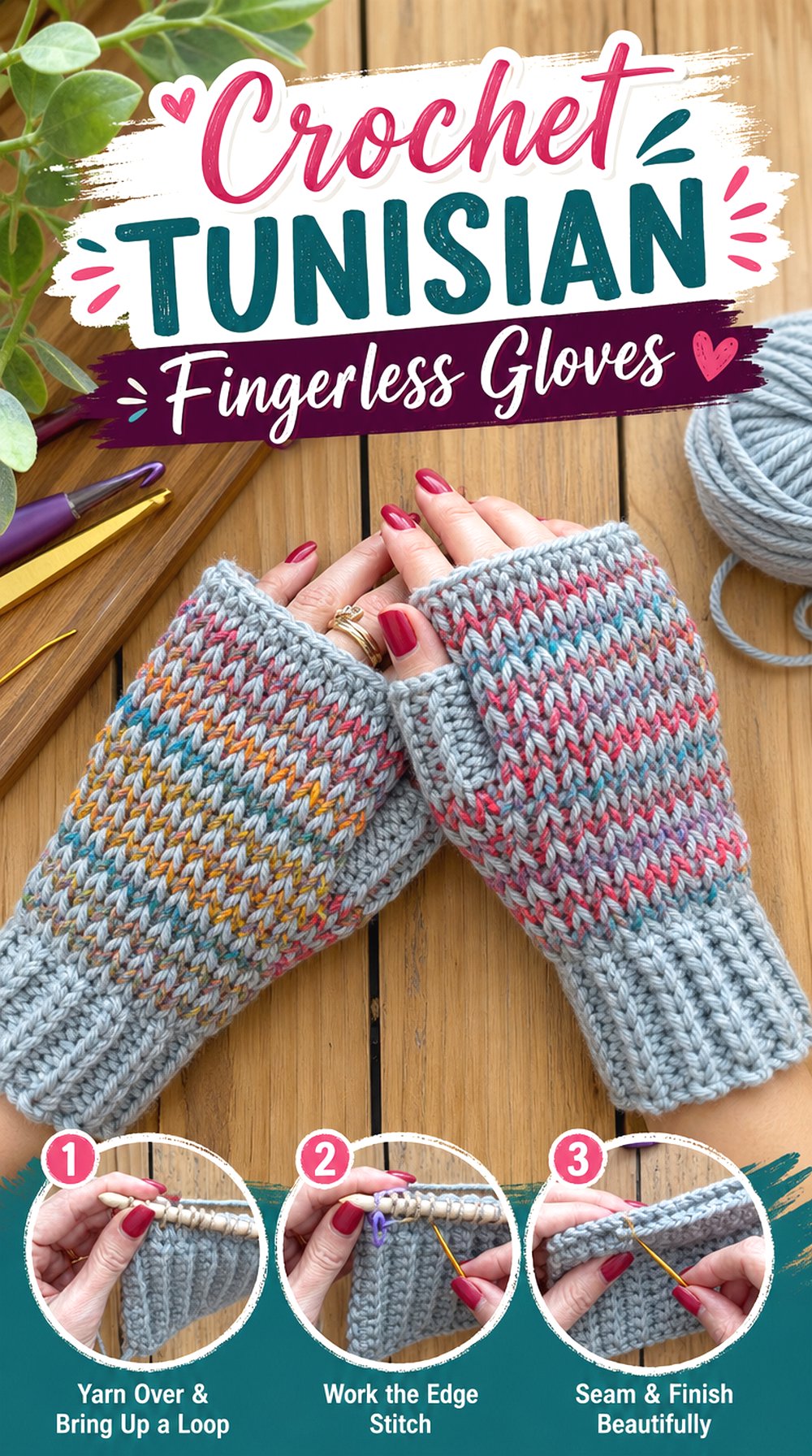
Fingerless gloves turn Tunisian crochet into a fitted accessory with practical shaping. This project is more specific than a scarf or headband because it needs to account for the wrist, hand, and thumb opening. The source describes gloves with a ribbed cuff, Tunisian knit stitch body, striping, and finishing around the thumb area.
Readers who want a wearable project with smaller pieces may find this more approachable than a sweater, but fit still matters. Each glove needs to feel consistent with the other and suit the intended hand size.
Thumb Opening Needs Careful Attention
The thumb opening is the detail that separates fingerless gloves from a simple tube. Readers should pay close attention to how that opening is placed and finished in the original guide. A small shift can affect comfort and appearance, so this is a section worth replaying rather than rushing.
Cuff Fit Sets the Tone
The ribbed cuff helps the gloves sit at the wrist and gives the finished accessory a cleaner beginning. Readers should check whether the cuff looks snug, relaxed, or adjustable in the final view. Since wrist size varies, any available measurement or fit guidance from the creator should be reviewed before starting the pair.
Stripes Make Matching More Important
The source describes alternating colors for striping, which adds visual interest but also creates a matching decision. Readers who want both gloves to look consistent should pay attention to color order and stopping points in the original source. A less exact approach can still look handmade, but the decision should be intentional.
Finishing Both Gloves Evenly
A pair of gloves needs consistent finishing. The top edge, thumb area, and side shaping should look balanced from one glove to the other. Readers may want to compare the first finished glove with the second as they work, using the creator’s finished view as a guide without trying to recreate instructions outside the original tutorial.
Creator: I Can Crochet That
11. Crochet Tunisian Cozy Sweater
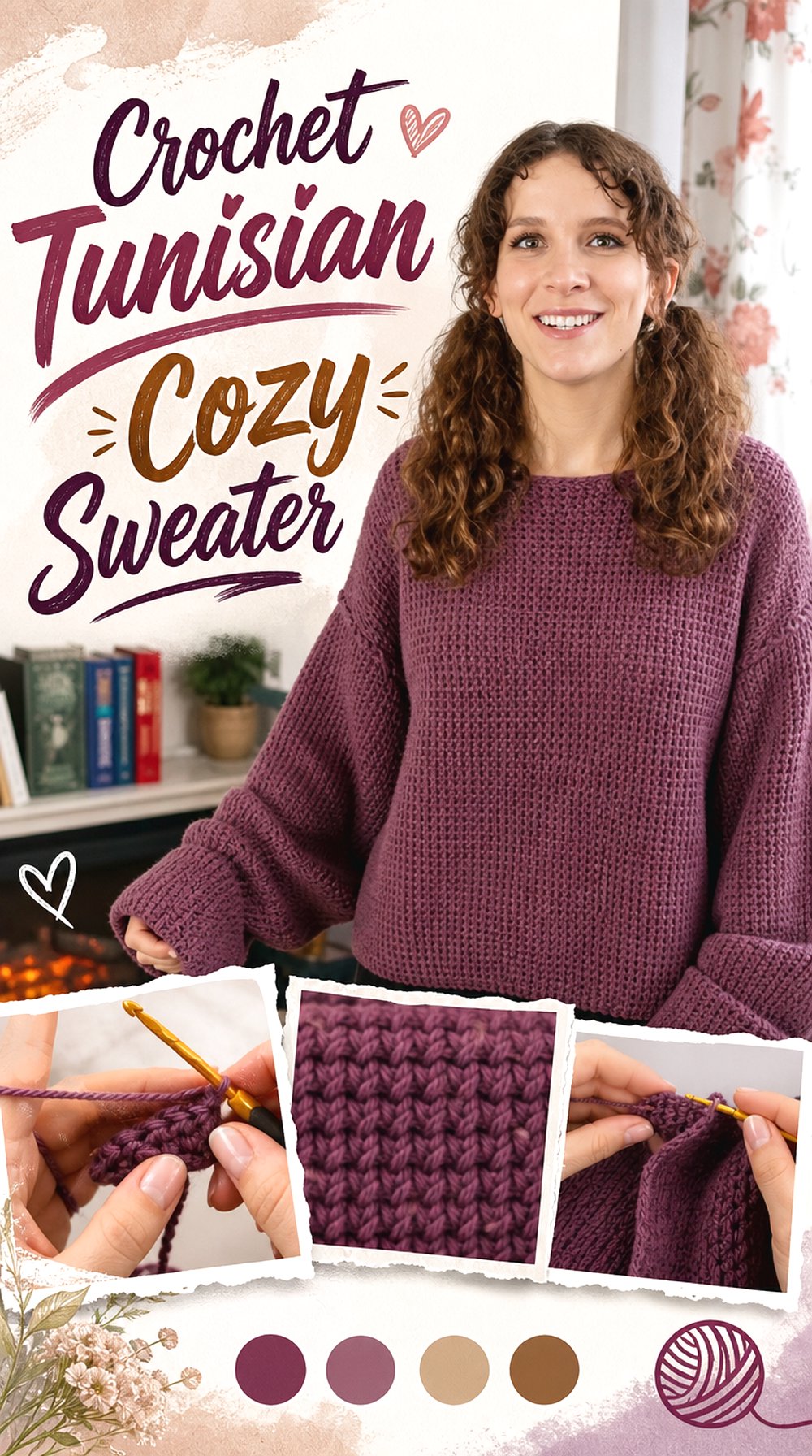
A Tunisian sweater is one of the most planning-heavy ideas in this collection. It is a full garment, so the finished result depends on measurements, shaping, seams, and how the body and sleeves fit together. The source lists required body measurements and presents the project as a sweater tutorial, which makes it better suited to readers ready to slow down and review the fit information carefully.
Compared with the vest, this sweater offers fuller coverage. It also asks for more decisions before starting, especially around garment length and sleeve fit.
Measurements Are Not Optional
A sweater should begin with measurement review, not only color choice. The source lists body measurements to take, so readers should compare those notes with their own fit preferences before buying supplies. This is especially important if the sweater needs to pass over the widest part of the body comfortably.
Sleeve Length Changes Wearability
Sleeves make this project more involved than the vest. Readers should look at the final sleeve length, wrist area, and shoulder-to-wrist information before choosing the project. A sweater can look very different if the sleeves are cropped, full length, loose, or close, so the creator’s fit notes should guide that decision.
Seaming Affects the Final Shape
The source description mentions seaming and finishing. For a garment, those steps influence how the sweater hangs and how clean the final lines look. Readers should review the finishing sections before starting so they understand how the separate areas come together without trying to memorize the full process from one watch.
Layering Plans Should Be Realistic
A cozy sweater may be worn over light clothing or as a main layer, but readers should not assume a specific warmth level without fiber and gauge information. The practical question is what the finished fit appears to allow underneath. Check the final garment view and measurement guidance before deciding whether to aim for close or relaxed wear.
Creator: Studio Crafti
12. Crochet Tunisian Simple Stitch Vest
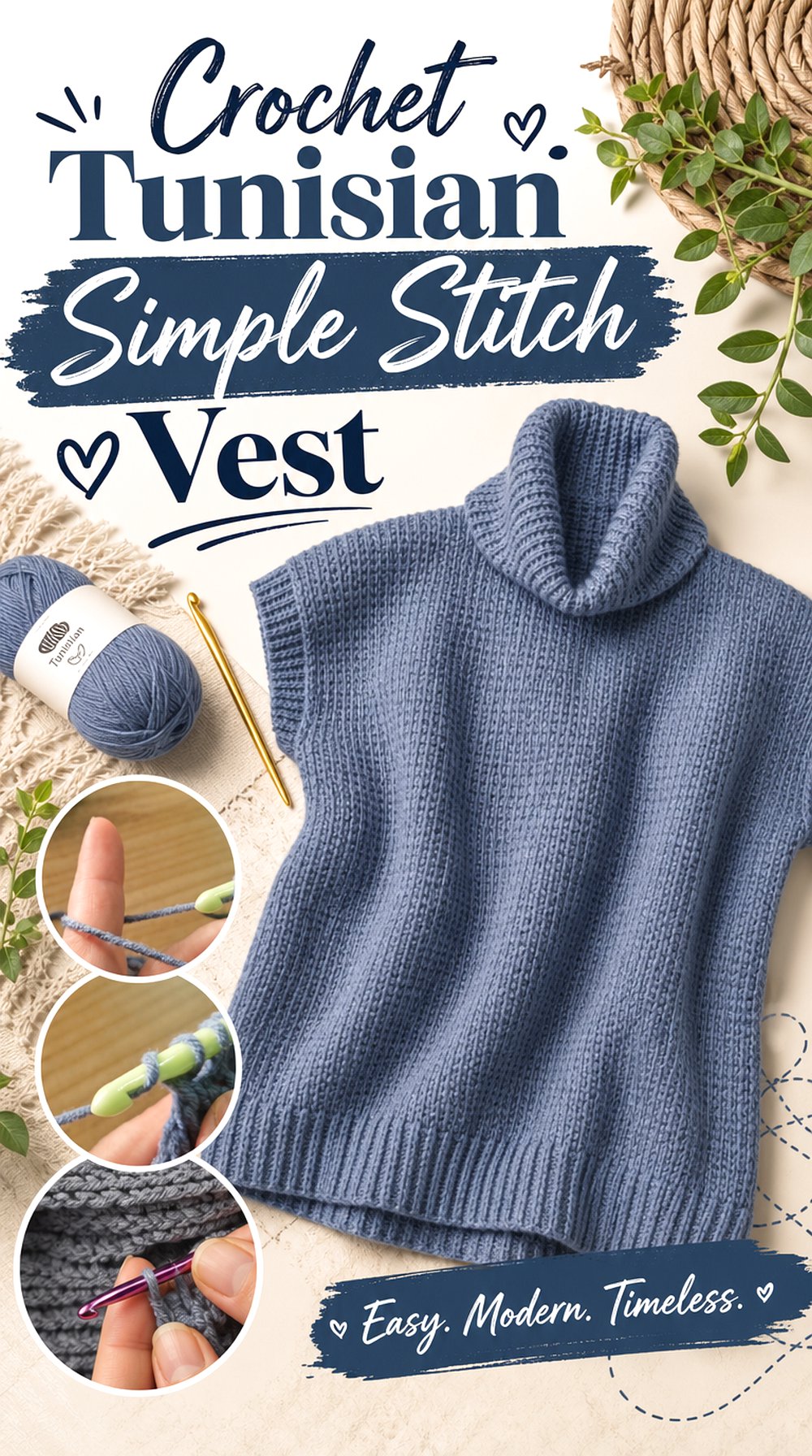
A Tunisian vest gives readers a wearable garment without full sleeves. The source identifies the main stitch as Tunisian simple stitch and describes the project as a vest tutorial. That makes it a useful middle ground between small accessories and the full sweater in the previous section.
The finished vest should be considered for layering, body length, armhole shape, and front coverage. Because it is worn over other clothing, readers should compare the final view with the kind of top they would wear underneath.
Armholes Deserve a Clear View
The armhole shape is one of the most important areas in a vest. If it is too high, low, narrow, or wide for the wearer, the garment may not sit comfortably. Readers should watch for front and side views and check whether the creator gives enough fit information to compare with their own measurements.
Front Coverage Sets the Style
A vest can feel open, close-fitting, boxy, or relaxed depending on the front shape. Readers should study how much coverage the finished vest provides before deciding whether it suits their wardrobe. This matters more than color because the front line affects how the vest layers over shirts, dresses, or fitted tops.
Length Should Match the Outfit Plan
The vest length changes the way it works with clothing underneath. A shorter vest may suit high-waisted outfits, while a longer one may layer more like a sleeveless cardigan. Readers should confirm the finished length or available size information in the source before choosing yarn or making changes.
Creator: Lily’s Crochet Stitches
13. Crochet Tunisian Entrelac Coaster
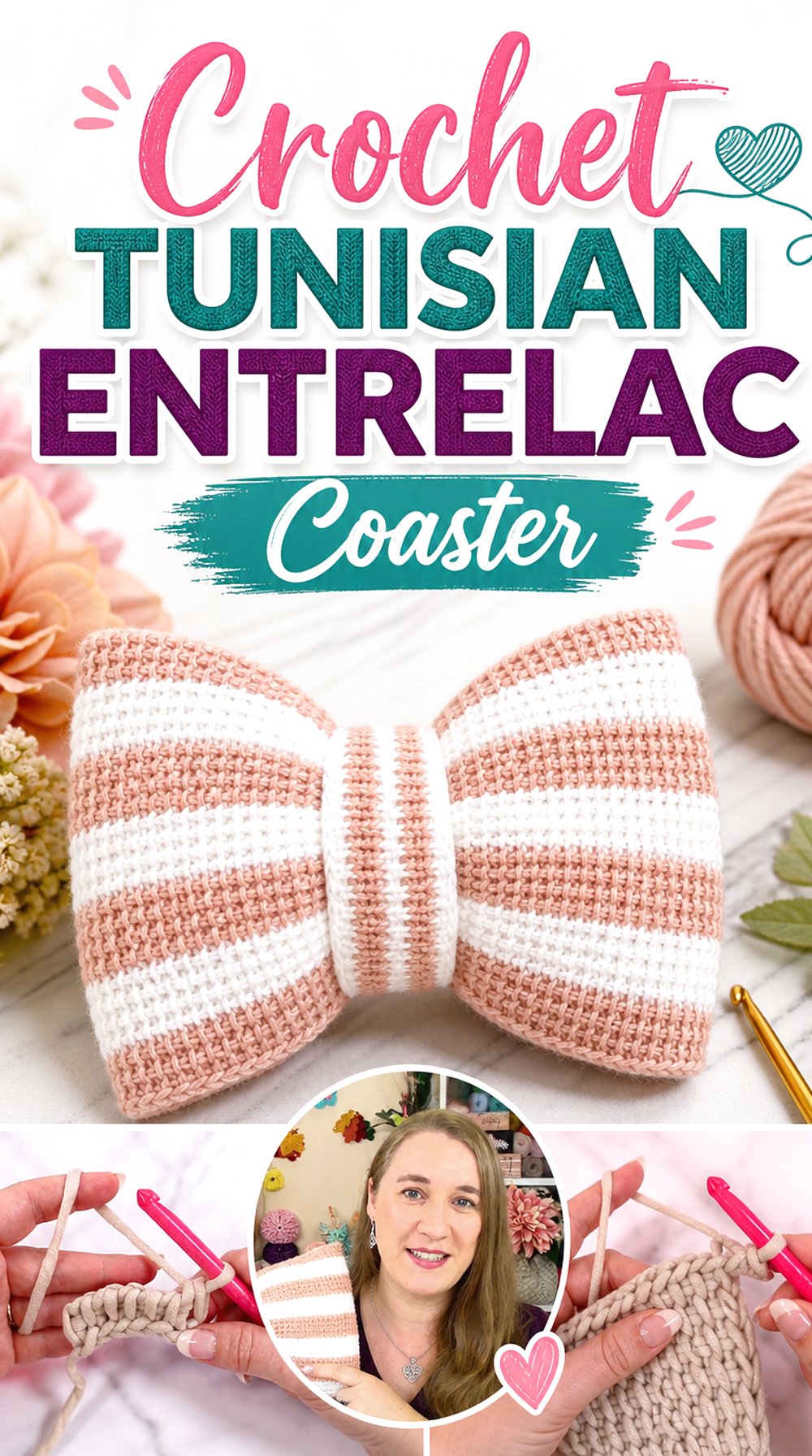
An entrelac coaster is a small home project with a strong geometric look. It differs from the blanket and placemat because the finished item is compact and meant for a single cup, small display area, or table accent. The source identifies it as a Tunisian entrelac coaster tutorial, so the visual interest comes from the block-like texture and layout.
This project may appeal to readers who want a useful small item while practicing a more decorative Tunisian crochet effect. The key checks are size, flatness, and edge finish.
Flatness Matters for Table Use
A coaster needs to sit flat enough for practical use. Readers should look at the finished view and check whether the edges, corners, or center appear even. If the coaster is meant for daily use, the practical finish matters as much as the stitch pattern because a wavy surface can affect how it sits under a cup.
Entrelac Creates a Different Texture
The entrelac layout makes this coaster visually different from a plain square dishcloth or simple placemat. Readers drawn to geometric texture should review the close-up sections and decide whether they like the block arrangement. Since this is a small item, the texture becomes the main design feature rather than just a background fabric.
Creator: Nicki’s Homemade Crafts
14. Crochet Tunisian Simple Stitch Placemat
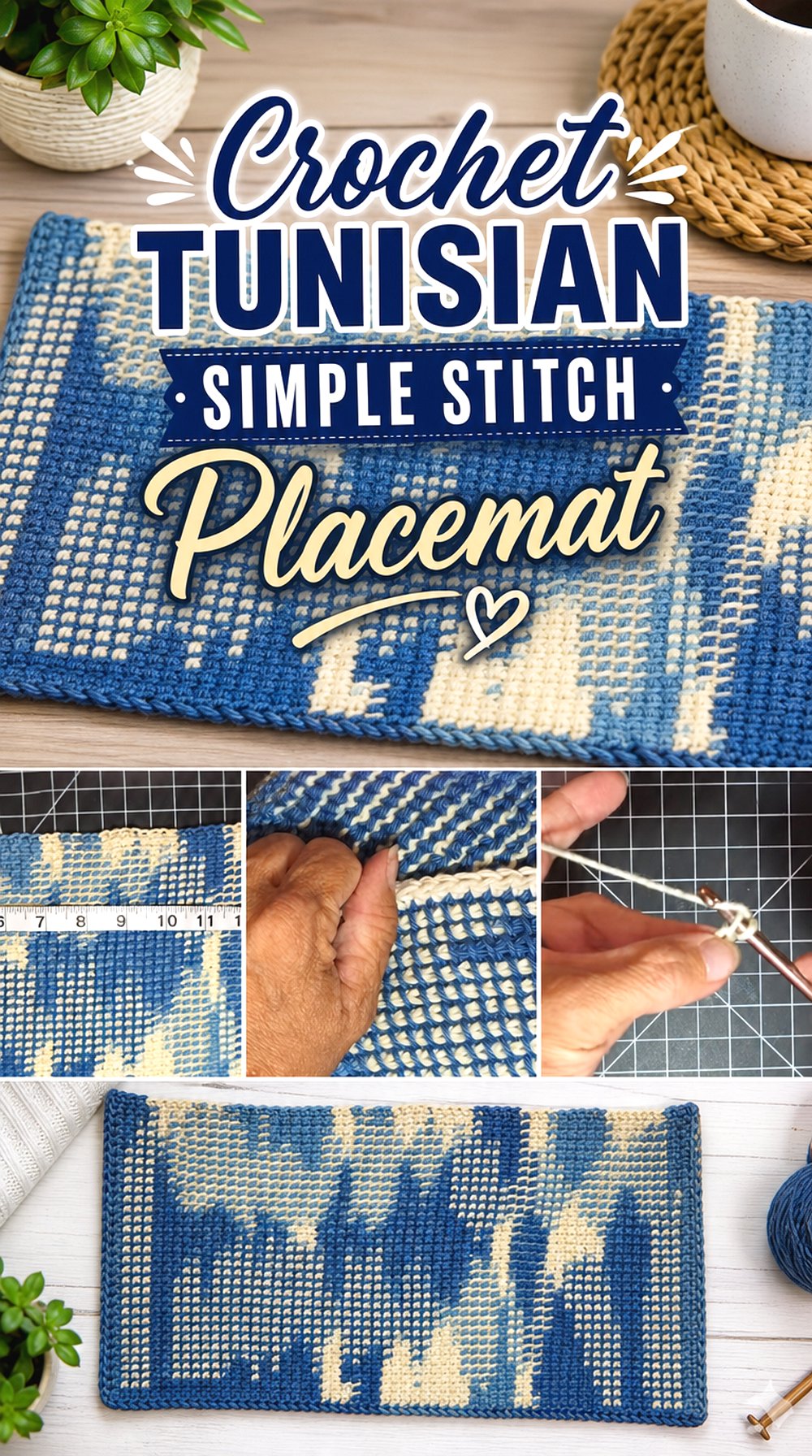
A placemat gives Tunisian crochet a practical table setting purpose. This project sits between the small coaster and the large blanket: it is still a flat home piece, but the finished rectangle needs enough size to hold a plate setting neatly. The source describes a Tunisian crochet placemat and includes a stated length in the video information.
Readers choosing this project should think about table space, edge finish, and whether they want a single placemat or a coordinated set. A repeated set will make consistency more important than a one-off practice piece.
Table Fit Is the Main Decision
A placemat has to work with the table, plate, and surrounding space. Readers should compare the stated or shown dimensions with their own place setting before starting. A placemat that looks right on one table may feel crowded on another, so this is a project where finished footprint matters.
Repeating a Set Needs Consistency
One placemat can be a practice project, but a set needs matching size and finish. Readers planning multiple pieces should pay attention to how the first one is measured and finished before moving on. Keeping notes from the original source can help each placemat stay visually consistent without rewriting the tutorial.
Edges Complete the Dining Look
The border or edge finish affects whether a placemat looks polished on the table. Since the project is flat and visible from above, uneven edges may stand out. Readers should study the final view and any finishing information in the source before deciding whether this is the right table project for everyday use or occasional settings.
Creator: Cre8 Along With Trace
15. Crochet Tunisian Flower Accent
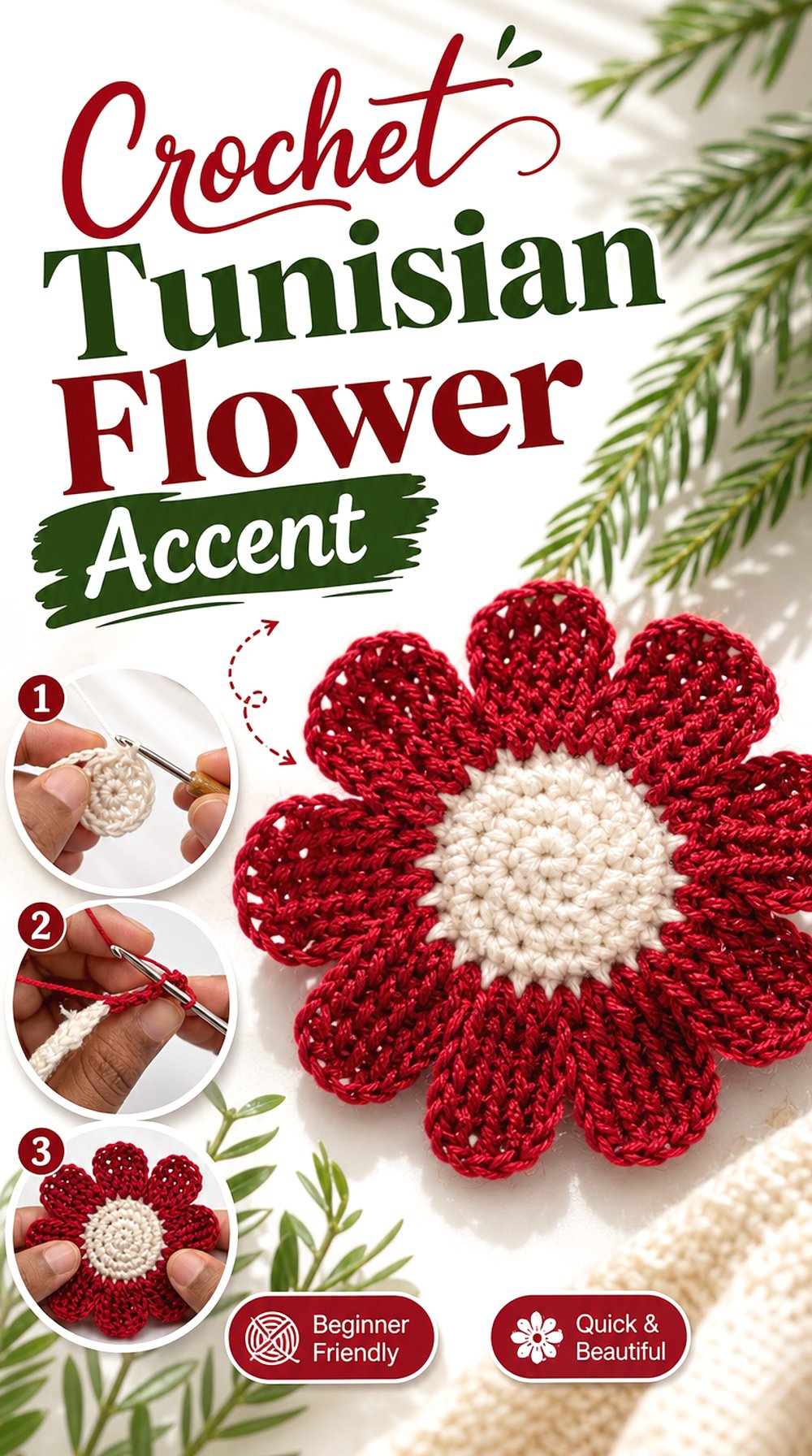
A Tunisian flower accent is the smallest decorative idea in this collection. Unlike the bags, garments, and home pieces, it does not need to carry, fit, or cover anything. Its purpose is surface detail: it can be considered for embellishing other crochet pieces, decorating a gift, or practicing shaped Tunisian crochet on a small scale.
Because flowers are decorative, the most useful checks are petal shape, center finish, and how the finished piece might be attached if used on another item. The source identifies it as a step-by-step Tunisian crochet flower tutorial.
Petal Shape Carries the Design
The flower depends on recognizable petal shaping. Readers should look closely at whether the petals appear rounded, pointed, layered, or flat in the finished view. That detail changes the final mood of the accent and helps readers decide whether it suits a bag, hat, blanket corner, or gift topper.
Attachment Is a Separate Decision
The tutorial focuses on making the flower, but readers should decide how they would use it after it is finished. An accent for a bag may need different attachment planning than one used on a card or display piece. Unless the creator clearly covers a specific use, treat the flower as a decorative motif and verify attachment needs separately.
Creator: HiruHandmade Crochet
How to Choose Between These Tunisian Crochet Ideas
For a small first project, the flower, coaster, headband, pouch, or placemat keeps the commitment controlled while still producing a finished item. For practical accessories, compare the tote, phone pouch, gloves, beanie, scarf, and cowl by how they will be worn or carried. The basket and blanket are stronger home choices, but they ask for more space and more planning.
Wearables need the most fit attention. The sweater, vest, gloves, beanie, headband, cowl, and scarf all touch the body, so readers should check measurements, stretch, length, and final views before choosing. Home pieces are more about footprint, flatness, structure, and where the item will be used.
Conclusion
These Tunisian crochet project ideas show how much variety can fit under one technique. The tote, phone pouch, and drawstring pouch focus on carrying and storage, while the basket, coaster, placemat, and blanket move the same texture into the home. The scarf, cowl, headband, beanie, gloves, sweater, and vest are better for readers who want wearable projects with different levels of fit planning.
Small accents and table pieces are useful when the goal is a contained project. Larger garments and blankets need more review before supplies are chosen. Use the original tutorials for exact construction details, measurements, and finishing steps.
FAQs
What is a good Tunisian crochet project to start with from this list?
A smaller project is usually easier to review before committing supplies. The coaster, flower accent, headband, drawstring pouch, or placemat can help readers focus on shape and finishing without the planning needed for a sweater or blanket. The best choice depends on whether the reader wants a decorative item, wearable accessory, or practical home piece.
Which Tunisian crochet projects need the most size checking?
The sweater, vest, fingerless gloves, beanie, cowl, headband, phone pouch, and blanket all need careful size review. Wearables must match body measurements or comfort preferences, while the phone pouch and blanket need dimensions that fit their intended use. Readers should check the creator’s size notes before changing yarn, hook, or project length.
Are Tunisian crochet bags practical for everyday use?
They can be practical for light use when the finished size, handle placement, opening, and structure match the intended contents. Readers should not assume strength, lining, or heavy carrying capacity unless the creator clearly confirms those details. The tote, crossbody phone pouch, and drawstring pouch each serve different carrying needs, so compare them by purpose first.
What should I check before making Tunisian crochet wearables?
Look for measurements, fit notes, finished views, neckline or armhole shape, sleeve length, cuff details, and any adjustment guidance from the creator. Wearables need more planning than flat projects because small fit differences can change comfort. It is also useful to review the full guide once before choosing supplies.
Can I sell finished items made from these YouTube tutorials?
Do not assume selling is allowed just because a tutorial is public. Readers should check the creator’s pattern terms, video description, linked written pattern, and any licensing notes before selling finished items. Local labeling, tax, and business rules may also apply, especially for wearables, baby items, or products sold online.
How do I choose between a Tunisian crochet home project and a wearable?
Choose a home project when placement, table use, storage, or display is the main goal. Choose a wearable when fit, layering, and personal styling matter more. Home projects usually need checks around size, flatness, and structure, while wearables need closer attention to body measurements, comfort, and finished views from more than one angle.