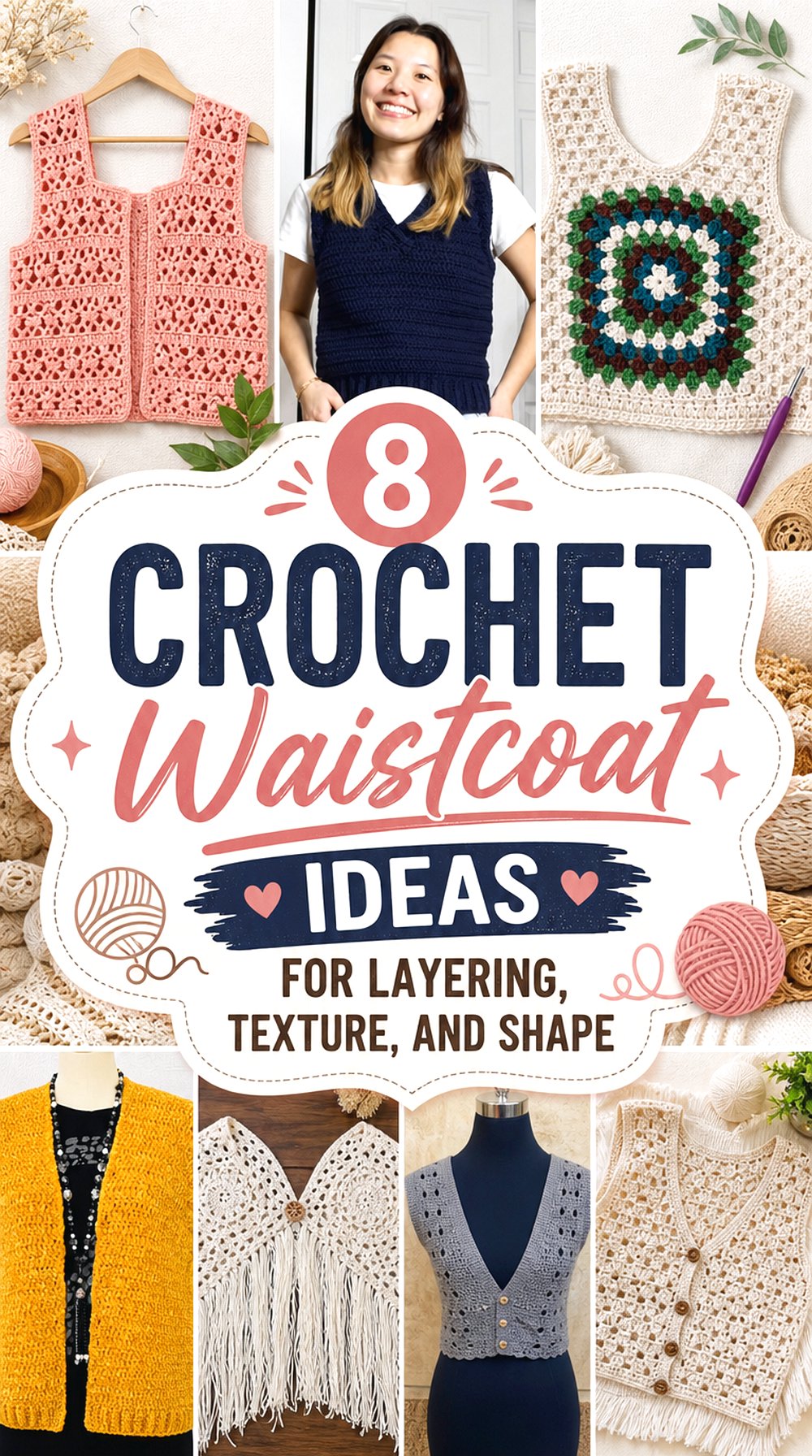

Crochet waistcoats can change the feel of an outfit without covering the whole look underneath. Some designs sit close to the body like sweater vests, while others work more like open sleeveless cardigans. The differences in neckline, length, texture, and closure make each option useful for a different kind of layering.
This collection includes fitted, open, hooded, cropped, lace, granny square, and boho-inspired waistcoat ideas. Some have a simple shape for everyday wear, while others focus on surface detail, fringe, buttons, or motif placement. Use the quick list first, then compare the project notes before opening the original tutorials for exact construction details.
Quick List
- Crochet Classic V-Neck Sweater Waistcoat
- Crochet Granny Square Patchwork Waistcoat
- Crochet Long Open-Front Waistcoat
- Crochet Hooded Layering Waistcoat
- Crochet Cropped Textured Sweater Waistcoat
- Crochet Button-Up Scallop Waistcoat
- Crochet Boho Fringe Flower Waistcoat
- Crochet Delicate Lace Waistcoat
Why These Crochet Waistcoats Are Worth Making
A crochet waistcoat is useful when you want a handmade garment that can layer over shirts, dresses, fitted tops, or simple long sleeves without adding full sleeves. The shape leaves the arms free, so details like neckline, body length, armhole depth, and front closure matter more than they might on a scarf or shawl.
These ideas also show how different a waistcoat can look within one category. A V-neck sweater vest feels neat and classic, a granny square version adds visible motif structure, and a lace waistcoat gives lighter coverage. Checking the finished shape before choosing a tutorial helps readers pick a piece that fits their wardrobe, not just their yarn basket.
1. Crochet Classic V Neck Sweater Waistcoat
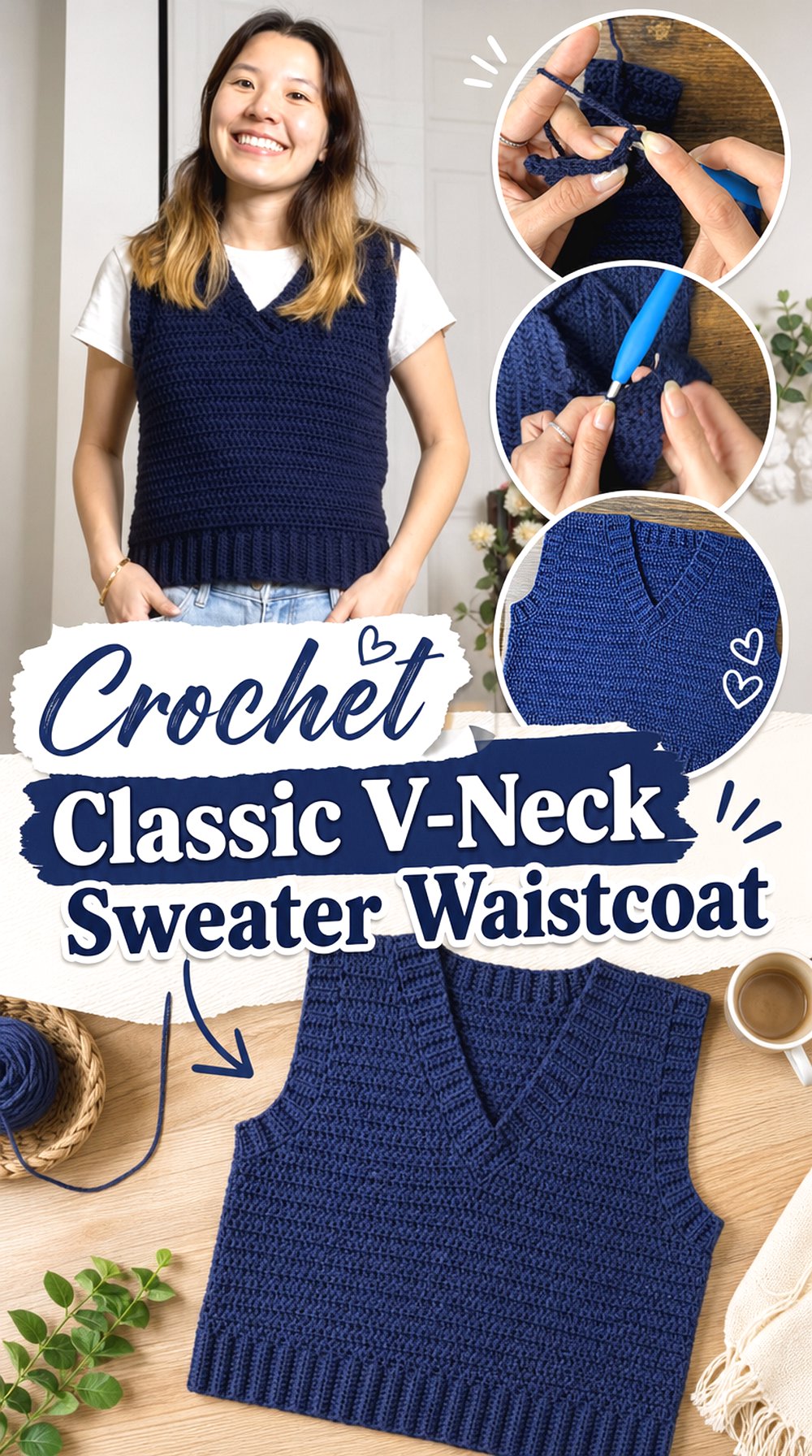
A clean V-neck shape gives this crochet waistcoat a familiar sweater-vest look. The source project uses a simple, solid body with ribbed finishing, so the focus stays on fit, neckline, and neat edges rather than heavy decoration. This is the most classic option in the set and may suit readers who want a waistcoat that can layer over collared shirts, fitted tees, or long-sleeve basics without looking overly bulky.
Look at the Neckline Shape
The V-neck is the feature that gives this waistcoat its sharper front line. Readers should check how low the neckline sits on the body and how the edge is finished before choosing it for a particular outfit. A deeper V may show more of the layer underneath, while a higher one can feel closer to a traditional sweater vest.
Check the Fit Information
For a sweater-style waistcoat, fit is more important than decoration. The body width, armhole shaping, and shoulder area all affect whether it sits neatly over another garment. Readers should compare the creator’s size notes with their own measurements and remember that the layer worn underneath may change how comfortable the finished piece feels.
Plan What to Wear Underneath
This waistcoat has a simple enough surface to work with plain or patterned base layers. A collared shirt can emphasize the V-neck, while a close-fitting long sleeve may keep the look smoother. Before starting, readers may want to think about the usual tops they wear most often so the finished length and neckline make sense.
Creator: VivCrochets
2. Crochet Granny Square Patchwork Waistcoat
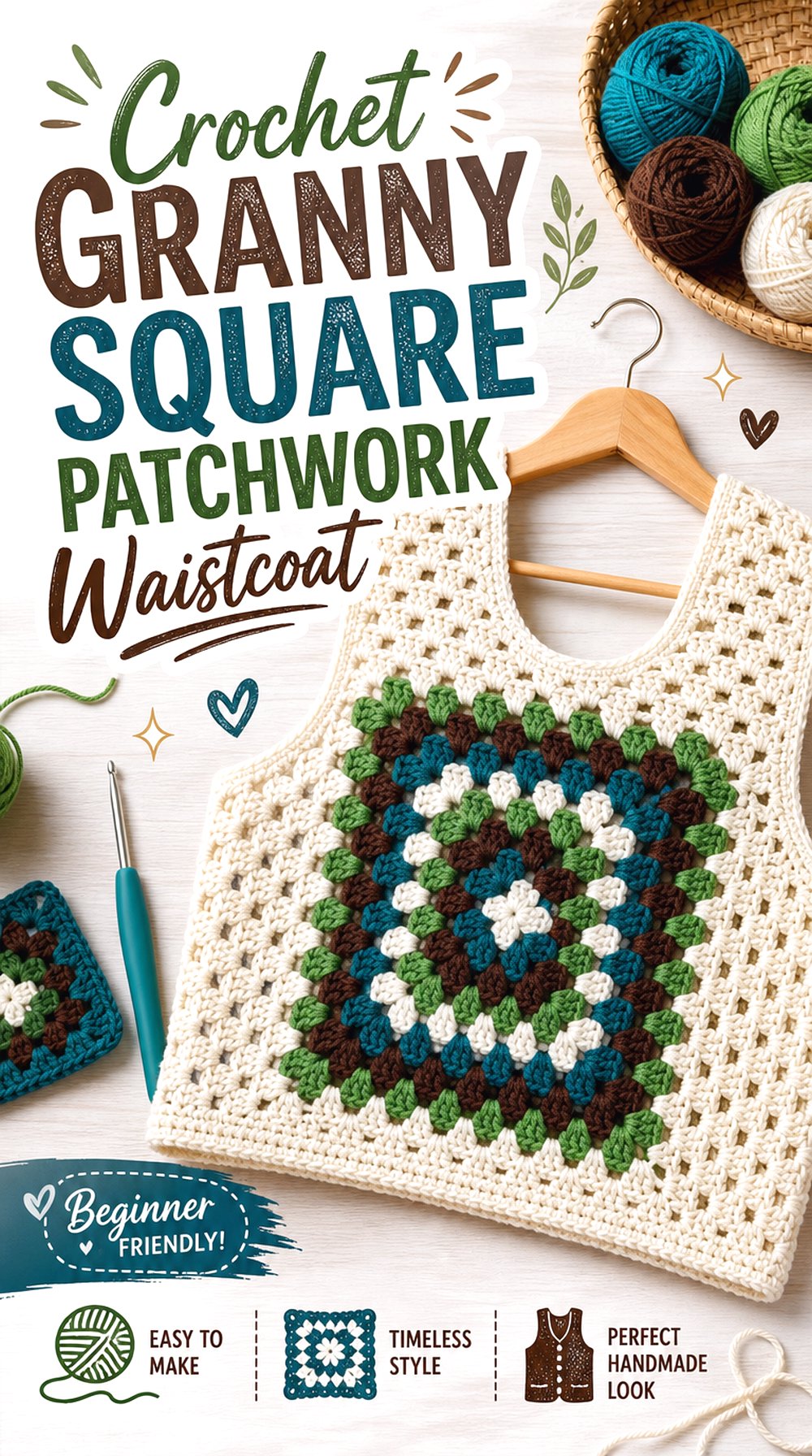
Granny squares make this waistcoat stand apart from the smoother sweater-vest options. The finished look is built around visible motifs, so color placement, joining, and edge finishing become part of the design. This idea may appeal to readers who want a waistcoat with a handmade patchwork feel rather than one flat fabric surface. It also brings more visual movement to the collection without relying only on fringe or lace.
Watch the Joining Section Closely
A granny square waistcoat depends on how the motifs come together. Even when each square looks neat on its own, the final garment can change if the joins pull, twist, or create uneven edges. Readers should slow down around the joining stage and compare the layout with the finished view before moving too far ahead.
Think About Color Placement
Motif garments can look very different depending on where each color lands. Strong contrast may make every square stand out, while closer tones can create a softer patchwork effect. The tutorial should be followed for the construction, but readers can still plan the color order before starting so the front, back, and shoulders feel balanced.
Check the Back View
The front of a granny square waistcoat often gets the most attention, but the back view matters because the motifs continue around the body. Readers should look for a clear finished view from behind or pause when the back layout is shown. This helps avoid surprises in shoulder placement, color distribution, and overall garment shape.
Creator: PassioKnit Kelsie
3. Crochet Long Open Front Waistcoat
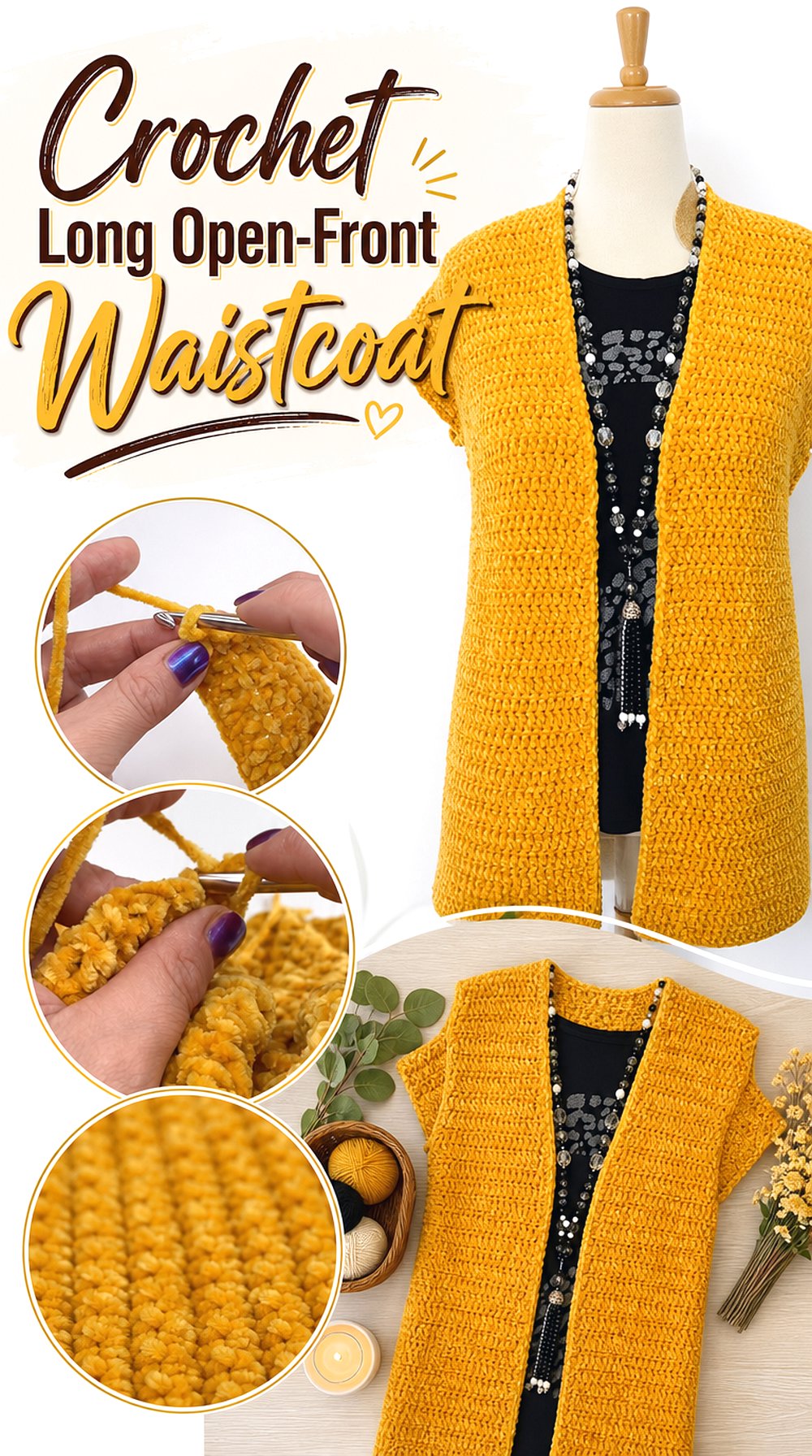
A longer open-front waistcoat works more like a sleeveless cardigan than a fitted sweater vest. The length gives it a soft vertical line, making it different from the cropped and buttoned options in this list. This kind of project may suit readers who want coverage through the body while still keeping the front open. It can layer over simple outfits, but the finished length and width should be checked carefully before starting.
Confirm the Garment Length
Length is the main decision with this waistcoat. A long piece can change where the eye falls on an outfit and may need more attention to drape than a short vest. Readers should confirm the finished length or watch how it sits on the model before deciding whether it matches their preferred layering style.
Consider Layering Needs
Because the front is open, the garment underneath remains visible. That can be useful with dresses, long tops, or fitted base layers, but it also means the waistcoat will not behave like a closed sweater vest. Readers should think about whether they want soft coverage, a vertical line, or a warmer-looking outer layer.
Check the Side Shape
Long waistcoats can vary in side depth and armhole openness. A closer side shape may feel neater, while a looser one may create more movement. Since side shaping affects how the garment hangs, readers should look for views from the front and side, not just a straight-on finished shot.
Creator: Claudetta Crochet
4. Crochet Hooded Layering Waistcoat
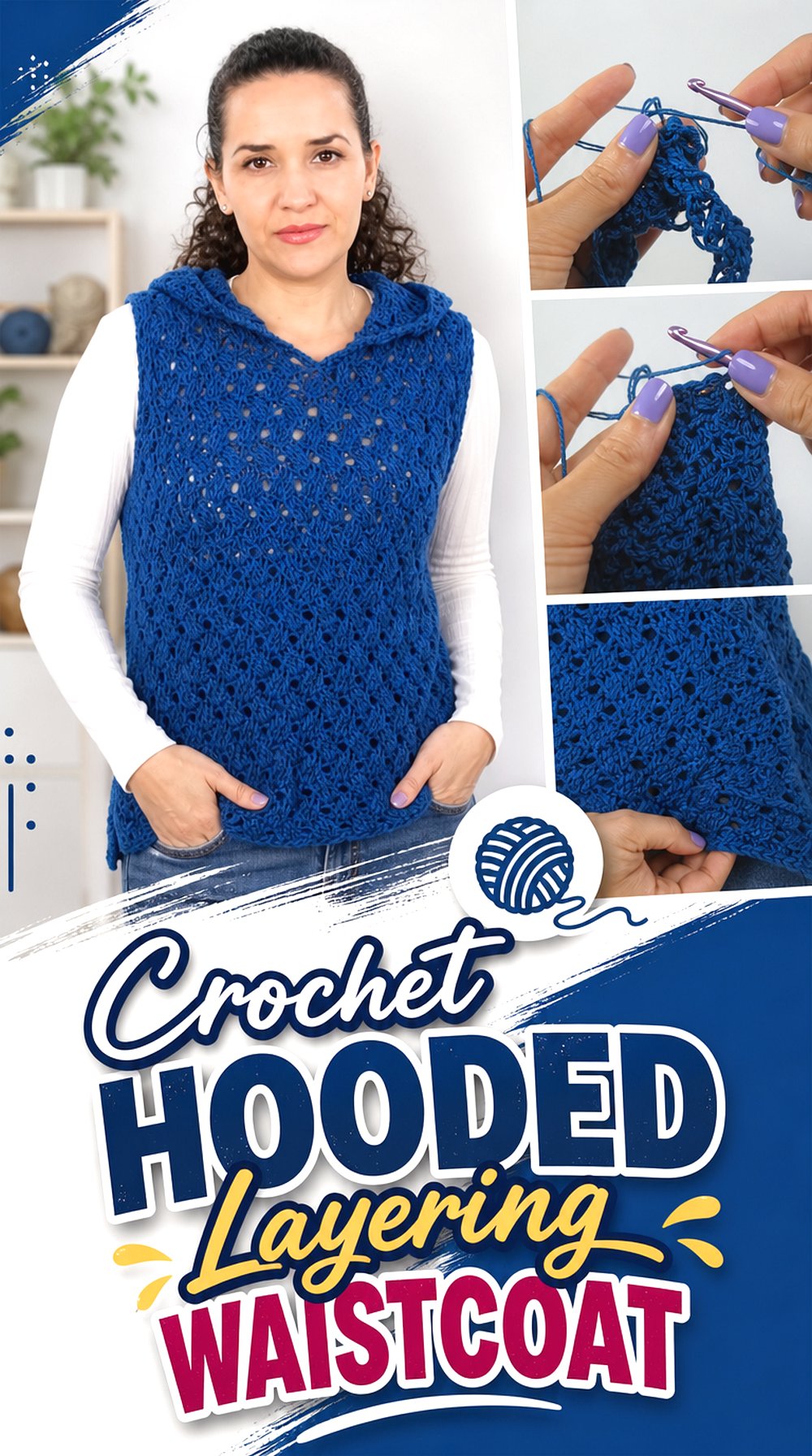
The hood gives this crochet waistcoat a more casual, outer-layer feeling. It is still sleeveless, but the added hood changes the shape around the neckline and shoulders. The source describes the project as a hooded vest with crisscross stitch and sizing for all sizes, so readers should pay close attention to the fit information rather than treating it like a simple rectangle. This option stands out from the cleaner V-neck and lace designs.
Review the Hood Shape
A hood adds weight and structure near the neckline, so its finished shape matters. Readers should check whether the hood sits flat, folds softly, or stands away from the neck. This makes a difference when choosing the waistcoat for layering under a jacket or wearing it as the outer visible piece.
Check the Size Range
The source presents this as an all-sizes project, but readers still need to compare the instructions with their own measurements. Armholes, body width, and hood depth can affect comfort. A waistcoat that is meant to go over another layer may need a different fit from one worn over a thin top.
Compare Fit From Each Angle
A hooded waistcoat should be checked from the front, back, and side when possible. The hood can hide the upper back, and the armholes can look different once the garment is worn. Pausing at final-view sections helps readers understand how the hood, shoulders, and open arm area work together.
Creator: Crochet MC
5. Crochet Cropped Textured Sweater Waistcoat
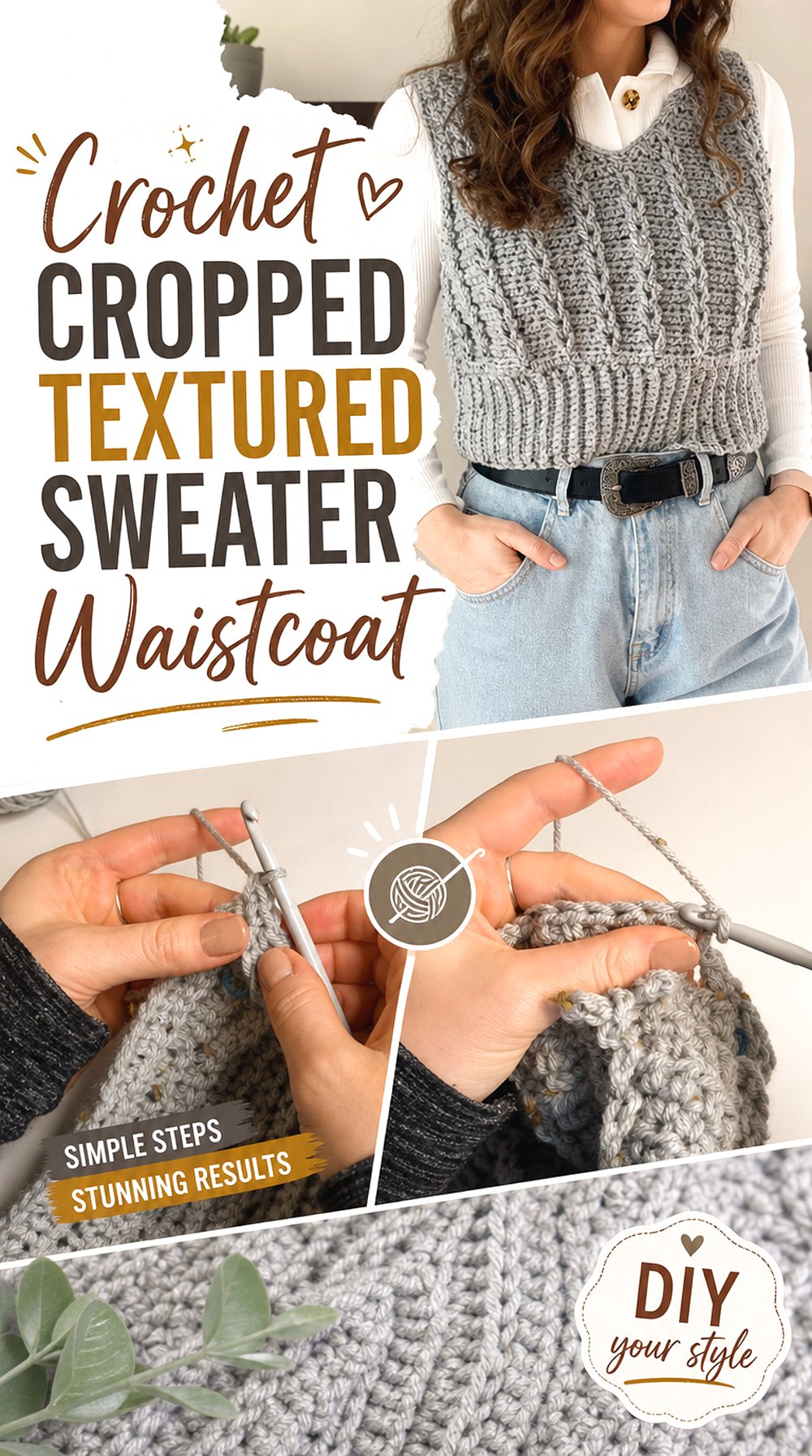
This cropped crochet waistcoat focuses on texture and a shorter body length. The tutorial describes a braided loop stitch, which gives the surface more raised detail than a plain sweater vest. Because the sample is cropped, the finished piece may work best as a visible top layer rather than a long coverage layer. It is a strong contrast to the long open-front waistcoat and the lace design later in the list.
Confirm the Garment Length
A cropped waistcoat changes the whole styling decision. It may meet high-waisted bottoms differently than a full-length vest, and it may show more of the garment underneath. Readers should check the creator’s fit notes and finished view before deciding whether to keep the cropped shape or look for size-adjustment guidance.
Consider the Raised Texture
The braided loop texture is the standout feature, so it should remain visible after the waistcoat is finished. Highly variegated yarn or very dark colors may make surface detail harder to see, depending on lighting and fiber. Readers should look at the close-ups and decide whether they want the stitch texture or the overall silhouette to be the main focus.
Review Size Adjustment Notes
The source mentions that the vest can be adjusted, but readers should still watch how the adjustment is explained. A cropped textured piece may need careful checking at the waist, armhole, and shoulder points. Keeping a simple progress note while following the tutorial can help prevent confusion when shaping or sizing changes appear.
Creator: Stephanie Tashi
6. Crochet Button Up Scallop Waistcoat
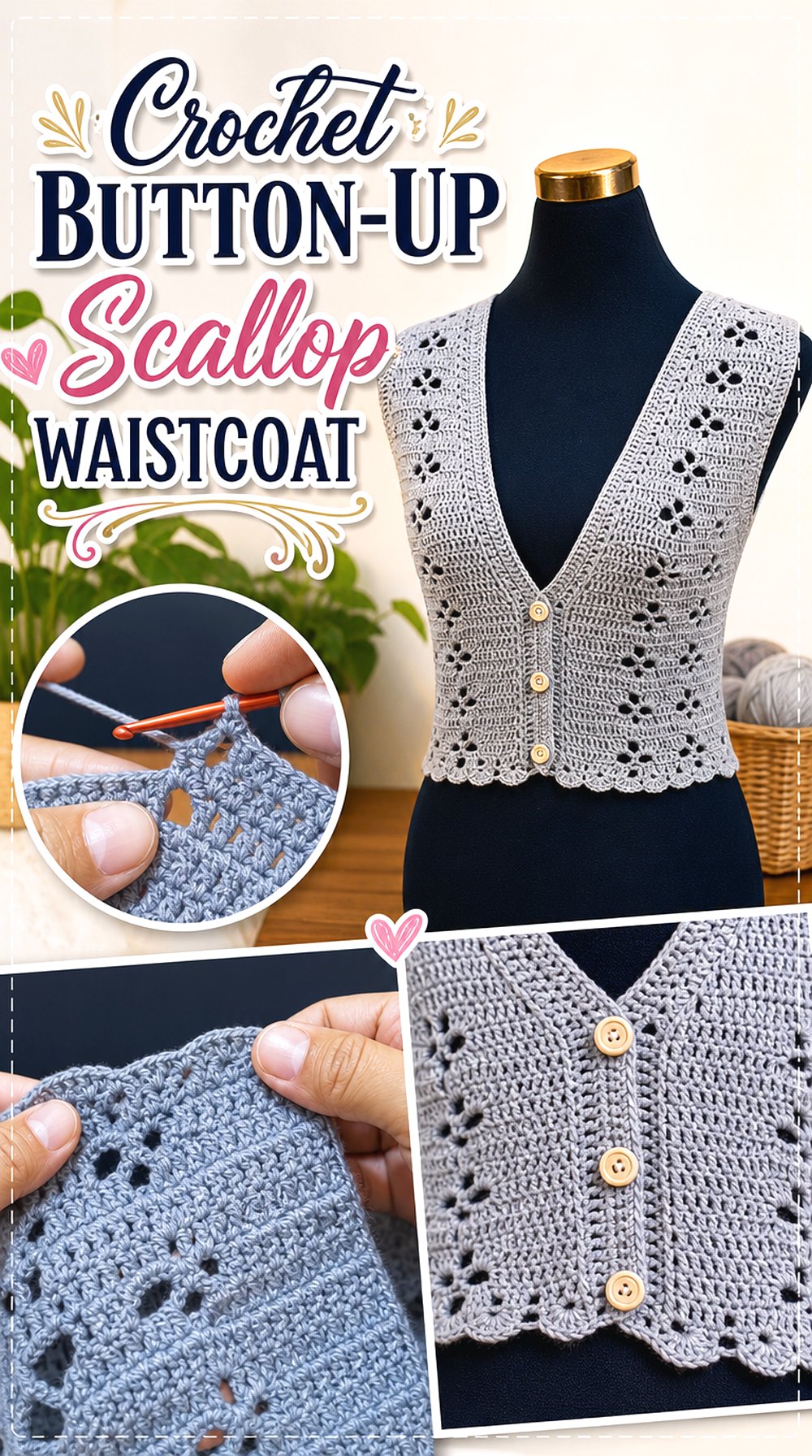
Buttons and a scalloped edge make this crochet waistcoat feel more finished at the front than the open styles. The tutorial describes a V-neckline, buttonholes, front buttons, and decorative edging, so this idea is useful for readers who want a closure instead of a loose open layer. It has more small finishing details to check than the long vest or classic pullover-style waistcoat, especially around the front bands.
Confirm How the Front Closes
A button-up waistcoat gives more control over the front opening, but the placement matters. Readers should check how many buttons are used, where the buttonholes sit, and whether the closed front matches the fit they want. The closure should be considered part of the garment design, not just a final decoration.
Look at the Neckline Shape
The V-neckline works together with the button front. When the buttons are closed, the neckline may frame the layer underneath; when left open, it may look more like a sleeveless cardigan. Readers should compare both views if available and decide how they are most likely to wear the finished waistcoat.
Check Any Extra Components
This project includes more than yarn and a hook because buttons are part of the finished result. Readers should confirm the material list before buying supplies and check whether sewing tools or matching thread are needed. It is also worth reviewing how the scallop edging changes the final outline of the garment.
Creator: Ler Crochet
7. Crochet Boho Fringe Flower Waistcoat
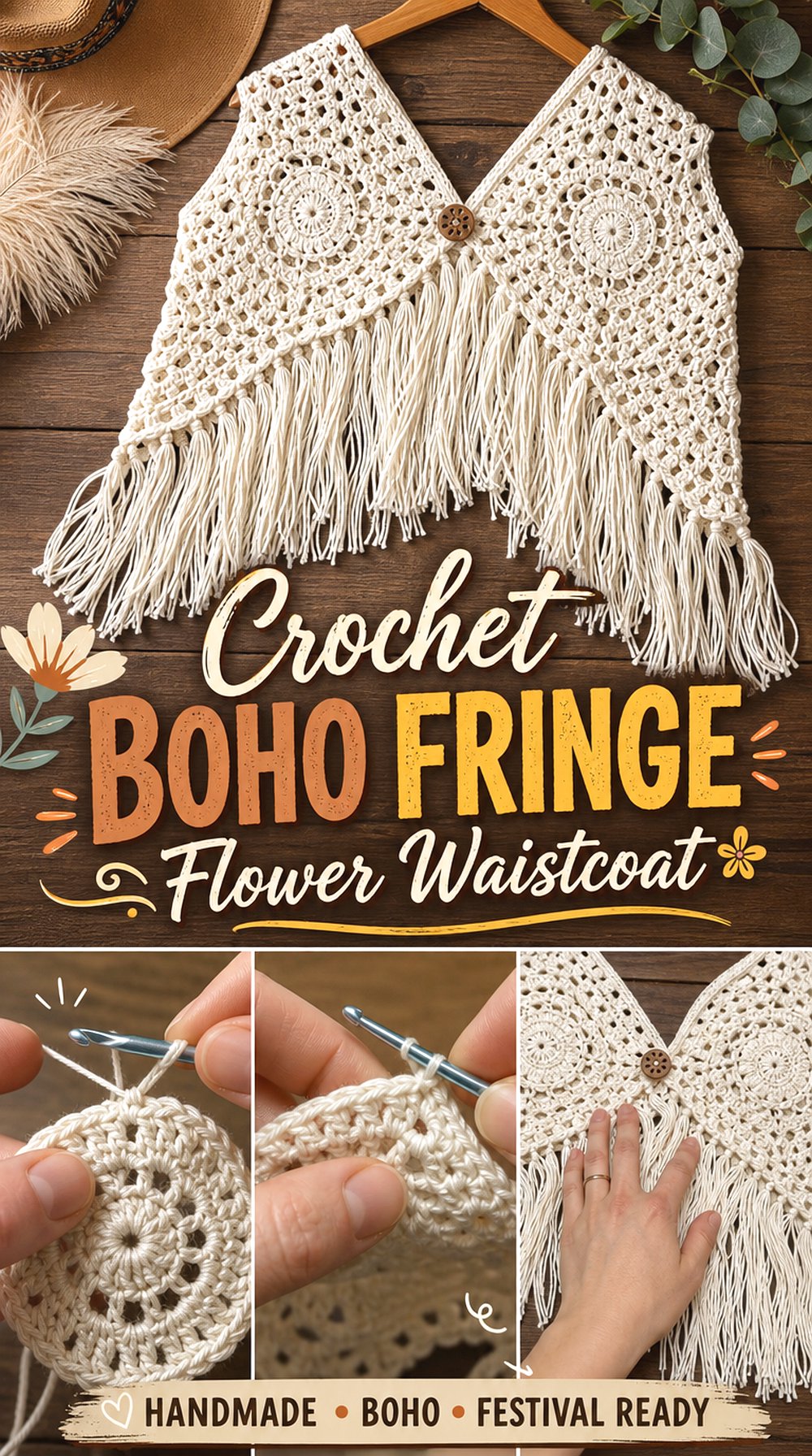
Flower motifs and fringe give this waistcoat a festival-inspired shape with more movement than the other projects. The source describes flower granny square motifs, fringe, and a wooden button, which makes this design more decorative than a simple sweater vest. It may suit readers who want a statement layering piece over a plain outfit. Because the details are visible, planning placement and finishing will matter as much as the main body shape.
Keep the Fringe Practical
Fringe changes how a waistcoat moves and how it hangs when worn. It can make the finished piece feel more relaxed, but readers should consider where the fringe lands and whether it will suit their usual outfits. The original tutorial should be used for placement, while the final styling choice depends on how much movement the reader wants.
Check the Motif Placement
Flower motifs create the visual center of this waistcoat. Their placement affects the front balance, back view, and overall style. Readers should pay close attention when the motifs are arranged and joined, especially if using different colors. A clear plan before joining can help the finished waistcoat look intentional instead of random.
Confirm Any Extra Components
The source mentions a wooden button, so readers should check the supply list before starting. Extra components can affect both the look and the closure. It is worth confirming the button size, placement, and whether the finished front is meant to stay closed, sit partly open, or work mostly as decoration.
Creator: Zays Crochet & Macrame
8. Crochet Delicate Lace Waistcoat
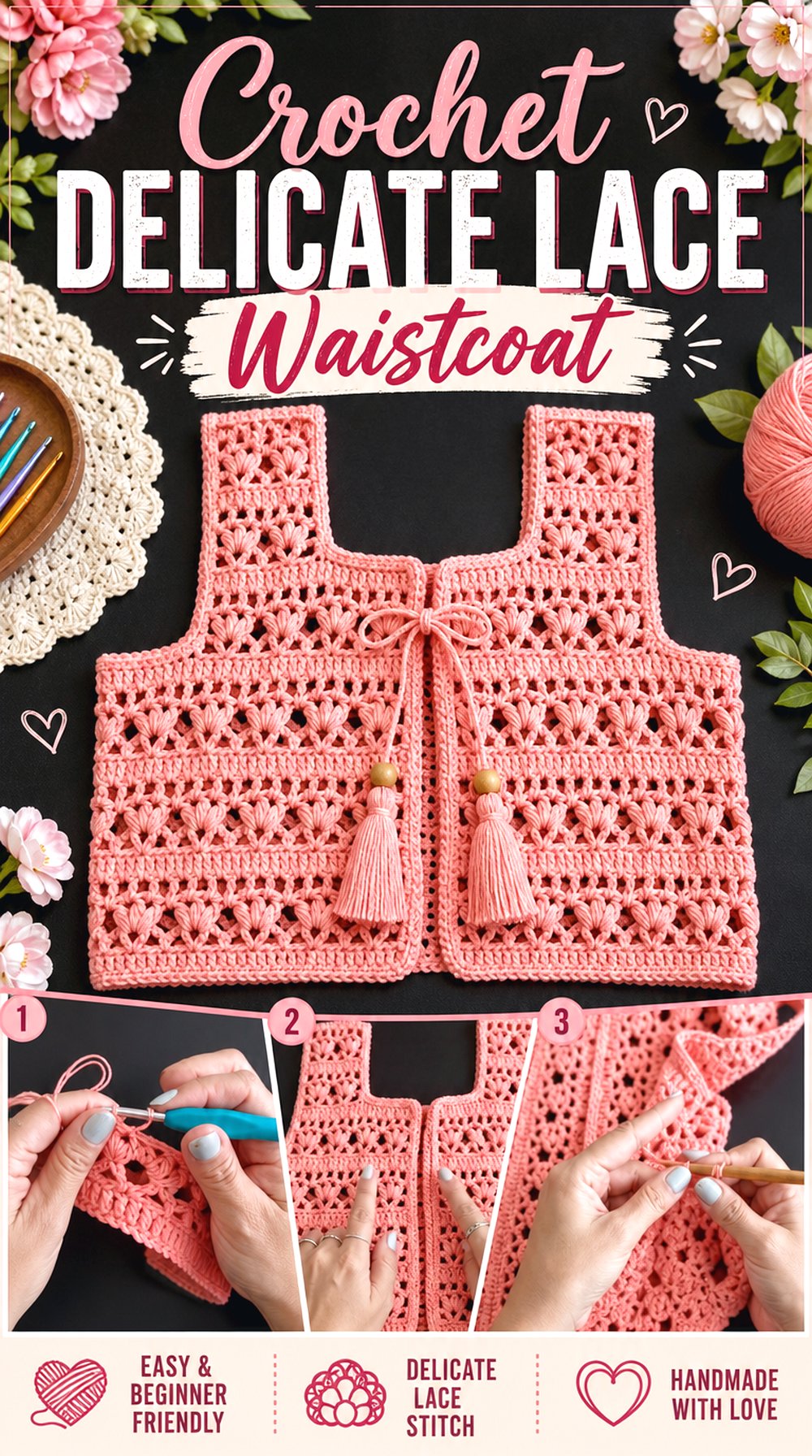
A lace crochet waistcoat brings a lighter, more open texture to the collection. The source describes a delicate lace stitch and a one-piece design that can be adapted, so this idea is less about heavy structure and more about drape, coverage, and surface pattern. It may work well for readers who want a softer layer over simple clothes, but the open stitch pattern means the underlayer should be considered from the beginning.
Think About Coverage
Lace-style crochet leaves more open space than solid sweater-vest fabric. That can make the waistcoat feel lighter visually, but it also means the layer underneath will show. Readers should decide whether they want contrast, matching tones, or a neutral base before choosing colors, especially if the lace pattern is the main feature.
Check Whether Adjustments Are Explained
The source says the design is adaptable, but readers should still review how that adjustment is handled. For a lace waistcoat, changes in width or length may affect the way the stitch pattern lands at the edges. It is useful to watch the full guide first and note where size decisions are made.
Compare the Drape Before Choosing Yarn
A delicate waistcoat depends on how the fabric hangs. The same general shape may look different with a firm yarn than with one that relaxes more softly. Readers should check the creator’s material list and final garment view before buying supplies, especially if they want the lace openings to remain clear and even.
Creator: V.Ccrochet
Conclusion
These crochet waistcoat ideas give readers several ways to approach the same garment category. The V-neck sweater waistcoat is the cleanest classic option, while the granny square and flower-fringe designs focus on motifs. The long open-front and hooded waistcoats offer more coverage, and the cropped, button-up, and lace versions each bring a different shape or finish. Before starting, compare neckline, length, closure, texture, and fit needs, then use the original tutorials for the exact construction details.
FAQs
How do I choose the right crochet waistcoat style?
Start with how you want to wear it. A V-neck sweater waistcoat works well for a neat layered look, while a long open-front waistcoat gives more body coverage. A lace version is lighter visually, and a granny square or fringe design makes the waistcoat the main feature of the outfit.
What should I check before starting a crochet waistcoat?
Check the size notes, finished views, material list, and whether the creator explains adjustments. Waistcoats need attention at the shoulders, armholes, neckline, and body length. If the tutorial includes buttons, a hood, fringe, or motifs, confirm those extra parts before buying supplies.
Can crochet waistcoats be adjusted for size?
Some tutorials include size or adjustment guidance, but the amount of help varies by creator. Readers should not assume every waistcoat can be resized the same way. Compare the creator’s notes with personal measurements and watch the shaping sections before changing length, width, armholes, or neckline depth.
What should I consider when layering a crochet waistcoat?
Think about the underlayer first. Open-front and lace waistcoats show more of the clothing underneath, while sweater-style waistcoats cover more of the torso. Cropped designs may work better with higher waistlines, and hooded or long waistcoats may need more space over thicker shirts.
Can I sell a waistcoat made from a YouTube tutorial?
Selling rules depend on the creator’s terms, the written pattern license, and any local business requirements. Do not assume that a public tutorial automatically allows selling finished items. Check the video description, linked pattern page, and creator wording before listing finished crochet waistcoats for sale.