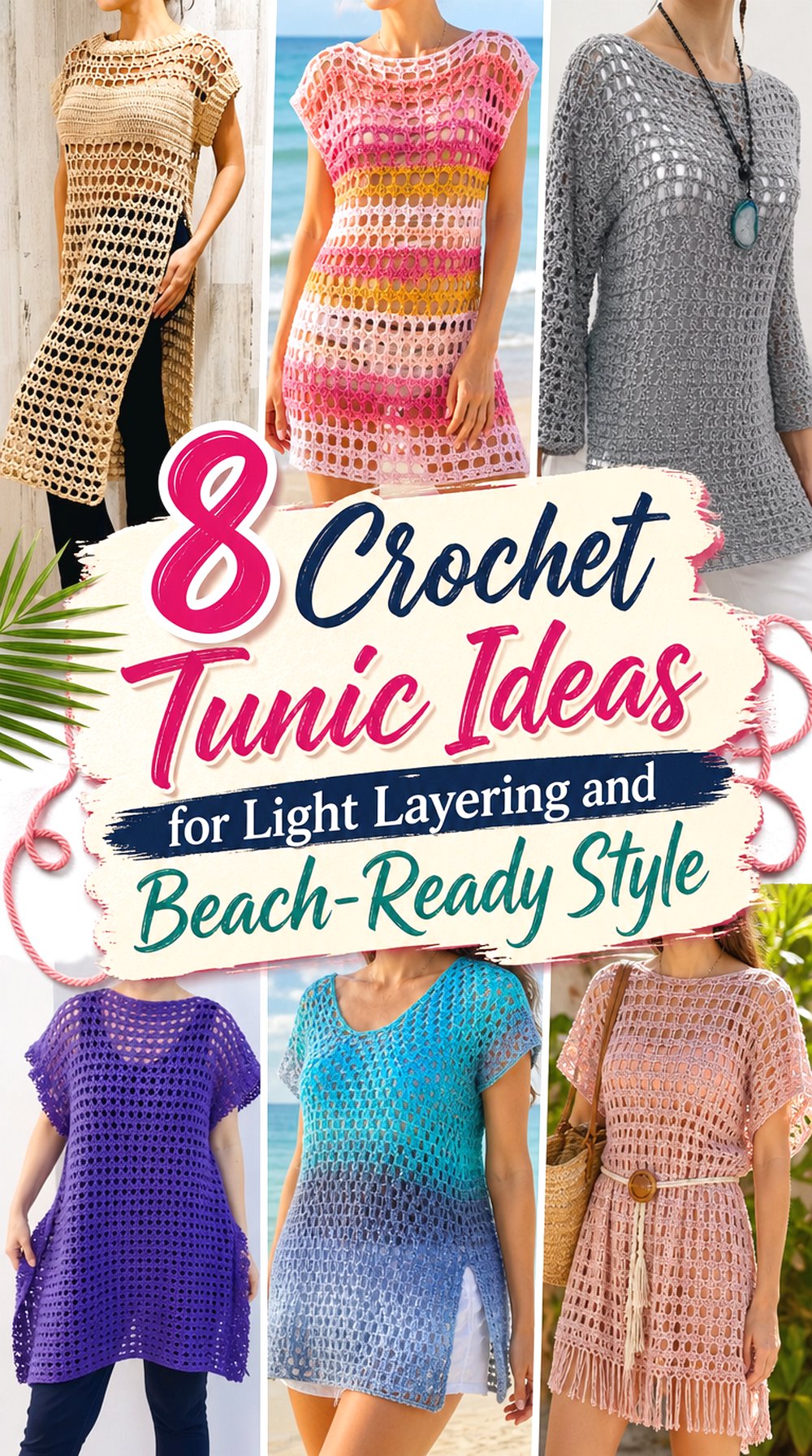

Crochet tunics can sit between a top, dress, and cover-up, which makes them useful when you want more length without choosing a full sweater or dress. This collection includes long tunics, airy mesh pieces, openwork summer layers, kaftan shapes, and beach cover-ups, so the choices are not all the same silhouette.
Some designs are better for wearing over a tank or slip, while others are meant to layer over swimwear or casual clothes. The main things to compare are length, coverage, neckline shape, sleeve style, and whether the finished piece needs exact body measurements before starting.
Quick List
- Crochet Long Everyday Tunic
- Crochet Granny Square Summer Tunic
- Crochet Mesh Rectangle Tunic
- Crochet Two-Rectangle Beach Tunic
- Crochet Belted Kaftan Tunic
- Crochet Tunic Dress Cover-Up
- Crochet Openwork Summer Tunic
- Crochet Fine-Thread Blouse Tunic
Why These Crochet Tunic Ideas Are Worth Making
A tunic gives more styling room than a short crochet top because the extra length can change how the garment is worn. A longer piece may work over pants, shorts, swimwear, or a fitted base layer, depending on the openness of the stitch pattern and the amount of coverage shown in the tutorial.
These projects are also useful for comparing garment decisions before committing to supplies. Some tunics focus on body length, while others focus on drape, open mesh, square-based construction, or a loose beachwear shape. Checking the size notes, neckline, armholes, side shaping, and finishing details helps readers choose a tutorial that matches the way they plan to wear the finished tunic.
1. Crochet Long Everyday Tunic

A long, straight tunic gives this idea a more garment-like shape than a short summer top. The finished length makes it useful for readers who want a crochet layer that can be worn with pants, shorts, or as a beach cover-up when the coverage works for them. Its simple modern look makes it different from the mesh and motif-heavy tunics in this list, especially for someone who wants a cleaner outline with plenty of body length.
Confirm the Garment Length
The listed finished length is an important reason to consider this tunic, especially if the goal is more coverage than a regular crochet top. Readers should compare the stated length with their own preferred tunic length before choosing supplies. A piece that looks dress-like on one body may sit closer to a long top on another, so body measurements matter here.
Think About Side Coverage
The source notes that the sides can affect how the garment is worn, including the option of treating it more like a dress when closed. That makes side coverage a practical decision, not just a finishing detail. Readers should watch how the side area is handled and decide whether they want a looser beach layer or a more closed everyday garment.
Review the Size Notes
This tutorial includes a sample size, but readers should still check how the creator discusses sizing before beginning. A long tunic has more fit points than a scarf or simple accessory, including bust, hip, armhole, and total length. Anyone planning a close fit should compare the creator’s measurements with a tunic they already like wearing.
Creator: D3 Crochet
2. Crochet Granny Square Summer Tunic
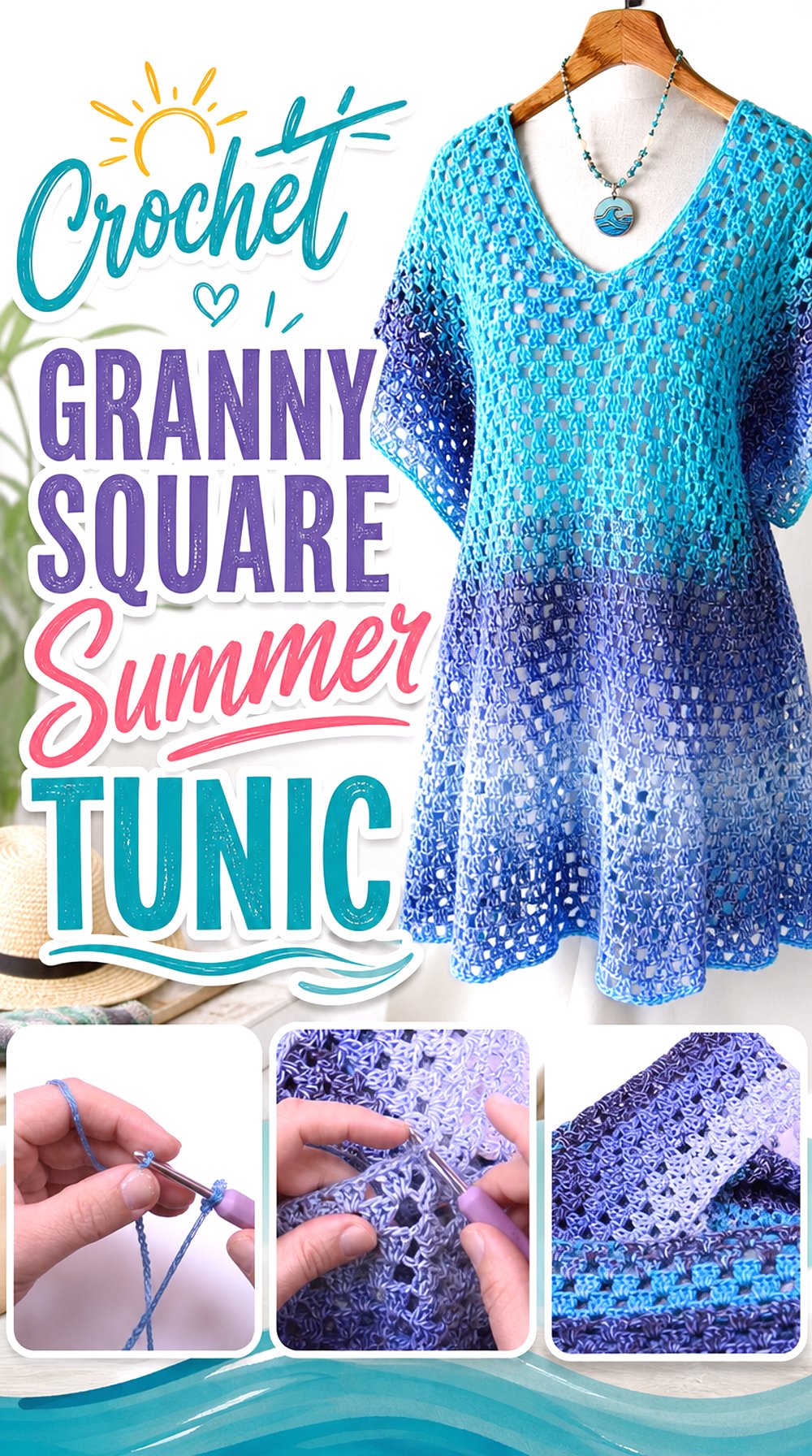
This summer tunic has a square-based look that feels very different from the long column and mesh styles. The source describes it as a lightweight tunic built around a large granny-square-style construction with an opening in the middle, giving it a relaxed layering shape. It may appeal to readers who like a visible motif layout and a softer drape instead of a more fitted tunic with shaped sleeves or a defined waist.
Look at the Center Opening
Because this tunic is built around a large square-style layout, the center opening matters for both comfort and coverage. Readers should look closely at how the neckline sits and how much space it leaves at the shoulders. A centered opening can create an easy layered shape, but it should still feel balanced when worn over a tank, camisole, or swimsuit.
Consider the Drape
The source describes this as a lightweight summer layer, so drape is one of the main reasons to choose it. A tunic with a soft fall can move differently from a stiff garment, especially around the sides and lower edge. Readers should check the yarn information and finished photos before substituting materials, since a different yarn may change the hang.
Check for the Written Pattern
This project is connected to a downloadable pattern, which may help readers who prefer written support alongside the video. Before starting, it is worth checking whether the current pattern link is still available and whether it includes the size or measurement details needed. Written support can be especially helpful for a garment with a distinctive square-based layout.
Creator: Yarnspirations
3. Crochet Mesh Rectangle Tunic

Open mesh gives this tunic a lighter, more see-through finish, so it works best as a layering garment rather than a stand-alone top. The source describes a made-to-measure piece built from four rectangles, with larger front and back panels and smaller sleeve rectangles. That construction makes this option stand apart from the round, square, and dress-like tunics because the shape depends strongly on panel width, sleeve length, and how the rectangles are joined.
Think About Coverage
The mesh texture is the main feature here, so readers should decide what they plan to wear underneath before beginning. A more open tunic can work over a fitted top, swimwear, or another base layer, but the amount of coverage will depend on the stitch openness and finished size. It is better to plan the underlayer early instead of treating it as an afterthought.
Take Measurements Carefully
This project is described as measurement-based, which is useful for a tunic but also requires attention. Readers should take their own measurements and compare them with the creator’s guidance before starting the panels. A rectangle-based garment can look simple, but width, length, and sleeve placement still affect how the finished tunic sits on the body.
Watch the Joining Section Closely
Since the piece is made from separate rectangles, the joining stage controls the final armholes, side seams, and overall shape. Readers should pause before joining and compare the front, back, and sleeve pieces so the layout makes sense. This is not a section to rush, because small placement differences can affect the finished fit and movement.
Creator: Toyainstitches
4. Crochet Two Rectangle Beach Tunic

This beach tunic uses a simpler garment idea: two matching rectangles joined to create the body, shoulders, and arm openings. The source describes it as a summer tunic top that can also become a beach cover-up when made longer. That makes it useful for readers who want a clear, flat-panel structure instead of a more shaped tunic, while still getting a wearable garment with enough length to layer over warm-weather outfits.
Decide on the Finished Length
Length is one of the most useful choices for this tunic because the source notes that making it longer can shift it toward a beach cover-up. Readers should decide whether they want a top-length tunic or more coverage before they begin. That choice affects how the finished piece will pair with shorts, swimwear, or a fitted layer underneath.
Check the Armhole Placement
A two-rectangle garment depends on where the panels are joined and left open. The armhole area should be checked carefully so the tunic has enough movement without becoming too loose at the sides. Readers may want to compare the armhole placement with a top they already wear comfortably before committing to the final joining.
Review the Size Range
The source lists a broad size range, but readers should still compare their own measurements with the creator’s notes. A rectangle-style tunic may be easier to visualize flat, yet the finished garment still needs enough width across the bust and hips. Anyone between sizes should pay attention to how the creator explains adding width or length.
Creator: Jennyandteddy crochet.
5. Crochet Belted Kaftan Tunic

A kaftan-style tunic brings a loose, beachwear-inspired shape into the list. The source describes a relaxed fit, an adjustable deep V-neckline, optional length choices, and a thin belt that can define the waist. This option is different from the rectangle tunics because the styling can change depending on whether it is worn loose or belted. It may suit readers looking for a crochet cover-up with a longer, more flowing outline.
Look at the V-Neckline Shape
The adjustable V-neckline is one of the main styling points of this kaftan tunic. Readers should check how low the neckline sits and how the creator controls the opening. A deep neckline can look balanced over swimwear or a slip, but it may need a base layer for everyday wear, depending on personal coverage preferences.
Decide Whether to Add the Belt
The belt changes the whole outline of the garment. Worn loose, the kaftan shape can look relaxed and open; tied at the waist, it becomes more defined. Readers should decide whether the belt matches their intended use before finishing the project, especially if they want the tunic to move easily over swimwear or sit closer over a slip.
Confirm the Length Choice
The source notes that the length can be adjusted, with the creator choosing a knee-length version. That gives readers a clear decision point before starting. A shorter version may feel more like a tunic top, while a longer version may behave more like a beach dress or cover-up. Measurements should guide that choice.
Creator: la fata tuttofare
6. Crochet Tunic Dress Cover Up
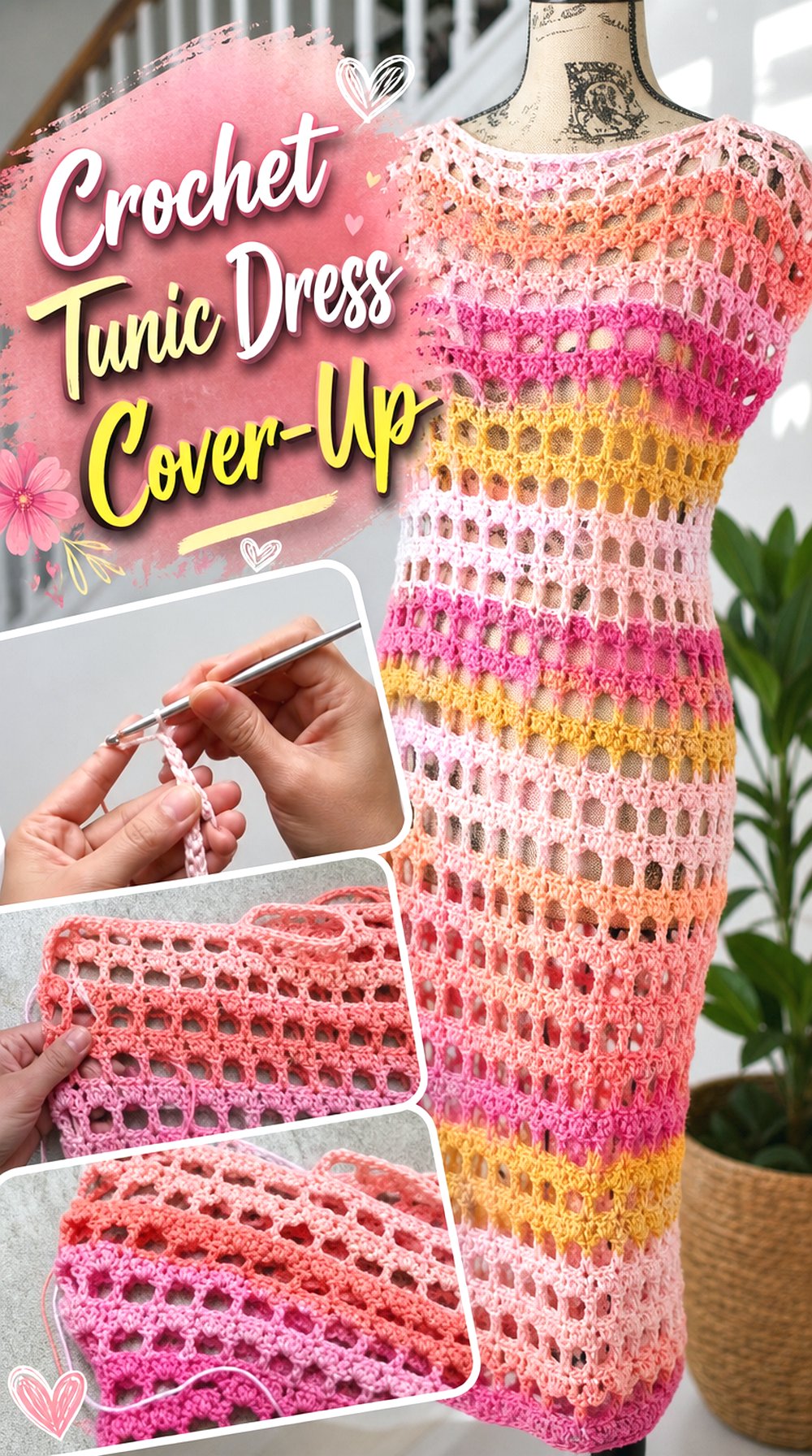
This tunic dress has a longer summer-cover-up purpose, making it useful for readers who want more length than a blouse but not a heavily fitted garment. The source describes it as a step-by-step tunic dress that can also be worn as a beach cover-up and mentions a two-panel construction. That gives it a clearer dress-like direction than the mesh tunic, while still keeping the focus on warm-weather layering.
Consider the Dress-Like Shape
Because this project is presented as a tunic dress, readers should think about where they want the hem to fall. A tunic dress can be worn differently from a standard top, especially when used as a beach cover-up. The finished length, side coverage, and openness should match the intended setting, whether that is poolside layering or casual summer wear.
Check the Panel Assembly
The source describes the garment as being made from two panels, so assembly is a key part of the finished result. Readers should pay attention to how the panels line up and where openings are left for the neck and arms. Even a simple panel structure needs careful placement to keep the garment balanced from front to back.
Plan the Underlayer
A cover-up tunic often depends on what is worn beneath it. Before choosing this project, readers should look at the openness of the stitch pattern and decide whether they need a swimsuit, tank, slip, or fitted dress underneath. This helps avoid surprises when the finished piece has more open areas than expected.
Creator: Crafting Shed
7. Crochet Openwork Summer Tunic

This openwork tunic has a more delicate summer-blouse feeling than the chunkier or rectangle-based options. The source describes it as a summer openwork crochet tunic and blouse, with cotton yarn information included in the video description. It may interest readers who want an airy surface pattern and a lighter visual finish, while still making a wearable tunic shape that can layer over a simple base.
Think About the Openwork
Openwork is the defining feature of this tunic, so coverage should be considered before starting. A lace-like surface can look beautiful as a summer layer, but it may not provide the same opacity as a denser crochet garment. Readers should plan what they will wear underneath and check the finished views for how much skin or base fabric shows through.
Confirm the Material Details
The description provides yarn and hook information, which is useful for readers comparing this project with other tunics. Before buying supplies, it is worth recording the creator’s listed materials and checking whether similar yarn is available. Substituting yarn without comparing weight and fiber behavior may change the drape, size, and openness of the finished tunic.
Compare the Fit From Each Angle
For an openwork garment, fit is not only about width. The neckline, armholes, side area, and hem all affect how the tunic looks over clothing. Readers should look for front and side views, then compare them with the amount of ease they prefer. A light tunic can feel very different when worn close to the body versus loose.
Creator: Вязание Озимок Ангелина
8. Crochet Fine Thread Blouse Tunic

A fine-thread blouse tunic gives this list a more detailed, refined direction. The source presents it as a step-by-step crochet tunic and blouse and includes a small hook size in the materials, which suggests a more delicate fabric than the bulkier beach-cover-up options. This project may suit readers who want a crochet tunic that feels closer to a dressy blouse layer, while still keeping the longer tunic category in mind.
Expect a Finer Fabric
Fine-thread crochet can create a different finish from a DK, worsted, or cotton-cake tunic. Readers should look closely at the fabric density, drape, and stitch definition before choosing this project. A finer fabric may give a more polished blouse look, but it also means the material choice and gauge information deserve careful attention.
Check the Size Information
The available description confirms the project type and materials, but readers should review the tutorial for size guidance before starting. A blouse-style tunic needs enough room at the bust, shoulders, and hips to sit comfortably. Without clear size planning, the final garment may not match the length or ease the maker had in mind.
Prepare for Detailed Progress
A fine-thread tunic may require more careful progress tracking than a simple mesh cover-up. Readers may want to mark stopping points, compare the garment shape often, and avoid skipping visual checks. The goal is not to memorize the whole project at once, but to keep the shaping and proportions clear as the garment develops.
Creator: Las Maravillas del Crochet
Conclusion
These crochet tunic ideas cover several different garment needs. The long everyday tunic and tunic dress offer more length, while the mesh and openwork versions are better for visible layering. The granny-square tunic gives a motif-based look, the two-rectangle tunic keeps the structure straightforward, and the kaftan version adds a loose beachwear shape with an optional belt. Readers should choose by coverage, length, neckline, and construction style, then use the original tutorials for the exact construction details.
FAQs
How do I choose the right crochet tunic length?
Start by deciding how the tunic will be worn. A shorter tunic may work over jeans or shorts, while a longer one may feel closer to a beach cover-up or tunic dress. Compare the creator’s finished length, if provided, with a garment you already like before starting.
Should a crochet tunic be fitted or loose?
That depends on the project style and intended use. Mesh, kaftan, and beach-cover-up tunics often look better with relaxed ease, while blouse-style tunics may need closer measurement checks. Always review the creator’s size notes, especially around the bust, hips, armholes, and total length.
What should I wear under an open crochet tunic?
Open crochet tunics usually need a base layer. Depending on the design, that could be a tank top, camisole, swimsuit, slip, or fitted dress. Look at how open the stitch pattern is and decide whether the finished garment gives enough coverage for where it will be worn.
Can I change the yarn for a crochet tunic?
Yarn changes can affect drape, size, weight, and coverage, especially in garments. Before substituting, compare the yarn weight, fiber content, hook size, and gauge information from the creator. For tunics with openwork or mesh, even a small change can alter how the fabric hangs.
Can I sell a crochet tunic made from a YouTube tutorial?
Do not assume selling is allowed just because a tutorial is public. Check the creator’s description, website, pattern terms, and any licensing notes. When terms are unclear, ask the creator directly or make the item for personal use only.


