

Cool blue and white give crochet granny square slippers a crisp two-color structure that works especially well when the motifs remain clearly visible after assembly. Cool blue can anchor the larger areas, while white can define centers, outer rounds, joins, openings, or individual motifs.
Slippers require a different color strategy from granny square blankets. Only a small number of motifs may be visible at once, and their placement around the toe, instep, sides, heel, and opening affects the finished color balance. A white-centered square on top of the foot can become much more prominent than the same motif placed along the side.
The 13 ideas below use those locations deliberately. Some keep cool blue dominant within every square, others reverse the motifs, and several concentrate white or blue around a particular slipper feature. The credited tutorials support the granny-square or slipper construction concept; the cool blue and white palettes are independent adaptations.
Quick List
- Cool Blue Center Crochet Granny Square Slippers With White Outer Rounds
- White Center Crochet Granny Square Slippers With Cool Blue Frames
- Alternating Cool Blue And White Crochet Granny Square Slippers
- Cool Blue Crochet Granny Square Slippers With White Joining
- White Crochet Granny Square Slippers With Cool Blue Joining
- Cool Blue Crochet Granny Square Slippers With White Toe Motifs
- White Crochet Granny Square Slippers With Cool Blue Instep Squares
- Cool Blue And White Crochet Granny Square Slippers With Reversed Motifs
- Cool Blue Crochet Granny Square Slippers With White Opening Edge
- White Crochet Granny Square Slippers With Cool Blue Opening Edge
- Cool Blue Crochet Solid Granny Square Slippers With White Centers
- Cool Blue White And Silver Gray Crochet Granny Square Slippers
- Cool Blue White And Navy Crochet Granny Square Slippers
Decide Whether Cool Blue or White Should Lead the Slipper Motifs
Start with the complete pair rather than one granny square. Cool blue outer rounds repeated across several motifs can make the slippers look predominantly blue even when every square has a white center. White outer rounds create a much lighter effect and make smaller blue centers appear more isolated.
Consistency between the two slippers matters as well. If the same motif appears on the instep of each foot, keep its color placement matched unless an intentionally mismatched pair is the goal.
Use Cool Blue and White to Define the Toe and Instep
The upper surface of the foot receives more attention than many side or joining areas, so motifs placed there can carry the strongest color statement. A white-heavy instep square can become the focal point of cool-blue slippers, while a blue-heavy square can anchor an otherwise white pair.
Before assembly, lay out the motifs approximately where they will sit. This makes it easier to spot an accidental concentration of white or blue on one side of the pair.
Plan Cool Blue and White Joining Before Assembly
Visible joining can become a substantial part of a small granny-square project. White joins can outline cool-blue motifs and make the modular construction clearer. Cool blue joins can create a stronger framework around white-heavy squares.
Choose the joining color after comparing the completed outer rounds. The join should support the intended color hierarchy rather than introducing an unplanned third visual layer.
1. Cool Blue Center Crochet Granny Square Slippers With White Outer Rounds
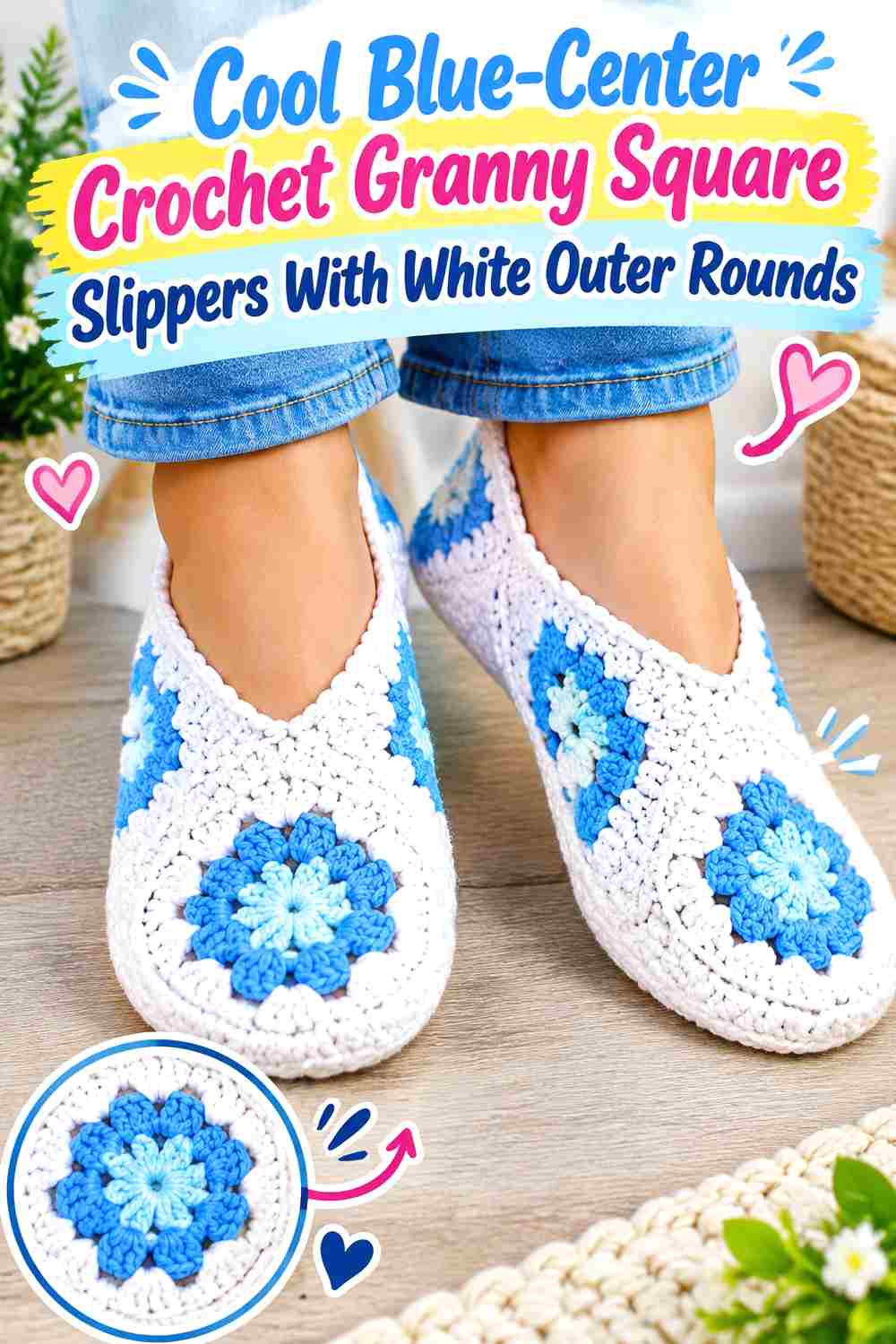
Begin each motif in cool blue and move into white toward the outside. The repeated blue centers provide clear focal points, while the white outer rounds create separation where the motifs meet around the foot.
Cool Blue Centers Give the Granny Square Slippers Repeated Focal Points
Keep blue in the same central position throughout both slippers. Repetition makes the color arrangement look deliberate even when the motifs change orientation during assembly.
White Outer Rounds Separate Cool Blue Slipper Centers
White creates visible space around each blue focal point. This can help preserve the individual granny-square shapes after several motifs are connected.
Cool Blue Can Return Around White Granny Square Slipper Edges
If white begins to dominate the assembled slippers, repeat cool blue at the opening or another finishing edge. This reconnects the perimeter with the motif centers.
Creator Credit: Naztazia
2. White Center Crochet Granny Square Slippers With Cool Blue Frames
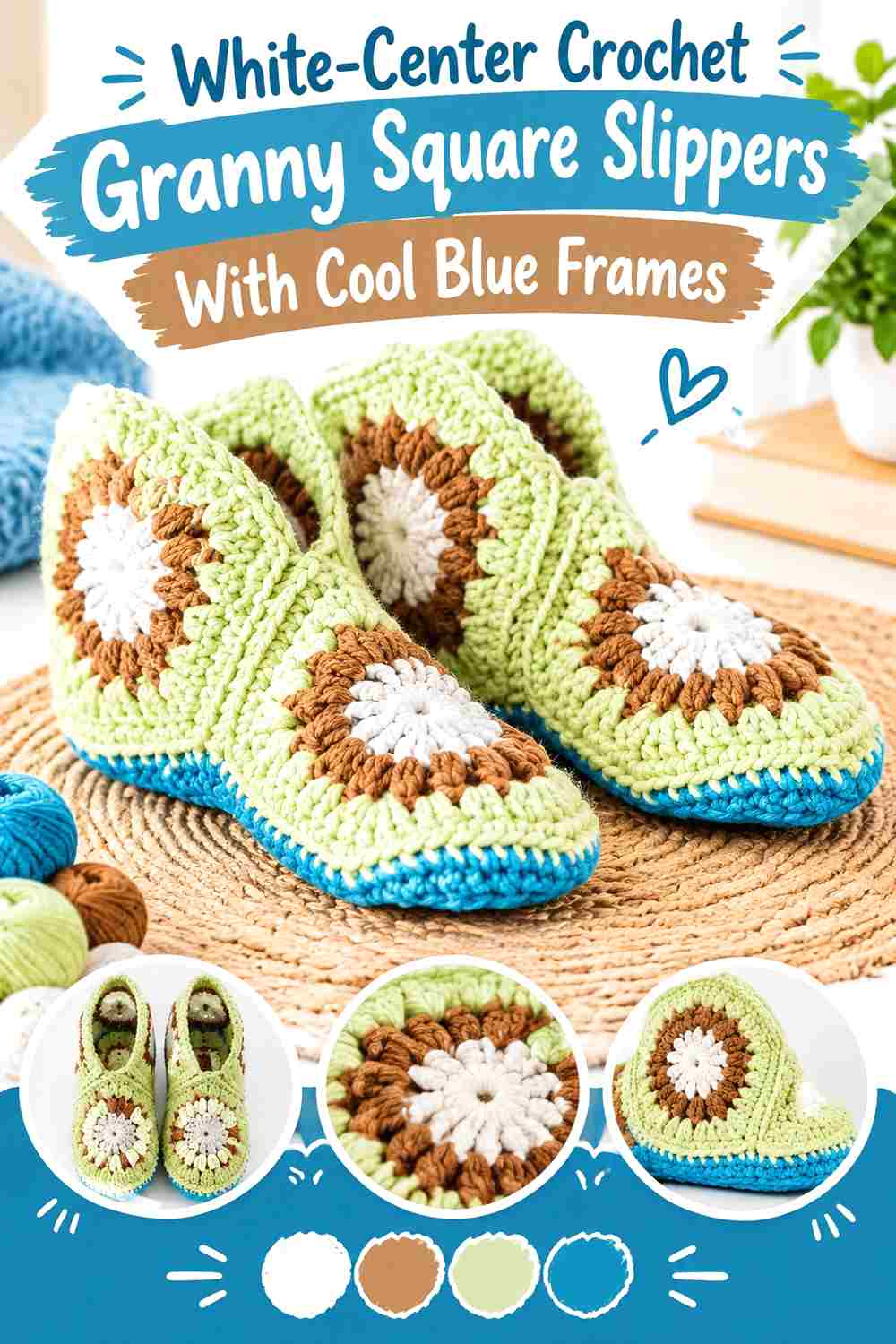
Reverse the first arrangement by starting each motif in white and making the outer rounds cool blue. Because outer rounds occupy more area, this version creates a noticeably bluer finished slipper.
White Centers Lighten Cool Blue Granny Square Slippers
Small white centers can remain highly visible inside darker blue frames. Repeat them consistently so they form recognizable light points across both slippers.
Cool Blue Outer Rounds Connect White-Center Slipper Motifs
Finishing each square in blue gives neighboring motifs a common outer color. Once joined, the squares can read as one blue surface containing repeated white centers.
White Should Remain Large Enough Inside Cool Blue Slipper Squares
If the motifs contain several blue rounds, a very small white center can lose visual importance. Extend white farther outward when you want a more balanced two-color result.
Creator Credit: The Crochet Crowd
3. Alternating Cool Blue And White Crochet Granny Square Slippers
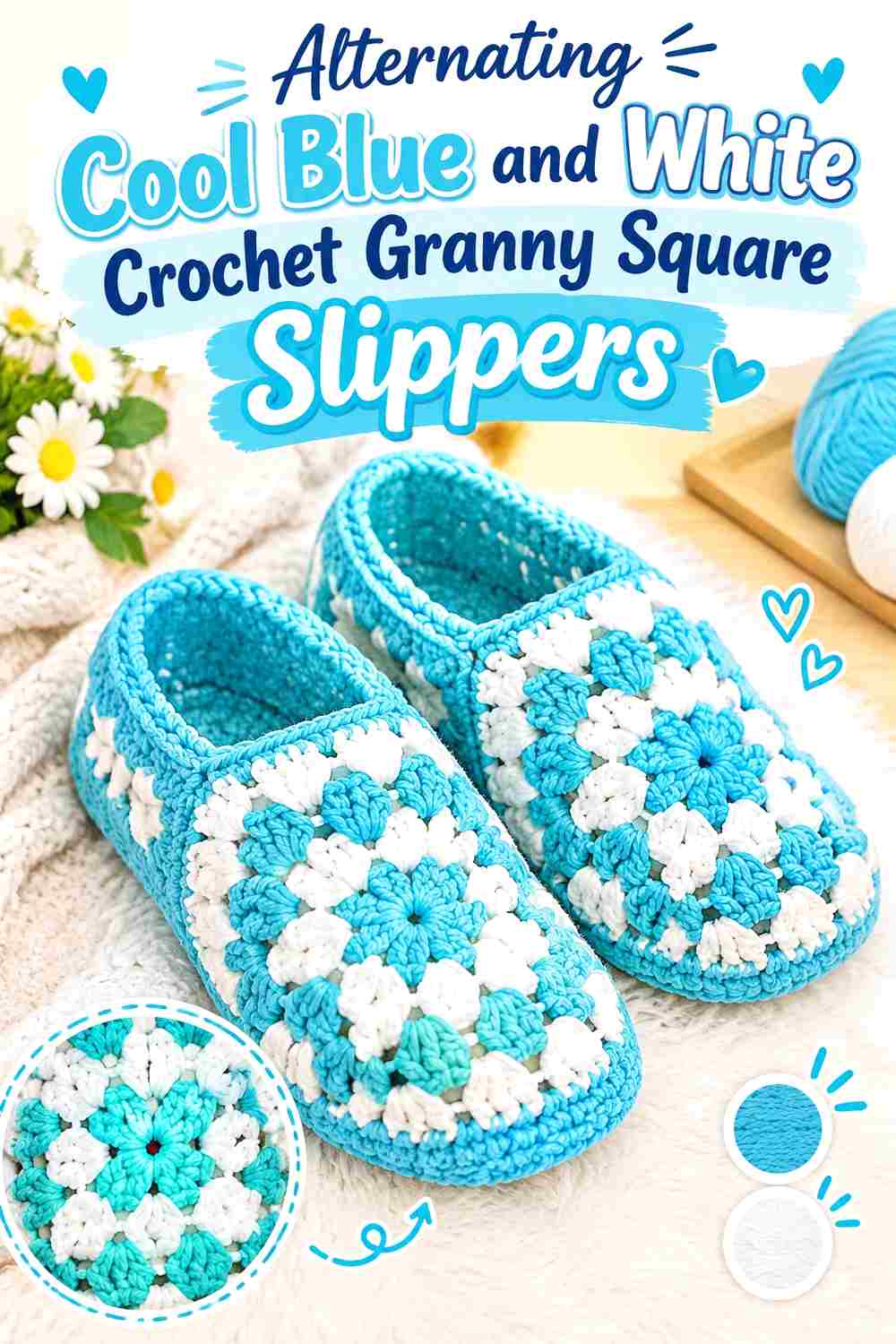
Create two versions of the same motif: one cool-blue-dominant and one white-dominant. Alternate their placement rather than changing the underlying construction.
Cool Blue-Dominant Squares Can Alternate With White Slipper Squares
Reversing the color hierarchy gives neighboring motifs obvious differences while keeping the granny-square structure consistent.
White Motifs Need Cool Blue Details to Connect the Slippers
Include some blue inside the white-heavy squares. A blue center or outer round keeps them related to neighboring blue-dominant motifs.
Cool Blue and White Alternation Should Match Across Both Slippers
Lay out the complete pair before joining. If the left slipper has a blue-heavy toe motif, repeat that relationship on the right when a coordinated pair is intended.
Creator Credit: The Secret Yarnery
4. Cool Blue Crochet Granny Square Slippers With White Joining

Keep the motifs predominantly cool blue and reserve white for assembly. The lighter connecting lines can reveal the granny-square structure without requiring frequent white rounds inside each motif.
Cool Blue Can Fill Most of Each Granny Square Slipper Motif
Large blue areas give the slippers a clear main color while the granny clusters provide the internal surface pattern.
White Joining Can Outline Cool Blue Slipper Squares
A visible white join separates neighboring blue motifs. This is useful when every square finishes in the same cool blue and would otherwise blend into adjacent squares.
Cool Blue Should Remain Wider Than White Slipper Join Lines
Keep the white connections visually restrained if blue should remain dominant. Wide white joins can turn the design into a grid rather than a blue slipper with light definition.
Creator Credit: Melanie Ham
5. White Crochet Granny Square Slippers With Cool Blue Joining
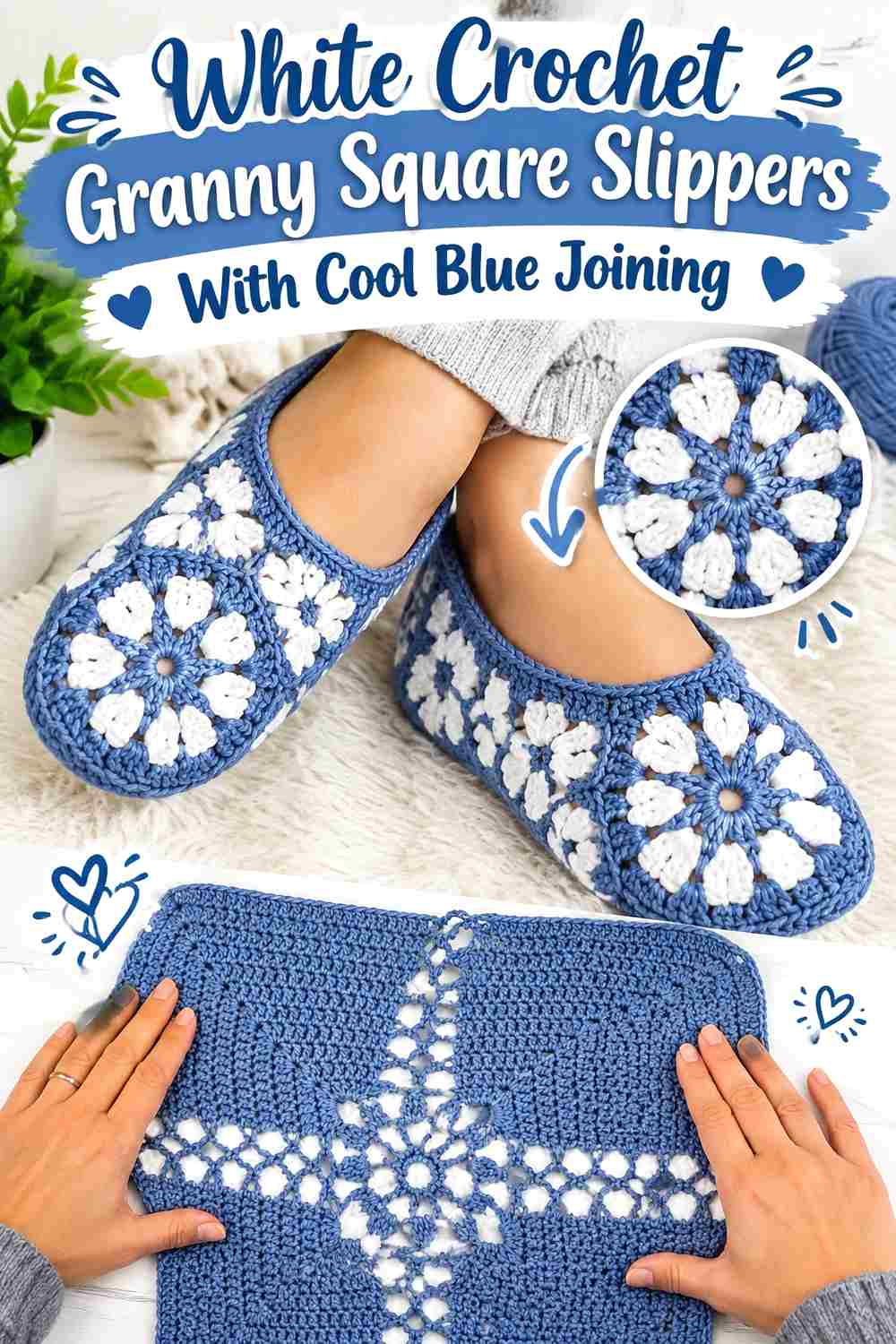
Use white-heavy motifs and connect them with cool blue. The darker join becomes a structural line around the foot and can organize a collection of otherwise pale squares.
White Can Carry the Main Granny Square Slipper Surface
Keeping most motif rounds white creates a light pair while allowing the cluster structure to supply texture.
Cool Blue Joining Can Define Separate White Slipper Squares
A blue connection provides stronger boundaries between neighboring motifs. Because it repeats throughout the assembly, even a relatively narrow join can become important.
White Should Remain Visible Around Strong Cool Blue Joins
Avoid combining wide blue outer rounds with equally prominent blue joins if the slippers should remain white-led. Preserve enough uninterrupted white around each motif.
Creator Credit: Ophelia Talks Crochet
6. Cool Blue Crochet Granny Square Slippers With White Toe Motifs

Make most motifs cool-blue-dominant and place a white-heavy square toward the toe of each slipper. This concentrates the lighter color in one immediately recognizable location.
Cool Blue Can Keep the Main Granny Square Slipper Body Connected
Repeat blue through the side and surrounding motifs so the white toe does not turn the whole slipper into an evenly divided design.
White Toe Squares Can Create a Focal Point Against Cool Blue
Give the toe motif substantially more white than its neighbors. A meaningful change in color proportion creates clearer emphasis than merely adding one extra white round.
Cool Blue Should Repeat Inside White Toe Granny Squares
Include a blue center or frame in the toe motif. Repeating the main color prevents the light square from looking unrelated to the rest of the slipper.
Creator Credit: Bella Coco
7. White Crochet Granny Square Slippers With Cool Blue Instep Squares
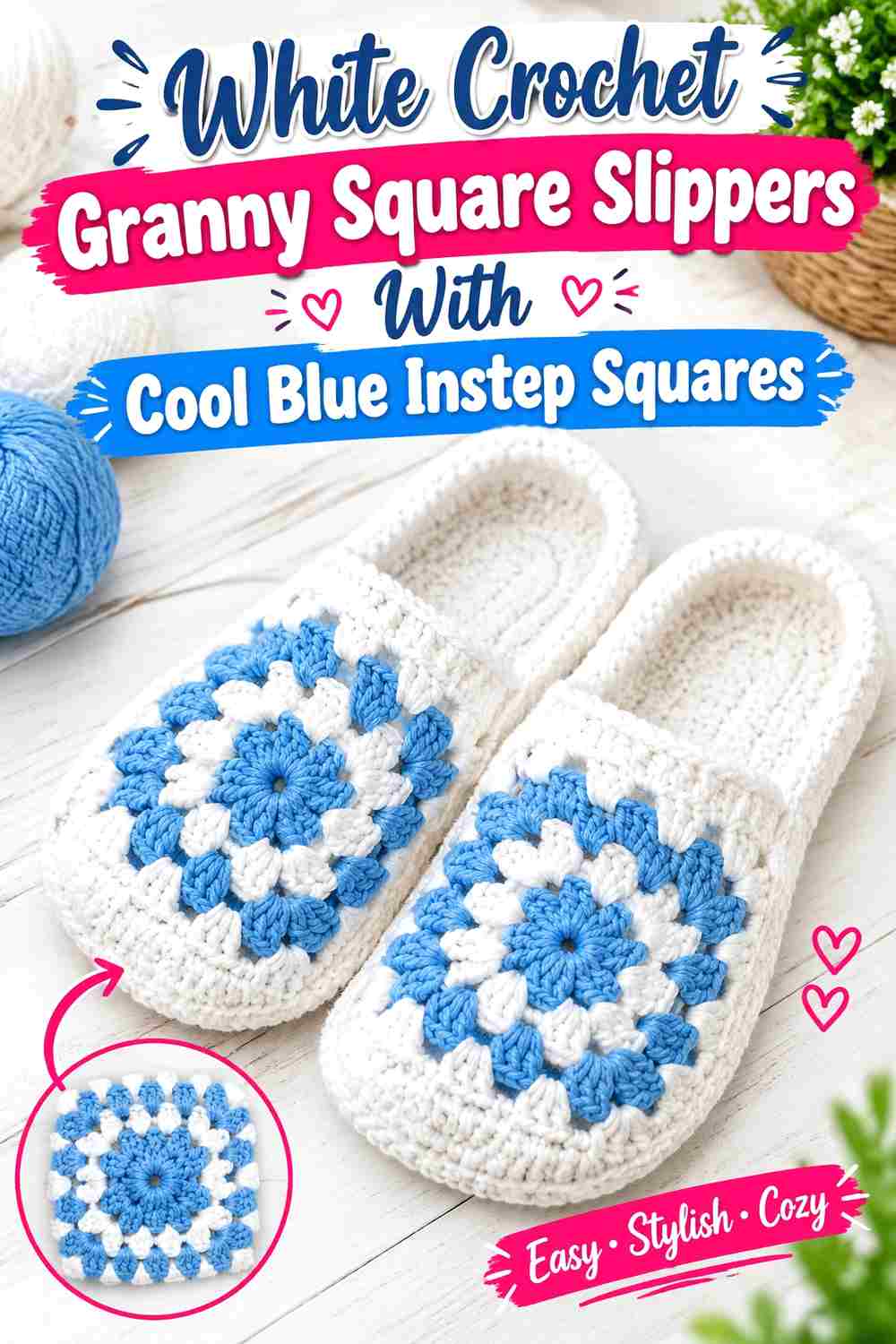
Keep the side motifs predominantly white and place the strongest cool blue concentration over the instep. The top square then becomes the main colored focal point when the slippers are viewed from above.
White Side Squares Keep the Cool Blue Slippers Visually Light
Use white around the sides when you want the instep motif rather than the entire slipper to carry the strongest color.
Cool Blue Instep Squares Can Anchor the White Slipper Upper
Give the top motif enough blue to remain distinct from its neighbors. Because the instep is highly visible, it does not need to be surrounded by additional blue squares to become important.
White Should Repeat Inside the Cool Blue Instep Motif
A white center or outer round connects the focal square with the surrounding motifs. This is more cohesive than making the instep square completely unrelated in color distribution.
Creator Credit: Adore Crea Crochet
8. Cool Blue And White Crochet Granny Square Slippers With Reversed Motifs
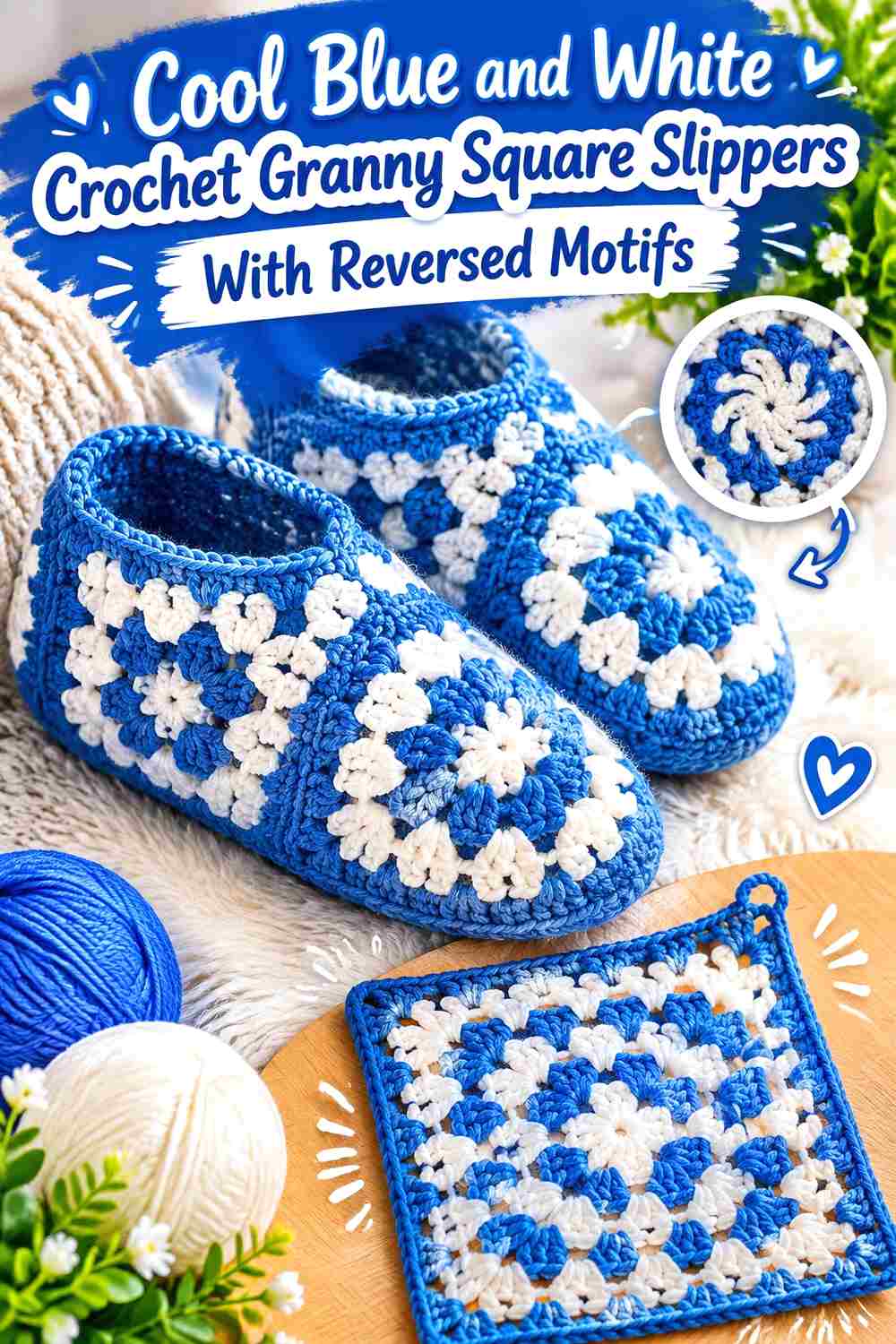
Make matching granny squares with opposite color order. One can begin cool blue and finish white, while another begins white and finishes cool blue.
Cool Blue Centers Can Alternate With White Slipper Centers
Changing the central color gives the motifs variation immediately. Repeat the reversal in a planned sequence across both slippers.
White Outer Rounds Can Balance Cool Blue Outer Rounds
Outer rounds occupy more visible area than centers. Check their distribution separately so one slipper does not accidentally receive most of the white-framed motifs.
Cool Blue and White Reversed Squares Need a Consistent Join
Choose one joining color for the complete pair. A consistent join can unify motifs whose outer colors intentionally change.
Creator Credit: Tiara Lace Crochet
9. Cool Blue Crochet Granny Square Slippers With White Opening Edge
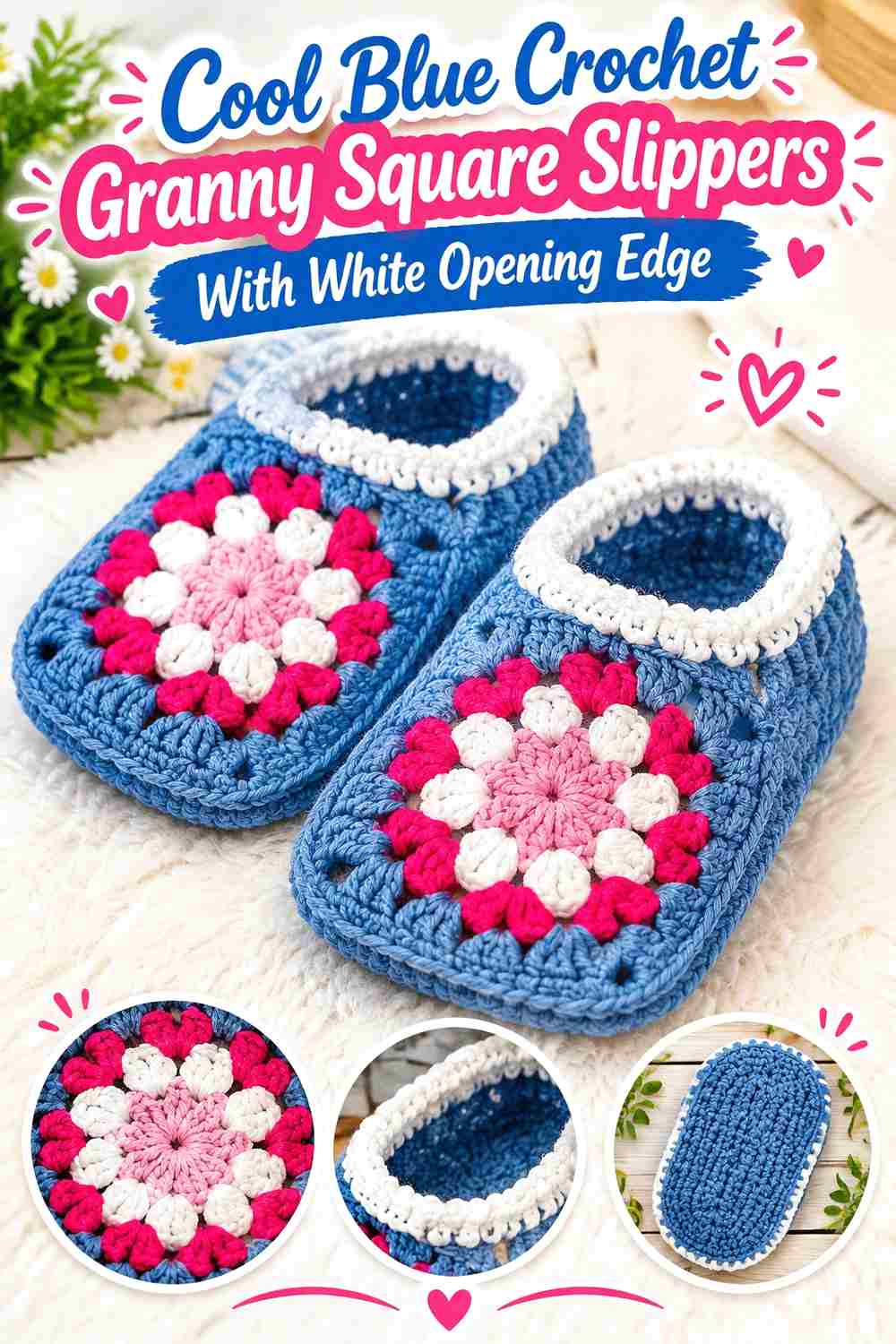
Use cool blue throughout most of the motifs and reserve white for the upper opening. The light finishing line gives the slippers a crisp endpoint without interrupting every square.
Cool Blue Can Keep the Granny Square Slipper Body Dominant
Use blue in the largest portions of the motifs so the pair maintains a clear color identity from toe to heel.
White Can Define the Cool Blue Slipper Opening
A continuous white edge creates a visible boundary around the foot opening. Because it repeats around the top, the white can remain narrow and still have an obvious role.
Cool Blue Should Separate White Opening Edging From White Motif Details
If white also appears inside the squares, retain blue between those areas and the opening where possible. This prevents separate white details from visually merging into one large pale section.
Creator Credit: Crochet with Clare
10. White Crochet Granny Square Slippers With Cool Blue Opening Edge
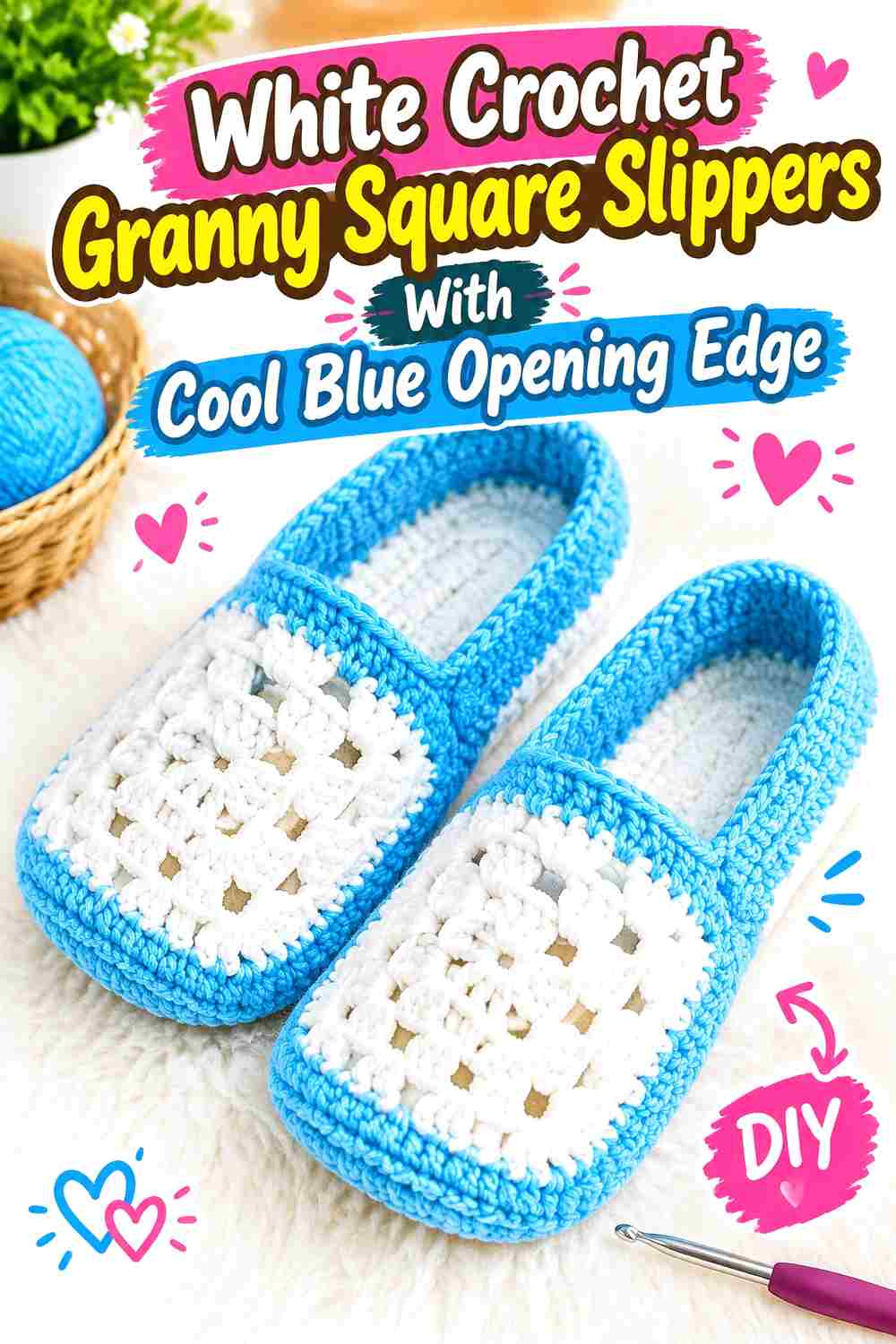
Reverse the opening treatment by using white-heavy motifs and a cool blue finish around the top. The blue edge can visually contain the lighter slipper body.
White Can Keep the Main Granny Square Slipper Motifs Crisp
Give white the larger share of each square when you want a light pair with concentrated blue definition.
Cool Blue Can Frame the White Slipper Opening
A continuous blue upper edge creates a stronger boundary than scattered blue accents. It also gives the main color a structural role.
White Should Remain Visible Beside a Wide Cool Blue Opening
Check the finished proportion before expanding the blue edging. A broad upper section can change the slippers from white-led to more evenly balanced.
Creator Credit: Meema Makes
11. Cool Blue Crochet Solid Granny Square Slippers With White Centers
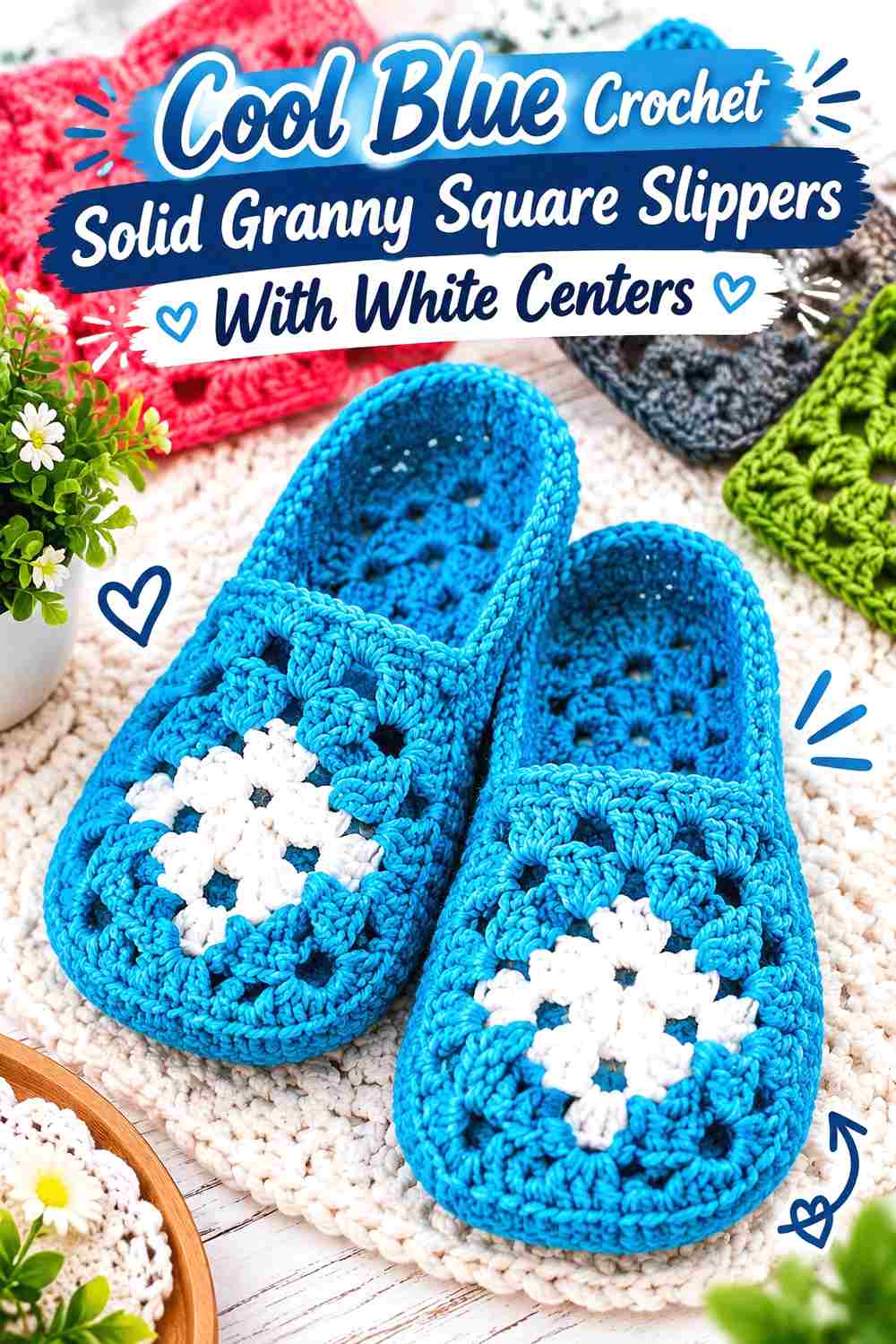
A solid granny square changes the visual balance because it contains less open space than a traditional cluster-based motif. Use cool blue across the denser outer area and keep white concentrated near the center.
White Centers Can Break Up Cool Blue Solid Granny Square Slippers
A repeated light center gives the denser motifs a clear focal point. Keep its placement consistent across the pair.
Cool Blue Outer Areas Can Carry the Solid Granny Square Slipper Color
Give blue enough space around the white center to establish the main field. This works particularly well when you want color blocking to receive more attention than frequent round changes.
White Should Be Checked Against Cool Blue on the Denser Granny Square Surface
Because a solid square presents larger continuous color areas, contrast can appear stronger than it does in an open traditional granny motif. Compare a completed sample before committing to every slipper square.
Creator Credit: Rich Textures Crochet
12. Cool Blue White And Silver Gray Crochet Granny Square Slippers
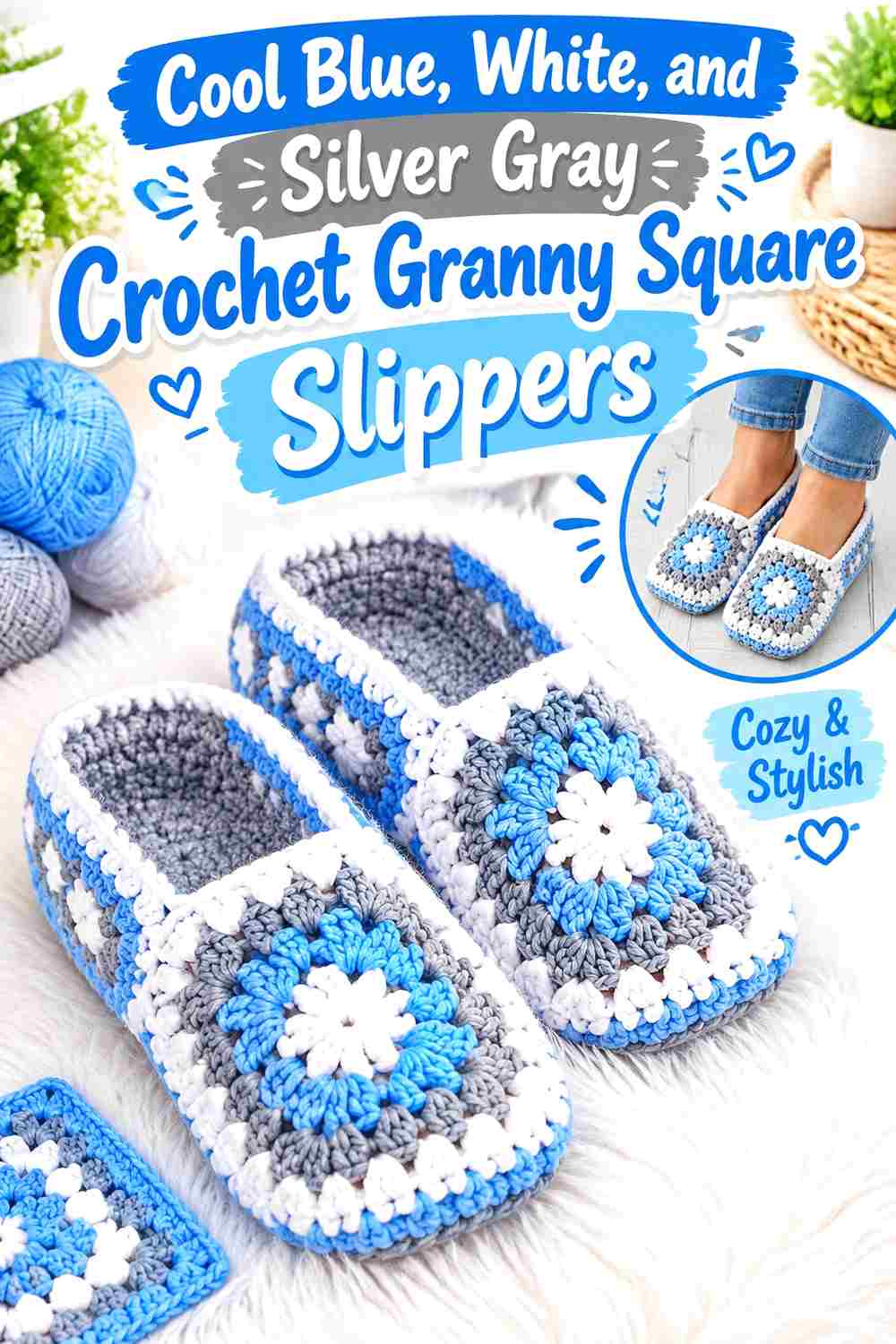
Silver gray introduces a quieter cool-toned transition between blue and white. Keep cool blue as the principal hue, white as the lightest separator, and silver gray in selected centers or intermediate rounds.
Cool Blue Should Remain the Main Hue Beside Silver Gray Slipper Squares
Repeat blue in an important location throughout the pair, such as the outer rounds or instep motifs. Without consistent blue placement, silver gray and white can make the slippers predominantly neutral.
White Can Separate Cool Blue and Silver Gray Granny Square Details
Place white between blue and gray when those two shades are close in value. The lighter boundary can make small rounds easier to distinguish.
Silver Gray Can Bridge White Centers and Cool Blue Outer Rounds
A white-to-gray-to-blue progression gives each shade a clear role. Repeat the same order when you want a controlled tonal transition rather than a patchwork effect.
Creator Credit: HappyBerry Crochet
13. Cool Blue White And Navy Crochet Granny Square Slippers
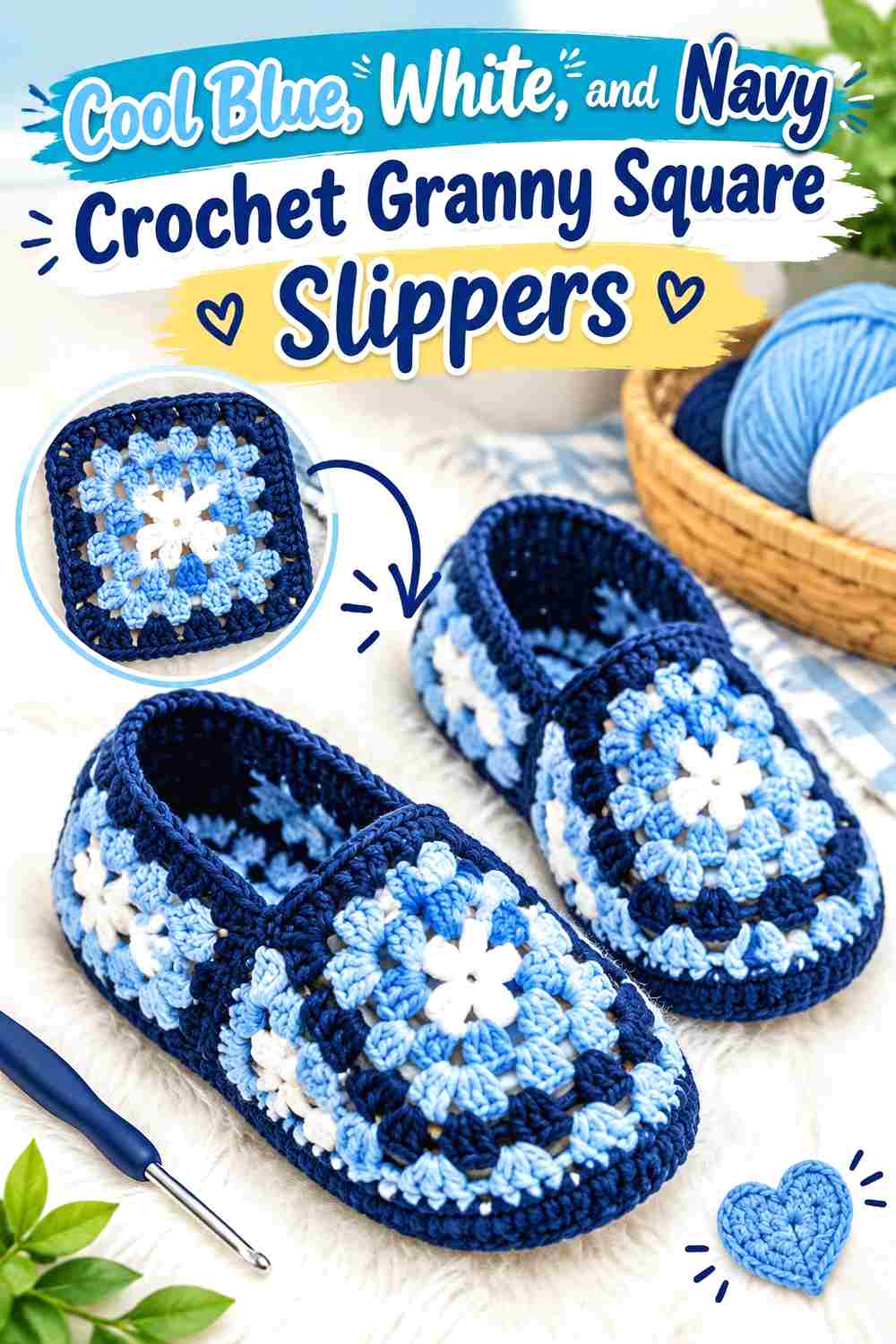
Navy introduces a much darker blue, so use it selectively if cool blue should remain the defining hue. White can provide separation between the two blues, while navy anchors a toe, center, opening, or another controlled detail.
Cool Blue Should Appear More Often Than Navy in the Granny Square Slippers
Repeat cool blue across most motifs and reserve navy for selected areas. If both blues receive equal surface, the original cool-blue-and-white identity becomes less clear.
White Can Separate Cool Blue and Navy Slipper Rounds
Place white between neighboring blue shades when their values are close. The light neutral prevents small navy and cool blue details from merging.
Navy Can Anchor Cool Blue and White Slipper Toe Details
Concentrate navy near the toe or another repeated focal point on each slipper rather than scattering it randomly. A defined location gives the darkest shade a clear purpose.
Creator Credit: Club Crochet
Comparing the 13 Cool Blue and White Granny Square Slipper Directions
The cool-blue-center and white-center designs change the focal point inside every motif, while reversing the outer rounds changes the overall color balance more dramatically because those rounds occupy more visible space.
The joining versions make assembly part of the palette. White joining separates cool-blue motifs, while blue joining gives white squares a stronger framework.
Toe and instep placement concentrate contrast where the slippers are most visible from above. Opening-edge variations move the color emphasis to a structural boundary instead, while reversed motifs distribute both colors more evenly.
For a different motif character, the solid-square version uses larger uninterrupted areas of color. Silver gray creates a softer three-color progression, while navy introduces the deepest accent.
Conclusion
Cool blue and white can produce many different crochet granny square slippers without requiring completely different constructions. Blue can sit in motif centers, dominate outer rounds, create visible joins, define the opening, or concentrate over the toe and instep. White can perform each of those jobs when you want a lighter finished pair.
Because slippers use relatively few visible motifs, placement matters as much as color quantity. A single white toe square or cool blue instep motif can influence the complete pair more than several small color changes hidden along the sides.
Plan both slippers together before assembly so the dominant color, focal motifs, joining, and opening edge remain coordinated. Follow the credited tutorial for its actual granny-square or slipper construction, and use these cool-blue-and-white arrangements as independent color plans.
Frequently Asked Questions
Should Cool Blue or White Dominate Crochet Granny Square Slippers?
Either can lead. Cool blue creates a stronger colored field and makes white useful for centers, joins, and edging. White produces a lighter pair and allows relatively small cool blue details to become focal points.
Should Cool Blue Go in the Center or Outer Rounds of White Granny Squares?
Use cool blue in the center for repeated focal points. Put it in the outer rounds when you want the motifs to connect into a stronger blue field after assembly.
What Color Should Join Cool Blue and White Granny Squares?
White joining can outline cool-blue-heavy motifs, while cool blue can create a stronger framework around white-heavy squares. Decide after placing several completed motifs together.
Where Should White Go on Cool Blue Granny Square Slippers?
Useful locations include motif centers, outer rounds, visible joins, toe squares, and the opening edge. Choose one or two repeatable roles instead of placing white randomly throughout the pair.
Can the Toe Granny Square Use More Cool Blue Than the Side Squares?
Yes. Concentrating blue at the toe or instep can create a focal area. Repeat the same relationship on both slippers when you want a coordinated pair.
How Can I Check Cool Blue and White Contrast?
Place the actual yarns together and view them from a short distance. A grayscale photo can also help show their light-dark difference, particularly when cool blue appears in narrow rounds or small centers.
What Third Color Works With Cool Blue and White Granny Square Slippers?
Silver gray creates a softer tonal progression, while navy supplies a much darker anchor. Keep the third shade in a defined supporting role if cool blue and white should remain the primary pair.
How Can I Keep Cool Blue and White Granny Square Slippers From Looking Too Busy?
Use a simple placement rule across both slippers. For example, keep cool blue in every center and white outside, assign white only to joins, or reserve the strongest contrast for the toe and opening. Consistent placement lets the granny-square construction remain easy to see.