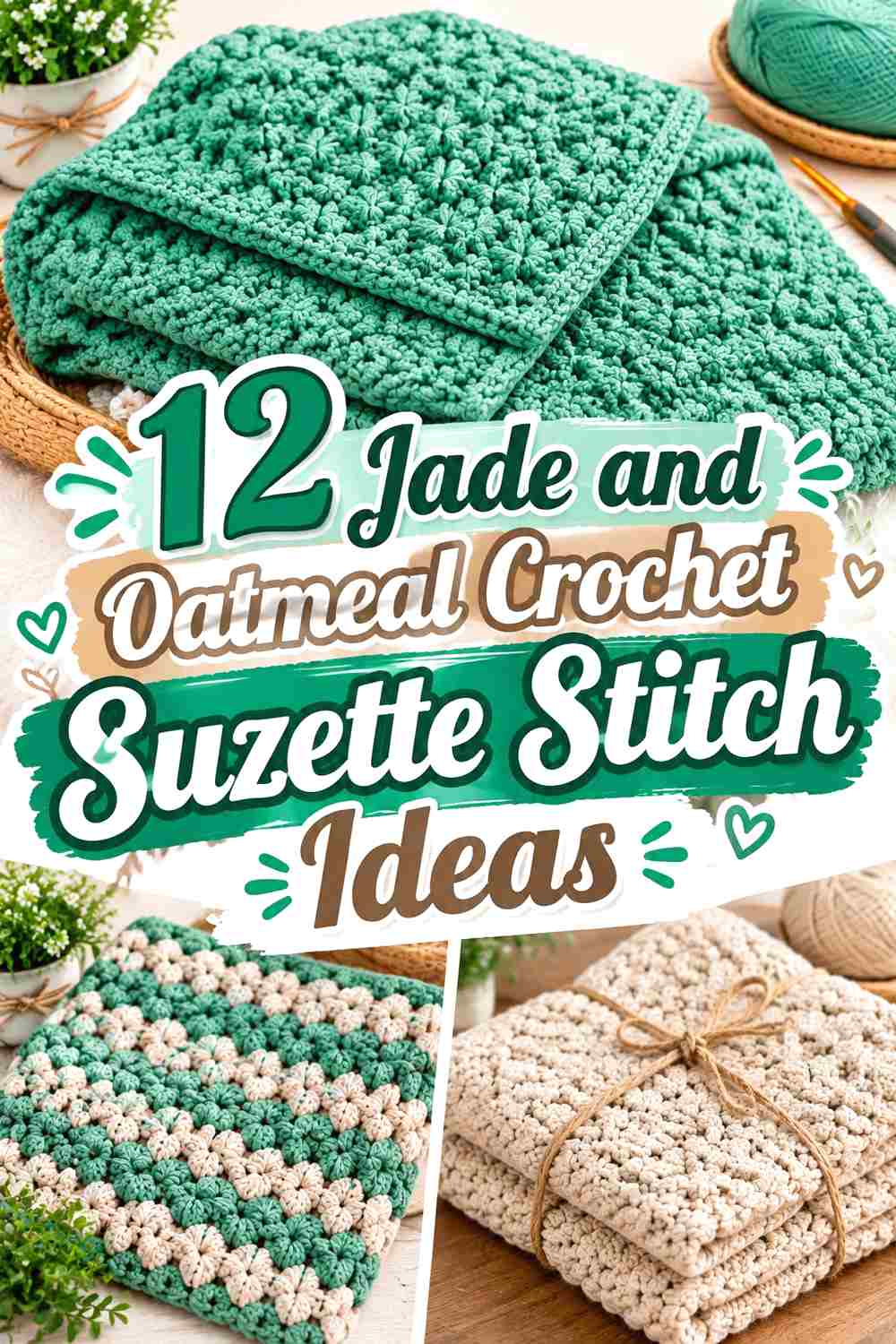

Jade and oatmeal create a useful light-and-dark relationship for textured Suzette stitch crochet. Jade can carry the stronger visual weight, while oatmeal provides a quieter neutral that can separate bands, outline edges, lighten larger surfaces, or keep small textured details from disappearing.
Suzette stitch combines single and double crochet to produce a compact textured surface. It is used across projects ranging from blankets and washcloths to scarves and garments, which gives jade and oatmeal plenty of different places to play distinct color roles.
The key is hierarchy. A jade cardigan with oatmeal cuffs needs a different color plan from an oatmeal blanket with a jade border. These 12 ideas focus on those placement decisions rather than simply alternating the same two colors.
Quick List
- Jade Dominant Crochet Suzette Stitch Blanket
- Oatmeal Crochet Suzette Stitch Scarf With Jade Ends
- Jade Crochet Suzette Stitch Cardigan With Oatmeal Ribbing
- Jade And Oatmeal Color Block Crochet Suzette Stitch Throw
- Jade Crochet Suzette Stitch Ear Warmer With Oatmeal Center Band
- Oatmeal Crochet Suzette Stitch Pillow With Jade Frame
- Jade And Oatmeal Crochet Suzette Stitch Shawl
- Jade Oatmeal And Sage Crochet Suzette Stitch Palette
- Jade Oatmeal And Terracotta Crochet Suzette Stitch Palette
- Jade Oatmeal And Charcoal Crochet Suzette Stitch Palette
Decide Whether Jade or Oatmeal Should Lead the Suzette Texture
Before planning stripes or borders, decide which color should occupy the largest visual area. A jade-led project emphasizes the richer green surface and lets oatmeal act as a light interruption. An oatmeal-led project reverses that relationship, making jade useful for edges, bands, cuffs, or other concentrated details.
Suzette stitch already creates noticeable surface variation, so a project does not need constant color changes to remain interesting. Larger uninterrupted sections give the texture room to become part of the design.
Use Oatmeal to Separate Strong Jade Crochet Sections
Oatmeal is particularly useful when several jade sections would otherwise sit directly beside one another. A lighter neutral band can define where one part ends and another begins, especially on striped blankets, scarves, or garments.
Check the actual yarns together before committing. Color names do not guarantee a particular value relationship, and one jade may be substantially darker or more saturated than another.
Plan Jade and Oatmeal Around the Finished Crochet Item
The same palette should be distributed differently depending on the project. Blankets provide enough surface for broad fields, stripes, and borders. Cardigans offer body panels, sleeves, cuffs, collars, and hems. Scarves and ear warmers have less area, so a few deliberate color changes can have more impact than numerous narrow stripes.
That item-specific placement is what makes each jade-and-oatmeal scheme feel intentional.
1. Jade Dominant Crochet Suzette Stitch Blanket
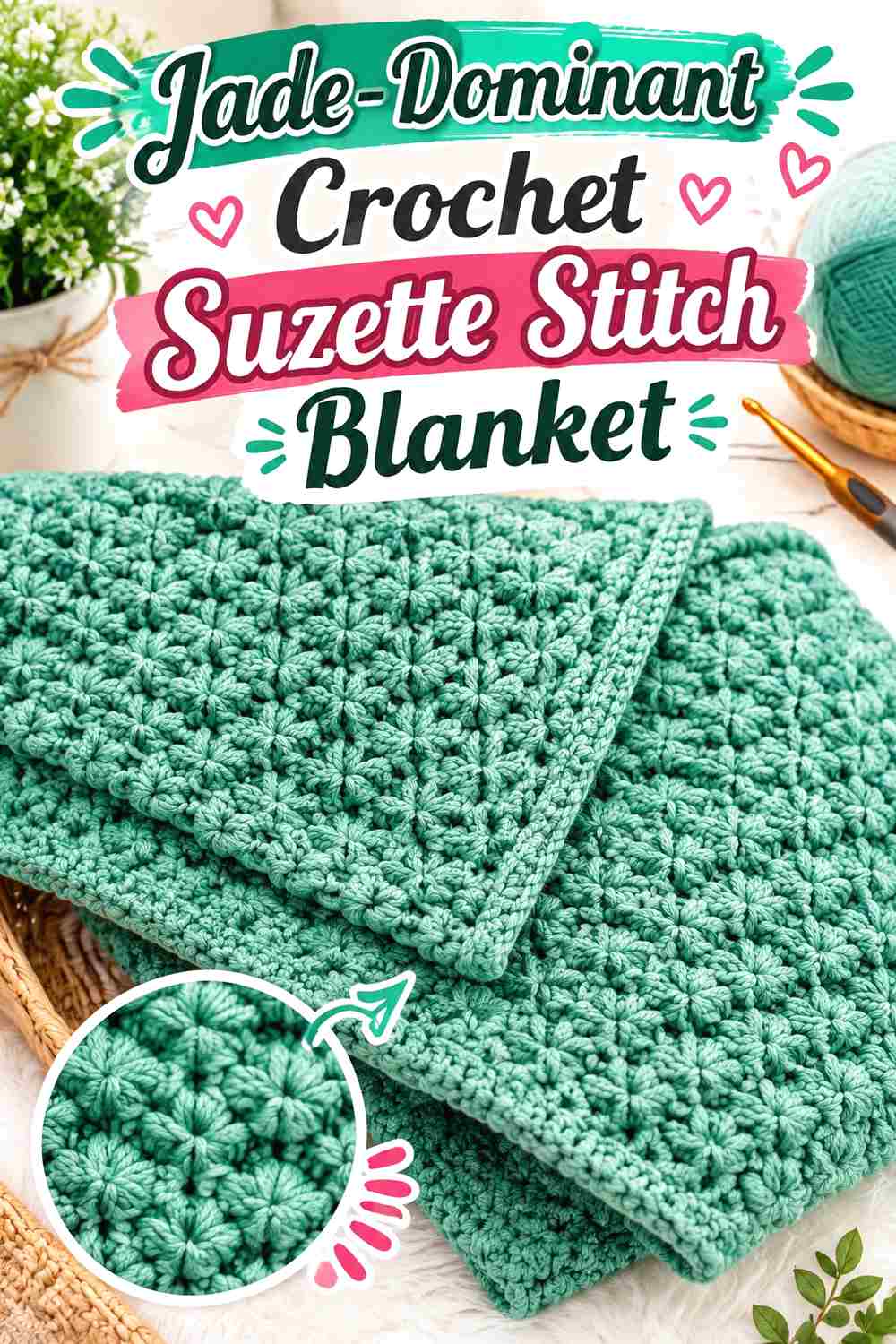
Let jade cover most of the blanket so the Suzette texture reads as one continuous green field. Oatmeal can then be reserved for a border or a small number of bands. This arrangement keeps the project clearly jade-led while giving the lighter neutral a practical job: separating or framing the darker textured surface.
Jade Gives the Suzette Stitch Blanket a Strong Main Field
Large jade sections allow the repeating texture to remain uninterrupted. Instead of changing colors every few rows, use enough jade for the eye to register both the color and the textured crochet surface.
Oatmeal Can Break Up a Large Jade Blanket
If a full jade field feels heavier than you want, introduce oatmeal in a few substantial bands rather than many tiny stripes. Wider neutral sections create genuine visual relief and keep the palette from becoming unnecessarily busy.
Jade Can Return at the Edge of an Oatmeal Border
When oatmeal forms most of the border, a final jade detail can reconnect the edge to the main blanket. This is especially useful when the oatmeal border is wide enough to become a major visual feature.
Creator Credit: Crochet by Nora
2. Oatmeal Crochet Suzette Stitch Scarf With Jade Ends

An oatmeal-led scarf puts the light neutral across most of the length and concentrates jade near the ends. Because a scarf is long and relatively narrow, color placement at both ends can create balance without interrupting the Suzette texture repeatedly through the center.
Oatmeal Lets Suzette Stitch Texture Lead the Scarf
Keeping the central length oatmeal gives the textured stitch a large uninterrupted area. This is a useful alternative to treating every textured scarf as a striped project.
Jade Can Give Both Oatmeal Scarf Ends More Definition
Repeating jade at both ends creates a deliberate relationship across the scarf. The dark green sections visually contain the lighter center instead of leaving one isolated accent at only one end.
Oatmeal Should Remain Visible Between Multiple Jade Bands
If you add more than one jade band near each end, leave enough oatmeal between them for the neutral to remain recognizable. Closely packed jade lines can merge visually and make the ends look like a single large green block.
Creator Credit: Hooked by Robin
3. Jade Crochet Suzette Stitch Cardigan With Oatmeal Ribbing
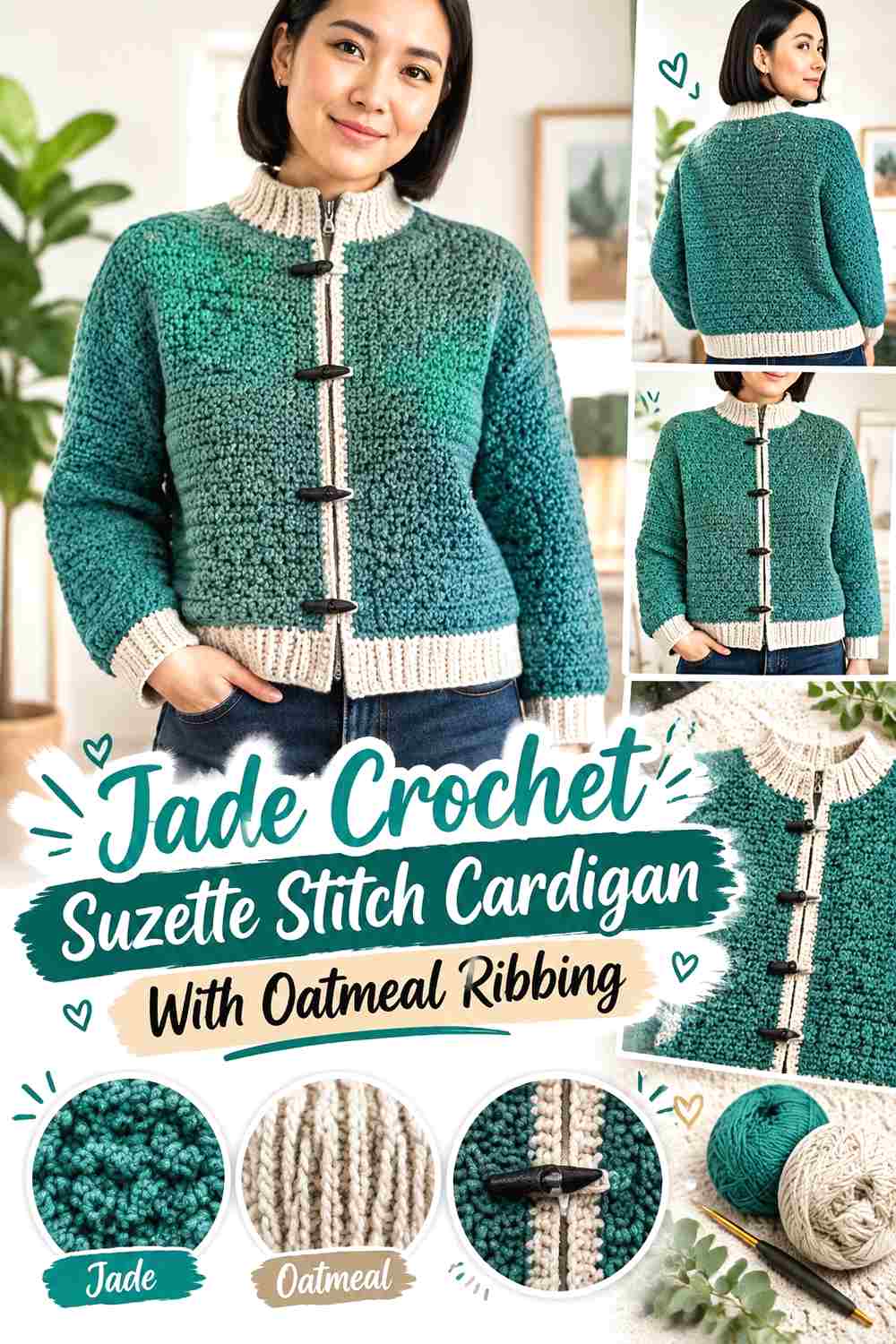
A jade body paired with oatmeal finishing gives a Suzette stitch cardigan a clear color hierarchy. Jade can cover the main body and sleeves, while oatmeal appears around cuffs, hem, collar, or front edging. Suzette stitch has been used specifically for cardigan construction, including raglan and panel-based designs.
Jade Can Unite the Main Suzette Cardigan Body
Keeping the body predominantly jade prevents the garment from becoming visually fragmented. The textured stitch remains continuous across larger areas rather than competing with frequent color changes.
Oatmeal Can Define Jade Cardigan Cuffs and Edging
Oatmeal ribbing or trim creates a clear transition at the ends of jade sleeves and around other garment boundaries. Because these areas naturally mark changes in construction, they are logical places to introduce the neutral.
Jade Should Repeat if Oatmeal Becomes a Wide Cardigan Feature
A broad oatmeal collar or hem carries more visual weight than a narrow trim. If several oatmeal areas become prominent, keep enough jade across the sleeves and body to preserve the intended jade-dominant direction.
Creator Credit: therry.crochet
4. Jade And Oatmeal Color Block Crochet Suzette Stitch Throw

Instead of narrow stripes, divide the throw into a small number of large jade and oatmeal fields. Color blocking allows both shades to show the Suzette texture clearly while making the transition between dark green and neutral a major design feature.
Jade Needs Enough Space to Establish a True Color Block
A jade section should read as an intentional field rather than an oversized stripe. Larger uninterrupted areas also let the Suzette texture remain visible inside each color.
Oatmeal Gives Large Jade Blocks a Clear Break
Use oatmeal when two dark sections need stronger separation. Because the neutral occupies its own substantial area, it becomes a supporting block rather than merely a divider.
Jade and Oatmeal Blocks Do Not Need Equal Proportions
Equal dimensions are an option, not a requirement. A jade-heavy throw can use one large oatmeal section, while an oatmeal-heavy throw can reverse the arrangement. Decide which color should dominate before determining the block layout.
Creator Credit: My Crochet Space
5. Jade Crochet Suzette Stitch Ear Warmer With Oatmeal Center Band

An ear warmer provides little space for complicated color arrangements, so make jade the main field and use oatmeal as one purposeful center detail. Suzette stitch is used in ear-warmer construction, making this a direct way to apply the palette to a compact accessory.
Jade Keeps the Suzette Ear Warmer Visually Continuous
Use jade across most of the band when you want the textured stitch to remain the primary surface. Too many short color changes can divide a small accessory into competing sections.
Oatmeal Can Mark the Center of a Jade Ear Warmer
A contained oatmeal section can draw attention to the center or another construction feature without taking over the full band. Repeat only as much oatmeal as needed for the chosen balance.
Jade Should Surround Oatmeal if Jade Is the Intended Main Color
If oatmeal becomes too wide, the accessory will read as a two-color split rather than a jade piece with a neutral accent. Check the proportions across the complete band rather than judging the oatmeal section by itself.
Creator Credit: The Snugglery
6. Oatmeal Crochet Suzette Stitch Pillow With Jade Frame
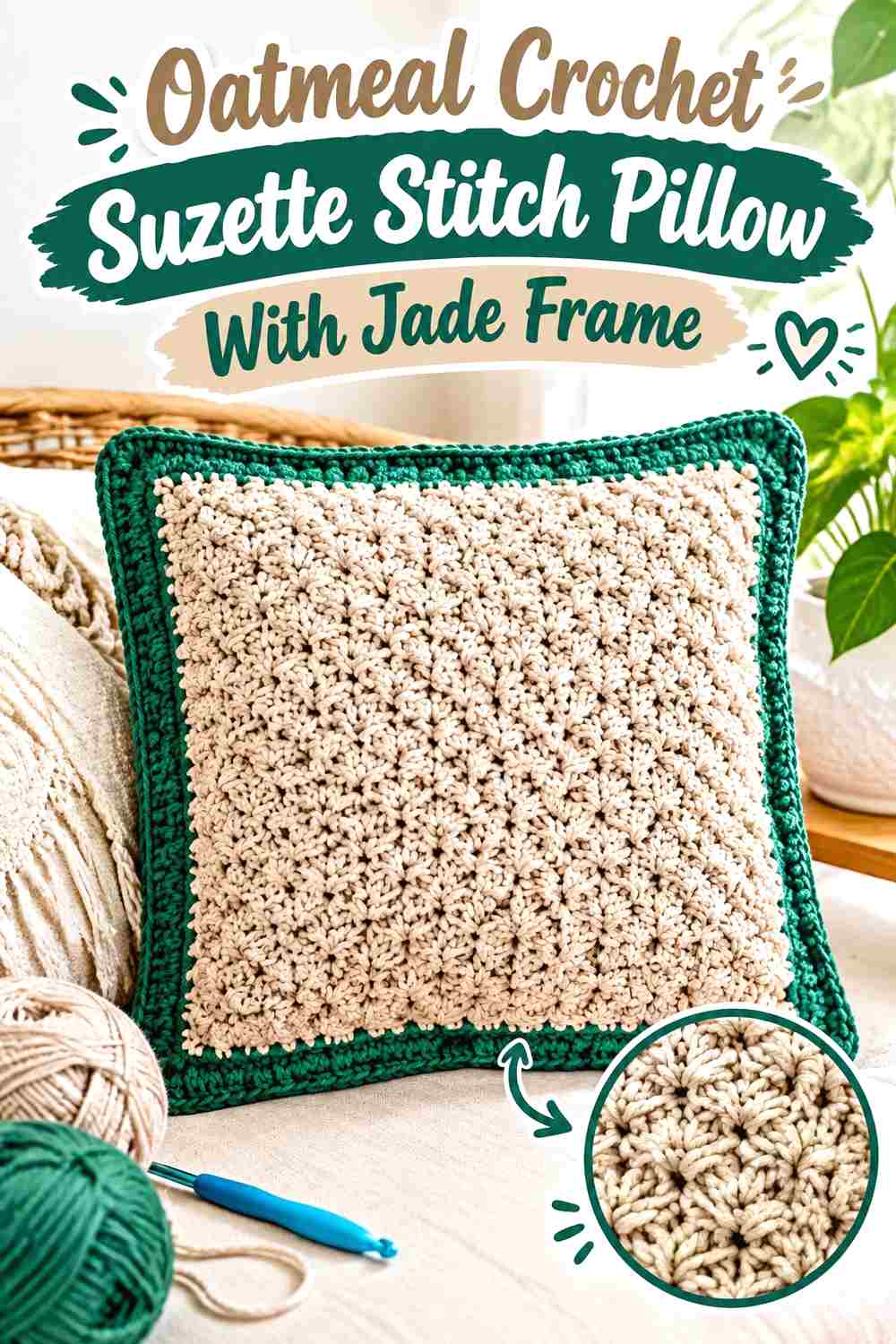
A pillow face gives you a defined surface where oatmeal can occupy the center and jade can sit around the perimeter. The contrast makes the boundary obvious while leaving enough uninterrupted oatmeal for the Suzette texture to remain visible.
Oatmeal Lets Suzette Texture Fill the Pillow Center
Keep the central area mostly oatmeal when texture is meant to supply the detail. Frequent jade stripes across the center would shift attention from the stitch toward the color sequence.
Jade Can Frame the Oatmeal Crochet Pillow Face
Place jade around the outer area or edging to give the lighter center a defined boundary. The amount of jade determines whether the pillow remains oatmeal-led or moves toward a more evenly divided palette.
Oatmeal Can Connect a Jade Pillow Back to the Front
If the back is primarily jade, repeat oatmeal in edging or another small feature. That repetition helps the two faces read as parts of one planned color scheme rather than two unrelated solid-color panels.
Creator Credit: Happy Heartsy
7. Jade And Oatmeal Crochet Suzette Stitch Shawl
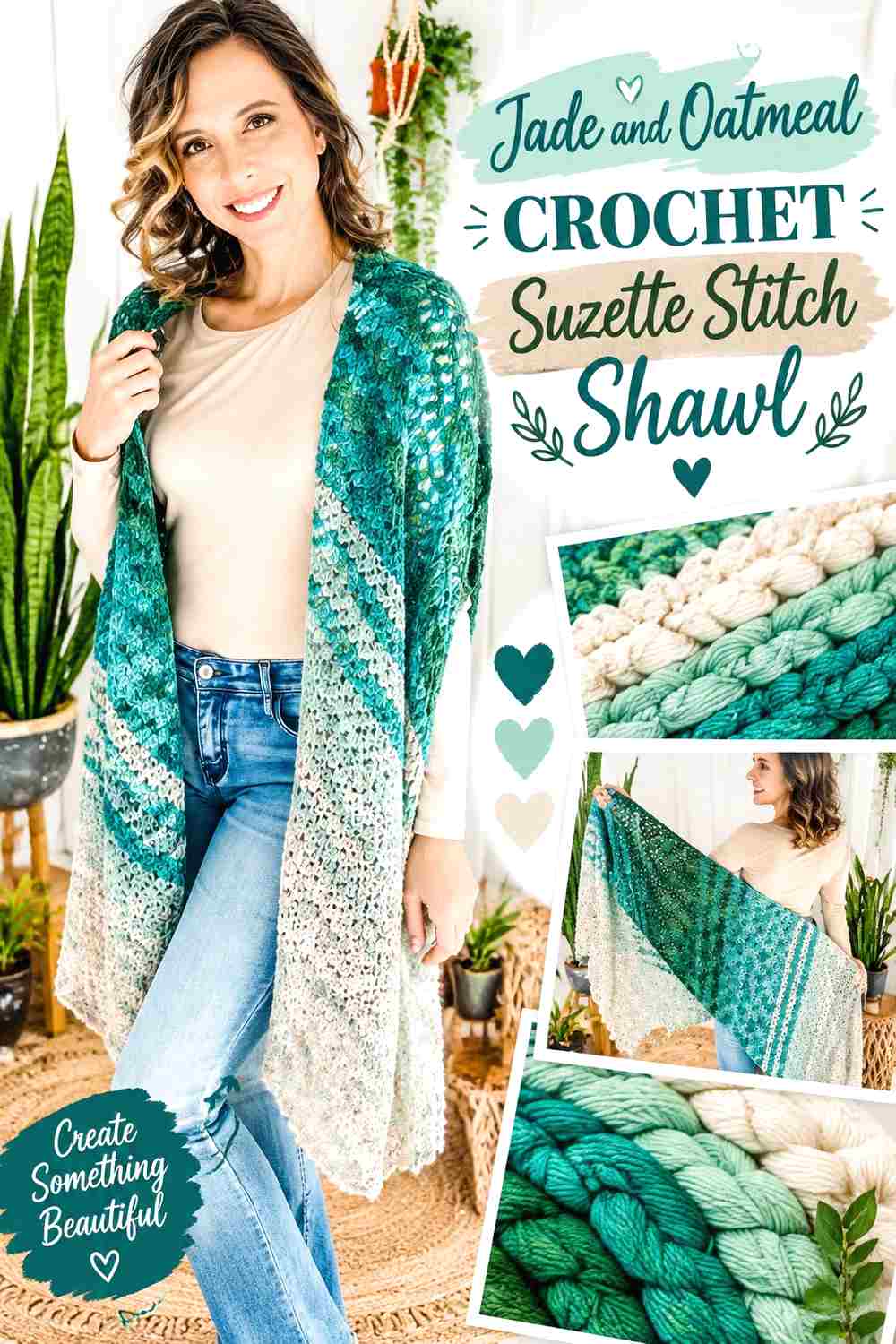
A shawl gives jade and oatmeal more length for gradual color distribution. Rather than alternating identical stripes from beginning to end, use one color for broader sections and the other at selected intervals. Suzette stitch can also be worked on the bias for a rectangular shawl, providing another way for color changes to interact with the direction of the fabric.
Jade Can Anchor the Darker Sections of the Suzette Shawl
Use jade in larger areas where you want more visual weight. Concentrating the green instead of scattering it in tiny stripes keeps the palette easier to read across a large wearable.
Oatmeal Can Create Breathing Room Between Jade Shawl Sections
Oatmeal bands can separate larger jade areas and keep the entire shawl from appearing uniformly dark. The neutral sections can also make directional changes in the fabric easier to notice.
Jade and Oatmeal Can Shift Proportion Across the Shawl
The two colors do not need to repeat mechanically. You might begin with more oatmeal and gradually increase the visual share of jade, or reverse that relationship. Keep the progression deliberate enough that it looks planned rather than like an inconsistent stripe sequence.
Creator Credit: Briana K Designs
8. Jade Oatmeal And Sage Crochet Suzette Stitch Palette
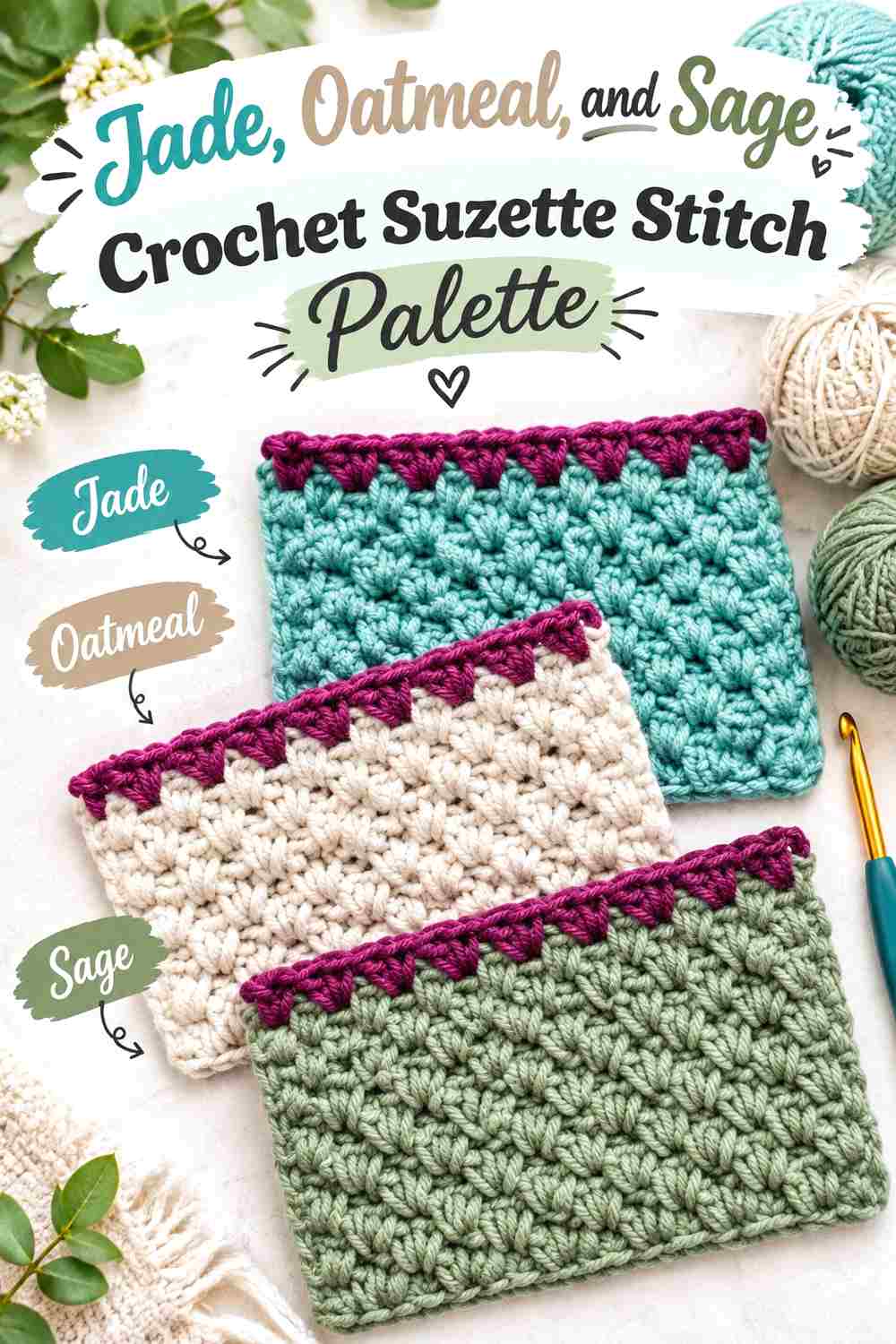
Adding sage creates a tonal green transition rather than introducing a strongly unrelated accent. Jade should remain the deeper green anchor, oatmeal the light neutral, and sage the middle supporting shade. This arrangement works particularly well when you want three colors without losing the botanical green direction.
Jade Should Remain Darker Than Sage in the Crochet Hierarchy
Choose a sage that stays visibly separate from your jade. If the two greens are too similar in both value and saturation, the intended three-color structure can disappear once they are worked into the textured surface.
Sage Can Bridge Jade and Oatmeal Suzette Sections
Place sage between jade and oatmeal when you want a more gradual transition. This gives sage a functional role instead of scattering it randomly through the project.
Oatmeal Keeps Jade and Sage From Becoming One Green Field
Use oatmeal near small details or between repeated green sections when jade and sage begin to merge visually. The neutral can restore separation without requiring another strong accent.
Creator Credit: Crochet Me Lovely
9. Jade Oatmeal And Terracotta Crochet Suzette Stitch Palette

Terracotta changes the palette more noticeably than sage because it introduces a warm earthy accent beside the green and neutral. Keep jade and oatmeal as the foundation and use terracotta selectively so all three shades do not compete for equal attention.
Jade Should Establish the Main Green Crochet Surface
Give jade a clear dominant or substantial supporting role before introducing terracotta. Without a hierarchy, two stronger colors can pull attention in different directions across the textured Suzette surface.
Oatmeal Can Separate Jade From Terracotta
Oatmeal is useful between the two stronger colors when a direct jade-to-terracotta transition feels too abrupt. A neutral band or border creates visual space while keeping both accent colors recognizable.
Terracotta Works Better as a Controlled Accent Beside Jade
Try terracotta on smaller bands, edging, or selected details rather than automatically dividing the project into equal thirds. This preserves jade as the recognizable main color while still allowing the warmer accent to change the character of the palette.
Creator Credit: TheMailoDesign
10. Jade Oatmeal And Charcoal Crochet Suzette Stitch Palette

Charcoal gives jade and oatmeal a darker neutral companion. Because charcoal and deep jade can both carry substantial visual weight, oatmeal becomes especially important for keeping the palette separated. This direction suits projects where you want a deeper overall scheme without replacing jade as the defining color.
Jade Needs Visible Separation From Charcoal Crochet Sections
Compare jade and charcoal in grayscale before using them side by side. Two clearly different hues can still have similar light-dark values, which may cause their boundary to become less obvious across a textured surface.
Oatmeal Can Divide Dark Jade and Charcoal Suzette Areas
Put oatmeal between large jade and charcoal sections when stronger separation is needed. Even a controlled neutral area can keep the two darker shades from merging into one heavy visual block.
Charcoal Should Support Jade Rather Than Overpower It
Reserve charcoal for borders, selected bands, cuffs, or another secondary area when jade is supposed to remain the signature shade. If charcoal takes over too much surface, the palette will shift toward charcoal-and-oatmeal with jade acting only as an accent.
Creator Credit: TCDDIY
Comparing the 12 Jade and Oatmeal Suzette Stitch Directions
For the strongest jade presence, the jade-dominant blanket, cardigan, and ear warmer keep green across most of the visible surface. The oatmeal scarf, baby blanket, and pillow reverse that hierarchy and use jade mainly for definition.
The striped washcloth emphasizes repetition, while the color-block throw gives each shade substantially more uninterrupted space. The shawl provides room to shift the jade-to-oatmeal proportion gradually rather than repeating identical bands.
Among the three-color options, sage keeps the palette closest to a tonal green direction. Terracotta creates a warmer and more obvious accent, while charcoal makes the overall scheme darker and increases the importance of oatmeal as a separator.
Conclusion
Jade and oatmeal can change substantially depending on which shade gets the larger share of a Suzette stitch project. Use jade as the dominant color when you want a deeper green surface with oatmeal acting as trim or relief. Reverse the proportions when you want the textured neutral field to lead and jade to define borders, ends, cuffs, or frames.
For three-color projects, give the additional shade a specific role. Sage can create a softer green transition, terracotta can supply a controlled warm accent, and charcoal can deepen the palette. Keeping jade, oatmeal, and the third color in clear dominant, supporting, and accent roles prevents the Suzette texture from becoming visually overloaded.
The credited tutorials provide the stitch or project-construction reference; use their exact instructions for construction while treating these jade-and-oatmeal arrangements as independent palette ideas.
Frequently Asked Questions
Does Jade or Oatmeal Show Suzette Stitch Texture More Clearly?
That depends on the actual yarn surface, shade, and lighting. Oatmeal may make small shadows easier to notice in some conditions, while jade can give the texture stronger depth in others. Work a small swatch in both colors when stitch visibility is an important part of the finished project.
Should Jade or Oatmeal Be the Main Suzette Stitch Color?
Choose according to the visual weight you want. Jade produces a stronger green field, while oatmeal creates a lighter neutral base that makes jade useful for borders and accents. There is no need to divide the colors equally.
How Can I Check the Contrast Between Jade and Oatmeal Yarn?
Place the yarns directly beside each other and look at them from a short distance. A grayscale photo can also help you judge light-dark value without relying only on the difference between green and neutral hues.
Can I Use Jade and Oatmeal Stripes With Suzette Stitch?
Yes. Wider sections emphasize the Suzette texture within each color, while narrow repeated stripes make the color pattern more prominent. Choose the stripe scale according to whether texture or color repetition should receive more attention.
What Color Can I Add to Jade and Oatmeal Crochet?
Choose the third shade by function. Sage can extend the green family, terracotta introduces a warmer accent, and charcoal adds a darker neutral. Whatever you choose, compare all three yarns together so each has a recognizable role.
How Do I Substitute a Different Jade Shade?
Preserve the role of the original jade rather than trying to match a color name precisely. If jade is supposed to be the dark anchor, choose another green that remains noticeably deeper than the oatmeal. If it is part of a jade-and-sage scheme, make sure the replacement still separates clearly from the sage.
How Can I Keep Jade and Oatmeal Suzette Stitch Crochet From Looking Too Busy?
Limit unnecessary color changes. Let one shade occupy the larger areas and assign the second shade a repeatable purpose such as a border, band, cuff, end section, or frame. Suzette stitch already contributes surface texture, so the colors do not need to change constantly to create visual interest.


