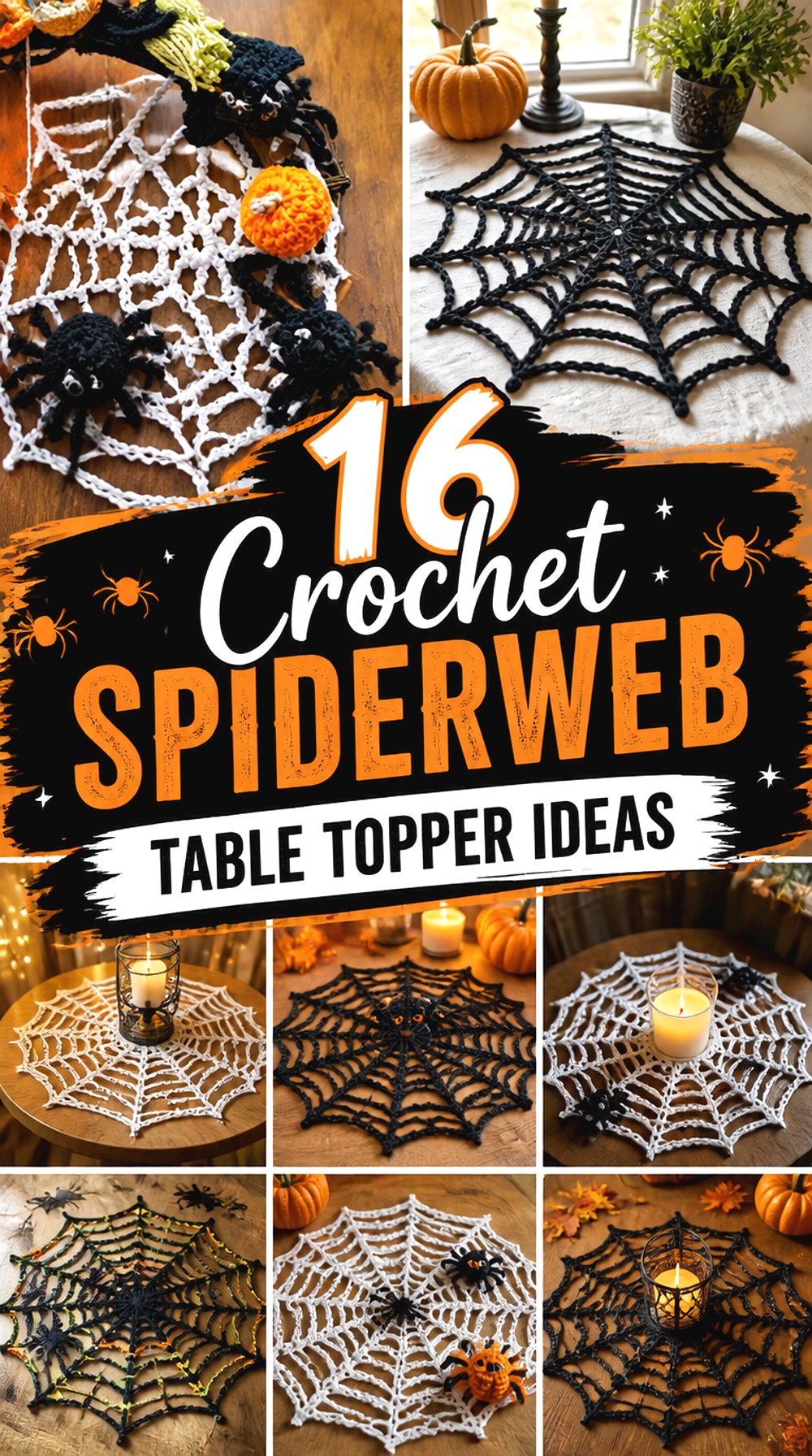

A crochet spiderweb can cover much more territory than a single Halloween doily. Depending on the construction, the same visual theme can become a delicate centerpiece, a bold table mat, a wide tablecloth-style web, a compact coaster set, or a modular square accent. Some designs emphasize fine negative space, while others use thicker yarn or closely spaced lines to create a stronger graphic effect.
The ideas below deliberately mix those formats so you can compare scale, structure, edging, and tabletop use rather than choosing between sixteen nearly identical circles. Several source tutorials are presented as doilies, coasters, general decorative webs, or tablecloths rather than specifically as “table toppers,” so check the creator’s finished dimensions and materials before adapting one to your own table.
Quick List
- Crochet Expanding Spiderweb Tablecloth Topper
- Crochet Round Spiderweb Center Table Mat
- Crochet Filet-Style Spiderweb Doily Topper
- Crochet Compact Spiderweb Accent Doily
- Crochet Picot-Edged Spiderweb Dessert-Table Doily
- Crochet Beaded Spiderweb Side-Table Mat
- Crochet Adjustable Spiderweb Placemat Topper
- Crochet Scrap-Yarn Spiderweb Mini Table Accent
- Crochet Custom-Size Spiderweb Buffet Mat
- Crochet Stiffened Spiderweb Tray Topper
- Crochet Eight-Spoke Cobweb Side-Table Topper
- Crochet Chunky Graphic Spiderweb Center Mat
- Crochet Oversized Spiderweb Treat-Table Cover
- Crochet Square Spiderweb Motif Table Accent
- Crochet Spiderweb Coaster Cluster Table Set
- Crochet Fine-Lace Spiderweb Centerpiece Layer
Choose the Tabletop Role Before Choosing the Web
Start with where the crochet will sit. A centerpiece only needs to frame a vase, candle arrangement, or decorative bowl, while a placemat-scale piece needs enough uninterrupted surface to look intentional beneath tableware. A large web covering most of a dining or buffet table creates a completely different effect and puts more emphasis on consistent tension and overall flatness.
Also decide whether you want the table itself to show through the openings. Wide negative spaces are especially visible over contrasting surfaces, while closely spaced web lines create a denser, more textile-like appearance. For a small side table, a compact doily may have better proportions than an oversized web. For long tables, several coordinated pieces or a larger expanding construction can often look more balanced than one undersized centerpiece.
Openwork, Yarn Weight, and Blocking Change the Finished Look
Spiderweb crochet depends heavily on negative space, so yarn choice affects more than color. A finer yarn can emphasize delicate radiating lines and give a doily-like finish, while a heavier yarn can make each spoke and connecting section more visually dominant. Neither approach is automatically better; the right choice depends on whether you want lace-like detail or a strong graphic shape.
Flatness is equally important on a table. Openwork can look uneven when individual sections pull at different rates, so evaluate the piece after the fabric has settled and use an appropriate blocking method when the yarn allows it. If a tutorial uses stiffening, remember that stiffness changes drape, storage, and washability. A decorative spiderweb should also not be assumed to function as a trivet or hot pad unless the materials and construction are specifically intended for heat contact.
1. Crochet Expanding Spiderweb Tablecloth Topper
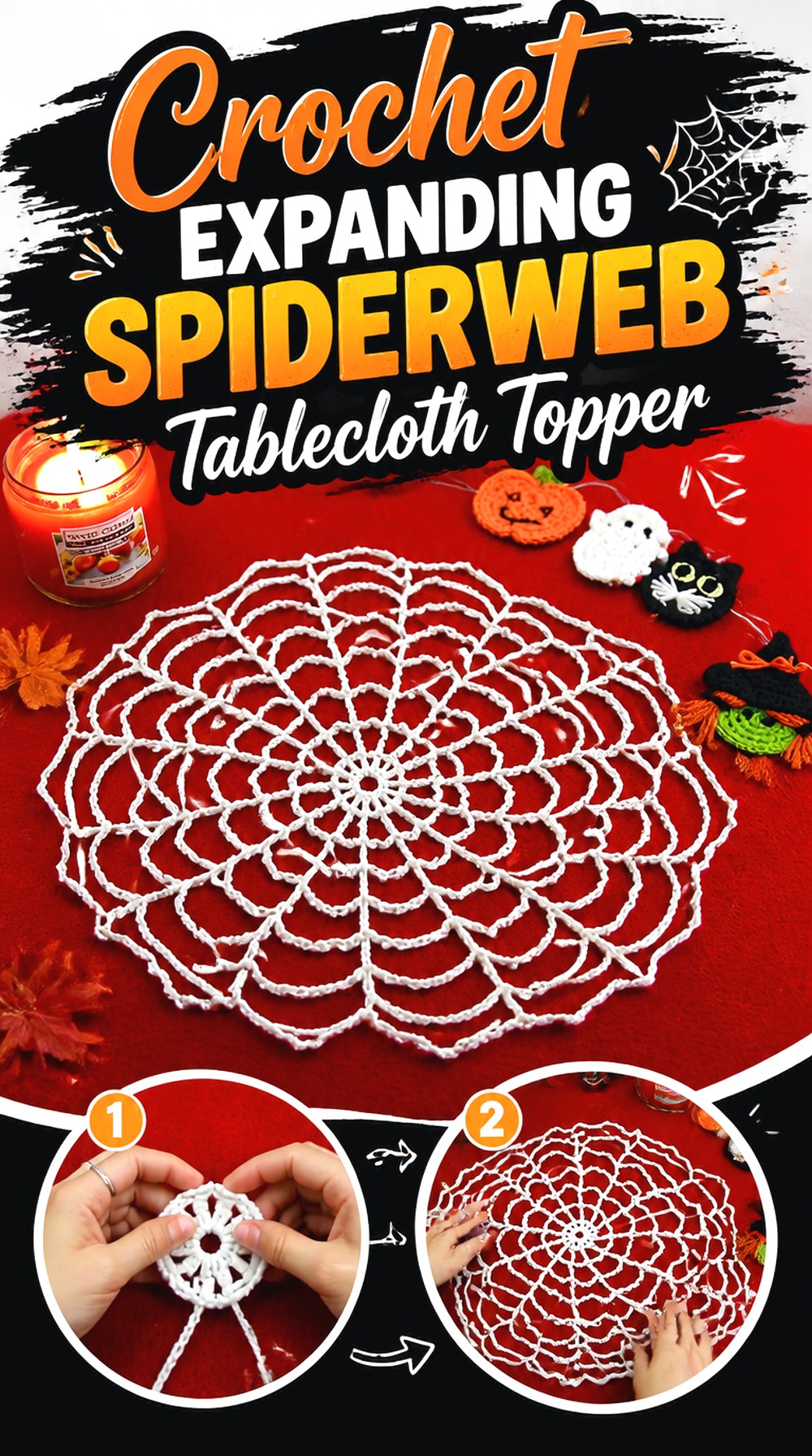
This option is for readers who want the spiderweb to become a major part of the table rather than a small accent. The radiating construction makes the web visually expand from a central point, so it works particularly well on round or square tables where the center can anchor the composition. A larger web also creates stronger contrast between the open spaces and the surface beneath it.
The main planning question is coverage. Decide whether you want the crochet to remain entirely on the tabletop or extend toward the edges. A larger piece will also make uneven tension more obvious, so periodically checking how the fabric lies can save frustration before the web becomes extensive. Brunaticality’s tutorial specifically presents the concept as a spiderweb table runner/tablecloth and discusses multiple sizing possibilities.
A Large Web Makes Flatness More Visible
Small irregularities can disappear in a coaster, but the same variation becomes noticeable across a broad tabletop. Before committing to maximum coverage, lay the growing piece on a flat surface and look for sections that pull inward or flare outward. The goal is not to force the fabric perfectly flat while working, but to identify tension differences early enough that they do not multiply across a much wider web.
Let the Table Surface Become Part of the Design
An open spiderweb changes dramatically depending on what lies beneath it. Pale yarn over a dark table produces a very different result from black yarn over light wood or linen. If your table will also hold dishes or seasonal decor, consider how much of the web will remain visible after everything is arranged. Wider empty areas around the center can help the radiating structure stay recognizable.
Plan Storage Before Making Maximum Coverage
A large lace-style topper may be light, but it still needs to be stored without excessive creasing or snagging. If this will be seasonal decor, think about whether you can fold it gently, roll it, or store it flat enough to preserve the openwork. A design that can expand to a substantial size is attractive, but stopping at a more manageable scale may make repeated use much easier.
2. Crochet Round Spiderweb Center Table Mat
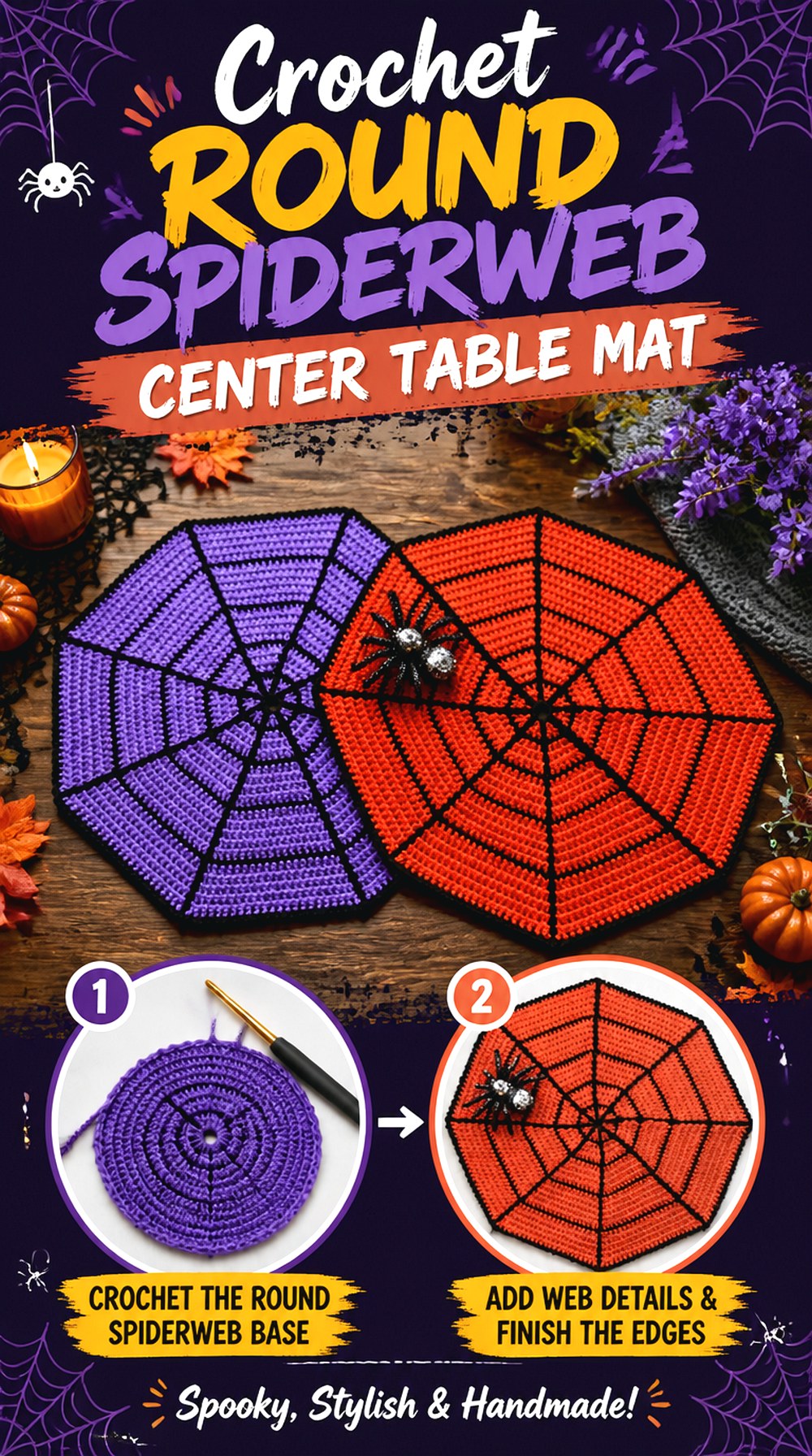
A centered round mat gives the spiderweb theme a defined boundary, making it easier to use beneath a decorative bowl, vase, pumpkin display, or other lightweight seasonal arrangement. Compared with an expanding tablecloth, the contained circular silhouette feels more like a deliberate centerpiece and leaves plenty of uncovered table around it.
This format is also useful when you want the web detail to remain readable from several viewing angles. HandmadebyRaine’s tutorial is specifically presented as a spiderweb table mat, giving this idea one of the most direct matches to tabletop use in the collection. Before choosing it, compare the finished scale shown in the tutorial with the diameter of the area you actually want to decorate.
Centering Matters More Than Exact Edge Alignment
A round web can look slightly off when the centerpiece placed on top hides its visual center. Before styling the table, locate the center of the crochet first and position the display from that point outward. If the topper will sit on a rectangular table, it does not need to mimic the table shape; a strong circular contrast can make the arrangement feel intentionally layered.
Keep Enough Openwork Visible Around the Decor
A spiderweb loses much of its character when a large object covers nearly every radiating line. If you plan to place a bowl or vase in the middle, compare the object’s footprint with the visible web area before settling on a final arrangement. A slightly larger mat can provide more visible negative space, while a smaller centerpiece placed above it allows the crochet itself to remain the focal detail.
Check the Edge After Blocking
With a circular mat, an uneven outer edge can distract from an otherwise symmetrical web. Once the piece is complete, assess the shape on the surface where it will actually be used. If the chosen fiber responds well to blocking, careful shaping can help the radiating sections spread more evenly. Always follow appropriate care instructions for the yarn rather than assuming every fiber tolerates the same treatment.
Original Tutorial and Creator Credit
Creator: HandmadebyRaine
3. Crochet Filet Style Spiderweb Doily Topper
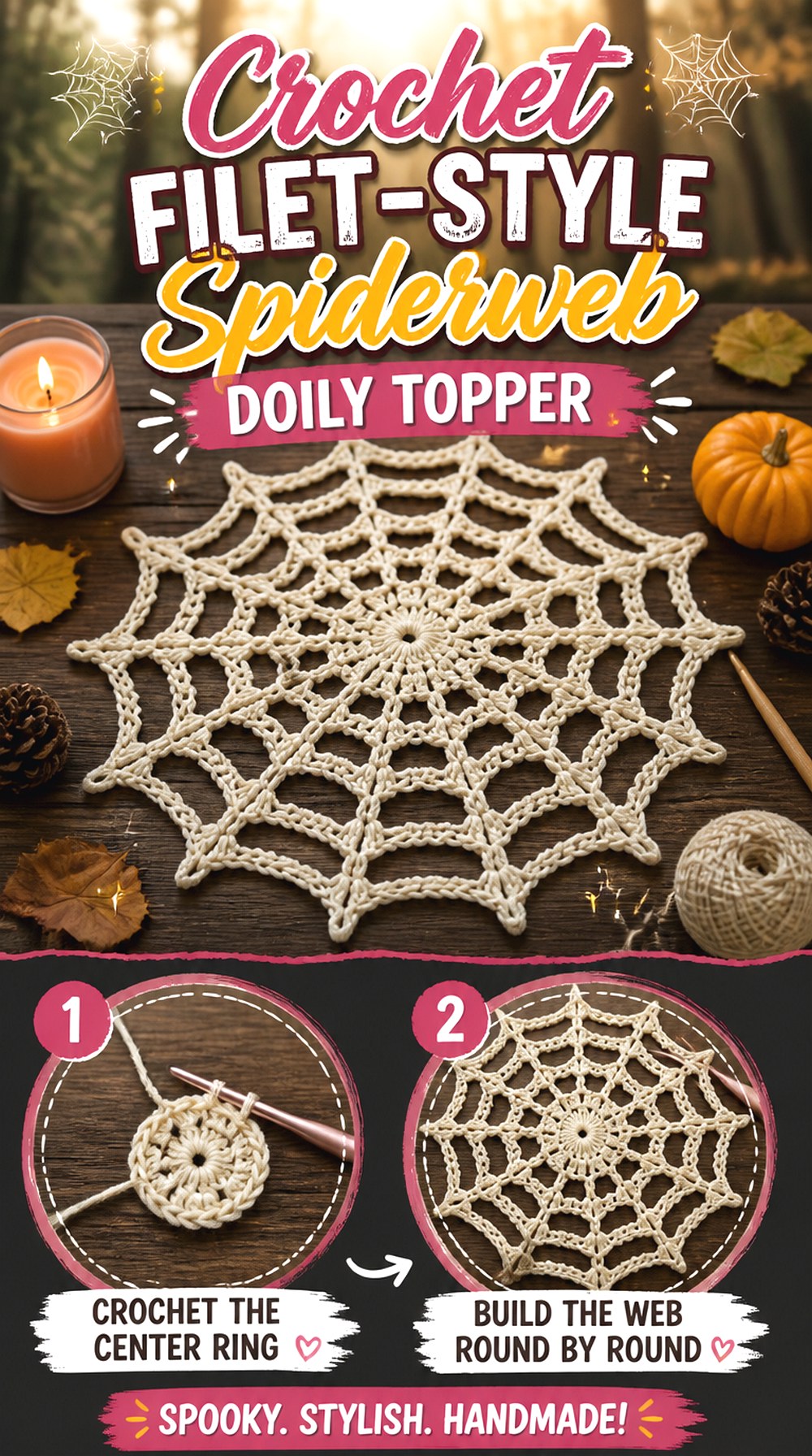
This version leans toward lace rather than bold seasonal prop styling. A doily-scale spiderweb works well when you want the motif to register up close without covering a large amount of furniture. Its compact footprint makes it suitable for end tables, shelves, consoles, or a layered dining-table centerpiece.
Jayda InStitches presents the source as a circular spiderweb doily tutorial, and the finished form can also function as a flat decorative accent. Compared with heavier webs later in this list, this idea suits readers who prefer the spaces between the crochet lines to be as important as the yarn itself. Pay attention to how the outer edge frames the web because that boundary strongly influences whether the piece reads as a doily or a free-form web.
Fine Negative Space Benefits From Strong Contrast
Lacy web lines can disappear visually when the yarn and tabletop are too similar in value. If the main purpose is decoration, place a sample strand or small swatch against the intended surface before committing to the color. Black is not the only option; ivory over deep wood, gray over white, or another high-contrast pairing can make the structure equally clear while changing the overall mood.
A Doily Scale Is Easier to Layer
Because this form occupies less table space, it can sit over a runner, cloth, or bare surface without dominating the full setting. Layering works best when the lower textile does not compete heavily with the web’s openwork. If both layers have complex patterns, the negative spaces can become visually busy. A simpler background usually lets the radiating structure remain easier to read.
Original Tutorial and Creator Credit
Creator: Jayda InStitches
4. Crochet Compact Spiderweb Accent Doily

A compact spiderweb doily is a practical choice when the table itself is small or when you want several little decorative moments instead of one oversized statement. The finished piece can sit under a lightweight ornament, on a nightstand, or at one end of a console without consuming the entire surface. It also offers a useful way to test how a lace web looks with your chosen yarn before committing to a much larger project.
Kristines Crochets demonstrates a small circular spiderweb doily in cotton-based lace styling. The appeal here is scale: rather than treating a small web as an unfinished large one, use its compact proportions intentionally and give it enough empty tabletop around the edge to read as a finished accent.
Small Scale Rewards Cleaner Placement
On a small topper, even a modest shift in the object sitting above it can hide a large part of the motif. If you plan to display something on top, choose an item with a narrow base or place it slightly away from the center so the radiating web remains visible. For a purely decorative doily, leaving the center unobstructed shows the construction most clearly.
Repeating Small Doilies Can Replace One Large Web
Two or three coordinated small pieces can create continuity across a long console or buffet without requiring one enormous crochet project. Keep enough separation between them that each web retains its own silhouette. Repetition can also make storage easier because several compact pieces may be simpler to pack flat than a single broad topper, particularly when the openwork is delicate.
Original Tutorial and Creator Credit
Creator: Kristines Crochets
5. Crochet Picot Edged Spiderweb Dessert Table Doily

This spiderweb idea puts more emphasis on the finishing edge. The tutorial from All About Crochet identifies picot detail alongside the spiderweb construction, creating a perimeter that can look more decorative than an unfinished-looking open web. That makes it an interesting choice for a dessert table, sideboard, or other setting where the outer edge will remain clearly visible.
Rather than covering the topper with several serving pieces, consider using it as a visual frame around one central display. The extra edge texture gives the silhouette another layer of detail, so it benefits from a relatively uncluttered background. This is also a useful project to compare with the cleaner-edged webs elsewhere in the list if you are deciding between graphic simplicity and a more ornamental finish.
Picot Detail Gives the Outer Edge More Presence
When a web is surrounded by a pronounced decorative edge, the eye reads the complete silhouette before individual internal lines. That can help a relatively small topper hold its own on a larger surface. It also means the edge deserves space: avoid placing plates or decor directly over the perimeter if the picot finish is one of the features you want to showcase.
Decorative Edges Need Thoughtful Storage
Small points and open loops can catch on rough objects or other craft supplies. For seasonal storage, keep the topper away from hooks, exposed fasteners, and abrasive decorations that could snag the edge. If it develops creases between uses, consult the yarn’s care guidance before reshaping it rather than applying high heat or aggressive pressing to an unknown fiber.
Original Tutorial and Creator Credit
Creator: All About Crochet
6. Crochet Beaded Spiderweb Side Table Mat
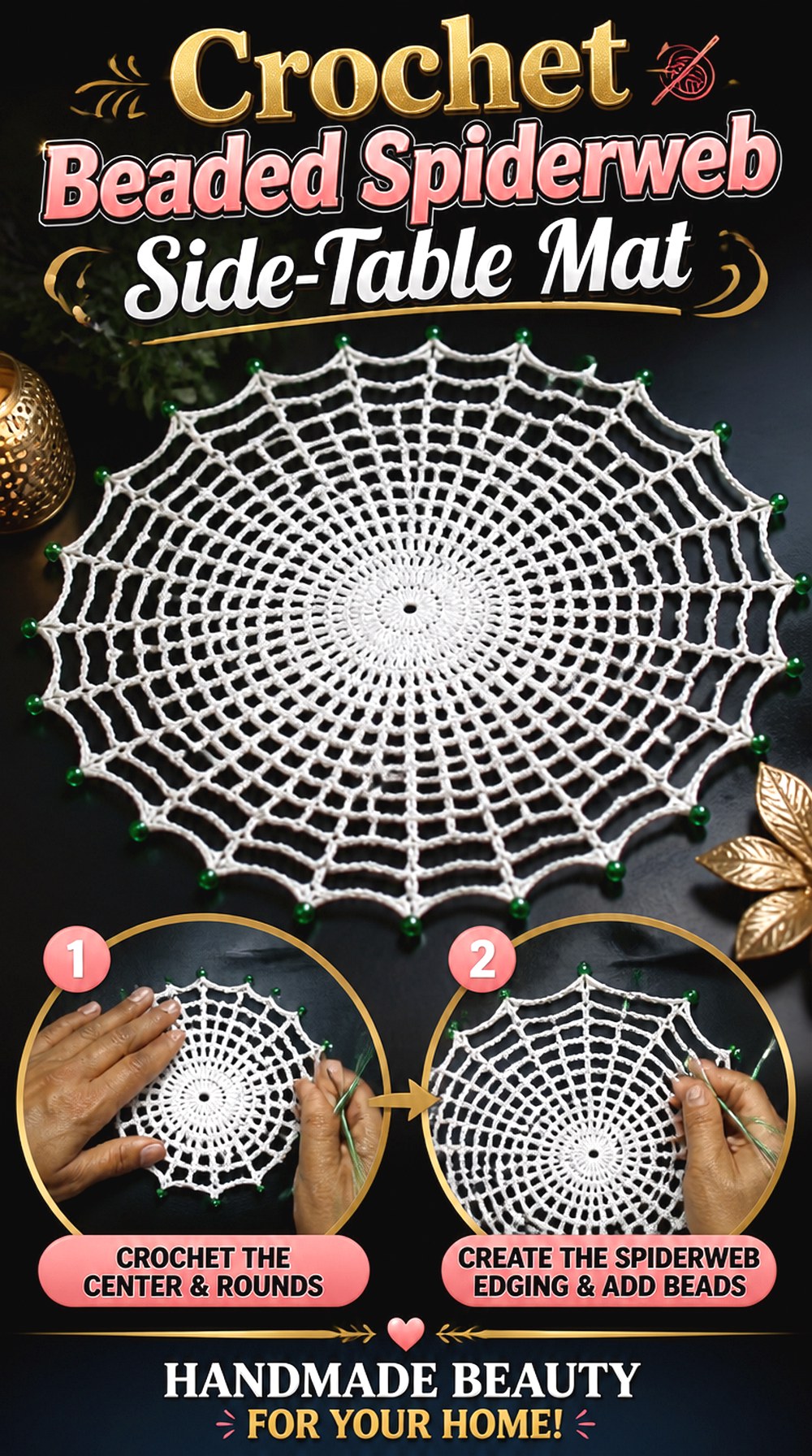
Beads introduce a different kind of contrast: instead of changing the overall web shape, they create small points that can catch light and draw attention to selected areas of the crochet. Alka Crochet and Knitting’s tutorial is presented as a spiderweb doily/table mat and references bead embellishment, making it distinct from the plain-yarn mats in the collection.
A beaded topper is best treated as decorative surface styling rather than an all-purpose table protector. The added elements can create an uneven surface beneath cups, plates, or fragile objects, depending on their placement. For that reason, a side table, console, or display area where the beads can remain visible may make more sense than a crowded dining place setting.
Keep Beads Away From Unstable Tableware
If beads sit above the fabric surface, they can interfere with the flat contact area beneath cups or small dishes. Before styling, place the finished mat on its intended table and check where the raised details fall. Keep fragile objects on stable sections of the surface rather than balancing them over embellishments simply for symmetry.
Embellishment Changes the Storage Decision
A plain web can often be folded or rolled fairly easily, while beads add hard points that may press into neighboring crochet during storage. A loose roll or flat storage arrangement may reduce pressure on those areas. Also consider whether the beads can snag delicate openwork when multiple decorations are stored together, and separate the piece from rough seasonal items if necessary.
Original Tutorial and Creator Credit
Creator: Alka Crochet and Knitting
7. Crochet Adjustable Spiderweb Placemat Topper
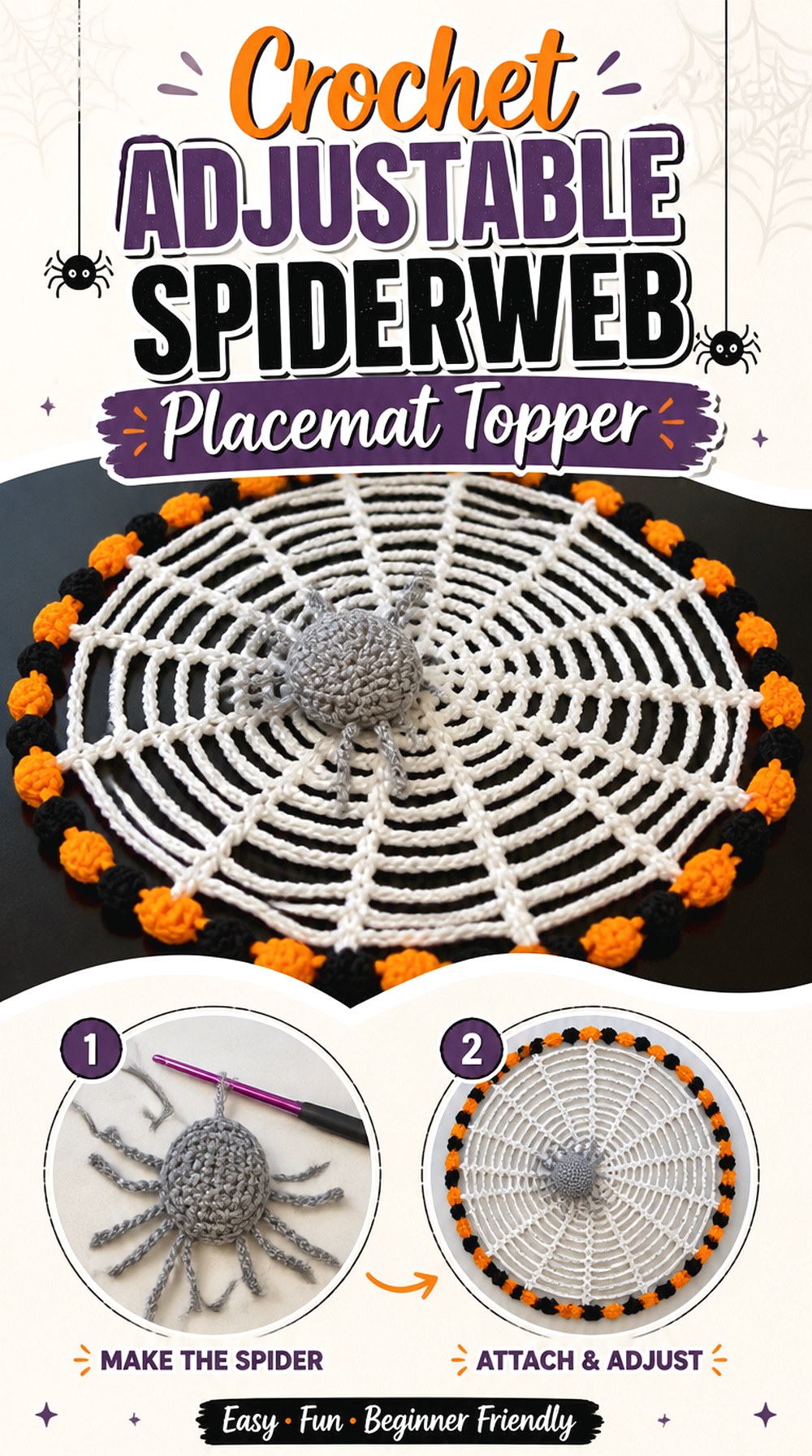
A spiderweb that can be expanded gives you more control over how the motif relates to an individual place setting. Rather than treating the piece only as a central doily, you can consider stopping at a scale that visually frames a plate or use several matching webs across the table. Llama Mama Kayla specifically presents the web as adaptable to tablecloth, coaster, and placemat uses.
The key is to plan around visible space rather than assuming that bigger is always better. If a plate will cover the center, enough of the outer web needs to extend beyond it to preserve the spiderweb effect. For a purely decorative setting, the topper can remain uncovered and function more like a place-marker or layered accent.
Test the Plate Footprint Before Deciding Scale
Place the plate you expect to use on a piece of paper or scrap fabric and mark the area that will be hidden. That simple visual check helps you estimate how much spiderweb needs to remain outside the plate for the design to be recognizable. This is planning rather than a pattern measurement, and it prevents a carefully made web from disappearing almost completely beneath the tableware.
Matching Placemats Need Consistent Finished Shape
When several openwork pieces will appear together, differences in tension can become more noticeable than they would in one standalone web. Compare the pieces on the same flat surface before setting the table. If one looks significantly tighter or looser, determine whether appropriate blocking can bring the shapes closer together instead of trying to disguise the mismatch with dishes.
Original Tutorial and Creator Credit
Creator: Llama Mama Kayla
8. Crochet Scrap Yarn Spiderweb Mini Table Accent
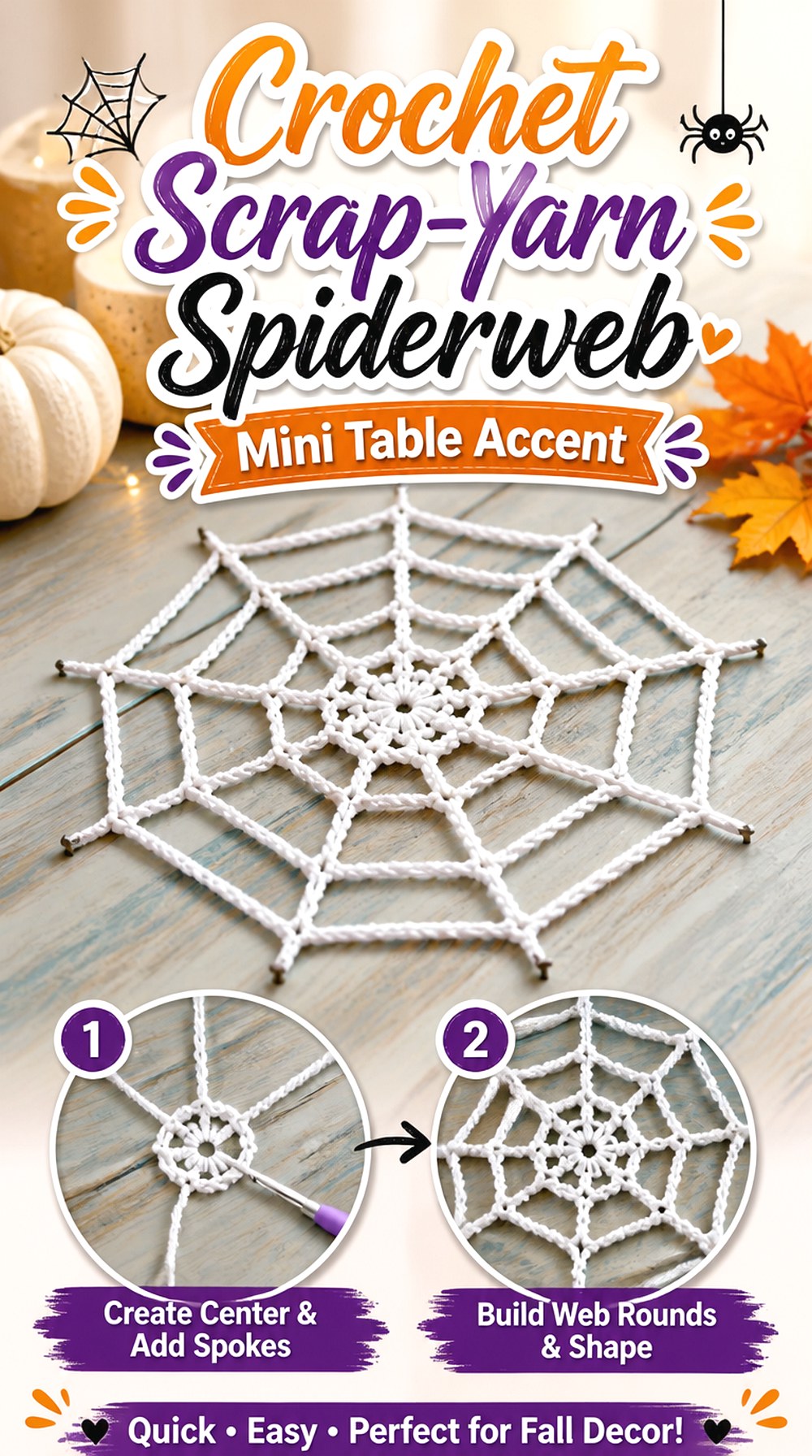
A small spiderweb is a useful way to turn leftover yarn into a focused seasonal detail without planning an entire tablecloth. HappyBerry Crochet’s tutorial is presented as a yarn-scrap spider’s web project, which naturally suits this smaller accent approach. Use the finished web alone on a shelf or side table, or group it with other simple decorations where a large topper would feel excessive.
The important consideration is consistency of yarn behavior. Leftovers may look similar but respond differently to blocking and tension, especially if they come from different fibers or weights. For a crisp flat result, using a compatible leftover yarn may be more predictable than mixing several unrelated remnants in the same web.
Scrap Yarn Still Needs a Purposeful Scale
Using leftovers does not mean the finished piece has to look random. Decide first whether the web will sit beneath a small object, fill a corner of a table, or remain fully visible. That intended footprint gives you a sensible stopping point and helps the mini topper feel proportionate to its setting rather than simply ending when the yarn runs out.
Mixed Leftovers Can Behave Differently
Two black yarns can look nearly identical in the ball yet produce noticeably different thickness, sheen, or stretch once crocheted. If you plan to combine scraps, compare them side by side before using them in the same openwork piece. A sudden shift in yarn diameter can change the visual rhythm of the web and may make flat shaping more difficult.
Original Tutorial and Creator Credit
Creator: HappyBerry Crochet
9. Crochet Custom Size Spiderweb Buffet Mat
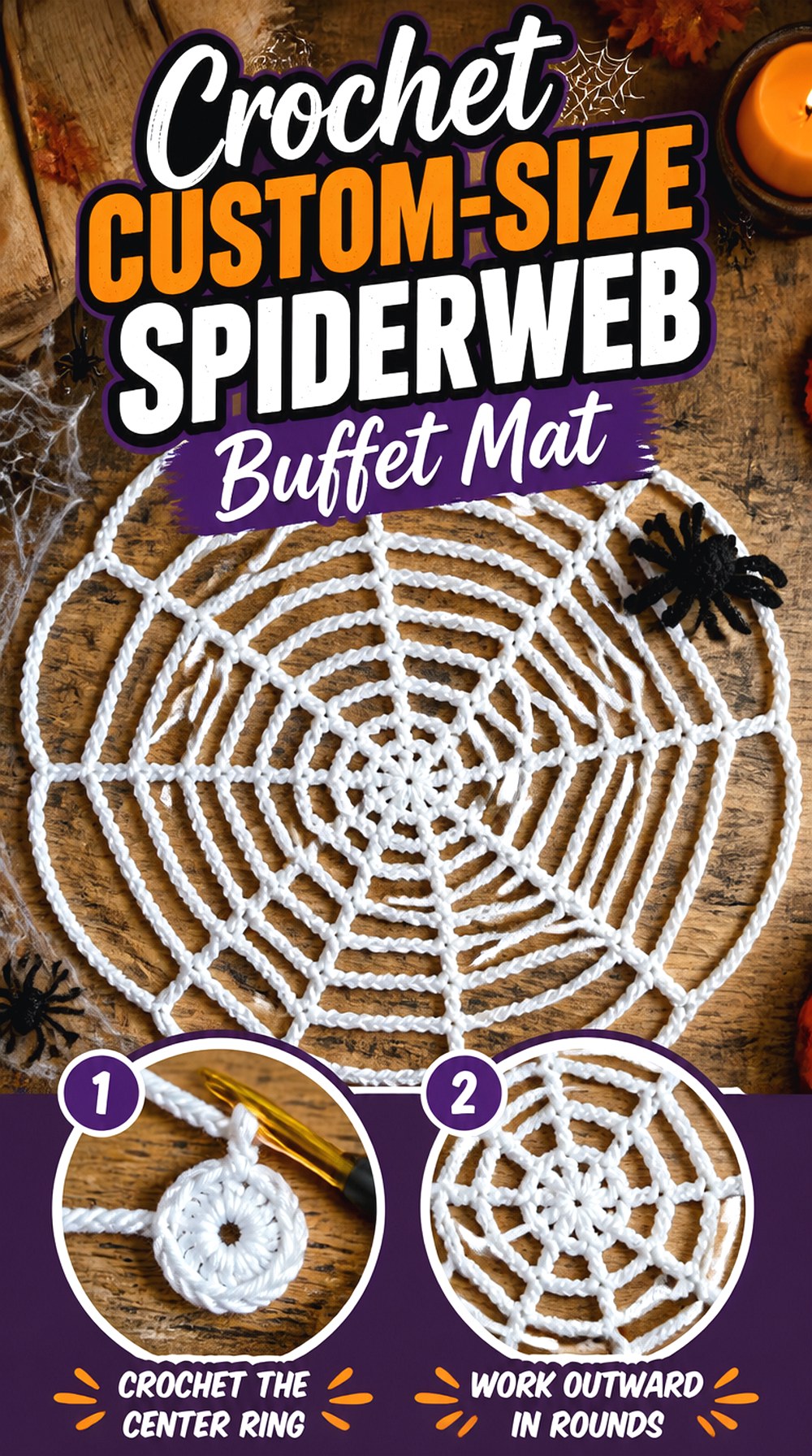
A buffet or console table often needs a different proportion from a compact dining centerpiece. This idea uses a customizable web concept that can be developed until the visual coverage suits a larger display area. Nana’s Crafty Home presents the source tutorial as highly customizable and specifically discusses wet blocking.
That flexibility is helpful when the topper needs to work around serving dishes, candlesticks, pumpkins, or other seasonal objects. Instead of guessing a final diameter, decide what should remain visible after the table is styled. A buffet mat can afford to be broad, but the outer web should still be visible around the objects placed on top or much of the crochet work will disappear from view.
Map the Serving Area Before Enlarging the Web
A buffet may already have predictable zones for dishes or decorations. Lay those objects out first, then assess where an openwork topper could be visible between them. This reverses the usual process of making a large piece first and trying to force the table setting around it. It can also help you choose a smaller finished web if most of the surface would otherwise be hidden.
Wet Blocking Can Clarify the Final Geometry
The creator specifically references wet blocking, which is relevant because openwork webs often need their radiating shape to be spread deliberately. Follow the tutorial’s fiber-appropriate guidance rather than assuming every yarn should be treated identically. After blocking and drying, evaluate the web on the actual table before deciding whether additional decorative elements are needed.
Original Tutorial and Creator Credit
Creator: Nana’s Crafty Home | Tonya Bush
10. Crochet Stiffened Spiderweb Tray Topper

A stiffened web changes the character of the project from soft lace to a more defined decorative shape. Craft Fix knitting & crochet demonstrates a spiderweb that can be made in different sizes and also shows the use of stiffener and pins for shaping. For tabletop styling, that approach works well when you want a web to sit prominently inside a decorative tray or on a surface where a crisper outline is desirable.
Stiffness comes with trade-offs. The piece may hold its geometry better for display, but it will not drape or fold like a conventional doily. Decide before finishing whether the topper needs to be stored compactly, washed frequently, or flex around objects, because those needs may favor a softer finish instead.
Stiffener Turns Drape Into Structure
A soft openwork web conforms naturally to the table, while a stiffened one behaves more like a shaped decoration. That can be useful inside a tray, beneath lightweight seasonal ornaments, or as a clearly defined graphic accent. It is less appropriate when you want the crochet to hang softly over an edge or fold easily into a small storage container.
Pin the Shape With the Final Silhouette in Mind
The creator’s approach includes shaping with pins, so the placement stage has a direct effect on how the web reads when dry. Think about whether you want a symmetrical radiating shape or a slightly more organic cobweb appearance before setting the points. The goal is to shape for your intended display rather than automatically stretching every section to its maximum.
Keep Stiffened Crochet Away From Heat and Moisture Assumptions
A stiff decorative web should not be treated as heat protection for hot cookware. Likewise, the presence of a stiffening product may change how you clean or re-block the piece. Check the instructions for both the yarn and any finishing product used before exposing the topper to water, heat, or repeated handling.
Original Tutorial and Creator Credit
Creator: Craft Fix knitting & crochet
11. Crochet Eight Spoke Cobweb Side Table Topper
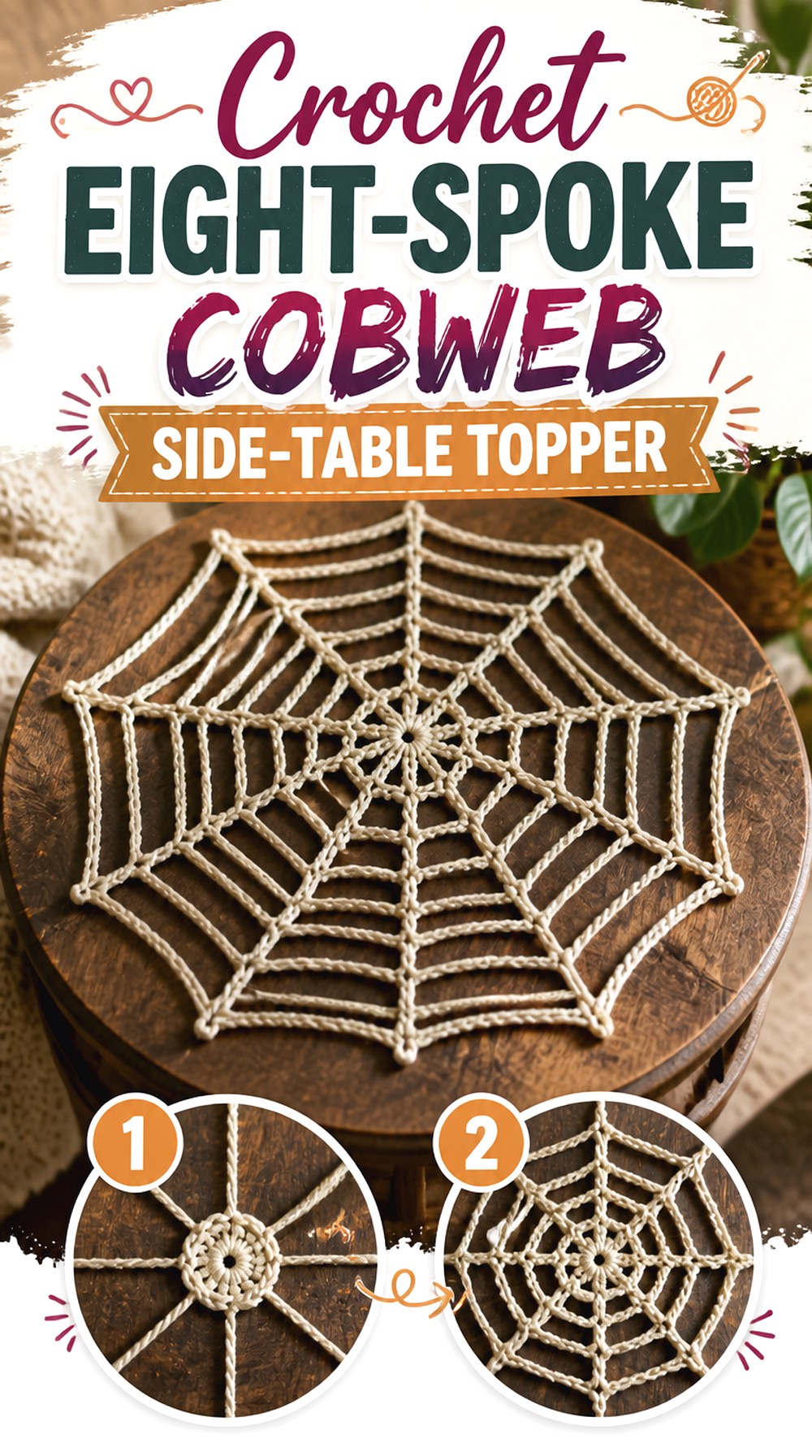
An eight-spoke cobweb gives the design a strong radial framework and a slightly more graphic appearance than very fine lace webs. Crochet with Clare’s cobweb tutorial shows this clear radiating format, making it useful for a side table where the complete silhouette can remain visible.
This is a good choice when you like recognizable web geometry but do not necessarily want an elaborate doily edge. The spokes become part of the visual architecture, so contrast matters. A mostly uncovered topper lets those lines do the work; adding many small decorations over it can interrupt the radial pattern and make the web feel less coherent.
Strong Spokes Suit Simple Table Styling
When the main lines are visually dominant, a few carefully placed objects usually work better than many scattered accessories. Try positioning the topper first and then adding decor where it does not obscure the strongest radial lines. This preserves the structure of the web and helps the table look styled rather than simply covered with themed objects.
A Defined Cobweb Can Move Beyond Halloween
The spiderweb association is naturally seasonal, but a monochrome cobweb can also fit gothic or dark-romantic decor outside October. If you want longer use, choose the tabletop color and yarn combination with the room rather than a holiday palette in mind. The same geometric web can look theatrical in black or much softer when worked in a pale neutral.
Original Tutorial and Creator Credit
Creator: Crochet with Clare
12. Crochet Chunky Graphic Spiderweb Center Mat
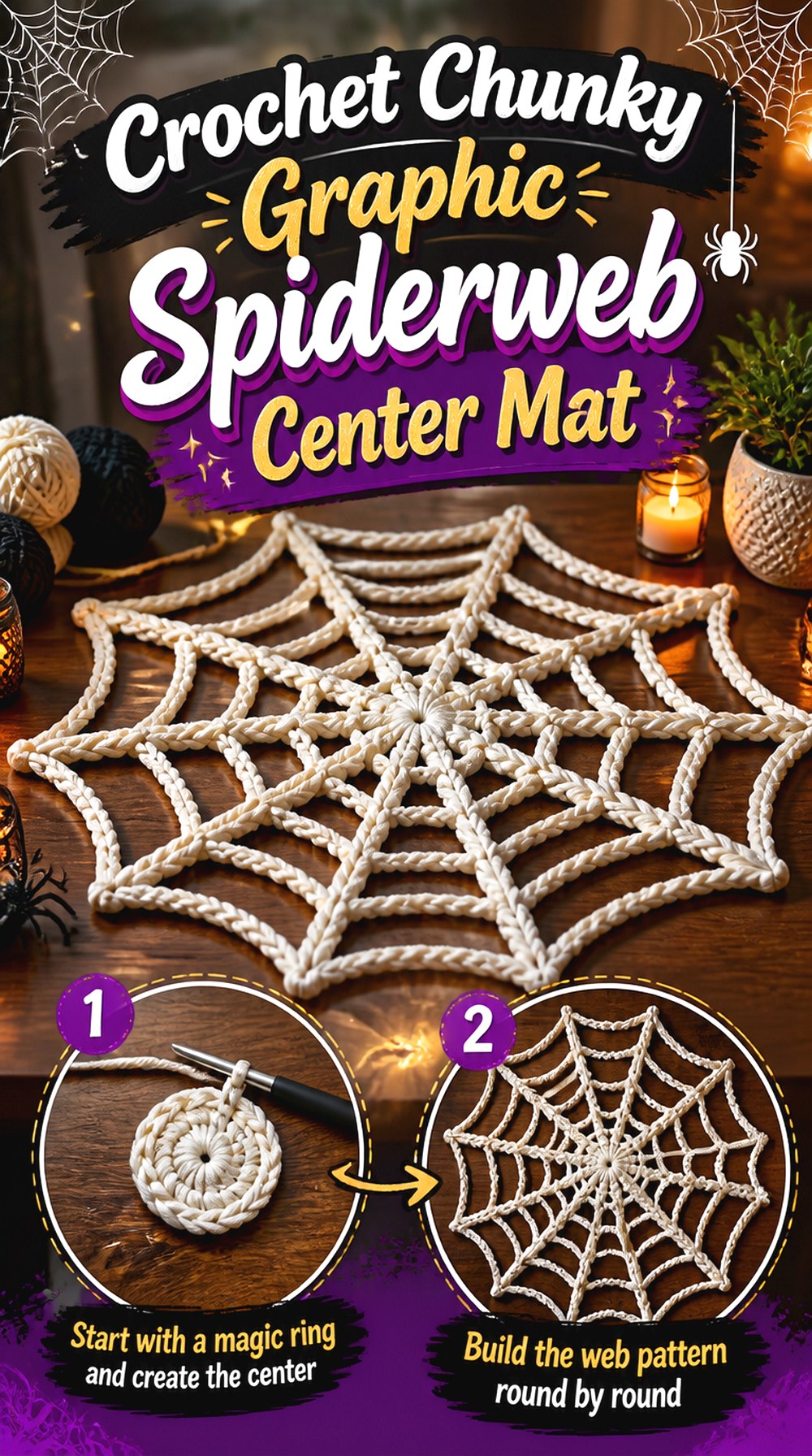
This project takes the opposite approach from fine doily crochet. JolieKnots Handmade demonstrates decorative spiderwebs in different size treatments, including a bolder version made with heavier-looking yarn presentation. That makes it a useful source for a chunky tabletop mat where the yarn lines themselves become the dominant visual feature.
A thicker web can stand out against a busy tabletop more readily than delicate lace, but it also creates more physical texture. Think carefully about what will sit on top. A large decorative bowl may work well at the center, while narrow-stemmed glassware or small unstable objects may be less suitable if the raised yarn makes the surface uneven.
Chunkier Lines Reduce the Delicate-Lace Effect
Increasing visual weight makes the web feel more graphic and less like a traditional doily. This can be especially effective on a large table where very fine threads might disappear at a distance. The trade-off is that the spaces between the lines can feel smaller and the finished surface more textured, so the piece may read more as a statement mat than a subtle layer.
Watch How Raised Yarn Meets Tableware
A thicker yarn creates more noticeable ridges beneath whatever is placed above the web. Before using the topper in a functional place setting, test the stability of the specific objects that will sit on it. Decorative centerpieces with broad, flat bases are generally easier to position than narrow or top-heavy objects that could rock across raised crochet.
Scale the Surrounding Decor to the Bolder Web
A chunky centerpiece can visually overpower tiny ornaments. Pairing it with one or two larger forms often creates a cleaner relationship between the crochet and the objects above it. Alternatively, leave much of the web uncovered so its strong radial geometry becomes the decoration rather than merely a background layer.
Original Tutorial and Creator Credit
Creator: JolieKnots Handmade
13. Crochet Oversized Spiderweb Treat Table Cover

For a Halloween treat table or party buffet, an oversized web can act as the main textile rather than a small decoration. The Crochet Crowd presents its spiderweb as expandable into a much larger home-decor piece, which supports using the construction for broad coverage. The openwork keeps the table surface visible while still creating a strong theme.
This option works best when you plan the table and topper together. If bowls, trays, and decorations will cover almost every section, a huge web may offer little visual return. Instead, leave some radiating areas visible between objects and near the perimeter. Also remember that decorative crochet is not a substitute for food-safe liners or heat-resistant protection beneath warm serving pieces.
Oversizing Changes the Visual Balance of the Whole Table
Once the web occupies most of the surface, it becomes part of the table’s overall composition rather than an isolated accessory. Keep that in mind when adding other decorations. Several small competing motifs can make the arrangement busy, whereas a few larger objects allow the web itself to provide much of the seasonal detail.
Openwork Does Not Protect the Table Surface
Large coverage can create the impression of a protective cloth, but the gaps between stitches leave substantial portions of the table exposed. Use appropriate mats, trays, or other surface protection where spills, condensation, or heat are concerns. Treat the crochet as decoration unless the materials and construction are specifically designed for a protective function.
Stop Enlarging When the Visible Coverage Is Enough
The tutorial’s expandable nature makes it tempting to keep going simply because you can. Instead, check the piece against the intended table as it grows. A web that reaches the right visual footprint without interfering with seating, serving, or storage may be more useful than one pushed to the largest possible size.
Original Tutorial and Creator Credit
Creator: The Crochet Crowd
14. Crochet Square Spiderweb Motif Table Accent
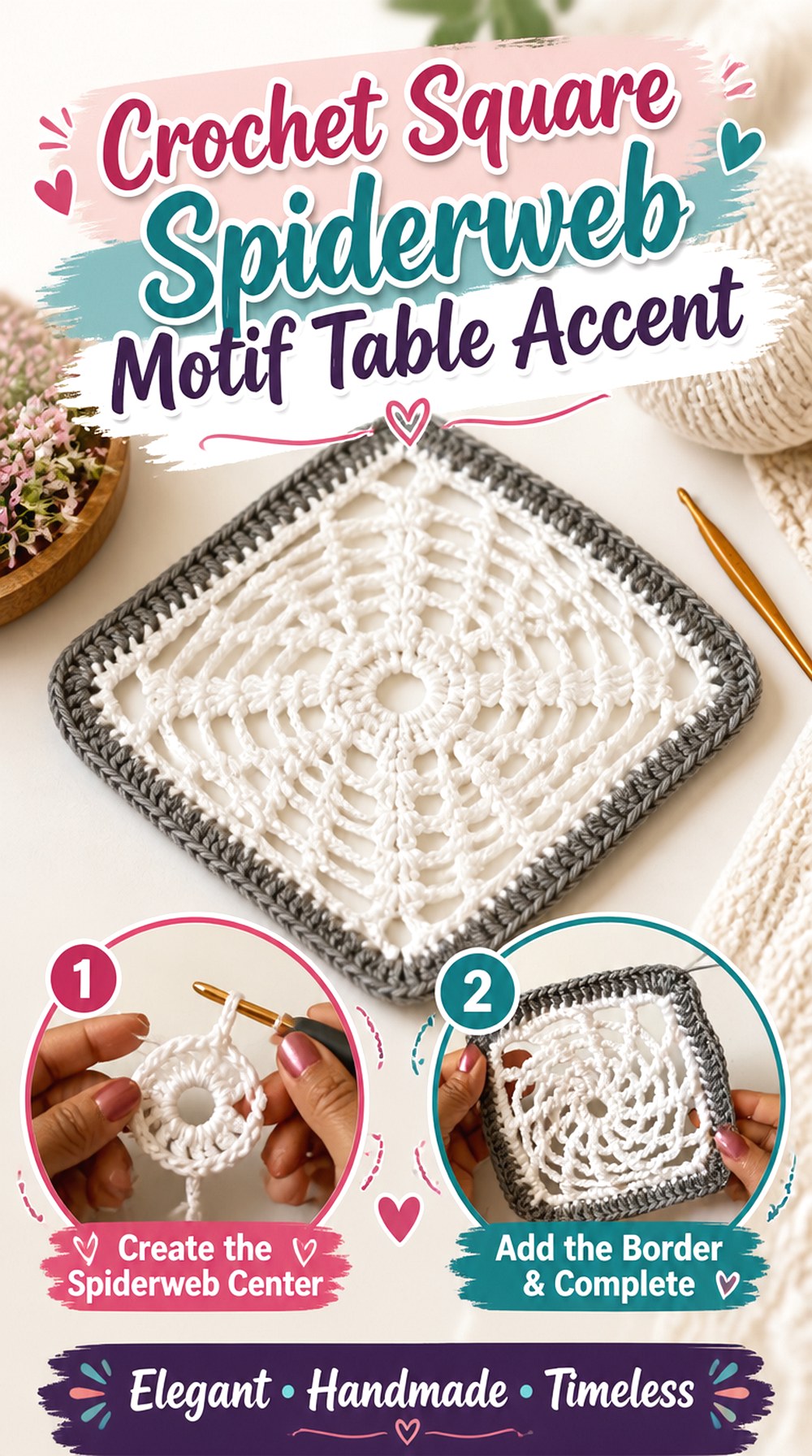
Not every spiderweb topper has to be round. Crochet Mili’s tutorial places a spiderweb inside a granny-square format, creating a clear geometric boundary around the motif. That square outline makes this idea particularly useful on small square tables, beneath a rectangular tray, or as one element in a modular arrangement.
The key advantage is layout flexibility. One square can act as a compact accent, while compatible squares can potentially be arranged side by side for a broader surface—provided their blocked dimensions and edges match well enough for the intended join. If you adapt the motif into a larger tabletop composition, test one completed and blocked square first instead of assuming every motif will finish at an identical size.
The Square Border Changes the Visual Geometry
A circular web directs attention outward in every direction, while a square border creates tension between the radial center and straight outer edges. That can work especially well beneath square trays or at the center of angular furniture. If you want the motif to remain obvious, avoid covering all four corners because those edges help distinguish this design from the round webs in the collection.
Block One Motif Before Planning a Larger Grid
If you want to connect several squares, use the finished blocked dimensions of an actual motif rather than an assumed size. As a simple planning example, four blocked squares placed in a two-by-two grid will span roughly twice one square’s width and height before accounting for joining or edging. That is layout math, not a substitute for the creator’s construction instructions.
Joined Squares Create New Lines Across the Table
A modular topper introduces seams or joins that become part of the finished look. Decide whether you want those joins to blend into the spiderwebs or create a visible grid between them. Strongly contrasting joins can make the table topper look more patchwork-like, while a quieter join keeps attention on the individual web centers.
Original Tutorial and Creator Credit
Creator: Crochet Mili
15. Crochet Spiderweb Coaster Cluster Table Set
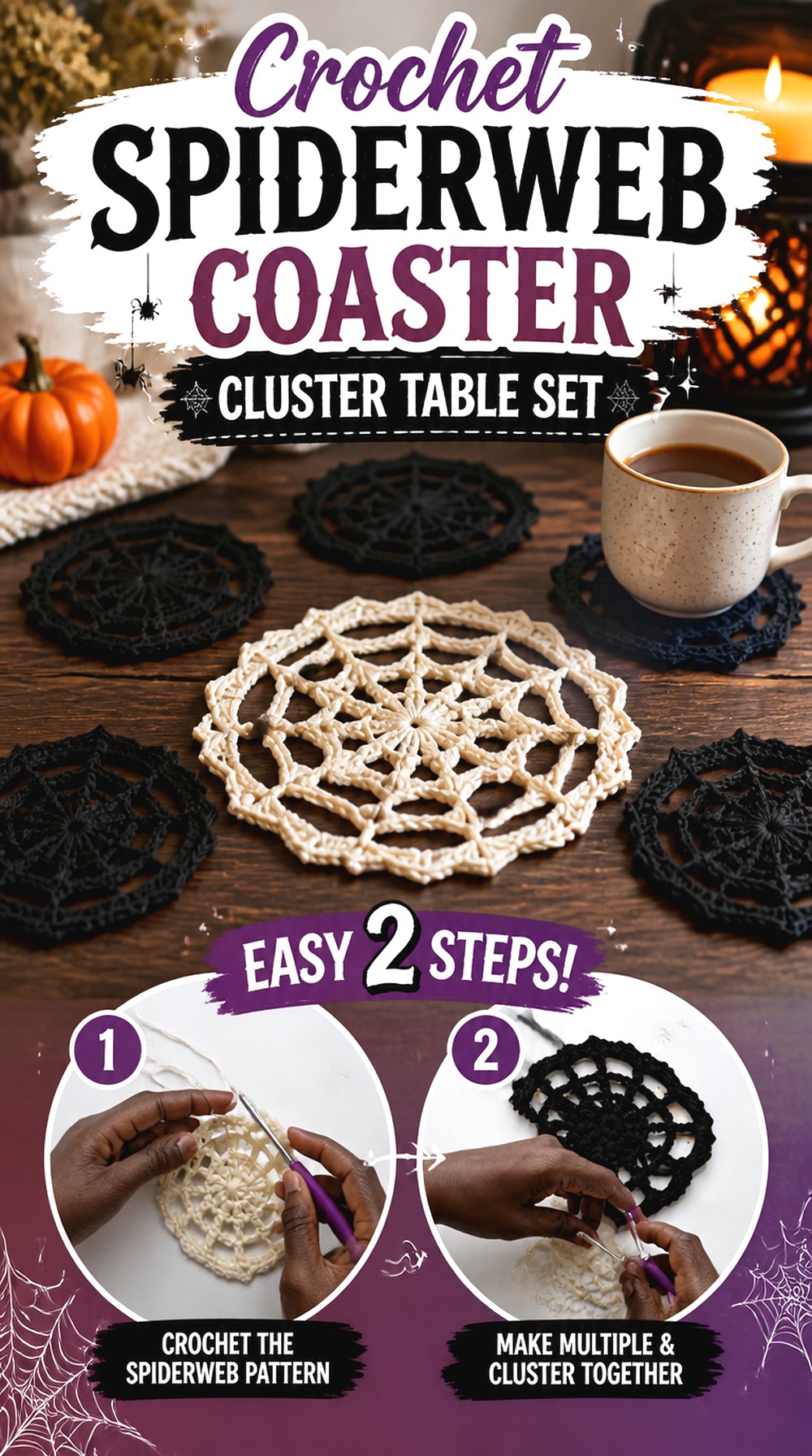
A set of small spiderweb coasters creates tabletop decoration through repetition rather than sheer size. Hooked and Smithen’s tutorial focuses specifically on a crochet spiderweb coaster, making it a natural source for this clustered arrangement. Instead of placing a single large web in the center, distribute matching webs around a coffee table or informal seasonal setting.
The approach works well when you want the spiderweb theme to remain useful at individual spots, but do not assume every yarn or openwork coaster construction provides moisture or heat protection. If actual drinks will sit on them, consider stability, condensation, and the intended fiber. They can also be used purely as decorative mini toppers beneath lightweight ornaments.
Repetition Creates a Tablewide Theme
Several small webs can visually connect different parts of a table without covering the surface. Keep their spacing deliberate so they read as a coordinated set rather than scattered scraps. You can also reserve one or two for decorative objects and leave others open, which gives the arrangement variety while preserving the same motif throughout.
Check Cup Stability Before Functional Use
Openwork and raised stitches may give a cup less continuous contact with the table than a dense coaster would. Test the finished piece with the specific cup or glass you intend to use before relying on it functionally. For delicate stemware or top-heavy mugs, a purely decorative use may be the better choice if the web does not sit evenly.
Original Tutorial and Creator Credit
Creator: Hooked and Smithen
16. Crochet Fine Lace Spiderweb Centerpiece Layer
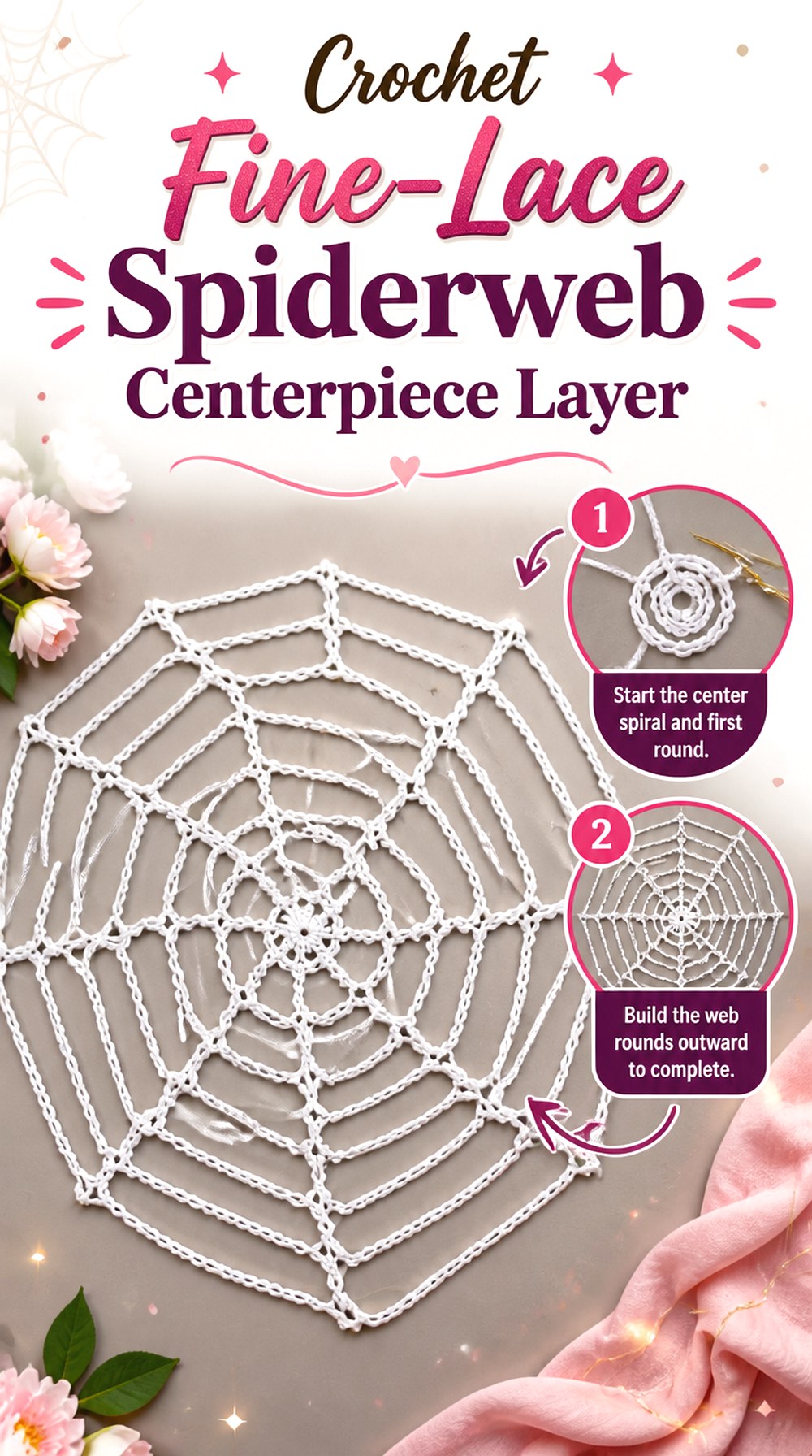
This final idea returns to the classic radiating web but treats it as a fine decorative layer rather than a full table covering. Diving Ducks Crochet’s spiderweb tutorial is described as adjustable in scale, with the source demonstrating a cotton-based version. That makes it useful for a centerpiece where you want to control the diameter according to the visual space around a vase, candle group, or seasonal arrangement.
The strongest feature of a fine web is transparency. Much of the tabletop remains visible through the crochet, so the surface color becomes an active part of the finished design. Keep the setting relatively simple and allow the narrow web lines to contrast against the background instead of burying them beneath numerous decorations.
Fine Lines Benefit From an Uncluttered Background
When the yarn is visually delicate, patterned tablecloths or busy wood grain can compete with the web. Test the idea on the actual table before final styling. If the motif almost disappears, a plain runner or contrasting fabric layer beneath it can make the web easier to see without changing the crochet itself.
Adjustable Scale Helps Frame the Centerpiece
A web that can continue expanding gives you freedom to stop when enough material remains visible around the object placed at the center. Check the relationship as the work grows rather than relying on a generic target measurement. The right diameter depends on both the table and the footprint of the decor that will sit above it.
How the 16 Spiderweb Table Topper Styles Compare
If you want maximum table coverage, the expanding tablecloth, buffet mat, and oversized treat-table web offer the most flexible direction. For a traditional centerpiece, the round table mat, filet-style doily, compact accent doily, and fine-lace web keep the design centered and easy to see.
Choose the stiffened tray topper when crisp display structure matters more than drape, or the chunky center mat when you want heavier graphic lines. The square motif is the clearest choice for modular or angular layouts, while the coaster cluster spreads the theme across several small table positions. For extra surface detail, the beaded mat adds embellishment and the picot-edged doily emphasizes the perimeter rather than only the web’s internal spokes.
Conclusion
The most useful spiderweb topper is the one that matches how much of your table you actually want to cover. Fine doilies and compact webs suit small displays and layered centerpieces, while expandable webs create stronger impact across buffet, dining, or party tables. Chunkier yarn makes the web more graphic, stiffening creates a display-focused structure, and square motifs or coaster sets offer alternatives to the familiar round format.
Before choosing, consider the objects that will sit above the crochet, how much openwork should remain visible, and whether the piece needs to fold easily for seasonal storage. Use the original tutorials near each idea for exact construction details, then adapt only where the finished scale and structure make sense for your table.
Frequently Asked Questions
Do crochet spiderweb table toppers usually need blocking?
Many openwork spiderweb designs can benefit from shaping because the radiating lines and large spaces make uneven sections easy to notice. Whether you should wet block, steam, pin, or use another method depends on the fiber and the creator’s guidance. Do not automatically apply high heat. First check the yarn’s care information, then shape the piece only with a method appropriate to that material.
What type of yarn gives a spiderweb table topper the clearest look?
That depends on the result you want. Finer yarn can produce a delicate lace effect with narrow web lines, while thicker yarn creates a bolder, more graphic motif. Stitch definition and contrast with the table are often more important than choosing one universal fiber. If the web will be washed or stored repeatedly, also consider the care requirements and how well the chosen yarn returns to shape.
How can I choose the right spiderweb size for my table?
Measure the area you actually want the crochet to occupy, not only the total tabletop. Then account for anything that will cover the center, such as a vase, bowl, or serving tray. A useful planning approach is to place those objects first and estimate how much visible web you want around them. For adjustable tutorials, compare the growing piece with the table periodically rather than relying on an invented universal diameter.
Can I place hot dishes directly on a crochet spiderweb topper?
Do not assume so. An openwork decorative topper is not automatically a trivet, pot holder, or heat barrier, and the gaps can leave the table directly exposed. Yarn fibers and any beads, stiffeners, or embellishments can also react differently to heat. Use a purpose-designed heat-safe layer beneath hot cookware unless the specific project materials and construction are explicitly intended for heat protection.
How can I keep a large crochet spiderweb from looking wavy?
Uneven tension, differences between radiating sections, or aggressive stretching can all affect how an open web lies. Check the project periodically on a flat surface while it grows so problems are noticed early. After completion, an appropriate blocking method may help define the shape. If the piece still ripples substantially, consult the original tutorial before forcing it flatter, because the construction itself may need attention.
Can a spiderweb coaster or granny square be turned into a larger table topper?
Sometimes, but the adaptation depends on the construction. A repeatable square can potentially become a joined grid, while an expandable circular web may simply continue outward according to its original logic. Start by finishing and blocking one sample so you know its real dimensions and behavior. Avoid assuming that enlarging yarn, hook size, or stitch sections will automatically preserve flatness; use the source tutorial for construction-specific decisions.


