A crochet waterfall cardigan depends on more than adding extra fabric at the front. The most convincing versions balance front-panel width, fabric weight, stitch openness, shoulder fit, sleeve shape, and enough flexibility for the edges to fall into soft folds instead of standing stiffly away from the body.
These 18 ideas cover true waterfall cardigans as well as open-front constructions that can provide useful starting points for a waterfall-inspired garment. Some linked tutorials specifically demonstrate cascading or draped fronts; others teach kimono, mesh, raglan, granny-stitch, hexagon, or long-cardigan constructions that would require additional fit planning before being adapted. That distinction matters when choosing a project, because a cardigan that looks relaxed when hanging flat will not automatically create a waterfall effect when worn.
Quick List
- Flowing-Edge Crochet Waterfall Cardigan
- Sleeveless Cascade Crochet Waterfall Cardigan
- Rectangle-Drape Crochet Waterfall Cardigan
- One-Piece Breezy Crochet Waterfall Cardigan
- Kimono-Shape Crochet Waterfall Cardigan
- Mesh V-Stitch Crochet Waterfall Cardigan
- Oversized Pocket Crochet Waterfall Cardigan
- Widened-Front Crochet Waterfall-Inspired Cardigan
- Bell-Sleeve Crochet Waterfall-Inspired Cardigan
- Alpine-Texture Crochet Waterfall-Inspired Cardigan
- Relaxed Unisex Crochet Waterfall-Inspired Cardigan
- Simple Everyday Crochet Waterfall-Inspired Cardigan
- V-Stitch Summer Crochet Waterfall-Inspired Cardigan
- Basket-Weave Hexagon Crochet Waterfall-Inspired Cardigan
- Top-Down Raglan Crochet Waterfall-Inspired Cardigan
- Granny-Stitch Crochet Waterfall-Inspired Cardigan
- Full-Length Crochet Waterfall Duster Cardigan
- U-Shaped Crochet Kimono Waterfall Cardigan
What Actually Creates a Waterfall Front in Crochet?
A waterfall front needs enough fabric beyond the ordinary center-front edge to fold rather than simply hang vertically. How that extra width is created varies: wider front panels, a generous collar extension, rectangle-based construction, or fabric that naturally rolls and drapes can all contribute.
The checkpoint is the cardigan on the body, not its shape on a table. Before adding more front width, consider shoulder placement and garment weight. Too little width can produce an ordinary open cardigan; too much dense fabric can pull the neckline forward or create bulky folds.
When adapting a regular cardigan tutorial, compare the original front-panel shape with the silhouette you want. Keep the creator’s garment construction separate from your own drape experiments, and verify that additional width will not interfere with armholes, neckline shaping, pockets, closures, or intended fit.
Yarn Weight, Stitch Openness, and Drape Work Together
A waterfall silhouette usually looks more fluid when the crochet fabric bends easily. That does not mean one yarn weight is universally correct. Fiber, twist, hook choice, stitch pattern, and fabric density all influence how a panel falls.
Open mesh and V-stitch fabrics can produce light folds with less bulk, making them useful for warmer-weather layers. Dense textured stitches can create a stronger visual statement, but a wide waterfall front made from heavy fabric may place noticeably more weight around the shoulders and neckline.
Make a fabric sample large enough to handle, not just measure. Hold it vertically and fold it back on itself. If it stays rigid, the finished front may behave similarly. If it collapses into soft folds, it is more compatible with a cascading edge. Always follow the source tutorial’s gauge requirements when making its original garment.
Fit Checkpoints Before Adapting an Open-Front Cardigan
Start with the shoulders. A dramatic front cannot compensate for a cardigan that sits too far off the shoulder or pulls backward at the neck. Next, check armhole comfort and sleeve weight before extending the front.
Length changes the visual balance too. A cropped waterfall cardigan produces concentrated folds near the waist, while a longer version can create a stronger vertical line. With a duster, however, additional front width also means additional yarn and garment weight.
For an adaptation example, suppose an existing front panel reaches comfortably to the center front but does not drape. Adding width would change the amount available for folding, but it could also alter the neckline and hem. Rather than assuming a universal number of extra inches, pin or temporarily mock up additional width and evaluate how it hangs on the intended wearer.
1. Flowing Edge Crochet Waterfall Cardigan

This is the most direct interpretation in the collection because the supporting video is specifically presented as a waterfall cardigan tutorial. The defining feature is a relaxed front that falls away from the neckline instead of relying on buttons or a narrow conventional band.
For someone who wants the recognizable waterfall silhouette rather than adapting another cardigan shape, this is a logical place to study how extra front fabric behaves. Pay particular attention to the relationship between the shoulder area and the hanging edge. A cascade needs freedom to fold, but the upper body still needs enough stability to keep the garment from continually shifting forward.
Let the Front Fold Instead of Forcing a Collar Shape
A waterfall front works visually because the edge decides where to fold as the cardigan is worn. Heavy edging or a very firm border can change that behavior. Before adding decorative finishing, hold the unfinished edge in its natural position and decide whether more structure would improve it or make it too stiff.
Shoulder Stability Matters More With Extra Front Fabric
The cascading sections add fabric ahead of the shoulder line. If the back and shoulder area already feel loose, that additional weight may encourage the cardigan to migrate forward. Check the garment from the side as well as the front; the shoulder seam or shoulder area should remain reasonably balanced.
2. Sleeveless Cascade Crochet Waterfall Cardigan

Removing sleeves changes both the appearance and the engineering of a waterfall cardigan. This sleeveless version leaves the shoulders visually lighter while preserving loose cascading fronts, making the drape the dominant feature of the garment.
It can work as a layering vest over fitted sleeves, dresses, or simple tops when a full long-sleeve cardigan would feel too bulky. The supporting tutorial is explicitly described as a sleeveless waterfall cardigan and emphasizes a loose fit, so it offers a useful contrast with fitted-sleeve options.
Armhole Depth Becomes a Visible Design Detail
Without sleeves to hide the armhole edge, its depth and finishing become much more noticeable. An opening that drops too far may reveal more of the layer underneath than intended. Check the cardigan over the type of clothing you plan to wear with it rather than evaluating the armhole over bare arms alone.
A Lighter Shoulder Can Support a More Noticeable Cascade
Sleeveless construction removes sleeve weight, which can make the front drape feel visually more prominent. That does not mean unlimited front width will work, but it gives the waterfall edge more space to become the main feature without competing with substantial cuffs or sleeves.
Original Tutorial and Creator Credit
Creator: Crochet With Bernie
3. Rectangle Drape Crochet Waterfall Cardigan
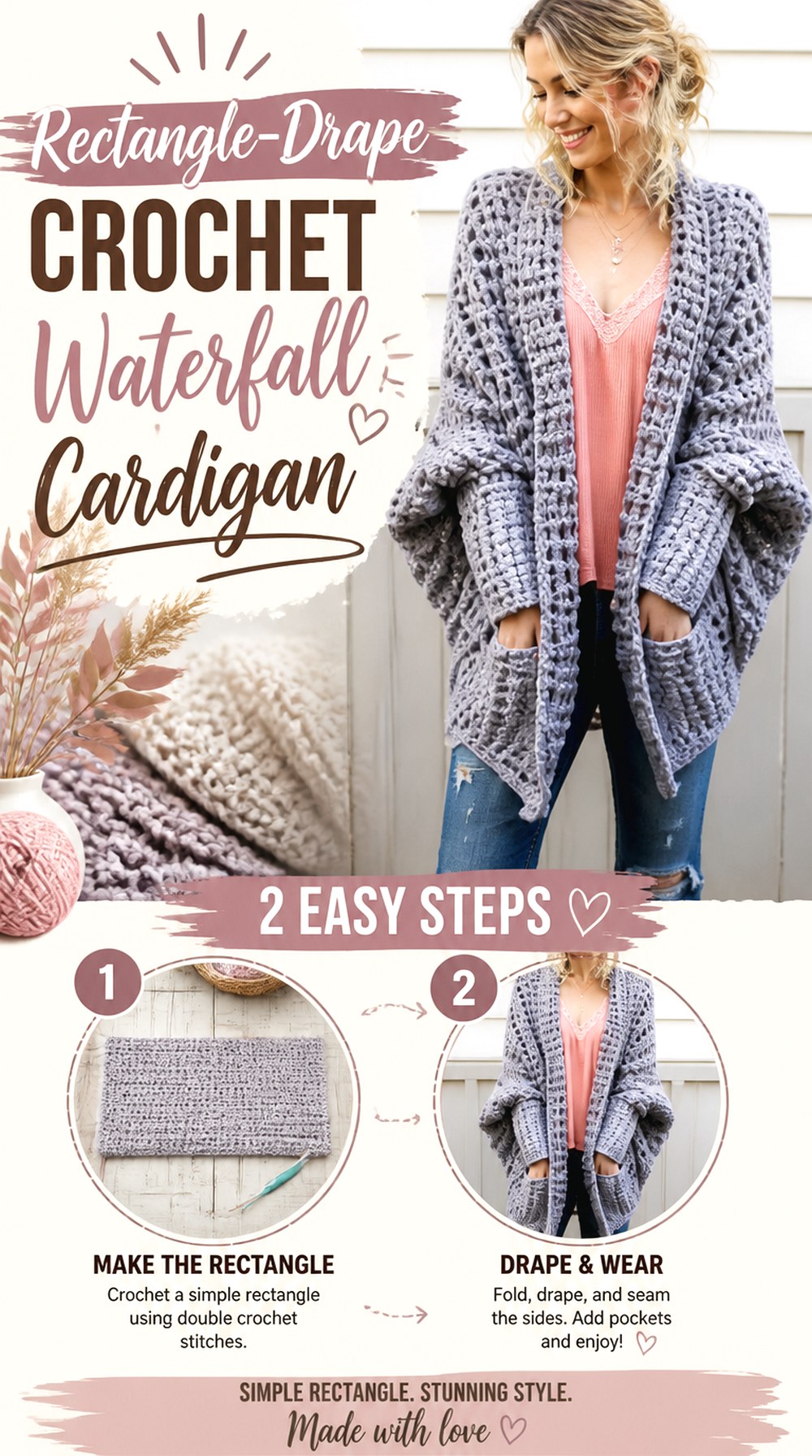
A rectangle-based cardigan can create a surprisingly sophisticated draped shape because the same broad piece of fabric contributes to the back, sides, and generous front opening. That geometry is useful for a waterfall look: there is naturally more fabric available around the neckline and front than in a narrowly shaped conventional cardigan.
The Make & Do Crew tutorial demonstrates its Habitat Cardigan as a flowing, rectangle-based sweater with dolman-style shaping and a ribbed collar. It is a strong reference when you prefer drape created by simple geometry rather than numerous individually shaped pieces.
Rectangle Construction Changes Where the Fabric Hangs
With this construction, altering width can affect more than the center front. It may also influence the depth of the body, shoulder area, and sleeve opening. Treat the whole rectangle as a connected system instead of assuming you can lengthen only one visible edge without consequences.
Keep Ribbing From Overpowering the Soft Body
A structured collar can give the opening definition, but strong ribbing beside very fluid body fabric creates a different look from an unstructured waterfall. Decide whether you want the border to frame the cascade or disappear into it. That decision should happen before making the edging disproportionately wide or firm.
Original Tutorial and Creator Credit
Creator: Make & Do Crew
4. One Piece Breezy Crochet Waterfall Cardigan

A one-piece open-front design offers another route to the waterfall look without assembling numerous front and back pieces. Treasurie’s Luna Cardigan is presented as a loose, drapey, open-front garment worked in one piece with short, flowing sleeves, making it especially relevant for a light waterfall-inspired layer.
The shorter sleeves keep the overall silhouette airy and put more visual attention on the front opening. This direction is suited to readers who want soft coverage rather than a substantial cold-weather cardigan.
One-Piece Construction Reduces Seam Bulk Near the Drape
A smooth body can be useful where you want uninterrupted folds around the opening. Seams are not inherently a problem, but bulky joins near the front or shoulder can change how lightweight fabric collapses. Watch how the completed one-piece body falls before deciding whether it needs additional edging.
Short Sleeves Keep the Proportions Airy
A broad waterfall front combined with large full-length sleeves can create a lot of visual volume. Shorter sleeves provide contrast. If you adapt sleeve length, reassess the cardigan after adding the extra weight because a longer sleeve can subtly change how the upper body hangs.
Original Tutorial and Creator Credit
Creator: Treasurie
5. Kimono Shape Crochet Waterfall Cardigan

A kimono-style cardigan brings a broad, relaxed body and wider sleeve line to the waterfall category. Instead of concentrating all the volume at the cascading fronts, it spreads ease through the entire garment, creating a more casual silhouette.
KnitcroAddict’s tutorial uses a lightweight kimono-cardigan approach and demonstrates a loose garment with an optional decorative border. The source also provides multiple sizes, making it a helpful construction reference when your goal is a wide, comfortable layer rather than a close-fitting cardigan.
Wide Sleeves Need Balance With a Generous Front
When both the sleeves and fronts contain substantial volume, the garment can become visually wide from every angle. If you want the waterfall edge to remain the focal point, compare sleeve width with front width before making both areas dramatically oversized.
Decorative Borders Can Change the Edge Behavior
Pom-poms, fringe, shells, or another noticeable border add both visual emphasis and some weight. On a waterfall cardigan, that can make the front swing differently. Test a small section of the intended edging before committing it to the entire opening.
Original Tutorial and Creator Credit
Creator: KnitcroAddict
6. Mesh V Stitch Crochet Waterfall Cardigan
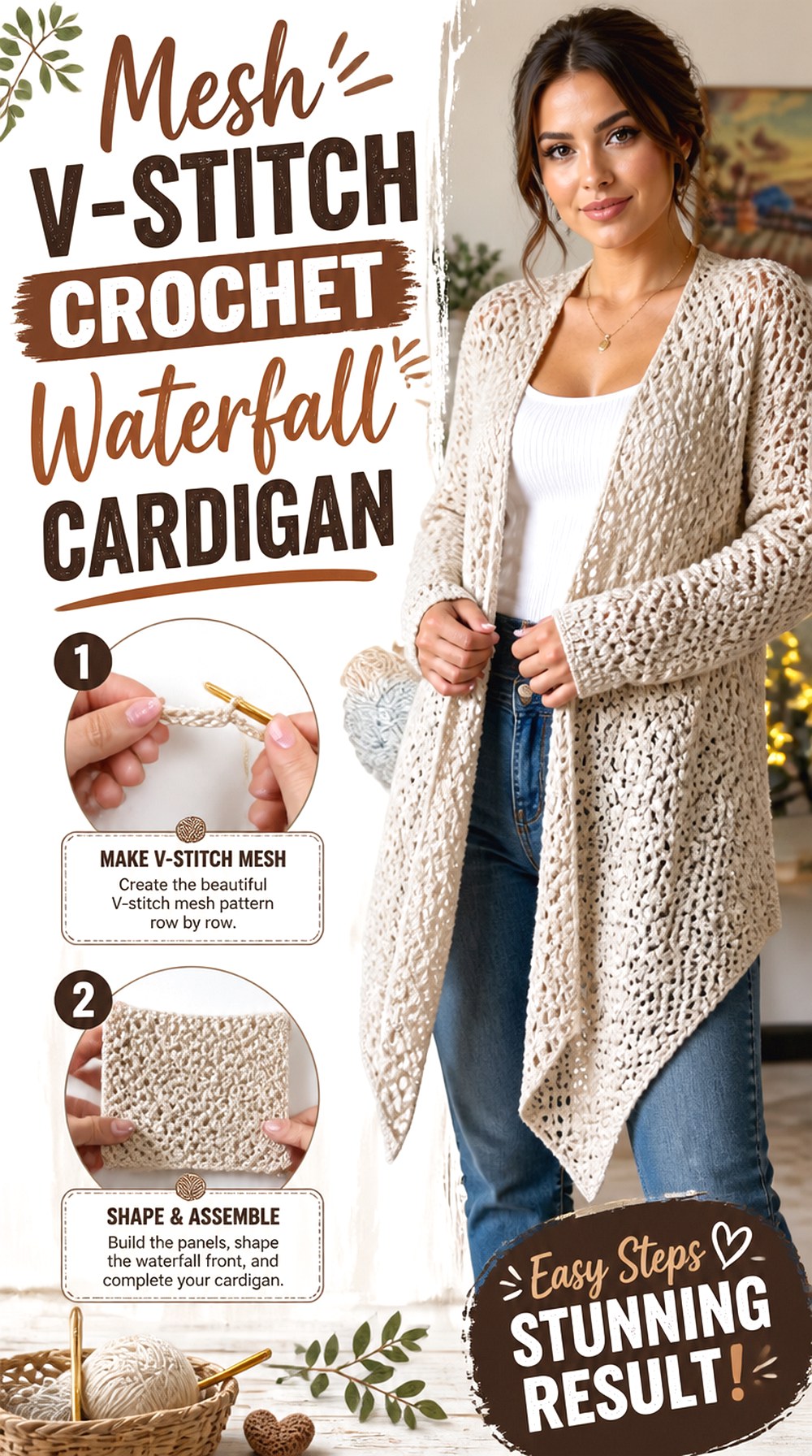
Mesh is one of the clearest ways to create movement without loading the front with dense fabric. VivCrochets’ mesh cardigan uses a V-stitch for a breathable, drapey fabric and constructs the garment from separate pieces that are later joined.
For a waterfall interpretation, the open texture makes a compelling starting point because the front can fold without looking heavy. This idea is more about light layering and visible movement than substantial warmth.
Open Fabric Makes the Underlayer Part of the Outfit
A mesh waterfall cardigan does not visually cover clothing underneath in the same way as dense crochet. Plan the garment with its likely base layer in mind. Contrast can make the stitch pattern clearer, while similar colors create a quieter texture.
Front Width Can Look Larger in an Airy Stitch
An open stitch takes up visual space without appearing solid. Before making an extremely wide cascade, pin or fold the front while wearing the cardigan. You may need less apparent volume than you would with a dense fabric because the openwork already creates movement and depth.
Seam Placement Still Needs to Sit Smoothly
Lightweight mesh can make a bulky join unexpectedly obvious. When assembling pieces, evaluate shoulder and sleeve joins from the outside and inside. An uneven join near the upper front can interrupt an otherwise fluid waterfall line.
Original Tutorial and Creator Credit
Creator: VivCrochets
7. Oversized Pocket Crochet Waterfall Cardigan

Pockets make a waterfall cardigan more functional, but they also introduce weight exactly where an oversized garment may already be pulling downward. For The Frills’ Briar Cardigan is a slouchy oversized design with wide sleeves, ribbing, and substantial patch pockets.
Its original front is not presented as a waterfall design, so use it primarily as an oversized-cardigan construction reference. A waterfall adaptation would require careful consideration of where pockets sit relative to any added front drape.
Keep Pockets Away From the Main Fold Line
If a pocket crosses the area that naturally collapses into a waterfall fold, it can make the cascade look stiff or uneven. Pin pocket shapes onto the nearly finished cardigan and wear it before sewing them permanently.
Oversized Ease and Waterfall Volume Are Different
A loose body gives room around the torso, while a waterfall front adds fabric specifically to the opening. Increasing both without distinction can produce more bulk than expected. Decide separately how much body ease you want and how dramatic you want the front folds to appear.
Wide Sleeves Add Their Own Visual Weight
A slouchy sleeve is already a statement. Pairing it with a very dramatic cascade creates a strongly oversized silhouette. If you prefer a cleaner vertical line, keep either the sleeve or the front more restrained rather than maximizing both.
Original Tutorial and Creator Credit
Creator: forthefrills
8. Widened Front Crochet Waterfall Inspired Cardigan

TCDDIY’s cardigan tutorial is useful here because its construction explicitly separates right and left front panels and includes increasing in those fronts before assembly. That makes it interesting for readers studying how front shaping affects an open cardigan, even though the source itself is not presented as a waterfall pattern.
Rather than simply adding a large rectangular extension afterward, this idea focuses on planning the front shape as an intentional part of the garment.
Front Increases Can Control Where the Extra Fabric Begins
A cascade that widens gradually can look different from one created by attaching a uniformly wide collar. If exploring this direction independently, consider whether you want fullness near the neckline, lower toward the hem, or evenly distributed.
Match Left and Right Shaping Before Assembly
Waterfall folds do not need to hang in identical positions, but the underlying front-panel dimensions should be intentional. Before joining the cardigan, place both fronts together and check whether the shaping is mirrored as expected.
Original Tutorial and Creator Credit
Creator: TCDDIY
9. Bell Sleeve Crochet Waterfall Inspired Cardigan
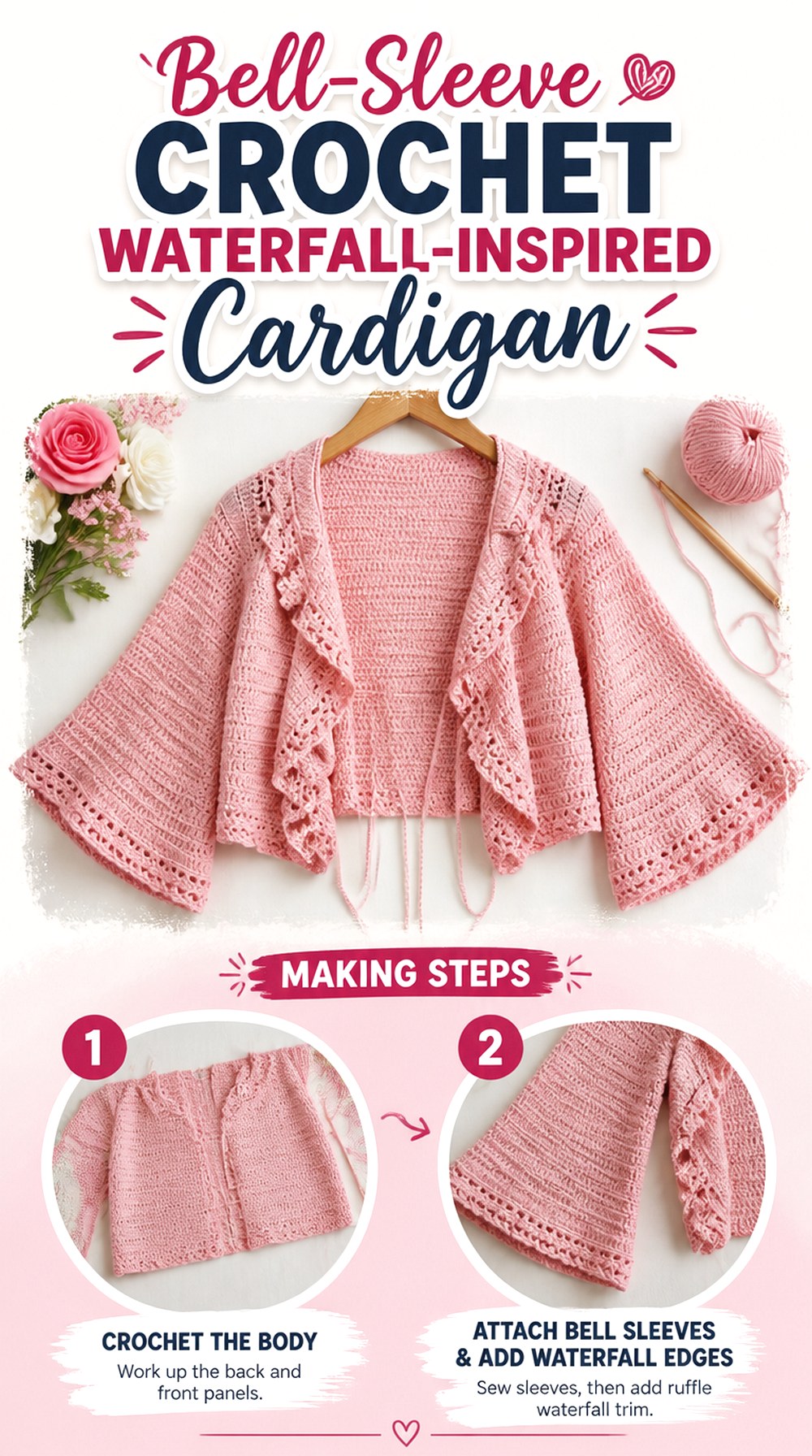
Bell sleeves shift the visual emphasis outward at the wrists, creating a very different balance from a narrow-sleeved waterfall cardigan. Chenda DIY’s tutorial specifically demonstrates a crochet cardigan with bell sleeves.
For a waterfall-inspired adaptation, this works best when you deliberately manage where the garment has volume. A moderately draped front can complement the sleeves; an extremely wide cascade plus strongly flared cuffs can turn the entire silhouette into one continuous field of fabric.
Sleeve Flare Should Begin Where It Looks Intentional
The exact sleeve shaping belongs to the source tutorial, but your fitting checkpoint is simple: look at the garment with arms relaxed at your sides. The flare should complement the front line rather than visually merging into it.
Fingertip Function Matters With Dramatic Cuffs
A bell sleeve can be attractive but impractical if it constantly drops into whatever you are handling. Consider your intended use—occasional layering versus an everyday work cardigan—before choosing how prominent you want the sleeve feature to be.
Original Tutorial and Creator Credit
Creator: Chenda DIY
10. Alpine Texture Crochet Waterfall Inspired Cardigan
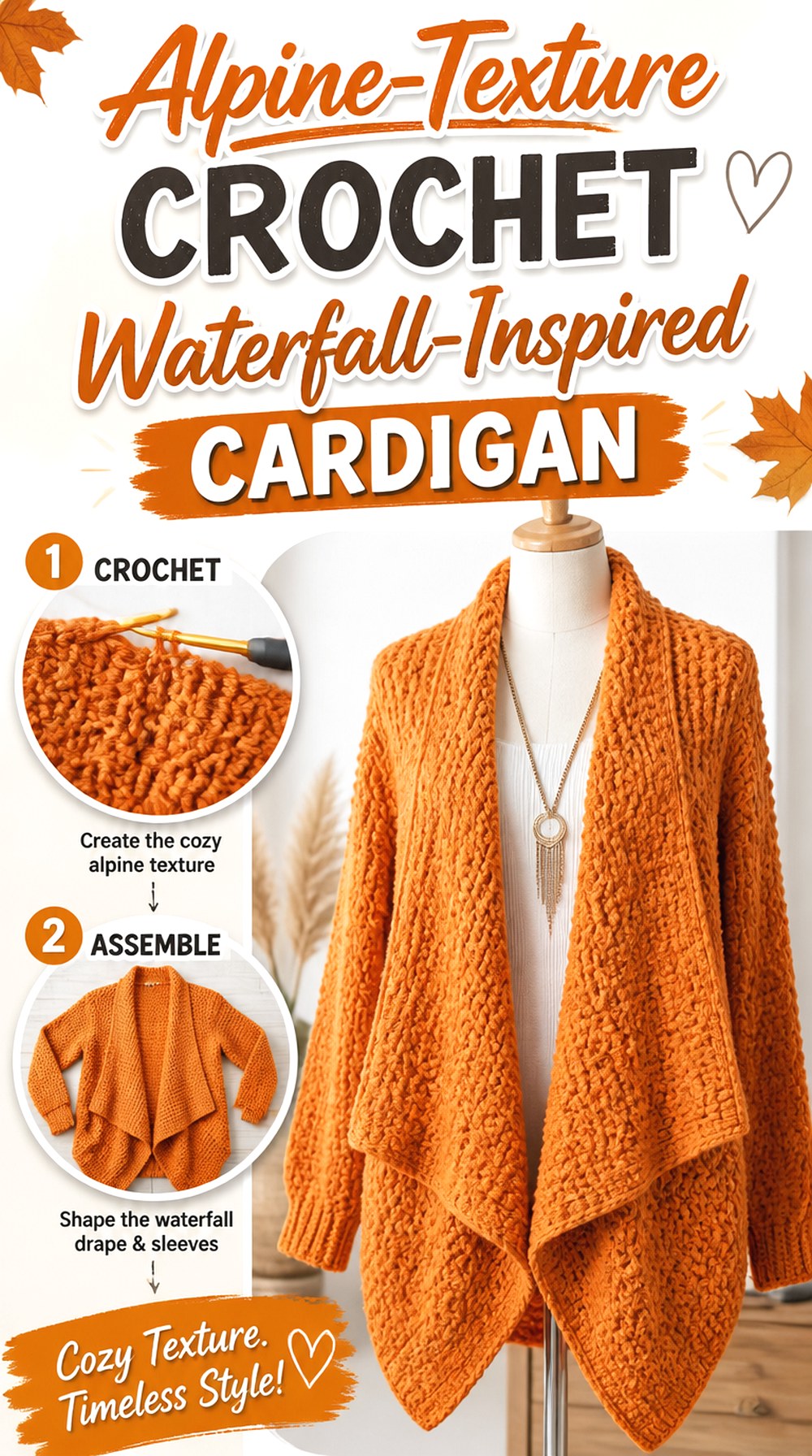
Waterfall cardigans are often imagined in smooth or open fabric, but a pronounced texture can create a heavier, more structured alternative. AC Crochets demonstrates a cardigan using alpine stitch and describes the project as measurement-based and adjustable.
The textured surface makes this a useful contrast to mesh and V-stitch options. For a waterfall adaptation, however, the key question is whether your chosen fabric bends easily enough to form folds rather than standing away from the torso.
Texture Can Reduce the Depth of Soft Folds
Raised stitch patterns create additional thickness. Before planning a generous waterfall edge, make a larger sample and physically scrunch, fold, and hang it. A texture that looks excellent on a straight back panel may behave differently when doubled over at the front.
Watch Total Garment Weight Before Extending the Front
More surface texture often means more yarn than a very open stitch fabric. A long front extension multiplies that difference. If the unfinished cardigan already feels substantial, consider a more restrained cascade instead of automatically adding maximum width.
Original Tutorial and Creator Credit
Creator: AC Crochets
11. Relaxed Unisex Crochet Waterfall Inspired Cardigan
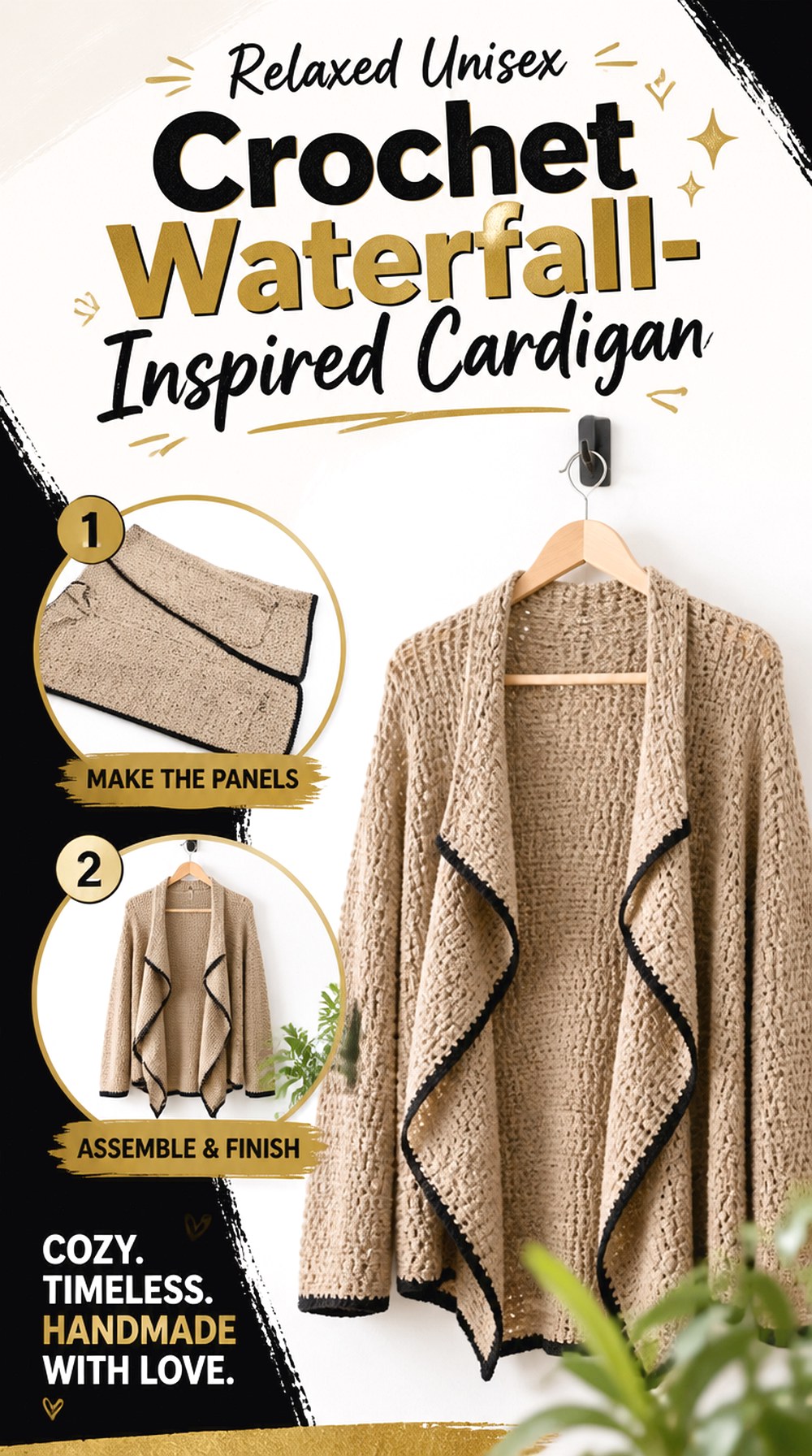
A straight, relaxed cardigan gives you a neutral base from which to study how a waterfall front changes the overall style. Bag-O-Day Crochet’s tutorial presents an easy-to-make unisex cardigan with positive ease and separate body sections.
This is not an exact waterfall design, so its strongest value here is comparison. The relatively straightforward body helps illustrate the difference between ordinary front coverage and deliberately cascading front fabric.
Start With the Intended Ease, Then Think About the Cascade
Do not use extra front width as a substitute for adequate body fit. First establish whether the back, shoulders, and armholes provide the room you want. Only then evaluate the front.
A Straight Body Keeps Attention on Any Added Drape
Simple silhouettes can make a waterfall feature more obvious because there are fewer competing shapes. If you prefer a clean everyday cardigan, a restrained front extension may be more compatible than adding pockets, flared sleeves, and multiple decorative borders at the same time.
Original Tutorial and Creator Credit
Creator: Bag-O-Day Crochet
12. Simple Everyday Crochet Waterfall Inspired Cardigan
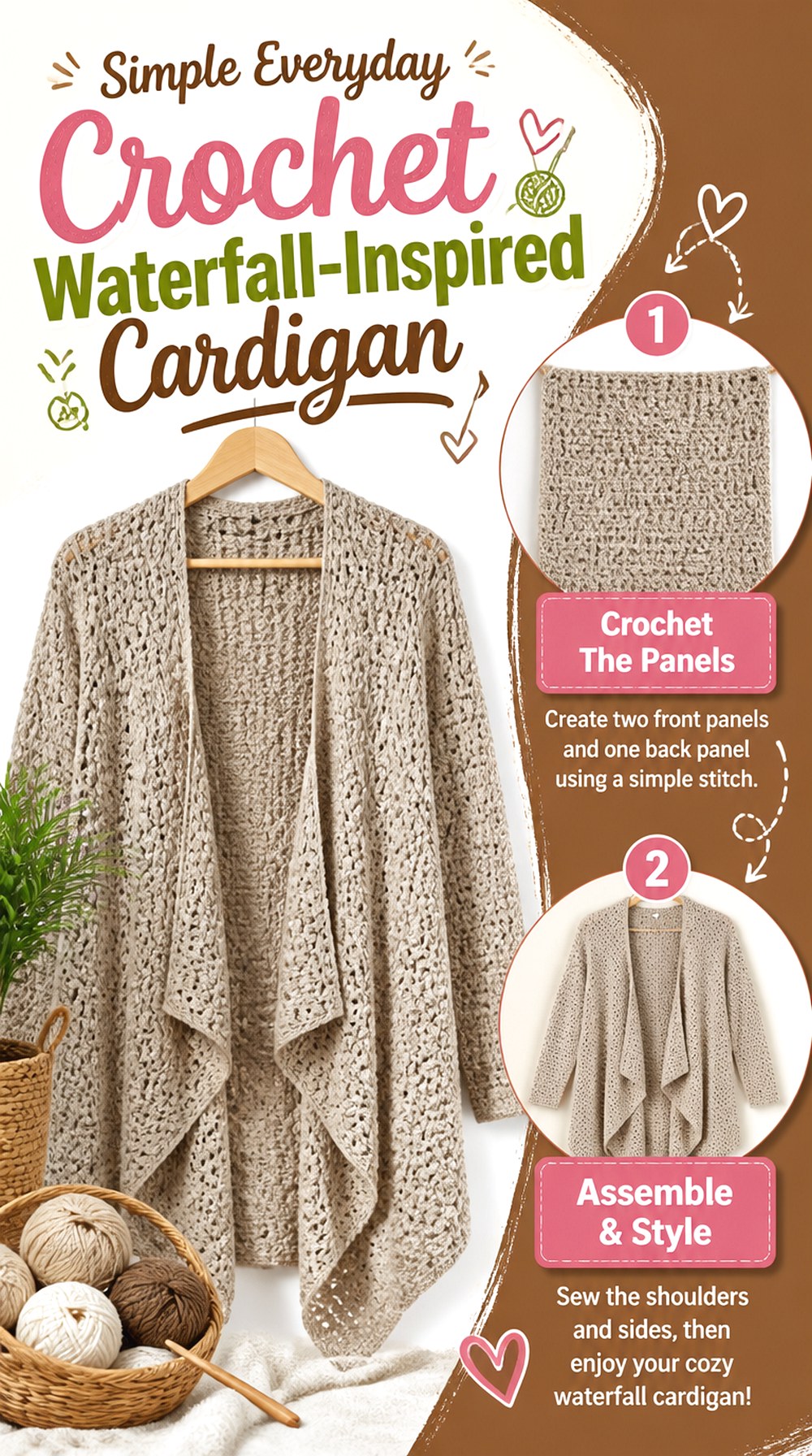
13. V Stitch Summer Crochet Waterfall Inspired CardiganNot every waterfall cardigan needs a dramatic hem or highly textured stitch. A simple everyday version can use a conventional cardigan body and let a softer front edge provide the main distinguishing feature.
Hey Carrie’s cardigan tutorial offers a relatively uncomplicated garment reference and discusses using common medium-weight yarn options. For an adaptation, keep the original construction intact until you understand its fit; then evaluate whether additional front fabric would complement the shoulder and neckline rather than distort them.
Keep the Edge Quiet for an Everyday Version
A narrow, unobtrusive finishing edge allows the cascading fabric to be the detail. A thick border, heavy fringe, or strong contrasting color can turn a subtle cardigan into a statement piece, so choose finishing based on where you expect to wear it.
Try the Cardigan on Before Deciding Final Front Length
Front points that look modest on a hanger may fall much lower once they fold on a body. Temporarily secure the unfinished edge and check it while standing, sitting, and moving before committing to decorative finishing.
Original Tutorial and Creator Credit
Creator: Hey Carrie
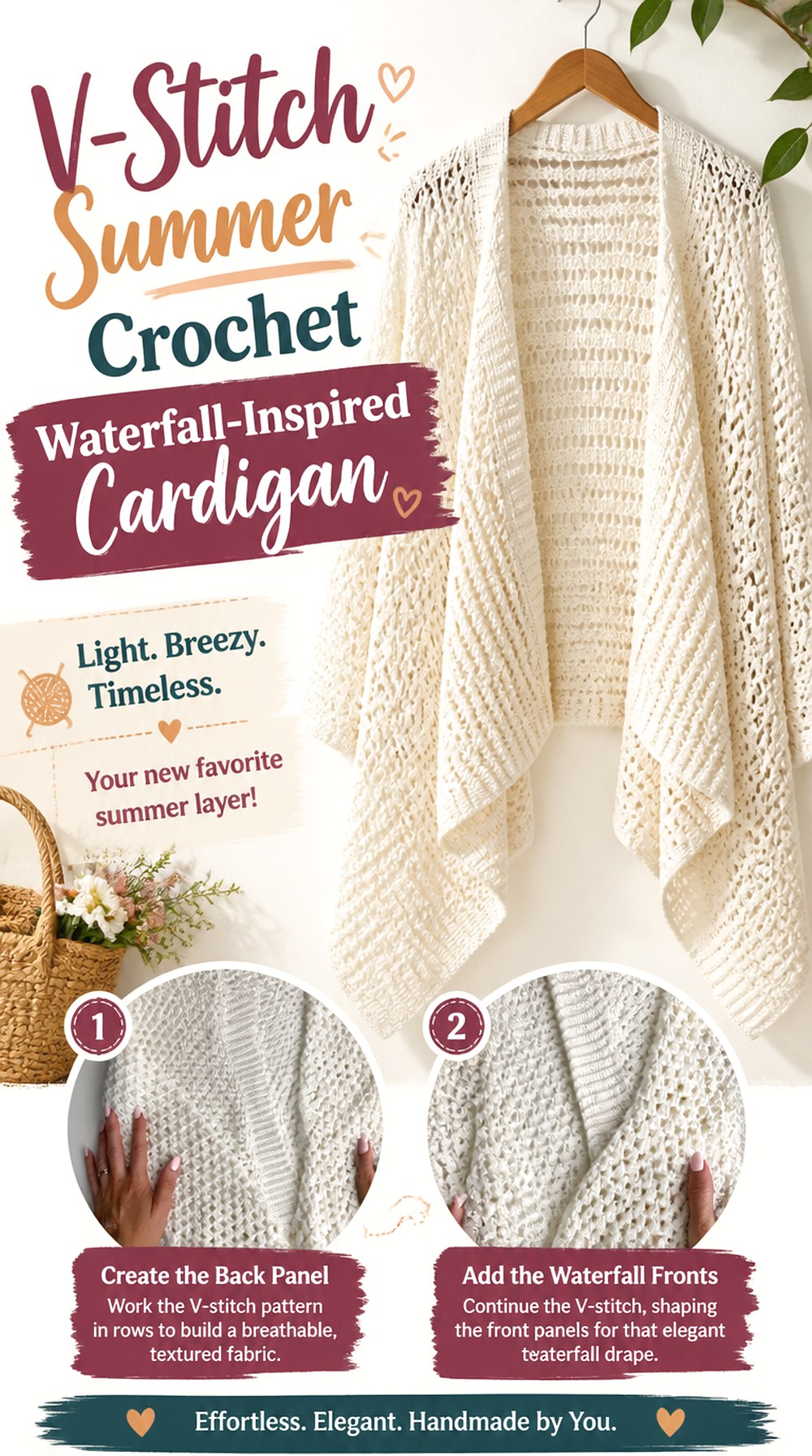
V-stitch is particularly compatible with a warm-weather waterfall concept because its open structure can create visual movement without a solid wall of fabric. MJ’s Off The Hook Designs demonstrates a seamless top-down V-stitch summer cardigan with different styling variations, including shorter and longer options.
The original pattern is not a conventional oversized waterfall cardigan, so consider it a stitch, fit, and top-down construction reference rather than assuming its closure details can simply be removed.
Open V-Stitches Help Wide Fronts Stay Visually Light
A wide solid panel may dominate a summer outfit. Open stitches allow the layer beneath to show through, which can make additional front width feel less bulky even when the silhouette is generous.
Top-Down Construction Gives Early Fit Feedback
One advantage of a top-down garment is the ability to evaluate upper-body fit before the cardigan reaches full length. If your shoulders or armholes already need adjustment, solve those issues before investing in a larger waterfall-style front treatment.
Original Tutorial and Creator Credit
Creator: MJ’s Off The Hook Designs
14. Basket Weave Hexagon Crochet Waterfall Inspired Cardigan
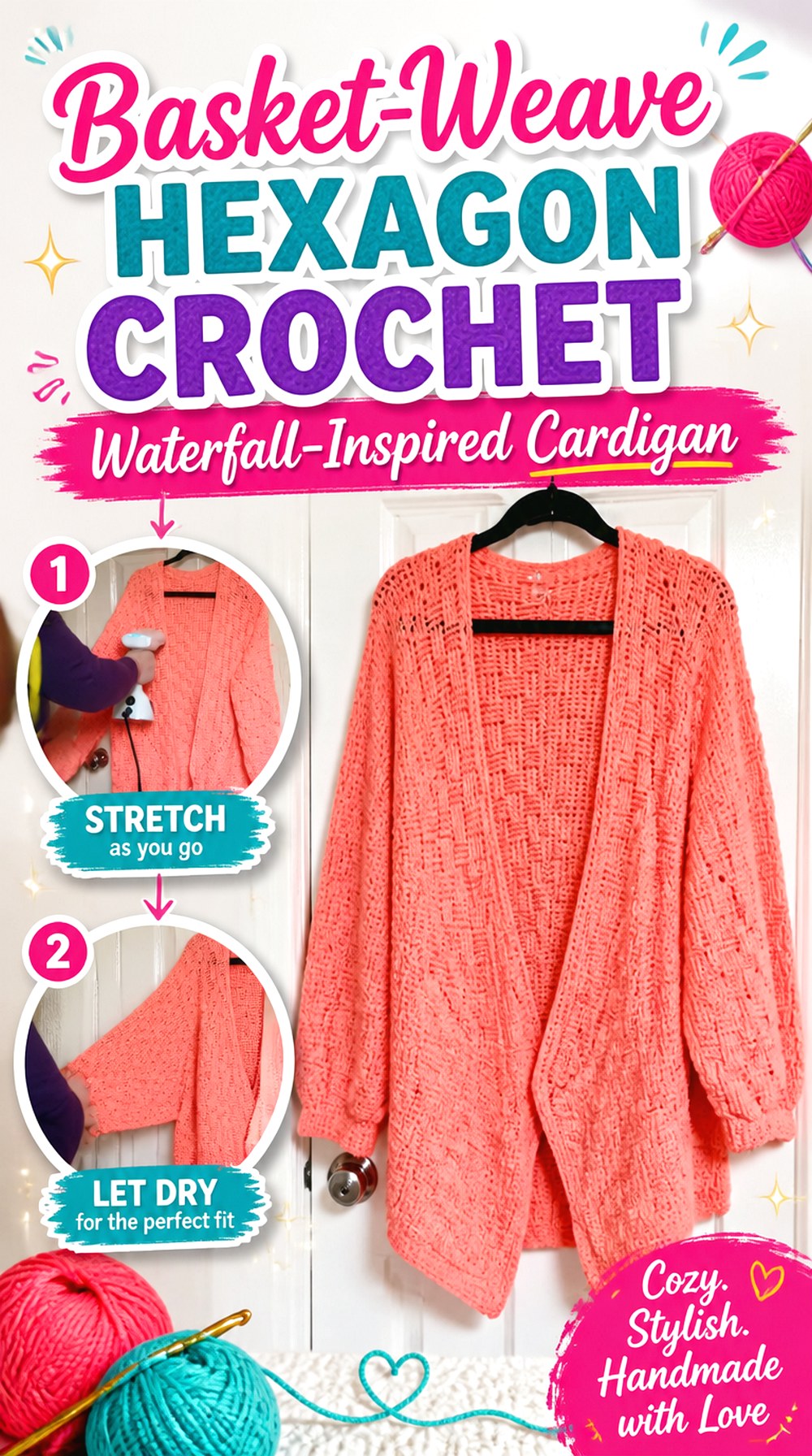
Hexagon construction creates a very different foundation from ordinary rectangular front and back panels. Amora’s full tutorial uses basket-weave texture in a hexagon cardigan and demonstrates extending the garment, joining sections, fitting the arms, and finishing the perimeter.
For a waterfall-inspired version, the attraction is the broad open-front shape a hexagon cardigan can create. The challenge is combining that geometry with substantial texture without making the front overly thick.
Hexagon Geometry Changes Several Dimensions at Once
Extending a hexagon does not behave like adding length to a straight rectangle. Growth can influence sleeve, body, and front dimensions together. Understand the source construction before attempting any independent waterfall modification.
Basket-Weave Texture Makes the Cascade More Sculptural
This is an option for readers who prefer strong texture rather than fluid mesh. Expect the folds to look more architectural. If your goal is a very soft cascading front, compare the basket-weave sample against a smoother stitch before choosing.
Perimeter Finishing Can Unite an Irregular Front
A consistent border can visually connect the neckline, fronts, and lower hem of a hexagon-based cardigan. The goal is not necessarily a stiff band; it is an edge that looks intentional around a shape that already has plenty of geometry.
Original Tutorial and Creator Credit
Creator: Amora
15. Top Down Raglan Crochet Waterfall Inspired Cardigan
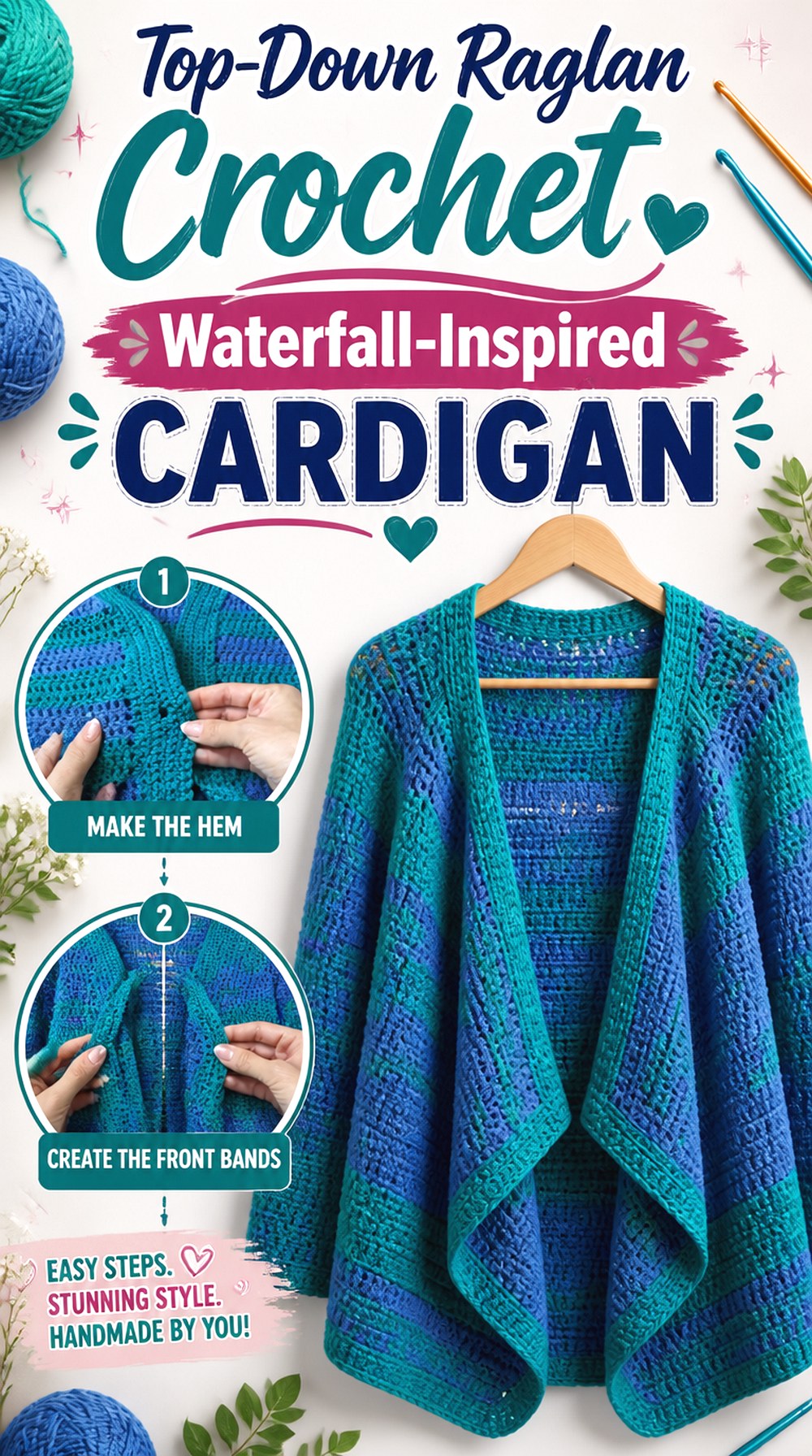
A raglan cardigan offers a more fitted upper-body route to the waterfall look. By Kristine’s tutorial demonstrates a top-down raglan construction with the body worked from the neckline and includes finishing around the opening.
The advantage of using this as a waterfall-inspired reference is control: a stable raglan yoke can keep the shoulders relatively organized while the lower front becomes softer and more relaxed. Any alteration to the original opening, however, should be treated as an independent adaptation rather than part of the source pattern.
Secure the Upper Body Before Adding Front Volume
A waterfall front works better when the neckline is not already spreading unpredictably. With a raglan base, evaluate the yoke and underarm placement first. Front drape should hang from a garment that already fits through the shoulders.
Decide Whether You Want a Collar or a Pure Cascade
A structured button band, collar, and waterfall fold communicate different styles. If adapting a source with planned closures, determine which design language you want rather than layering every detail together.
Original Tutorial and Creator Credit
Creator: by Kristine
16. Granny Stitch Crochet Waterfall Inspired Cardigan

Granny stitch produces a recognizable open fabric without the delicate appearance of fine lace. Mihankushea’s cardigan tutorial demonstrates a granny-stitch garment and discusses adjusting the project through body measurements.
That makes this idea useful for a relaxed, casual waterfall cardigan where the stitch pattern remains visible even in broad front folds. The front will still need enough flexibility to collapse naturally, so assess the actual fabric rather than assuming every granny-stitch yarn combination will drape the same way.
Keep Granny Clusters Consistent Through the Folding Area
Irregular tension becomes more noticeable where a wide front repeatedly folds over itself. Before extending a motif or cluster pattern, check that the fabric width and row edges remain consistent enough for the two fronts to look balanced.
Open Clusters Make Color Changes More Prominent
A waterfall front doubles sections of fabric over one another, so stripes and color blocks can overlap in unexpected ways. If using several colors, think about how the folded edge will look rather than planning color placement only with the cardigan lying flat.
Original Tutorial and Creator Credit
Creator: 🧶Mihankushea🧶
17. Full Length Crochet Waterfall Duster Cardigan
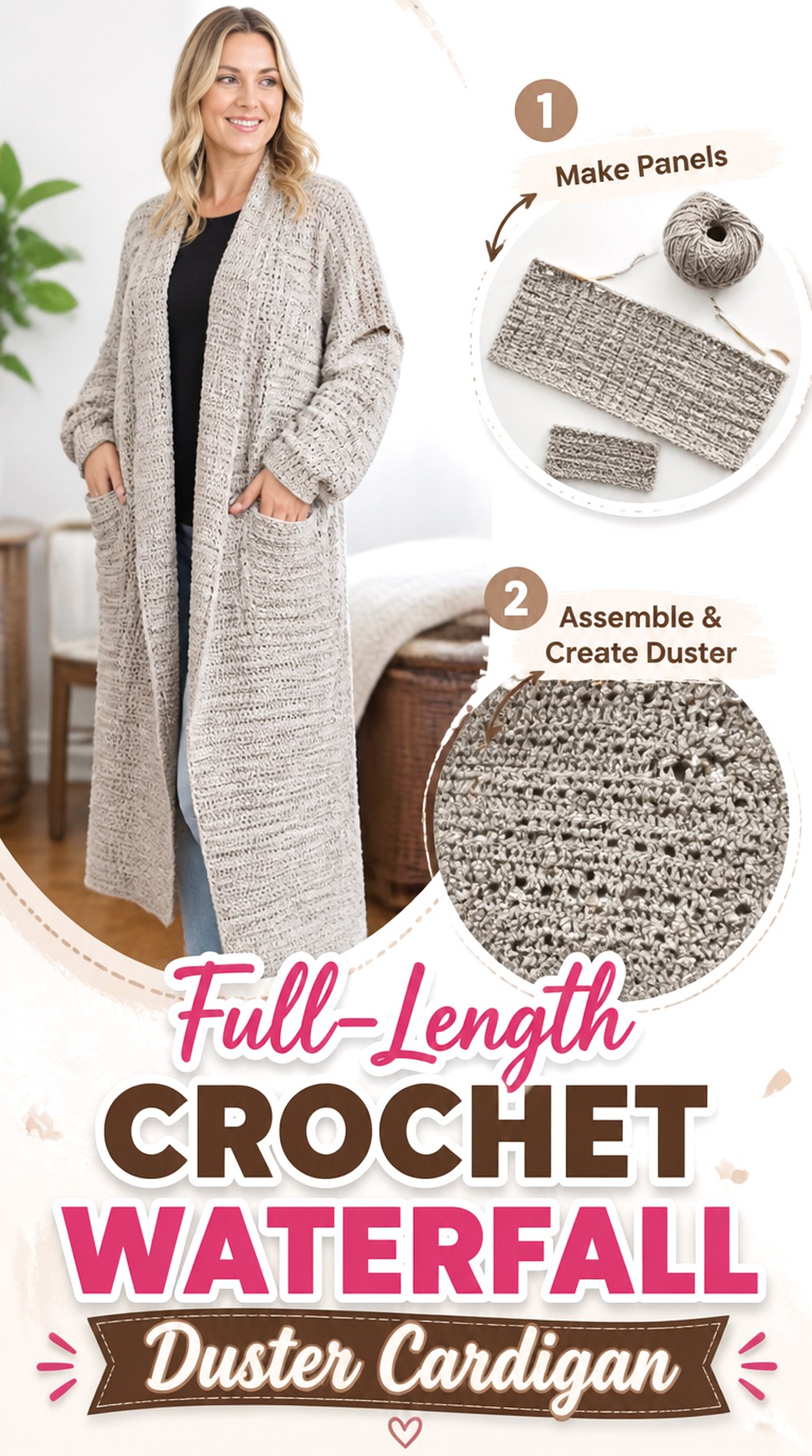
Length dramatically changes the character of a waterfall cardigan. A duster creates a long vertical line and can make even a moderate front drape feel more pronounced. Ophelia Talks Crochet’s Miss Potter Cardigan is a full-length project with front panels, sleeves, border, collar area, and pockets.
The source is not specifically a waterfall cardigan, so use it for long-cardigan proportion and construction. A true waterfall adaptation would require extra planning around the front opening and any collar or pocket details.
Long Front Panels Magnify Small Fit Problems
A slight difference between two short fronts may barely show, but the same inconsistency becomes more noticeable near a long hem. Measure both sides after the fabric has had time to relax, especially before adding a continuous border.
Duster Length Makes Weight a Serious Planning Factor
A full-length crochet cardigan already contains a large amount of fabric. Adding generous waterfall fronts can increase the load at the shoulders. Choose the drama of the cascade with total garment weight in mind rather than considering front width in isolation.
Keep Pockets From Pulling the Lower Silhouette Forward
Long garments show vertical alignment clearly. Heavy objects in large pockets may distort the lower front, particularly when the surrounding fabric is intended to drape. Treat pockets as light-use features unless the construction is specifically reinforced for more.
Original Tutorial and Creator Credit
Creator: Ophelia Talks Crochet
18. U Shaped Crochet Kimono Waterfall Cardigan
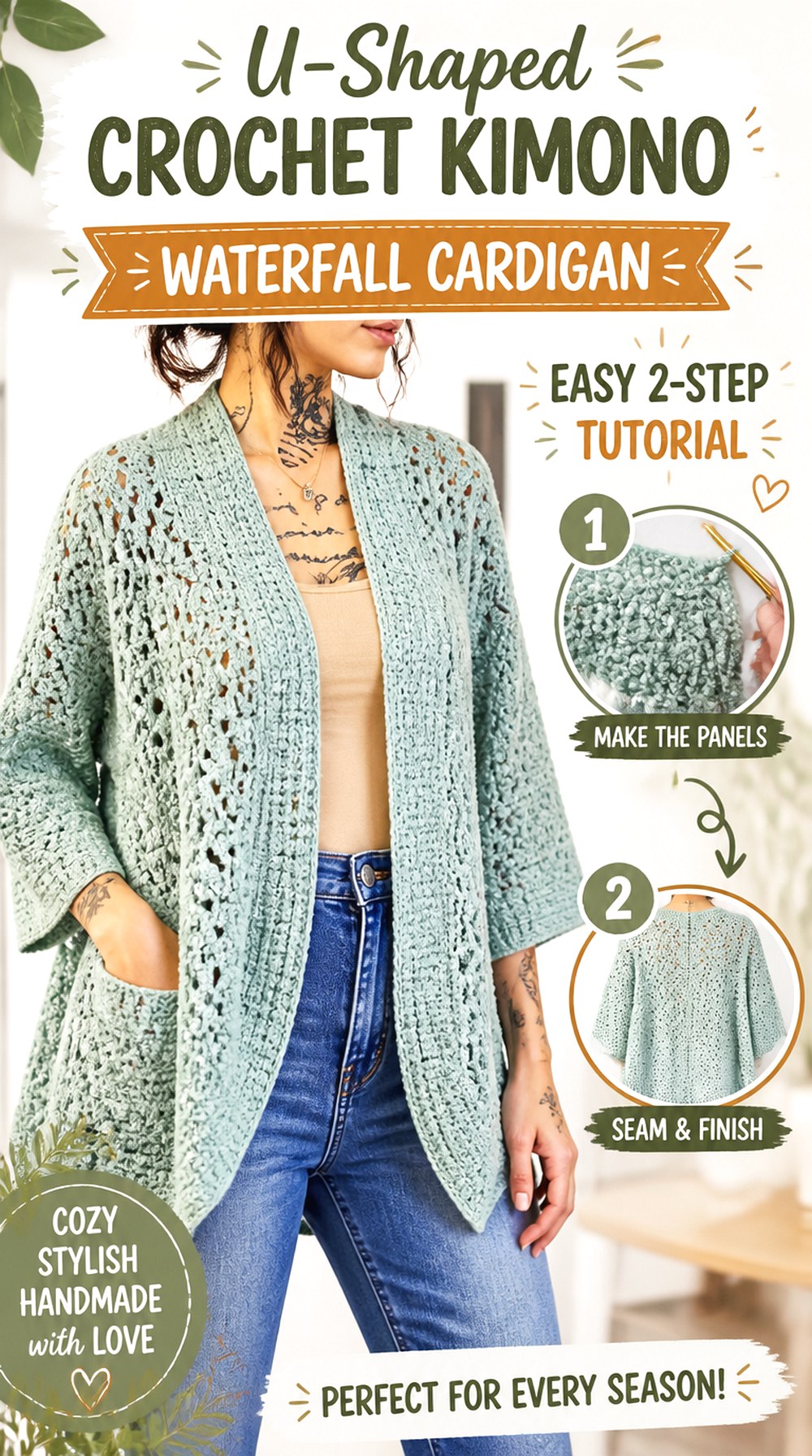
This final idea uses a different starting geometry again. Crafting Shed’s kimono cardigan tutorial begins from a U-shaped neckline concept and develops the cardigan around the body, back, and sleeves before finishing the opening.
A continuous neckline-to-front relationship is interesting for waterfall styling because the drape can feel integrated with the garment rather than added as a separate oversized collar. The finished look is broad and relaxed, making it a good option for readers who prefer a soft kimono influence.
A Continuous Neckline Can Make the Cascade Feel Integrated
When the neckline and front opening grow from the same structural idea, the folds can read as part of the garment rather than an attached feature. Watch the upper back and neck carefully, because extra front weight still needs a stable anchor.
Use the Finished Opening to Judge Additional Edging
Do not assume every open front requires a prominent border. Once the main cardigan is assembled, let it hang naturally and decide whether the edge needs visual definition, added stability, or almost no emphasis.
Broad Kimono Proportions Suit a Relaxed Waterfall
This approach is less about a sharply tailored shoulder and more about soft overall ease. It can work particularly well when you want the front to merge into a casual, wrap-like silhouette instead of looking like a conventional cardigan with extra fabric attached.
How These Waterfall Cardigan Directions Compare
If your priority is a true cascading front, start with the Bobiz Kollection or Crochet With Bernie projects because the source garments are specifically presented as waterfall cardigans. The Make & Do Crew and Treasurie options are strong choices when you prefer drape created through broad, open construction rather than a narrowly fitted body.
For lighter fabric, the VivCrochets mesh and MJ’s Off The Hook Designs V-stitch approaches provide useful references. For strong texture, compare the alpine-stitch and basket-weave ideas, keeping extra front weight in mind.
Choose the full-length duster when vertical impact matters most, the sleeveless version when you want the front cascade without sleeve bulk, and the raglan option when upper-body fit is a higher priority. Granny-stitch, bell-sleeve, oversized-pocket, and kimono approaches put more emphasis on styling details beyond the waterfall edge itself.
Conclusion
The strongest crochet waterfall cardigan idea depends on where you want the volume. For a recognizable cascade, choose a project designed around a true waterfall or draped front. For summer layering, mesh, V-stitch, sleeveless, and one-piece open-front constructions keep the silhouette visually lighter. Textured, oversized, hexagon, and duster versions create more presence but also make garment weight and shoulder balance more important.
When adapting a regular cardigan, establish the back, shoulders, armholes, and sleeve fit before experimenting with extra front width. A waterfall edge should enhance an already workable garment rather than compensate for fit problems. Use the original tutorials for their exact construction details, then evaluate any independent changes with the finished drape and intended use in mind.
Frequently Asked Questions
What makes a crochet cardigan a waterfall cardigan?
The main visual feature is an open front with enough fabric to fall into cascading folds instead of meeting in a straight button or zipper opening. That effect can come from widened front panels, an extended collar area, rectangle construction, or another shape that creates extra fabric around the opening. The exact method varies, so a standard open cardigan is not automatically a waterfall cardigan simply because it has no buttons.
What type of crochet fabric works well for a waterfall front?
Fabric that bends and folds easily generally produces the clearest waterfall effect. Open V-stitches, mesh, softer granny-stitch fabrics, and other relatively flexible textures can work well. Dense stitches can also be used, but the resulting folds may look more sculptural and add more weight. Make a sample with your actual yarn and hook, then hang and fold it before deciding whether it has the movement you want.
Can I turn any open-front crochet cardigan into a waterfall cardigan?
Not automatically. The original shoulder, neckline, front-panel construction, closure, pockets, and edging can limit how easily additional front width can be incorporated. A simple cardigan may offer a useful starting structure, but adding fabric can change weight distribution and fit. Understand the source construction first and treat any waterfall modification as a separate design decision rather than assuming one universal alteration works for every cardigan.
How wide should the waterfall front be?
There is no reliable universal width because the result depends on body size, fabric behavior, cardigan construction, neckline shape, stitch density, and how dramatic you want the folds to look. Instead of copying an arbitrary measurement, temporarily mock up additional front width or pin the fabric into the intended shape. Evaluate it while worn and make sure the shoulders remain balanced before finalizing the edge.
Is lightweight yarn always better for a waterfall cardigan?
No. Lightweight yarn can help create soft movement and reduce bulk, but fiber and stitch structure matter too. A lightweight yarn worked into very firm fabric may drape less than a somewhat heavier yarn worked at a more flexible gauge. Follow the tutorial’s yarn and gauge requirements for its original design. When creating an independent variation, compare fabric samples based on movement as well as thickness.
Should I add pockets to a crochet waterfall cardigan?
Pockets can be useful, but their placement matters more on a draped front. A pocket sewn directly across the main folding area may stiffen the cascade, and heavy contents can pull a long front out of alignment. Pin the pockets temporarily and try on the cardigan before attaching them permanently. On full-length or oversized designs, also consider whether the additional weight changes how the front hangs.